1. Search Result
Search Result
Pathways Recommended: Anti-infection
Results for "

thigh infection

" in MedChemExpress (MCE) Product Catalog:
Cat. No. Product Name Target Research Areas Chemical Structure
  • HY-B0593
    Ceftazidime
    40+ Cited Publications

    GR20263

    Beta-lactamase Bacterial Antibiotic Infection Cancer
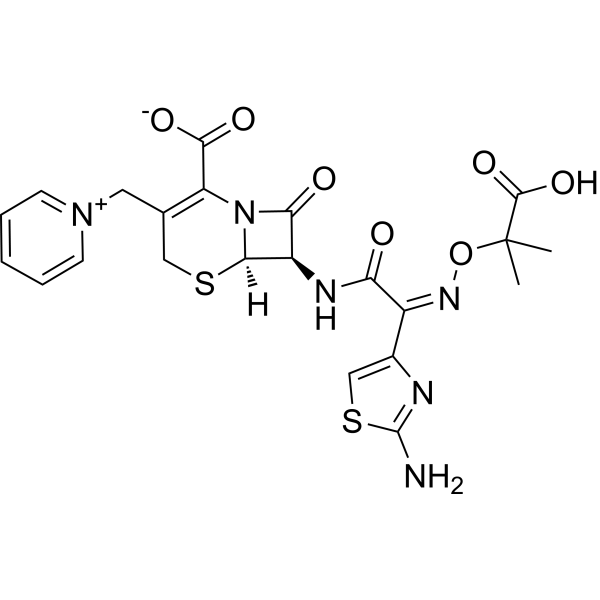
    Ceftazidime (GR20263), an antibiotic, has a broad spectrum activity against Gram-positive and Gram-negative aerobic bacteria. Ceftazidime is also active against Enterobacteriaceae (including β-lactamase-positive strains) and is resistant to hydrolysis by most β-lactamases .
    Ceftazidime
  • HY-147429

    Abx MCP; RG6006

    Antibiotic Bacterial Infection
    Zosurabalpin is a polypeptide antibiotic targeting LPS transporter (LptB2FGC complex), which can block the transport of LPS and lead to endotoxin accumulation in cells, and has shown excellent antibacterial activity against Carbapenem-resistant Acinetobacter baumanni (CRAB) .
    Zosurabalpin
  • HY-B0593A
    Ceftazidime pentahydrate
    40+ Cited Publications

    GR20263 pentahydrate

    Beta-lactamase Bacterial Antibiotic Infection Cancer
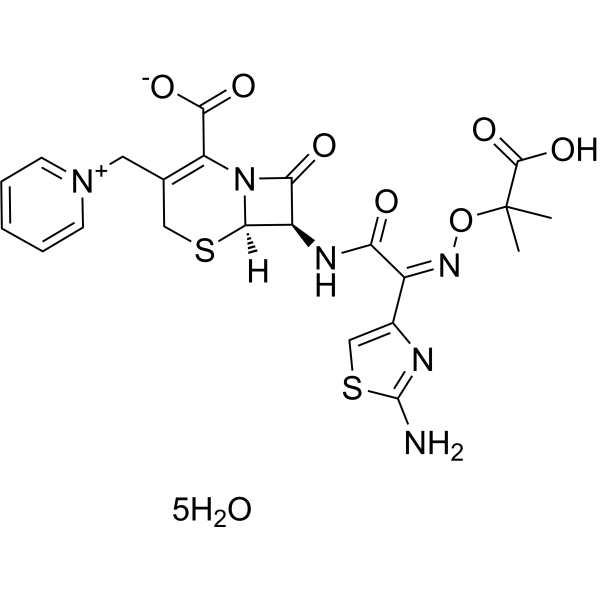
    Ceftazidime (GR20263) pentahydrate , an antibiotic, has a broad spectrum activity against Gram-positive and Gram-negative aerobic bacteria. Ceftazidime pentahydrate is also active against Enterobacteriaceae (including β-lactamase-positive strains) and is resistant to hydrolysis by most β-lactamases .
    Ceftazidime pentahydrate
  • HY-B0771A

    SCE-2787 hydrochloride

    Antibiotic Bacterial Penicillin-binding protein (PBP) Infection
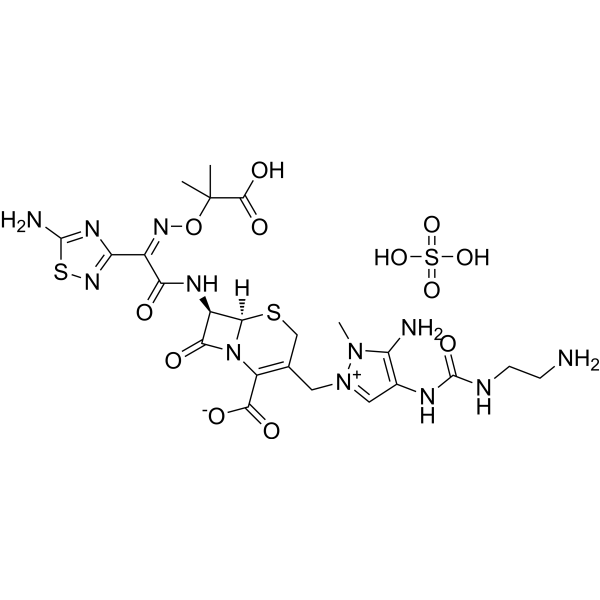
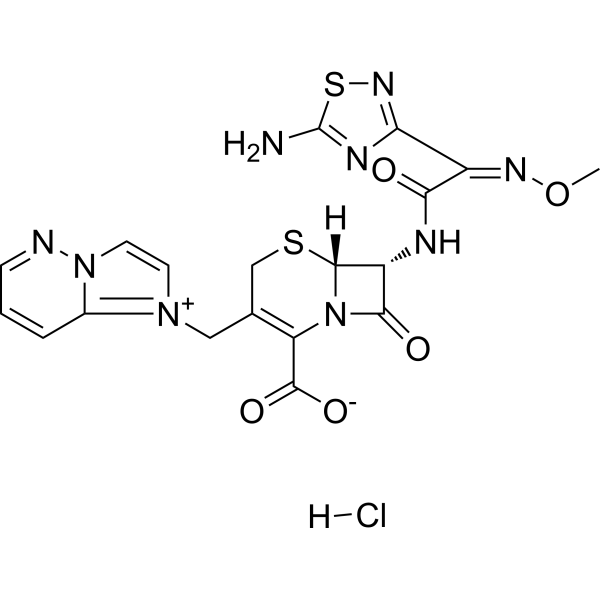
    Cefozopran (SCE-2787) hydrochloride is a potent antibiotic with broad-spectrum antibacterial activity. Cefozopran hydrochloride binds PBPs, induces cell wall destruction, cell elongation, filamentation, irregular septa formation, and bactericidal, bacteriolytic activity. Cefozopran hydrochloride reduces bacterial counts and eradicates bacteria in mouse respiratory, urinary, and thigh muscle infections. Cefozopran hydrochloride can be used for the research of bacterial infections .
    Cefozopran hydrochloride
  • HY-B0593AR

    GR20263 pentahydrate (Standard)

    Beta-lactamase Reference Standards Bacterial Antibiotic Infection Cancer
    Ceftazidime (pentahydrate) (Standard) is the analytical standard of Ceftazidime (pentahydrate). This product is intended for research and analytical applications. Ceftazidime (GR20263) pentahydrate , an antibiotic, has a broad spectrum activity against Gram-positive and Gram-negative aerobic bacteria. Ceftazidime pentahydrate is also active against Enterobacteriaceae (including β-lactamase-positive strains) and is resistant to hydrolysis by most β-lactamases .
    Ceftazidime pentahydrate (Standard)
  • HY-B0593R

    GR20263 (Standard)

    Beta-lactamase Reference Standards Bacterial Antibiotic Infection
    Ceftazidime (Standard) is the analytical standard of Ceftazidime. This product is intended for research and analytical applications. Ceftazidime (GR20263), an antibiotic, has a broad spectrum activity against Gram-positive and Gram-negative aerobic bacteria. Ceftazidime is also active against Enterobacteriaceae (including β-lactamase-positive strains) and is resistant to hydrolysis by most β-lactamases .
    Ceftazidime (Standard)
  • HY-B0771

    SCE-2787

    Antibiotic Bacterial Penicillin-binding protein (PBP) Infection
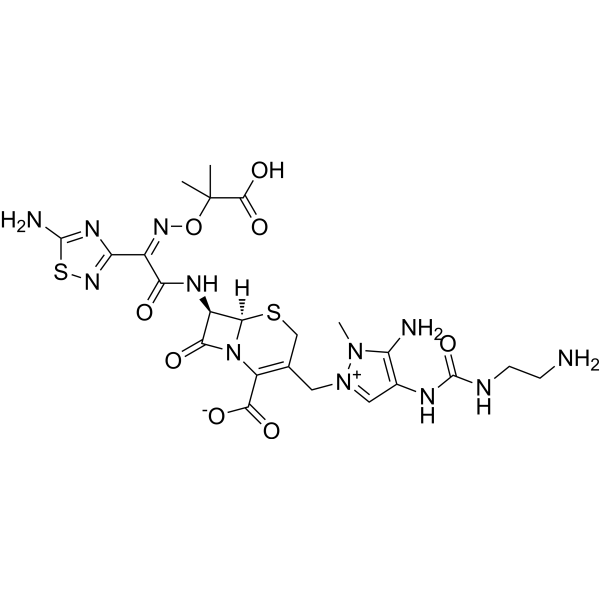
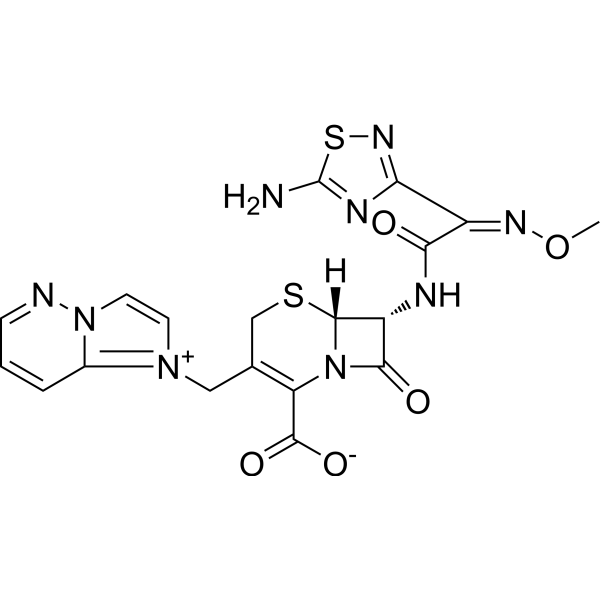
    Cefozopran (SCE-2787) is a potent antibiotic with broad-spectrum antibacterial activity. Cefozopran binds PBPs, induces cell wall destruction, cell elongation, filamentation, irregular septa formation, and bactericidal, bacteriolytic activity. Cefozopran reduces bacterial counts and eradicates bacteria in mouse respiratory, urinary, and thigh muscle infections. Cefozopran can be used for the research of bacterial infections .
    Cefozopran
  • HY-U00380

    Antibiotic Beta-lactamase Bacterial Infection
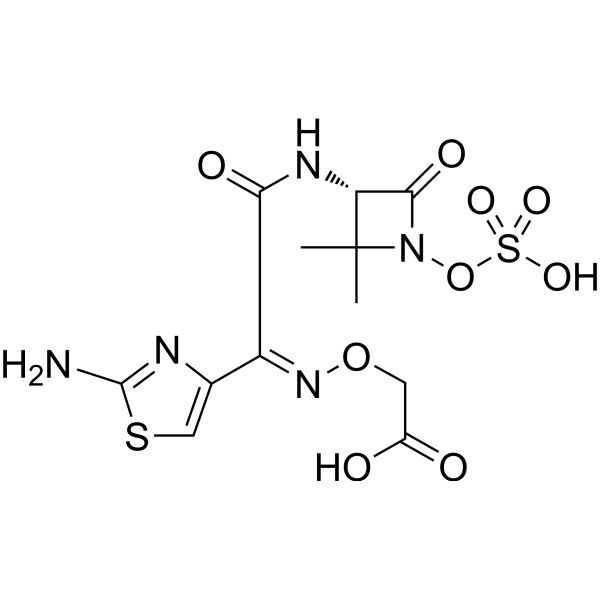
    Tigemonam is an orally active monobactam antibiotic with a Ki of 0.86 μM against Enterobacter cloacae P99 β-lactamase and 50.8 μM against Escherichia coli TEM-1 β-lactamase. Tigemonam binds to penicillin-binding proteins 1a, 3, and 4, inhibits bacterial cell wall synthesis, and exhibits bactericidal activity against aerobic gram-negative bacteria including Enterobacteriaceae, Haemophilus influenzae, and Neisseria gonorrhoeae. Tigemonam resists hydrolysis by multiple β-lactamase enzymes, reduces bacterial load in systemic, pyelonephritic, lung, and thigh muscle infections in rodents, and shows minimal difference between minimum inhibitory and bactericidal concentrations. Tigemonam can be used for the research of gram-negative bacterial infections, acute pyelonephritis, lung infection, and thigh muscle infection .
    Tigemonam
  • HY-125356

    Beta-lactamase Infection
    ETX0282 is an orally active prodrug, with its active form being ETX1317. ETX0282 and ETX1317 are β-lactamase inhibitors of the dioxolane-dibenzo-p-heptane (DBO) type. ETX0282 exhibits high stability during intestinal absorption and can be efficiently converted into ETX1317 in the liver. ETX0282 alone has no bactericidal activity, but in a mouse model of neutropenic thigh infection, it can significantly reduce bacterial load when used in combination with Cefpodoxime Proxetil (HY-N7101). ETX0282 can be used for the study of infections caused by drug-resistant Gram-negative bacteria .
    ETX0282
  • HY-117951

    Beta-lactamase Infection
    ANT431 is a metallo-β-lactamase inhibitor that also restores the effectiveness of Meropenem (HY-13678) in a mouse thigh Escherichia coli infection model .
    ANT431
  • HY-156122

    Dihydrofolate reductase (DHFR) Bacterial Infection
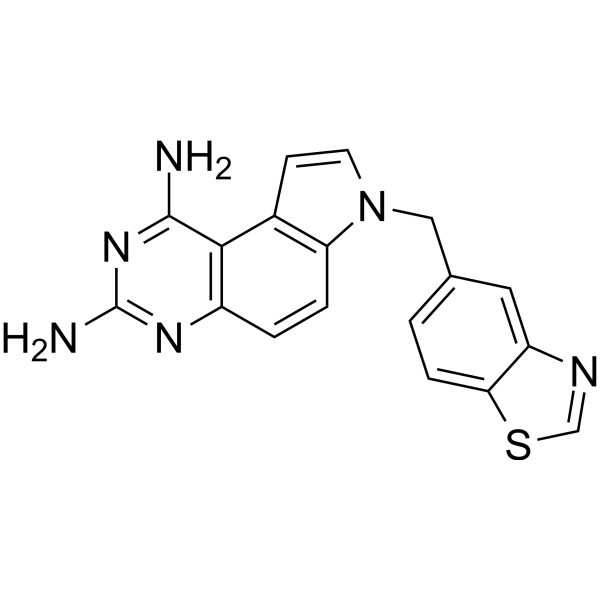
    DHFR-IN-8 (compound 6r) is a dihydrofolate reductase (DHFR) inhibitor that affects purine and thymidylate biosynthesis in cell proliferation and growth. DHFR-IN-8 inhibits methicillin-resistant Staphylococcus aureus (MRSA) ATCC 43300 (IC50=15.6 ng/mL) in mouse models of systemic infection and thigh infection .
    DHFR-IN-8
  • HY-173472

    Bacterial Beta-lactamase Infection
    MBL-IN-5 is a metallo-β-lactamase (MBL) inhibitor. MBL-IN-5 inhibits three clinically relevant B1 subfamily MBLs (NDM-1, VIM-1, and IMP-1) with IC50s of 0.05  nM, 14  nM and 21 nM respectively. MBL-IN-5 remarkably enhances carbapenems’ effectiveness against MBL-producing clinical strains and significantly reduces the bacterial load in a neutropenic murine thigh infection model combined with the IPM antibiotic .
    MBL-IN-5
  • HY-156123

    Dihydrofolate reductase (DHFR) Bacterial Infection Cancer
    DHFR-IN-9 (compound 8A) is a dihydrofolate reductase (DHFR) inhibitor that affects purine and thymidylate biosynthesis in cell proliferation and growth. DHFR-IN-9 inhibits methicillin-resistant Staphylococcus aureus (MRSA) ATCC 43300 (IC50=0.25 μg/mL) and has anti-infective effects in mouse models of systemic infection and thigh infection caused by it (dose: 2.5 mg /kg, 5 mg/kg; ip). DHFR-IN-9 has stronger anticancer activity than paclitaxel (Y-B0015) in a mouse model of breast cancer (dose: 2.5 mg/kg; ip; once every 3 days) .
    DHFR-IN-9
  • HY-B0771AR

    SCE-2787 hydrochloride (Standard)

    Reference Standards Antibiotic Bacterial Penicillin-binding protein (PBP) Infection
    Cefozopran (SCE-2787) hydrochloride (Standard) is the analytical standard of Cefozopran hydrochloride. Cefozopran (SCE-2787) dihydrochloride is a potent antibiotic with broad-spectrum antibacterial activity. Cefozopran dihydrochloride binds PBPs, induces cell wall destruction, cell elongation, filamentation, irregular septa formation, and bactericidal, bacteriolytic activity. Cefozopran dihydrochloride reduces bacterial counts and eradicates bacteria in mouse respiratory, urinary, and thigh muscle infections. Cefozopran dihydrochloride can be used for the research of bacterial infections .
    Cefozopran hydrochloride (Standard)
  • HY-182936

    Bacterial DNA/RNA Synthesis Infection
    Antibacterial agent 338 (Compound 65) is an antibacterial agent and GyrB inhibitor, with an IC50 of 12.60 nM against GyrB from E. coli. Antibacterial agent 338 binds to the ATP-binding domain of E. coli GyrB, thereby inhibiting the ATPase activity of GyrB. Antibacterial agent 338 exhibits broad-spectrum antibacterial activity against multidrug-resistant Gram-negative bacteria. Antibacterial agent 338 reduces bacterial load in a neutropenic mouse thigh infection model. Antibacterial agent 338 can be used for the research of Acinetobacter baumannii infection .
    Antibacterial agent 338
  • HY-W740077

    SCE-2787 dihydrochloride

    Antibiotic Bacterial Penicillin-binding protein (PBP) Infection
    Cefozopran (SCE-2787) dihydrochloride is a potent antibiotic with broad-spectrum antibacterial activity. Cefozopran dihydrochloride binds PBPs, induces cell wall destruction, cell elongation, filamentation, irregular septa formation, and bactericidal, bacteriolytic activity. Cefozopran dihydrochloride reduces bacterial counts and eradicates bacteria in mouse respiratory, urinary, and thigh muscle infections. Cefozopran dihydrochloride can be used for the research of bacterial infections .
    Cefozopran dihydrochloride
  • HY-182058

    Drug Derivative Bacterial Beta-lactamase Infection
    ATM potentiators-1 is a quercetin derivative that synergistically enhances the antibacterial activity of Aztreonam (ATM, HY-B0129) against metallo-β-lactamase-producing Pseudomonas aeruginosa. ATM potentiators-1 inhibits NDM-1, OXA-10, VIM-2, KPC-2, and OXA-48, suppressing the efflux pump activity of Pseudomonas aeruginosa. When used in combination with CCCP (HY-100941), it exhibits a synergistic inhibitory effect. ATM potentiators-1 is applicable to research related to Pseudomonas aeruginosa infections .
    ATM potentiator-1

Inquiry Online

Your information is safe with us. * Required Fields.

Salutation


Country or Region *

Applicant Name *


Organization Name *

Department *


Email Address *


Product Name *

Cat. No.


Requested quantity *

Phone Number *


Remarks

Inquiry Online

Inquiry Information

Product Name:
Cat. No.:
Quantity:
MCE Japan Authorized Agent:

