



Tioconazole
Based on 5 publication(s) in Google Scholar
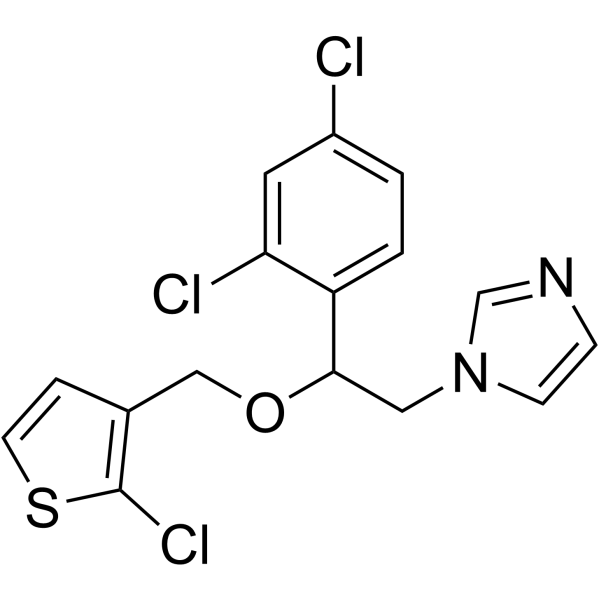
Tioconazole (UK-20349) is a broad-spectrum antifungal imidazole derivative. Tioconazole inhibits several dermatophytes and yeasts, with MIC50 values of less than 3.12 mg/L and 9 mg/L, respectively. Additionally, Tioconazole exhibits anti-parasitic activity. Tioconazole exerts anticancer activity by inhibiting the PI3K/AKT/mTOR signaling pathway and blocking autophagy. Tioconazole is applicable for research in the fields of anti-infection and anticancer therapy.
Nur für Forschungszwecke. Wir verkaufen nicht an Patienten.
- Reinheit : 99.86%
- CAS. Nr.: 65899-73-2
- Formel: C16H13Cl3N2OS
- Molecular Weight:387.71
-
Speicherung:Powder -20°C, 3 years , 4°C, 2 years ; In solvent -80°C, 2 years , -20°C, 1 year

To place orders, for customer services and technical support, please contact: MedChemExpress USA
Tel: 609-228-6898 E-mail: [email protected] [email protected]


-
 Biologische Aktivität
-
Chemical Information
-
Lösungsmittel & Löslichkeit
- Protokoll
- Reinheit & Dokumentation
- Verweise
-
 Help & FAQs


-
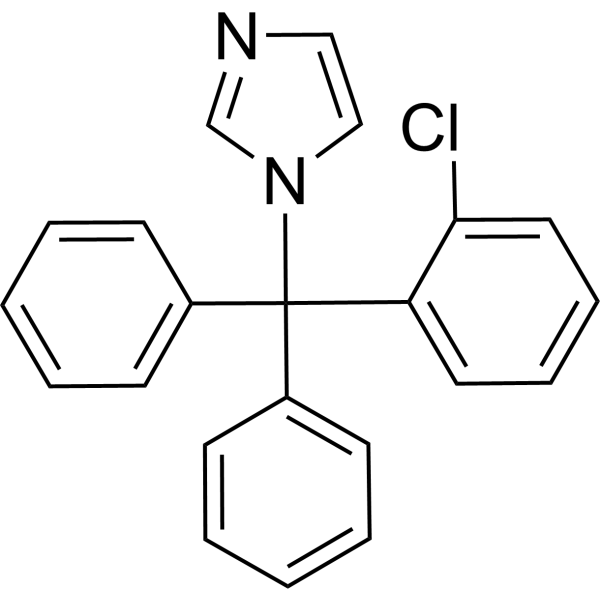
HY-10882
ClotrimazoleAutophagy Inhibitor -
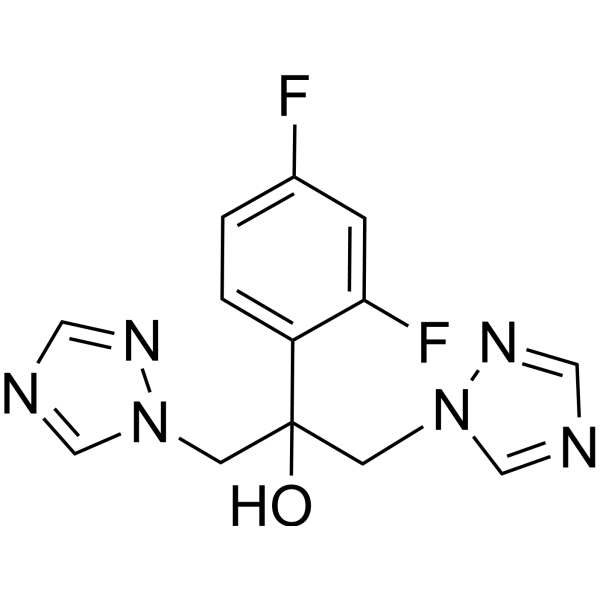
HY-B0101
FluconazoleAntifungal Agent -
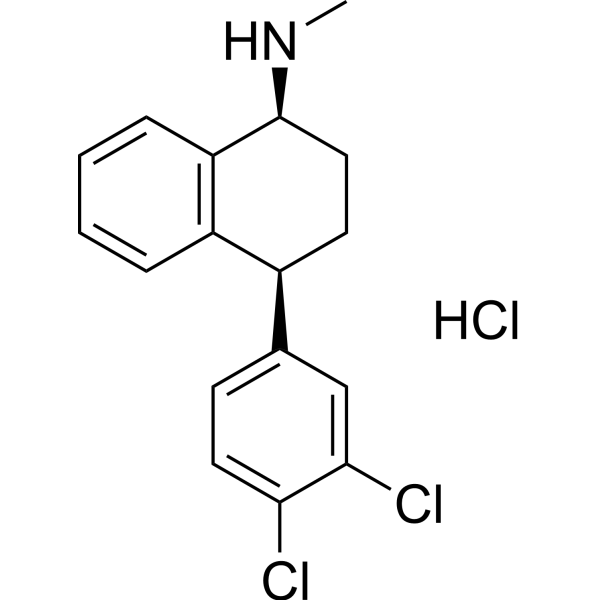
HY-B0176A
Sertraline hydrochlorideSSRI -
HY-B1444
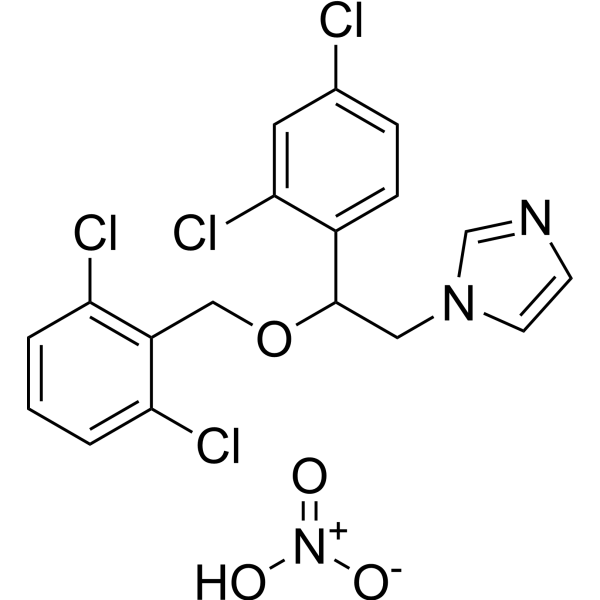
Isoconazole nitrateBacterial Inhibitor -

HY-B0101R
Fluconazole (Standard)Antifungal Agent -
HY-B0453
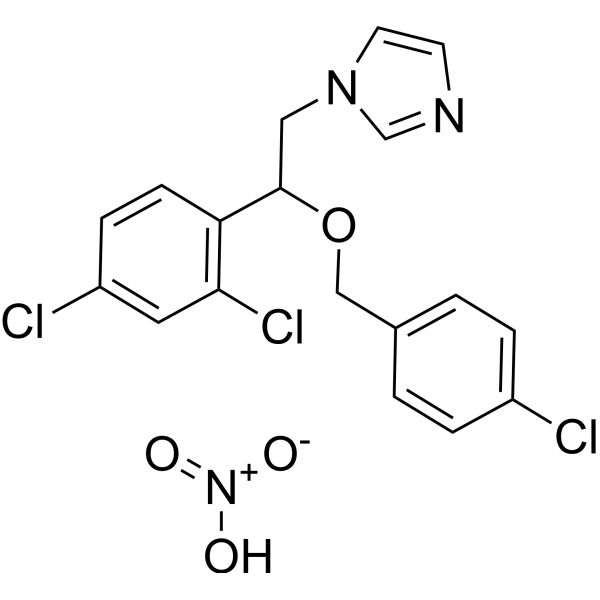
Econazole nitrateAntifungal Agent -

HY-B0319R
Tioconazole (Standard)Antifungal Imidazole Derivative -
HY-B0627
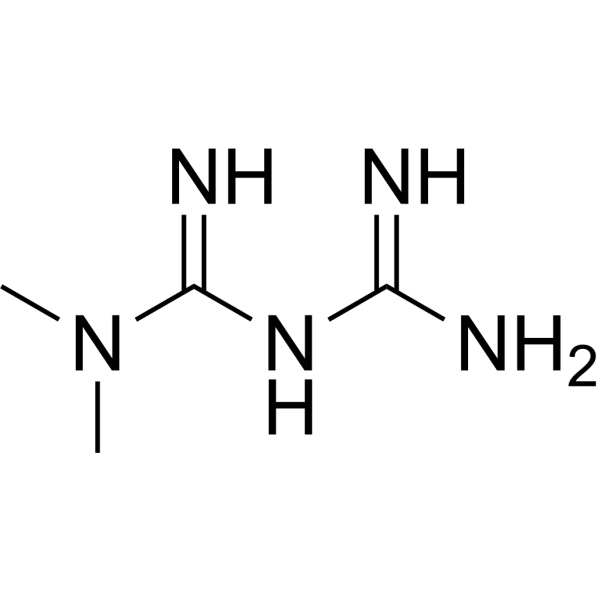
MetforminAntihyperglycemic Agent -
HY-14273
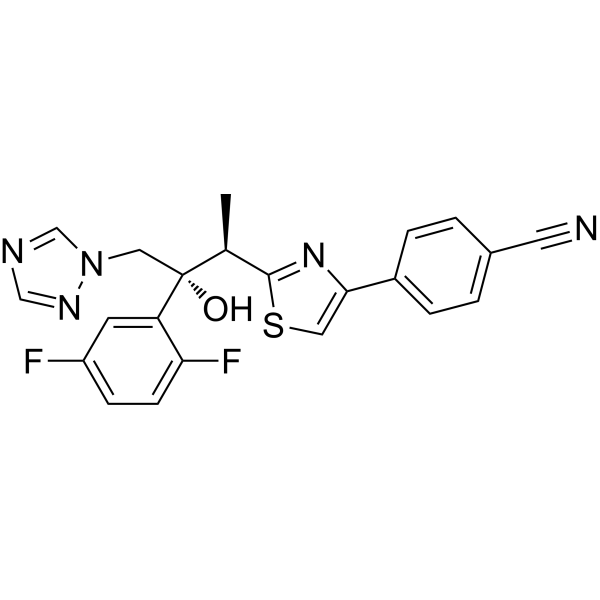
IsavuconazoleTriazole Antifungal -

HY-14273R
Isavuconazole (Standard)Triazole Antifungal -
HY-100373
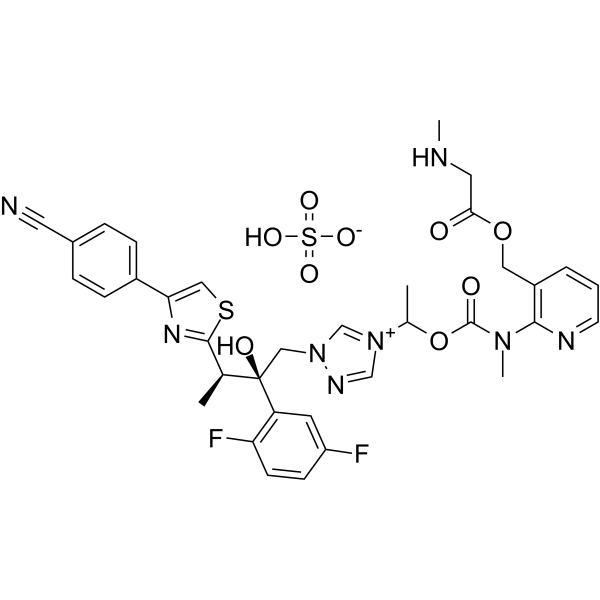
Isavuconazonium sulfateAntifungal Agent -
HY-B0238
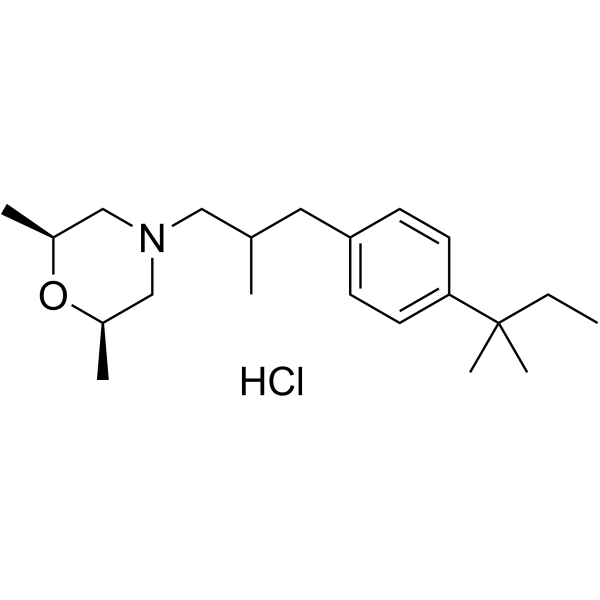
Amorolfine hydrochlorideAnti-fungal Agent
Publications Citing Use of MedChemExpress (MCE) Tioconazole
MoreAlle Antibiotic Isoform-spezifische Produkte anzeigen
MoreAlle Parasite Isoform-spezifische Produkte anzeigen
More

Biologische Aktivität
Beschreibung
IC50 & Target
Antifungal[1].
In Vitro
Tioconazole (10-40 μM, 24 hours) induces apoptosis and inhibits cell migration in HeLa cells through mitotic arrest, exhibiting anticancer activity (IC50: 14.9 μM)[3].
MedChemExpress (MCE) has not independently confirmed the accuracy of these methods. They are for reference only.
-
Cell Line:HeLa cells (cervical cancer)
-
Concentration:0-80 μM
-
Incubation Time:24 hours
-
Result:Inhibited HeLa cell proliferation in a concentration-dependent manner, IC50: 14.9 μM. At 5, 10, 15, 20, 30, 60, and 80 μM, cell proliferation inhibition rates were 22%, 28%, 50%, 59%, 65%, 79%, and 86%, respectively.
-
Cell Line:HeLa cells (cervical cancer)
-
Concentration:10, 20, 30, 40 μM
-
Incubation Time:24 hours
-
Result:Induced cell cycle arrest in mitosis, with 13%, 37%, 35%, and 13% of cells arrested at mitosis at 10, 20, 30, and 40 μM, respectively. The highest arrest was observed at 20 μM.
-
Cell Line:HeLa cells (cervical cancer)
-
Concentration:10, 20, 40 μM
-
Incubation Time:24 hours
-
Result:Induced apoptosis in HeLa cells, with 4%, 17%, and 32% of cells undergoing apoptosis at 10, 20, and 40 μM, respectively. The 40 μM group showed more pronounced nuclear fragmentation and chromatin condensation.
-
Cell Line:HeLa cells (cervical cancer)
-
Concentration:10, 20 μM
-
Incubation Time:24, 48, 72 hours
-
Result:Inhibited HeLa cell migration, with migration rates of 25%, 34%, and 55% in the 10 μM group and 10%, 13%, and 19% in the 20 μM group at 24, 48, and 72 hours, respectively, significantly lower than the control group (p < 0.0001).
In Vivo
MedChemExpress (MCE) has not independently confirmed the accuracy of these methods. They are for reference only.
-
Animal Model:MCF-7 cell xenograft breast cancer BALB/c mouse model[4]
-
Dosage:60 mg/kg
-
Administration:Intraperitoneal injection (i.p.), once every three days, for 43 days
-
Result:Inhibited tumor growth, reduced Ki-67 and PI3K/AKT/mTOR signaling activity, promoted LC3-II and p62 accumulation, indicating autophagic flux blockade, and enhanced apoptosis.
-
Animal Model:HCT116 cell xenograft colorectal cancer nude mouse model[5]
-
Dosage:Tioconazole: 60 mg/kg,Doxorubicin: 5 mg/kg,Chloroquine: 50 mg/kg
-
Administration:Tioconazole: Intraperitoneal injection (i.p.), once every 3 days, for 43 days; Doxorubicin: Intravenous injection (i.v.), once per week, for 6 weeks; Chloroquine: Intraperitoneal injection (i.p.), once daily, for 43 days
-
Result:Reduced xenograft tumor volume and sensitized xenograft tumors to Dox-induced cell death.
Clinical Trial
| NCT Number | Sponsor | Condition | Start Date |
Phase

|
|---|---|---|---|---|
| NCT01329991 | Plexxikon| | 2011-05 | PHASE1 |


Chemical Information
-
CAS. Nr. 65899-73-2
-
Appearance Solid
-
Molecular Weight 387.71
-
Formel C16H13Cl3N2OS
-
Color White to off-white
-
SMILES
ClC1=CC=C(C(OCC2=C(Cl)SC=C2)CN3C=CN=C3)C(Cl)=C1
-
Synonyms
UK-20349
-
Versand
Room temperature in continental US; may vary elsewhere.
-
Speicherung
Powder -20°C 3 years 4°C 2 years In solvent -80°C 2 years -20°C 1 year


Publications (5)
-
Journal Impact Factor
-
Most Recent
-
ACS Environ Au
Machine Learning-Assisted Recognition of Environmental Sulfur-Containing Chemicals in Nontargeted Mass Spectrometry Analysis of Inadequate Mass Resolution. [Abstract]2025 Aug 5;5(6):573-582. PMID: 41277996 -
Anal Chem
Exposome-Scale Investigation of Cl-/Br-Containing Chemicals Using High-Resolution Mass Spectrometry, Multistage Machine Learning, and Cloud Computing. [Abstract]2025 Jun 3;97(21):11099-11109. PMID: 40401576 -
Drug Metab Dispos
Metabolic flux analysis of bile acid biosynthesis acidic pathway in HepG2 cells reveals CYP8B1 inhibition of azole antifungals. [Abstract]2025 Nov;53(11):100168. PMID: 41124962 -
Int J Parasitol Drugs Drug Resist
Lower micromolar activity of the antifungal imidazoles on the bacterial-type bifunctional aldehyde/alcohol dehydrogenase (AdhE) in Cryptosporidium parvum and in vitro efficacy against the zoonotic parasite. [Abstract]2024 Aug:25:100551. PMID: 38875756 -


Lösungsmittel & Löslichkeit
In Vitro:
DMSO : ≥ 100 mg/mL (257.92 mM; Hygroscopic DMSO has a significant impact on the solubility of product, please use newly opened DMSO)
H2O : < 0.1 mg/mL (insoluble)
* "≥" means soluble, but saturation unknown.
Please refer to the solubility information to select the appropriate solvent. Once prepared, please aliquot and store the solution to prevent product inactivation from repeated freeze-thaw cycles.
Storage method and period of stock solution: -80°C, 2 years; -20°C, 1 year. When stored at -80°C, please use it within 2 years. When stored at -20°C, please use it within 1 year.
Please refer to the solubility information to select the appropriate solvent. Once prepared, please aliquot and store the solution to prevent product inactivation from repeated freeze-thaw cycles.
Storage method and period of stock solution: -80°C, 2 years; -20°C, 1 year. When stored at -80°C, please use it within 2 years. When stored at -20°C, please use it within 1 year.
Konzentration (Stammlösung) × Volumen (Stammlösung) = Konzentration (Ziellösung) × Volumen (Ziellösung)
In Vivo:
Select the appropriate dissolution method based on your experimental animal and administration route.
- For the following dissolution methods, please ensure to first prepare a clear stock solution using an In Vitro approach and then sequentially add co-solvents:
- To ensure reliable experimental results, the clarified stock solution can be appropriately stored based on storage conditions. As for the working solution for In Vivo experiments, it is recommended to prepare freshly and use it on the same day.
- The percentages shown for the solvents indicate their volumetric ratio in the final prepared solution. If precipitation or phase separation occurs during preparation, heat and/or sonication can be used to aid dissolution.
Add each solvent one by one: 10% DMSO 40% PEG300 5% Tween-80 45% Saline
Solubility: ≥ 2.5 mg/mL (6.45 mM); Clear solution
This protocol yields a clear solution of ≥ 2.5 mg/mL (saturation unknown).
Taking 1 mL working solution as an example, add 100 μL DMSO stock solution (25.0 mg/mL) to 400 μL PEG300, and mix evenly; then add 50 μL Tween-80 and mix evenly; then add 450 μL Saline to adjust the volume to 1 mL.
Preparation of Saline: Dissolve 0.9 g sodium chloride in ddH₂O and dilute to 100 mL to obtain a clear Saline solution.
Add each solvent one by one: 10% DMSO 90% (20% SBE-β-CD in Saline)
Solubility: ≥ 2.5 mg/mL (6.45 mM); Clear solution
This protocol yields a clear solution of ≥ 2.5 mg/mL (saturation unknown).
Taking 1 mL working solution as an example, add 100 μL DMSO stock solution (25.0 mg/mL) to 900 μL 20% SBE-β-CD in Saline, and mix evenly.
Preparation of 20% SBE-β-CD in Saline (4°C, storage for one week): 2 g SBE-β-CD powder is dissolved in 10 mL Saline, completely dissolve until clear.
In Vivo Dissolution Calculator
Please enter the basic information of animal experiments:
-
-
-
-
Recommended: Prepare an additional quantity of animals to account for potential losses during experiments.
Please enter your animal formula composition:
-
%DMSO +
Recommended: Keep the proportion of DMSO in working solution below 2% if your animal is weak.
-
%+
-
+%Tween-80 + +
-
%Saline +
The co-solvents required include: DMSO, . All of co-solvents are available by MedChemExpress (MCE). , Tween 80. All of co-solvents are available by MedChemExpress (MCE).
Working solution concentration: 0.22 mg/mL
Method for preparing stock solution: mg drug dissolved in μL DMSO. Stock solution concentration: mg/mL.
1. Take μL DMSO stock solution;
2. Add μL .
μL , mix evenly;
3. Then add μL Tween 80, mix evenly;
4. Then add μL
Please ensure that the stock solution in the first step is dissolved to a clear state, and add co-solvents in sequence. You can use ultrasonic heating (ultrasonic cleaner, recommended frequency 20-40 kHz), vortexing, etc. to assist dissolution.


Reinheit & Dokumentation
-
Data Sheet (286 KB)
-
SDS (396 KB)
- English - EN (396 KB)
- Français - FR (396 KB)
- Deutsch - DE (396 KB)
- Norwegian - NO (396 KB)
- Español - ES (396 KB)
- Swedish - SV (396 KB)
- Italian - IT (396 KB)
- Korean - KR (396 KB)
- Portuguese - PT (396 KB)
-
Handling Instructions (2659 KB)
Verweise
[1]. S P Clissold, et al. Tioconazole. A review of its antimicrobial activity and therapeutic use in superficial mycoses. Drugs. 1986 Jan;31(1):29-51. [Content Brief]
[2]. Yamamoto ES, et al. Activity of Fenticonazole, Tioconazole and Nystatin on New World Leishmania Species. Curr Top Med Chem. 2018;18(27):2338-2346. [Content Brief]
[3]. Sebastian J, et al. Cytotoxic mechanism of tioconazole involves cell cycle arrest at mitosis through inhibition of microtubule assembly. Cytotechnology. 2022 Feb;74(1):141-162. [Content Brief]
[4]. El-Gowily AH, et al. Tioconazole and Chloroquine Act Synergistically to Combat Doxorubicin-Induced Toxicity via Inactivation of PI3K/AKT/mTOR Signaling Mediated ROS-Dependent Apoptosis and Autophagic Flux Inhibition in MCF-7 Breast Cancer Cells. Pharmaceuticals (Basel). 2021 Mar 11;14(3):254. [Content Brief]
[5]. Liu PF, et al. Drug Repurposing Screening Identifies Tioconazole as an ATG4 Inhibitor that Suppresses Autophagy and Sensitizes Cancer Cells to Chemotherapy. Theranostics. 2018 Jan 1;8(3):830-845. [Content Brief]


Complete Stock Solution Preparation Table
Please refer to the solubility information to select the appropriate solvent. Once prepared, please aliquot and store the solution to prevent product inactivation from repeated freeze-thaw cycles.
Storage method and period of stock solution: -80°C, 2 years; -20°C, 1 year. When stored at -80°C, please use it within 2 years. When stored at -20°C, please use it within 1 year.
| Optional Solvent | Concentration Solvent Mass | 1 mg | 5 mg | 10 mg | 25 mg |
|---|---|---|---|---|---|
| DMSO | 1 mM | 2.5792 mL | 12.8962 mL | 25.7925 mL | 64.4812 mL |
| 5 mM | 0.5158 mL | 2.5792 mL | 5.1585 mL | 12.8962 mL | |
| 10 mM | 0.2579 mL | 1.2896 mL | 2.5792 mL | 6.4481 mL | |
| 15 mM | 0.1719 mL | 0.8597 mL | 1.7195 mL | 4.2987 mL | |
| 20 mM | 0.1290 mL | 0.6448 mL | 1.2896 mL | 3.2241 mL | |
| 25 mM | 0.1032 mL | 0.5158 mL | 1.0317 mL | 2.5792 mL | |
| 30 mM | 0.0860 mL | 0.4299 mL | 0.8597 mL | 2.1494 mL | |
| 40 mM | 0.0645 mL | 0.3224 mL | 0.6448 mL | 1.6120 mL | |
| 50 mM | 0.0516 mL | 0.2579 mL | 0.5158 mL | 1.2896 mL | |
| 60 mM | 0.0430 mL | 0.2149 mL | 0.4299 mL | 1.0747 mL | |
| 80 mM | 0.0322 mL | 0.1612 mL | 0.3224 mL | 0.8060 mL | |
| 100 mM | 0.0258 mL | 0.1290 mL | 0.2579 mL | 0.6448 mL |


Tioconazole Related Classifications
HY-B0319 Related Classifications
 Powered by Bioz