



Etoxazole

Based on 1 Customer Validation
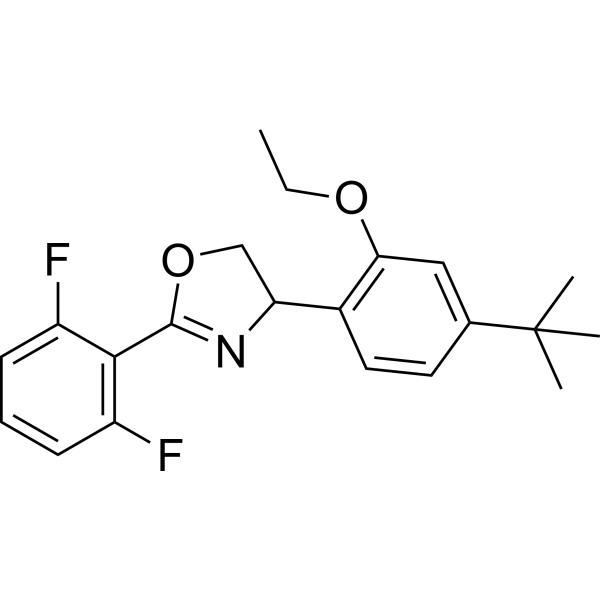
Etoxazole (YI-5301) is an orally active organofluorine Insecticide. Etoxazole acts specifically on mites. Etoxazole alters PI3K/AKT phosphorylation, increases ERK1/2, JNK and p38 MAPK phosphorylation, and inhibits renal GSK-3β, while increasing Wnt1, Wnt4, β-catenin and DKK1 mRNA. Etoxazole induces Apoptosis, cell cycle arrest, mitochondrial membrane potential disruption, endoplasmic reticulum stress, oxidative stress, and inhibits angiogenesis and mitotic progression. Etoxazole causes renal dysfunction, histopathological damage and reduced testicular weight. Etoxazole can be used in the study of nephrotoxicity.
Nur für Forschungszwecke. Wir verkaufen nicht an Patienten.
- Reinheit : 99.42%
- CAS. Nr.: 153233-91-1
- Formel: C21H23F2NO2
- Molecular Weight:359.41
-
Speicherung:Powder -20°C, 3 years ; In solvent -80°C, 6 months , -20°C, 1 month

To place orders, for customer services and technical support, please contact: MedChemExpress USA
Tel: 609-228-6898 E-mail: [email protected] [email protected]


-
 Biologische Aktivität
-
Chemical Information
-
Lösungsmittel & Löslichkeit
- Protokoll
- Reinheit & Dokumentation
- Verweise
-
 Help & FAQs


-

HY-W059342R
Etoxazole (Standard)Reference Standard -
HY-B0817
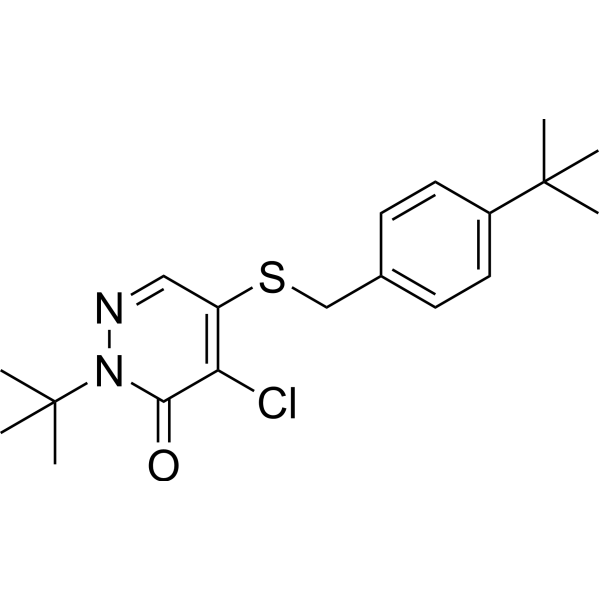
PyridabenMETI Acaricide -
HY-B1161A
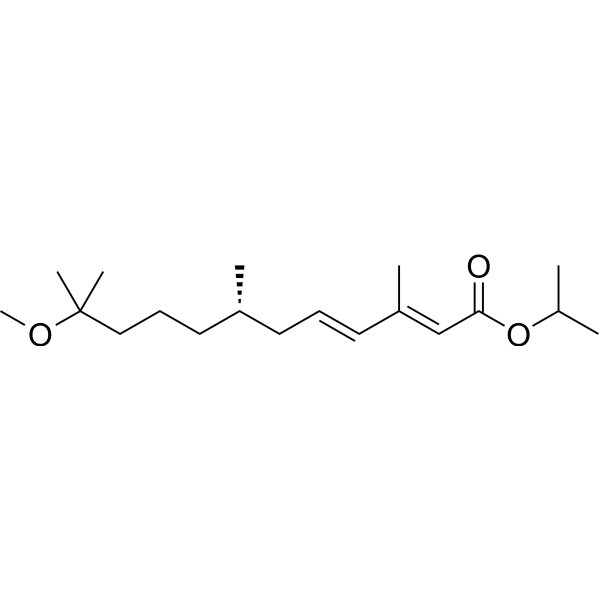
S-MethopreneInsecticide -
HY-B1953
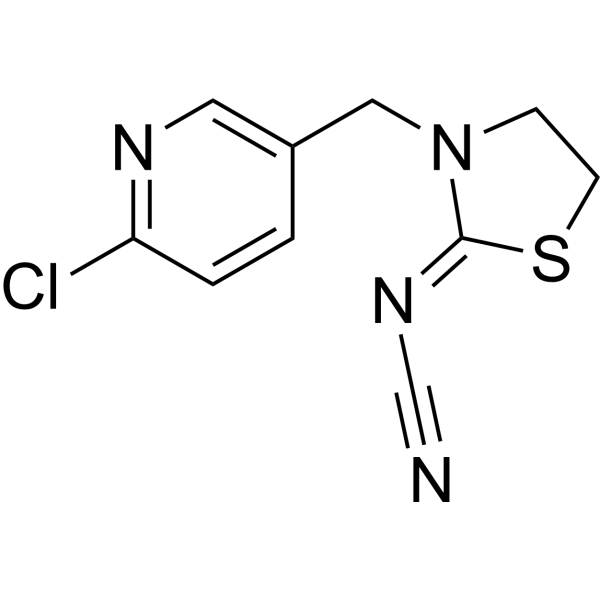
ThiaclopridInsecticide -

HY-B0817R
Pyridaben (Standard)METI Acaricide -

HY-B1953R
Thiacloprid (Standard)Chloronicotinyl Insecticide -

HY-B1161AR
S-Methoprene (Standard)Insecticide


Biologische Aktivität
Beschreibung
|
ERK1 |
ERK2 |
GSK-3β |
Wnt1 |
Wnt4 |
Cellular Effect
|
Cell Line

|
Type | Value | Description | References |
|---|---|---|---|---|
| TM3 | IC50 |
7.5 μM
|
Inhibition of proliferation in mouse TM3 Leydig cells assessed by BrdU incorporation ELISA after 24 hrs incubation.
Inhibition of proliferation in mouse TM3 Leydig cells assessed by BrdU incorporation ELISA after 24 hrs incubation.
|
33618463 |
In Vitro
Etoxazole (2-6 μM) increases BAX and cytochrome C in pTr cells at 6 μM and dose-dependently increases BAX, BAK, and cytochrome C in pLE cells[1].
Etoxazole (2-6 μM) activates ER stress markers in pTr and pLE cells, increasing GRP78 to about 300% in both cell lines[1].
Etoxazole (2.5-7.5 μM; 24 h) modestly increases late apoptosis in TM3 and TM4 cells to approximately 126% and 149%, respectively[5].
Etoxazole (2-6 μM; 24-72 h) suppresses pTr and pLE proliferation and reduces viability at 6 μM by 48-72 h[1].
Etoxazole (6 μM) reduces PCNA immunofluorescence in pTr and pLE cells[1].
Etoxazole (6 μM; 14 h) reduces pTr and pLE migration[1].
Etoxazole (0.125-0.5 mL/L) causes dose-dependent growth inhibition in Allium cepa bulbs, with 0.5 mL/L producing the strongest reductions in germination, root elongation, and weight gain[2].
Etoxazole (0.5 mL/L; 72 h) reduces rooting to 65% and root length to 3.00 cm in A. cepa roots[4].
MedChemExpress (MCE) has not independently confirmed the accuracy of these methods. They are for reference only.
-
Cell Line:pTr and pLE cells
-
Concentration:2, 3, 4, 6, 8, and 9 μM
-
Incubation Time:48 h
-
Result:Absorbance proportional to viable cell number gradually decreased with increasing concentration in both pTr and pLE cells. 6 μM was selected as the optimal concentration for subsequent experiments.
-
Cell Line:pTr and pLE cells
-
Concentration:2, 4, and 6 μM
-
Incubation Time:24, 48, and 72 h
-
Result:In pTr cells, proliferation increased until 48 h at 2 μM, whereas proliferative cell number decreased over time at 4 and 6 μM.
In pLE cells, proliferation was only slightly increased at 2 and 4 μM and was time-dependently reduced at 6 μM.
In both cell lines, cell viability significantly decreased at 6 μM after 48 and 72 h, and the decrease in viable cells was time-dependent.
-
Cell Line:pTr and pLE cells
-
Concentration:2, 4, and 6 μM
-
Incubation Time:48 h
-
Result:Early and late apoptotic cells increased dose-dependently in both cell lines.
In pTr cells, early and late apoptosis increased by 3.0-fold and 2.5-fold, respectively.
In pLE cells, early and late apoptosis increased by 2.2-fold and 5.3-fold, respectively.
-
Cell Line:pTr and pLE cells
-
Concentration:2, 4, and 6 μM
-
Incubation Time:48 h
-
Result:Sub-G1 phase population significantly increased at 6 μM in both cell lines.
The sub-G1 population increased by 3.4-fold in pTr cells and by 9.0-fold in pLE cells.
In pLE cells, G1, S, and G2/M phase populations also decreased.
-
Cell Line:mouse TM3 Leydig cells and TM4 Sertoli cells
-
Concentration:2.5, 5.0, 7.5, 10.0 μM
-
Incubation Time:24 h
-
Result:Proliferation was suppressed; at 7.5 μM, proliferation was suppressed by approximately 50% in TM3 cells and 56% in TM4 cells.
-
Cell Line:mouse TM3 Leydig cells and TM4 Sertoli cells
-
Concentration:2.5, 5, 7.5 μM
-
Incubation Time:24 h
-
Result:Relative late apoptotic cells increased to approximately 126% in TM3 cells and 149% in TM4 cells.
In Vivo
MedChemExpress (MCE) has not independently confirmed the accuracy of these methods. They are for reference only.
-
Animal Model:C57BL/6 (male, 3 weeks old at purchase)[5]
-
Dosage:50 mg/kg body weight
-
Administration:p.o. (oral gavage); once daily; 4 weeks
-
Result:Testis weight decreased by 15% compared with vehicle-treated mice.
- Western Blot
- RNA extraction experimental
- Mitochondrial membrane-potential fluorescent assay
- Human pluripotent stem cell endothelial-cell differentiation
- Nephrotoxicity Study
- Vascular/Branching Fractal Analysis
- Annexin V plus membrane-impermeant dye apoptosis staining
- BrdU Incorporation Assay
- ROS/oxidative-stress fluorescent staining
- Protocol for Cell Cycle
- Kinase activity and phosphorylation assays
- Detection of Apoptosis
- TUNEL staining for apoptotic DNA fragmentation
- Flow cytometric DNA-content cell-cycle staining
- Fluorescent plasma-membrane potential dye assay
- Mitochondrial membrane-potential and mitochondrial mass staining
- Endothelial Tube Formation Assay
- Apoptosis Solutions
- Protocol for Kinase activity and phosphorylation assays
- Endothelial Cell Migration/Angiogenic Sprouting Assay


Chemical Information
-
CAS. Nr. 153233-91-1
-
Appearance Solid
-
Molecular Weight 359.41
-
Formel C21H23F2NO2
-
Color White to off-white
-
SMILES
CCOC1=C(C=CC(=C1)C(C)(C)C)C1COC(=N1)C1=C(F)C=CC=C1F
-
Synonyms
YI-5301
-
Versand
Room temperature in continental US; may vary elsewhere.
-
Speicherung
Powder -20°C 3 years In solvent -80°C 6 months -20°C 1 month


Lösungsmittel & Löslichkeit
In Vitro:
DMSO : 16.67 mg/mL (46.38 mM; ultrasonic and warming and heat to 60°C; Hygroscopic DMSO has a significant impact on the solubility of product, please use newly opened DMSO)
Please refer to the solubility information to select the appropriate solvent. Once prepared, please aliquot and store the solution to prevent product inactivation from repeated freeze-thaw cycles.
Storage method and period of stock solution: -80°C, 6 months; -20°C, 1 month. When stored at -80°C, please use it within 6 months. When stored at -20°C, please use it within 1 month.
Konzentration (Stammlösung) × Volumen (Stammlösung) = Konzentration (Ziellösung) × Volumen (Ziellösung)
In Vivo:
Select the appropriate dissolution method based on your experimental animal and administration route.
- For the following dissolution methods, please ensure to first prepare a clear stock solution using an In Vitro approach and then sequentially add co-solvents:
- To ensure reliable experimental results, the clarified stock solution can be appropriately stored based on storage conditions. As for the working solution for In Vivo experiments, it is recommended to prepare freshly and use it on the same day.
- The percentages shown for the solvents indicate their volumetric ratio in the final prepared solution. If precipitation or phase separation occurs during preparation, heat and/or sonication can be used to aid dissolution.
Add each solvent one by one: 10% DMSO 40% PEG300 5% Tween-80 45% Saline
Solubility: ≥ 1.67 mg/mL (4.65 mM); Clear solution
This protocol yields a clear solution of ≥ 1.67 mg/mL (saturation unknown).
Taking 1 mL working solution as an example, add 100 μL DMSO stock solution (16.7 mg/mL) to 400 μL PEG300, and mix evenly; then add 50 μL Tween-80 and mix evenly; then add 450 μL Saline to adjust the volume to 1 mL.
Preparation of Saline: Dissolve 0.9 g sodium chloride in ddH₂O and dilute to 100 mL to obtain a clear Saline solution.
Add each solvent one by one: 10% DMSO 90% (20% SBE-β-CD in Saline)
Solubility: ≥ 1.67 mg/mL (4.65 mM); Clear solution
This protocol yields a clear solution of ≥ 1.67 mg/mL (saturation unknown).
Taking 1 mL working solution as an example, add 100 μL DMSO stock solution (16.7 mg/mL) to 900 μL 20% SBE-β-CD in Saline, and mix evenly.
Preparation of 20% SBE-β-CD in Saline (4°C, storage for one week): 2 g SBE-β-CD powder is dissolved in 10 mL Saline, completely dissolve until clear.
In Vivo Dissolution Calculator
Please enter the basic information of animal experiments:
-
-
-
-
Recommended: Prepare an additional quantity of animals to account for potential losses during experiments.
Please enter your animal formula composition:
-
%DMSO +
Recommended: Keep the proportion of DMSO in working solution below 2% if your animal is weak.
-
%+
-
+%Tween-80 + +
-
%Saline +
The co-solvents required include: DMSO, . All of co-solvents are available by MedChemExpress (MCE). , Tween 80. All of co-solvents are available by MedChemExpress (MCE).
Working solution concentration: 0.22 mg/mL
Method for preparing stock solution: mg drug dissolved in μL DMSO. Stock solution concentration: mg/mL.
1. Take μL DMSO stock solution;
2. Add μL .
μL , mix evenly;
3. Then add μL Tween 80, mix evenly;
4. Then add μL
Please ensure that the stock solution in the first step is dissolved to a clear state, and add co-solvents in sequence. You can use ultrasonic heating (ultrasonic cleaner, recommended frequency 20-40 kHz), vortexing, etc. to assist dissolution.


Reinheit & Dokumentation


Verweise

Complete Stock Solution Preparation Table
Please refer to the solubility information to select the appropriate solvent. Once prepared, please aliquot and store the solution to prevent product inactivation from repeated freeze-thaw cycles.
Storage method and period of stock solution: -80°C, 6 months; -20°C, 1 month. When stored at -80°C, please use it within 6 months. When stored at -20°C, please use it within 1 month.
| Optional Solvent | Concentration Solvent Mass | 1 mg | 5 mg | 10 mg | 25 mg |
|---|---|---|---|---|---|
| DMSO | 1 mM | 2.7823 mL | 13.9117 mL | 27.8234 mL | 69.5584 mL |
| 5 mM | 0.5565 mL | 2.7823 mL | 5.5647 mL | 13.9117 mL | |
| 10 mM | 0.2782 mL | 1.3912 mL | 2.7823 mL | 6.9558 mL | |
| 15 mM | 0.1855 mL | 0.9274 mL | 1.8549 mL | 4.6372 mL | |
| 20 mM | 0.1391 mL | 0.6956 mL | 1.3912 mL | 3.4779 mL | |
| 25 mM | 0.1113 mL | 0.5565 mL | 1.1129 mL | 2.7823 mL | |
| 30 mM | 0.0927 mL | 0.4637 mL | 0.9274 mL | 2.3186 mL | |
| 40 mM | 0.0696 mL | 0.3478 mL | 0.6956 mL | 1.7390 mL |


Etoxazole Related Classifications
HY-W059342 Related Classifications
 Powered by Bioz
Keywords
- Etoxazole
- 153233-91-1
- YI-5301
- YI5301
- YI 5301
- Insecticide
- PI3K
- Akt
- ERK
- JNK
- p38 MAPK
- GSK-3
- Wnt
- β-catenin
- Apoptosis
- Mitochondrial Metabolism
- Phosphoinositide 3-kinase
- PKB
- Protein kinase B
- Extracellular signal regulated kinases
- c-Jun N-terminal kinase
- Glycogen synthase kinase-3
- Glycogen synthase kinase 3
- Beta catenin
- GSK-3β
- MAPK
- PI3K/AKT
- Wnt/β-catenin
- apoptosis
- chitin synthesis
- genotoxicity
- nephrotoxicity
- oxidative stress
- sulfonylurea receptor
- Inhibitor
- inhibitor
- inhibit