16 Results for "

chikungunya virus infection

" in MedChemExpress (MCE) Product Catalog:
Products (16)

16 Results for "chikungunya virus infection" in MCE Product Catalog:

7
7 Cited Publications
Cat. No.: HY-B1030
CAS No.: 17575-22-3
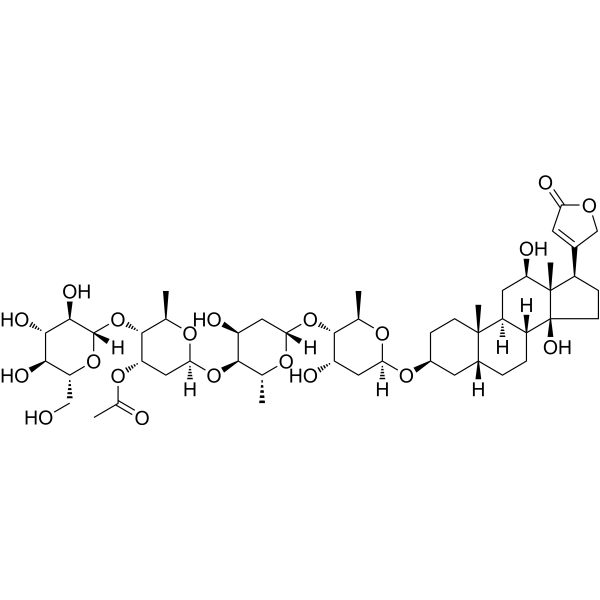
Lanatoside C is a cardiac glycoside, can be used in the treatment of congestive heart failure and cardiac arrhythmia.Lanatoside C has an IC50 of 0.19 μM for dengue virus infection in HuH-7 cells. Lanatoside C can effectively inhibit all four serotypes of dengue virus, flavivirus Kunjin, alphavirus Chikungunya, Sindbis virus and the human enterovirus 71 .
loading...
    loading...
1
1 Cited Publications
Cat. No.: HY-N2925
CAS No.: 638-97-1
Synonyms: β-Amyron
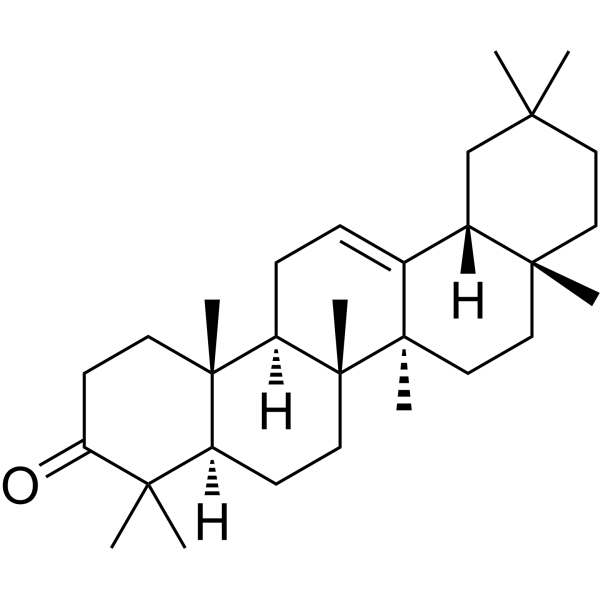
β-Amyrone (β-Amyron) is a triterpene compound which has anti-inflammatory activity through inhibiting the expression of COX-2. β-Amyrone has antifungal activity , as well as antiviral activity against Chikungunya virus. β-Amyrone also inhibits α-glucosidase and acetylcholinesterase (AChE) activity. β-Amyrone can be used in the research of disease like inflammation, infection, and obesity .
loading...
    loading...
Cat. No.: HY-116291
CAS No.: 27536-56-7
Purity:  ≥98.0%
Synonyms: 4αPDD
Target:  

TRP Channel CHIKV

Research Areas:  

Infection Inflammation/Immunology

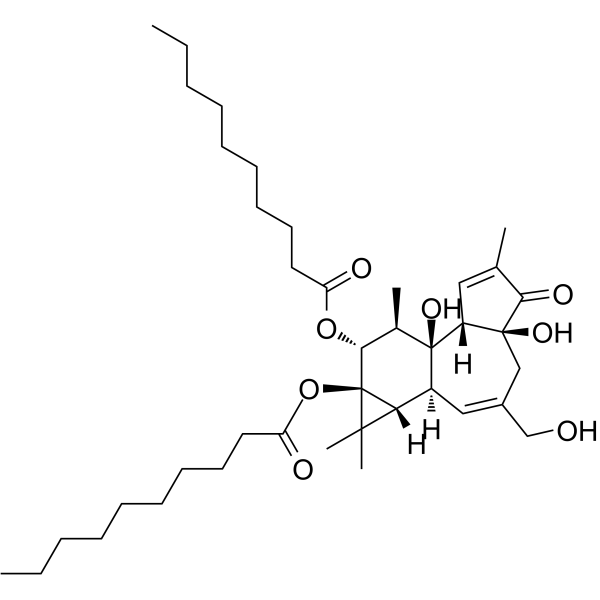
4α-Phorbol 12,13-didecanoate (4αPDD) is a transient receptor potential vanilloid 4 (TRPV4) agonist. 4α-Phorbol 12,13-didecanoate can promote Ca 2+ influx, induce ATP release and function as an osmoreceptor. 4α-Phorbol 12,13-didecanoate can inhibit water intake and increase maximal micturition pressure in rats. 4α-Phorbol 12,13-didecanoate can be used for the researches of inflammation and infection, such as chikungunya virus (CHIKV) .
loading...
    loading...
Cat. No.: HY-P990825

Target:  

Flavivirus CHIKV

Research Areas:  

Infection

Anti-Chikungunya virus E2 Antibody (CHK-265) is mouse-derived IgG2c κ type antibody inhibitor, targeting to Chikungunya virus E2. Anti-Chikungunya virus E2 Antibody (CHK-265) reacts with a conserved epitope on the B domain of the E2 glycoprotein of chikungunya virus. Anti-Chikungunya virus E2 Antibody (CHK-265) can block viral entry and egress. Anti-Chikungunya virus E2 Antibody (CHK-265) can be used for the research of infection, such as Chikungunya virus (CHIKV), Mayaro (MAYV) and O’nyong’nyong virus (ONNV) .
loading...
    loading...
Cat. No.: HY-100662
CAS No.: 4298-14-0
Purity:  98.57%
Synonyms: Bisdesethylchloroquine
Target:  

Drug Metabolite

Research Areas:  

Cardiovascular Disease Infection

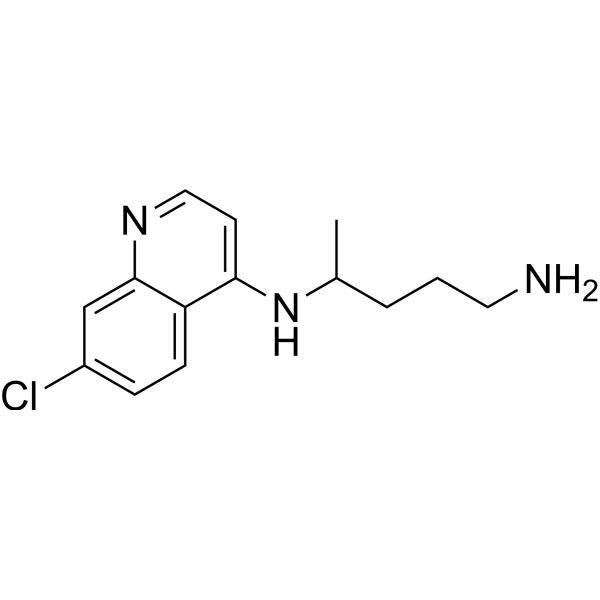
Didesethyl chloroquine (Bisdesethylchloroquine) is the major metabolite of the antimalarial agent Chloroquine (HY-17589A). Didesethyl chloroquine is a potent myocardial inhibitor. Didesethyl chloroquine reduces calcium binding and accumulation in cardiac mitochondria, induces mitochondrial swelling, rupture and membrane conformational changes. Didesethyl chloroquine inhibits the growth of Plasmodium falciparum strains. Didesethyl chloroquine can be used in research related to malaria, chikungunya virus infection, and cardiovascular and cerebrovascular diseases .
loading...
    loading...
Cat. No.: HY-B1030R
CAS No.: 17575-22-3
Lanatoside C (Standard) is the analytical standard of Lanatoside C. This product is intended for research and analytical applications. Lanatoside C is a cardiac glycoside, can be used in the treatment of congestive heart failure and cardiac arrhythmia.Lanatoside C has an IC50 of 0.19 μM for dengue virus infection in HuH-7 cells. Lanatoside C can effectively inhibit all four serotypes of dengue virus, flavivirus Kunjin, alphavirus Chikungunya, Sindbis virus and the human enterovirus 71 .
loading...
    loading...
Cat. No.: HY-179251
Target:  

CHIKV

Research Areas:  

Infection

BDGR-651 is an efficient and selective inhibitor of the Chikungunya virus (CHIKV) with an EC50 in NHDF cells of 0.86 μM, and the therapeutic index (SI) of 22.1. BDGR-651 exhibits dose-dependent protective effects when infecting Vero E6 cells, with its EC50 being 6 μM. BDGR-651 can be used for research on CHIKV infection .
loading...
    loading...
Cat. No.: HY-106991
CAS No.: 878189-87-8
Synonyms: S-303
Research Areas:  

Infection

Amustaline (S-303) is a compound used for inactivating pathogens in blood components and belongs to the category of nucleic acid-targeted chemical decontaminants. Amustaline has the ability to inactivate viruses and is effective against mosquito-borne viruses such as Chikungunya virus (CHIKV), Dengue virus (DENV), and Zika virus (ZIKV). When combined with glutathione (Glutathione, GSH), which acts as a neutralizer to counteract adverse reactions, Amustaline ensures the stability of red blood cell membranes. Amustaline is mainly used for inactivating pathogens in red blood cell concentrates (RBCC) to reduce the risk of transfusion-transmitted infections (TTI) .
loading...
    loading...
Cat. No.: HY-175234
CAS No.: 3107145-13-8
Research Areas:  

Infection

CHIKV nsP2 protease-IN-2 (Compound 2o) is a allosteric nonstructural protein 2 helicase (nsP2hel) inhibitor with IC50s of 0.5  μM and 0.9  μM for nsP2 ATPase and RNA unwindase, respectively. CHIKV nsP2 protease-IN-2 has broad-spectrum antialphaviral activity against chikungunya virus (CHIKV), Mayaro virus (MAYV), and Venezuelan equine encephalitis virus (VEEV) (EC50 of 120 nM for CHIKV-nLuc). CHIKV nsP2 protease-IN-2 can be used for alphaviruses infections research .
loading...
    loading...
Cat. No.: HY-144334
CAS No.: 2906132-49-6
Target:  

CHIKV DNA/RNA Synthesis

Research Areas:  

Infection

CHIKV-IN-3 is a potent against two low-passage CHIKV inhibitor with EC50 values of 1.55 and 0.14 μM for CHIKV-122508 and CHIKV-6708, respectively. CHIKV-IN-3 acts on the host cells to interfere with the viral replication. CHIKV-IN-3 displays minimal cytotoxic liability (CC50>100 μM). Prophylactic effect .
loading...
    loading...
Cat. No.: HY-208145
CAS No.: 1609009-17-7
Target:  

CHIKV

Research Areas:  

Infection

CHIKV-IN-6 is a selective CHIKV inhibitor with no cytotoxicity to mammalian cells. CHIKV-IN-6 inhibits CHIKV replication and exhibits little to no activity against other Togaviridae family members. CHIKV-IN-6 can be used for the research of chikungunya virus infection .
loading...
    loading...
Cat. No.: HY-186075
CAS No.: 1822320-58-0
Research Areas:  

Infection

PS1097 is a broad-spectrum antiviral inhibitor with a BVDV RdRp IC50 of 0.64 μM. PS1097 selectively reduces RTN3 protein levels, causes partial RTN3 mRNA reduction, and leaves other endoplasmic reticulum-resident proteins unaffected. PS1097 inhibits replication of Zika virus and multiple viruses that use the endoplasmic reticulum as a replication hub. PS1097 inhibits BVDV RdRp enzymatic activity and exerts activity against Bovine Viral Diarrhea Virus. PS1097 can be used for the research of zika virus infection, usutu virus infection, west nile virus infection, COVID-19, coxsackie b virus 5 infection, chikungunya virus infection, vaccinia virus infection .
loading...
    loading...
Cat. No.: HY-187426
Target:  

CHIKV

Research Areas:  

Infection

MDOLL-0591 is a selective CHIKV nsP3 macrodomain inhibitor and antiviral agent, with an IC50 of 10 μM against CHIKV nsP3. MDOLL-0591 inhibits the replication of CHIKV in cell culture systems. MDOLL-0591 is applicable to research related to Chikungunya virus infection .
loading...
    loading...
Cat. No.: HY-181969
Target:  

Virus Protease

Research Areas:  

Infection

BFB78 is a blood-brain barrier-permeable nsP2 protease inhibitor. BFB78 potently and broadly inhibits the purified nsP2 proteases of various alphaviruses, with IC50 values ranging from 21.6 nM (Mayaro virus; MAYV) to 130.7 nM (Chikungunya virus; CHIKV). BFB78 blocks viral replication in cell culture systems and reduces viral titers in the brains of mice. BFB78 can be used in studies related to Venezuelan equine encephalitis virus (VEEV) infection .
loading...
    loading...
Cat. No.: HY-184264
CAS No.: 1309199-94-7
Target:  

CHIKV

Research Areas:  

Infection

CHVB-066 is an alphavirus non-structural protein nsP1 inhibitor that exhibits varying degrees of inhibitory activity against nsP1 of CHIKV and VEEV. CHVB-066 inhibits MTase and GTase activities and disrupts the capping process of viral RNA, including inhibiting CHIKV replication, reducing progeny viruses, and preventing cytopathic effects. It shows varying degrees of inhibitory activity against nsP1 of CHIKV and VEEV but lacks anti-SFV replication activity, displays cross-resistance with MADTP series compounds, and requires nsP2/nsP3 mutations to develop complete drug resistance. This inhibitor with varying inhibitory activity against nsP1 of CHIKV and VEEV can be widely applied to relevant studies on chikungunya virus infection and chikungunya fever .
loading...
    loading...
Cat. No.: HY-123996
CAS No.: 20041-64-9
3-Ethoxy-5,6-dibromosalicylaldehyde is an IRE1/ERN1 inhibitor, with an IC50 of 0.12 μM, a Ki of 71-88 nM, and a Kd of 100 nM against the ribonuclease activity of hIRE1α, as well as an IC50 of 4.8 μM against yeast Ire1. It shows selectivity toward IRE1 ribonuclease. 3-Ethoxy-5,6-dibromosalicylaldehyde blocks the IRE1/ERN1-mediated unfolded protein response (UPR) signaling pathway, including XBP-1 mRNA splicing, induction of XBP1 target genes, and activation of MAPK8/9/10, but does not alter the phosphorylation level of IRE1α or the PERK/ATF6 pathway. 3-Ethoxy-5,6-dibromosalicylaldehyde inhibits chikungunya virus replication, induces growth arrest, apoptosis and clonogenic inhibition in pancreatic cancer cells, reduces FB1 (Fumonisin B1) (HY-N6719)-induced autophagy and cell death, regulates PGG-induced senescence and apoptosis, and alleviates Sorafenib (HY-10201)-induced vacuolization and damage in hepatic stellate cells. 3-Ethoxy-5,6-dibromosalicylaldehyde can be used in research related to chikungunya virus infection, pancreatic cancer, FB1-induced nephrotoxicity, liver cancer, breast cancer, lung cancer and liver fibrosis .
loading...
    loading...
  • 1

