
1. Search Result
Search Result
Pathways Recommended: Anti-infection
Results for "

Gram-positive infections

" in MedChemExpress (MCE) Product Catalog:

333

Inhibitors & Agonists

4

Biochemical Assay Reagents

25

Peptides

61

Natural
Products

20

Isotope-Labeled Compounds

1

Click Chemistry

Cat. No. Product Name Target Research Areas Chemical Structure
  • HY-B0474
    Tetracycline hydrochloride
    Maximum Cited Publications
    51 Publications Verification

    Environmental Pollutants Antibiotic Bacterial Infection Cancer
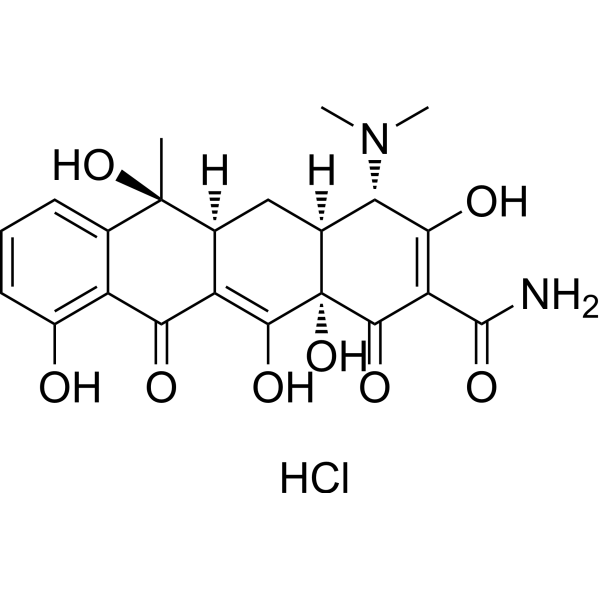
    Tetracycline hydrochloride is a broad-spectrum antibiotic with oral activity. Tetracycline hydrochloride exhibits activity against a wide range of bacteria including gram-positive, gram-negative bacteria, chlamydiae, mycoplasmas and rickettsiae. Tetracycline hydrochloride can be used for the research of infections .
    Tetracycline hydrochloride
  • HY-A0107
    Tetracycline
    Maximum Cited Publications
    51 Publications Verification

    Antibiotic Bacterial Infection Cancer
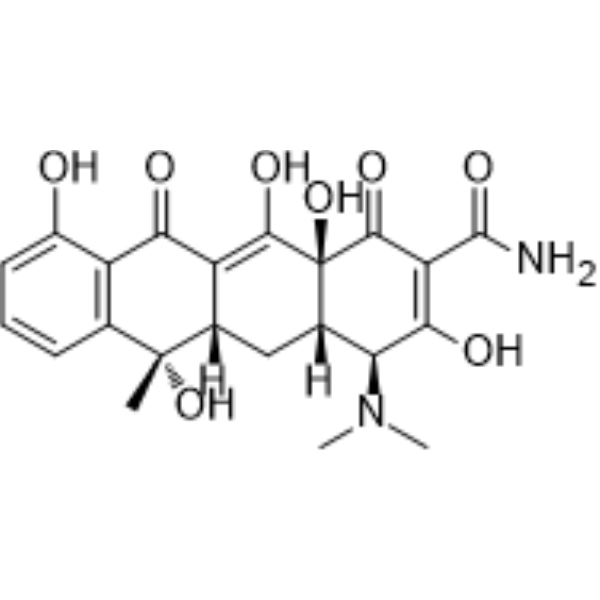
    Tetracycline is a broad-spectrum antibiotic with oral activity. Tetracycline exhibits activity against a wide range of bacteria including gram-positive, gram-negative bacteria, chlamydiae, mycoplasmas and rickettsiae. Tetracycline can be used for the research of infections .
    Tetracycline
  • HY-A0256
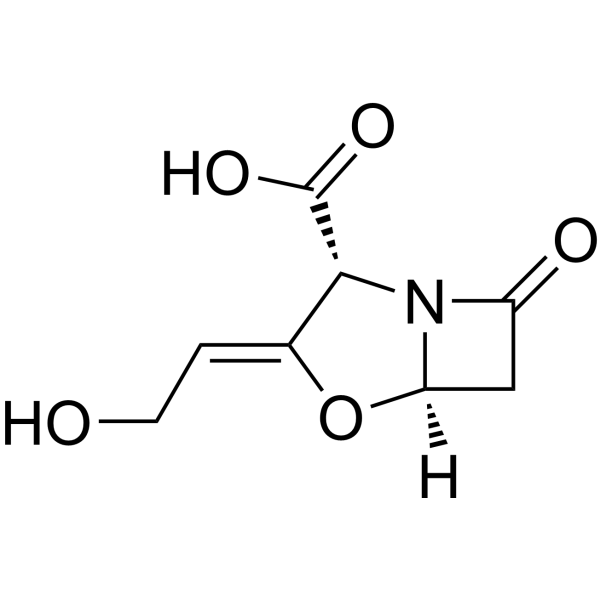
    Clavulanic acid
    5+ Cited Publications

    Beta-lactamase Antibiotic Bacterial Infection Inflammation/Immunology
    Clavulanic acid is a naturally occurring powerful bacterial β-lactamases inhibitor for research of infections caused by bacteria, including infections of the ears. Clavulanic acid is active against a wide spectrum of gram-positive and gram-negative bacterias .
    Clavulanic acid
  • HY-B2237
    Lysozyme from chicken egg white
    5+ Cited Publications

    Bacterial HIV Infection
    Lysozyme from chicken egg white is a bactericidal enzyme, and it lyses gram-positive bacteria. Lysozyme from chicken egg white can also be used for the research of HIV infection and pulmonary emphysema .
    Lysozyme from chicken egg white
  • HY-B0136
    Cefdinir
    4 Publications Verification

    FK-482; CI-983

    Bacterial Antibiotic Infection
    Cefdinir (FK-482) is a semi-synthetic, broad-spectrum antibiotic in the third generation of the cephalosporin class, which is proved to be effective for infections caused by several Gram-negative and Gram-positive bacteria. Cefdinir can be used for the research of common bacterial infections of the ear, sinus, throat, and skin .
    Cefdinir
  • HY-B1916
    Acetylspiramycin
    2 Publications Verification

    Spiramycin B; Spiramycin II; Foromacidin B

    Antibiotic Bacterial Parasite Infection
    Acetylspiramycin (Spiramycin B) is an effective oral macrolide antibiotic produced by Streptomyces, It can inhibit the splenic lymphocyte transformation induced by phytohemagglutinin (PHA), LPS (HY-D1056) and antigen, reduce the procoagulant activity of macrophages, have good antibacterial effect on gram-positive bacteria, and is also an effective antigenic insect agent, which can be used to fight parasitic infection .
    Acetylspiramycin
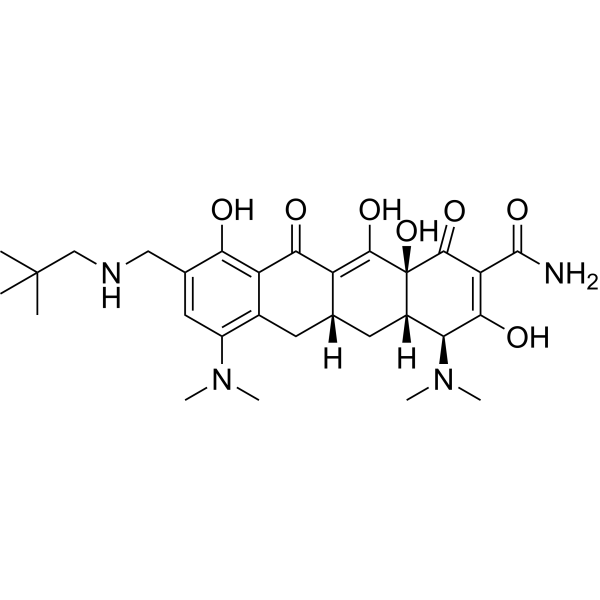
  • HY-14865
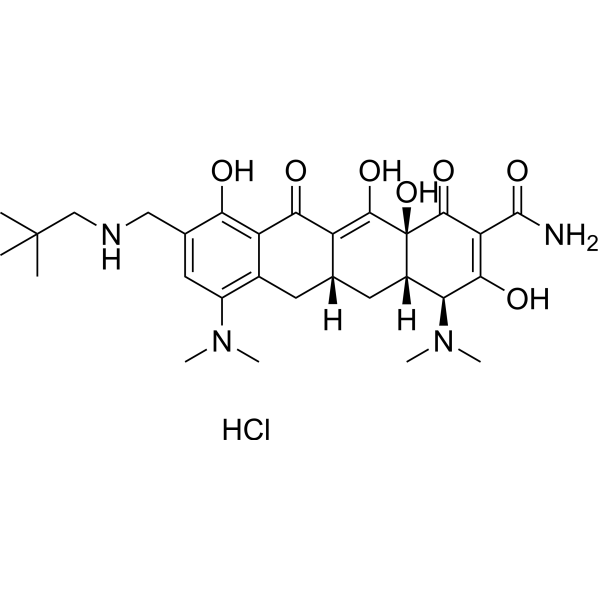
    Omadacycline
    30+ Cited Publications

    PTK 0796; Amadacycline

    Bacterial Antibiotic Infection
    Omadacycline (PTK 0796), a first-in-class orally active aminomethylcycline antibacterial, is a member of the tetracycline class of antibiotics. Omadacycline acts through the inhibition of bacterial protein synthesis by binding to the 30S ribosomal subunit. Omadacycline possesses broad-spectrum antibacterial activity against aerobic and anaerobic Gram-positive and Gram-negative bacteria, as well as atypical bacteria. Omadacycline can be used for the research of acute bacterial skin and skin-structure infections, community-acquired pneumonia, and urinary tract infections .
    Omadacycline
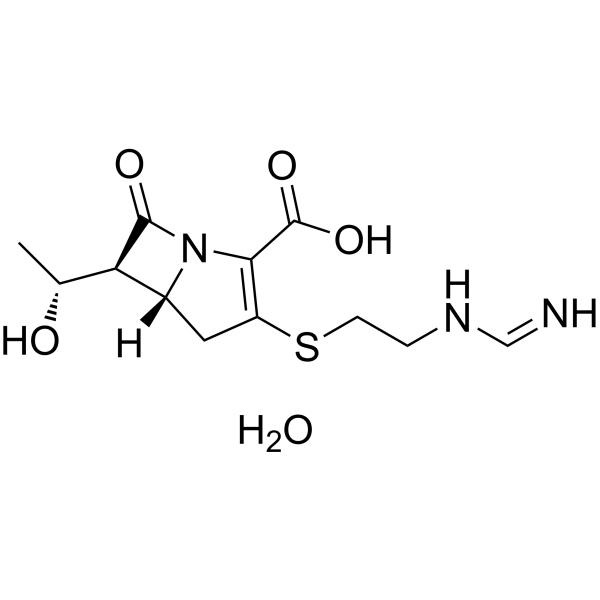
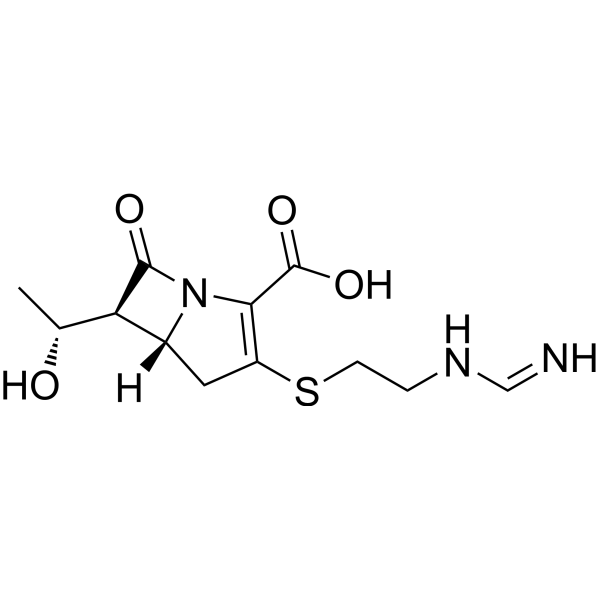
  • HY-105284
    Sulopenem
    2 Publications Verification

    CP-70429

    Beta-lactamase Bacterial Antibiotic Infection
    Sulopenem (CP-70429) is an orally active, parenteral penem antibiotic with broad-spectrum activities against Gram-positive and Gram-negative bacteria. Sulopenem has the potential for urinary tract infections and intra-abdominal infections treatment. Sulopenem is inactive against Pseudomonas aeruginosa and Xanthomonas maltophilia .
    Sulopenem
  • HY-A0253

    Cephacetrile; Cephacetril

    Bacterial Antibiotic Infection
    Cefacetrile (Cephacetrile) is a broad-spectrum antibiotic that is effective in gram-positive and gram-negative bacterial infection .
    Cefacetrile
  • HY-142127
    Ribostamycin
    1 Publications Verification

    Vistamycin; SF-733

    Bacterial Antibiotic PDI Infection
    Ribostamycin (Vistamycin) is a broad-spectrum aminoglycoside antibiotic. Ribostamycin is effective against Gram-Negative and Gram-Positive bacterial infection. Ribostamycin also inhibits the chaperone activity of PDI .
    Ribostamycin
  • HY-B2237A
    Lysozyme chloride
    5+ Cited Publications

    Bacterial HIV Infection
    Lysozyme chloride is a bactericidal enzyme, and it lyses gram-positive bacteria. Lysozyme chloride can also be used for the research of HIV infection and pulmonary emphysema .
    Lysozyme chloride
  • HY-B1150
    Clofoctol
    1 Publications Verification

    Bacterial SARS-CoV Antibiotic Infection Cancer
    Clofoctol is a bacteriostatic antibiotic. Clofoctol is used in the treatment of respiratory tract and ear, nose and throat infections caused by Gram-positive bacteria. Clofoctol is only functional against Gram-positive bacteria and can penetrate into human lung tissue. Clofoctol is also an inhibitor of prostate cancer. Clofoctol has antiviral potency .
    Clofoctol
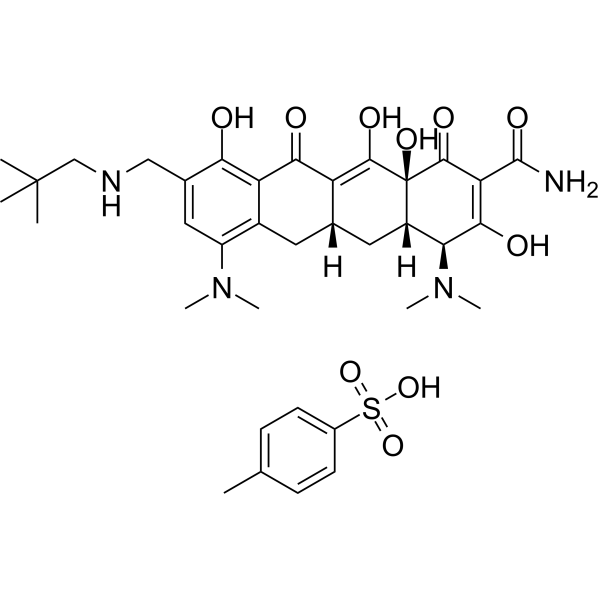
  • HY-14865B
    Omadacycline tosylate
    30+ Cited Publications

    PTK 0796 tosylate; Amadacycline tosylate

    Bacterial Antibiotic Infection
    Omadacycline (PTK 0796) tosylate, a first-in-class orally active aminomethylcycline antibacterial, is a member of the tetracycline class of antibiotics. Omadacycline tosylate acts through the inhibition of bacterial protein synthesis by binding to the 30S ribosomal subunit. Omadacycline tosylate possesses broad-spectrum antibacterial activity against aerobic and anaerobic Gram-positive and Gram-negative bacteria, as well as atypical bacteria. Omadacycline tosylate can be used for the research of acute bacterial skin and skin-structure infections, community-acquired pneumonia, and urinary tract infections .
    Omadacycline tosylate
  • HY-N7139

    Benzylpenicillin

    Antibiotic Bacterial Infection
    Penicillin G is a potent penicillinantibiotic. Penicillin G can be used for bacterial infection. Penicillin G has potent activity against all Gram-positive bacteria and Gram-negative cocci .
    Penicillin G
  • HY-B0395C
    Sitafloxacin hydrate
    5+ Cited Publications

    DU6859a hydrate

    Bacterial Antibiotic Infection
    Sitafloxacin (DU6859a) hydrate is an orally active fluoroquinolone antibiotic (antibiotic) with in vitro activity against a wide range of Gram-positive and -negative bacteria, including anaerobic bacteria, as well as atypical pathogens. Sitafloxacin is used in the study of respiratory tract infections and urinary tract infections .
    Sitafloxacin hydrate
  • HY-B0977
    Dicloxacillin Sodium hydrate
    3 Publications Verification

    Dicloxacillin sodium salt monohydrate

    Bacterial Antibiotic Infection Inflammation/Immunology
    Dicloxacillin Sodium hydrate (Dicloxacillin sodium salt monohydrate) is a narrow-spectrum β-Lactam antibiotic of the penicillin class, is used to treat infections caused by susceptible Gram-positive bacteria, active against beta-lactamase-producing organisms such as Staphylococcus aureus .
    Dicloxacillin Sodium hydrate
  • HY-B0126

    Bacterial Antibiotic Infection
    Marbofloxacin is a third generation fluoroquinolone and orally active antimicrobial agent, which has a broad spectrum bactericidal activity and good efficacy. Marbofloxacin can be used for the research of infections by Gram-positive and Gram-negative bacteria and Mycoplasma .
    Marbofloxacin
  • HY-B1210
    Pipemidic acid
    1 Publications Verification

    Bacterial Antibiotic Infection
    Pipemidic acid , a derivative of Piromidic acid, is an antibacterial agent. Pipemidic acid inhibits DNA gyrase. Pipemidic acid is active against gram-negative bacteria including Pseudomonas aeruginosa as well as some gram-positive bacteria. Pipemidic acid can be used for the research of intestinal, urinary, and biliary tract infections .
    Pipemidic acid
  • HY-112959

    TD-6424

    Antibiotic Bacterial Infection
    Telavancin (TD-6424) is a semisynthetic lipoglycopeptide vancomycin-derivative, is a novel antimicrobial agent developed by Theravance for overcoming resistant Gram-positive bacterial infections, specifically methicillin-resistant Staphylococcus aureus (MRSA). Telavancin disrupts cell membrane integrity, can be used for research of complicated skin and skin structure infections (cSSSIs) caused by Gram-positive bacteria .
    Telavancin
  • HY-14865C
    Omadacycline hydrochloride
    30+ Cited Publications

    PTK0796 hydrochloride; Amadacycline hydrochloride

    Bacterial Antibiotic Infection
    Omadacycline (PTK 0796) hydrochloride, a first-in-class orally active aminomethylcycline antibacterial, is a member of the tetracycline class of antibiotics. Omadacycline hydrochloride acts through the inhibition of bacterial protein synthesis by binding to the 30S ribosomal subunit. Omadacycline hydrochloride possesses broad-spectrum antibacterial activity against aerobic and anaerobic Gram-positive and Gram-negative bacteria, as well as atypical bacteria. Omadacycline hydrochloride can be used for the research of acute bacterial skin and skin-structure infections, community-acquired pneumonia, and urinary tract infections .
    Omadacycline hydrochloride
  • HY-B1282
    Sulfaquinoxaline
    2 Publications Verification

    Environmental Pollutants Antibiotic Parasite Bacterial Infection
    Sulfaquinoxaline is an antimicrobial for veterinary use, with activity against a broad spectrum of Gram-negative and Gram-positive bacteria. Sulfaquinoxaline is used to prevent coccidiosis and bacterial infections .
    Sulfaquinoxaline
  • HY-B1924
    Norvancomycin monohydrochloride
    1 Publications Verification

    N-Demethylvancomycin monohydrochloride; NVCM monohydrochloride

    Bacterial Infection
    Norvancomycin hydrochloride is a cell wall synthesis inhibitor targeting peptidoglycan precursors of Gram-positive bacteria and cannot pass the blood-brain barrier. Norvancomycin hydrochloride can competitively bind to peptidoglycan precursors, irreversibly inhibit bacterial cell wall synthesis, and exert antibacterial activity. Norvancomycin hydrochloride is mainly used in the study of Gram-positive bacterial infections, especially infections caused by methicillin-resistant Staphylococcus aureus (MRSA) and methicillin-resistant Staphylococcus epidermidis (MRSE). Norvancomycin hydrochloride can also be incorporated into the bionic calcium phosphate coating of titanium implants to enhance antibacterial activity and inhibit postoperative orthopedic infections .
    Norvancomycin monohydrochloride
  • HY-B0213
    Sulfameter
    2 Publications Verification

    Sulfametoxydiazine; 5-Methoxysulfadiazine; NSC 683528

    Antibiotic Bacterial Infection
    Sulfameter (Sulfametoxydiazine) is an orally active long-acting sulfonamide antibiotic. Sulfameter is active against both Gram-positive and Gram-negative bacteria. Sulfameter can be used for the research of diseases such as respiratory and urinary tract infections .
    Sulfameter
  • HY-B1466

    BAY-f 1353 sodium

    Bacterial Antibiotic Infection
    Mezlocillin (BAY-f 1353) sodium is a β-lactam antibiotic, a semisynthetic and extended-spectrum antibiotic. Mezlocillin sodium is active against both gram-negative and gram-positive bacteria. Mezlocillin sodium can be used in bacterial infection research .
    Mezlocillin sodium
  • HY-B0159

    Q-35

    Bacterial Antibiotic Infection
    Balofloxacin (Q-35) is an orally active fluoroquinolone antibiotic with broad-spectrum antibacterial activity against gram-negative, gram-positive, and anaerobic bacteria. Balofloxacin can be used for the research of respiratory, intestinal, and urinary tract infections .
    Balofloxacin
  • HY-110354
    UCM05
    2 Publications Verification

    G28UCM

    Fatty Acid Synthase (FASN) Bacterial Infection
    UCM05 (G28UCM) is a fatty acid synthase (FASN) and filamentous temperature-sensitive protein Z (Ftsz) inhibitor. UCM05 inhibits fatty acid synthesis, viral replication, and Gram-positive bacterial growth. UCM05 binds to FtsZ GTP-binding sites, inhibits GTPase activity, and disrupts Z-ring localization. UCM05 can be used for the research of HSV-1/2 infection, HIV-1 infection, and Gram-positive bacterial infections[1][2][3].
    UCM05
  • HY-N13668

    Antibiotic Bacterial Infection
    Rhodomyrtone is an antibiotic that can be found in the leaves of Rhodomyrtus tomentosa. Rhodomyrtone kills Gram-positive bacterial cells without causing bacteriolysis. Rhodomyrtone exhibits activity against a variety of Gram-positive bacteria, including Bacillus cereus, Bacillus subtilis, Enterococcus faecalis, Staphylococcus epidermidis, Streptococcus gordonii, Streptococcus pneumoniae, Streptococcus pyogenes and Streptococcus salivarius. Rhodomyrtone is applicable to studies related to bacterial infections .
    Rhodomyrtone
  • HY-103249

    Reutericycline

    Bacterial Infection Metabolic Disease
    Reutericyclin (Reutericycline) is an orally active antibacterial and anti-obesity agent that selectively inhibits Gram-positive bacteria. By selectively dissipating transmembrane potential, Reutericyclin exerts non-lytic bactericidal or bacteriostatic activity against pathogens such as Clostridium difficile and Staphylococcus aureus, and rapidly kills vegetative cells and spores of Clostridium difficile. Reutericyclin possesses favorable properties including resistance to enzymatic hydrolysis, iron-chelating function, and poor absorption by colonic epithelium. Reutericyclin not only eradicates staphylococcal biofilms and inhibits drug-resistant strains, but also counteracts Risperidone (HY-11018)-induced weight gain by inducing changes in gut microbiota composition and restoring energy utilization efficiency. Reutericyclin can be used in research related to Clostridium difficile infection, Risperidone-induced weight gain, and staphylococcal superficial skin infections .
    Reutericyclin
  • HY-B1144A

    Clomidazole hydrochloride

    Fungal Infection
    Chlormidazole hydrochloride is an antifungal agent and has inhibitory activity against many fungi and some gram-positive cocci. Chlormidazole hydrochloride can be applied in fungal and bacterial infections of nails and skin, including interdigital and periungual mycoses .
    Chlormidazole hydrochloride
  • HY-123779

    Bacterial Fungal Infection
    RWJ-49815 is a histidine kinase inhibitor. RWJ-49815 inhibits the autokinase activity of purified GST-Sln1 and the autophosphorylation of KinA in vitro. RWJ-49815 acts as a fungal growth inhibitor . RWJ-49815 serves as a bactericide against Gram-positive pathogenic bacteria. RWJ-49815 is applicable to research related to fungal infections and Gram-positive bacterial infections .
    RWJ-49815
  • HY-B1282A
    Sulfaquinoxaline sodium salt
    2 Publications Verification

    Bacterial Parasite Antibiotic Infection
    Sulfaquinoxaline sodium salt is an antimicrobial for veterinary use, with activity against a broad spectrum of Gram-negative and Gram-positive bacteria. Sulfaquinoxaline is used to prevent coccidiosis and bacterial infections .
    Sulfaquinoxaline sodium salt
  • HY-B1466A

    BAY-f 1353

    Antibiotic Bacterial Infection
    Mezlocillin (BAY-f 1353) is a β-lactam antibiotic, a semisynthetic and extended-spectrum antibiotic. Mezlocillin is active against both gram-negative and gram-positive bacteria. Mezlocillin can be used in bacterial infection research .
    Mezlocillin
  • HY-N14107

    Bacterial Endogenous Metabolite Infection
    Cinnabarin is a natural phenoxazinone red pigment derived from Pycnoporus sanguineus. Cinnabarin reduces rabies virus infection levels in neuroblastoma cells and causes cytopathic effects on neuroblastoma cell monolayers at high concentrations. Cinnabarin exhibits antibacterial activity against bacteria, with a preference for Gram-positive bacteria and human isolates. Cinnabarin can be used in studies related to rabies and drug-resistant Gram-positive bacteria .
    Cinnabarin
  • HY-B1150R

    Reference Standards Bacterial SARS-CoV Antibiotic Infection Cancer
    Clofoctol (Standard) is the analytical standard of Clofoctol. This product is intended for research and analytical applications. Clofoctol is a bacteriostatic antibiotic. Clofoctol is used in the treatment of respiratory tract and ear, nose and throat infections caused by Gram-positive bacteria. Clofoctol is only functional against Gram-positive bacteria and can penetrate into human lung tissue. Clofoctol is also an inhibitor of prostate cancer. Clofoctol has antiviral potency .
    Clofoctol (Standard)
  • HY-175595

    ADEP26

    ClpP Bacterial Infection
    ADEP-14 (ADEP26) is a ClpP activator. ADEP-14 exhibits antibacterial activity against Gram-negative and Gram-positive bacteria. ADEP-14 can be used in studies related to bacterial infections .
    ADEP-14
  • HY-N15551

    Bacterial Infection
    Armeniaspirol C is a potent antibacterial agent targeting Gram-positive bacteria. Armeniaspirol C is is promising for research of infections caused by multidrug-resistant Gram-positive bacteria .
    Armeniaspirol C
  • HY-B0159A

    Q-35 dihydrate

    Bacterial Antibiotic Infection
    Balofloxacin dihydrate (Q-35 dihydrate) is an orally active fluoroquinolone antibiotic with broad-spectrum antibacterial activity against gram-negative, gram-positive, and anaerobic bacteria. Balofloxacin dihydrate can be used for the research of respiratory, intestinal, and urinary tract infections .
    Balofloxacin dihydrate
  • HY-101726

    Bacterial Infection
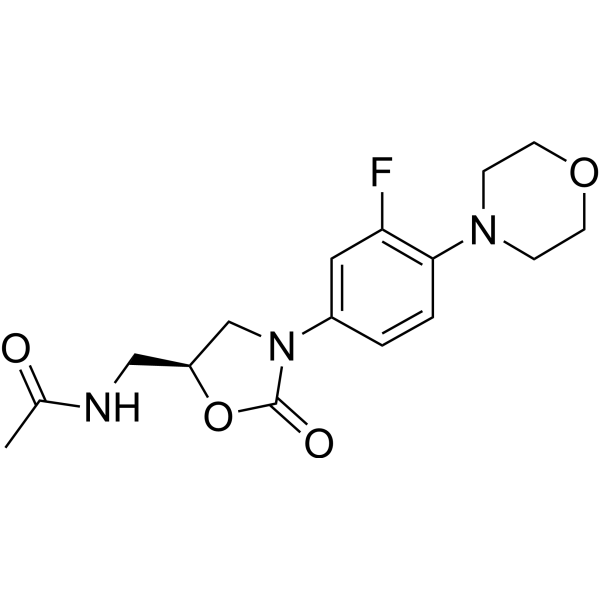
    DuP 105 is an orally active oxazolidinone with activity against Gram-positive bacteria. DuP 105 protects staphylococcal and streptococcal infections in mice. DuP 105 can be used for the study of infections caused by gram-positive bacteria .
    DuP 105
  • HY-12888

    Topoisomerase Bacterial Infection
    AZD5099, an antibacterial agent, is a potent and selective bacterial topoisomerase II inhibitor. AZD5099 potently inhibits the infections caused by Gram-positive and fastidious Gram-negative bacteria .
    AZD5099
  • HY-139798

    Bacterial Infection
    Iboxamycin is a potent antibiotic candidate bearing a fused bicyclic amino acid residue. Iboxamycin is orally bioavailable, safe and effective in researching both Gram-positive and Gram-negative bacterial infections in mice .
    Iboxamycin
  • HY-113640

    Bacterial Infection
    BC-7013 is a novel semi-synthetic pleuromutilin derivative. BC-7013 has excellent activity against Gram-positive pathogenic bacteria. BC-7013 exhibits potent antibacterial properties against both Staphylococcus, Streptococcus and penicillin-resistant Streptococcus pneumoniae. BC-7013 has activity against Gram-positive pathogenic bacteria, BC-7013 is useful in the research of acute bacterial skin and skin structure infection (ABSSSI) .
    BC-7013
  • HY-125654

    Bacterial Infection Inflammation/Immunology
    Olanexidine is an antibacterial agent. Olanexidine is active against a wide range of bacteria, imcluding both Gram-positive and Gram-negative bacteria Olanexidine is also an antiseptic. Olanexidine can be used in the research of infection and inflammation .
    Olanexidine
  • HY-139805

    Antibiotic Bacterial Infection
    Ticarcillin is a semisynthetic, extended-spectrum, carboxypenicillin antibacterial agent, and is active against gram-positive cocci, including streptococci and staphylococci. Ticarcillin is also effective against most gram-negative organisms, including Pseudomonas aeruginosa. Ticarcillin can be used in lower respiratory tract infections, skin and skin structure infections, urinary tract infections, and intraabdominal infections research .
    Ticarcillin
  • HY-N16397

    Bacterial Infection
    Anhydrofulvic acid is a polyketide with antibacterial activity (notably against MRSA, MIC=8 mg/mL). Anhydrofulvic acid is promising for research of Gram-positive infections (e.g., skin, bloodstream) .
    Anhydrofulvic acid
  • HY-106882

    MDL 62879

    Bacterial Antibiotic Infection
    GE 2270A (MDL 62879) is an antibiotic. GE 2270A inhibits gram-positive bacteria and anaerobes by inhibiting protein synthesis. GE 2270A can be used for the research of infection .
    GE 2270A
  • HY-106526

    Bactacine; Nanbacine

    Bacterial Infection Inflammation/Immunology
    Xibornol (Bactacine) has strong antibacterial action against Streptococcus pneumoniae, Streptococcus pyogenes, and Staphyloccus aureus, as well as against Actinomyces israelii and Corynebacterium ulcerans. Xibornol has the potential for using for the antisepsis of the oral cavity and as adjuvant in pharyngeal infections caused by Gram-positive microorganisms .
    Xibornol
  • HY-W923644

    Aegelinol; (-)-Smyrinol

    Bacterial Infection
    (-)-Decursinol (Aegelinol; (-)-Smyrinol) is a natural pyranocoumarin compound tant can be isolated from the roots of Apiaceae plants such as Ferulago campestris. (-)-Decursinol inhibits both Gram-positive bacteria (Staphylococcus aureus ATCC 13709, Enterococcus faecalis ATCC 14428) and Gram-negative bacteria (Salmonella typhii ATCC 19430, Enterobacter cloacae ATCC 10699, Enterobacter aerogenes ATCC 13048) with minimum inhibitory concentrations (MIC) ranging from 16 to 64 μg/mL. (-)-Decursinol possesses antioxidant activity. (-)-Decursinol can be used for the study of bacterial infections .
    (-)-Decursinol
  • HY-106095

    Antibiotic Bacterial Penicillin-binding protein (PBP) Infection
    DQ 2556 is a semi-synthetic cephalosporin antibiotic. DQ-2556 exhibits significant activity against both Gram-positive and Gram-negative bacteria, particularly Gram-positive bacteria and Enterobacteriaceae infections. DQ 2556 exerts its bactericidal effect by interfering with cell division. DQ-2556 has a strong affinity for the penicillin-binding proteins (PBPs) of Escherichia coli: PBP1A/1B (IC₅₀ = 0.57-0.73 μg/mL) and PBP3 (IC₅₀ = 0.088 μg/mL). DQ-2556 demonstrates significant in vivo protective effects. DQ-2556 can be used in the development of injectable cephalosporins .
    DQ 2556
  • HY-B1149

    Drug Derivative Bacterial Antibiotic Infection
    Bacampicillin is an orally active semi-synthetic aminopenicillin derivative, prodrug and bactericide that is readily inactivated by β-lactamases. Bacampicillin is hydrolyzed by carboxylester hydrolases and non-specific esterases in the gastrointestinal wall and plasma to form Ampicillin (HY-B0522), and produces higher levels of Ampicillin in rodents in vivo. Bacampicillin exhibits bactericidal activity against Gram-positive and Gram-negative bacteria. Bacampicillin can be used in studies related to bacterial infections .
    Bacampicillin
  • HY-B0226A

    (E)-Nitrofural

    Bacterial Parasite Infection
    (E)-Nitrofurazone ((E)-Nitrofural) is a topical broad-spectrum antibacterial agent effective against both Gram-negative and Gram-positive bacteria. (E)-Nitrofurazone also possesses antiprotozoal and antiparasitic activities. (E)-Nitrofurazone is commonly used in the research of superficial wounds, burns, skin infections, pyoderma, infectious skin diseases, trypanosomiasis, and acute bacillary dysentery .
    (E)-Nitrofurazone

Inquiry Online

Your information is safe with us. * Required Fields.

Salutation


Country or Region *

Applicant Name *


Organization Name *

Department *


Email Address *


Product Name *

Cat. No.


Requested quantity *

Phone Number *


Remarks

Inquiry Online

Inquiry Information

Product Name:
Cat. No.:
Quantity:
MCE Japan Authorized Agent:

