



Pentadecanoic acid
Based on 1 publication(s) in Google Scholar
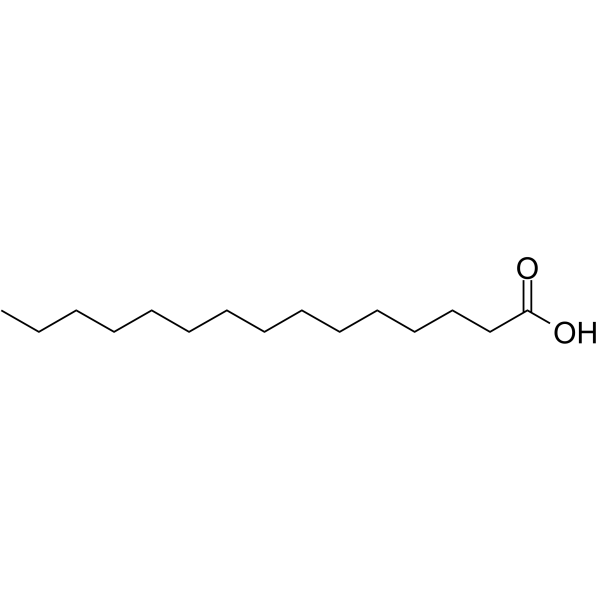
Pentadecylic acid is a saturated fatty acid with a 15-carbon backbone.
For research use only. We do not sell to patients.
- Purity : 99.92%
- CAS No.: 1002-84-2
- Formula: C15H30O2
- Molecular Weight:242.40
-
Storage:Powder -20°C, 3 years , 4°C, 2 years ; In solvent -80°C, 2 years , -20°C, 1 year

To place orders, for customer services and technical support, please contact: MedChemExpress USA
Tel: 609-228-6898 E-mail: [email protected] [email protected]


-
 Biological Activity
-
Chemical Information
-
Solvent & Solubility
- Purity & Documentation
- References
-
 Help & FAQs


-
HY-W004284
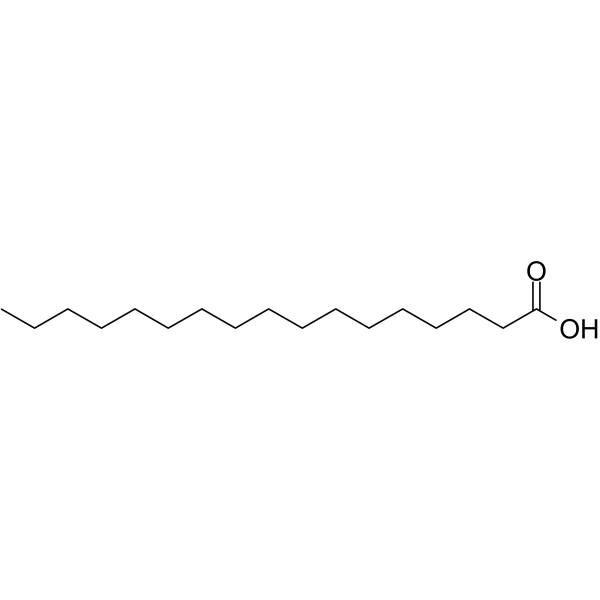
Heptadecanoic acidEndogenous Metabolite -
HY-N0830
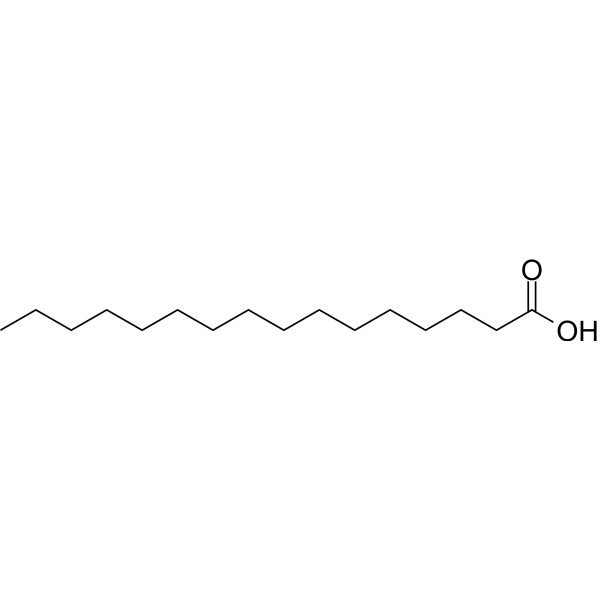
Palmitic acidEndogenous Metabolite -
HY-N2041
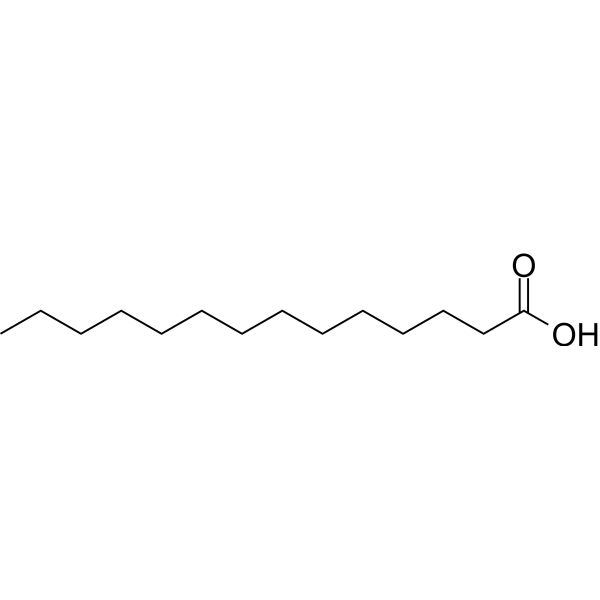
Myristic acidEndogenous Metabolite -
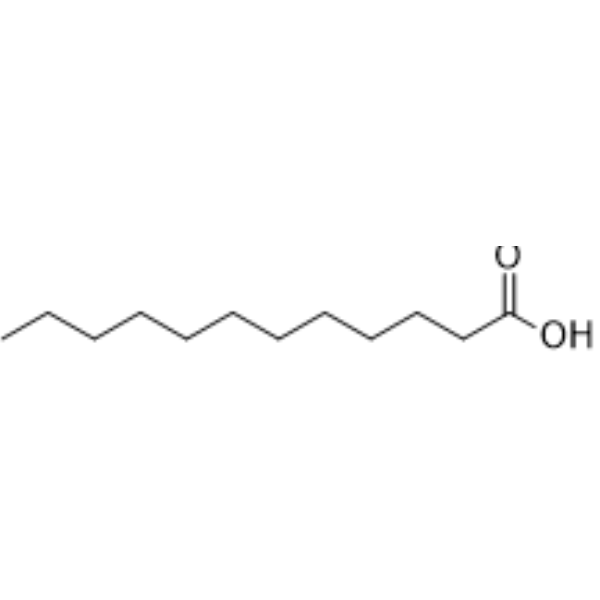
HY-Y0366
Lauric acidMiddle Chain-free Fatty Acid -
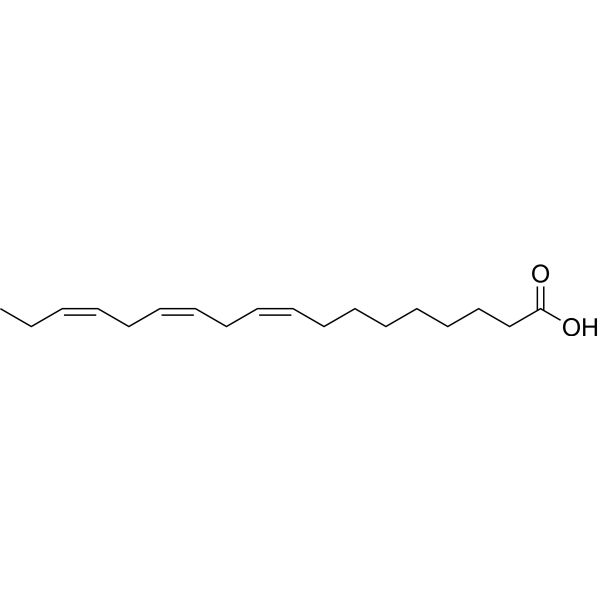
HY-N0728
α-Linolenic acidEssential Fatty Acid -
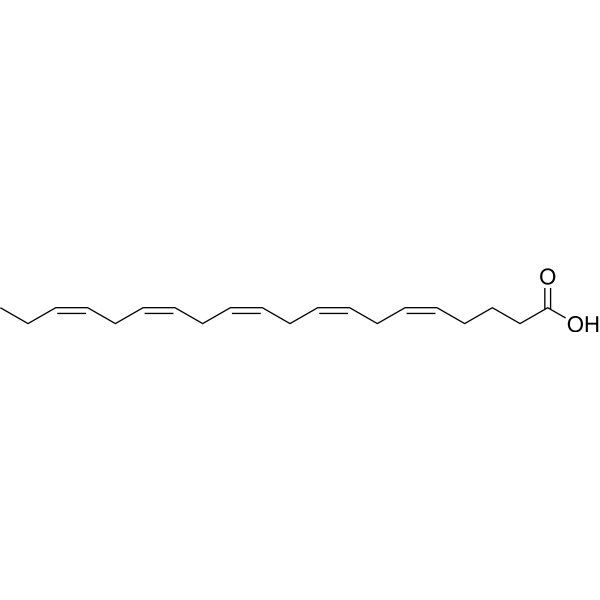
HY-B0660
Eicosapentaenoic AcidLC-PUFA -
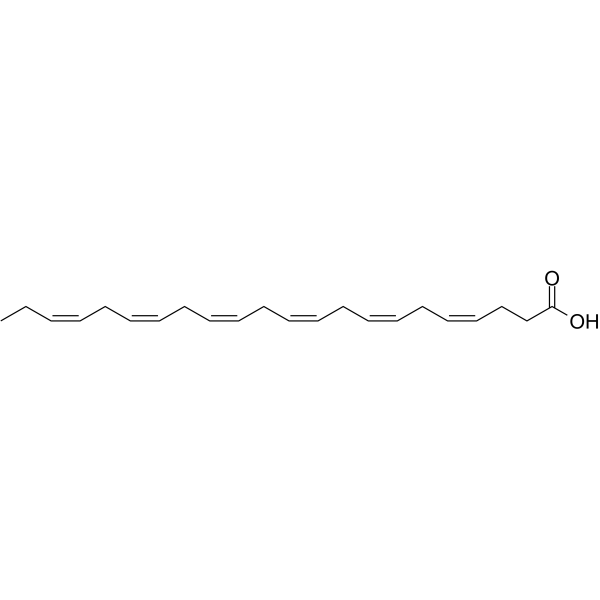
HY-B2167
Docosahexaenoic acidomega-3 Fatty Acid -
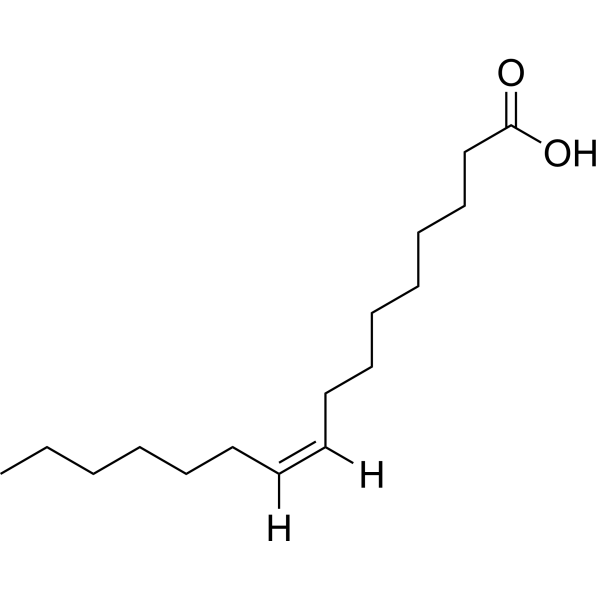
HY-W011873
Palmitoleic acid -
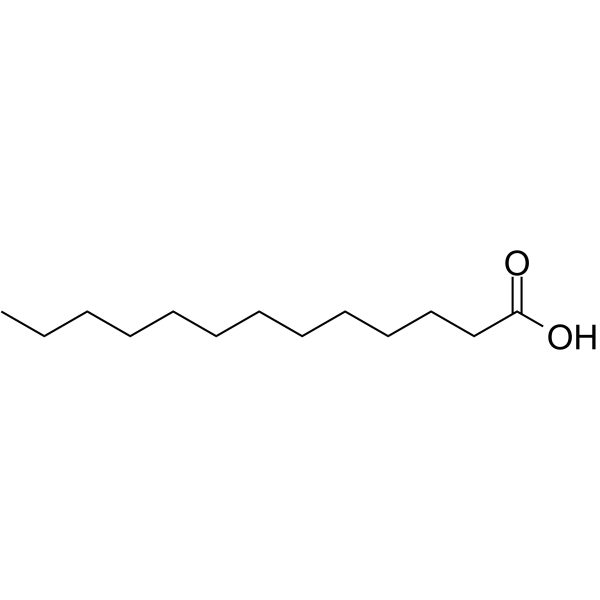
HY-Y1718
Tridecanoic acidBacterail Inhibitor -
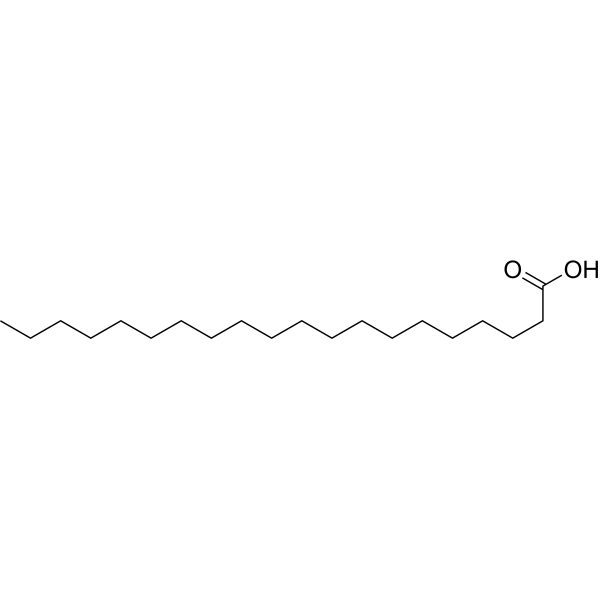
HY-W004260
Arachidic acidReceptor/Ion Channel Effector -

HY-W004283R
Pentadecanoic acid (Standard)STAT3 Inhibitor
Publications Citing Use of MedChemExpress (MCE) Pentadecanoic acid
MoreAll Endogenous Metabolite Isoforms
MoreAll Caspase Isoforms
More

Biological Activity
Description
IC50 & Target
|
Human Endogenous Metabolite |
In Vitro
Pentadecanoic acid (50-200 μM, 48 hours) induces apoptosis in MCF-7/SC breast cancer stem-like cells by inhibiting the JAK2/STAT3 signaling pathway and suppresses their proliferation and migration[1].
MedChemExpress (MCE) has not independently confirmed the accuracy of these methods. They are for reference only.
-
Cell Line:MCF-7/SC breast cancer stem-like cells
-
Concentration:50, 100, 150, 200 μM
-
Incubation Time:48 hours
-
Result:Significantly reduced MCF-7/SC cell viability, showing time- and dose-dependent cytotoxic effects.
-
Cell Line:MCF-7/SC breast cancer stem-like cells
-
Concentration:100 μM
-
Incubation Time:48 hours
-
Result:Significantly reduced the ability of MCF-7/SC cells to penetrate Matrigel, with a markedly lower number of invasive cells compared to the control group.
-
Cell Line:MCF-7/SC breast cancer stem-like cells
-
Concentration:50, 100, 150, 200 μM
-
Incubation Time:48 hours
-
Result:Led to a significant accumulation of MCF-7/SC cells in the Sub-G1 phase and reduced the proportion of S-phase and G2/M-phase cells, suggesting cell cycle arrest.
In Vivo
MedChemExpress (MCE) has not independently confirmed the accuracy of these methods. They are for reference only.
-
Animal Model:1% Pentadecanoic acid (PA) diet-induced gestational glucose intolerance C57BL6/J mouse model[2]
-
Dosage:1% (Pentadecanoic acid ethyl ester was incorporated into a low-fat diet (LFD) by replacing 10 g/kg soybean oil, achieving a final concentration of 1% (w/w), with a total feed composition of 1000 g/kg as an example)
-
Administration:Dietary intake, from gestation to the end of lactation
-
Result:Increased PA and heptadecanoic acid (C17:0) levels in maternal and fetal tissues; Induced mild insulin resistance during pregnancy and activated PPARα and MAPK signaling pathways; Increased maternal oxidative stress but reduced maternal fat deposition and promoted offspring growth during lactation; Reduced plasma and liver triglyceride (TG) levels in offspring and enhanced antioxidant capacity.
Clinical Trial
| NCT Number | Sponsor | Condition | Start Date |
Phase

|
|---|---|---|---|---|
| NCT01329991 | Plexxikon| | 2011-05 | PHASE1 |


Chemical Information
-
CAS No. 1002-84-2
-
Appearance Solid
-
Molecular Weight 242.40
-
Formula C15H30O2
-
Color White to off-white
-
SMILES
O=C(CCCCCCCCCCCCCC)O
-
Structure Classification
-
Initial Source
-
Shipping
Room temperature in continental US; may vary elsewhere.
-
Storage
Powder -20°C 3 years 4°C 2 years In solvent -80°C 2 years -20°C 1 year


Publications (1)
-
Journal Impact Factor
-
Most Recent
-
BMC Med
Integration of gut microbiome and lipid metabolism reveals the anti-cancer effects of pentadecanoic acid on bladder cancer. [Abstract]2025 Dec 3;24(1):10. PMID: 41339867


Solvent & Solubility
In Vitro:
DMSO : 62.5 mg/mL (257.84 mM; Need ultrasonic; Hygroscopic DMSO has a significant impact on the solubility of product, please use newly opened DMSO)
Please refer to the solubility information to select the appropriate solvent. Once prepared, please aliquot and store the solution to prevent product inactivation from repeated freeze-thaw cycles.
Storage method and period of stock solution: -80°C, 2 years; -20°C, 1 year. When stored at -80°C, please use it within 2 years. When stored at -20°C, please use it within 1 year.
Please refer to the solubility information to select the appropriate solvent. Once prepared, please aliquot and store the solution to prevent product inactivation from repeated freeze-thaw cycles.
Storage method and period of stock solution: -80°C, 2 years; -20°C, 1 year. When stored at -80°C, please use it within 2 years. When stored at -20°C, please use it within 1 year.
Concentration (start) × Volume (start) = Concentration (final) × Volume (final)
In Vivo:
Select the appropriate dissolution method based on your experimental animal and administration route.
- For the following dissolution methods, please ensure to first prepare a clear stock solution using an In Vitro approach and then sequentially add co-solvents:
- To ensure reliable experimental results, the clarified stock solution can be appropriately stored based on storage conditions. As for the working solution for In Vivo experiments, it is recommended to prepare freshly and use it on the same day.
- The percentages shown for the solvents indicate their volumetric ratio in the final prepared solution. If precipitation or phase separation occurs during preparation, heat and/or sonication can be used to aid dissolution.
Add each solvent one by one: 10% DMSO 40% PEG300 5% Tween-80 45% Saline
Solubility: ≥ 2.08 mg/mL (8.58 mM); Clear solution
This protocol yields a clear solution of ≥ 2.08 mg/mL (saturation unknown).
Taking 1 mL working solution as an example, add 100 μL DMSO stock solution (20.8 mg/mL) to 400 μL PEG300, and mix evenly; then add 50 μL Tween-80 and mix evenly; then add 450 μL Saline to adjust the volume to 1 mL.
Preparation of Saline: Dissolve 0.9 g sodium chloride in ddH₂O and dilute to 100 mL to obtain a clear Saline solution.
In Vivo Dissolution Calculator
Please enter the basic information of animal experiments:
-
-
-
-
Recommended: Prepare an additional quantity of animals to account for potential losses during experiments.
Please enter your animal formula composition:
-
%DMSO +
Recommended: Keep the proportion of DMSO in working solution below 2% if your animal is weak.
-
%+
-
+%Tween-80 + +
-
%Saline +
The co-solvents required include: DMSO, . All of co-solvents are available by MedChemExpress (MCE). , Tween 80. All of co-solvents are available by MedChemExpress (MCE).
Working solution concentration: 0.22 mg/mL
Method for preparing stock solution: mg drug dissolved in μL DMSO. Stock solution concentration: mg/mL.
1. Take μL DMSO stock solution;
2. Add μL .
μL , mix evenly;
3. Then add μL Tween 80, mix evenly;
4. Then add μL
Please ensure that the stock solution in the first step is dissolved to a clear state, and add co-solvents in sequence. You can use ultrasonic heating (ultrasonic cleaner, recommended frequency 20-40 kHz), vortexing, etc. to assist dissolution.


Purity & Documentation
-
Data Sheet (275 KB)
-
SDS (393 KB)
- English - EN (393 KB)
- Français - FR (393 KB)
- Deutsch - DE (393 KB)
- Norwegian - NO (393 KB)
- Español - ES (393 KB)
- Swedish - SV (393 KB)
- Italian - IT (393 KB)
- Korean - KR (393 KB)
- Portuguese - PT (393 KB)
-
Handling Instructions (2659 KB)
References
[1]. To N B, et al. Pentadecanoic acid, an odd-chain fatty acid, suppresses the stemness of MCF-7/SC human breast cancer stem-like cells through JAK2/STAT3 signaling[J]. Nutrients, 2020, 12(6): 1663. [Content Brief]
[2]. Wang J, et al. Pentadecanoic acid (C15: 0, PA) induces mild maternal glucose intolerance and promotes the growth of the offspring partly through up-regulating liver PPARα and MAPK signaling pathways[J]. Food & Function, 2024, 15(23): 11400-11414. [Content Brief]


Complete Stock Solution Preparation Table
Please refer to the solubility information to select the appropriate solvent. Once prepared, please aliquot and store the solution to prevent product inactivation from repeated freeze-thaw cycles.
Storage method and period of stock solution: -80°C, 2 years; -20°C, 1 year. When stored at -80°C, please use it within 2 years. When stored at -20°C, please use it within 1 year.
| Optional Solvent | Concentration Solvent Mass | 1 mg | 5 mg | 10 mg | 25 mg |
|---|---|---|---|---|---|
| DMSO | 1 mM | 4.1254 mL | 20.6271 mL | 41.2541 mL | 103.1353 mL |
| 5 mM | 0.8251 mL | 4.1254 mL | 8.2508 mL | 20.6271 mL | |
| 10 mM | 0.4125 mL | 2.0627 mL | 4.1254 mL | 10.3135 mL | |
| 15 mM | 0.2750 mL | 1.3751 mL | 2.7503 mL | 6.8757 mL | |
| 20 mM | 0.2063 mL | 1.0314 mL | 2.0627 mL | 5.1568 mL | |
| 25 mM | 0.1650 mL | 0.8251 mL | 1.6502 mL | 4.1254 mL | |
| 30 mM | 0.1375 mL | 0.6876 mL | 1.3751 mL | 3.4378 mL | |
| 40 mM | 0.1031 mL | 0.5157 mL | 1.0314 mL | 2.5784 mL | |
| 50 mM | 0.0825 mL | 0.4125 mL | 0.8251 mL | 2.0627 mL | |
| 60 mM | 0.0688 mL | 0.3438 mL | 0.6876 mL | 1.7189 mL | |
| 80 mM | 0.0516 mL | 0.2578 mL | 0.5157 mL | 1.2892 mL | |
| 100 mM | 0.0413 mL | 0.2063 mL | 0.4125 mL | 1.0314 mL |


Pentadecanoic acid Related Classifications
HY-W004283 Related Classifications
 Powered by Bioz