1. Search Result
Search Result
Pathways Recommended: Anti-infection
Results for "

antibacterial infections.

" in MedChemExpress (MCE) Product Catalog:

580

Inhibitors & Agonists

5

Screening Libraries

1

Fluorescent Dyes

14

Biochemical Assay Reagents

34

Peptides

1

Inhibitory Antibodies

122

Natural
Products

31

Isotope-Labeled Compounds

2

Oligonucleotides

1

GMP Molecules

Cat. No. 상품명 Target 연구분야 Chemical Structure
  • HY-148690

    Bacterial Fungal Infection
    L18-MDP is a derivative of muramyl dipeptide, an antibacterial agent. L18-MDP has antibacterial activity and has potential applications in bacterial and fungal infections .
    L18-MDP
  • HY-B1366

    Antibiotic Bacterial Infection
    Meclocycline Sulfosalicylate Salt is a tetracycline antibiotic with broad-spectrum antibacterial activities, preventing skin bacterial infections such as acne vulgaris .
    Meclocycline Sulfosalicylate Salt
  • HY-144300

    TNP-2198

    Bacterial Infection
    Rifasutenizol (TNP-2198) is a dual-targeted antibacterial agent that has a good antibacterial effect on Helicobacter pylori infection. Rifasutenizol can be used in the study of microaerophilic and anaerobic bacterial infections .
    Rifasutenizol
  • HY-14957

    T-3912

    Bacterial Antibiotic Infection
    Ozenoxacin is a nonfluorinated quinolone antibacterial, which shows potent activities against the main microorganisms isolated from skin and soft tissue infections.
    Ozenoxacin
  • HY-16487

    TMFX; TA-167 free acid; A-62254 free acid

    Bacterial Antibiotic Infection
    Temafloxacin (TMFX) is an orally active quinolone broad-spectrum antibacterial agent. Temafloxacin is well tolerated in lower respiratory and genitourinary tract infections .
    Temafloxacin
  • HY-B1924
    Norvancomycin monohydrochloride
    1 Publications Verification

    N-Demethylvancomycin monohydrochloride; NVCM monohydrochloride

    Bacterial Infection
    Norvancomycin hydrochloride is a cell wall synthesis inhibitor targeting peptidoglycan precursors of Gram-positive bacteria and cannot pass the blood-brain barrier. Norvancomycin hydrochloride can competitively bind to peptidoglycan precursors, irreversibly inhibit bacterial cell wall synthesis, and exert antibacterial activity. Norvancomycin hydrochloride is mainly used in the study of Gram-positive bacterial infections, especially infections caused by methicillin-resistant Staphylococcus aureus (MRSA) and methicillin-resistant Staphylococcus epidermidis (MRSE). Norvancomycin hydrochloride can also be incorporated into the bionic calcium phosphate coating of titanium implants to enhance antibacterial activity and inhibit postoperative orthopedic infections .
    Norvancomycin monohydrochloride
  • HY-B1784

    Sulfaisodimidine

    Bacterial Antibiotic Infection
    Sulfisomidin (Sulfaisodimidine) is an orally active short-acting sulfonamide antibacterial. Sulfisomidin can be used for the research of lower urinary tract infections .
    Sulfisomidin
  • HY-B1043

    Bacterial Antibiotic Infection
    Piromidic acid is an antibacterial agent. Piromidic acid is active against gramnegative bacteria and staphylococci and can be used for the research of intestinal, urinary, and biliary tract infections .
    Piromidic acid
  • HY-P4809

    Bacterial Fungal Infection Cancer
    Polybia-MP1 is an antimicrobial peptide with antibacterial, antifungal and anticancer activities. Polybia-MP1 selectively targets cancer cells by interacting with PS and PE in the outer leaflet of cell membranes, and induces necrosis via pore formation. Polybia-MP1 exhibits antibacterial activity against Pseudomonas aeruginosa. Polybia-MP1 can be used in research related to bacterial infections, fungal infections and cancers .
    Polybia-MP1
  • HY-N3373

    Bacterial Infection
    Loganetin is a non-toxic natural product that may be applied in the antibacterial agent development for treating multidrug-resistant Gram negative infections.
    Loganetin
  • HY-107329

    Bacterial Antibiotic Infection
    Cefathiamidine is a first-generation cephalosporin antibacterial agent and is used to treat infections caused by susceptible bacteria. Cefathiamidine exhibits a wide spectrum of antimicrobial activity against bacteria. Cefathiamidine is used for the treatment of respiratory, liver, five senses, urinary tract infections, endocarditis and sepsis .
    Cefathiamidine
  • HY-W753904

    Bacterial Infection
    Pradofloxacin, a third-generation fluoroquinolone antibacterial agent. Pradofloxacin can be used for the study of bacterial infections in the dog and cat, such as skin infections .
    Pradofloxacin
  • HY-B1366A

    Antibiotic Bacterial Infection
    Meclocycline is a tetracycline antibiotic with broad-spectrum antibacterial activities, preventing skin bacterial infections such as acne vulgarisis .
    Meclocycline
  • HY-B0576
    Sulfacetamide sodium
    3 Publications Verification

    Sulphacetamide sodium

    Antibiotic Bacterial Fungal Infection Inflammation/Immunology
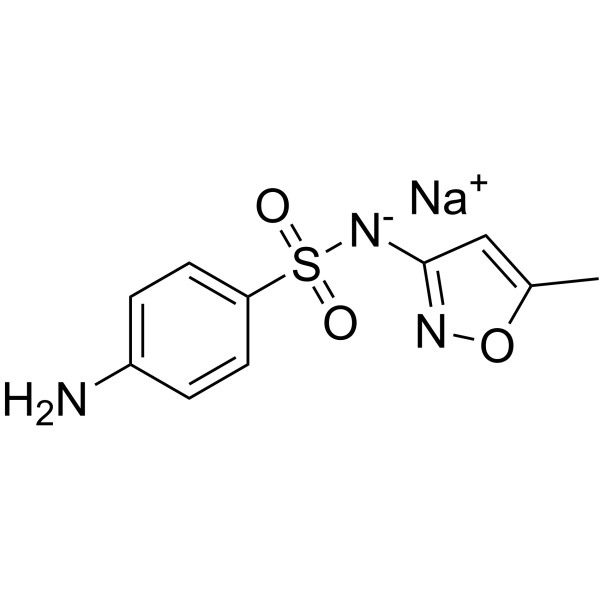
    Sulfacetamide (Sulphacetamide) sodium is a sulfonamide antibiotic that can be used for the study of ocular infections. Sulfacetamide sodium has antifungal and antibacterial activities .
    Sulfacetamide sodium
  • HY-151102

    Antibiotic Bacterial Infection
    Fabimycin is a FabI inhibitor with potent antibacterial activity against gram-negative bacteria. Fabimycin is effective against drug-resistant gram-negative Infections in vivo .
    Fabimycin
  • HY-133937

    Bacterial HIV Infection
    Sulfametrole is an orally active and potent antibacterial. Sulfametrole can be used for infections research, such as HIV, severe pneumonia and UTIs (urinary tract infections) .
    Sulfametrole
  • HY-A0090A

    Antibiotic Bacterial Infection
    Nitrofurantoin sodium is a potent and orally active antibacterial agent. Nitrofurantoin sodium acts as an antibiotic. Nitrofurantoin sodium can be used for the study of urinary tract infections (UTIs), including cystitis and kidney infections .
    Nitrofurantoin sodium
  • HY-132282

    Bacterial Infection
    Thiamphenicol glycinate hydrochloride is a broad-spectrum antibacterial agent that can be used for respiratory tract infections research .
    Thiamphenicol glycinate hydrochloride
  • HY-B0888
    Sulfacetamide sodium monohydrate
    3 Publications Verification

    Sulphacetamide sodium monohydrate

    Antibiotic Bacterial Fungal Infection Inflammation/Immunology
    Sulfacetamide (Sulphacetamide) sodium monohydrate is a sulfonamide antibiotic that can be used for the study of ocular infections. Sulfacetamide sodium monohydrate has antifungal and antibacterial activities .
    Sulfacetamide sodium monohydrate
  • HY-N11554

    Bacterial Infection
    (-)-Codonopsine is an alkaloid with antibacterial activity. (-)-Codonopsine can be used in research related to Staphylococcus aureus and Escherichia coli infections .
    (-)-Codonopsine
  • HY-W012617

    Nicotinic acid hydrazide

    Drug Intermediate Infection
    Nicotinohydrazide (Nicotinic acid hydrazide) is a precursor used for synthesizing hydrazone derivatives with antibacterial and antifungal activities. Nicotinohydrazide can be used in studies of bacterial and fungal infections .
    Nicotinohydrazide
  • HY-143292

    Bacterial Infection
    Antibacterial agent 81 is a DNA transcription inhibitor. Antibacterial agent 81 inhibits S. aureus USA300 and M. smegmatis ATCC14468 with MIC values of 12.5 and 7.8 μM, respectively. Antibacterial agent 81 can be used for the research of infection .
    Antibacterial agent 81
  • HY-139805

    Antibiotic Bacterial Infection
    Ticarcillin is a semisynthetic, extended-spectrum, carboxypenicillin antibacterial agent, and is active against gram-positive cocci, including streptococci and staphylococci. Ticarcillin is also effective against most gram-negative organisms, including Pseudomonas aeruginosa. Ticarcillin can be used in lower respiratory tract infections, skin and skin structure infections, urinary tract infections, and intraabdominal infections research .
    Ticarcillin
  • HY-131554

    Bacterial Antibiotic Infection
    Tibezonium iodide, an oropharyngeal disinfectant, has antibacterial activity for the prevention of mouth infections .
    Tibezonium iodide
  • HY-P5724

    Bacterial Infection
    Nv-CATH is an antibacterial peptide of frog origin. Nv-CATH has broad-spectrum antibacterial activity against gram-positive and gram-negative bacteria. Nv-CATH significantly protects mice from fatal infections caused by Staphylococcus aureus. Nv-CATH protects mice from bacterial infection through antimicrobial immunoregulatory duality .
    Nv-CATH
  • HY-128509

    Dioxydine

    Bacterial Infection
    Dioxidine is an antibacterial agent. Dioxidine inhibits the growth of bacteria Dioxidine can be usde for suppurative infections study .
    Dioxidine
  • HY-128502

    Bacterial Antibiotic Infection
    Nifurtoinol is a nitrofuran-derivative antibiotic with antibacterial effects. Nifurtoinol can be used for the research of urinary tract infections .
    Nifurtoinol
  • HY-W264454

    Bacterial Infection
    Antibacterial agent 303 (compound 3) is an antibacterial agent exhibiting potent antibacterial activity against MDR strains, with MICs of 10 and 100 µg/mL against Pseudomonas aeruginosa MDR1 and Staphylococcus aureus MDR strains, respectively. Antibacterial agent 303 displays strong binding affinities to E. coli DNA gyrase and Candida albicans lanosterol 14α-demethylase. Antibacterial agent 303 can be used for drug-resistant infections research .
    Antibacterial agent 303
  • HY-19814

    RU-40555

    Glucocorticoid Receptor Infection Inflammation/Immunology
    Toripristone (RU-40555) is a cortisol receptor inhibitor. Toripristone combined with clarithromycin can increase the antibacterial activity of Mycobacterium avium complex infection .
    Toripristone
  • HY-113595

    TMFX hydrochloride; TA-167; A-62254

    Antibiotic Bacterial Infection
    Temafloxacin (TMFX) hydrochloride is an orally active quinolone broad-spectrum antibacterial agent. Temafloxacin hydrochloride is well tolerated in lower respiratory and genitourinary tract infections .
    Temafloxacin hydrochloride
  • HY-107075A

    Bacterial Infection
    WCK-1152 is a fluoroquinolone antibacterial agent. WCK-1152 is active against resistant pathogens bearing mutations of DNA gyrase and/or topoisomerase IV which also express efflux pumps. WCK-1152 can be used for the research of infection, such as respiratory infections caused by resistant pneumococci and staphylococci .
    WCK-1152
  • HY-170650

    Phospholipase Cholinesterase (ChE) Bacterial Infection Inflammation/Immunology
    SMase-IN-1 (Compound 4) is a bacterial sphingomyelinase enzyme (SMase) inhibitor (IC50 value for B. cereus SMase is 6.43 µM). SMase-IN-1 also inhibits eqBuChE (59.50% inhibition rate at 50 µM concentration). SMase-IN-1 forms a complex with Cu 2+ in biometal interactions. SMase-IN-1 reduces B. cereus-induced hemolysis on sheep erythrocytes .
    SMase-IN-1
  • HY-163984

    Bacterial Infection
    Antibacterial agent 240 (compound 62-7c) is an antibacterial agent that can target multidrug-resistant (MDR) MRSA strains. Antibacterial agent 240 showed high biosafety and potent anti-infection activity in mouse pneumonia and mouse wound models of MRSA infection .
    Antibacterial agent 240
  • HY-139679

    Bacterial Infection
    Antibacterial agent 28 is a potential antibacterial candidate for combating MRSA infections (MICs = 0.5–2 μg/mL).
    Antibacterial agent 28
  • HY-156005

    Bacterial Others
    Antibacterial agent 153 is a broad-spectrum antibacterial agent. Antibacterial agent 153 kills bacteria by acting on the bacterial cell membrane. Antibacterial agent 153 can be used for bacterial infections research .
    Antibacterial agent 153
  • HY-178384

    Bacterial Infection
    Antibacterial agent 294 is an antibacterial agent. Antibacterial agent 294 shows antibacterial effect against carbapenem-resistant Acinetobacter baumannii (CRAB) with a MIC of 0.5 μg/mL. Antibacterial agent 294 can be used for the research of infection .
    Antibacterial agent 294
  • HY-139755

    Bacterial Infection
    Antibacterial agent 38 is an antibacterial agent extracted from patent WO2015063714A1, compound C. Antibacterial agent 38 can be used for the research of bacterial infections .
    Antibacterial agent 38
  • HY-139754

    Bacterial Infection
    Antibacterial agent 37 is an antibacterial agent extracted from patent WO2015063714A1, compound B. Antibacterial agent 37 can be used for the research of bacterial infections .
    Antibacterial agent 37
  • HY-139761

    Bacterial Infection
    Antibacterial agent 44 is an antibacterial agent extracted from patent WO2013030735A1, example 7. Antibacterial agent 44 can be used for the research of bacterial infections .
    Antibacterial agent 44
  • HY-139763

    Bacterial Infection
    Antibacterial agent 46 is an antibacterial agent extracted from patent WO2013030735A1, example 9. Antibacterial agent 46 can be used for the research of bacterial infections .
    Antibacterial agent 46
  • HY-139760

    Bacterial Infection
    Antibacterial agent 43 is an antibacterial agent extracted from patent WO2013030735A1, example 6. Antibacterial agent 43 can be used for the research of bacterial infections .
    Antibacterial agent 43
  • HY-W740165

    Antibiotic Drug Metabolite Infection
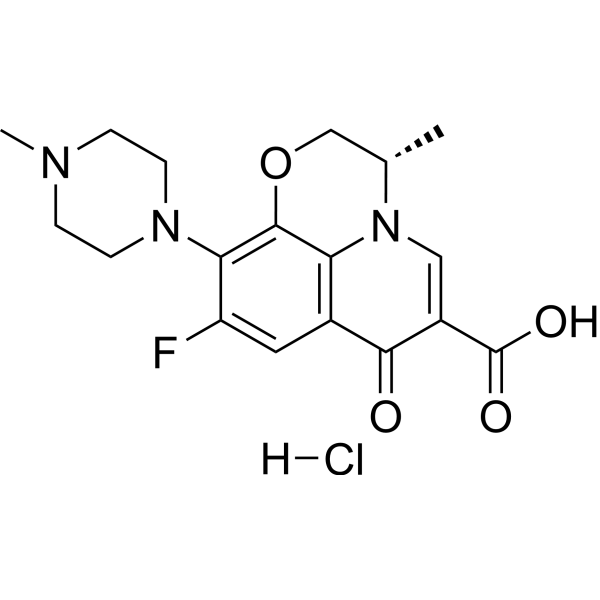
    Desmethyl Levofloxacin hydrochloride is an antibacterial agent with broad-spectrum antibacterial activity against a variety of pathogens. Desmethyl Levofloxacin hydrochloride effectively fights bacterial infections by inhibiting bacterial DNA synthesis. Studies on Desmethyl Levofloxacin hydrochloride have shown that it has potential in inhibiting respiratory infections .
    Desmethyl Levofloxacin hydrochloride
  • HY-174273

    Bacterial Infection
    Antibacterial agent 280 (Compound 7af) is an antibacterial agent targeting methicillin-resistant and vancomycin-resistant Staphylococcus aureus (MRSA, VRSA). Antibacterial agent 280 is promising for research of is promising for research of S. aureus infections .
    Antibacterial agent 280
  • HY-W282615

    Bacterial Infection
    Antibacterial agent 117, triazole derivative, is an antibacterial agent. Antibacterial agent 117 has against R. prowazekii MetAP1 (RpMetAP1) activity with an IC50 value of 15 μM. Antibacterial agent 117 also inhibits rickettsial growth and can be used for the research of infection .
    Antibacterial agent 117
  • HY-162171

    Bacterial Infection
    Antibacterial agent 179 (Compound 23) is a potent antibacterial agent, which effectively kills both Gram-negative and Gram-positive bacteria. Antibacterial agent 179 shows potent in vivo antibacterial efficacy in murine corneal infection models caused by Staphylococcus aureus or Pseudomonas aeruginosa .
    Antibacterial agent 179
  • HY-173270

    Bacterial Infection
    Antibacterial synergist 3 is a dual-acting inhibitor of biofilm (IC50 of PAO1: 0.40 μM and IC50 of PA14: 1.45 μM). Antibacterial synergist 3 reduces virulence production by inhibiting the quorum sensing (QS) system and induces iron deficiency in P. aeruginosa PAO1. Antibacterial synergist 3 enhances the efficacy of Tobramycin (HY-B0441) and Ciprofloxacin (HY-B0356) in a mouse wound infection model. Antibacterial synergist 3 can be used for the research of P. aeruginosa infections .
    Antibacterial synergist 3
  • HY-156283

    Antibiotic Infection
    Antibacterial agent 159 (Compound 6d) is an antibiotic. Antibacterial agent 159 can effective against impetigo and C. difficile infection (CDI). Antibacterial agent 159 has no observed recurrence for C. difficile and exertes a minimal impact on the beneficial gut microbiome .
    Antibacterial agent 159
  • HY-175346

    Bacterial Infection
    Antibacterial agent 289 (Compound 7c) is an antibacterial agent. Antibacterial agent 289 has potent inhibitory activity against Helicobacter pylori (H. pylori) (MIC: 0.804 μg/mL for H. pylori ATCC 26695) with significant growth inhibition. Antibacterial agent 289 can be used for H. pylori infection research .
    Antibacterial agent 289
  • HY-178924

    Bacterial Infection
    Antibacterial agent 298 exhibits significant antibacterial activity against Pseudomonas putida (ATCC 25922) with an IC50 4.48 µg/mL. Antibacterial agent 298 shows strong antibiofilm activity. Antibacterial agent 298 also inhibits approximately 50% of biofilm formation in L. lactis and P. putida. Antibacterial agent 298 can be used for the study of Bacterial infections caused by multidrug-resistant bacteria (MDR) .
    Antibacterial agent 298
  • HY-142695

    Bacterial Infection
    Antibacterial synergist 1 (compound 20P) is a bacterial biofilm inhibitor. Antibacterial synergist 1 inhibits the production of pyocyanin and biofilm formation with IC50s of 8.6 and 4.5 μM, respectively. Antibacterial synergist 1 has the potential for the research of P. aeruginosa infections .
    Antibacterial synergist 1

온라인 문의

Your information is safe with us. * Required Fields.

호칭


Country or Region *

고객명 *


회사명 *

Department *


메일주소 *


상품명 *

Cat. No.


Requested quantity *

전화번호 *


비고

온라인 문의

Inquiry Information

상품명:
Cat. No.:
수량:
MCE Japan Authorized Agent:

