



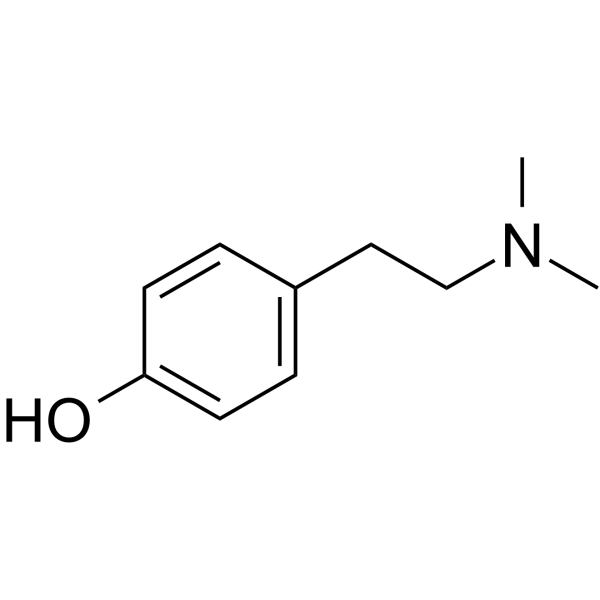
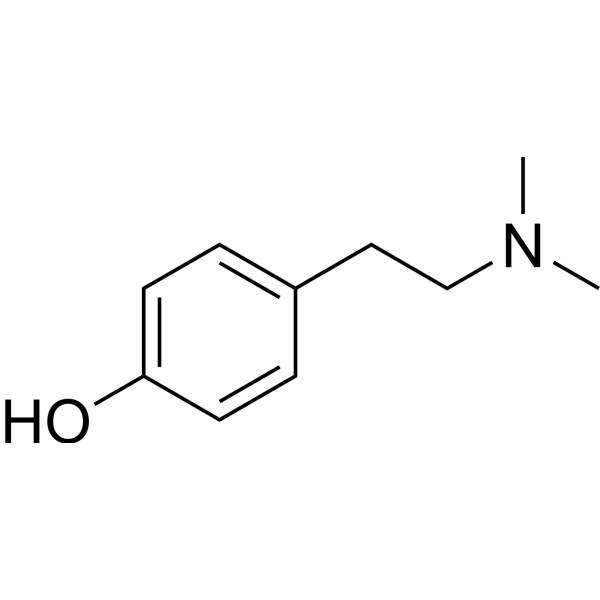
Hordenine
Based on 2 publication(s) in Google Scholar
Hordenine (Ordenina; Peyocactine) is a multifunctional alkaloid with oral activity and blood-brain barrier penetration. Hordenine inhibits LPS-induced phosphorylation of p38, JNK, ERK1/2, p65, IκB, and AKT, prevents p65 nuclear translocation, and suppresses inflammatory cytokines and mediators. Hordenine promotes M2 macrophage polarization, restores blood-milk barrier integrity, alleviates oxidative stress by reducing ROS and MDA, and attenuates LPS-induced lung injury and pulmonary edema. Hordenine inhibits cAMP production, CREB phosphorylation, and MITF expression, thereby suppressing melanin synthesis in melanocytes and reconstructed epidermis. Hordenine activates the Wnt/β-catenin signaling pathway, promotes dermal papilla cell proliferation and hair shaft elongation, and accelerates hair regeneration. Hordenine activates DRD2, acts as a D3R partial agonist, α2A-AR full agonist, and 5-HT2A-R antagonist, and inhibits SERT and DAT. Hordenine inhibits α-synuclein accumulation and ameliorates motor deficits in Parkinson's disease models. Hordenine limits alcohol intake, reduces relapse drinking behavior, and modulates alcohol-induced conditioned place preference. Hordenine can be used for research on mastitis, skin pigmentation, acute lung injury, foodborne diseases, hair loss, Parkinson's disease, bacterial infections, and alcohol use disorder.
Nos produits utilisent uniquement pour la recherche. Nous ne vendons pas aux patients.
- Pureté : 99.88%
- CAS No.: 539-15-1
- Formule: C10H15NO
- Masse moléculaire:165.24
-
Stockage:Powder -20°C, 3 years , 4°C, 2 years ; In solvent -80°C, 2 years , -20°C, 1 year

To place orders, for customer services and technical support, please contact: MedChemExpress USA
Tel: 609-228-6898 E-mail: [email protected] [email protected]


-
 Activité biologique
-
Chemical Information
-
Solvant et solubilité
- Pureté et documentation
- Références
-
 Help & FAQs




Publications Citing Use of MedChemExpress (MCE) Hordenine
MoreVoir tous les produits spécifiques à Isoform TNF Receptor
MoreVoir tous les produits spécifiques à Isoform Dopamine Receptor
MoreVoir tous les produits spécifiques à Isoform Adrenergic Receptor
MoreVoir tous les produits spécifiques à Isoform 5-HT Receptor
MoreVoir tous les produits spécifiques à Isoform α-synuclein
More

Activité biologique
Description
|
ERK1 |
ERK2 |
IL-6 |
IL-1β |
TNF-α |
iNOS |
COX-2 |
D3 Receptor 6.6 μM (EC50) |
D3 Receptor 6.9 μM (Ki) |
Alpha-2A adrenergic receptor 7.4 μM (EC50) |
Alpha-2A adrenergic receptor 11 μM (Ki) |
5-HT2A Receptor 3.1 μM (Ki) |
In Vitro
Hordenine (25-200 μM; 2 h) shows no cytotoxicity in EpH4-Ev cells at experimental concentrations of 2-100 μM, but affects cell viability at 200 μM[1].
Hordenine (100 μM; 0-8 h) activates the AMPK/Nrf2/HO-1 signaling cascade in EpH4-Ev cells[1].
Hordenine (0.5-100 μM; 1 h/5 days) inhibits melanin content in human epidermal melanocytes by downregulating the expression of MITF, tyrosinase, TRP-1, and TRP-2, and inhibiting CREB phosphorylation, reduces melanin levels in reconstructed epidermis, inhibits tyrosinase activity, and suppresses cAMP production[2].
Hordenine (12.5-200 μM; 48 h) promotes the proliferation of mouse primary dermal papilla cells in a dose-dependent manner[5].
Hordenine (25-50 μM; 10 consecutive days) significantly enhances the colony-forming ability of primary mouse dermal papilla cells at a concentration of 50 μM[5].
Hordenine (25-50 μM; 24 h) increases the proportion of proliferating (Ki67-positive) primary mouse dermal papilla cells, promotes nuclear translocation of β-catenin, elevates the gene expression of key DPC activity markers (ALP, Versican, and Wnt3a), activates the gene expression of the Wnt/β-catenin signaling pathway, and increases ALP protein expression[5].
Hordenine (2-50 μM; 24 h) dose-dependently activates DRD2 in live 293T-Tango-PB cells, with a maximum effective concentration of 50 μM[6].
Hordenine (0-90 μM; 15 min) inhibits cAMP production in HEK293T cells expressing DRD2, with an IC50 of 5.546 μM[6].
Hordenine (25-50 μM; 7 days) attenuates age-related α-synuclein accumulation in C. elegans strain NL5901 via a DRD2-dependent pathway[6].
Hordenine binds to multiple GPCRs with low micromolar affinity, exhibiting the highest affinity for the 5-HT2A receptor (Ki = 3.1 μM) and the D3 receptor (Ki = 6.9 μM)[7].
Hordenine binds to human SERT (Ki = 4.0 μM) with higher affinity than to human DAT (Ki = 30 μM)[7].
Hordenine acts as a potent partial agonist at D3R (EC50 = 6.6 μM; Emax = 70%), a weak partial agonist at α1A-AR (EC50 = 38 μM; Emax = 23%), and a neutral antagonist at 5-HT2A R (Emax < 5%)[7].
Hordenine is a full agonist of the α2A-adrenergic receptor (EC50 = 7.4 μM; Emax = 109%)[7].
Hordenine (25-100 μM; 2 h) attenuates LPS (HY-D1056)-induced inflammatory responses at the mRNA level in EpH4-Ev cells by decreasing pro-inflammatory cytokines and increasing anti-inflammatory cytokines, reduces the expression of the pro-inflammatory enzymes iNOS and COX-2, and alleviates the activation of the TLR4-MAPK/NF-κB inflammatory signaling pathway as well as oxidative stress[1].
Hordenine (50-75 μg/mL; 1 h pre-treatment) inhibits the secretion of pro-inflammatory cytokines TNF-α, IL-6, and IL-1β in LPS-stimulated RAW264.7 macrophages, downregulates the mRNA expression of pro-inflammatory mediators, and upregulates M2 macrophage markers, inhibits the activation of AKT, NF-κB, and MAPK signaling pathways, and reduces the protein expression of iNOS and COX-2[3].
Hordenine (75 μg/mL; 1 h pretreatment) inhibits LPS-induced nuclear translocation of p65 in RAW264.7 macrophages[3].
Hordenine (0.5-1.0 mg/mL; 48 h) inhibits quorum sensing in Pseudomonas aeruginosa PAO1 in a concentration-dependent manner by reducing the production of the signaling molecules C4-HSL and 3-oxo-C12-HSL, with an inhibition rate of up to 79% for C4-HSL at 1.0 mg/mL[4].
Hordenine (0.5-1.0 mg/mL; 24 h) reduces biofilm formation in Pseudomonas aeruginosa PAO1 by up to 31% at subinhibitory concentrations without affecting planktonic cell viability[4].
Hordenine (0.5-1.0 mg/mL; 24 h) significantly inhibits the production of QS-related virulence factors (protease, elastase, pyocyanin, rhamnolipid, alginate, and pyoverdine) in Pseudomonas aeruginosa PAO1 in a concentration-dependent manner[4].
Hordenine (0.5-1.0 mg/mL; 24 h) inhibits swimming and swarming motility of Pseudomonas aeruginosa PAO1 in a concentration-dependent manner[4].
Hordenine (1.0 mg/mL; 24 h) inhibits the expression of key QS-related genes (lasI, lasR, rhlI, rhlR) in Pseudomonas aeruginosa PAO1, with the most significant effect being a 60% downregulation of lasR[4].
Hordenine (25-50 μM; 9 days) alleviates 6-OHDA (HY-B1081A)-induced locomotor deficits in C. elegans strain N2[6].
MedChemExpress (MCE) has not independently confirmed the accuracy of these methods. They are for reference only.
-
Cell Line:EpH4-Ev mouse mammary epithelial cells
-
Concentration:25, 50, 100, 200 μM
-
Incubation Time:2 h pretreatment; 24 h LPS stimulation
-
Result:Exerted a notable impact on cell viability at 200 μM.
Showed no cytotoxic effect at 25, 50, and 100 μM.
-
Cell Line:EpH4-Ev mouse mammary epithelial cells
-
Concentration:25, 50, 100 μM
-
Incubation Time:2 h pretreatment; 24 h LPS stimulation
-
Result:Suppressed the LPS-induced increase in mRNA levels of TNF-α, IL-1β, and IL-6.
Further increased the level of IL-10.
-
Cell Line:EpH4-Ev mouse mammary epithelial cells
-
Concentration:25, 50, 100 μM
-
Incubation Time:2 h pretreatment; 24 h LPS stimulation
-
Result:Alleviated the LPS-triggered elevation of iNOS and COX-2 expression.\nDose-dependently reduced the expression of TLR4 and phosphorylated expression of p65 and IκBα.
Alleviated the phosphorylation levels of p38, JNK, and ERK.
Alleviated p65 nuclear translocation.
-
Cell Line:EpH4-Ev mouse mammary epithelial cells
-
Concentration:100 μM
-
Incubation Time:0, 1, 2, 4, 8 h
-
Result:Enhanced activation of the AMPK/Nrf2/HO-1 pathway after 2-4 h pretreatment.
Promoted Nrf2 translocation into the nucleus.
AMPK inhibitor compound C inhibited AMPK phosphorylation, Nrf2 upregulation, and HO-1 expression.
Nrf2 inhibitor retinoic acid inhibited Nrf2 activation, HO-1 expression, the decrease in MDA content, and the increase in CAT activity and GSH/GSSG ratio.
-
Cell Line:human epidermal melanocytes (Cascade Biologics)
-
Concentration:0.5, 5, 50, 100 μM
-
Incubation Time:1 h
-
Result:Inhibited cAMP production in a concentration-dependent manner.
-
Cell Line:human epidermal melanocytes (Cascade Biologics)
-
Concentration:0.5, 5, 50, 100 μM
-
Incubation Time:1 h and 5 days
-
Result:Suppressed CREB phosphorylation.
Decreased MITF expression significantly in a concentration-dependent manner.
Inhibited the production of tyrosinase, TRP-1, and TRP-2.
At 100 μM, tyrosinase/β-actin, TRP-1/β-actin, and TRP-2/β-actin ratios were reduced to approximately 0.35, 0.4, and 0.35, respectively.
-
Cell Line:LPS-stimulated RAW264.7 macrophages
-
Concentration:50, 75 μg/mL
-
Incubation Time:1 h (pre-treatment); 12 h (LPS stimulation)
-
Result:Suppressed the LPS-induced increases in TNF-α, IL-6, and IL-1β protein levels.
-
Cell Line:LPS-stimulated RAW264.7 macrophages
-
Concentration:50, 75 μg/mL
-
Incubation Time:1 h (pre-treatment); LPS stimulation
-
Result:Reduced the LPS-induced mRNA expression of IL-6, TNF-α, iNOS, and COX-2.
Promoted the expression of M2 macrophage marker genes Arg-1, Ym-1, and CD206.
-
Cell Line:LPS-stimulated RAW264.7 macrophages
-
Concentration:50, 75 μg/mL
-
Incubation Time:1 h (pre-treatment); 1 h (LPS stimulation)
-
Result:Reduced the LPS-induced increases in iNOS and COX-2 protein levels.
Alleviated the increased phosphorylation levels of AKT, p65, IκB, p38, ERK1/2, and JNK induced by LPS.
-
Cell Line:LPS-stimulated RAW264.7 macrophages
-
Concentration:75 μg/mL
-
Incubation Time:1 h (pre-treatment); 12 h (LPS stimulation)
-
Result:Inhibited the LPS-induced nuclear translocation of p65.
-
Cell Line:primary mouse dermal papilla cells (DPCs)
-
Concentration:0, 12.5, 25, 50, 100, 200 μM
-
Incubation Time:48 h
-
Result:Showed safety at 200 μM.
Significantly increased cell proliferation at 12.5, 25, 50, and 100 μM, with the highest increase observed at 50 μM.
-
Cell Line:primary mouse dermal papilla cells (DPCs)
-
Concentration:0, 25, 50 μM
-
Incubation Time:24 h
-
Result:Increased the percentage of Ki67-positive DPCs in a dose-dependent manner, with counts rising from 10 (control) to 28 (25 μM) and 39 (50 μM) per 100 cells.\nGreatly promoted the nuclear entrance of β-catenin in DPCs compared with the controls.
-
Cell Line:primary mouse dermal papilla cells (DPCs)
-
Concentration:0, 25, 50 μM
-
Incubation Time:24 h
-
Result:Markedly upregulated the mRNA levels of ALP, Versican, and Wnt3a in a dose-dependent manner.\nMarkedly upregulated the mRNA expression of β-catenin, Lef-1, Axin2, and Cyclin D1 in a dose-dependent manner.
-
Cell Line:primary mouse dermal papilla cells (DPCs)
-
Concentration:0, 25, 50 μM
-
Incubation Time:24 h
-
Result:Markedly upregulated the protein levels of ALP in a dose-dependent manner.\nSignificantly increased the protein levels of p-GSK3β, β-catenin, Lef-1, Axin2, and Cyclin D1.
In Vivo
Hordenine (10-15 mg/kg; i.p.; single administration; 1 h before LPS modeling) attenuates LPS-induced acute lung injury in mice in a dose-dependent manner by inhibiting inflammation and the production of inflammatory cytokines[3].
Hordenine (1-2 mM; topical application; daily; 25 days) accelerates the entry into the hair follicle anagen phase and hair regeneration in a depilation-induced mouse alopecia model by activating the Wnt/β-catenin signaling pathway[5].
Hordenine (30-100 mg/kg/day; p.o.; daily; 12 days) significantly ameliorates MPTP (HY-15608)-induced motor deficits and gait abnormalities in mice, rescues 44.4% of the climbing time, and restores multiple gait parameters[6].
Hordenine (100 mg/kg; p.o.; daily; 22 days) significantly ameliorates motor deficits in the 6-OHDA-induced hemiparkinsonian mouse model, reducing climbing time by 22.2% and traversal time by 34.2%[6].
Hordenine (50 mg/kg; i.p.; once daily; for 4 consecutive days) attenuates persistent alcohol intake in mice and prophylactically reduces relapse behavior after withdrawal[7].
MedChemExpress (MCE) has not independently confirmed the accuracy of these methods. They are for reference only.
-
Animal Model:ICR mice (25-30 g, 7-8 weeks old, female)[1]
-
Dosage:50 mg/kg/day
-
Administration:p.o.; daily; 14 days
-
Result:Reduced histopathological scores in mammary tissue from 3.75 to 1.75.
Attenuated the LPS-induced increase in MPO activity.
Reduced levels of pro-inflammatory mediators (IL-6, TNF-α, IL-1β, COX-2, iNOS) while elevating the anti-inflammatory cytokine IL-10.
Restored the integrity of the blood-milk barrier by upregulating the expression of tight junction proteins ZO-1, occludin, and claudin-3.
Inhibited the LPS-induced phosphorylation of key proteins in the TLR4-MAPK/NF-κB pathway while activating the AMPK/Nrf2/HO-1 antioxidative pathway.
Mitigated the LPS-induced increase in MDA content and restored decreased CAT activity, GSH/GSSG ratio, and SOD activity.
Altered the composition of intestinal microbiota, increasing the abundance of Lactobacillaceae, S24-7, and Prevotellaceae at the family level and Lactobacillus at the genus level, while decreasing Bacteroidaceae, Desulfovibrionaceae, Lachnospiraceae, and Ruminococcaceae at the family level and Bacteroides, Desulfovibrio, Oscillospira, and Blautia at the genus level.\nReduced histopathological damage in recipient mice.
Reduced MPO activity, IL-1β, IL-6, TNF-α, iNOS, and COX-2 levels, and elevated IL-10 levels.
Enhanced expression of tight junction proteins ZO-1 (fold change ~2.0), occludin (fold change ~1.8), and claudin-3 (fold change ~4.0) compared to the FN group.
-
Animal Model:BALB/c mice (Male, 6-8 weeks old, LPS-induced)[3]
-
Dosage:10, 15 mg/kg
-
Administration:i.p.; single dose; 1 h before LPS modeling
-
Result:Reduced lung histopathological injury score in a dose-dependent manner, with the 15 mg/kg dose showing greater alleviation than the 10 mg/kg dose.
Decreased the lung wet-dry (W/D) weight ratio.
Reduced mRNA expression levels of Il6, Il1β, Tnfa, iNOS, Cox2, and Mpo in lung tissues.
Reduced protein secretion of IL-6, IL-1β, and TNF-α in bronchoalveolar lavage fluid (BALF).
-
Animal Model:C57BL/6 (female, 7-week-old)[5]
-
Dosage:1 mM; 2 mM
-
Administration:topical application; daily; 25 days
-
Result:Accelerated anagen entry and hair regrowth.
Significantly increased the rate of hair regeneration at both 1 mmol/L and 2 mmol/L.
Markedly promoted hair follicles to enter a state of active growth at day 6.
Markedly increased the protein levels of β-catenin, p-GSK3β, and Axin2, and greatly increased the expression of downstream target genes Lef-1 and Cyclin D1 at both mRNA and protein levels.
-
Animal Model:C57BL/6 (male, 12-week-old, 20-25 g, MPTP-induced)[6]
-
Dosage:30, 100 mg/kg/day
-
Administration:p.o.; daily; 12 days
-
Result:Reduced turning and climbing time in the pole test, rescuing 44.4% of climbing time.
Improved locomotor speed, step size, and preserved shorter run duration in Catwalk gait analysis.
Rescued shortened bilateral print positions and recovered stride length of four limbs.
Presented similar or better effect than PPX on swing speed and relieved prolonged standing time and step cycle time.
Increased TH-immunopositive fiber fluorescence intensity in the striatum but did not change TH-immunopositive cells in the SNpc.
-
Animal Model:C57BL/6 (male, 12-week-old, 20-25 g, 6-OHDA-induced)[6]
-
Dosage:100 mg/kg
-
Administration:p.o.; daily; 22 days
-
Result:Reduced climbing time by 22.2% in the pole test compared to the 6-OHDA-lesioned group.
Spent 34.2% less time to cross the beam in the balance beam test.
Regained almost 30% locomotion activity compared to the 6-OHDA group.
-
Animal Model:C57BL/6 J mice (Male, 8 weeks old, 26 g)[7]
-
Dosage:50 mg/kg
-
Administration:i.p.; once a day; 4 days
-
Result:Reduced ongoing alcohol consumption on the first treatment day and the second day after treatment, with a significant decrease in the 6-day average alcohol consumption.
Decreased the 6-day average alcohol preference and total intake.
Reduced alcohol consumption on the first, third, and fourth days of reinstatement, with a significant decline in the 4-day average consumption and preference during withdrawal.
Had no effect on alcohol consumption during relapse, but significantly decreased alcohol preference on the third reinstatement day and in the 4-day average analysis.


Chemical Information
-
CAS No. 539-15-1
-
Appearance Solid
-
Masse moléculaire 165.24
-
Formule C10H15NO
-
Color Off-white to light yellow
-
SMILES
OC1=CC=C(CCN(C)C)C=C1
-
Synonyms
Ordenina; Peyocactine
-
Structure Classification
-
Initial Source
-
Livraison
Room temperature in continental US; may vary elsewhere.
-
Stockage
Powder -20°C 3 years 4°C 2 years In solvent -80°C 2 years -20°C 1 year


Publications (2)
-
Journal Impact Factor
-
Most Recent
-
-
J Agric Food Chem
Chemoproteomic Profiling of Cobalamin-Independent Methionine Synthases in Plants with a Covalent Probe. [Abstract]2020 Jul 29;68(30):8050-8056. PMID: 32618189


Solvant et solubilité
In Vitro:
DMSO : 250 mg/mL (1512.95 mM; Need ultrasonic; Hygroscopic DMSO has a significant impact on the solubility of product, please use newly opened DMSO)
Please refer to the solubility information to select the appropriate solvent. Once prepared, please aliquot and store the solution to prevent product inactivation from repeated freeze-thaw cycles.
Storage method and period of stock solution: -80°C, 2 years; -20°C, 1 year. When stored at -80°C, please use it within 2 years. When stored at -20°C, please use it within 1 year.
Please refer to the solubility information to select the appropriate solvent. Once prepared, please aliquot and store the solution to prevent product inactivation from repeated freeze-thaw cycles.
Storage method and period of stock solution: -80°C, 2 years; -20°C, 1 year. When stored at -80°C, please use it within 2 years. When stored at -20°C, please use it within 1 year.
Concentration (start) × Volume (start) = Concentration (final) × Volume (final)
In Vivo:
Select the appropriate dissolution method based on your experimental animal and administration route.
- For the following dissolution methods, please ensure to first prepare a clear stock solution using an In Vitro approach and then sequentially add co-solvents:
- To ensure reliable experimental results, the clarified stock solution can be appropriately stored based on storage conditions. As for the working solution for In Vivo experiments, it is recommended to prepare freshly and use it on the same day.
- The percentages shown for the solvents indicate their volumetric ratio in the final prepared solution. If precipitation or phase separation occurs during preparation, heat and/or sonication can be used to aid dissolution.
Add each solvent one by one: 10% DMSO 40% PEG300 5% Tween-80 45% Saline
Solubility: ≥ 6.25 mg/mL (37.82 mM); Clear solution
This protocol yields a clear solution of ≥ 6.25 mg/mL (saturation unknown).
Taking 1 mL working solution as an example, add 100 μL DMSO stock solution (62.5 mg/mL) to 400 μL PEG300, and mix evenly; then add 50 μL Tween-80 and mix evenly; then add 450 μL Saline to adjust the volume to 1 mL.
Preparation of Saline: Dissolve 0.9 g sodium chloride in ddH₂O and dilute to 100 mL to obtain a clear Saline solution.
Add each solvent one by one: 10% DMSO 90% (20% SBE-β-CD in Saline)
Solubility: ≥ 6.25 mg/mL (37.82 mM); Clear solution
This protocol yields a clear solution of ≥ 6.25 mg/mL (saturation unknown).
Taking 1 mL working solution as an example, add 100 μL DMSO stock solution (62.5 mg/mL) to 900 μL 20% SBE-β-CD in Saline, and mix evenly.
Preparation of 20% SBE-β-CD in Saline (4°C, storage for one week): 2 g SBE-β-CD powder is dissolved in 10 mL Saline, completely dissolve until clear.
In Vivo Dissolution Calculator
Please enter the basic information of animal experiments:
-
-
-
-
Recommended: Prepare an additional quantity of animals to account for potential losses during experiments.
Please enter your animal formula composition:
-
%DMSO +
Recommended: Keep the proportion of DMSO in working solution below 2% if your animal is weak.
-
%+
-
+%Tween-80 + +
-
%Saline +
The co-solvents required include: DMSO, . All of co-solvents are available by MedChemExpress (MCE). , Tween 80. All of co-solvents are available by MedChemExpress (MCE).
Working solution concentration: 0.22 mg/mL
Method for preparing stock solution: mg drug dissolved in μL DMSO. Stock solution concentration: mg/mL.
1. Take μL DMSO stock solution;
2. Add μL .
μL , mix evenly;
3. Then add μL Tween 80, mix evenly;
4. Then add μL
Please ensure that the stock solution in the first step is dissolved to a clear state, and add co-solvents in sequence. You can use ultrasonic heating (ultrasonic cleaner, recommended frequency 20-40 kHz), vortexing, etc. to assist dissolution.


Pureté et documentation
-
Fiche technique (310 KB)
-
SDS (394 KB)
- English - EN (394 KB)
- Français - FR (394 KB)
- Deutsch - DE (394 KB)
- Norwegian - NO (394 KB)
- Español - ES (394 KB)
- Swedish - SV (394 KB)
- Italian - IT (394 KB)
- Korean - KR (394 KB)
- Portuguese - PT (394 KB)
-
Instruction de manipulation (2659 KB)
Références
[2]. Kim SC, et al. Hordenine, a single compound produced during barley germination, inhibits melanogenesis in human melanocytes. Food chemistry. 2013 Nov 01;141(1):174-81. [Content Brief]
[6]. Li H, et al. Hordenine improves Parkinsonian-like motor deficits in mice and nematodes by activating dopamine D2 receptor-mediated signaling. Phytotherapy research : PTR. 2023 Aug;37(8):3296-3308. [Content Brief]


Complete Stock Solution Preparation Table
Please refer to the solubility information to select the appropriate solvent. Once prepared, please aliquot and store the solution to prevent product inactivation from repeated freeze-thaw cycles.
Storage method and period of stock solution: -80°C, 2 years; -20°C, 1 year. When stored at -80°C, please use it within 2 years. When stored at -20°C, please use it within 1 year.
| Optional Solvent | Concentration Solvent Mass | 1 mg | 5 mg | 10 mg | 25 mg |
|---|---|---|---|---|---|
| DMSO | 1 mM | 6.0518 mL | 30.2590 mL | 60.5180 mL | 151.2951 mL |
| 5 mM | 1.2104 mL | 6.0518 mL | 12.1036 mL | 30.2590 mL | |
| 10 mM | 0.6052 mL | 3.0259 mL | 6.0518 mL | 15.1295 mL | |
| 15 mM | 0.4035 mL | 2.0173 mL | 4.0345 mL | 10.0863 mL | |
| 20 mM | 0.3026 mL | 1.5130 mL | 3.0259 mL | 7.5648 mL | |
| 25 mM | 0.2421 mL | 1.2104 mL | 2.4207 mL | 6.0518 mL | |
| 30 mM | 0.2017 mL | 1.0086 mL | 2.0173 mL | 5.0432 mL | |
| 40 mM | 0.1513 mL | 0.7565 mL | 1.5130 mL | 3.7824 mL | |
| 50 mM | 0.1210 mL | 0.6052 mL | 1.2104 mL | 3.0259 mL | |
| 60 mM | 0.1009 mL | 0.5043 mL | 1.0086 mL | 2.5216 mL | |
| 80 mM | 0.0756 mL | 0.3782 mL | 0.7565 mL | 1.8912 mL | |
| 100 mM | 0.0605 mL | 0.3026 mL | 0.6052 mL | 1.5130 mL |


Hordenine Related Classifications
HY-N0113 Related Classifications
 Powered by Bioz
Keywords
- Hordenine
- 539-15-1
- Ordenina
- Peyocactine
- Bacterial
- p38 MAPK
- JNK
- ERK
- Akt
- Interleukin Related
- TNF Receptor
- NO Synthase
- COX
- Reactive Oxygen Species (ROS)
- Microphthalmia Associated Transcription Factor (MITF)
- Wnt
- β-catenin
- Dopamine Receptor
- Adrenergic Receptor
- 5-HT Receptor
- Serotonin Transporter
- Dopamine Transporter
- α-synuclein
- TRP-1
- tyrosinase
- MITF
- cAMP
- Nrf2
- HO-1
- TLR4
- NF-κB
- AMPK
- MAPK
- Inhibitor
- inhibitor
- inhibit