



MRS2768
MRS2768 is a potent, selective, and metabolically stable P2Y2 receptor agonist with an EC50 of 1.89 μM for the human P2Y2 receptor. MRS2768 activates Gq/PLC/PKC signaling, leading to downstream phosphorylation of Akt, eNOS, and ERK, with effects varying by cell type. MRS2768 inhibits ENaC via Gq/PKC/Src/Akt to promote natriuresis and lower blood pressure in the kidney. MRS2768 activates eNOS to increase NO secretion in endothelial cells. MRS2768 drives proliferation via PI3K/Akt in fibroblasts and cancer cells. MRS2768 exerts anti-apoptotic effects through PKC/Src/Akt in cardiomyocytes. MRS2768 can be applied to investigate P2Y2-dependent pathological processes, including acute kidney injury, chronic kidney disease and renal fibrosis, DOCA-salt induced hypertension, myocardial infarction, pulmonary arterial hypertension, pancreatic cancer, cardiac fibrosis, dry eye disease, as well as shear stress-mediated vascular remodeling and atherosclerosis.
Para uso exclusivo en investigación. No vendemos a pacientes.
- No. CAS: 1047980-83-5
- Fòrmula: C15H20N2O18P4
- Peso molecular:640.22
-
Almacenamiento:
Please store the product under the recommended conditions in the Certificate of Analysis.


To place orders, for customer services and technical support, please contact: MedChemExpress USA
Tel: 609-228-6898 E-mail: [email protected] [email protected]


-
 Actividad biológica
-
Chemical Information
- Protocolo
- Pureza y Documentación
- Referencias
-
 Help & FAQs


-
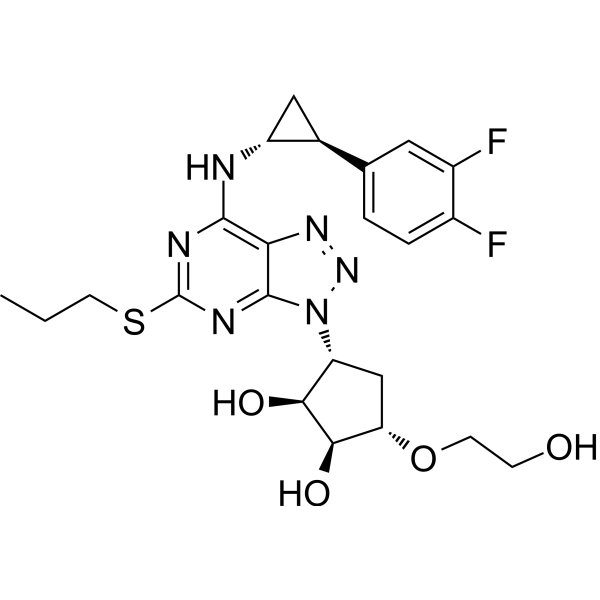
HY-10064
TicagrelorP2Y12 Antagonist -
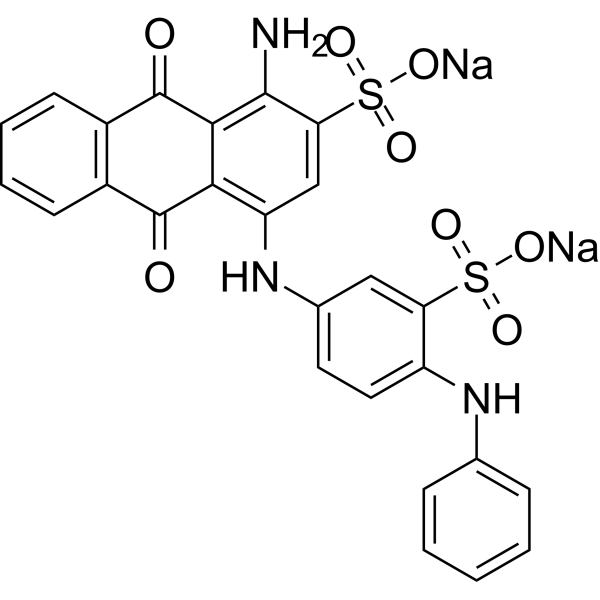
HY-108660
PSB-0739P2Y12 Receptor Antagonist -
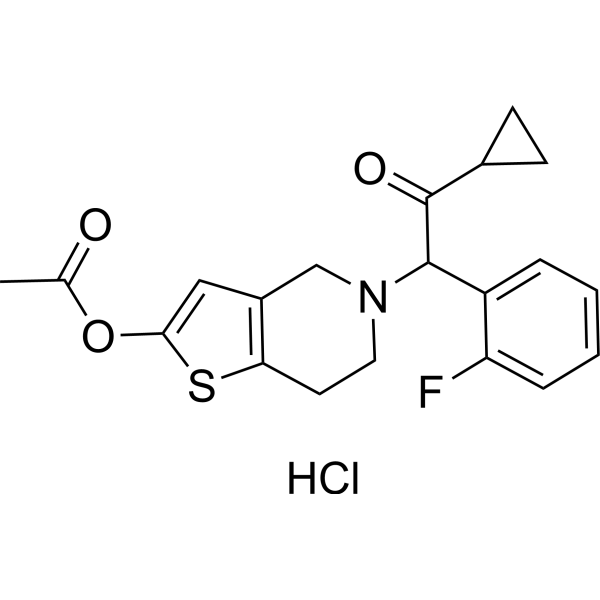
HY-15284A
Prasugrel hydrochlorideP2Y12 Receptor Antagonist -
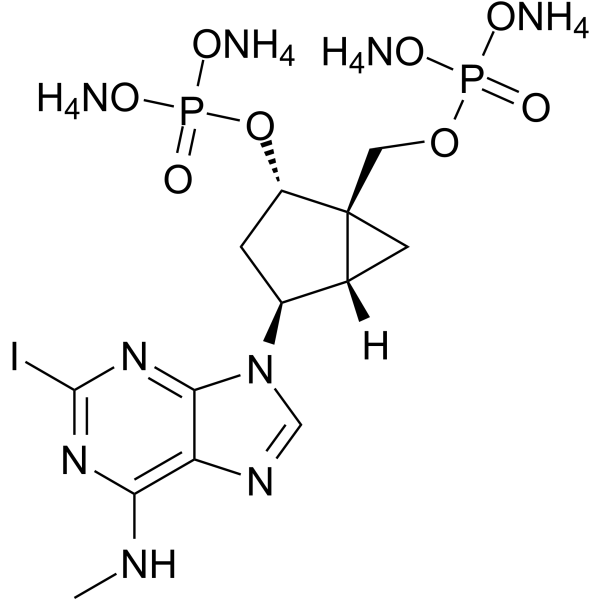
HY-108658
MRS2500 tetraammoniumP2Y1 Receptor Antagonist -
HY-15799
AZD1283P2Y12 Receptor Antagonist -
HY-W010832
Uridine-5'-diphosphate disodium saltNucleotide -
HY-13104
MRS 2578Apoptosis Inducer -

HY-10064R
Ticagrelor (Standard)P2Y12 Antagonist -
HY-108662
PITP2Y1 Receptor Antagonist -

HY-15284AR
Prasugrel hydrochloride (Standard)P2Y12 Receptor Antagonist -

HY-108660R
PSB-0739 (Standard)Reference Standard -
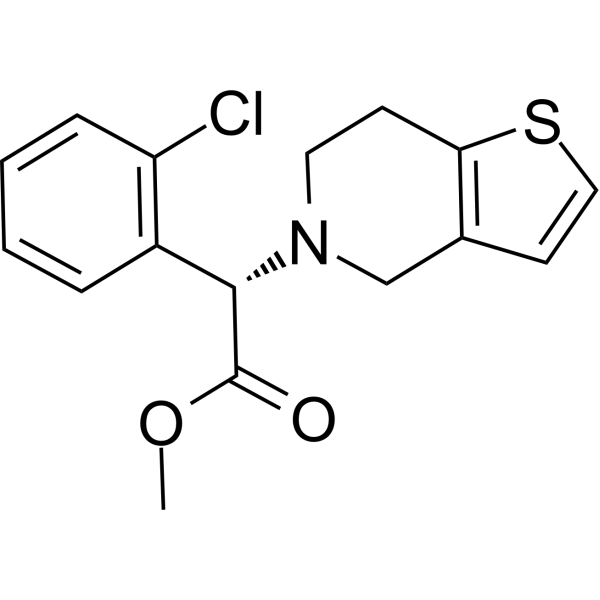
HY-15283
ClopidogrelAntiplatelet Agent
Ver todos los productos específicos de isoformas P2Y Receptor
MoreVer todos los productos específicos de isoformas Phospholipase
More

Actividad biológica
Descripciòn
|
P2Y2 Receptor 1.89 μM (EC50) |
PI3K |
PKC |
Akt |
CaMK II |
G-quadruplex |
Phospholipase |
Src |
eNOS |
ERK |
Sodium Channel |
In Vitro
MRS2768 (Compound 7) exerts agonistic activity against hP2Y2 (EC50 = 2.76 μM) in stably transfected astrocytoma cells, yet produces no response at hP2Y4 and hP2Y6[1].
MRS2768 shows superior resistance to both acidic hydrolysis and ectonucleotidase-mediated degradation in 1321N1 astrocytoma cell membranes compared with native UTP[1].
MRS2768 (Compound 30) (30 min) selectively stimulates PLC-mediated signaling via human P2Y2 receptors with an EC50 of 1.89 μM and produces no activation of hP2Y4 or hP2Y6 receptors in stably transfected 1321N1 human astrocytoma cells.[2].
MRS2768 (1-50 μM; 24 h) inhibits the growth of HK-2 cells at 50 μM[3].
MRS2768 (20 μM; 1 h) alone does not alter extracellular ATP levels in the culture medium of HK-2 cells, whereas TNF-α (Adalimumab) (HY-P9908) treatment and combined TNF-α and MRS2768 treatment significantly increase extracellular ATP levels[3].
MRS2768 (20 μM; 1-8 h) increases the mRNA expression level of P2Y2R in HK-2 cells[3].
MRS2768 (20 μM; 5-60 min) significantly elevates the phosphorylation of PKC, Src, and Akt in HK-2 cells[3].
MRS2768 (20 μM; 5 min) activates PKC, with Src and Akt as its downstream kinases in HK-2 cells[3].
MRS2768 (20 μM; 1 h) attenuates the upregulation of cleaved PARP, caspase-3 and caspase-8, and decreases the number of TUNEL-positive apoptotic cells as well as abnormal fragmented nuclei triggered by 16 h co-incubation of TNF-α and cycloheximide (HY-12320) in HK-2 cells[3].
MRS2768 (20 μM)-mediated P2Y2R activation protects proximal tubular cells from apoptotic stress and TNF-α stimulation through the PI3K/Akt signaling pathway[3].
MRS2768(10-50 μM; 1 h) dose-dependently reduces cardiomyocyte damage and death caused by prolonged hypoxia[4].
MRS2768 (50 μM; 1 h) exerts cardioprotective effects via P2Y2R[4].
MRS2768 (1 μM; 30 min) significantly inhibits the activity of epithelial sodium channels (ENaC) in the apical membrane of distal nephron principal cells[6].
MRS2768 (0.1 μM-1 mM; 24 h) significantly boosts PANC-1 cell proliferation in a concentration-dependent fashion, and its pro-proliferative activity at 1 μM after 24 h relies entirely on P2 purinergic receptors with no non-specific off-target effects, acting specifically through P2Y2 receptors instead of other P2 subtypes[7].
MRS2768 significantly elevates peak intracellular calcium levels in rat conjunctival goblet cells[8].
MRS2768 (1 μM)-induced peak intracellular calcium elevation is markedly reduced after P2Y2 receptor knockdown, while scrambled siRNA does not interfere with its calcium-stimulating effect in rat conjunctival goblet cells[8].
MRS2768 (10 μM; 2 h)-mediated P2Y2 receptor activation effectively stimulates tear mucin release, and its pro-secretory potency exceeds UTP and UDP in conjunctival goblet cells[8].
MRS2768 (10 μM; 1 h) induces actin stress fiber formation in human umbilical vein endothelial cells under static culture through intact P2Y2-integrin RGD binding interaction, and this cytoskeletal effect disappears after P2Y2 receptor knockdown or RGD motif mutation[9].
MRS2768 (100 nM-30 μM; 10 min) triggers concentration-dependent vasoconstriction in precontracted porcine isolated pancreatic arterial rings[10].
MRS2768 (30 μM; 7-28 days) boosts cardiac fibroblast proliferation through selective P2Y2 receptor activation[11].
MRS2768 (5 μM; 30 min) markedly reduces total ENaC activity, open probability and the number of active epithelial sodium channels in renal principal cells isolated from wild-type mice[12].
MRS2768 activates the Gαq/11-IP3 and Akt/eNOS signaling pathways in human pulmonary arterial endothelial cells, raising nitric oxide secretion in a time- and concentration-dependent way[13].
MRS2768 produces pulmonary vasodilatory effects and indicates P2Y2 as a promising therapeutic target for pulmonary arterial hypertension[13].
MedChemExpress (MCE) has not independently confirmed the accuracy of these methods. They are for reference only. Further protocols information, click here.
-
Cell Line:HK-2 cells
-
Concentration:1 μM, 5 μM, 10 μM, 20 μM, 50 μM
-
Incubation Time:24 h
-
Result:Decreased cell viability at 50 μM.
-
Cell Line:HK-2 cells
-
Concentration:20 μM
-
Incubation Time:1 h, 2 h, 4 h, 8 h
-
Result:Significantly upregulated P2Y2R expression at 4 h and 8 h post-treatment.
Reduced the mRNA expression levels of proinflammatory cytokines (TNF-α, MIP-2, and IL-6) in cells incubated with TNF-α.
-
Cell Line:HK-2 cells
-
Concentration:20 μM
-
Incubation Time:5 min, 10 min, 20 min, 40 min, 60 min
-
Result:Significantly boosted the phosphorylation of PKC, Src, and Akt in HK-2 cells.
Triggered the induction of p-PKC and p-Akt as early as 5 min post administration.
Sustained the elevated levels of p-PKC and p-Akt before their gradual decline at 60 min.
Induced two distinct peaks of p-Src expression at 5 min and 60 min after treatment.
Upregulated these kinases through P2Y2R activation.
Induced p-Akt was reduced by Gö6983 (HY-13689), PP2 (HY-13805), and wortmannin (HY-10197).
Induced p-Src was reduced by Gö6983 and PP2 but not affected by wortmannin.
Attenuated elevated cleaved PARP, caspase-3, and caspase-8 in TNF-α and cycloheximide-treated HK-2 cells.
Failed to exert its anti-apoptotic effect in the presence of wortmannin, which restored high levels of cleaved PARP, caspase-3, and caspase-8 in TNF-α and cycloheximide-treated cells.
-
Cell Line:HK-2 cells
-
Concentration:20 μM
-
Incubation Time:1 h
-
Result:Rescued the increase in the number of abnormally shaped nuclei after treatment with TNF-α and cyclooctanoic acid.
Rescued the increase in the number of TUNEL-positive cells after treatment with TNF-α and cyclooctanoic acid.
Lost its protective effect and exhibited apoptotic features when combined with wortmannin.
-
Cell Line:Cardiomyocytes
-
Concentration:10 μM, 50 μM
-
Incubation Time:1 h
-
Result:Significantly reduced LDH release levels.
Reduced cell death rate under hypoxic conditions.
Mediated cardioprotection against hypoxia was attenuated by the P2Y2R antagonist AR-C118925 (AR-C118925XX) (HY-110126).
-
Cell Line:PANC-1 cells
-
Concentration:1 μM
-
Incubation Time:24 h
-
Result:Induced cell proliferation is almost completely abolished after suramin pretreatment.
Lost its proliferative ability when P2Y2 receptor expression was knocked down by specific siRNA.
-
Cell Line:HUVECs
-
Concentration:10 μM
-
Incubation Time:1 h
-
Result:Markedly elevated the proportion of HUVECs with abundant actin stress fibers under static culture conditions.
Exerted cytoskeletal remodeling function via the RGD integrin-binding domain of P2Y2 receptors, and intact receptor-integrin interaction is indispensable for its downstream actin regulatory signaling.
-
Cell Line:Cardiac fibroblast
-
Concentration:30 μM
-
Incubation Time:7 days, 14 days, 21 days, 28 days
-
Result:Increased cardiac fibroblast proliferation via activating the P2Y2 receptor.
In Vivo
MRS2768 (4.44 μg/kg; i.v.; single dose) preserves left ventricular systolic function, attenuates adverse left ventricular remodeling, reduces myocardial infarct size, lowers serum Troponin T and TNF-α levels, alleviates neutrophil inflammatory infiltration, and modulates phospho-c-Jun expression after myocardial infarction[4].
MRS2768 (25 µg/kg; i.p.; once daily; until the mice were sacrificed) improves renal function, alleviates tubular injury, reduces renal fibrosis and inflammation, and normalizes abnormal JunB signaling to facilitate kidney recovery after renal ischemia-reperfusion injury[5].
MRS2768 (5 mg/kg; i.p.; once daily) induces prominent natriuresis in mice maintained on sodium-free diet via systemic P2Y2R activation[6].
MRS2768 (0.2 mg/kg; i.p.; once daily; for consecutive 6 days) induces persistent and significant elevation of 24-hour urinary sodium excretion in wild-type mice maintained on sodium-restricted diet[12].
MRS2768 (0.2 mg/kg; i.p.; once daily; given day 9 to day 12 after DOCA implantation) loses hypotensive effects in DOCA-salt hypertensive mice lacking principal cell P2Y2 receptors, verifying renal tubular P2Y2 is the core target mediating MRS2768 antihypertensive function[12].
MedChemExpress (MCE) has not independently confirmed the accuracy of these methods. They are for reference only.
-
Animal Model:IR-injured male mice (7 weeks old)[3]
-
Dosage:25 μg/kg
-
Administration:i.p., single dose
-
Result:Suppressed the elevation of plasma creatinine observed 24 hours after IR injury.
Reduced the IR-induced tubular injury and necrosis.
Markedly decreased the elevated neutrophil infiltration in tissues subjected to renal IR injury.
Attenuated the increased mRNA levels of proinflammatory cytokines (TNF-α, MIP-2, and IL-6) after IR.
Lowered the elevated number of tubular apoptotic cells detected by TUNEL staining following renal IR injury.
Significantly decreased the expression levels of cleaved caspase-3 and cleaved caspase-3 in IR-injured mice.
elevated the phosphorylation levels of PKC, Src and Akt that were Markedly induced at 1 h post renal IR.
-
Animal Model:Male C57BL/6 wild-type mice with myocardial infarction[4]
-
Dosage:4.44 μg/kg
-
Administration:i.v., single dose
-
Result:Preserved left ventricular systolic function and attenuated adverse left ventricular remodeling after myocardial infarction.
Reduced elevated serum Troponin T levels in myocardial infarction mice.
Reduced myocardial infarct size after LAD ligation.
Reduced elevated serum TNF-α levels in mice after myocardial infarction.
Attenuated inflammatory neutrophil infiltration in the myocardium after myocardial infarction.
Modulated the expression of phospho-c-Jun in the myocardium after myocardial infarction.
-
Animal Model:7-week-old male mice underwent a 1-week acclimatization period before IR injury[5]
-
Dosage:25 µg/kg
-
Administration:i.p., once daily, until the mice were sacrificed
-
Result:Reduced elevated plasma BUN levels and alleviated tubular injury after renal ischemia-reperfusion injury.
Decreased the expression of fibrogenic mediators including TGF-β, fibronectin, and α-SMA in injured kidneys.
Lowered the levels of proinflammatory cytokines including TNF-α, MCP-1, and MIP-2 after renal ischemia-reperfusion injury.
Reduced abnormally elevated JunB expression and restored normal JunB-mediated cell cycle regulation during renal recovery.
-
Animal Model:Young healthy adult (~2 mo old) male and female mice (18.60 g body wt) [6]
-
Dosage:5 mg/kg
-
Administration:i.p., once daily
-
Result:Produced remarkable urinary sodium excretion in sodium-deprived mice through systemic stimulation of P2Y2 receptors.
-
Animal Model:PC-P2ry2-KO mice[12]
-
Dosage:0.2 mg/kg
-
Administration:i.p., once daily, for consecutive 6 days
-
Result:Produced a sustained, remarkable rise in 24-hour urinary sodium excretion in wild-type mice fed a sodium-deficient diet.
-
Animal Model:DOCA-salt hypertensive PC-P2ry2-KO mice[12]
-
Dosage:0.2 mg/kg
-
Administration:i.p., once daily, given day 9 to day 12 after DOCA implantation
-
Result:Markedly reduced elevated mean arterial pressure and systolic blood pressure in DOCA-salt hypertensive wild-type mice.


Chemical Information
-
No. CAS 1047980-83-5
-
Peso molecular 640.22
-
Fòrmula C15H20N2O18P4
-
SMILES
O[C@@H]1[C@H](O)[C@@H](COP(OP(OP(OP(OC2=CC=CC=C2)(O)=O)(O)=O)(O)=O)(O)=O)O[C@H]1N3C(NC(C=C3)=O)=O
-
Envío
Room temperature in continental US; may vary elsewhere.
-
Almacenamiento
Please store the product under the recommended conditions in the Certificate of Analysis.

Protocolo
-
Kinase activity and phosphorylation assays
Kinase activity assays measure the ability of kinases to transfer phosphate groups from ATP to specific substrates, while phosphorylation assays detect the presence and levels of phosphorylated proteins. Common methods include radiolabeled ATP incorporation (e. g. ,), ADP release detection via bioluminescence (e. g. ,[3]), enzyme-linked immunosorbent assays (ELISA) for phospho-specific epitopes (e. g. ,[6]), and microtiter-based formats for high-throughput screening (e. g. ,[8]). The ADP-Glo assay quantifies kinase activity by measuring ADP produced during phosphorylation using a luciferase-based system. Radiometric assays involve autoradiography or scintillation counting after incorporation of 32P-labeled ATP into substrate proteins. ELISA-based approaches rely on phospho-specific antibodies to detect activated kinases in cell lysates or purified samples.
-
Fibrosis/Collagen Morphometry
Fibrosis and collagen morphometry is based on the quantitative visualization of fibrillar collagen deposition in tissue sections using histochemical stains such as Sirius Red (Picrosirius Red) or Masson's trichrome, followed by image-based or polarization-enhanced analysis to estimate collagen proportional area as a surrogate of extracellular matrix accumulation during fibrotic remodeling. Sirius Red combined with polarized light microscopy enhances detection of collagen fibers due to birefringence properties, enabling more specific visualization of collagen type I and III fibrils compared to conventional bright-field histology, while whole-section or region-restricted digital morphometry reduces field-selection bias in fibrosis assessment. Alternative quantitative approaches include second harmonic generation (SHG) and two-photon excited fluorescence microscopy, which enable label-free detection of fibrillar collagen and have been validated against histological staining and biochemica
-
Western Blot
Western blotting (WB) is a commonly used experimental method in molecular biology, biochemistry, and immunogenetics for identifying and quantifying target proteins. It combines gel electrophoresis with immunoassay, enabling researchers to analyze protein expression, post-translational modifications, and molecular weight.
-
Collagen: Sirius Red Staining
Sirius Red or picrosirius red staining is a histochemical method for visualizing collagen-rich extracellular matrix in tissue sections, and collagen fibers are detected as red-stained structures under bright-field microscopy with enhanced birefringence under polarized light. Picrosirius red is useful for assessing total collagen organization, distribution, and fibrosis burden, but polarized color should not be interpreted as a definitive collagen type I versus type III readout because color is affected by fiber orientation, thickness, and packing.
-
Apoptosis
Apoptosis, also called programmed cell death, is generally characterized by distinct morphological characteristics.
-
Nephrotoxicity Study
This protocol assesses nephrotoxicity by combining functional kidney injury readouts, urinary/tissue injury biomarkers, and renal histopathology. Serum creatinine and BUN reflect impaired kidney function, while KIM-1, NGAL, clusterin, osteopontin, IL-18, cystatin C, nephrin, Oat5, urinary protein, glucose, and alkaline phosphatase have been used to detect tubular injury in cisplatin-, gentamicin-, and acetaminophen-induced nephrotoxicity models.
-
Connective Tissue: Masson's Trichrome/Collagen Trichrome Staining
Masson’s Trichrome (collagen/trichrome staining) is a histological technique that differentially stains tissue compartments using sequential acidic dyes to distinguish collagen from muscle and cytoplasmic components based on dye affinity and tissue permeability differences, enabling visualization of fibrosis and connective tissue architecture in histological sections. The classical formulation typically uses Weigert's iron hematoxylin for nuclear staining, Biebrich scarlet-acid fuchsin for cytoplasm and muscle, and aniline blue (or light green variants) for collagen, producing a characteristic blue/green collagen signal contrasted against red cytoplasm and dark nuclei. The staining principle relies on selective displacement of smaller dye molecules by larger anionic dyes in collagen-rich regions under controlled acidified conditions, which enhances collagen-specific dye retention. This property makes the method widely used for fibrosis assessment in organs such as heart, liver, lung, a
-
Endothelial Tube Formation Assay
Endothelial tube formation assay evaluates the ability of endothelial cells to attach, migrate, align, and organize into capillary-like networks when cultured on gelled basement membrane extract or Matrigel; the readout is the morphology and quantity of tube-like networks, which reflects an in vitro endothelial morphogenesis step related to angiogenesis. Basement membrane extract/Matrigel provides laminin-rich extracellular matrix cues that support endothelial differentiation into capillary-like structures, but it can contain biologically active growth factors, so growth-factor-reduced matrix is preferred when testing defined angiogenic stimulators or inhibitors.
-
Apoptosis Solutions
Apoptosis is a regulated, generally non-lytic cell-death pathway that removes unwanted, damaged, infected, or abnormal cells through coordinated morphological changes, caspase activation, DNA fragmentation, and membrane remodeling. The intrinsic apoptosis pathway is controlled mainly by mitochondrial outer membrane permeabilization, BCL-2 family proteins, cytochrome c release, apoptosome formation, caspase-9 activation, and downstream executioner caspase-3/7 activation. The extrinsic apoptosis pathway is initiated by death receptors such as Fas, TNFR, and TRAIL receptors, which recruit adaptor proteins and activate caspase-8 before engaging executioner caspases or mitochondrial amplification through BID cleavage. Apoptosis is linked to many phenotypes, including cancer cell killing, tissue homeostasis, immune regulation, neurodegeneration, infection response, and treatment-induced cytotoxicity; unresolved questions include how apoptosis interacts with necroptosis, pyroptosis, ferroptos
-
Research Protocol for Cardiovascular Diseases
Cardiovascular disease can be modeled as maladaptive cardiac remodeling, where ischemic injury or pressure overload activates inflammatory signaling, fibroblast activation, extracellular-matrix deposition, cardiomyocyte hypertrophy, vascular remodeling, and progressive ventricular dysfunction. The TGF-β/SMAD axis is a central profibrotic pathway after myocardial injury and pressure overload, while innate immune and cytokine pathways regulate leukocyte recruitment, scar formation, and adverse remodeling. Key unresolved questions include which inflammatory signals are reparative versus harmful, when fibrosis is protective versus maladaptive, and whether pathway inhibition improves function without weakening necessary infarct healing or compensatory remodeling.
-
Protocol for Kinase activity and phosphorylation assays
Kinase activity assays measure transfer of phosphate from ATP to a protein or peptide substrate, generating phosphorylated substrate, ADP, or incorporated radiolabeled phosphate as the readout; phosphorylation assays measure site-specific phosphorylation in cells or tissues as a proxy for kinase-pathway activation, inhibition, or substrate regulation. Phosphorylation can be detected by phospho-specific Western blot, immunoprecipitation kinase assay, phospho-immunofluorescence, phospho-flow cytometry, luminescent ADP detection, radiolabeled ATP incorporation, or reporter-based pathway assays, and these readouts can be applied to cancer cells, primary neurons, mouse tumors, organoids, inflammatory macrophages, ferroptosis studies, and mitophagy studies when the kinase target is biologically relevant.
-
Cell Viability Determination by MTT Colorimetric Assay
The following protocol uses the MTT colorimetric assay as a classic literature-established method for assessing cell viability/metabolic activity in cultured mammalian cells. MTT[3-(4,5-dimethylthiazol-2-yl)-2,5-diphenyltetrazolium bromide] is reduced by metabolically active cells to a colored formazan product; the amount of formazan is quantified spectrophotometrically and provides an indirect measure of metabolically active viable cells. Importantly, MTT reduction reflects cellular oxidoreductase/metabolic activity rather than an absolute direct count of living cells, so changes in cellular metabolism can alter the signal independently of cell number.


Pureza y Documentación
Referencias
[1]. Maruoka H, et al. Pyrimidine nucleotides with 4-alkyloxyimino and terminal tetraphosphate δ-ester modifications as selective agonists of the P2Y(4) receptor. J Med Chem. 2011 Jun 23;54(12):4018-33. [Content Brief]
[2]. Ko H, et al. Synthesis and potency of novel uracil nucleotides and derivatives as P2Y2 and P2Y6 receptor agonists. Bioorg Med Chem. 2008 Jun 15;16(12):6319-32. [Content Brief]
[3]. Jeong K, et al. Activation of Purinergic P2Y2 Receptor Protects the Kidney Against Renal Ischemia and Reperfusion Injury in Mice. Int J Mol Sci. 2024 Nov 22;25(23):12563. [Content Brief]
[4]. Hochhauser E, et al. P2Y2 receptor agonist with enhanced stability protects the heart from ischemic damage in vitro and in vivo. Purinergic Signal. 2013 Dec;9(4):633-42. [Content Brief]
[5]. Jeong K, et al. Deficiency of purinergic P2Y2 receptor impairs the recovery after renal ischemia-reperfusion injury and accelerates renal fibrosis and tubular senescence in mice. Sci Rep. 2024 Dec 30;14(1):31932. [Content Brief]
[6]. Mironova E, et al. Renal Na+excretion consequent to pharmacogenetic activation of Gq-DREADD in principal cells. Am J Physiol Renal Physiol. 2019 Apr 1;316(4):F758-F767. [Content Brief]
[7]. Choi JH, et al. Uridine triphosphate increases proliferation of human cancerous pancreatic duct epithelial cells by activating P2Y2 receptor. Pancreas. 2013 May;42(4):680-6. [Content Brief]
[8]. Fjærvoll KA, et al. Pyrimidinergic P2Y1-Like Nucleotide Receptors Are Functional in Rat Conjunctival Goblet Cells. Invest Ophthalmol Vis Sci. 2025 Jan 2;66(1):46. [Content Brief]
[9]. Sathanoori R, et al. P2Y2 receptor modulates shear stress-induced cell alignment and actin stress fibers in human umbilical vein endothelial cells. Cell Mol Life Sci. 2017 Feb;74(4):731-746. [Content Brief]
[10]. Alsaqati M, et al. Investigation of the functional expression of purine and pyrimidine receptors in porcine isolated pancreatic arteries. Purinergic Signal. 2014;10(2):241-9. [Content Brief]
[11]. Certal M, et al. Calcium signaling and the novel anti-proliferative effect of the UTP-sensitive P2Y11 receptor in rat cardiac myofibroblasts. Cell Calcium. 2015 Nov;58(5):518-33. [Content Brief]
[12]. Soares AG, et al. P2Y2 receptor decreases blood pressure by inhibiting ENaC. JCI Insight. 2023 Jul 24;8(14):e167704. [Content Brief]

Calculators
Concentration (start) × Volume (start) = Concentration (final) × Volume (final)


MRS2768 Related Classifications
HY-108649 Related Classifications
 Powered by Bioz