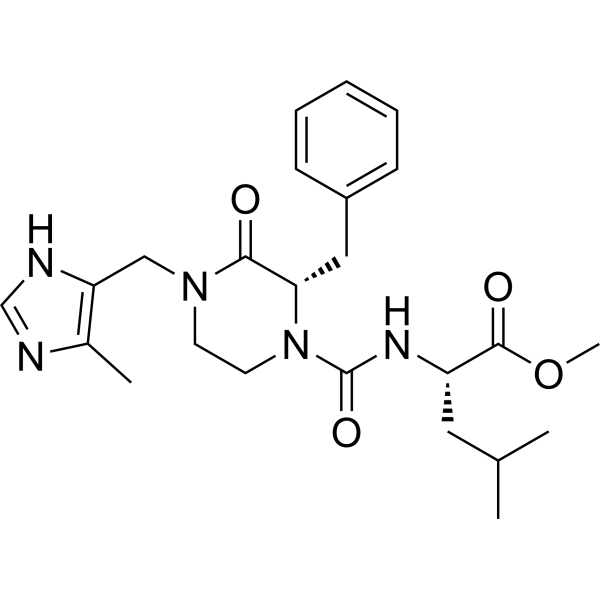
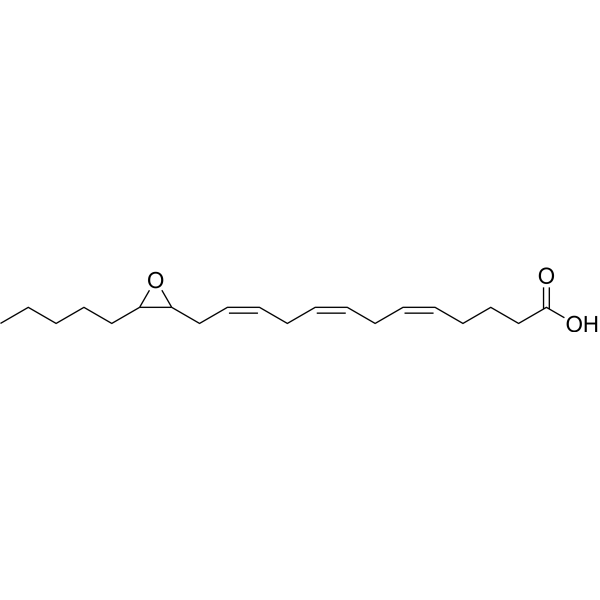
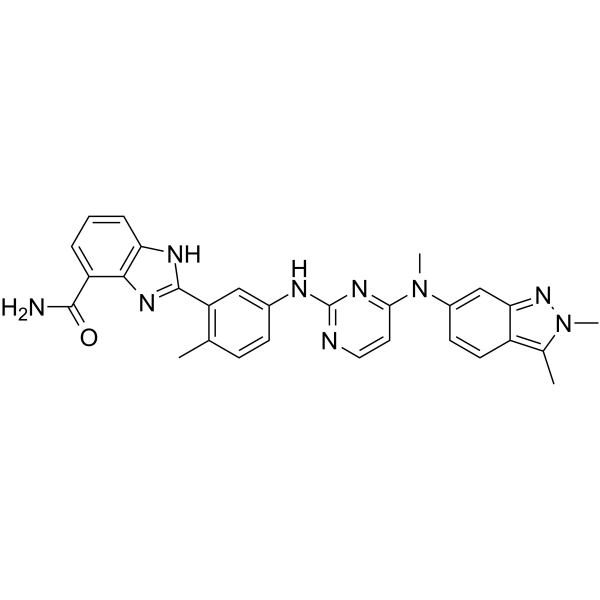
1. Search Result
Search Result
Pathways Recommended: Stem Cell/Wnt Cell Cycle/DNA Damage
Results for "

breast cells

" in MedChemExpress (MCE) Product Catalog:

2014

Inhibitors & Agonists

3

Screening Libraries

28

Fluorescent Dyes

29

Biochemical Assay Reagents

78

Peptides

95

Inhibitory Antibodies

306

Natural
Products

56

Isotope-Labeled Compounds

23

Click Chemistry

32

Oligonucleotides

4

GMP Molecules

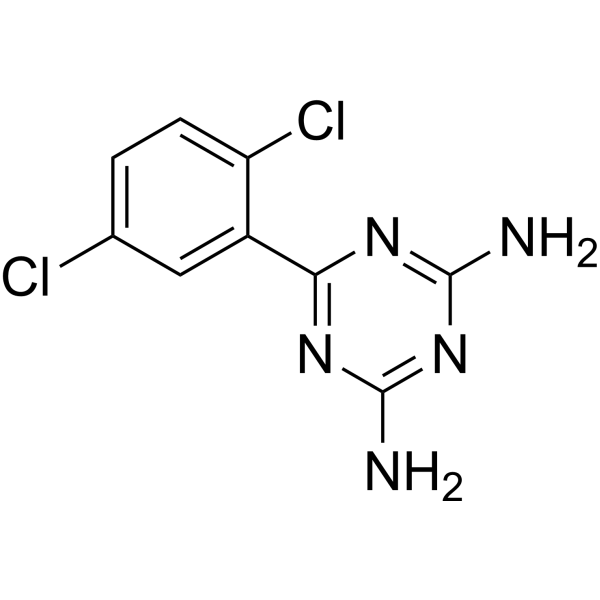
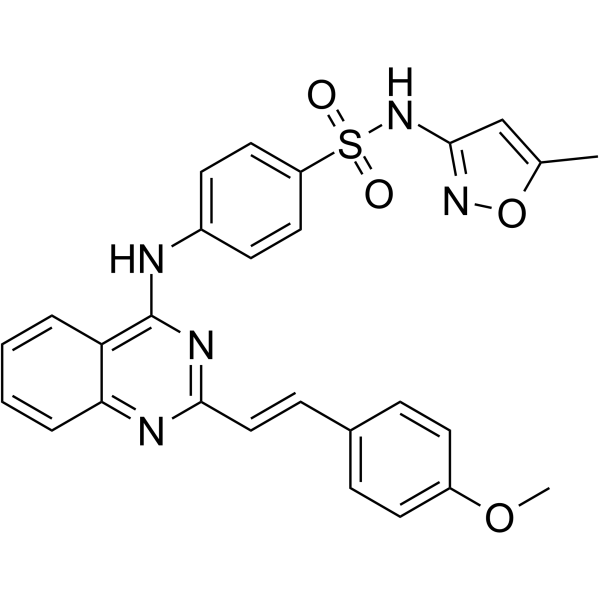
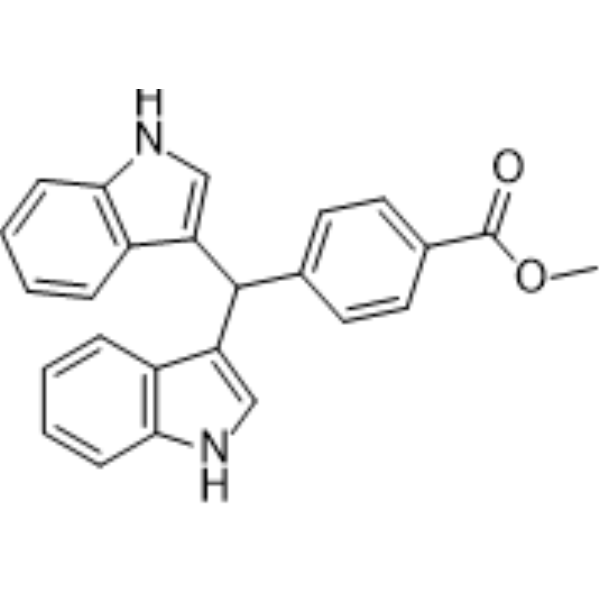
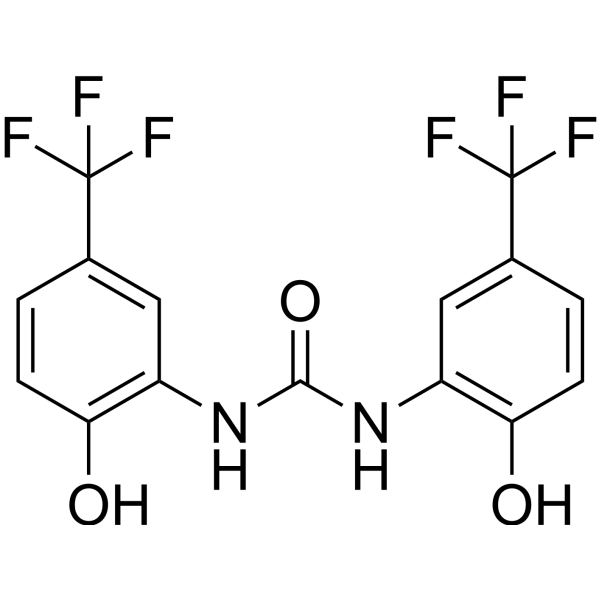
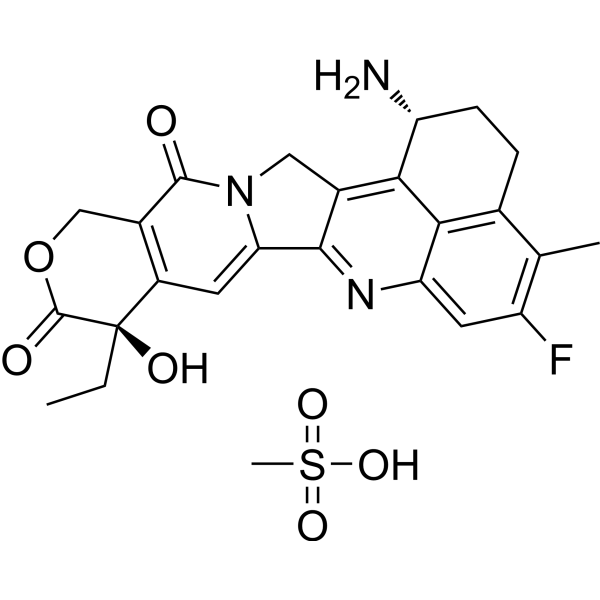
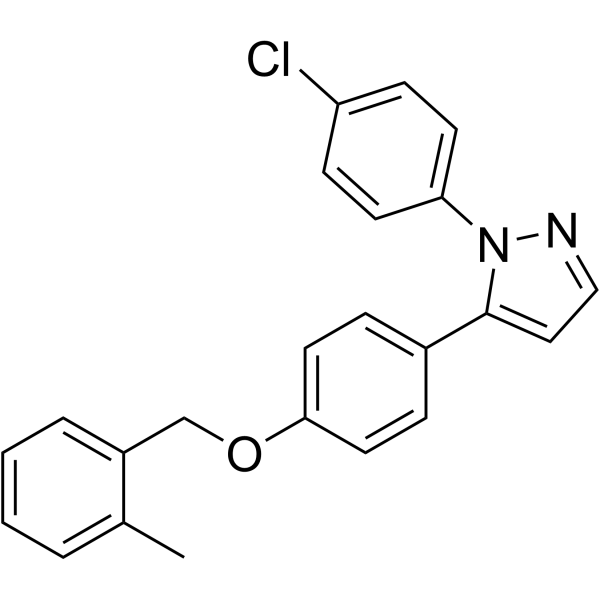
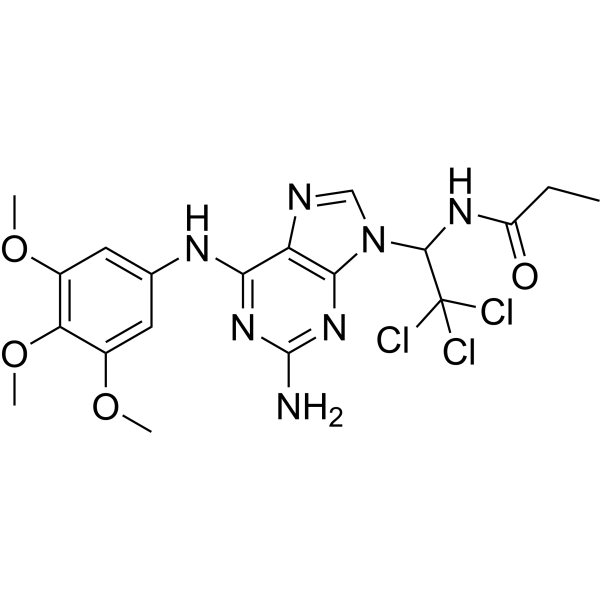
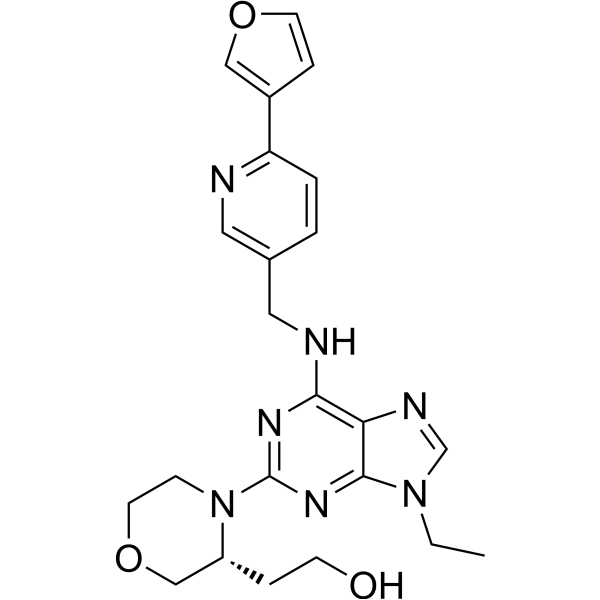
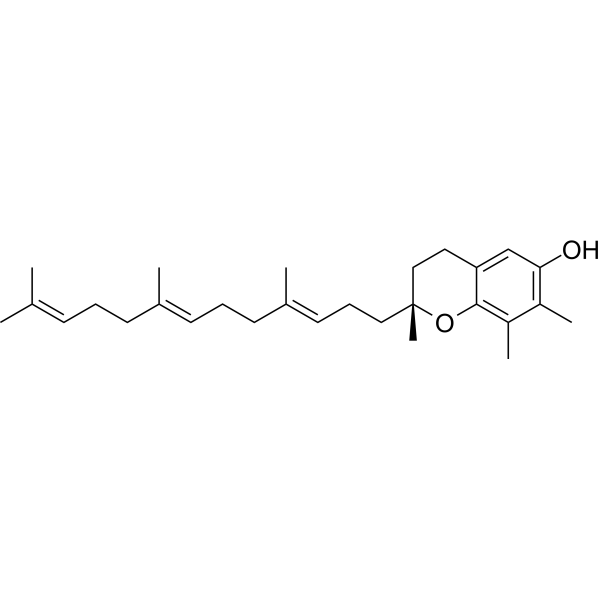
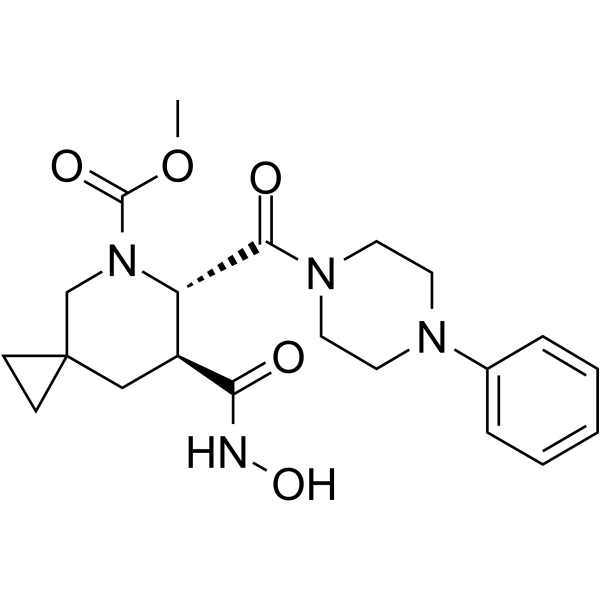
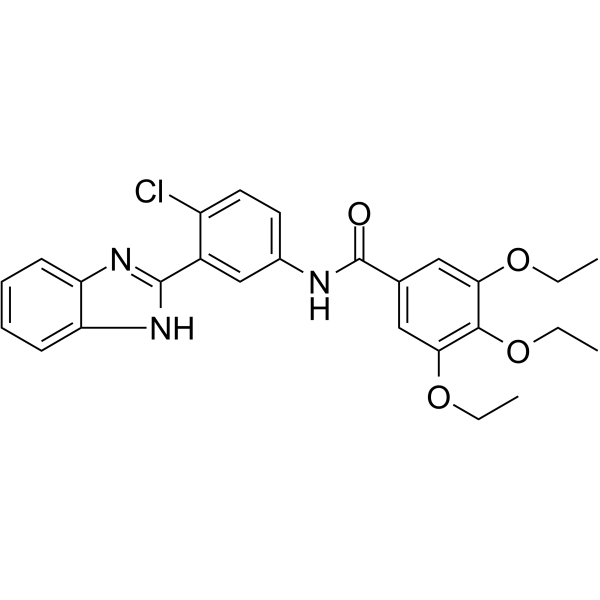
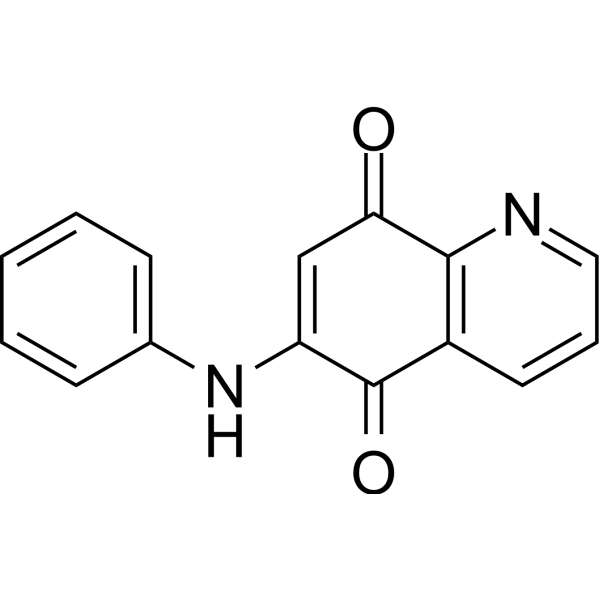
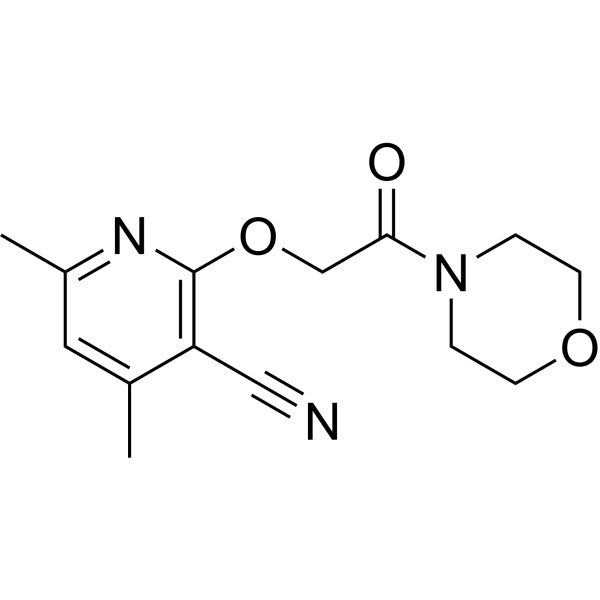
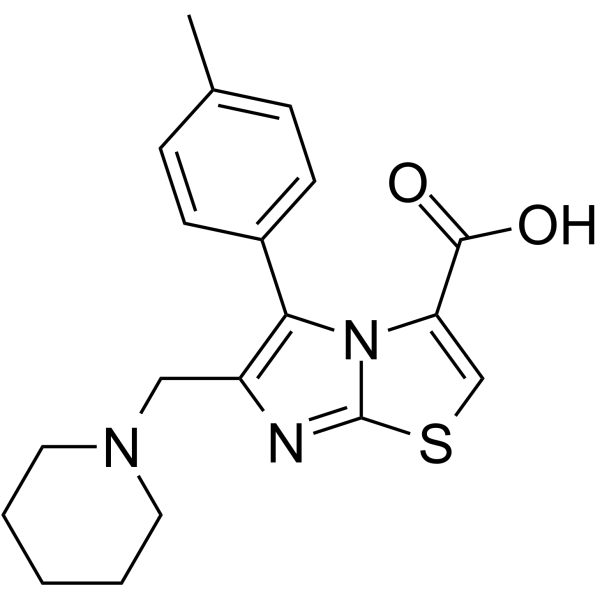
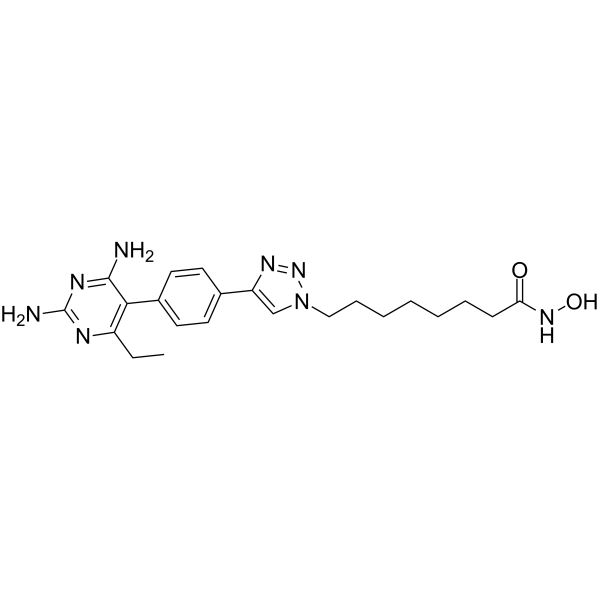
Cat. No. Product Name Target Research Areas Chemical Structure
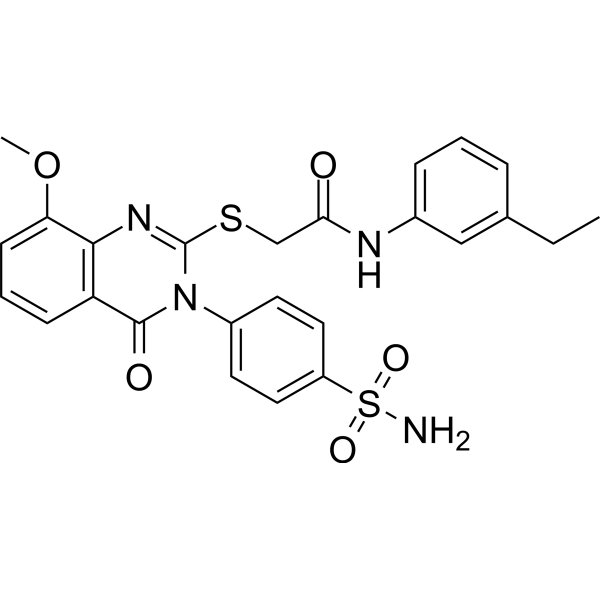
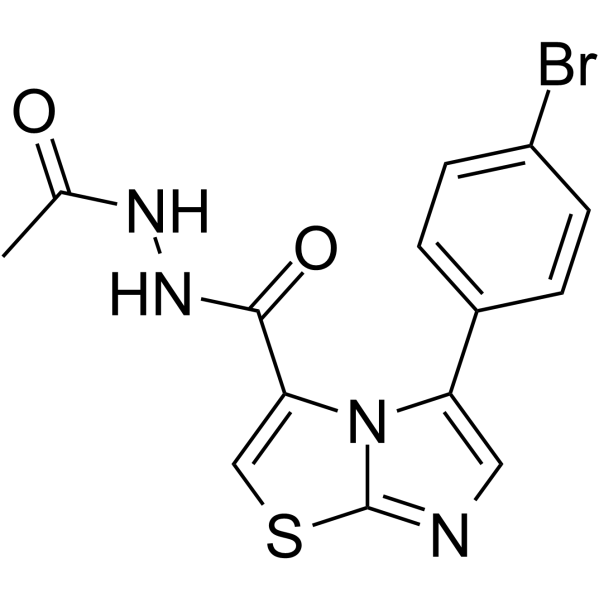
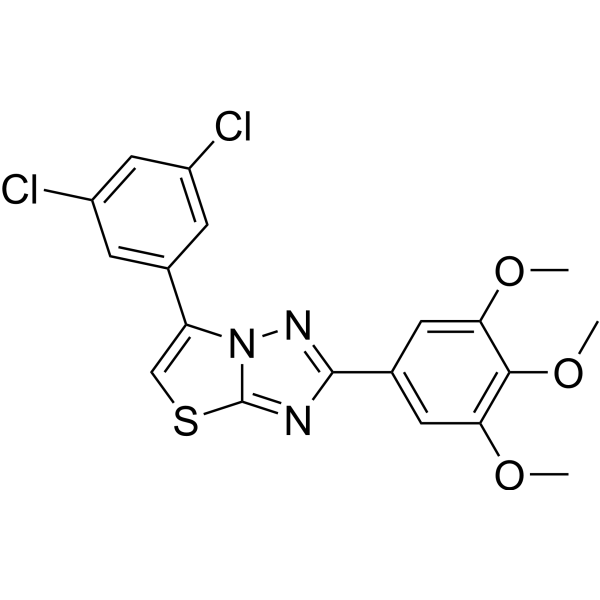
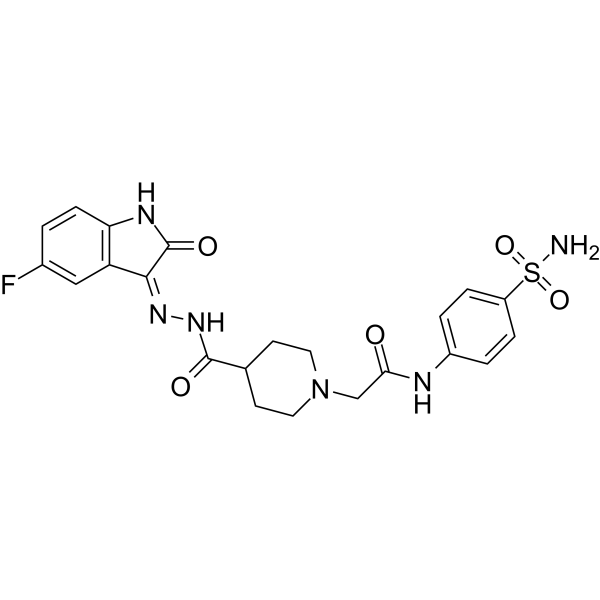
  • HY-Q45780
    ZINC00640089
    5+ Cited Publications

    Akt Cancer
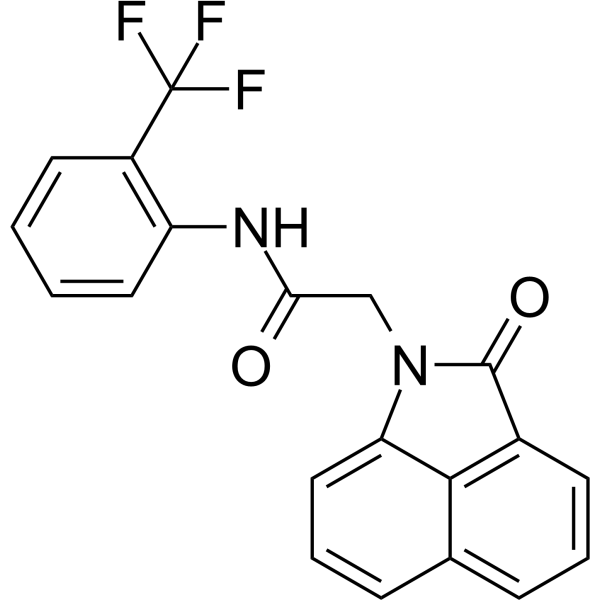
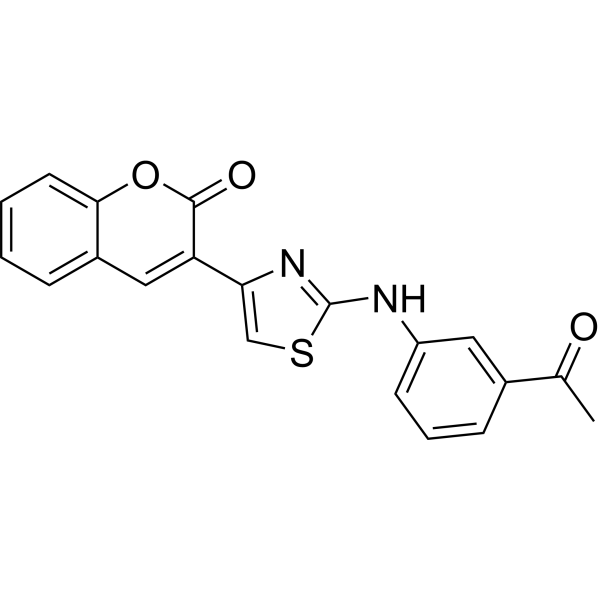
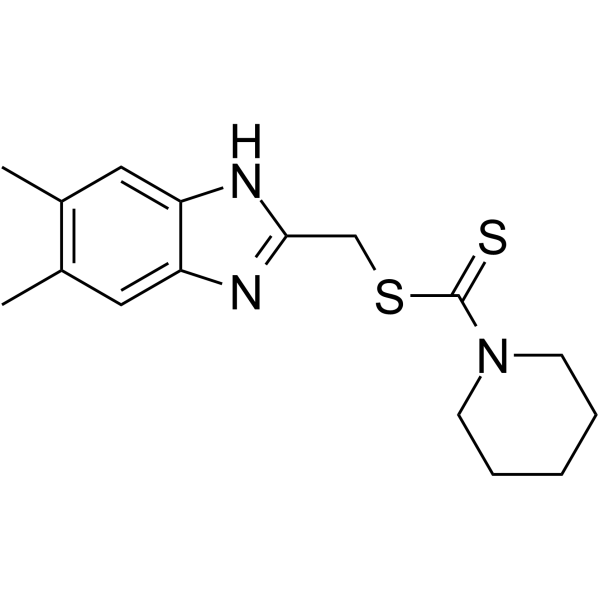
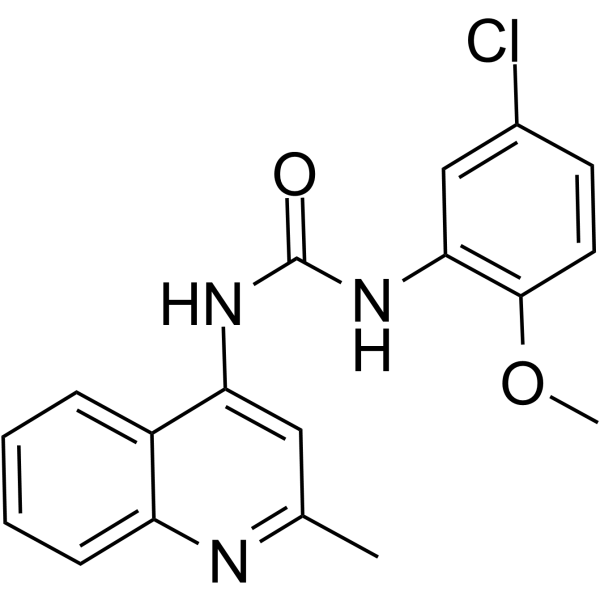
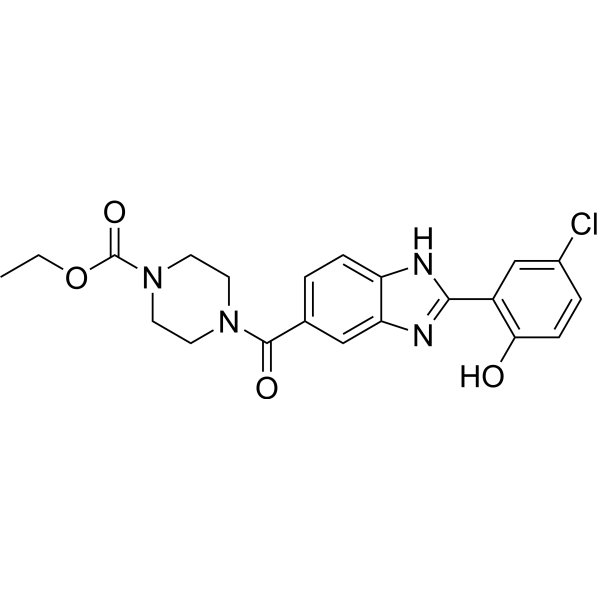
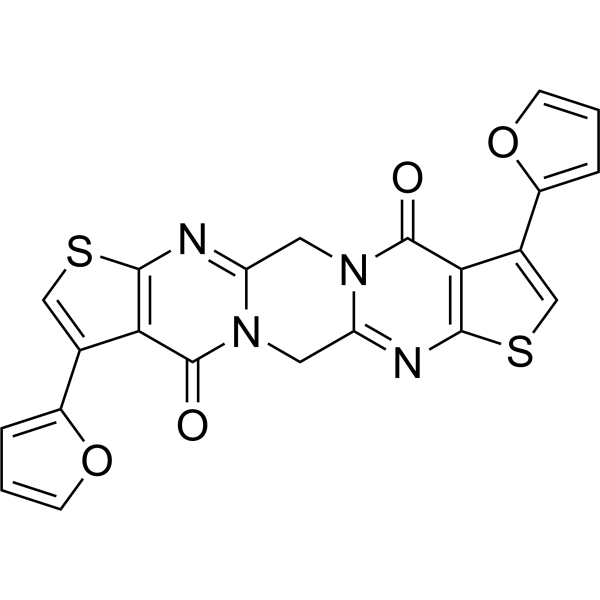
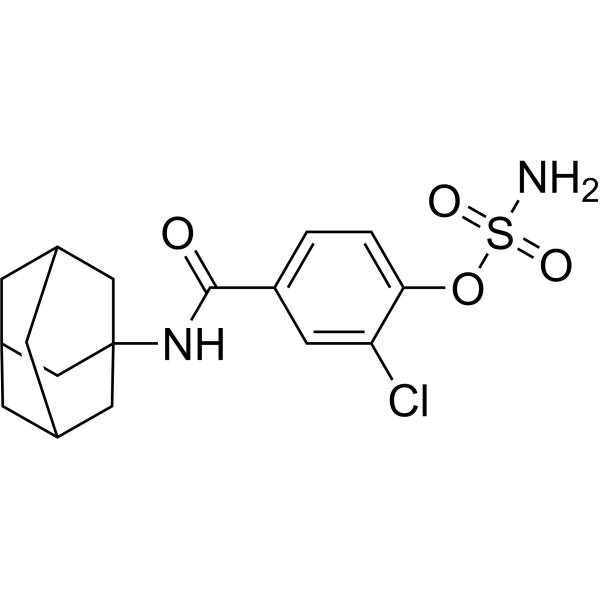
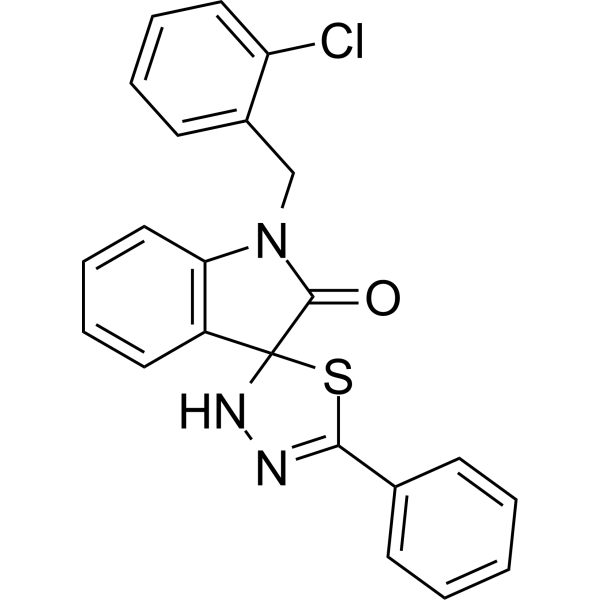
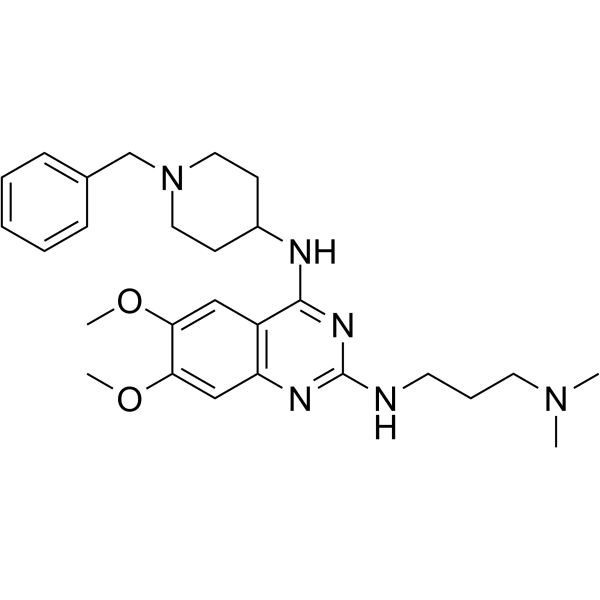
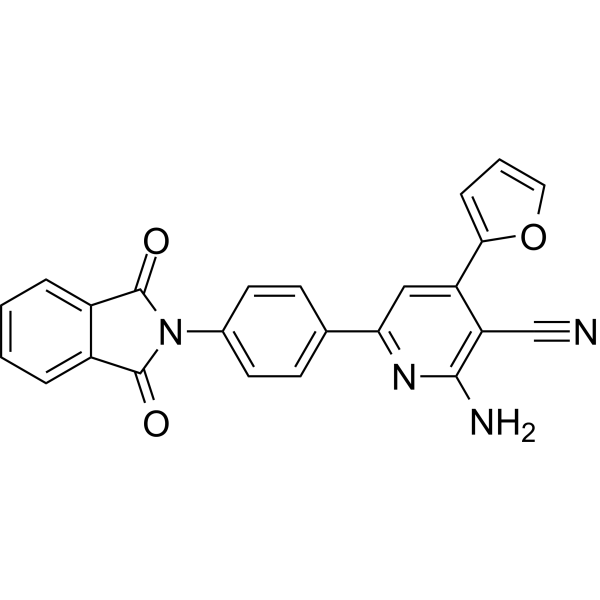
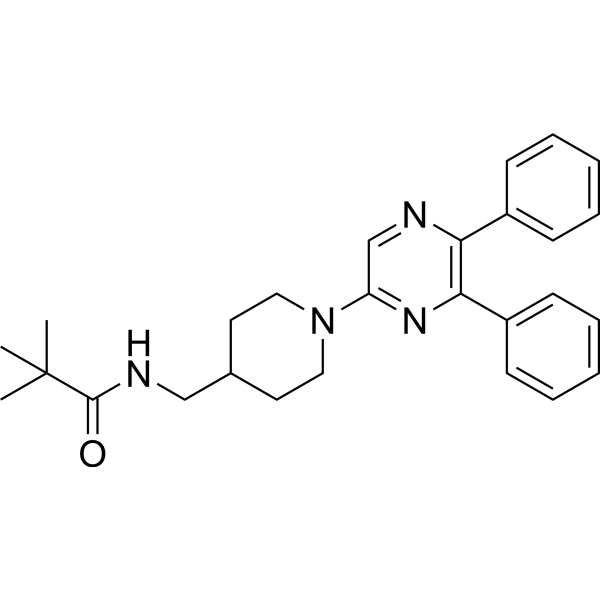
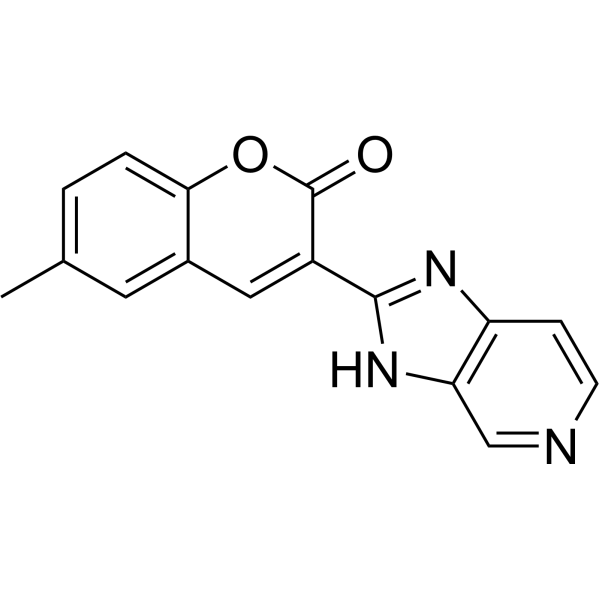
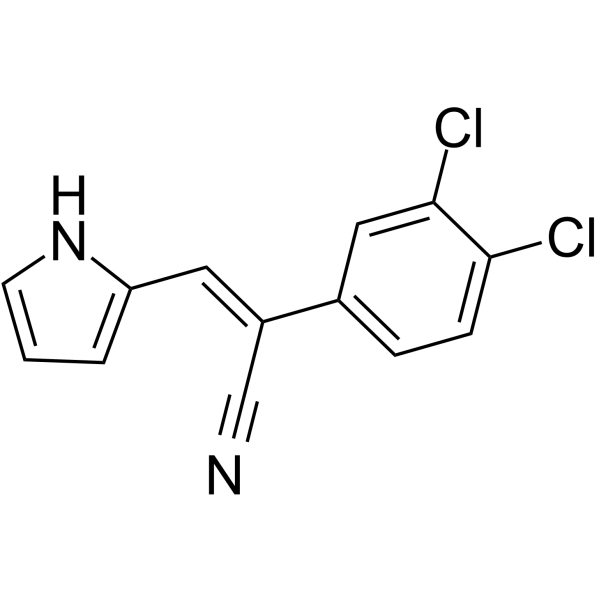
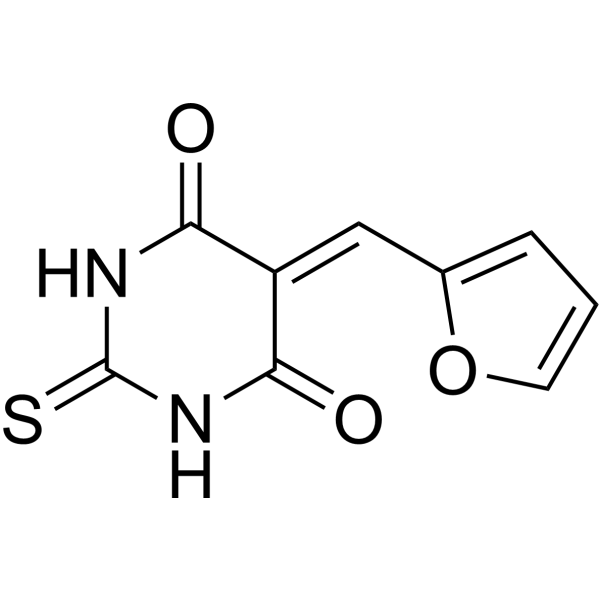
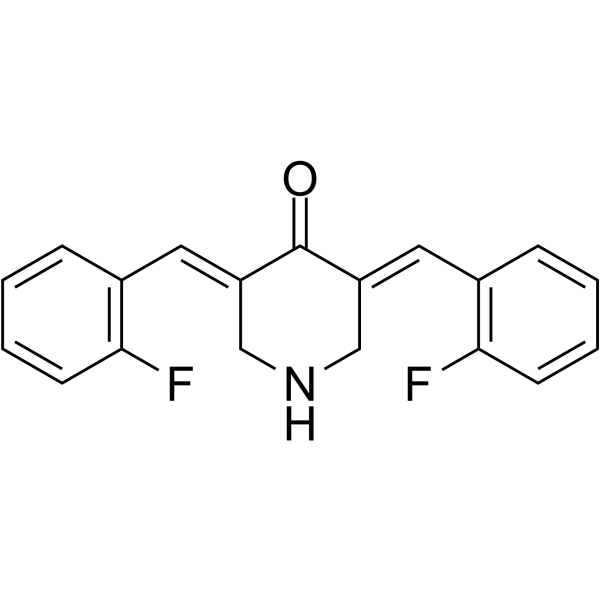
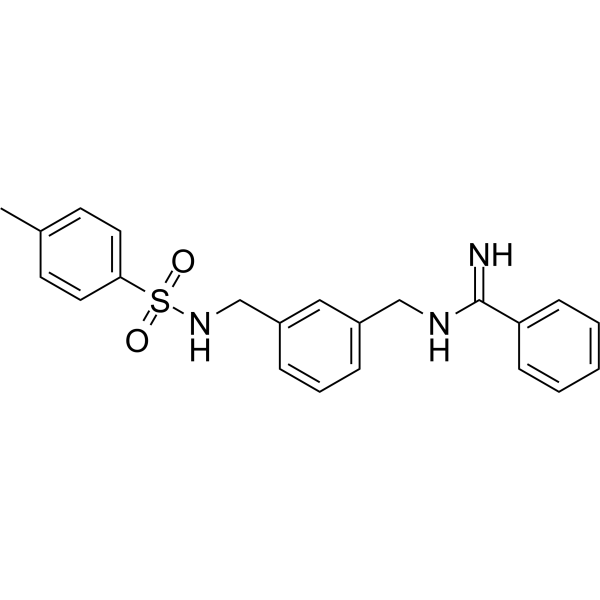
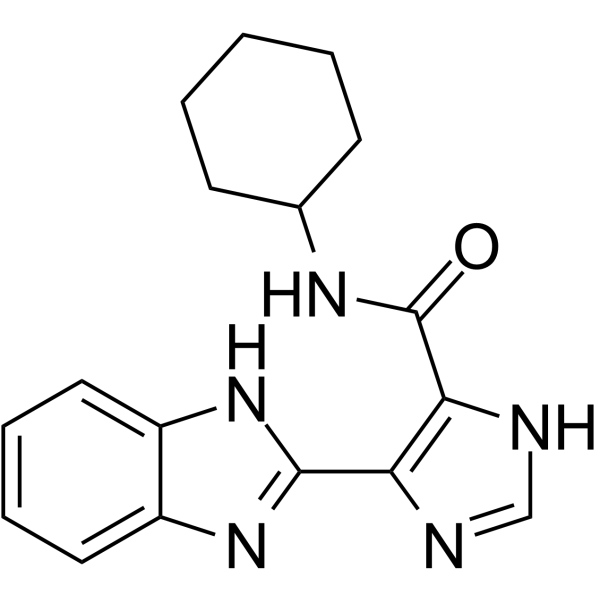
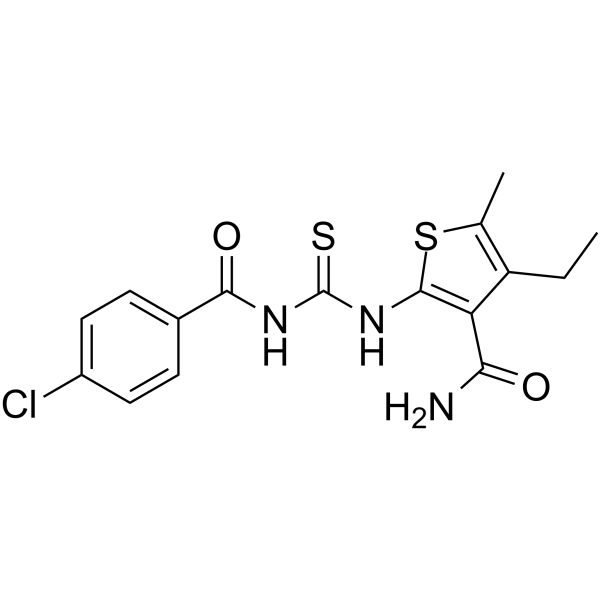
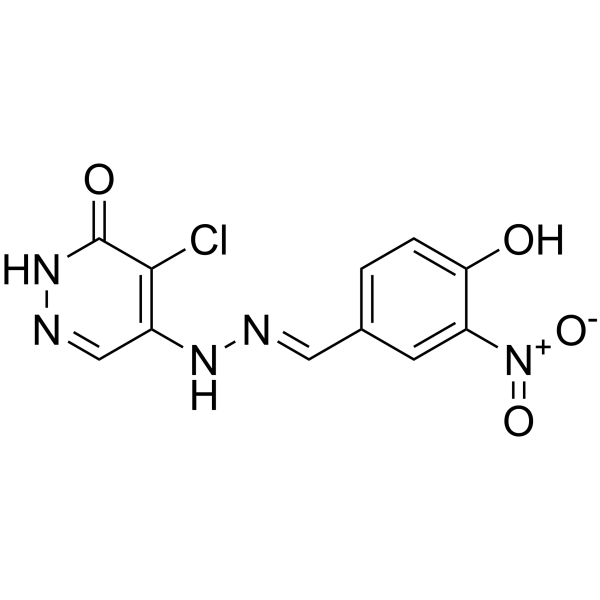
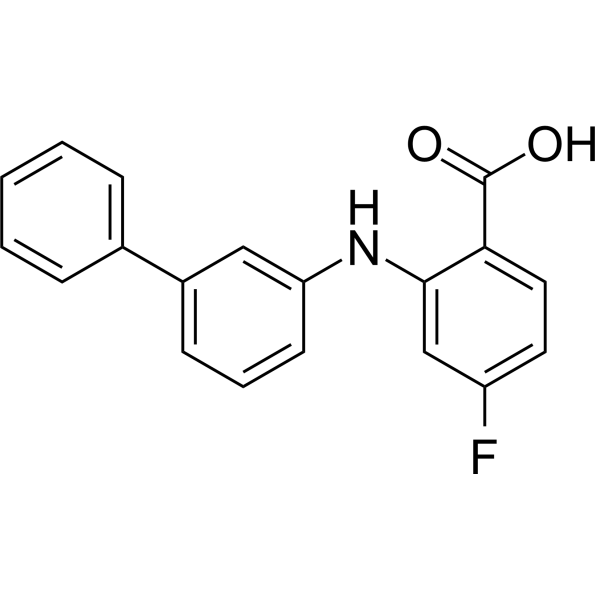
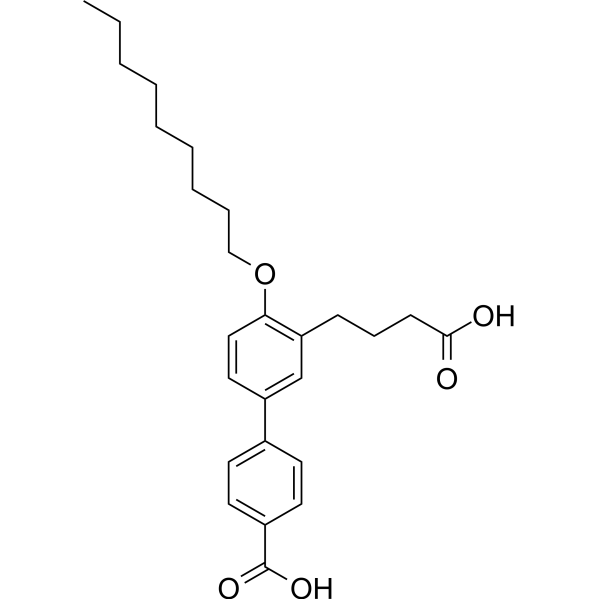
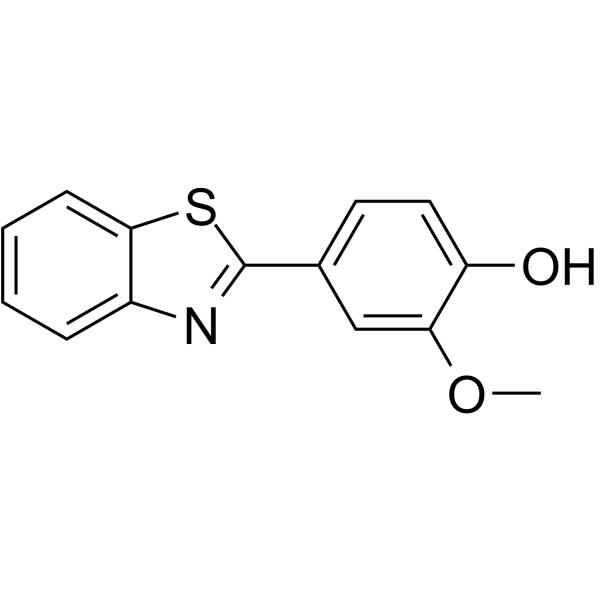
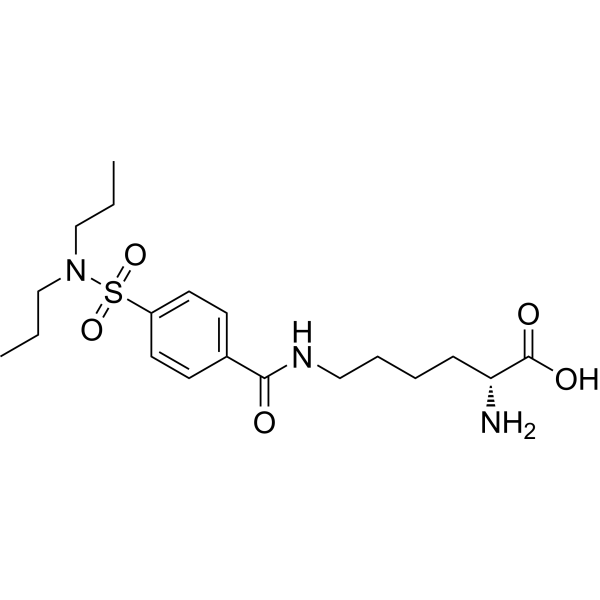
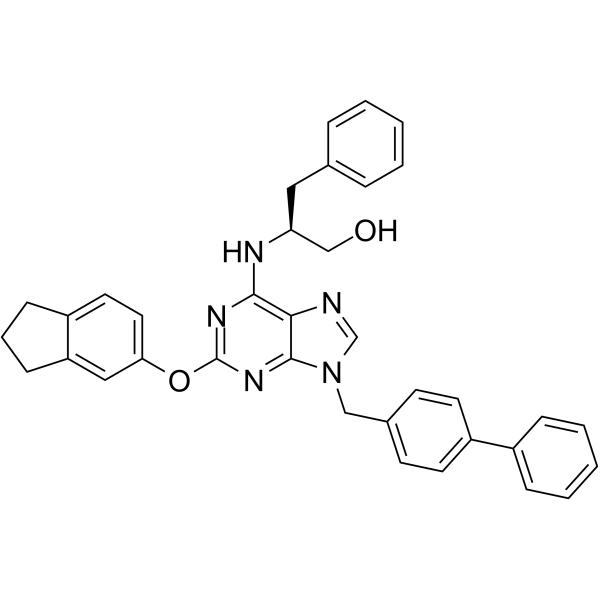
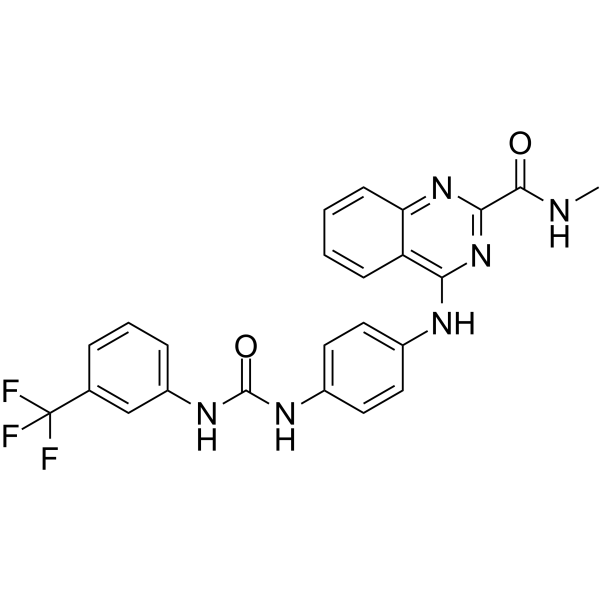
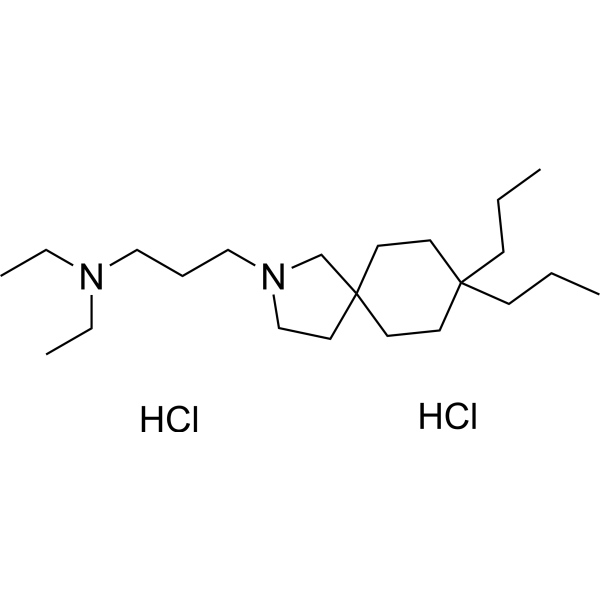
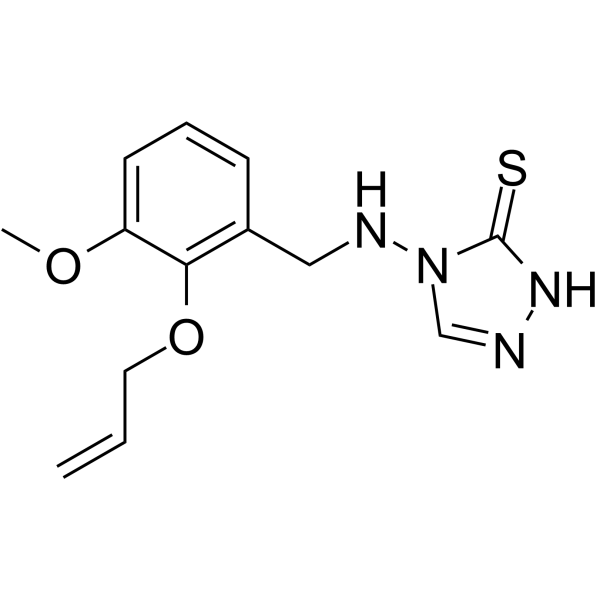
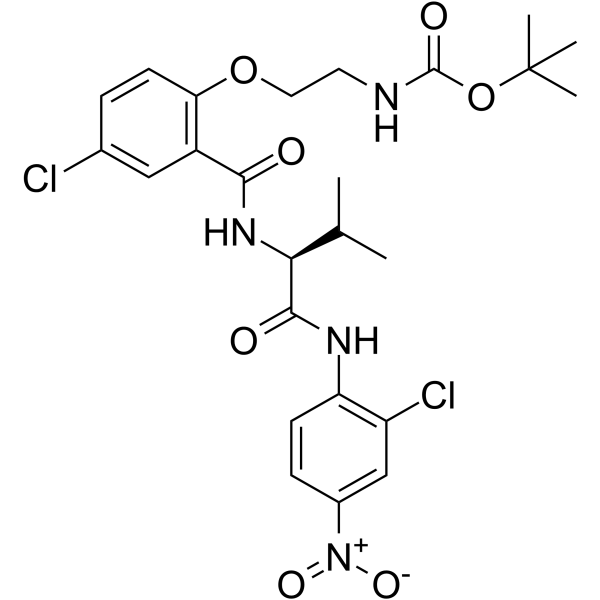
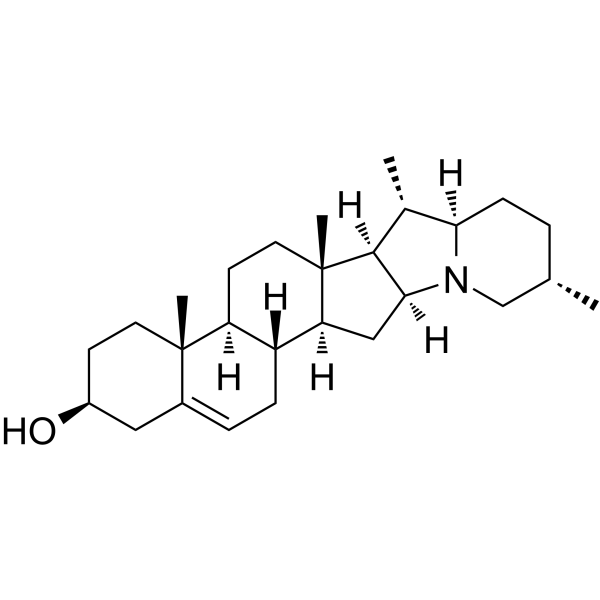
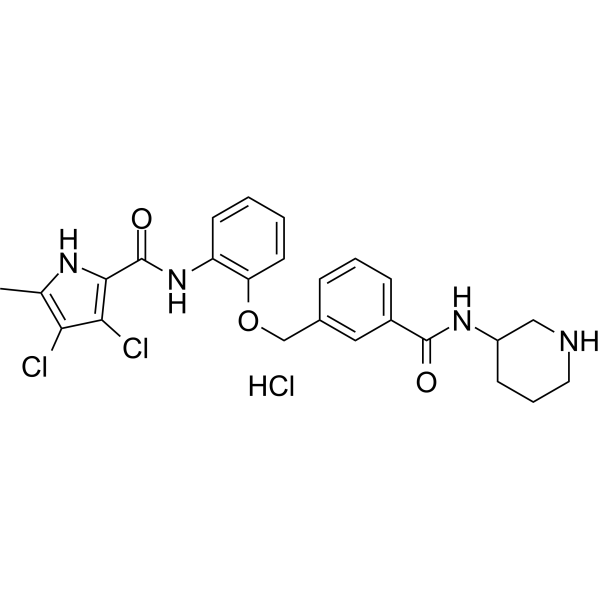
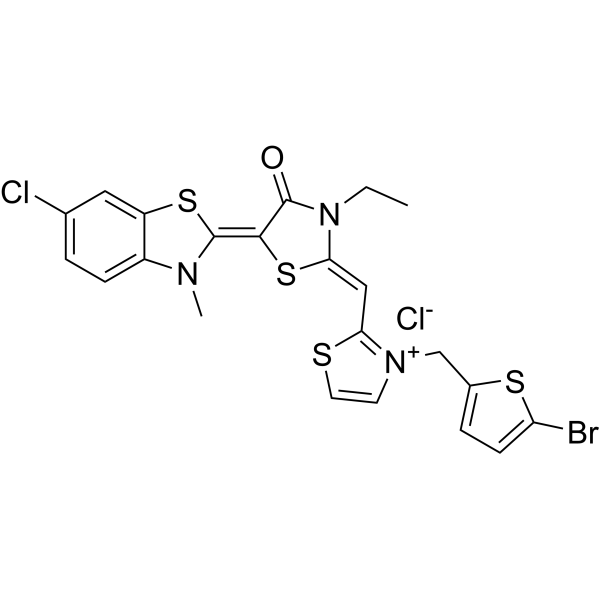
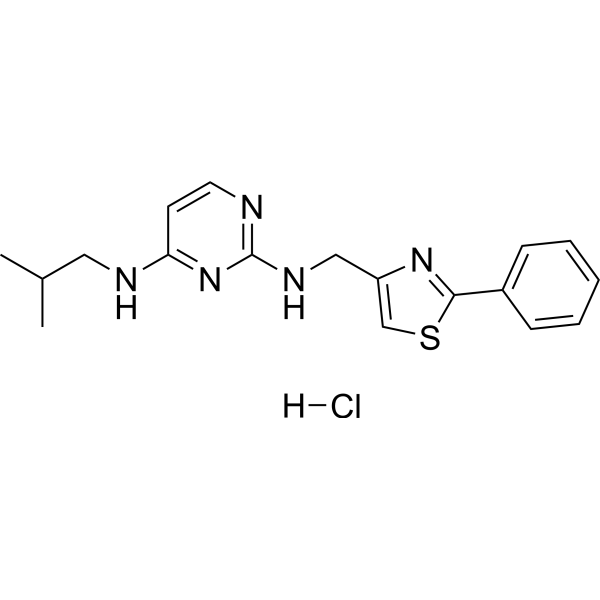
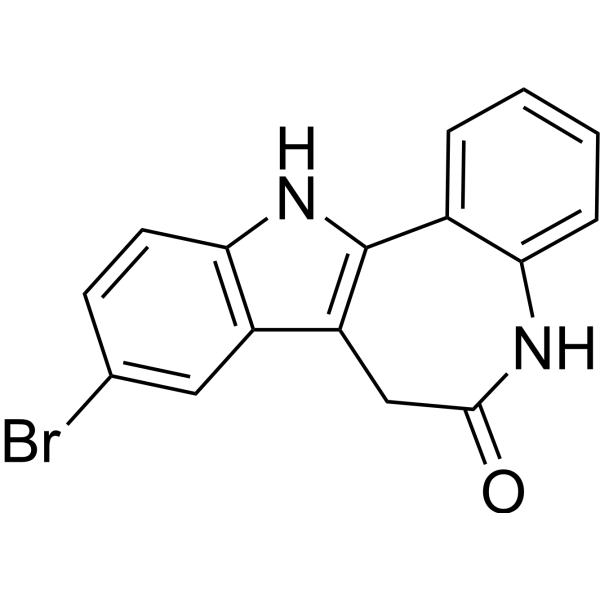
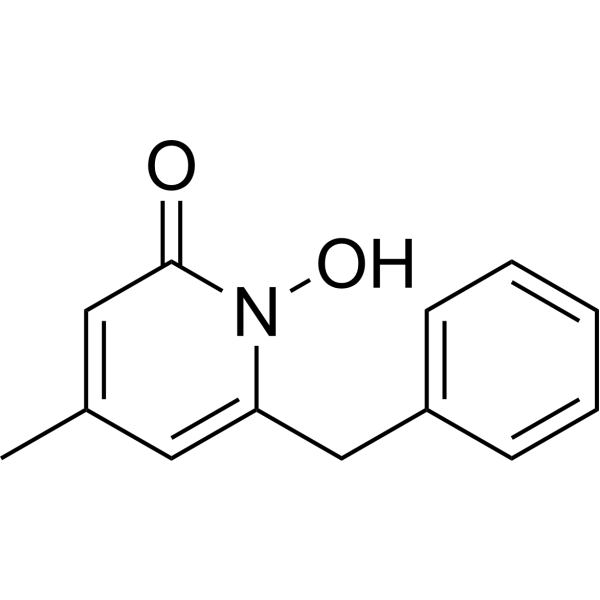
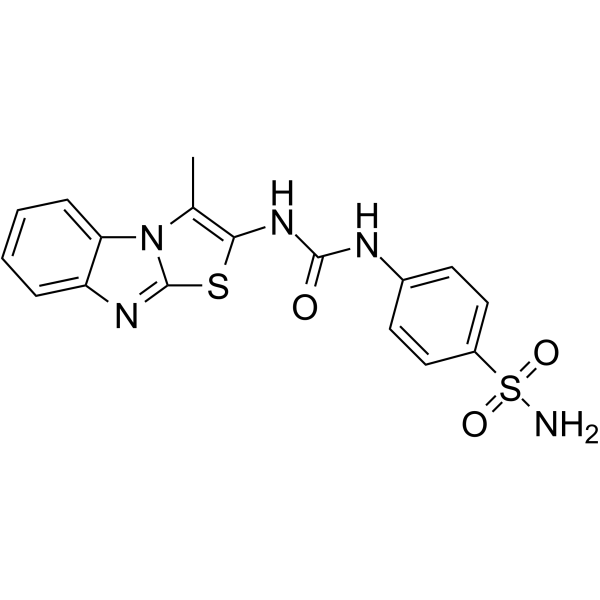
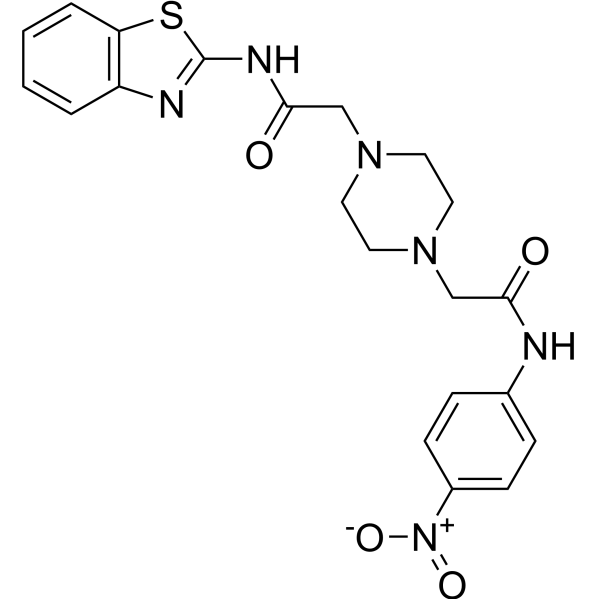
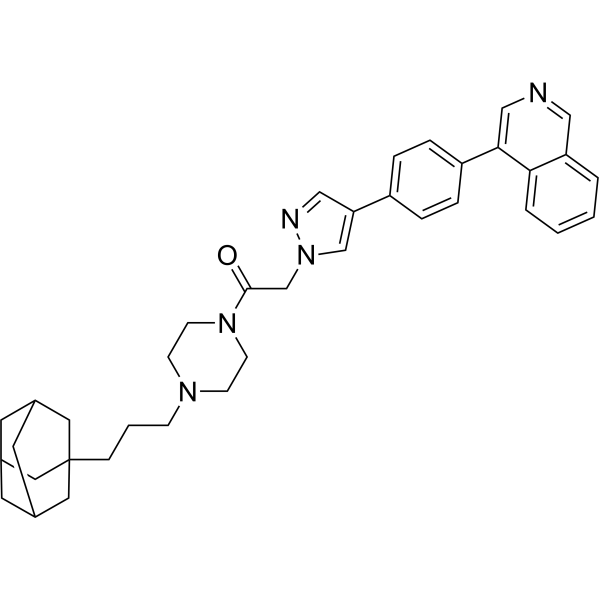
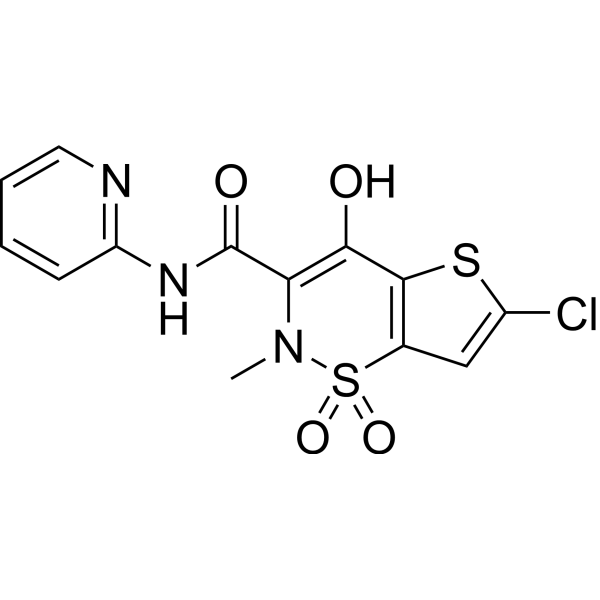
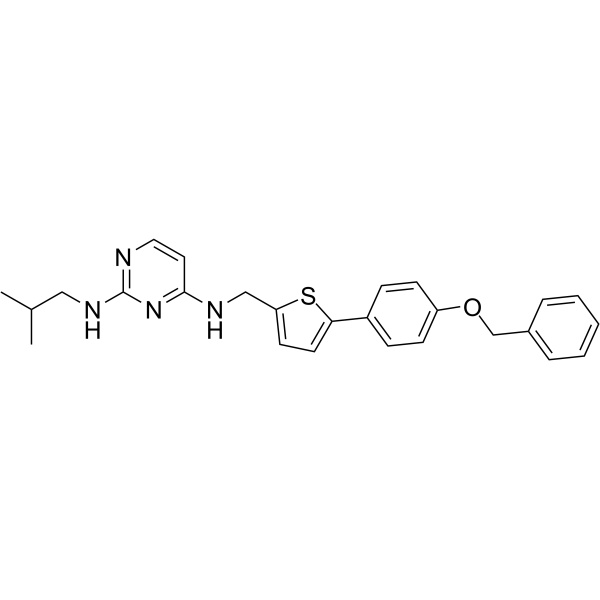
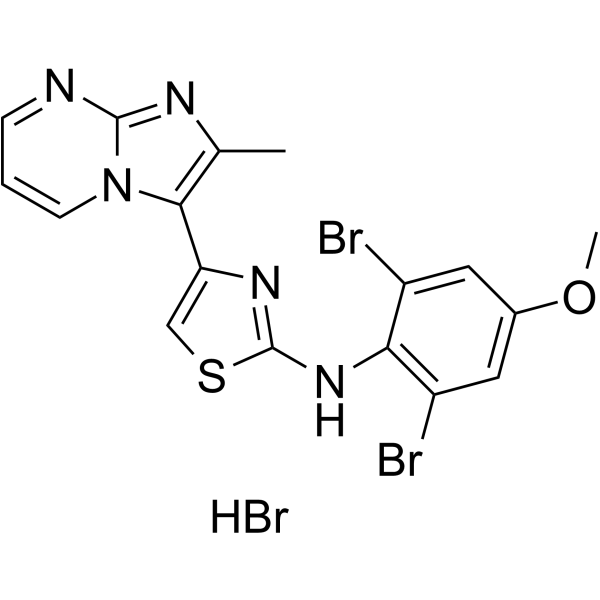
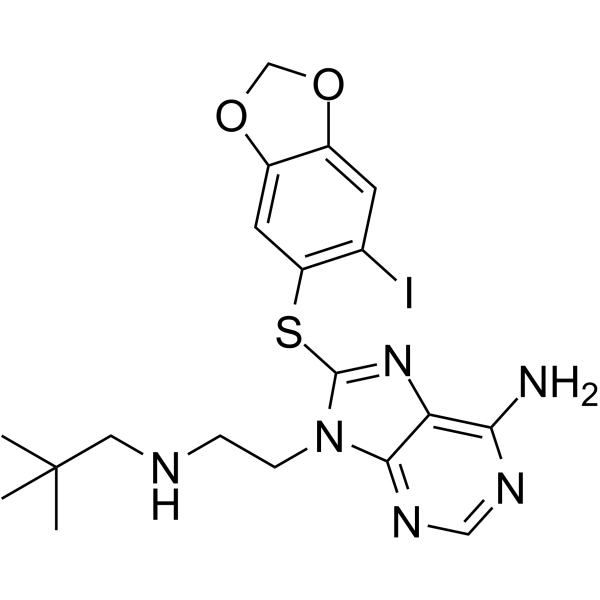
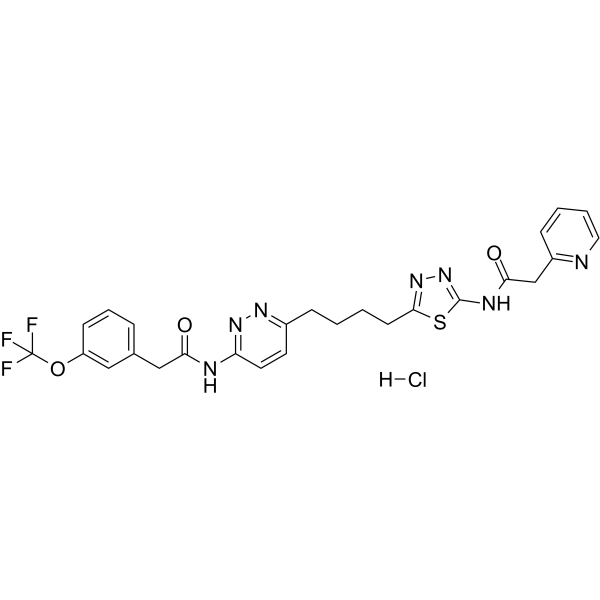
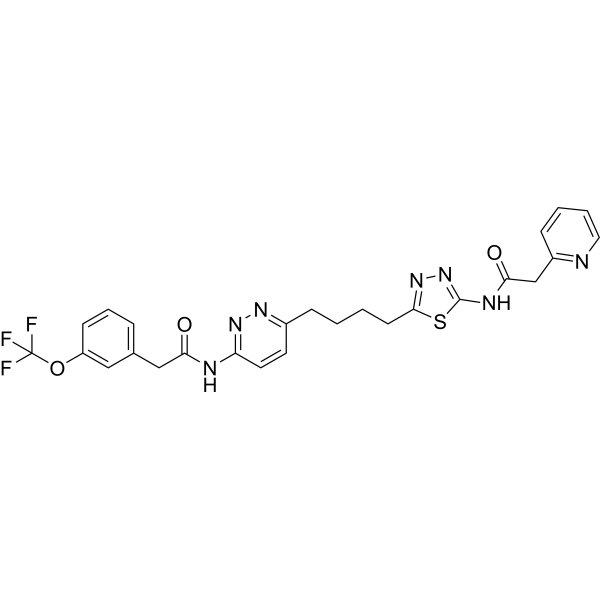
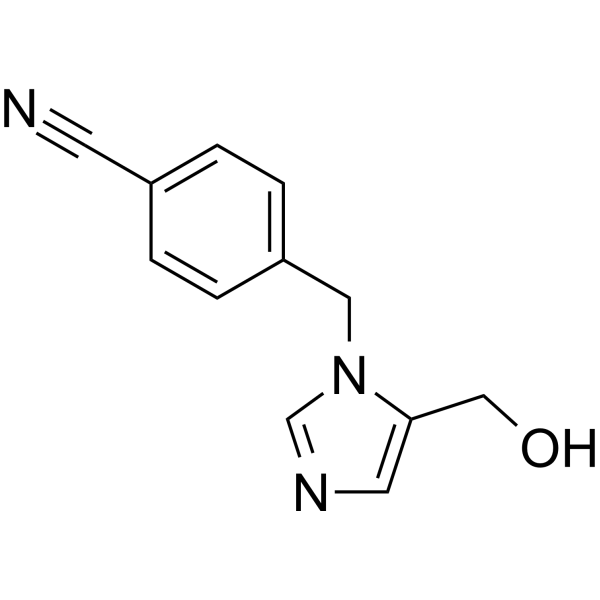
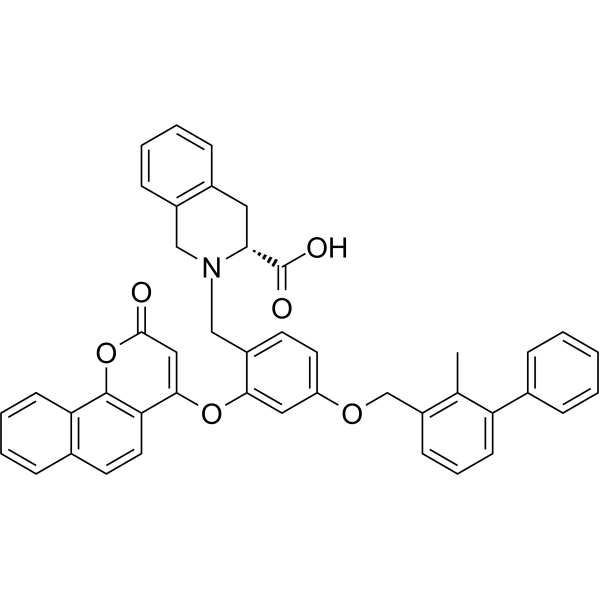
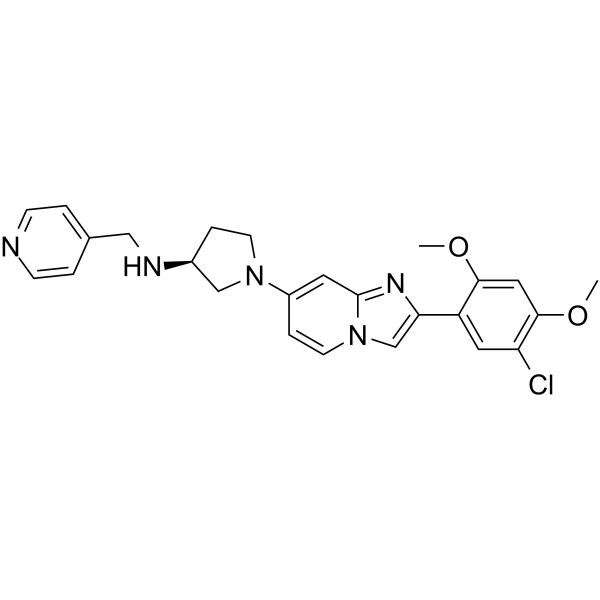
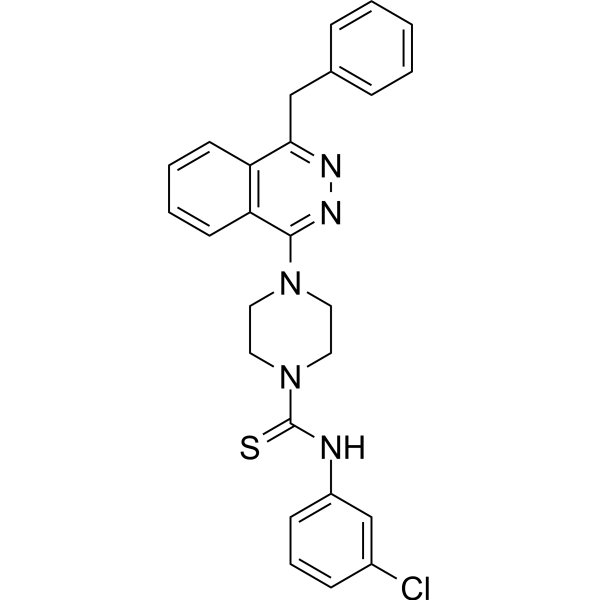
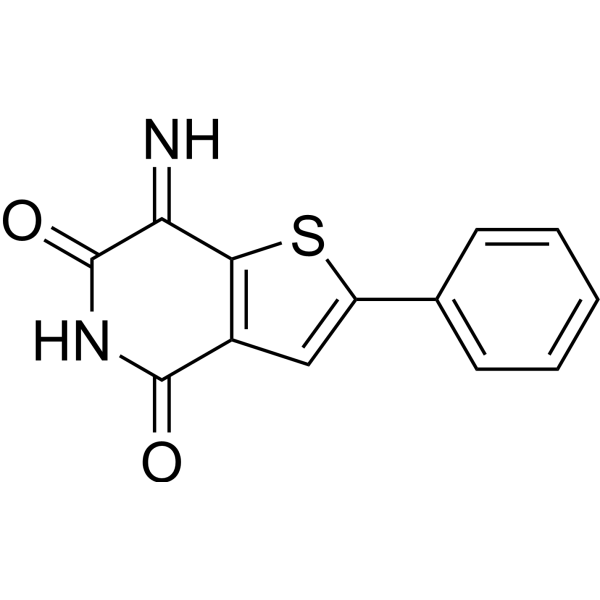
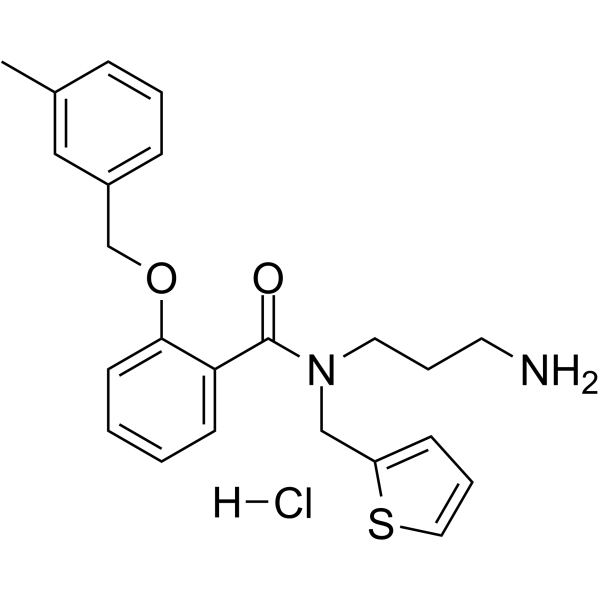
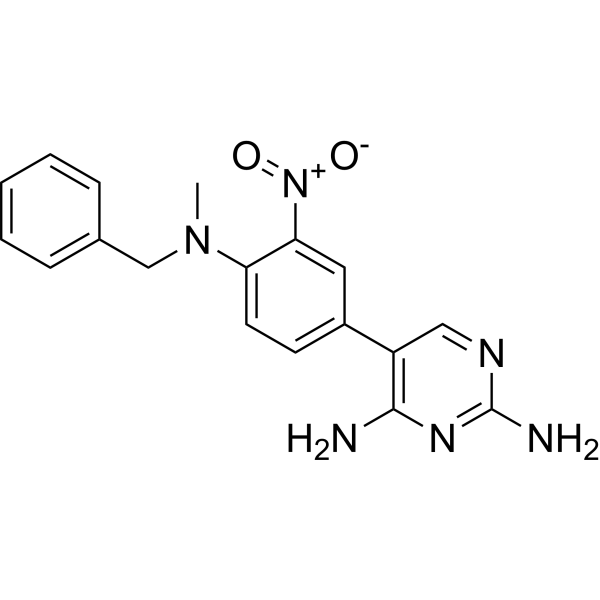
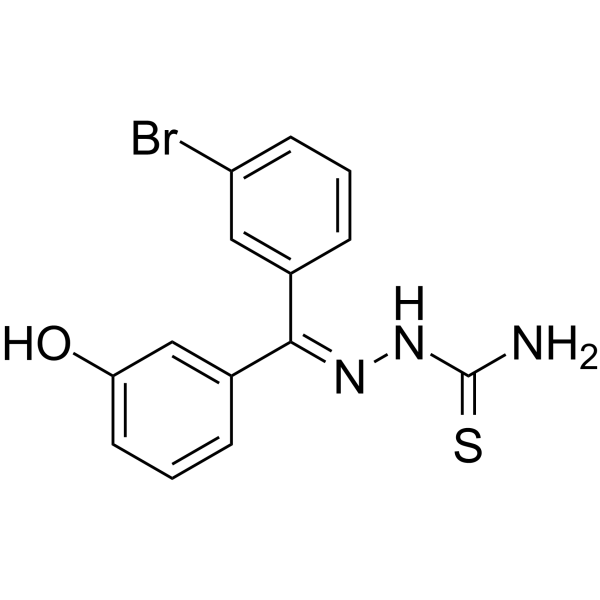
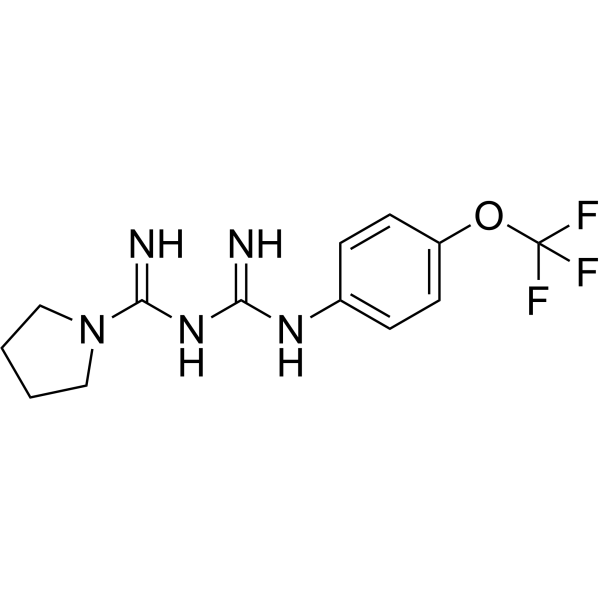
    ZINC00640089 is a specific Lipocalin-2 (LCN2) inhibitor. ZINC00640089 inhibits cell proliferation, cell viability and reduces AKT phosphorylation levels in SUM149 cells. ZINC00640089 has good potential for research in inflammatory breast cancer (IBC) .
    ZINC00640089
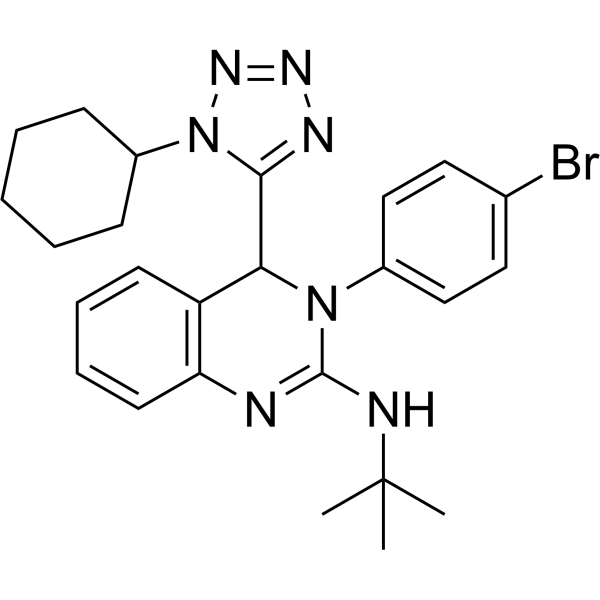
  • HY-N0595
    Genistin
    5+ Cited Publications

    Genistine; Genistoside; Genistein 7-O-β-D-glucopyranoside

    Estrogen Receptor/ERR Apoptosis Metabolic Disease Cancer
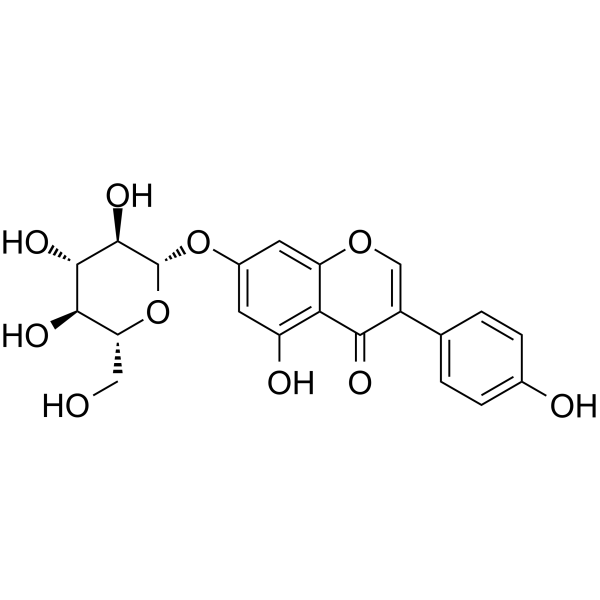
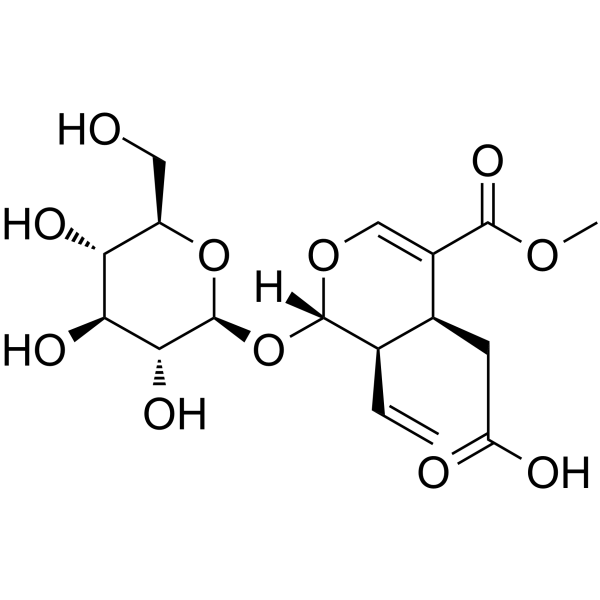
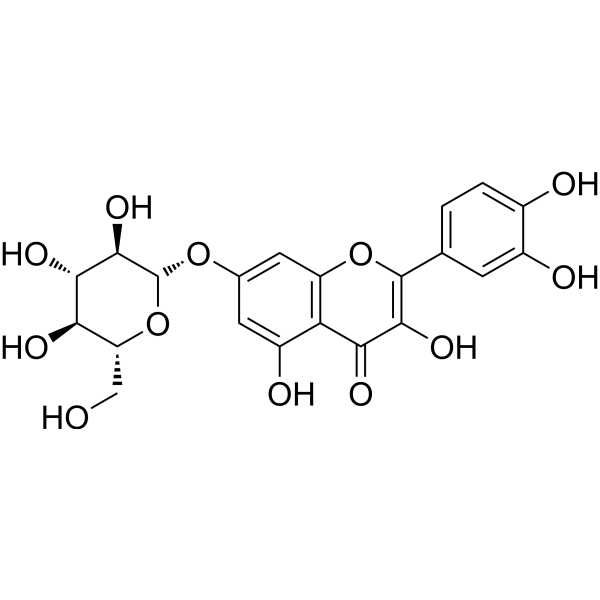
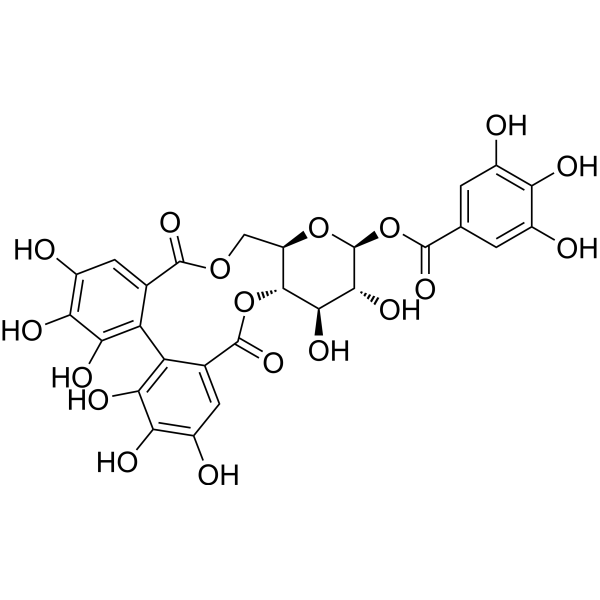
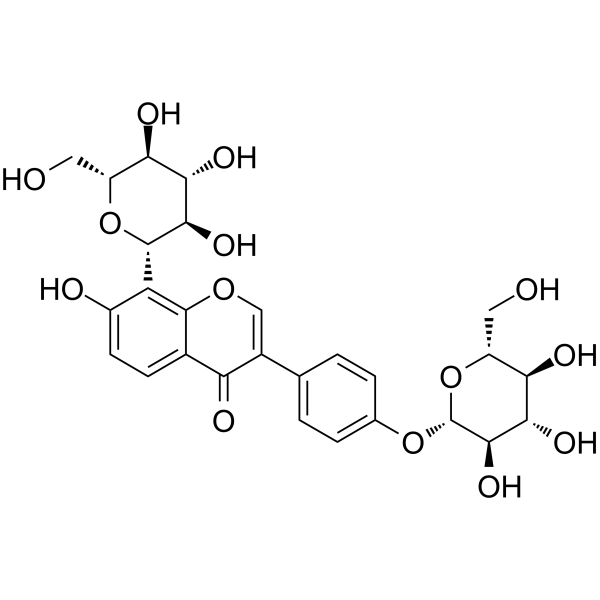
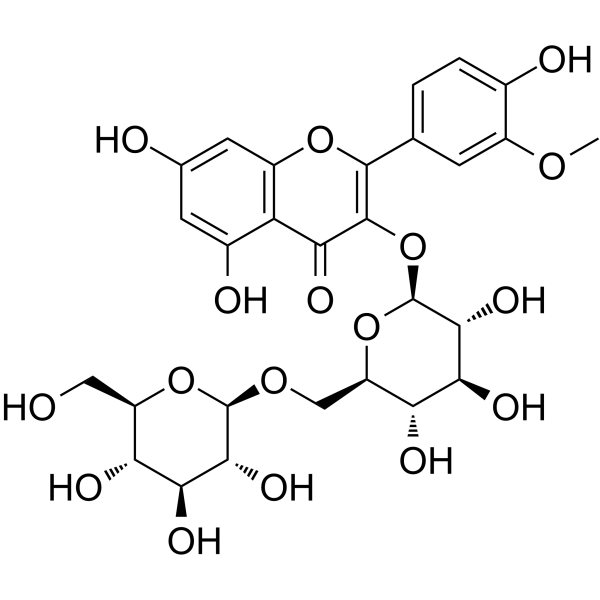
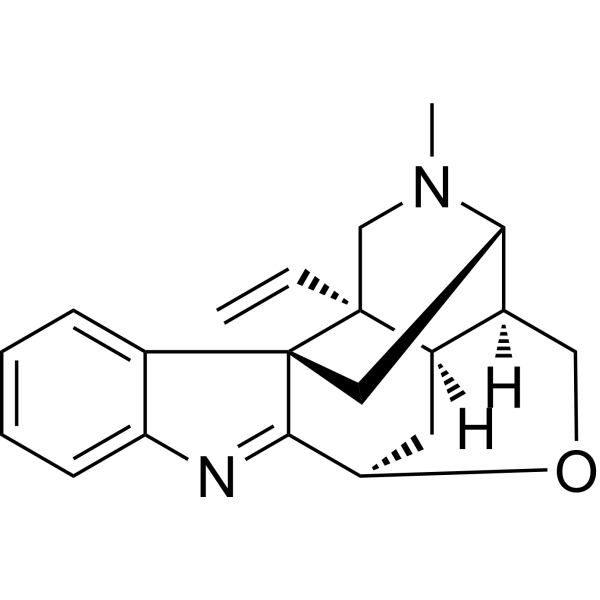
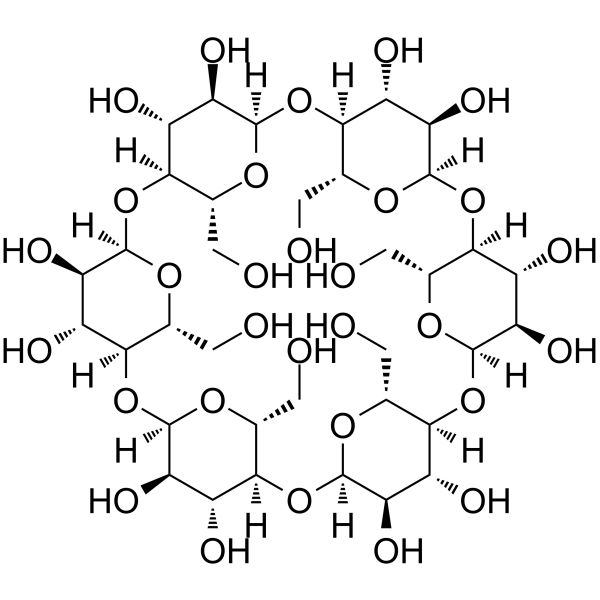
    Genistin (Genistine), an isoflavone belonging to the phytoestrogen family, is a potent anti-adipogenic and anti-lipogenic agent. Genistin attenuates cellular growth and promotes apoptotic cell death breast cancer cells through modulation of ERalpha signaling pathway .
    Genistin
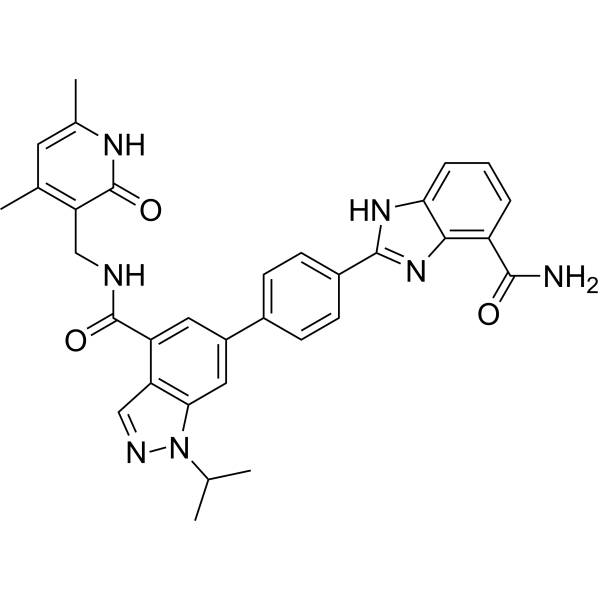
  • HY-W011338
    Benzyl butyl phthalate
    1 Publications Verification

    Environmental Pollutants Aryl Hydrocarbon Receptor Cancer
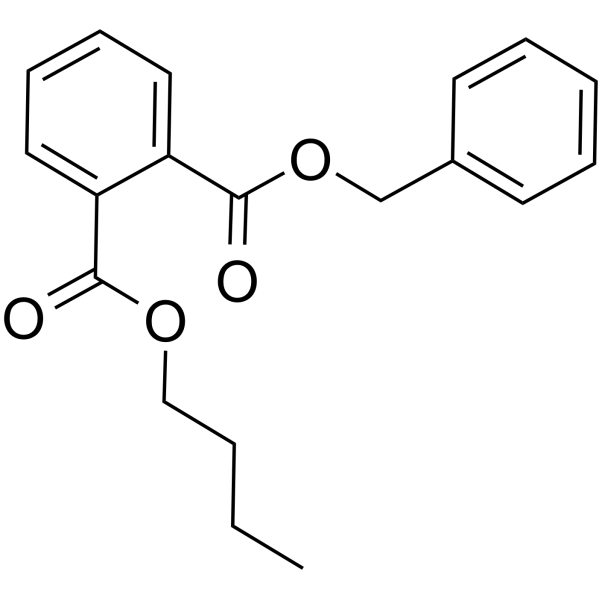
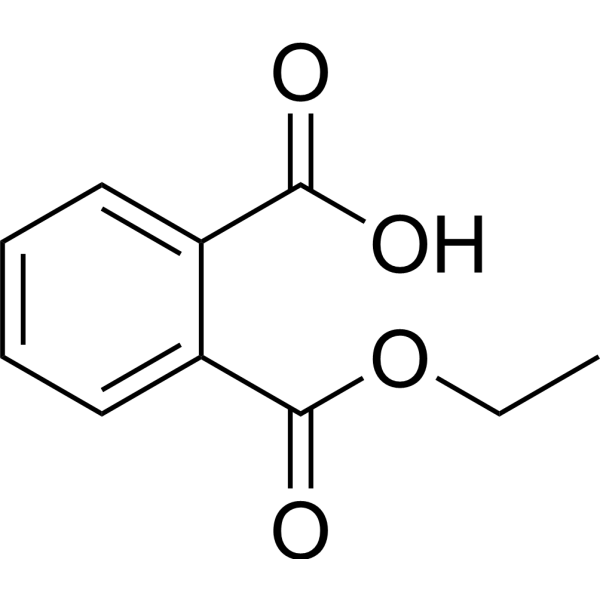
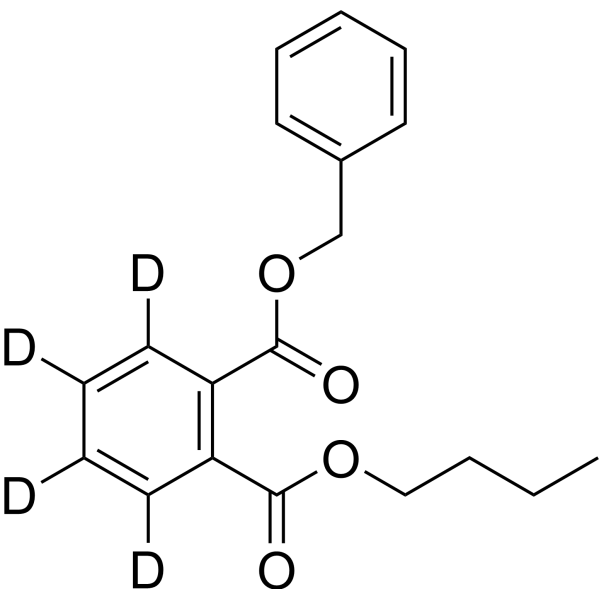
    Benzyl butyl phthalate, a member of phthalic acid esters (PAEs), can trigger the migration and invasion of hemangioma (HA) cells via upregulation of Zeb1. Benzyl butyl phthalate activates aryl hydrocarbon receptor (AhR) in breast cancer cells to stimulate SPHK1/S1P/S1PR3 signaling and enhances formation of metastasis-initiating breast cancer stem cells (BCSCs) .
    Benzyl butyl phthalate
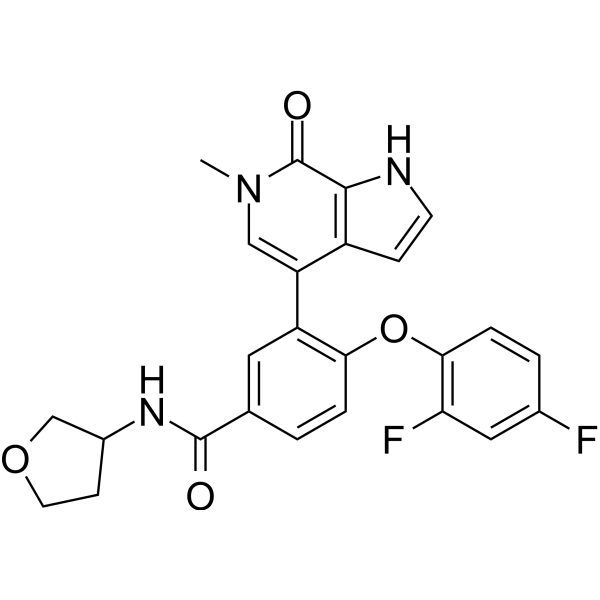
  • HY-108692

    Apoptosis Endogenous Metabolite Cancer
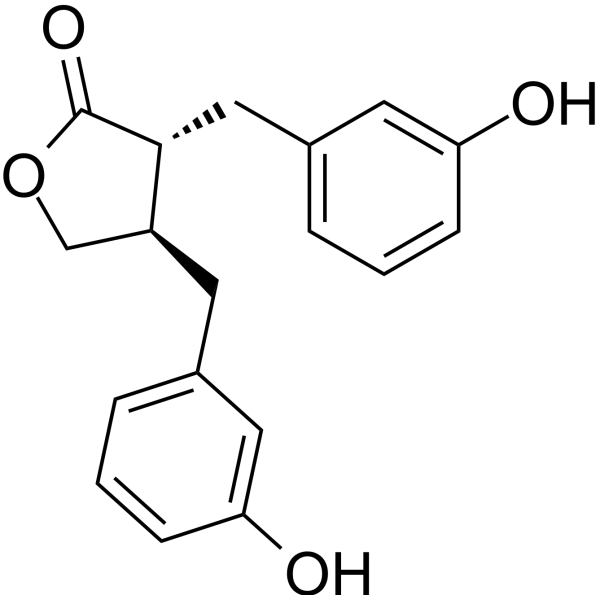
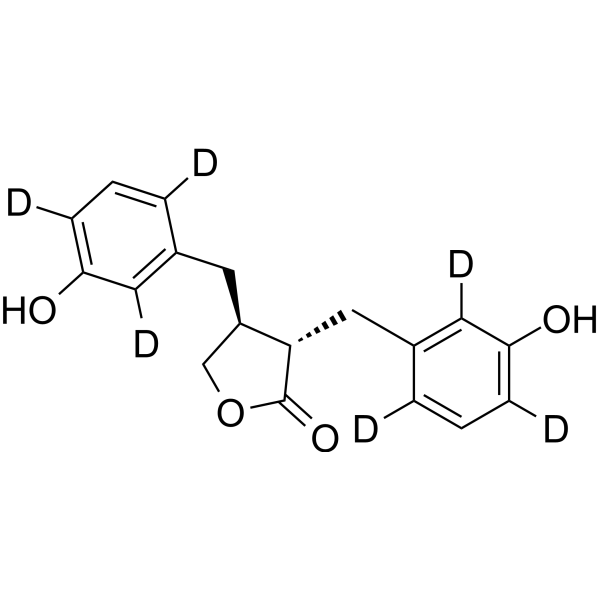
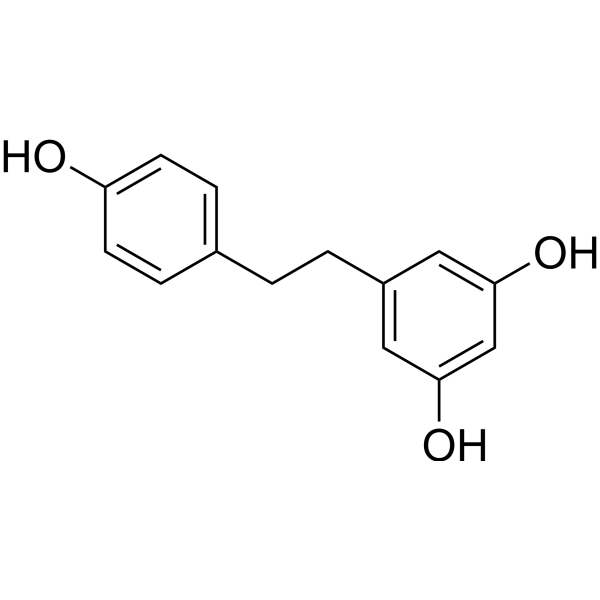
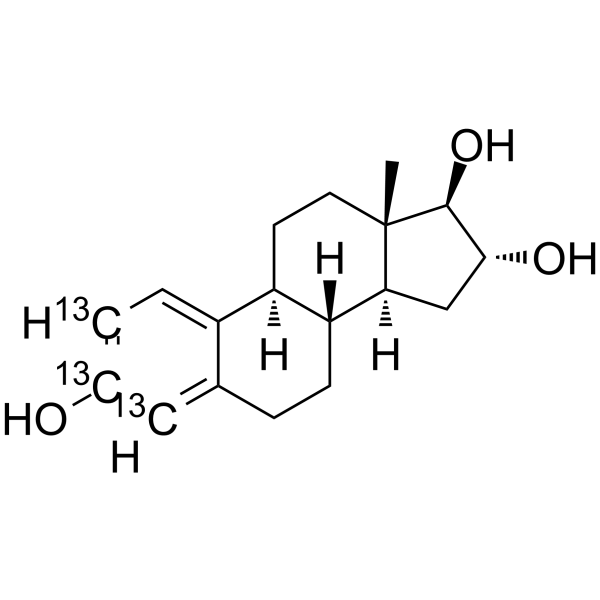
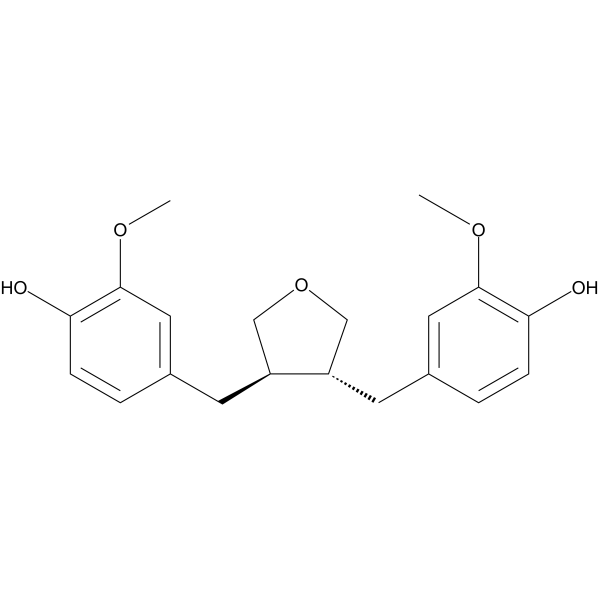
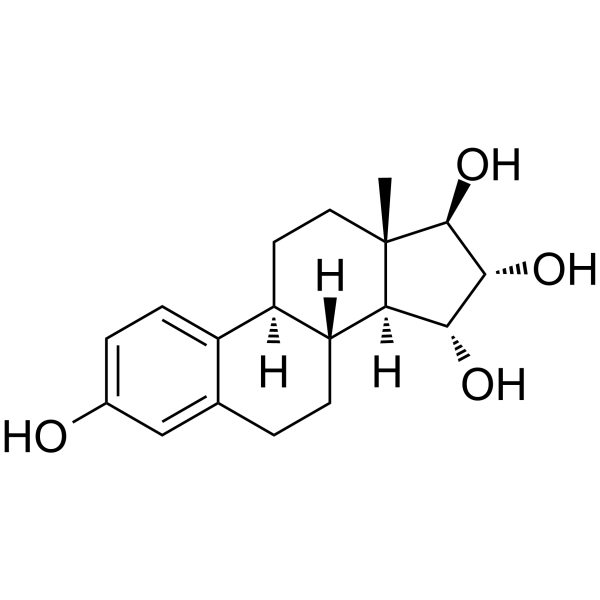
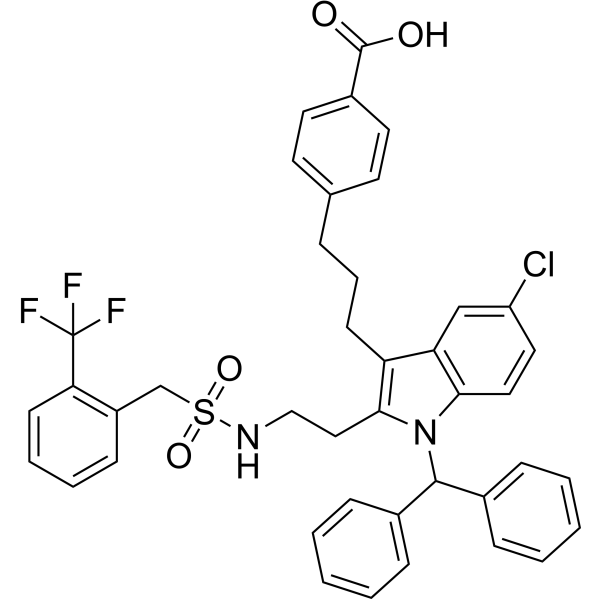
    Enterolactone is a bioactive phenolic metabolite known as a mammalian lignan derived from dietary lignans. Enterolactone has estrogenic properties and anti-breast cancer activity . Enterolactone is a radiosensitizer for human breast cancer cell lines through impaired DNA repair and increased apoptosis .
    Enterolactone
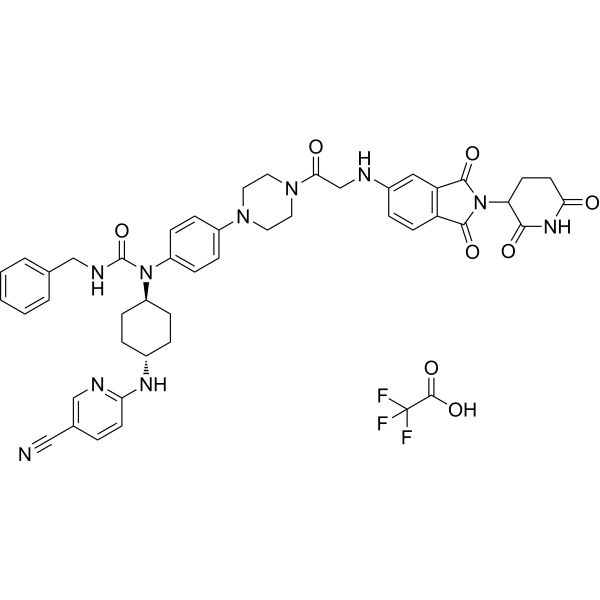
  • HY-176444

    Molecular Glues CDK Cancer
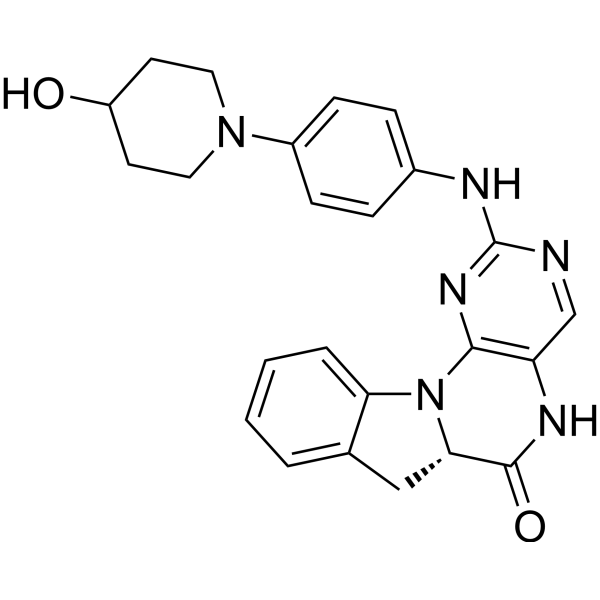
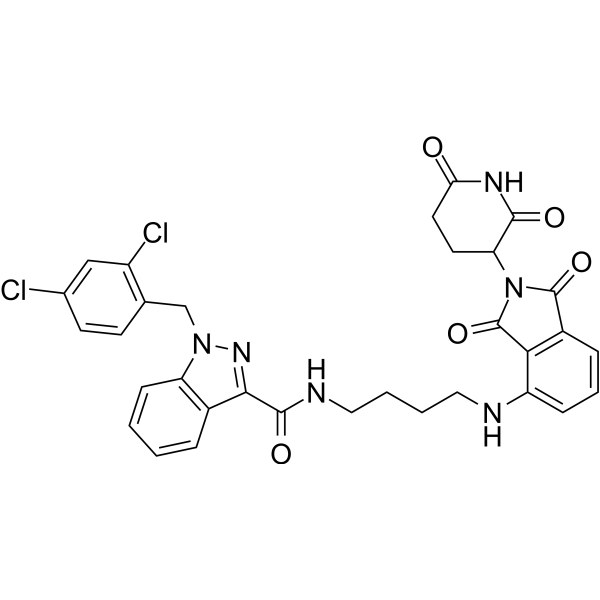
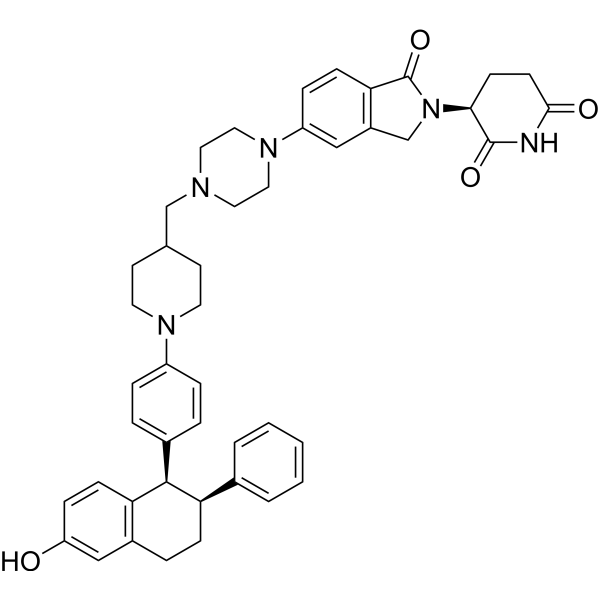
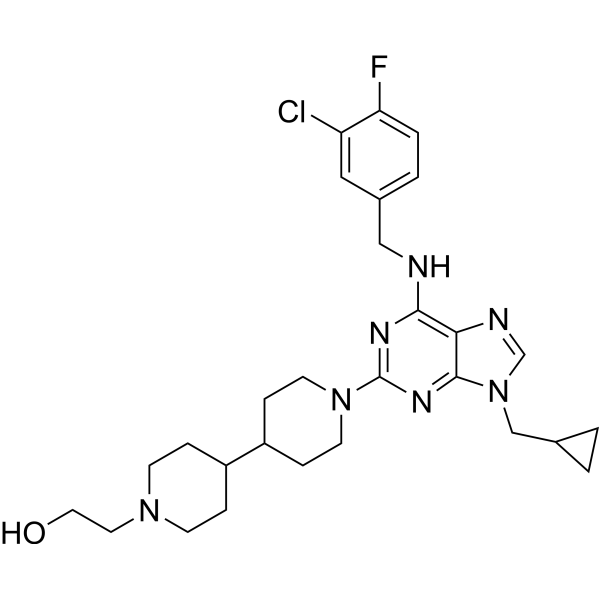
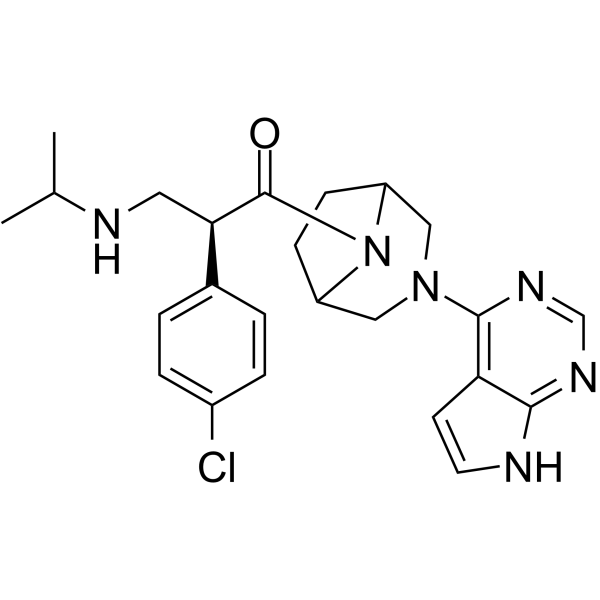
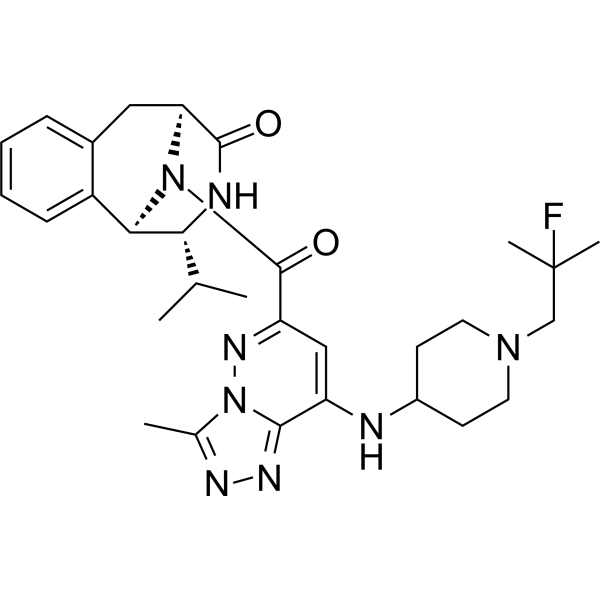
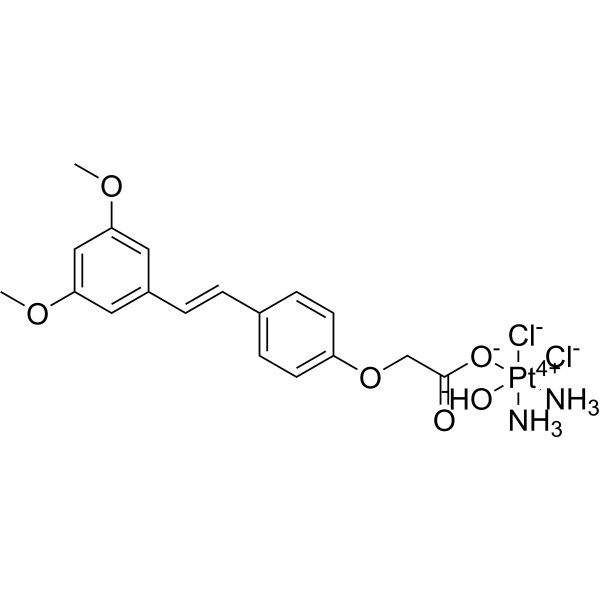
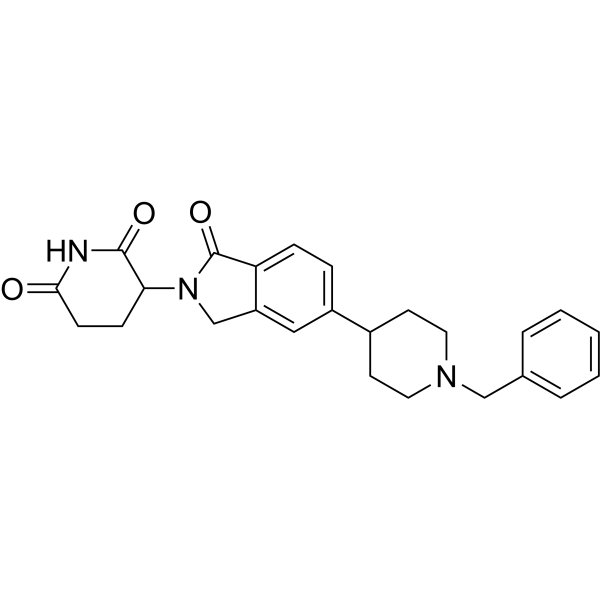
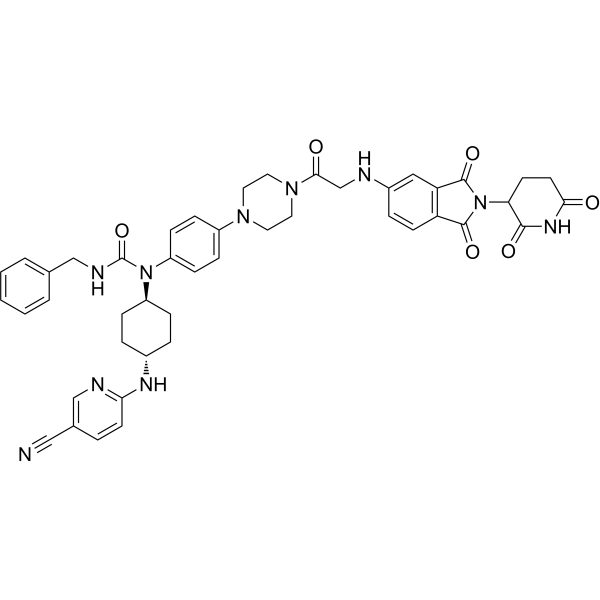
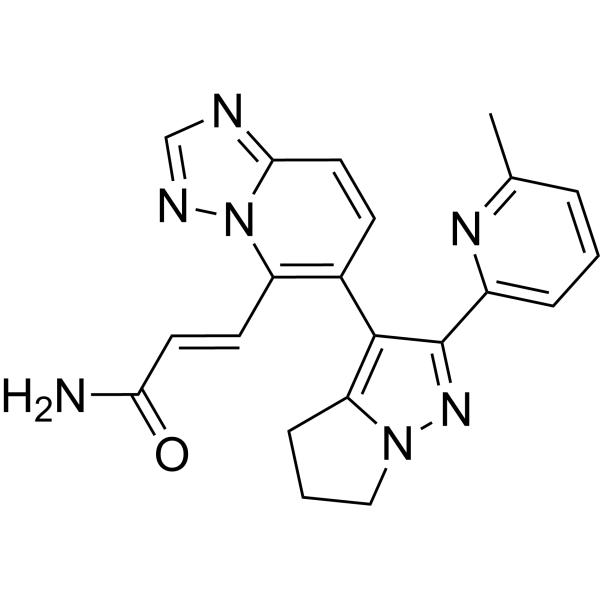
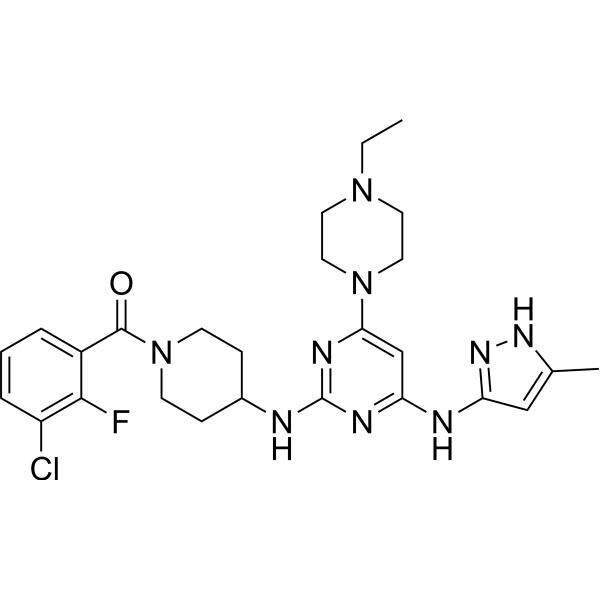
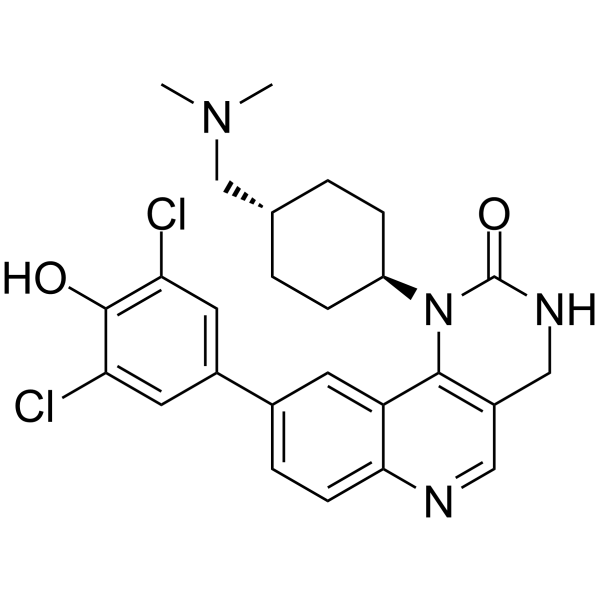
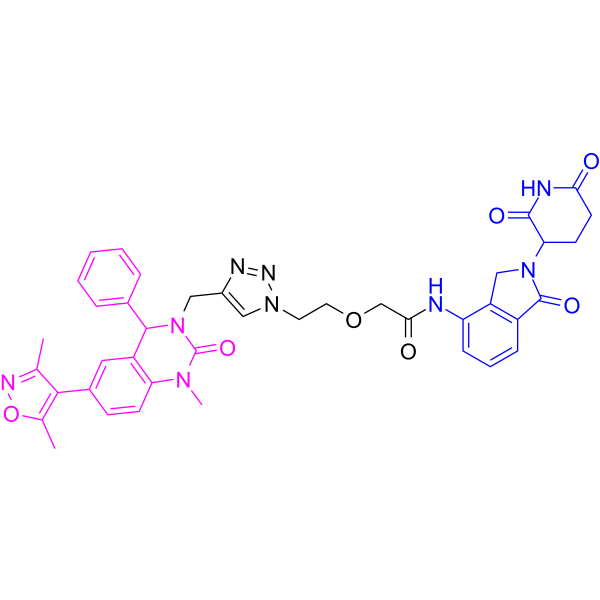
    CDK2 degrader 6 is an orally active and potent CDK2 molecular glue degrader with a DC50 of 46.5 nM. CDK2 degrader 6 binds to cereblon and CDK2 to induce ubiquitination and subsequent proteasomal degradation of CDK2. CDK2 degrader 6 modulates cell cycle in breast cancer cells. CDK2 degrader 6 reduces proliferation of breast cancer cells. CDK2 degrader 6 exhibits in vivo antitumor activity in gastric cancer mouse models. CDK2 degrader 6 can be used for the research of breast cancer, gastric cancer .
    CDK2 degrader 6
  • HY-148364
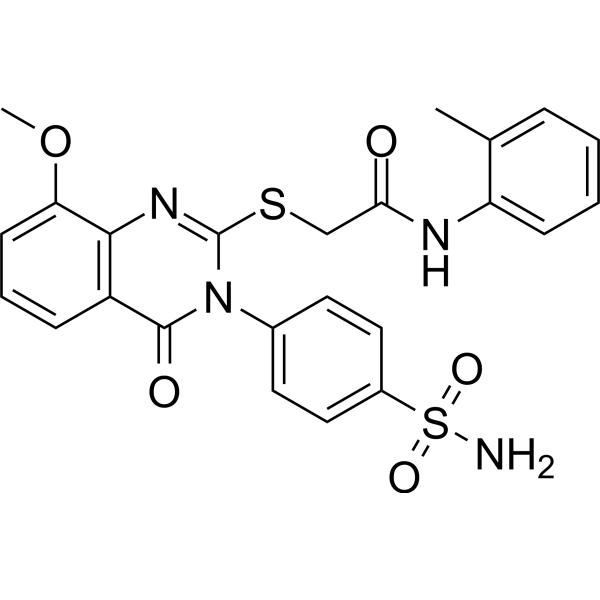
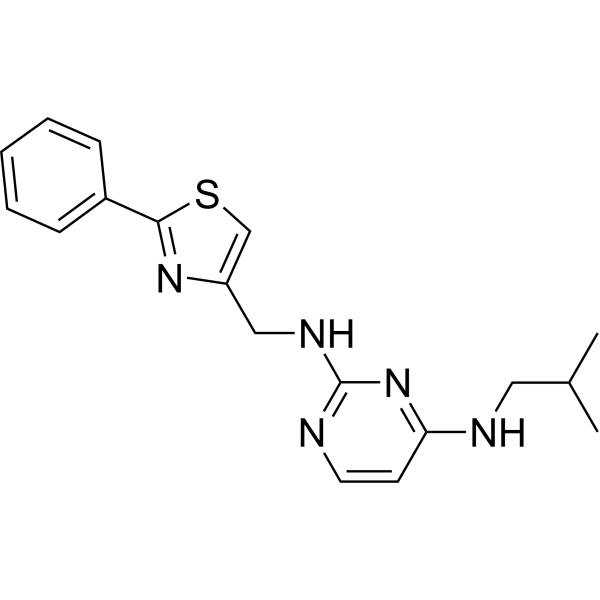
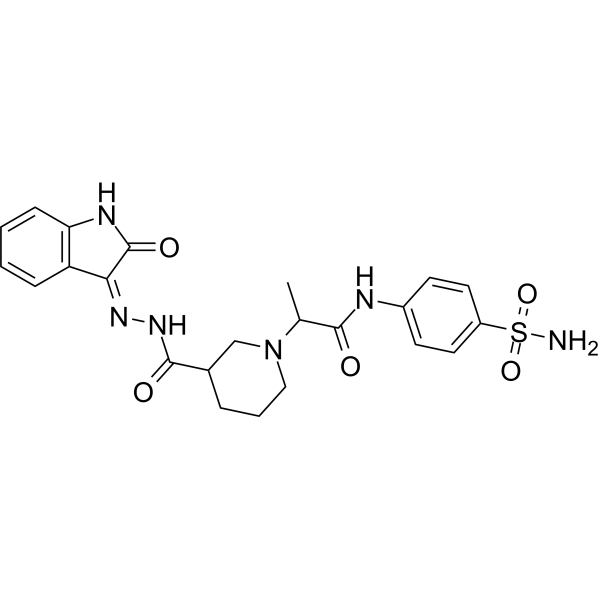
    ZINC00784494
    2 Publications Verification

    Lipocalin Family Akt Cancer
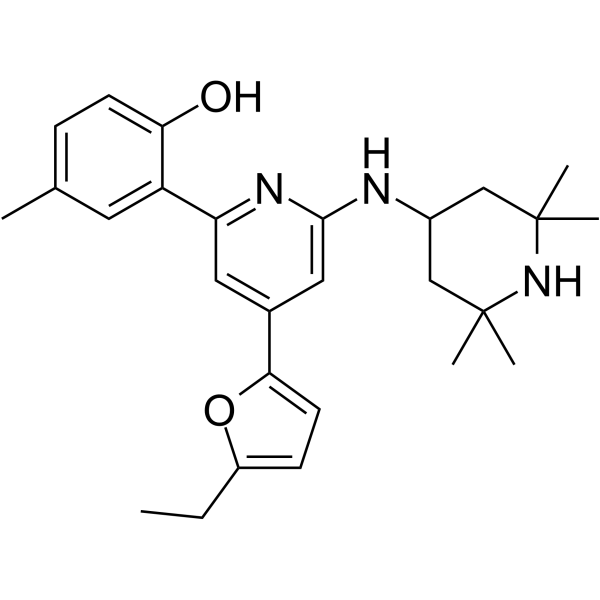
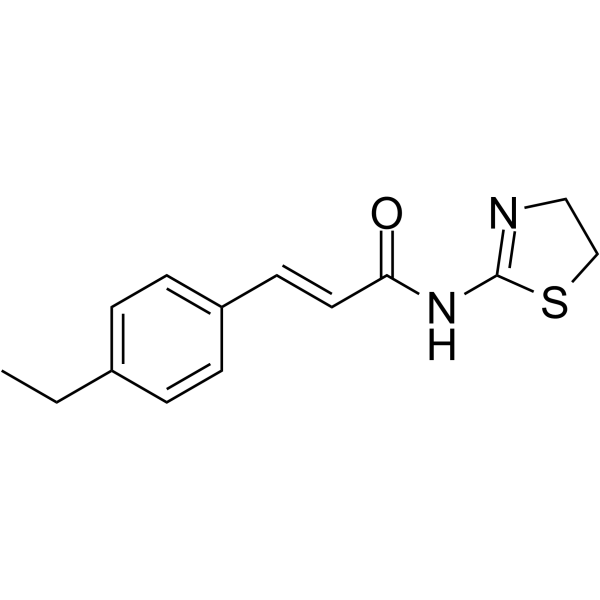
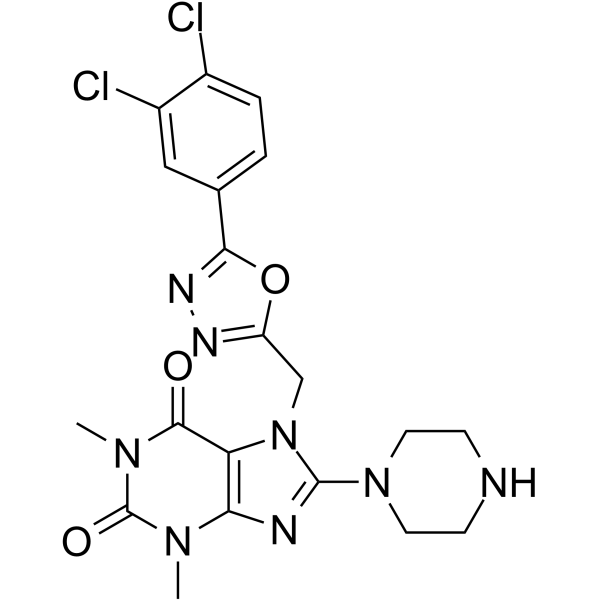
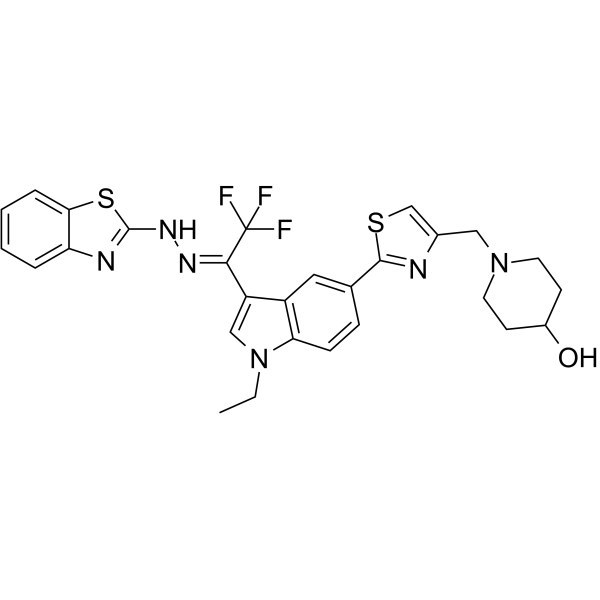
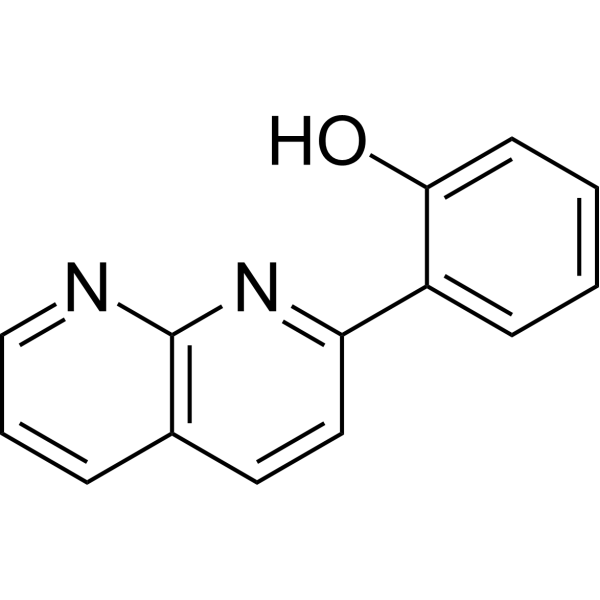
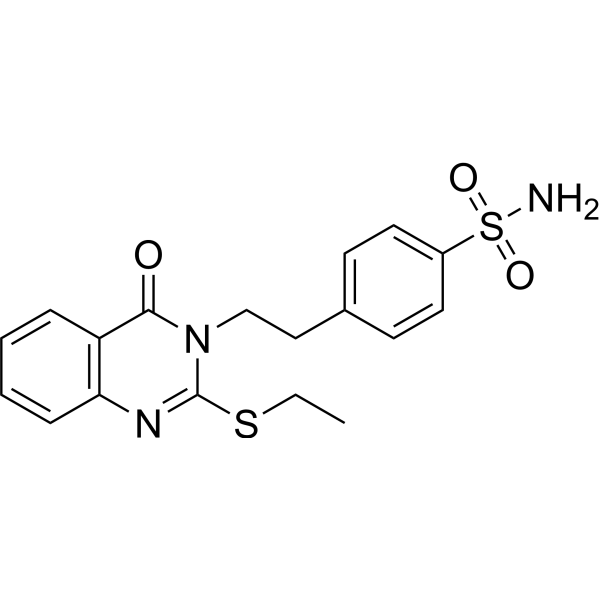
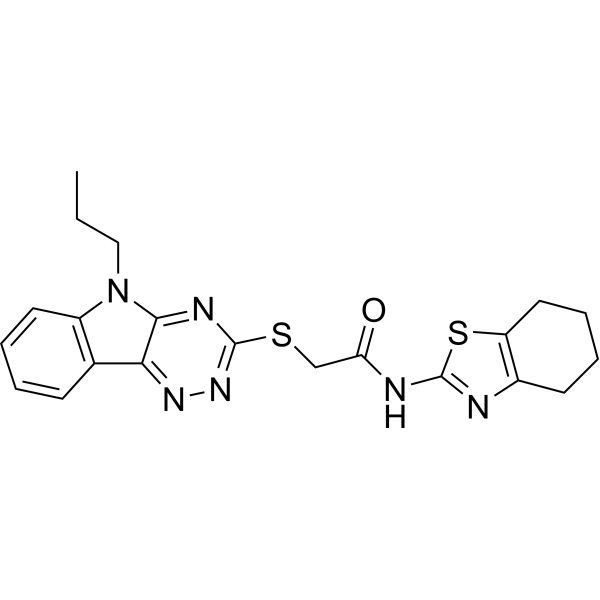
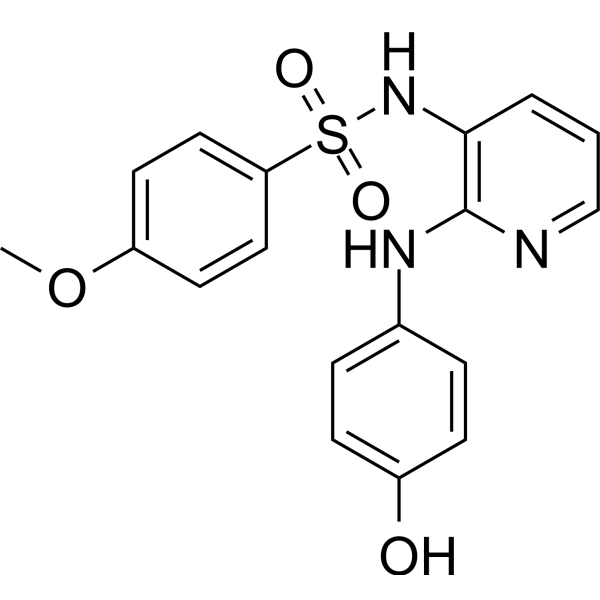
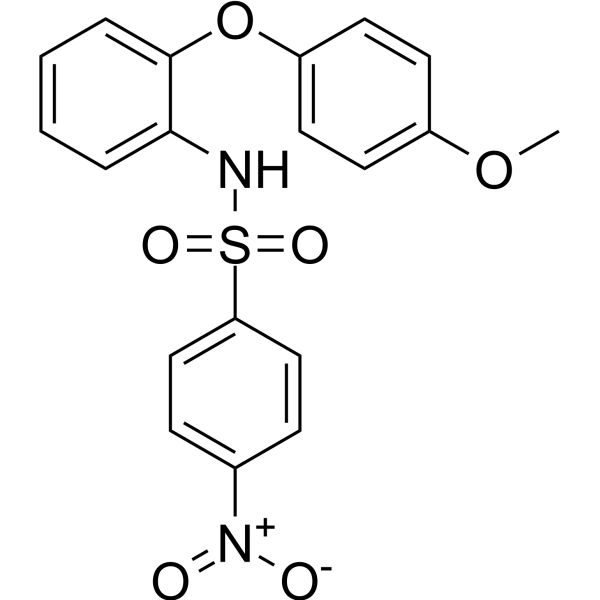
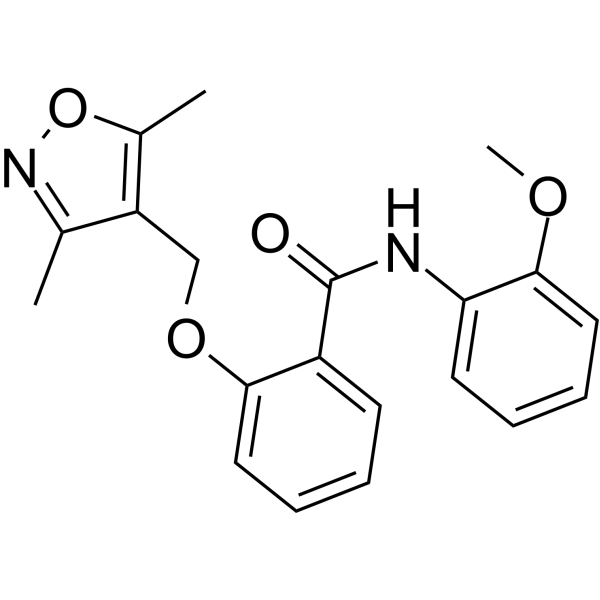
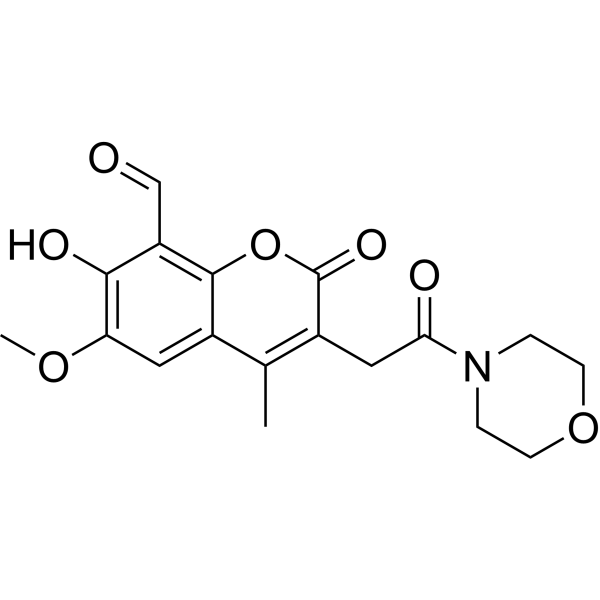
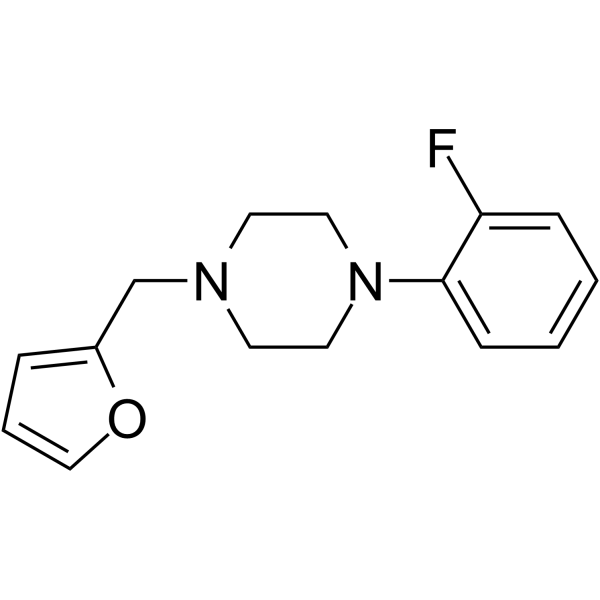
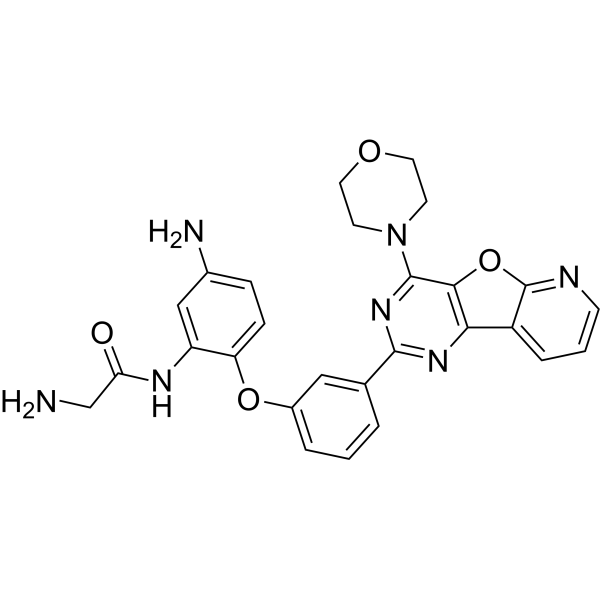
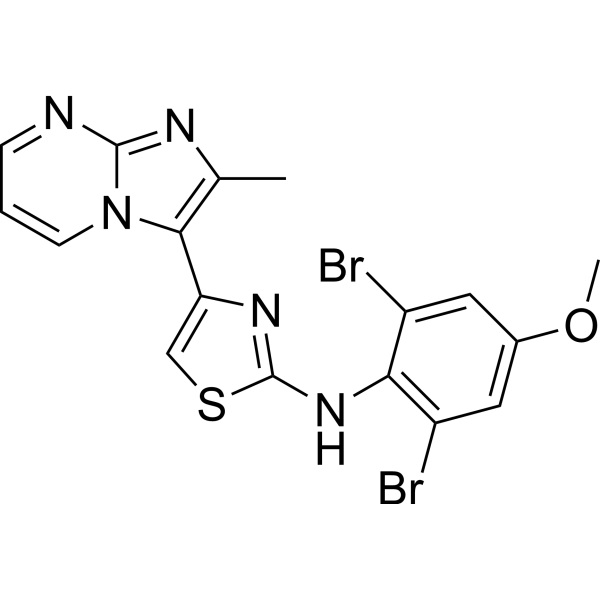
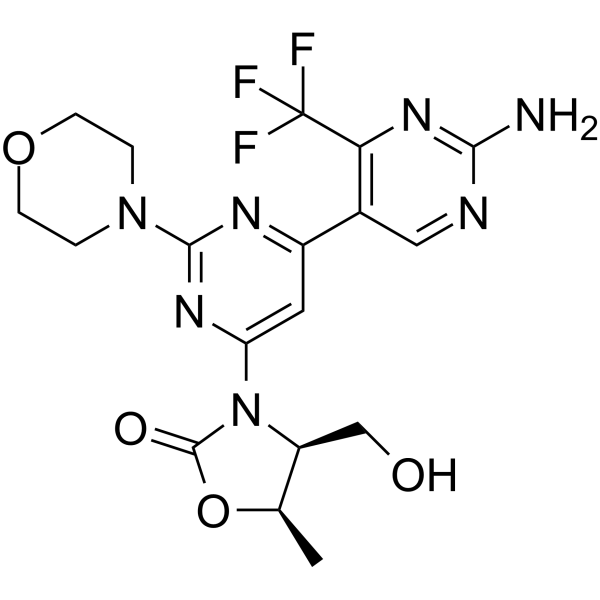
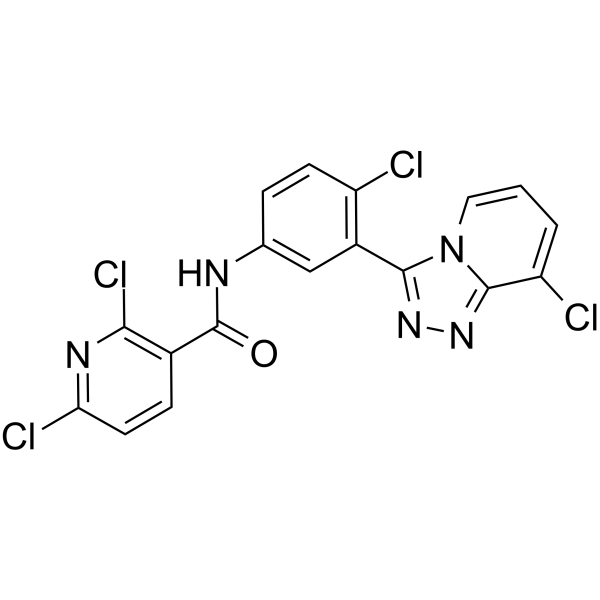
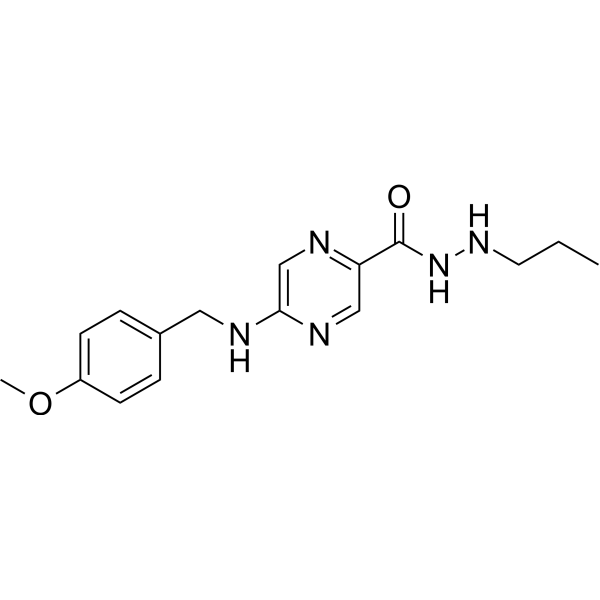
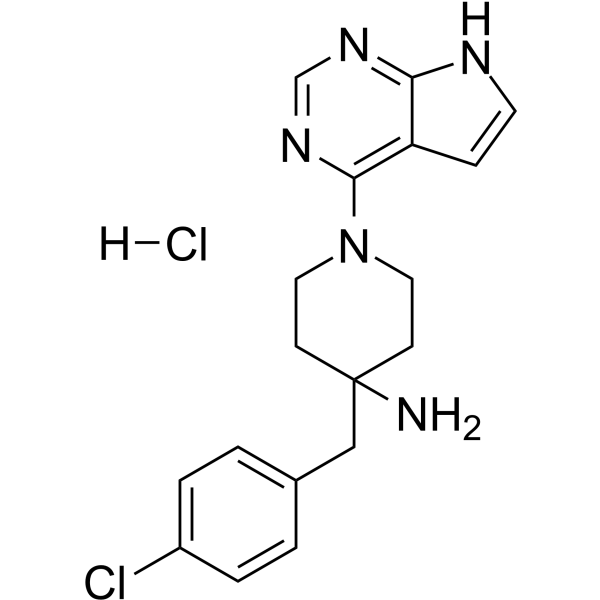
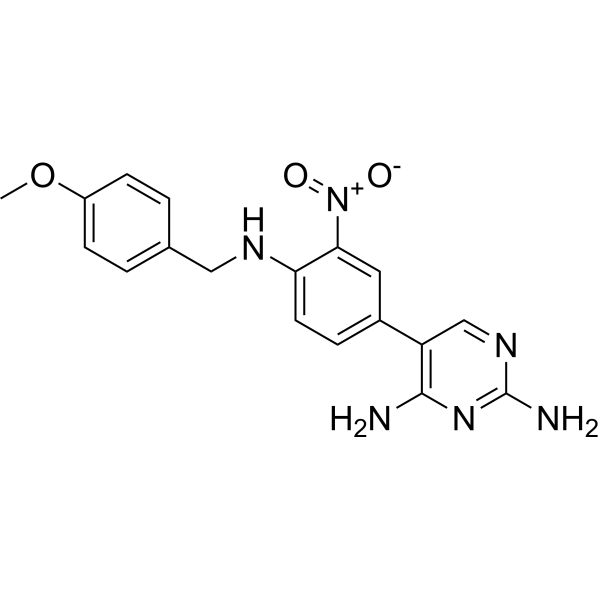
    ZINC00784494 is a specific Lipocalin-2 (LCN2) inhibitor. ZINC00784494 inhibits cell proliferation, cell viability and reduces AKT phosphorylation levels in SUM149 cells. ZINC00784494 has good potential for research in inflammatory breast cancer (IBC) .
    ZINC00784494
  • HY-N0554
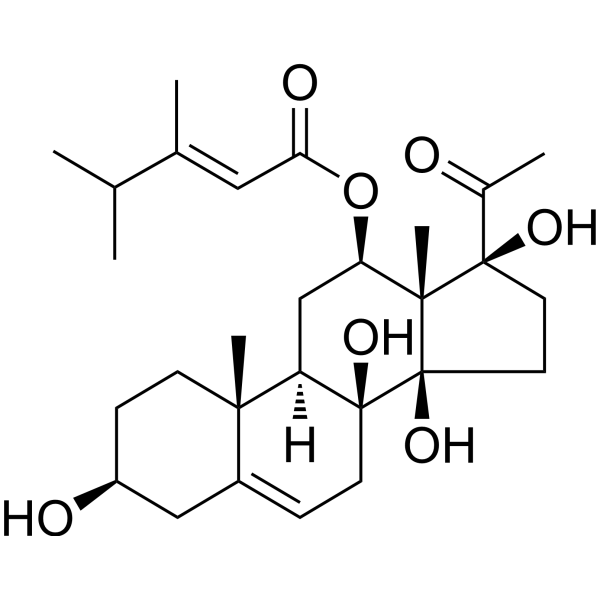
    Escin IA
    1 Publications Verification

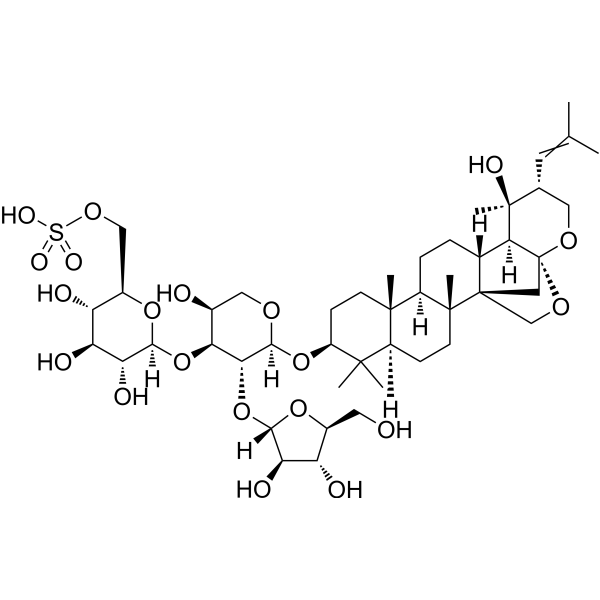
    HIV Protease Monoamine Oxidase Infection Inflammation/Immunology Cancer
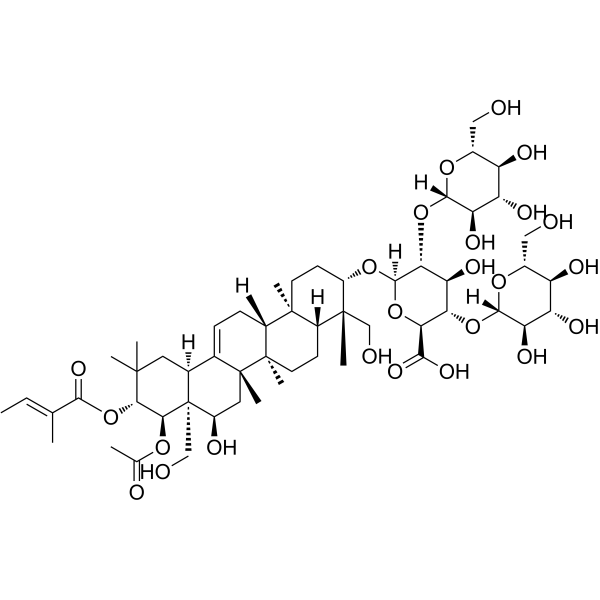
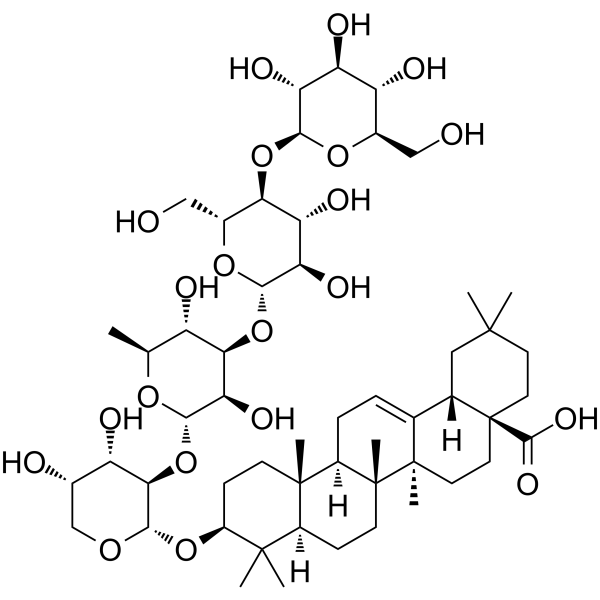
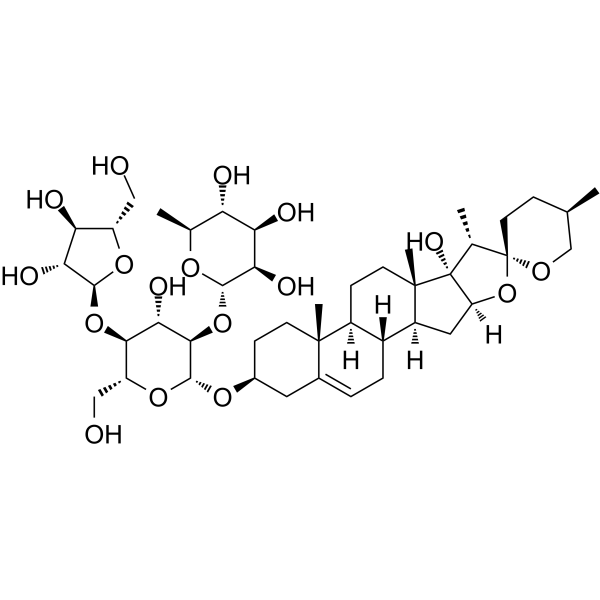
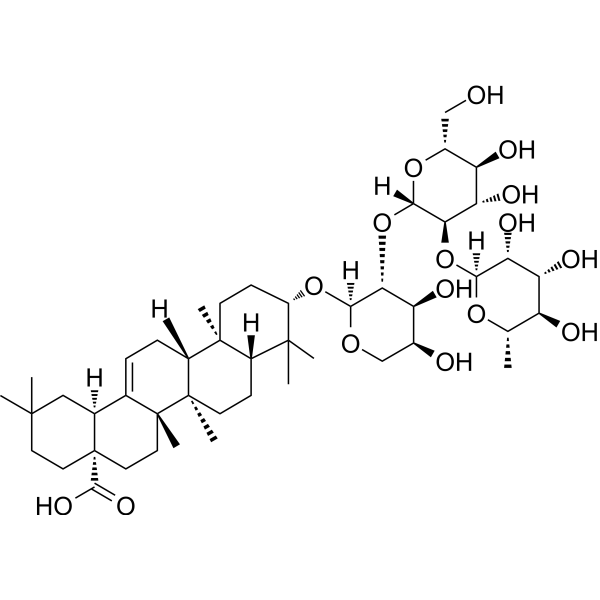
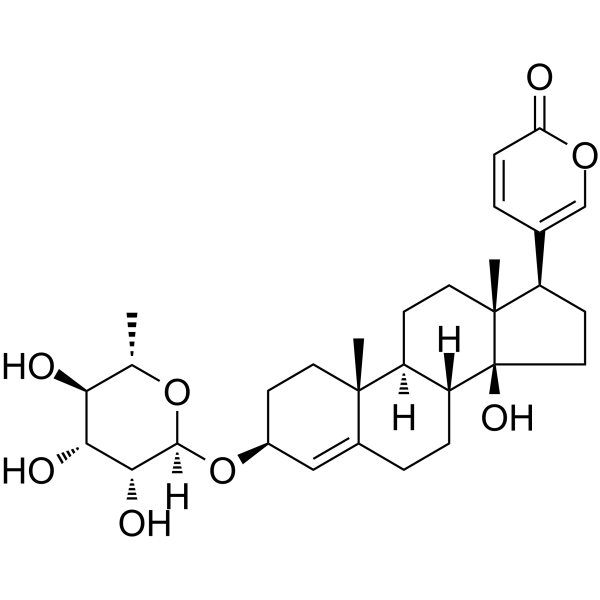
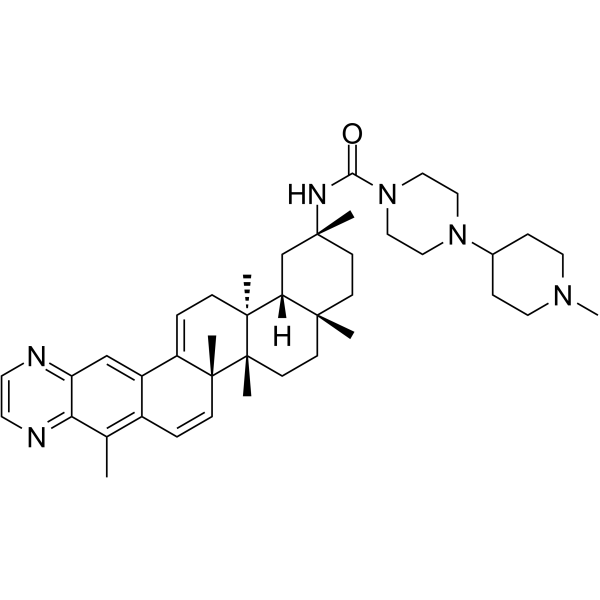
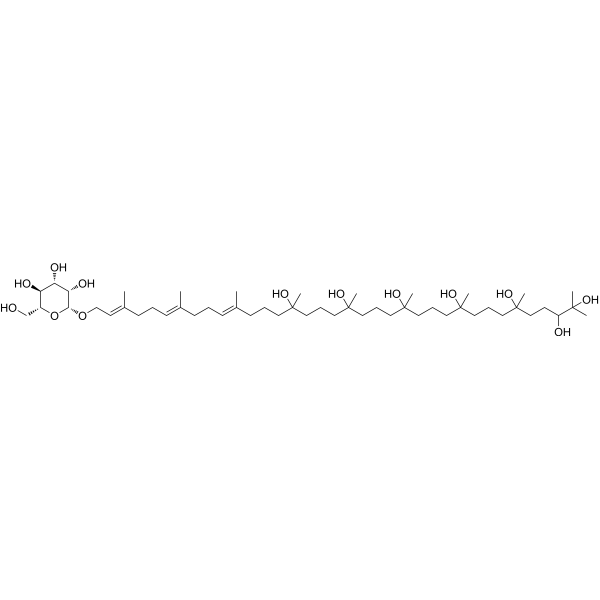
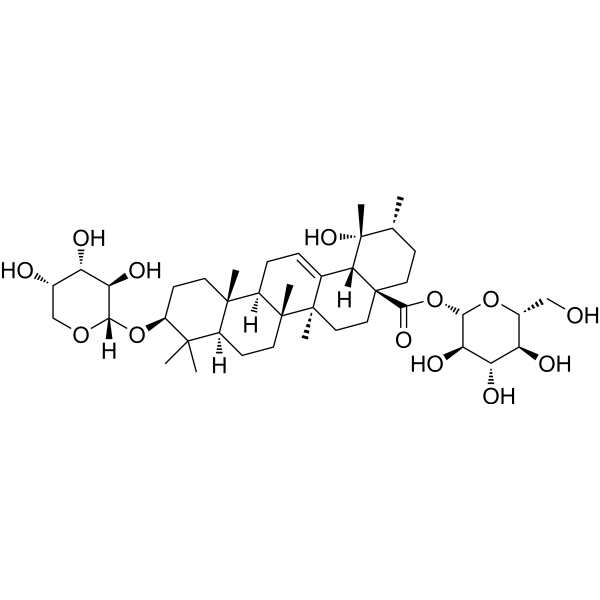
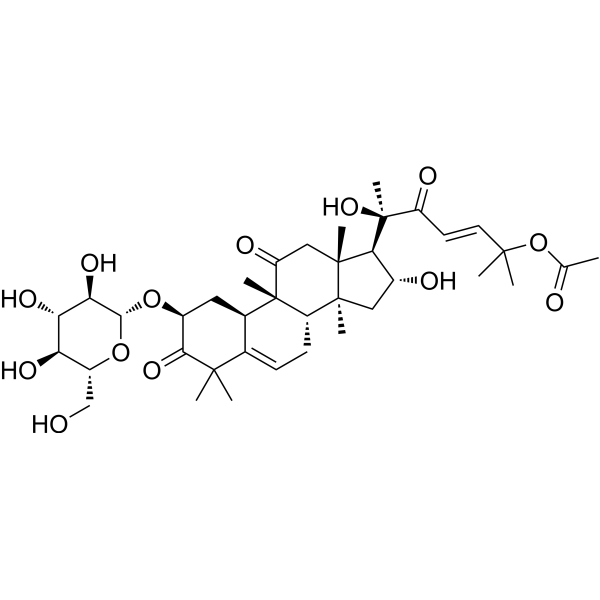
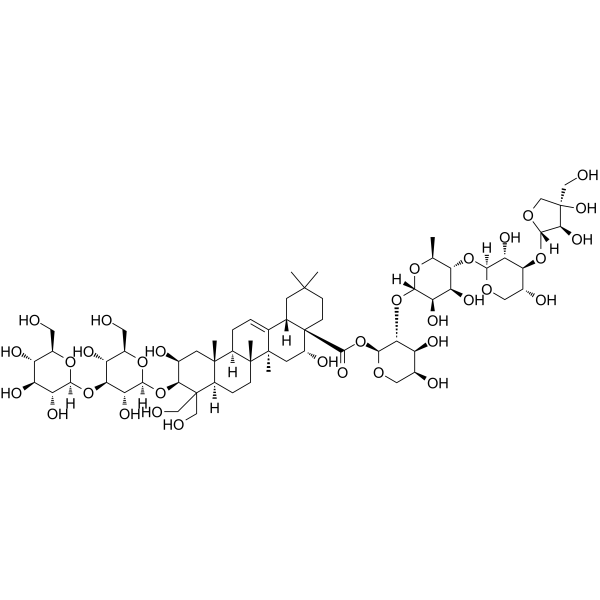
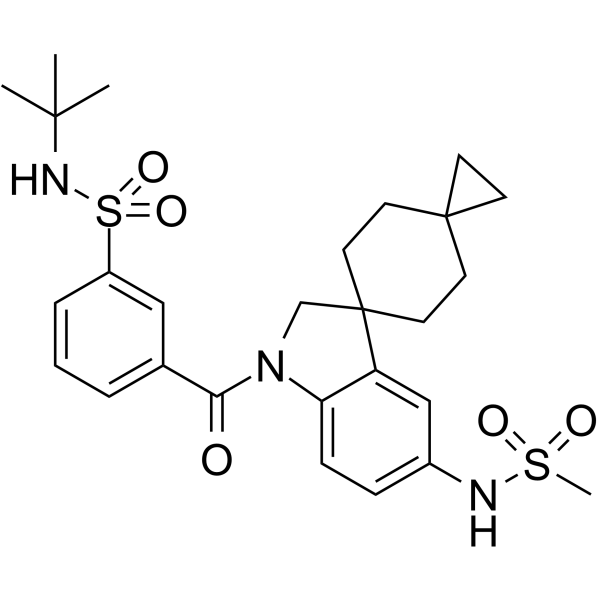
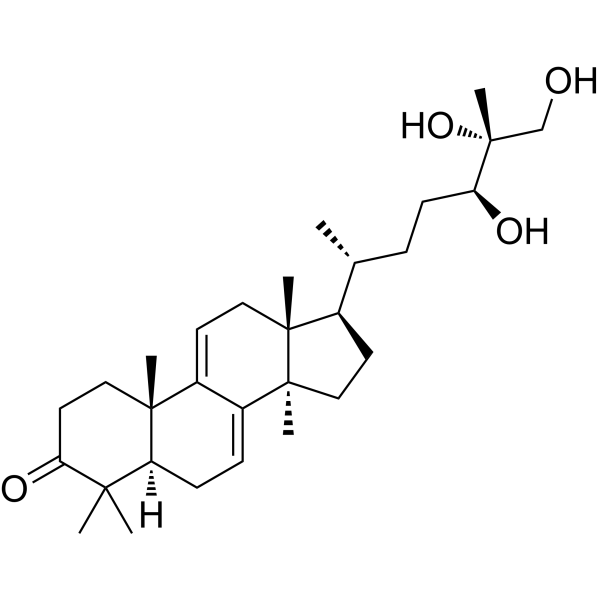
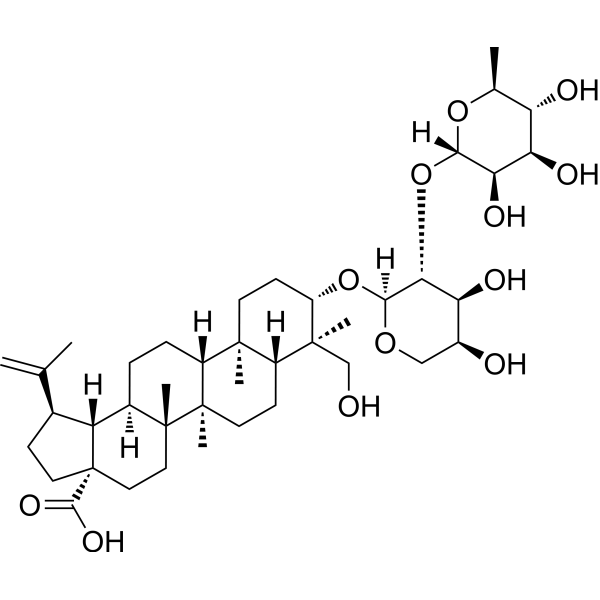
    Escin IA is an oral LOXL2 inhibitor and EMT inhibitor, with selectivity for LOXL2-expressing cells. Escin IA suppresses invasion, migration, and metastasis of breast cancer cells, and acts as the primary anti-TNBC metastasis constituent of Aesculus chinensis Bunge fruit saponin fraction. Escin IA can be used for the research of triple-negative breast cancer, acute inflammation, and ethanol-induced gastric mucosal lesions .
    Escin IA
  • HY-153468

    TEQ103; Sera2

    Sodium Channel TRP Channel Cancer
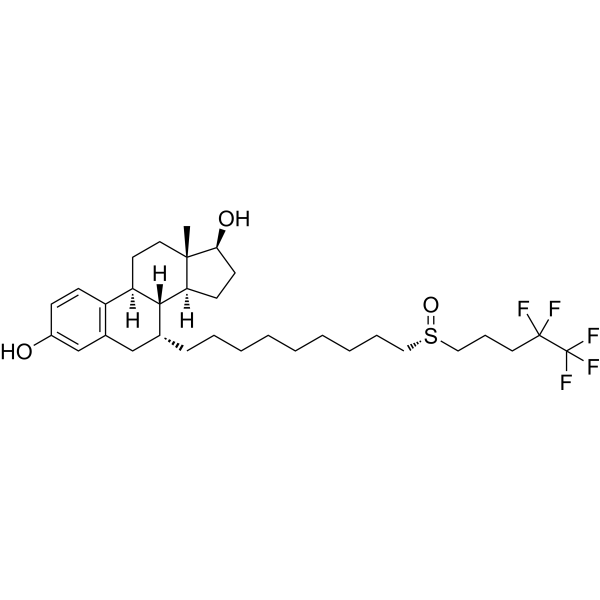
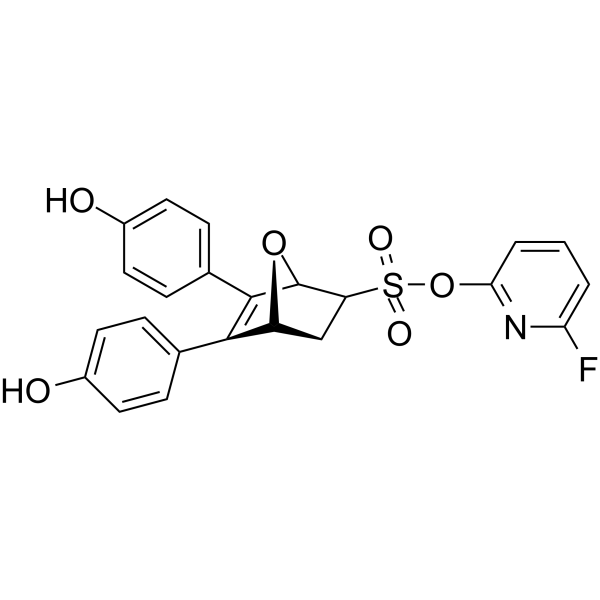
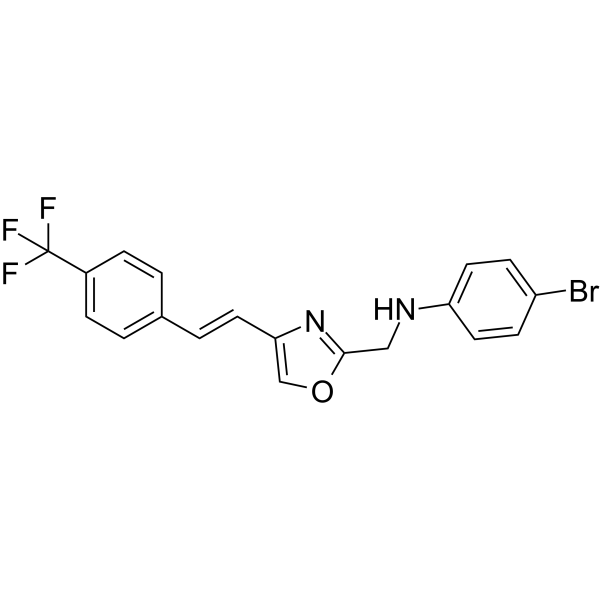
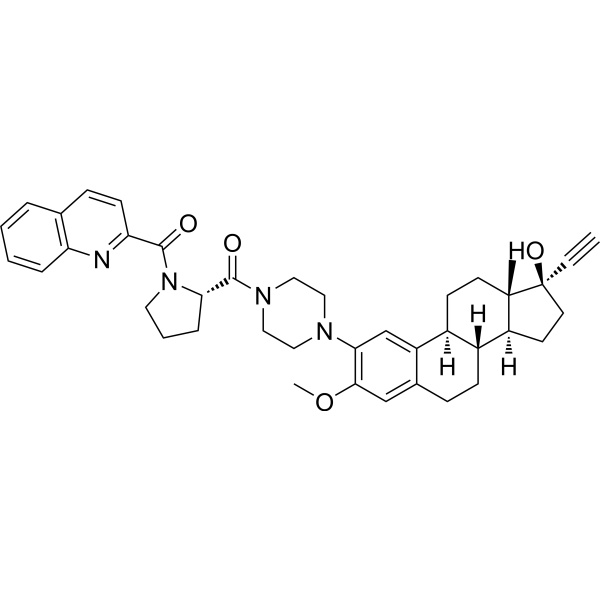
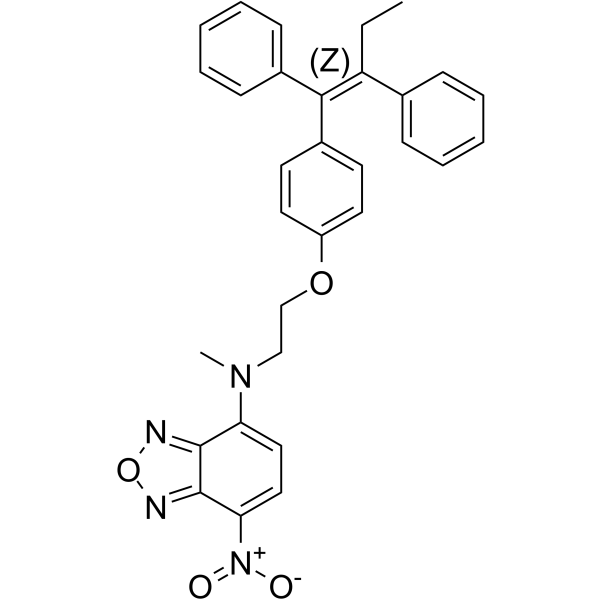
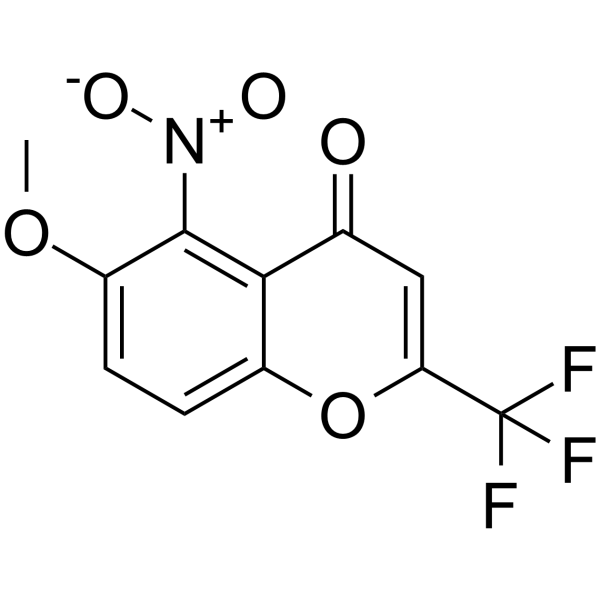
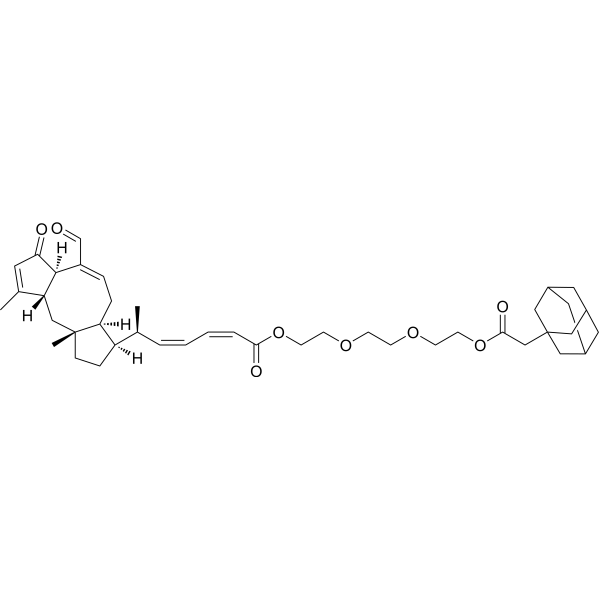
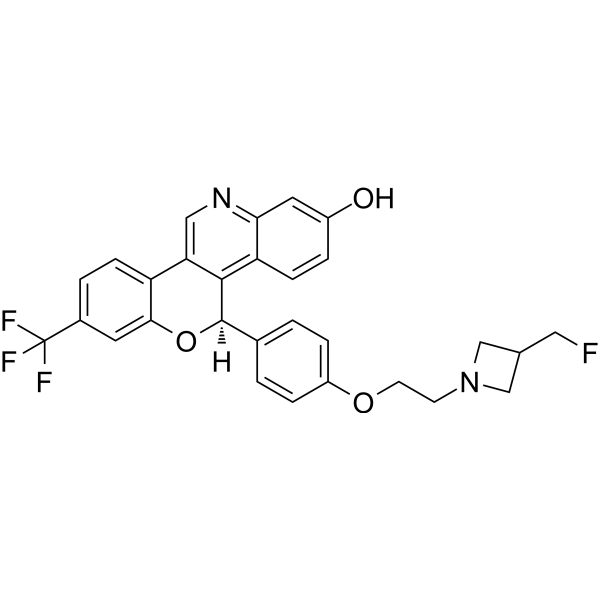
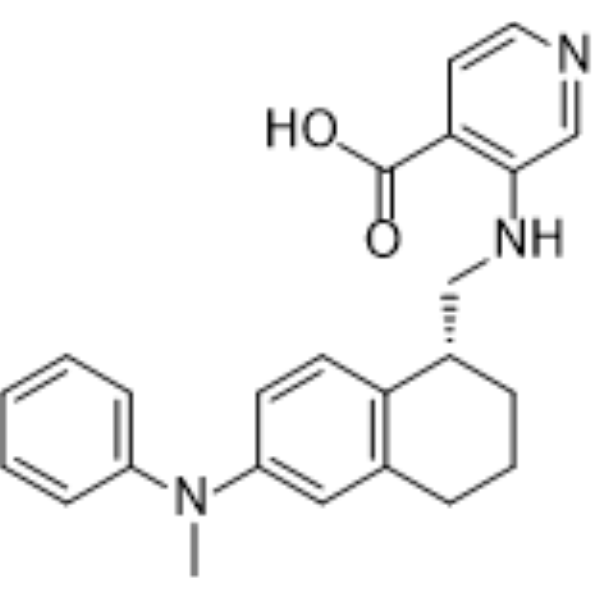
    ErSO-TFPy (TEQ103) is an ERα+ tumor cell inhibitor with low nanomolar cytotoxic activity against ERα+ breast cancer cells. ErSO-TFPy activates the sodium channel TRPM4, causes an imbalance of intracellular calcium and sodium ions. ErSO-TFPy dysregulates calcium homeostasis in ERα+ tumor cells, triggers the anticipatory unfolded protein response, and induces rapid immune cell-independent necrotic cell death. ErSO-TFPy can be used for the research of estrogen receptor alpha positive breast cancer .
    ErSO-TFPy
  • HY-171830

    YX39-105

    PROTACs Tyrosinase Apoptosis Cancer
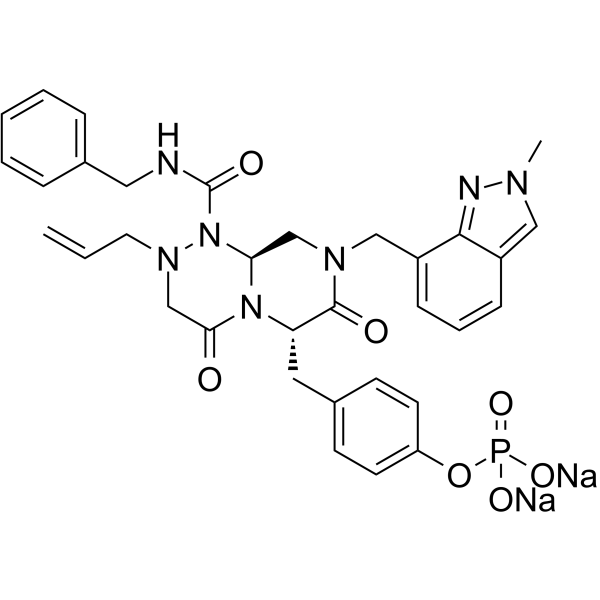
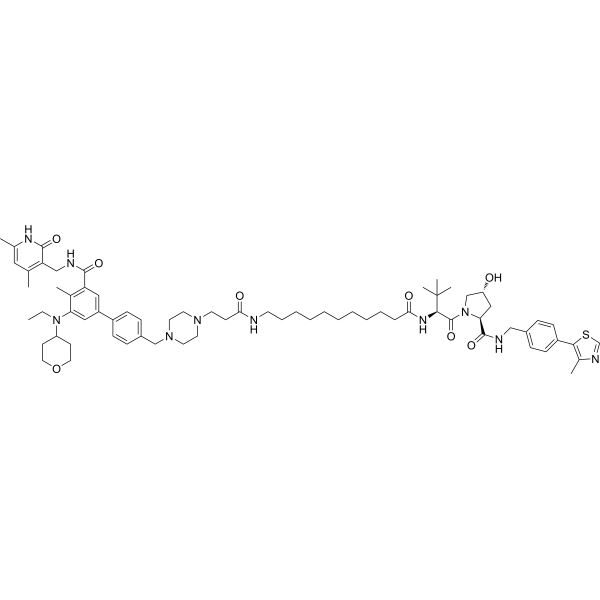
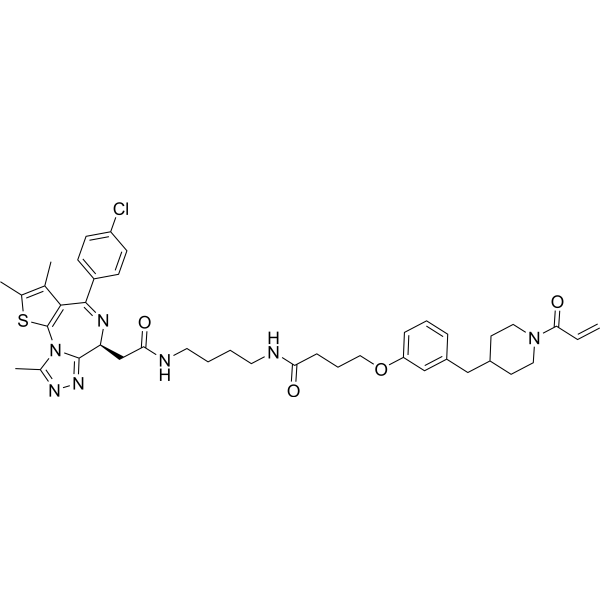
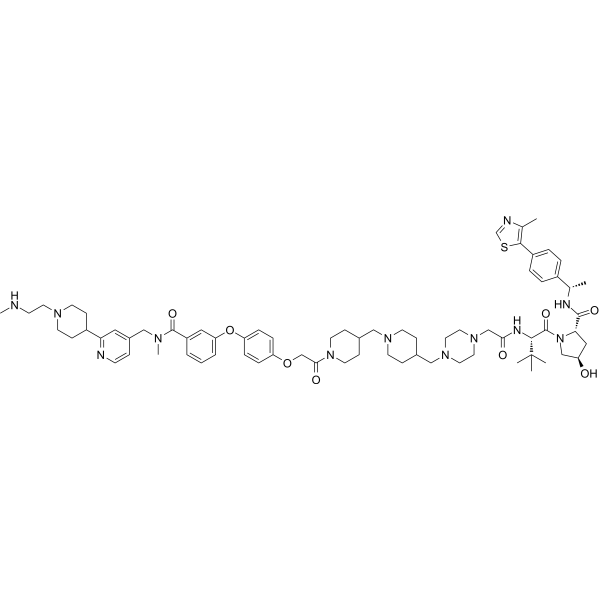
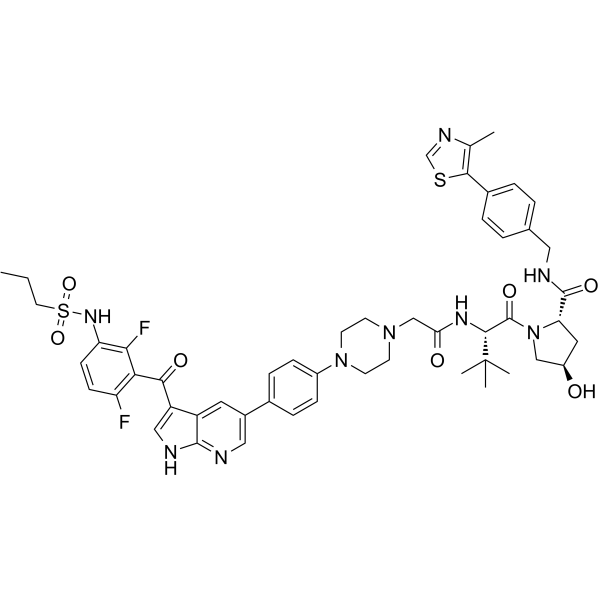
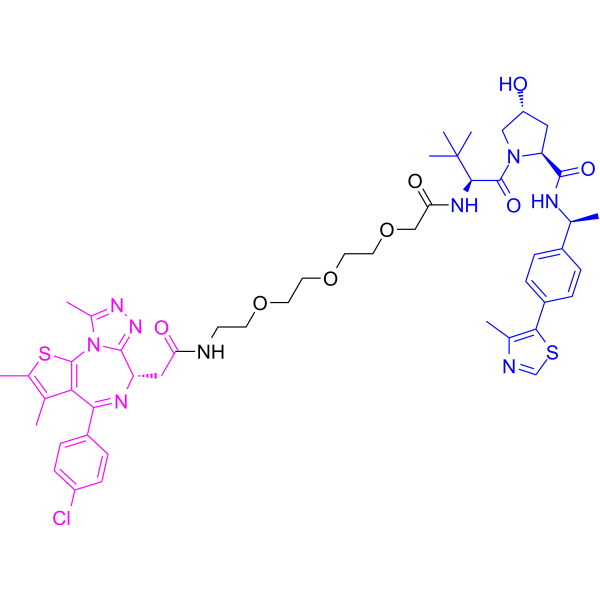
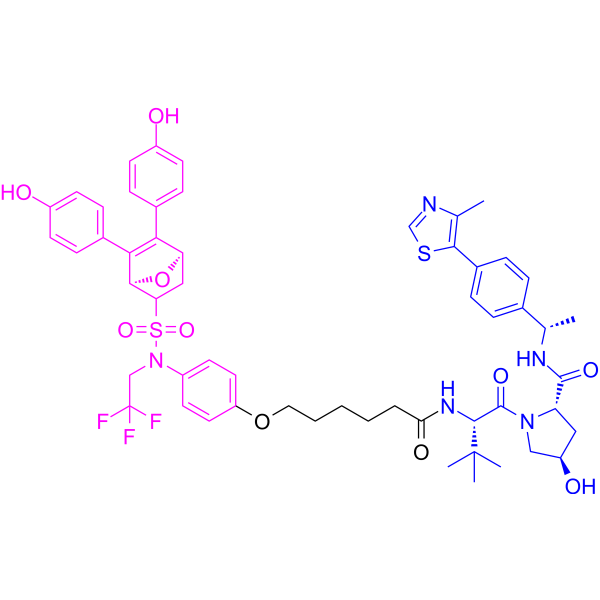
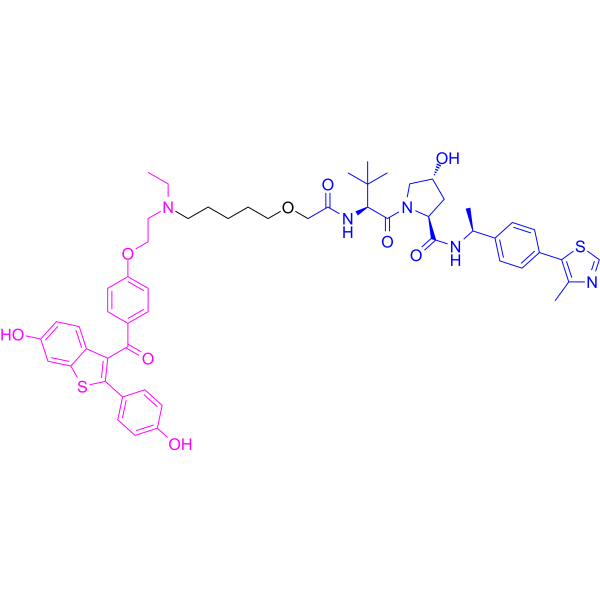
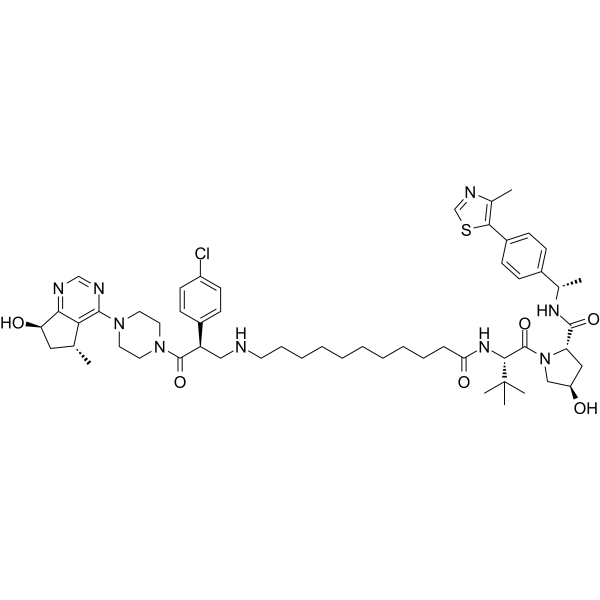
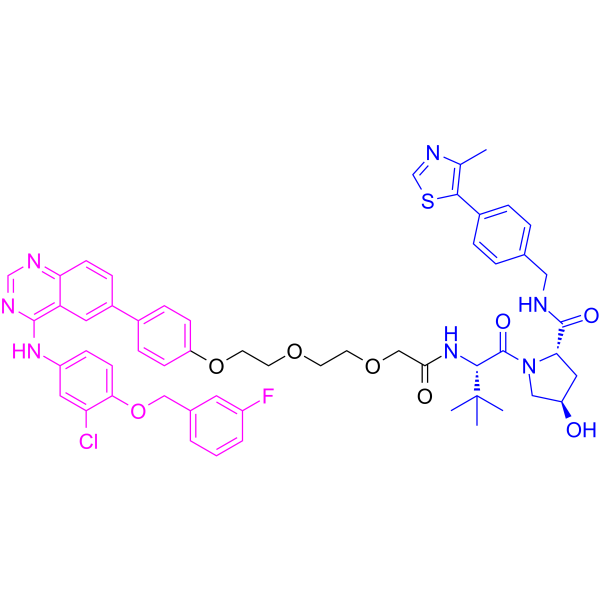
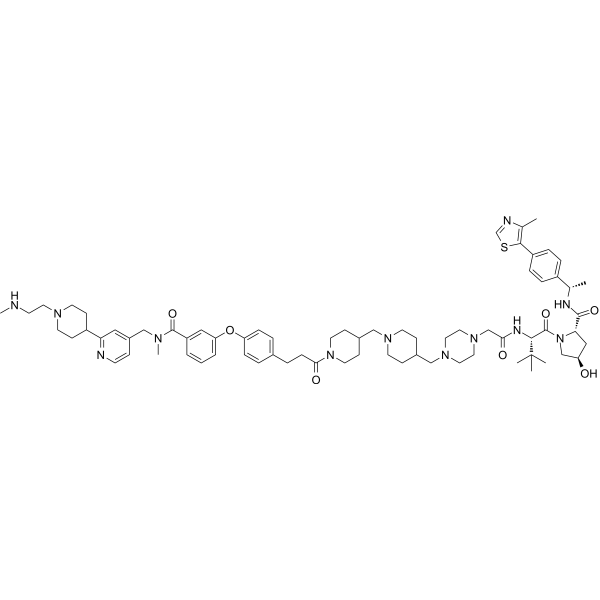
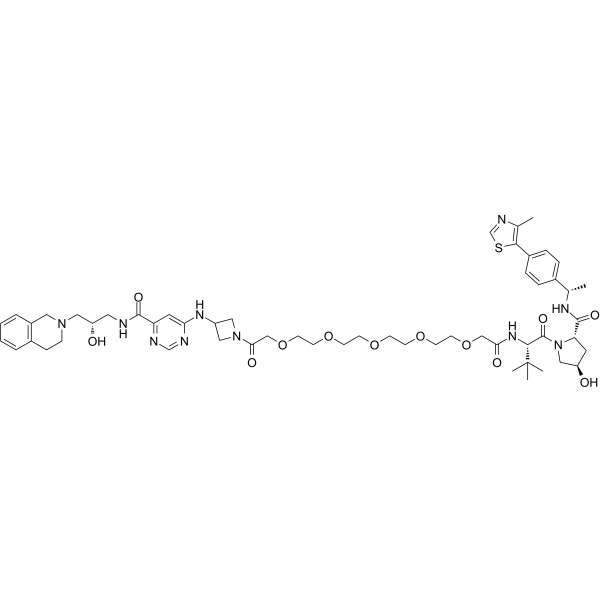
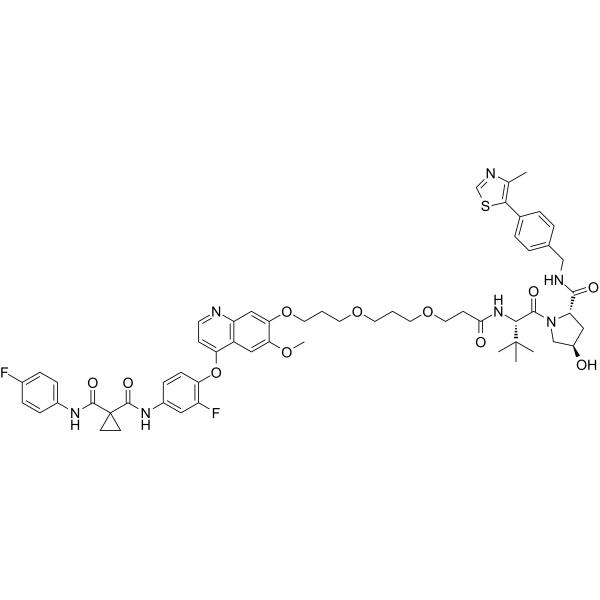
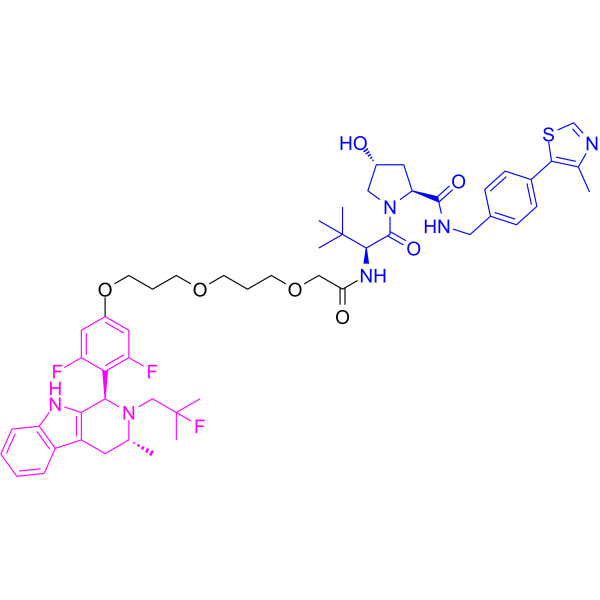
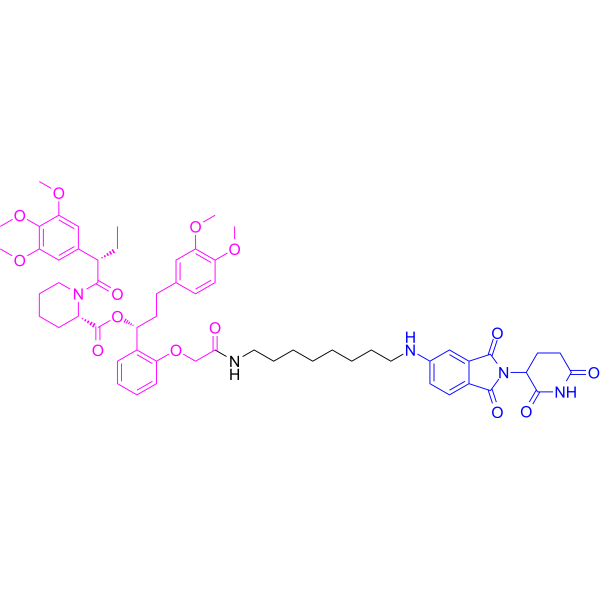
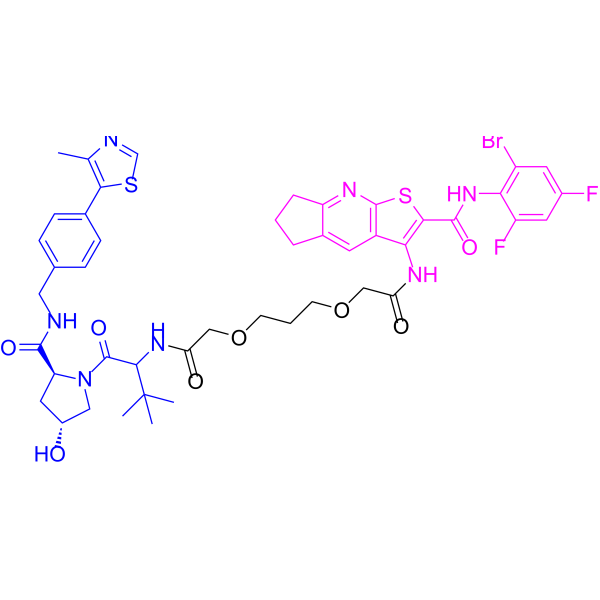
    MS105 (YX39-105) is an orally active and selective protein tyrosine kinase 6 (PTK6) (BRK) PROTAC degrader. MS105 recruits VHL E3 ligase via a VHL ligand moiety, promotes PTK6 ubiquitination and proteasomal degradation, inhibits the proliferation and migration of breast cancer cells, and induces apoptosis. MS105 shows potential for use in breast cancer research .
    MS105
  • HY-12246
    XEN445
    1 Publications Verification

    Lipase Cardiovascular Disease Metabolic Disease Cancer
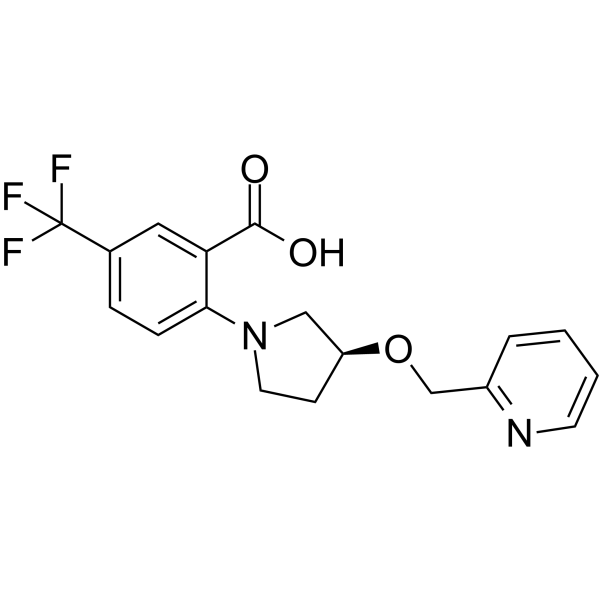
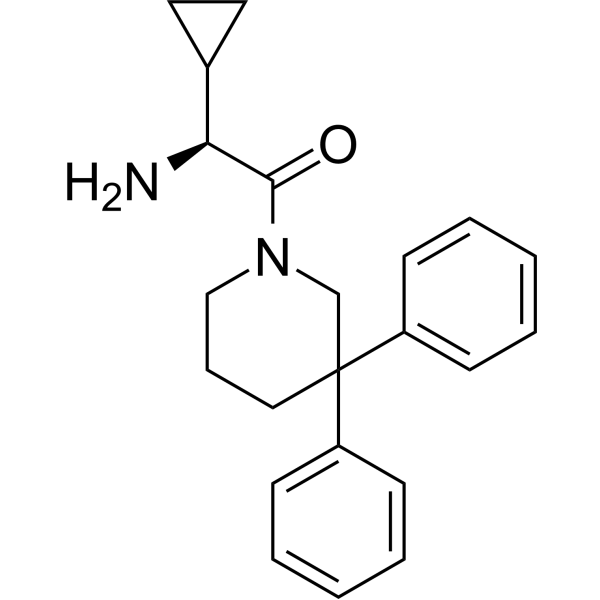
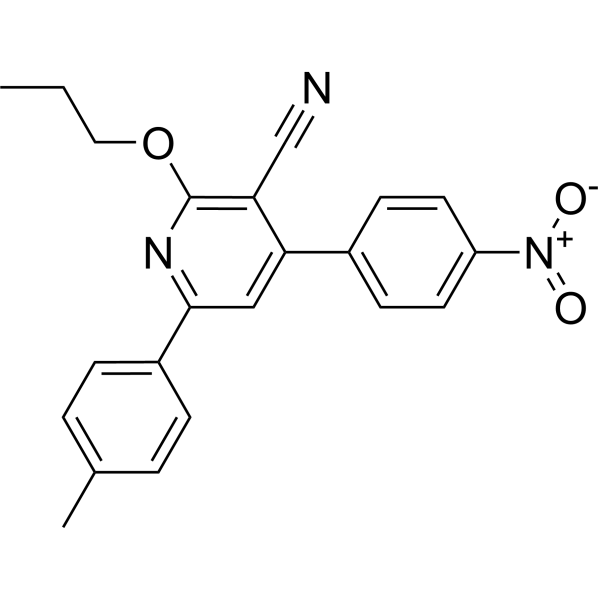
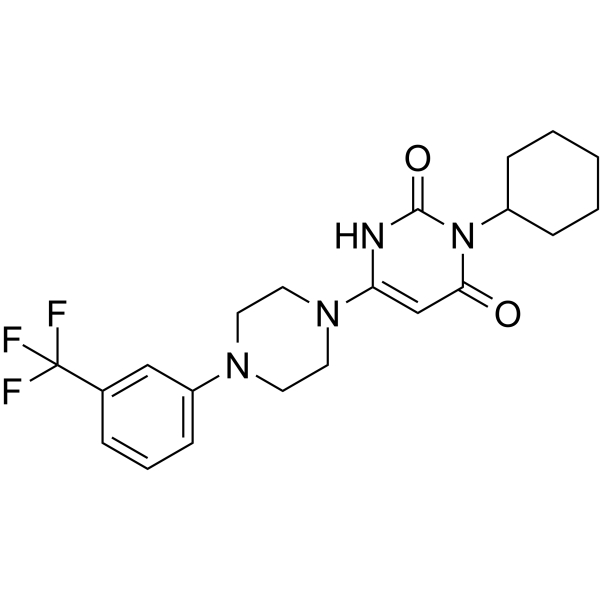
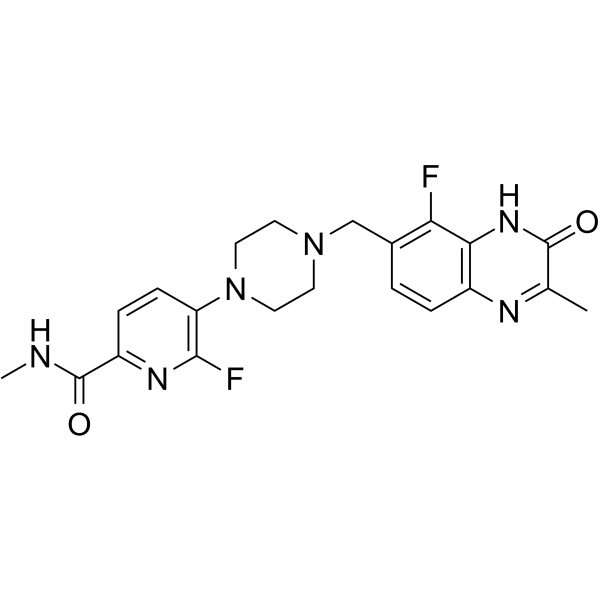
    XEN445 is a potent, selective and orally active endothelial lipase (EL) inhibitor with an IC50 value of 0.237 μM. XEN445 selectively inhibits phospholipase enzymatic activity of LIPG. XEN445 raises plasma HDL and cholesterol levles. XEN445 induces G1 cell cycle arrest, reduces cell viability, suppresses cancer stem cell self-renewal, and inhibits tumor formation in LIPG-expressing triple-negative breast cancer cells, while showing no inhibitory effect on invasiveness or cancer stem cell stemness in these cells. XEN445 can be used for the research of cancer and metabolic disease, such as triple-negative breast cancer .
    XEN445
  • HY-148214

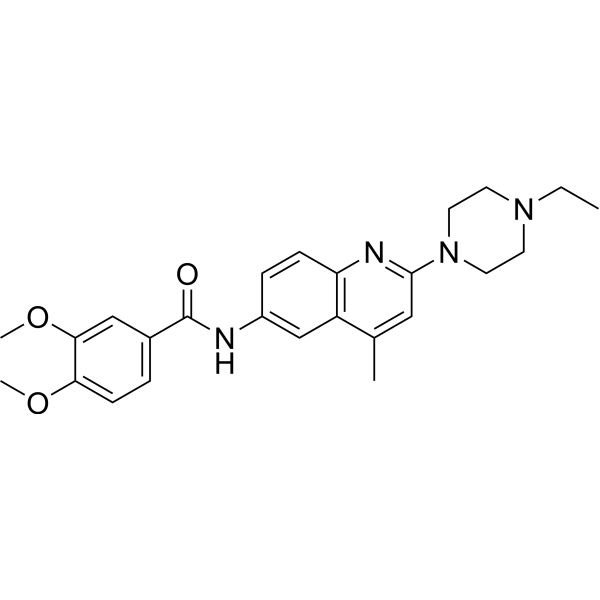
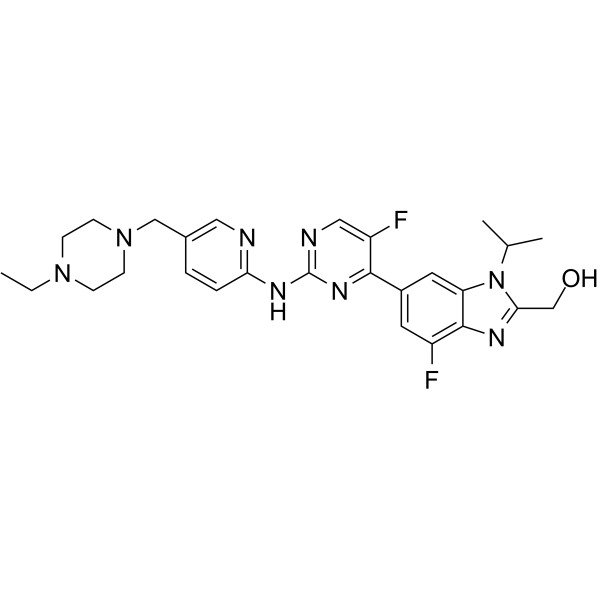
    CDK Cancer
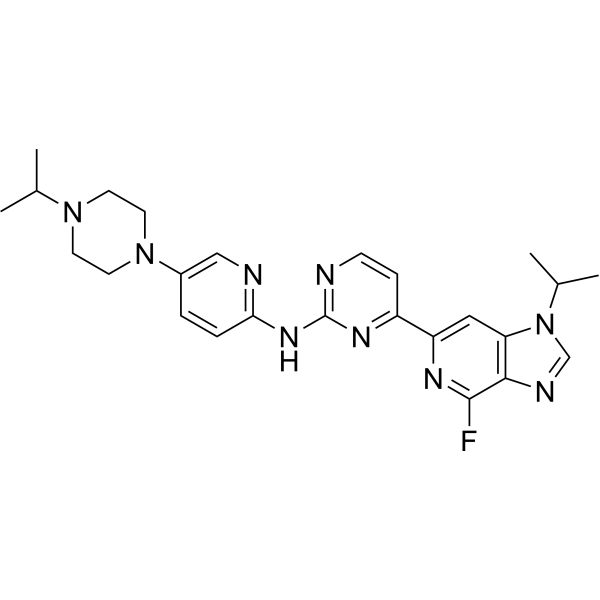
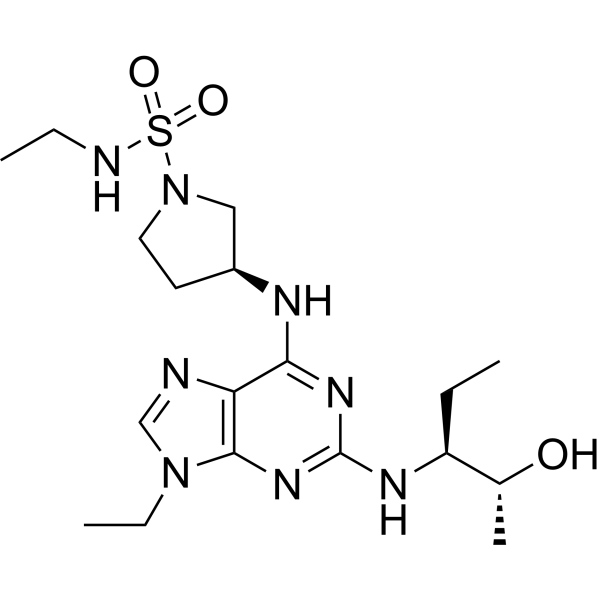
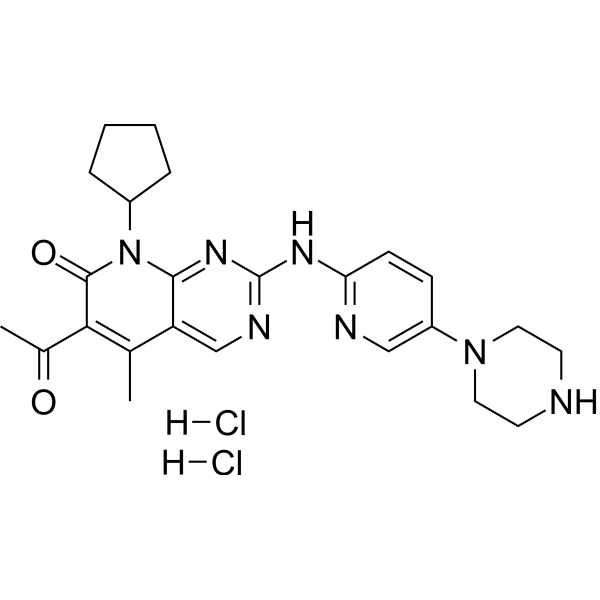
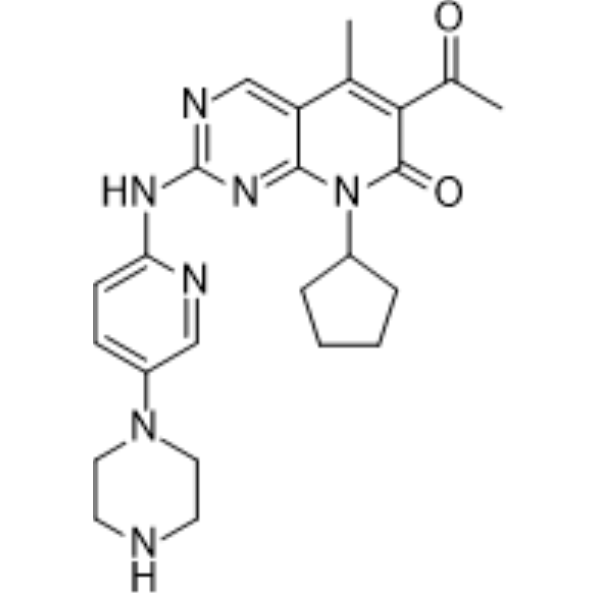
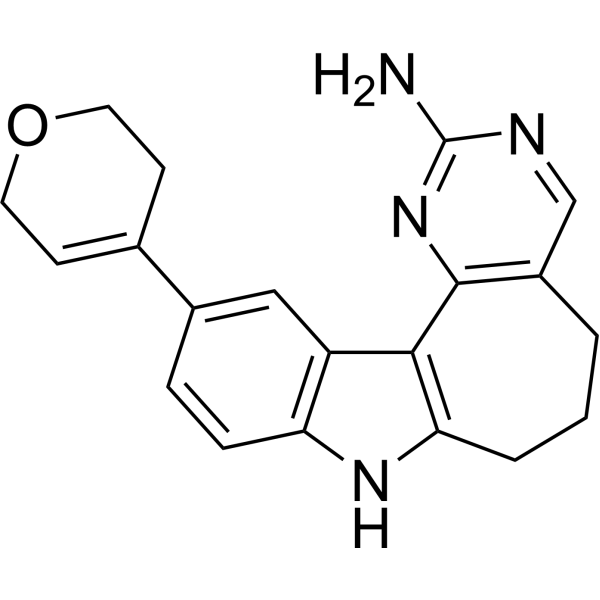
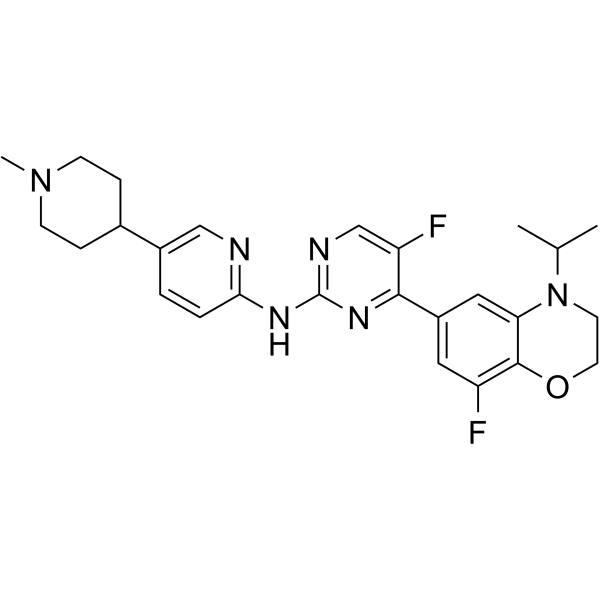
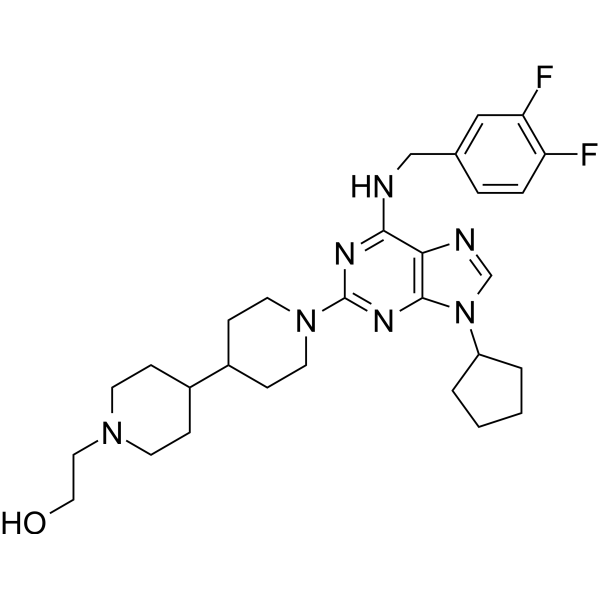
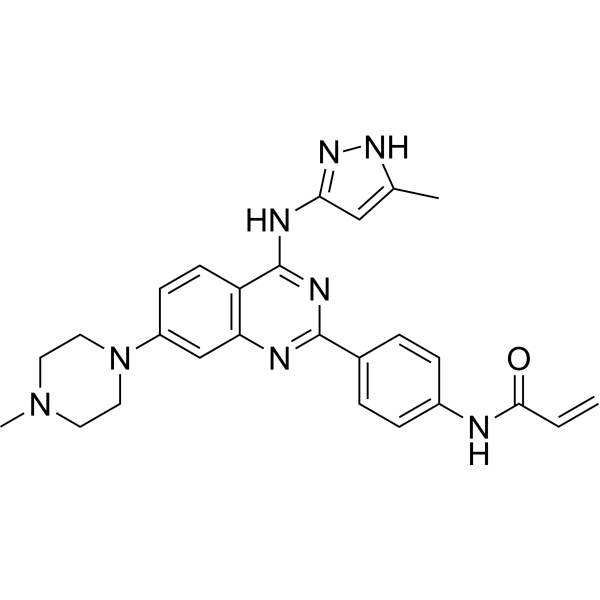
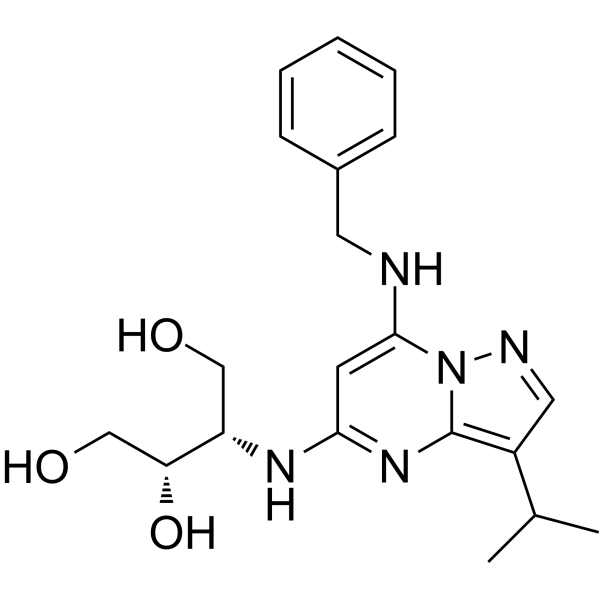
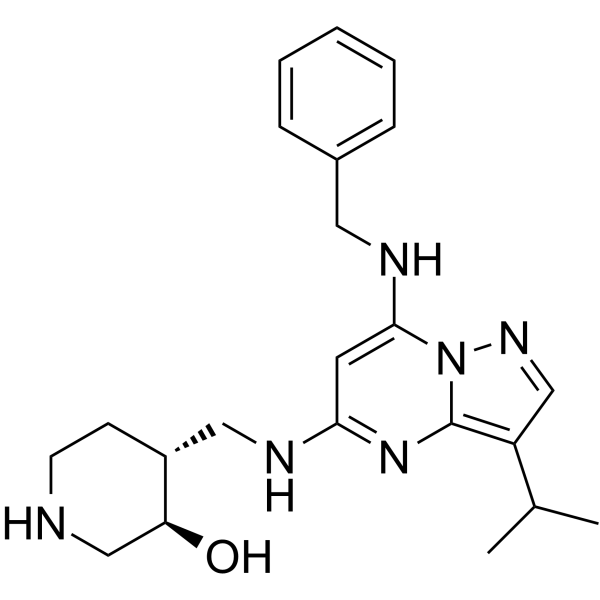
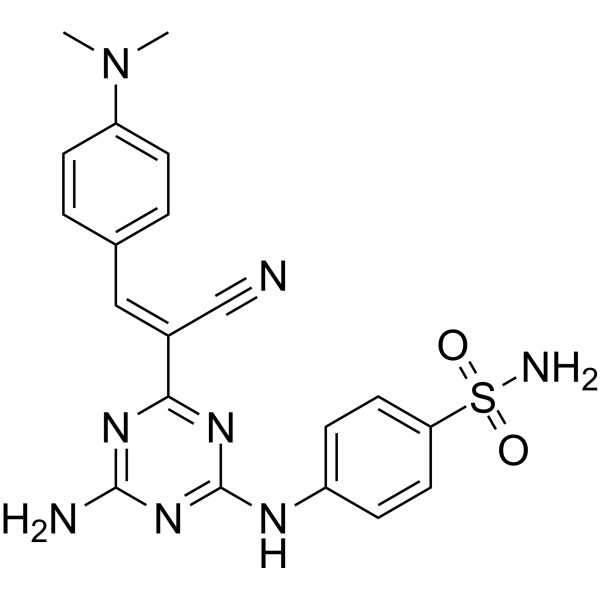
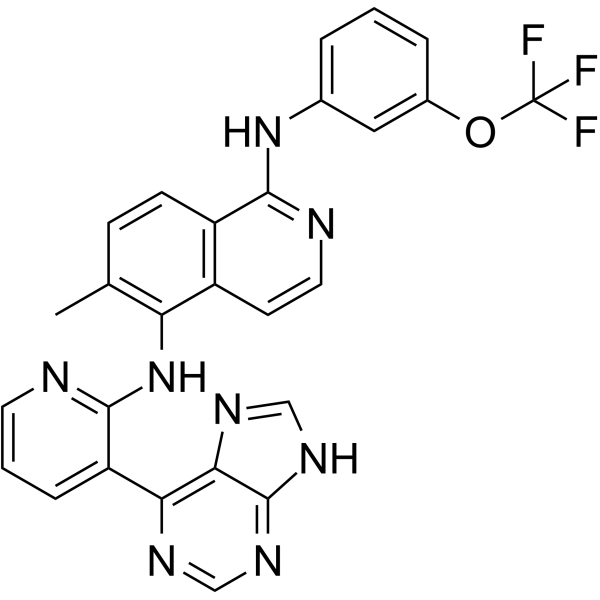
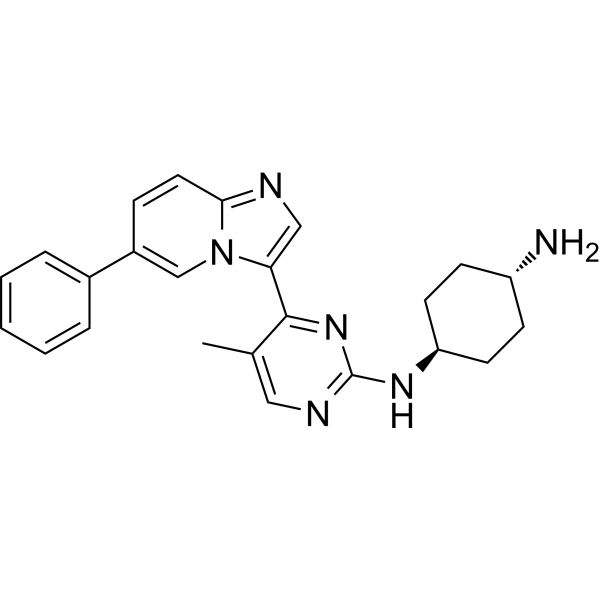
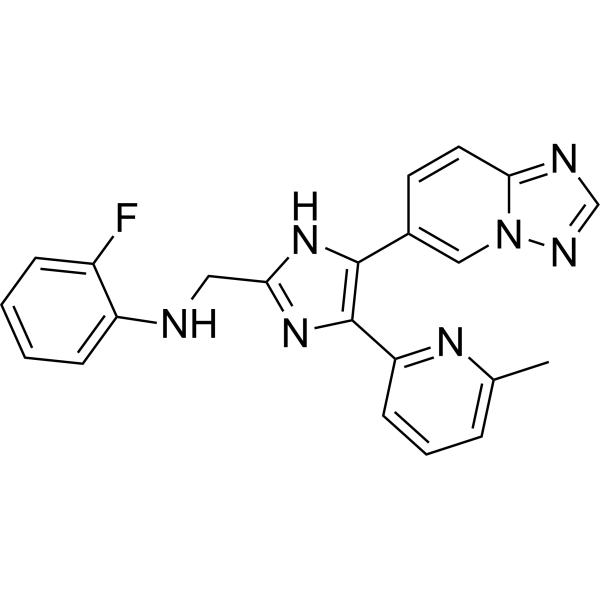
    CDK2/4/6-IN-2 is a selective CDK2/4/6 inhibitor with IC50 values <1 μM. CDK2/4/6-IN-2 inhibits cells proliferation and phosphorylation of retinoblastoma protein at Ser807/811 in breast cancer cells. CDK2/4/6-IN-2 can be used for the research of cancer, such as breast cancer .
    CDK2/4/6-IN-2
  • HY-D2309

    Fluorescent Dye Photosensitizer Cancer
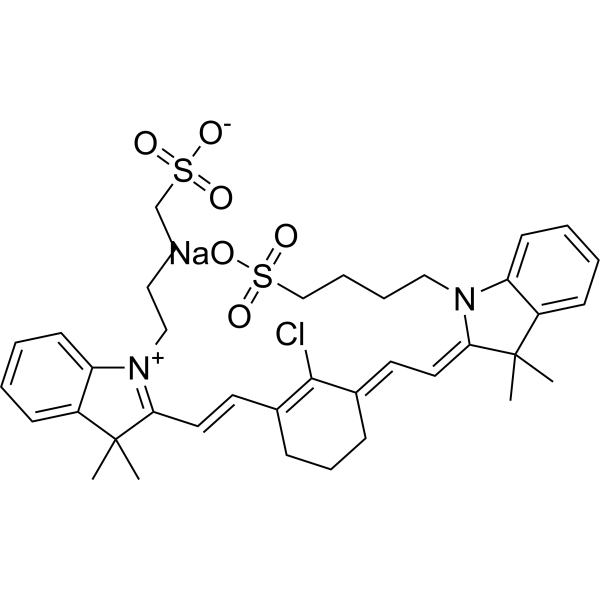
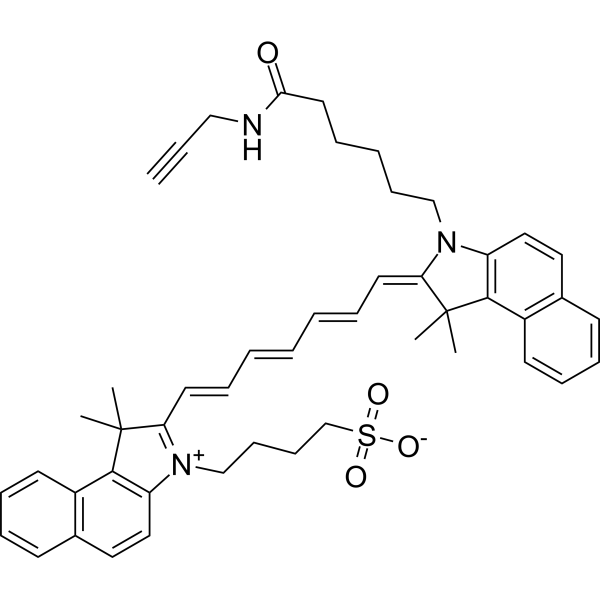
    IRDye700Dx Maleimide is a Photosensitizer. When conjugated with HER2 Affibody and activated by near-infrared light, IRDye700Dx Maleimide induces death in HER2-positive breast cancer cells without causing damage to HER2-negative breast cancer cells .
    IRDye700Dx (Maleimide)
  • HY-NP163A

    WGA-AF488

    Fluorescent Dye Cancer
    Wheat germ agglutinin-AF488 (WGA-AF488) is a cell membrane-specific staining agent prepared by conjugating wheat germ agglutinin with the Alexa Fluor 488 (HY-D1304) fluorescent dye, and it binds to cell surface glycoproteins with high affinity. Wheat germ agglutinin-AF488 is applied in fluorescence microscopy and confocal imaging techniques, and it can clearly label the membrane structures of various cells including breast cancer cells, enabling high-resolution visual observation. Wheat germ agglutinin-AF488 is used in studies of breast cancer and triple-negative breast cancer to observe cell morphology and membrane dynamic changes .
    Wheat germ agglutinin-AF488
  • HY-177760

    Carboxypeptidase Apoptosis Akt Cancer
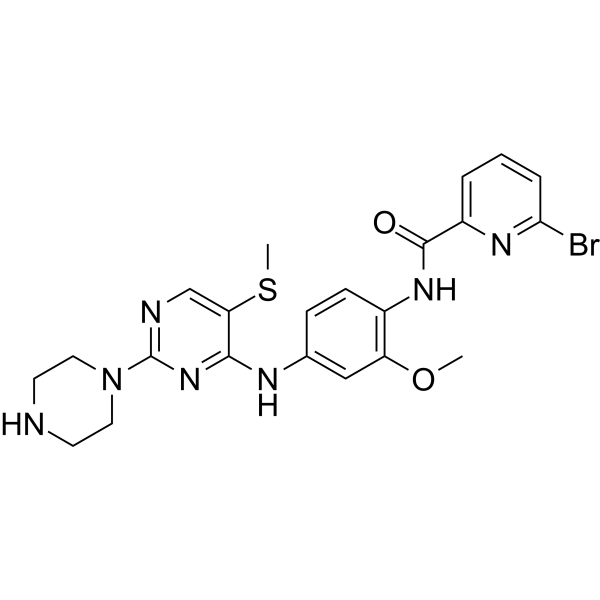
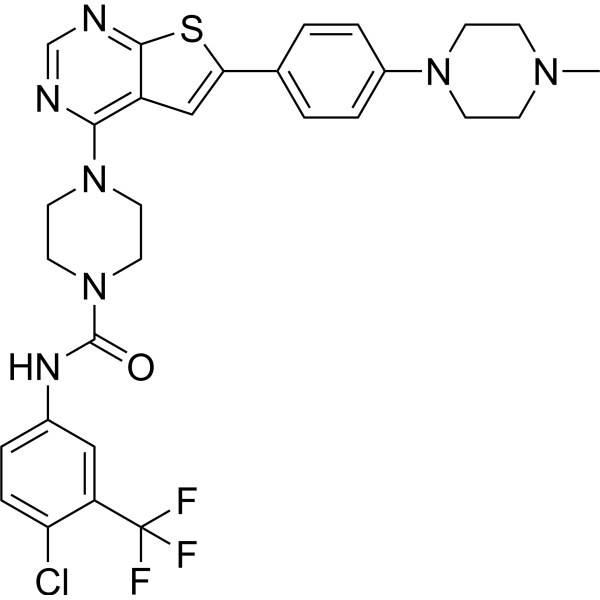
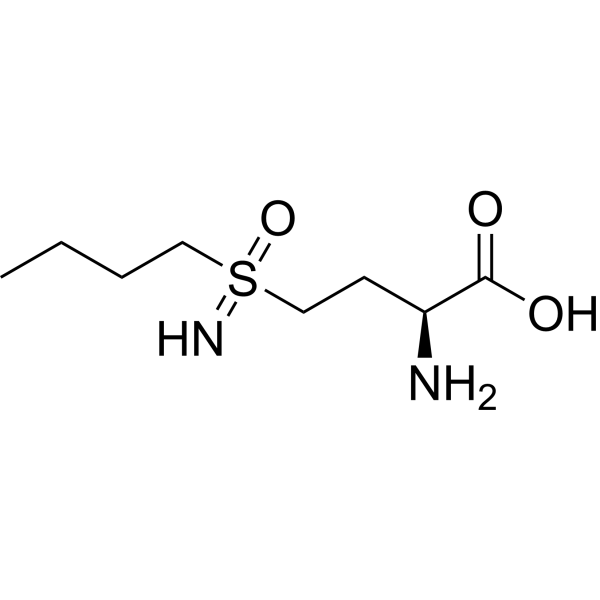
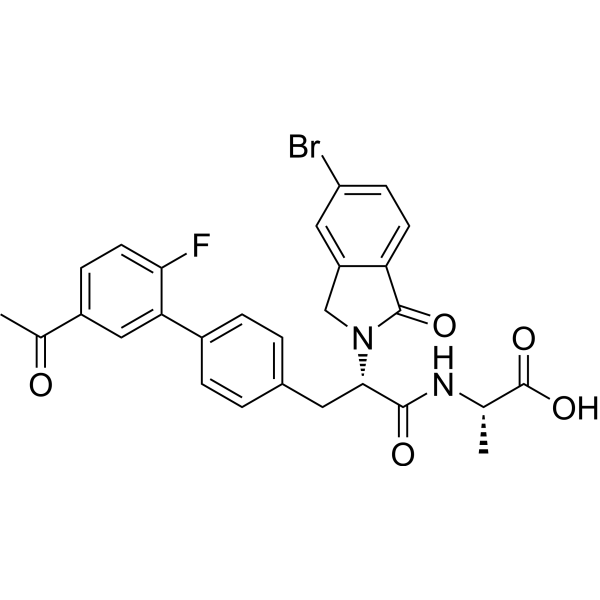
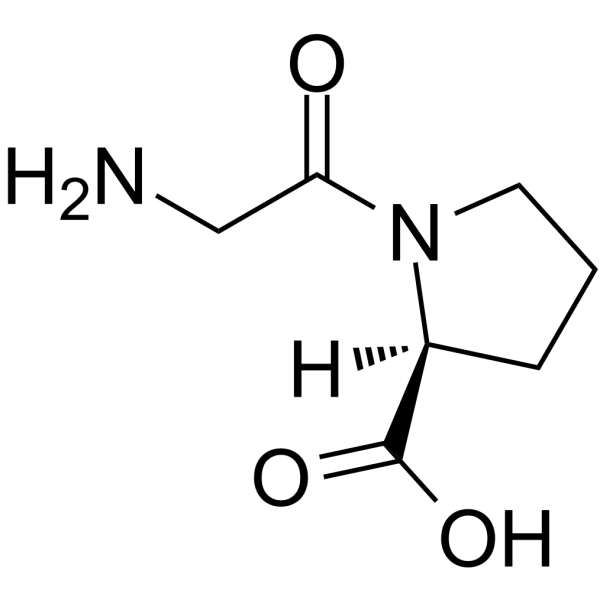
    PrCP-7414 is a prolyl carboxypeptidase (PRCP) inhibitor. PrCP-7414 blocks PRCP-mediated activation of the IGF1R/HER3 signaling pathway and subsequent AKT activation. PrCP-7414 exhibits pro-apoptotic, anti-tumor and synergistic cytotoxic activities, and inhibits the proliferation and survival of triple-negative breast cancer cells. PrCP-7414 can be used for the research of breast cancer .
    PrCP-7414
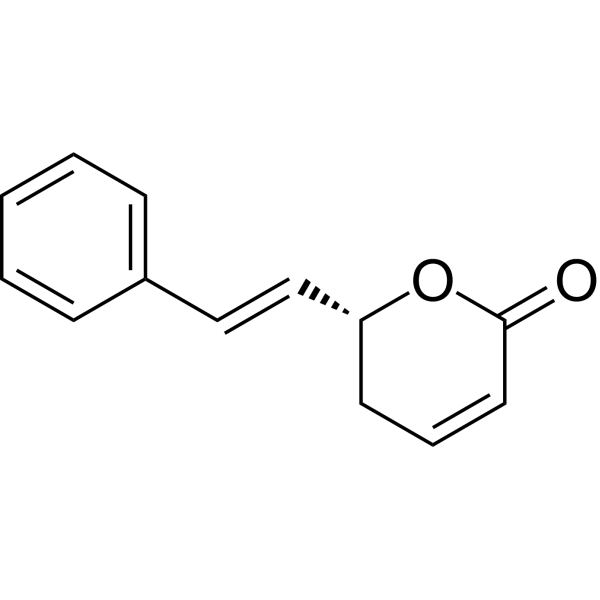
  • HY-N1180

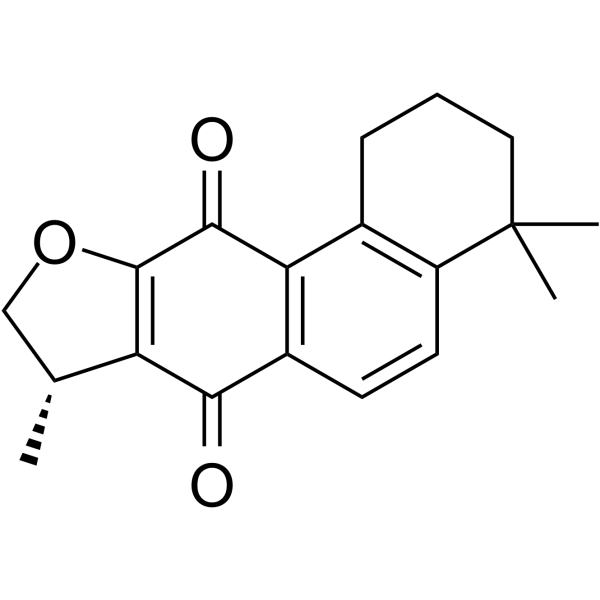
    SARS-CoV Keap1-Nrf2 Infection
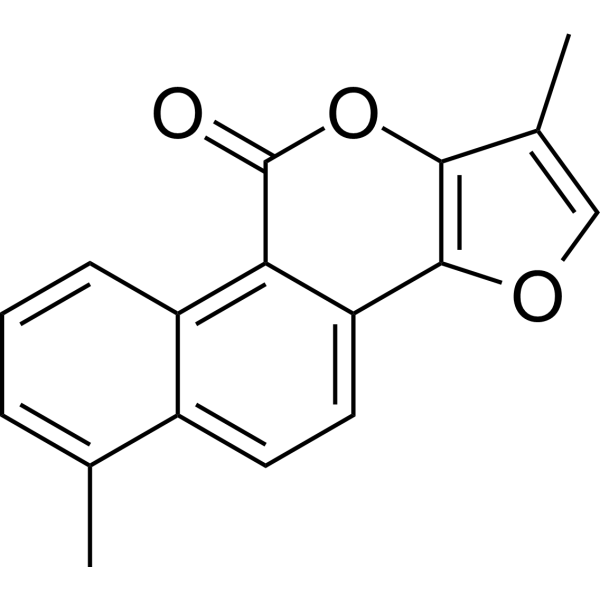
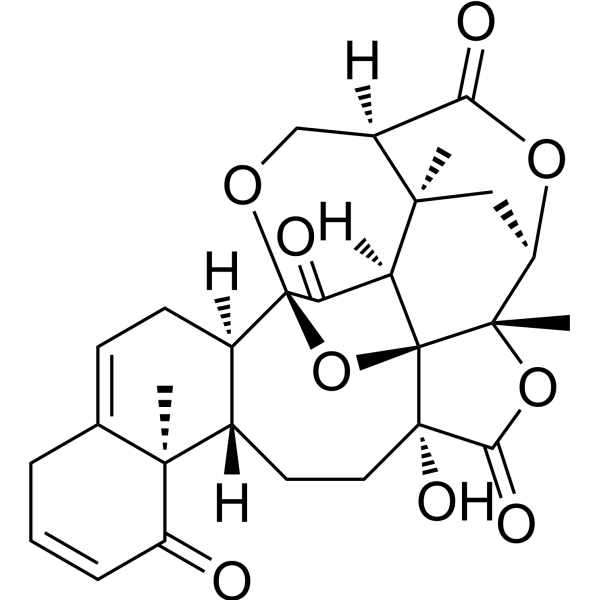
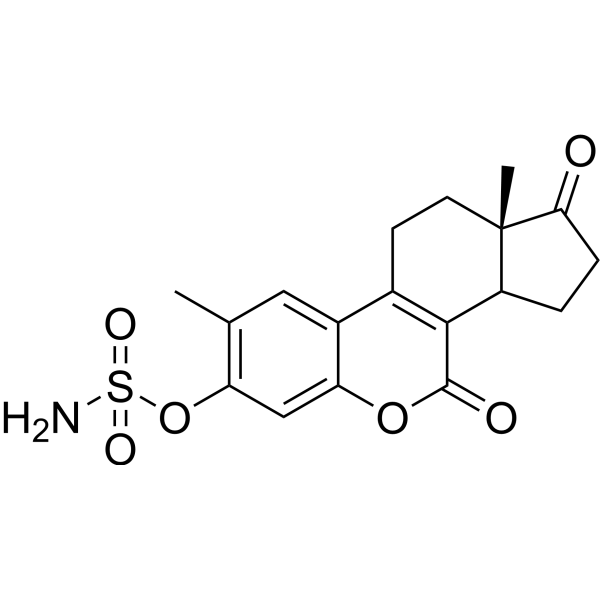
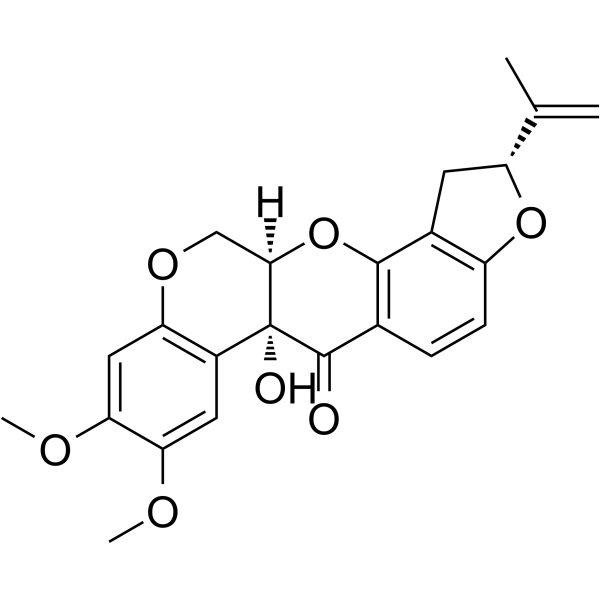
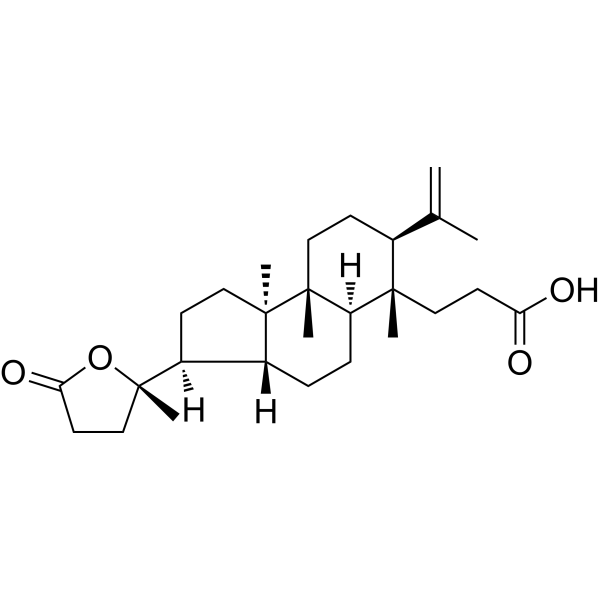
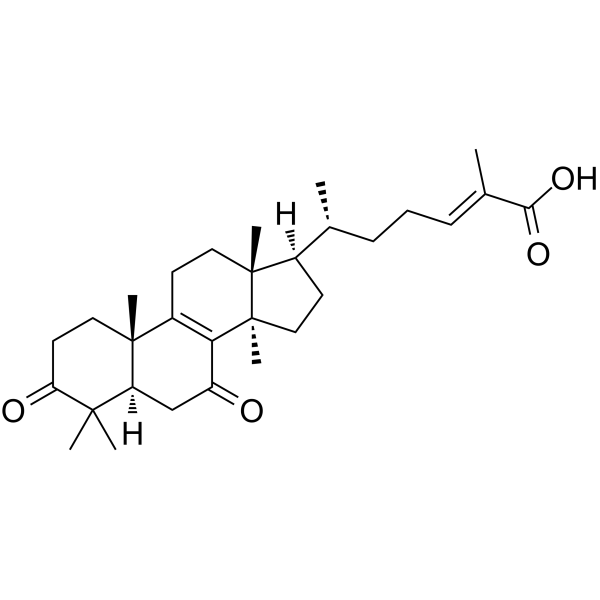
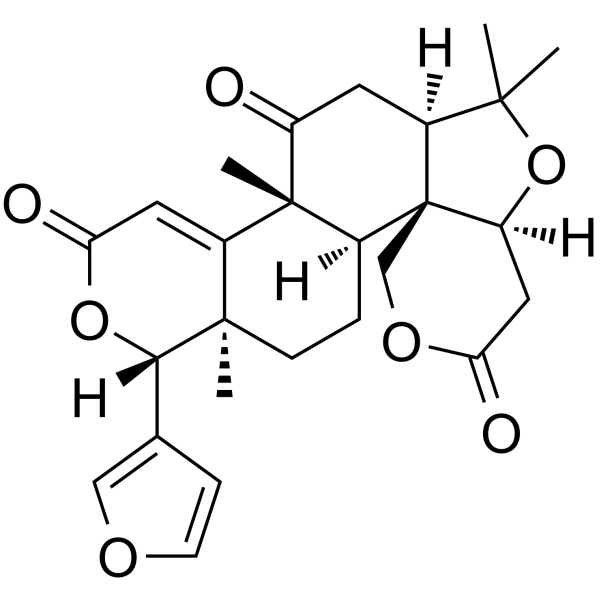
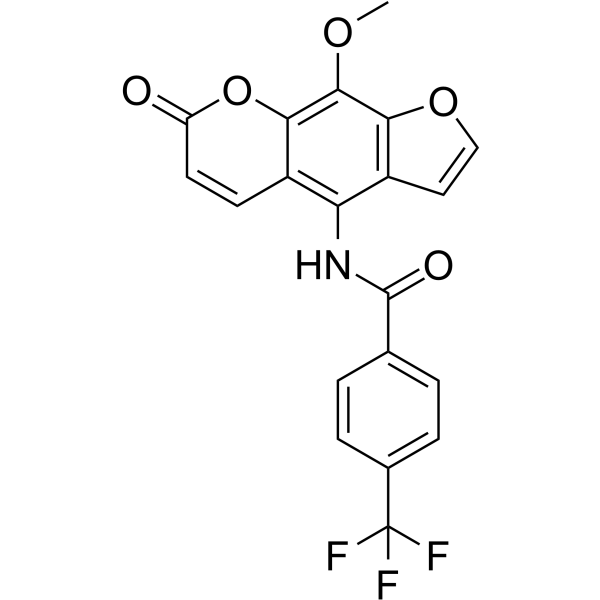
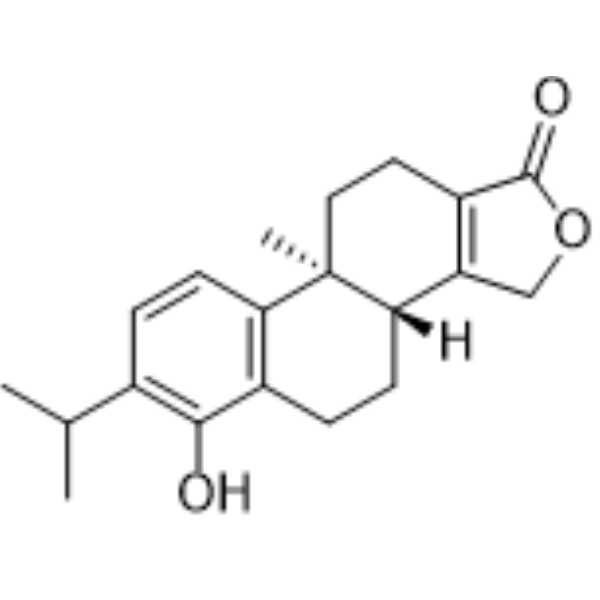
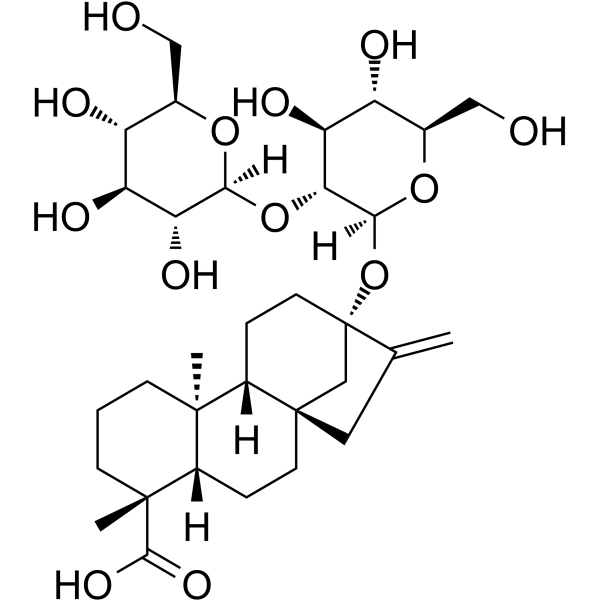
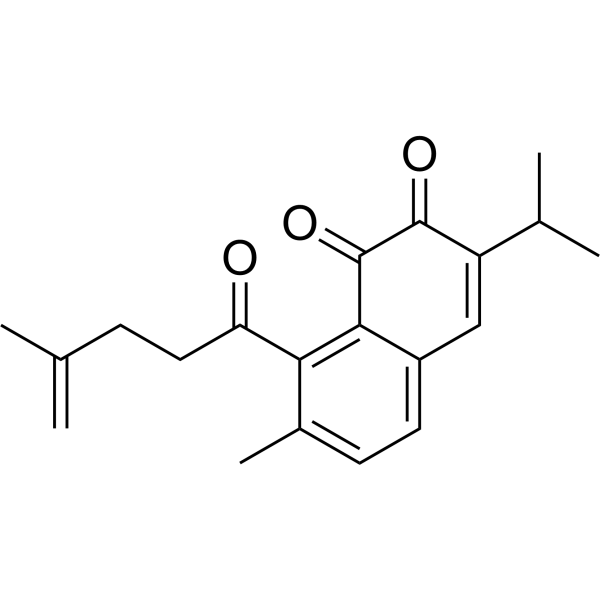
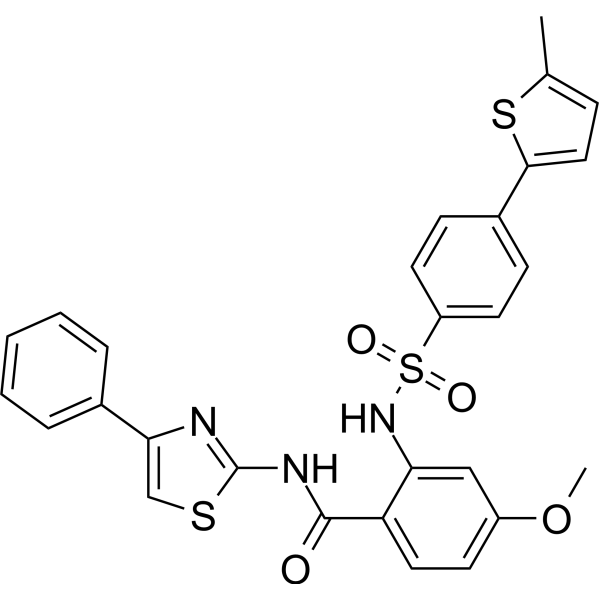
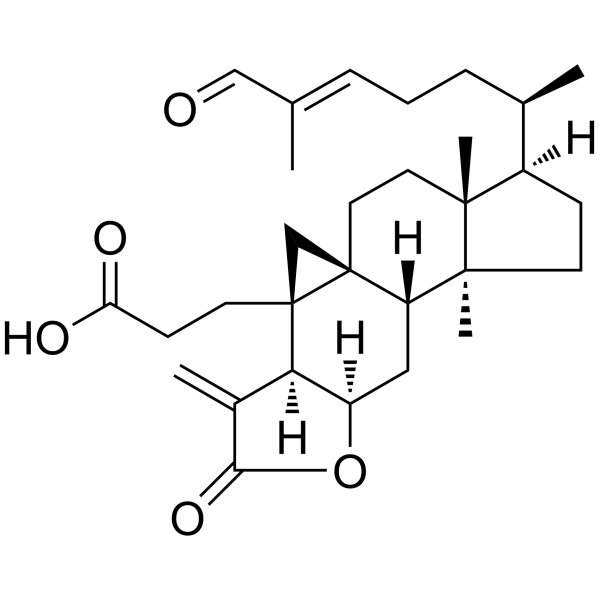
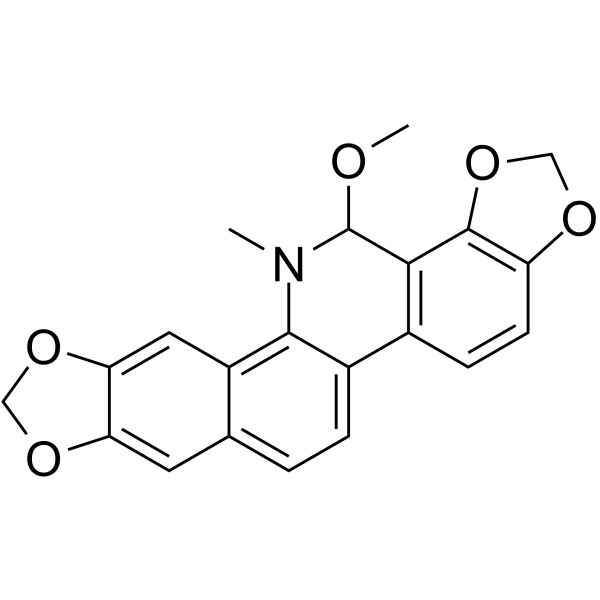
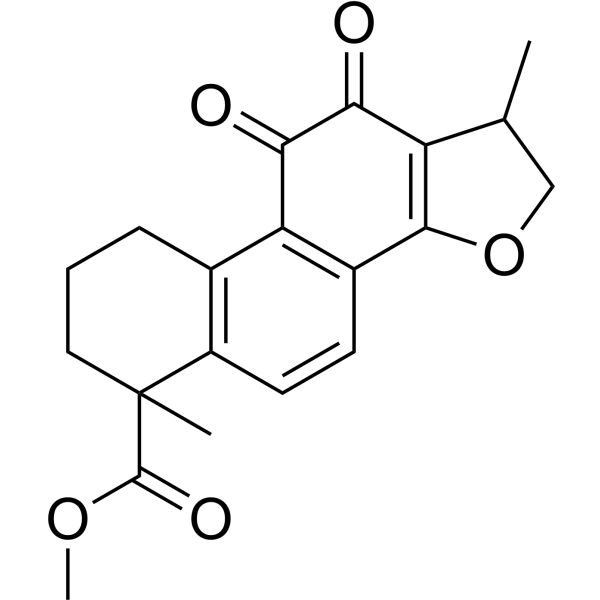
    Tanshinlactone is a compound found in Salvia miltiorrhiza with anti-coronavirus (CoV) and anti-tumor activities. Tanshinlactone induces methuocytic cell death (methuosis) by activating the NRF2 pathway, and selectively kills ER +, HER2 +/EGFR + breast cancer cells. Tanshinlactone is applicable to research related to breast cancer and coronavirus infections .
    Tanshinlactone
  • HY-149894

    c-Myc Cadherin Cancer
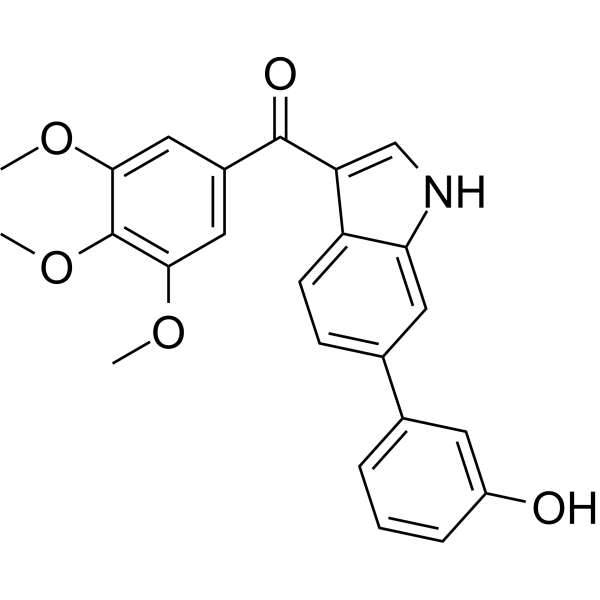
    MC-1-F2 is a FOXC2 inhibitor. MC-1-F2 shows a binding affinity (Kd) of 26 μM for full-length FOXC2. MC-1-F2 reduces epithelial-mesenchymal transition (EMT) markers in breast cancer cells, suppresses cancer stem cell (CSC) properties and reduces invasiveness in castration-resistant prostate cancer (CRPC) cells. MC-1-F2 can be used for the study of CRPC and breast cancer .
    MC-1-F2
  • HY-171158

    Liposome Cancer
    Glycerophosphoglycerol is a precursor for phospholipid biosynthesis. Glycerophosphoglycerol supports tumor cell membrane reconstruction and proliferation by promoting phospholipid synthesis. Glycerophosphoglycerol is promising for research of breast cancers .
    Glycerophosphoglycerol
  • HY-172609

    Phosphatase Apoptosis MDM-2/p53 Caspase Metabolic Disease Cancer
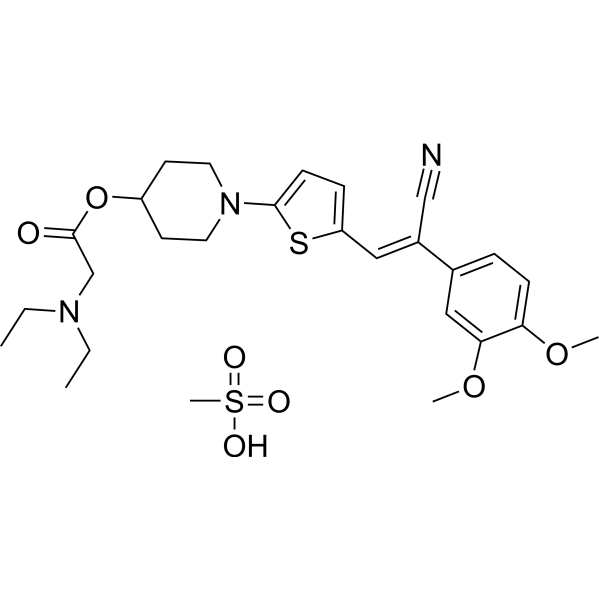
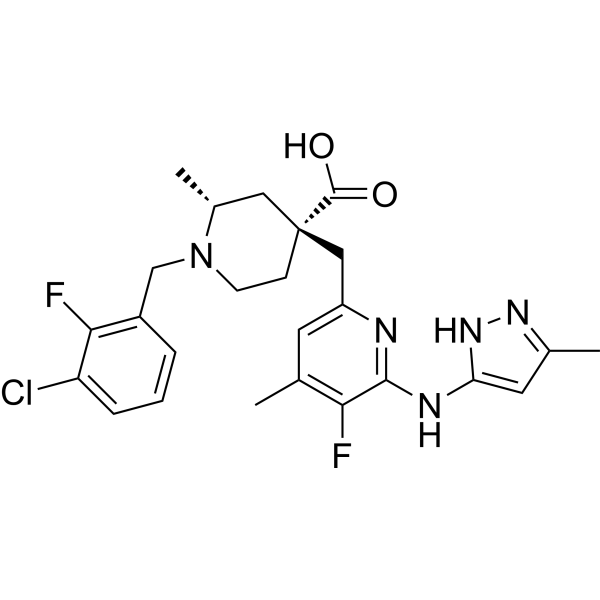
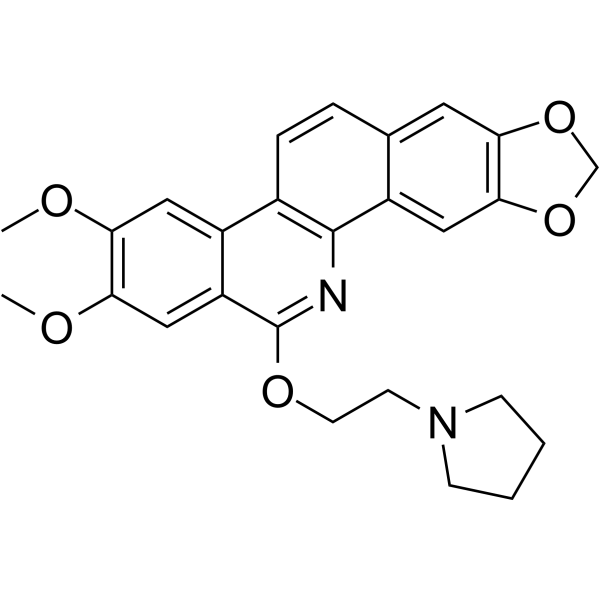
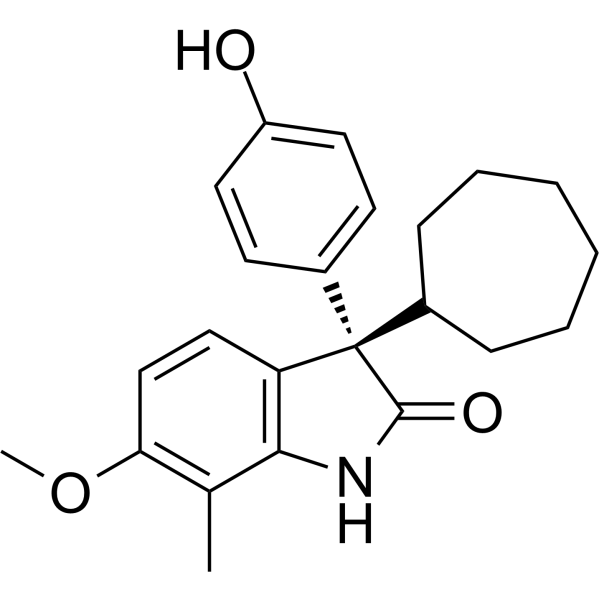
    SL-176 is a PPM1D (Wip1) inhibitor. SL-176 inhibits lipid droplet formation, downregulates the mRNA and protein expression of PPARγ and C/EBPα, and blocks adipocyte differentiation. SL-176 induces G2/M cell cycle arrest, apoptosis and inhibits cell proliferation in breast cancer cells overexpressing PPM1D, and activates components of the p53 pathway. SL-176 suppresses tumor growth in a zebrafish model of neuroblastoma. SL-176 is applicable to research related to obesity, breast cancer and neuroblastoma .
    SL-176
  • HY-159613

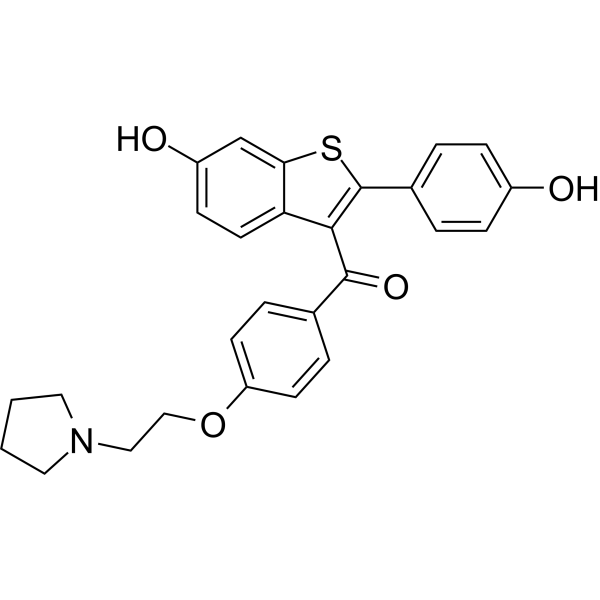
    Apoptosis Estrogen Receptor/ERR Inflammation/Immunology Cancer
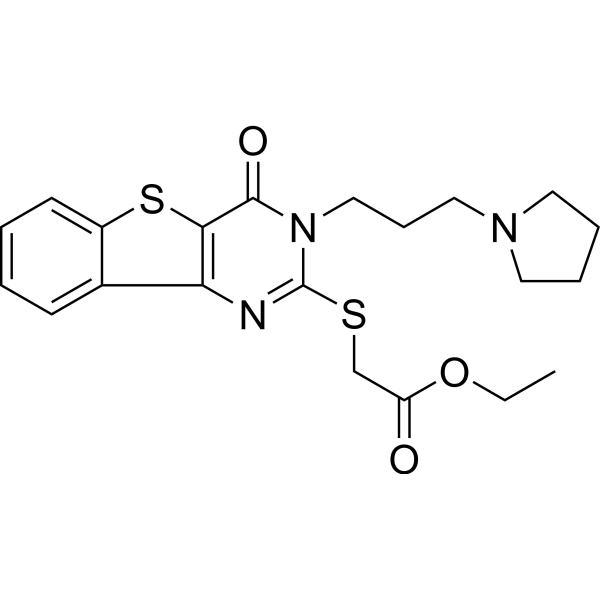
    PELP1-IN-1 is a PELP1 inhibitor and an apoptosis inducer with no cytotoxic activity against non-cancer cell lines. PELP1-IN-1 targets wild-type, mutant and drug-resistant ER + breast cancer, and promotes PELP1 degradation through the proteasome pathway. As an analog of SMIP34 (HY-169903), PELP1-IN-1 is applicable to the research of estrogen receptor α-positive breast cancer .
    PELP1-IN-1
  • HY-148368

    Bcl-2 Family Apoptosis Cancer
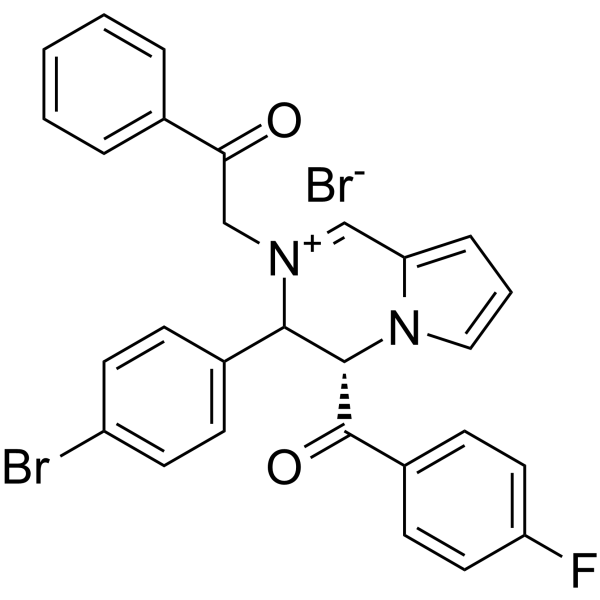
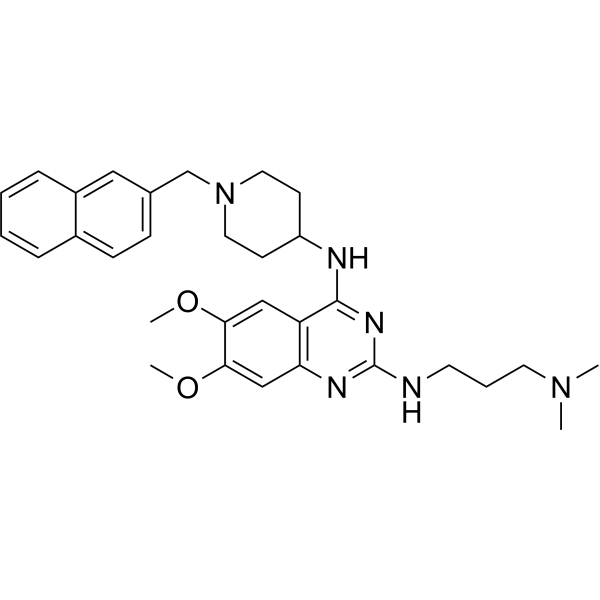
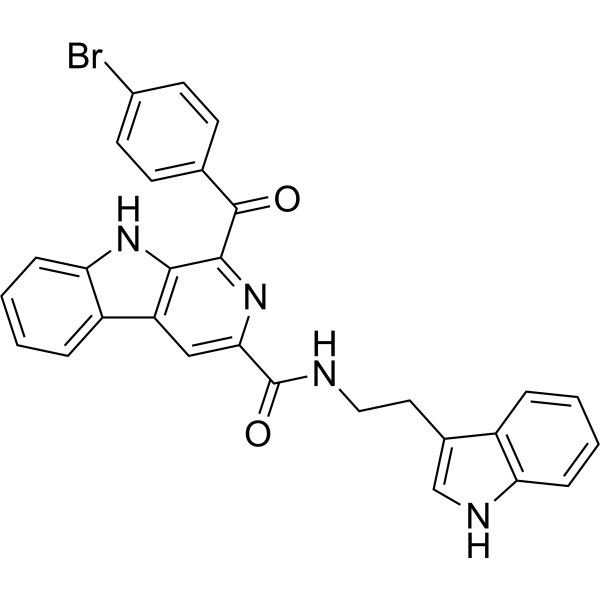
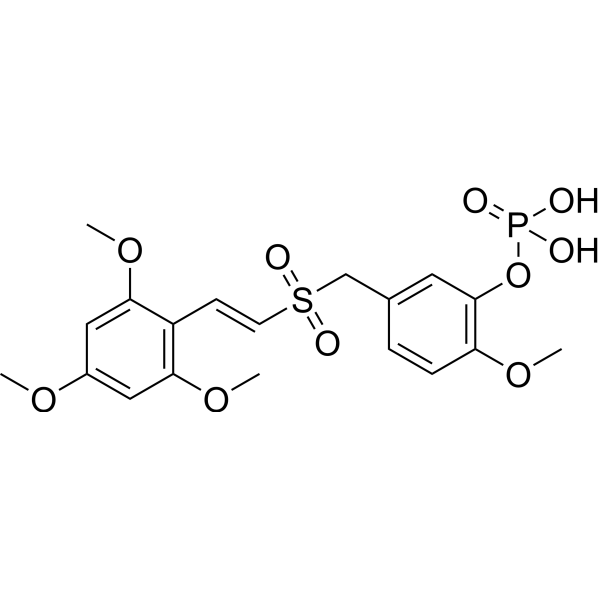
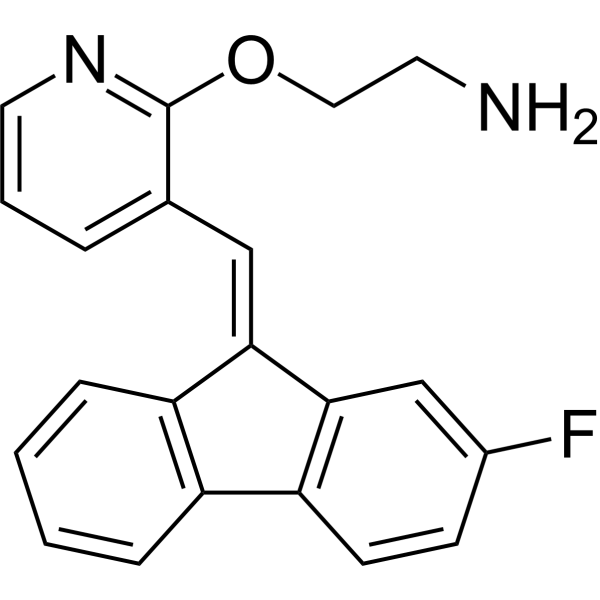
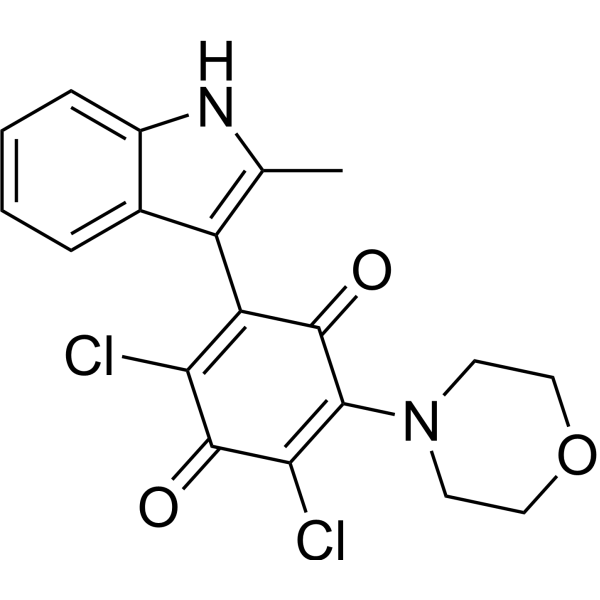
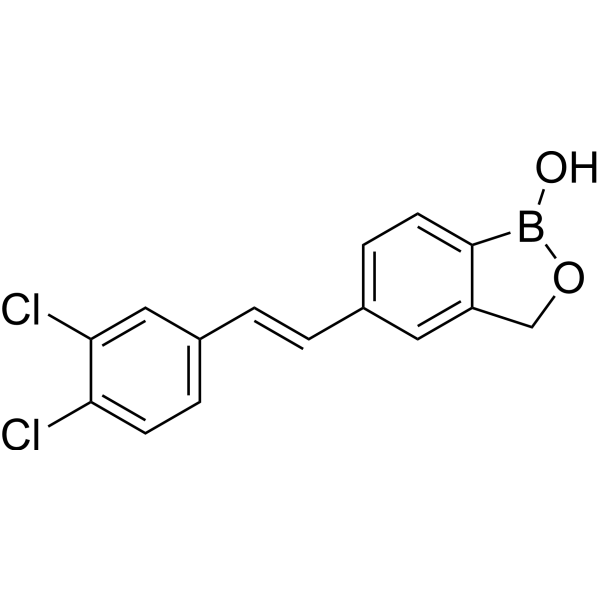
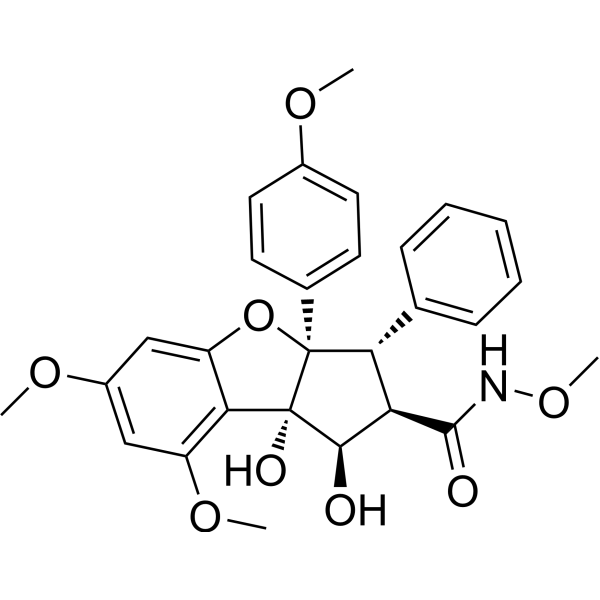
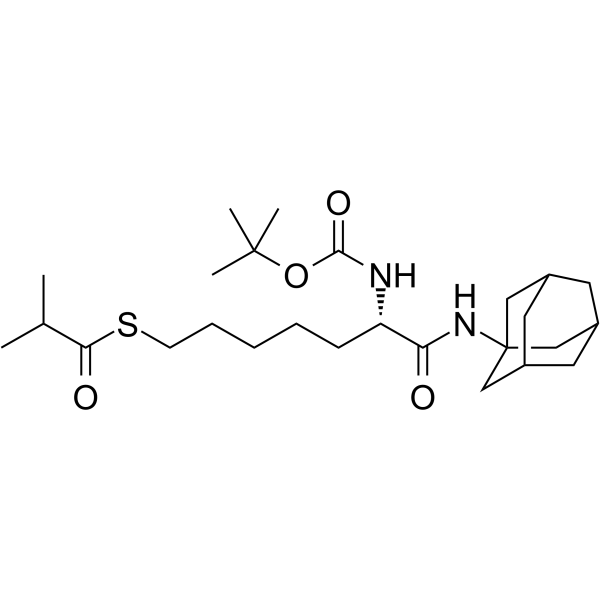
    CYD-4-61 is a novel Bax activator used for breast cancer research. CYD-4-61 inhibits triple-negative breast cancer MDA-MB-231 and ER-positive breast cancer MCF-7 cell lines proliferation. CYD-4-61 activates Bax protein to induce cytochrome c release and regulate apoptotic biomarkers, leading to cancer cell apoptosis .
    CYD-4-61
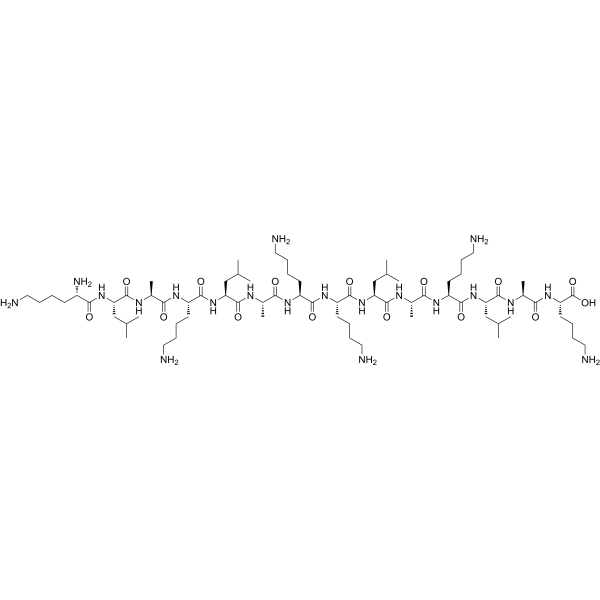
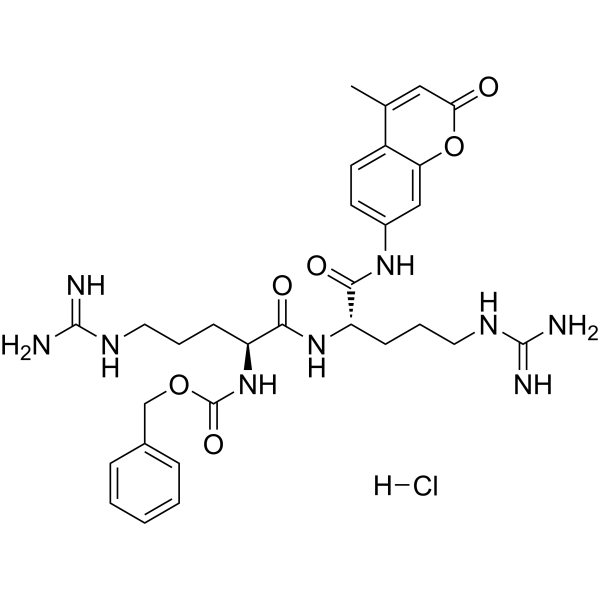
  • HY-P0237

    Kallikrein Cancer
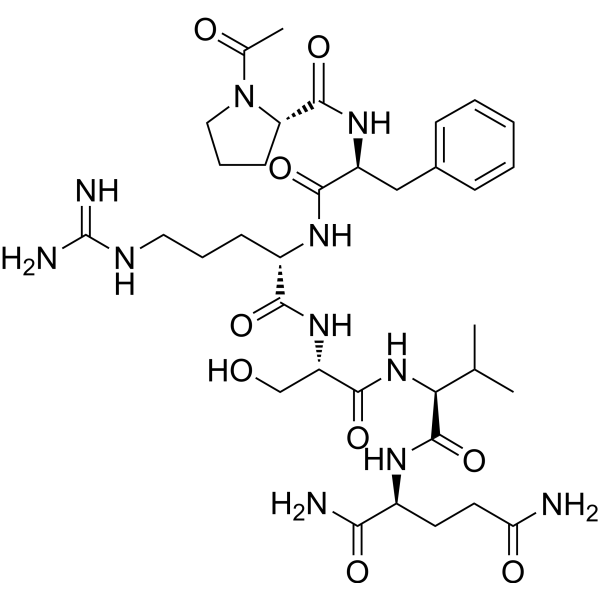
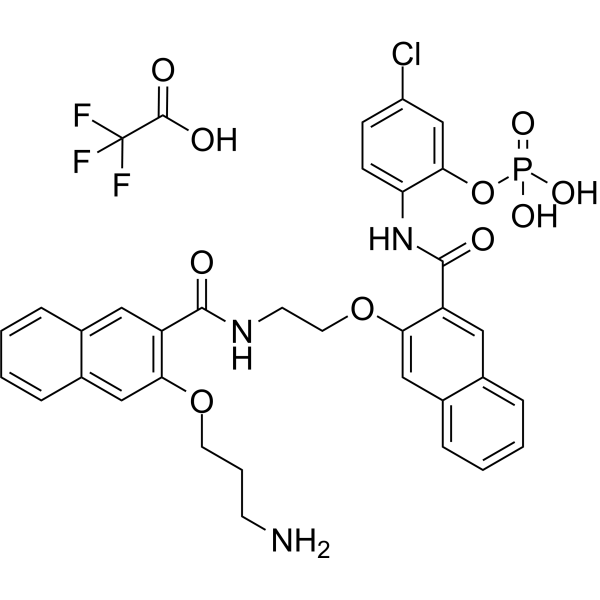
    KKI-5 is a specific inhibitor of tissue kallikrein. KKI-5 can attenuate breast cancer cell invasion .
    KKI-5
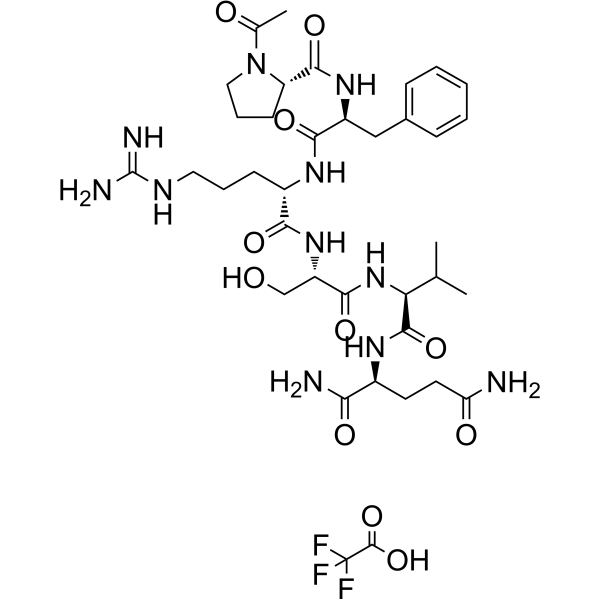
  • HY-P0237A

    Kallikrein Cancer
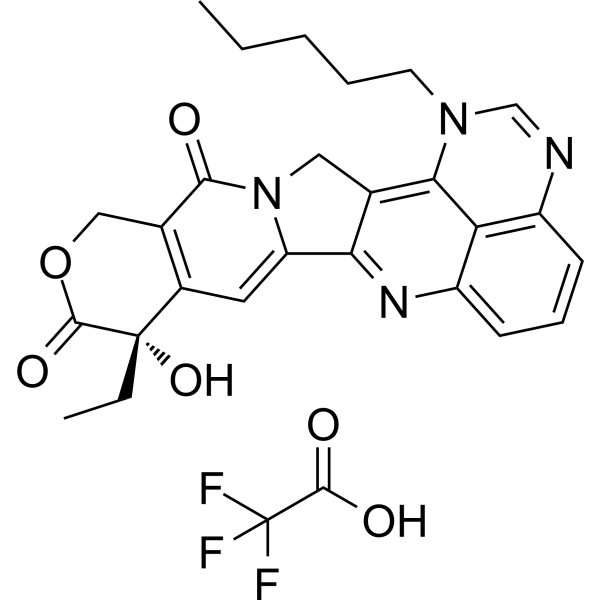
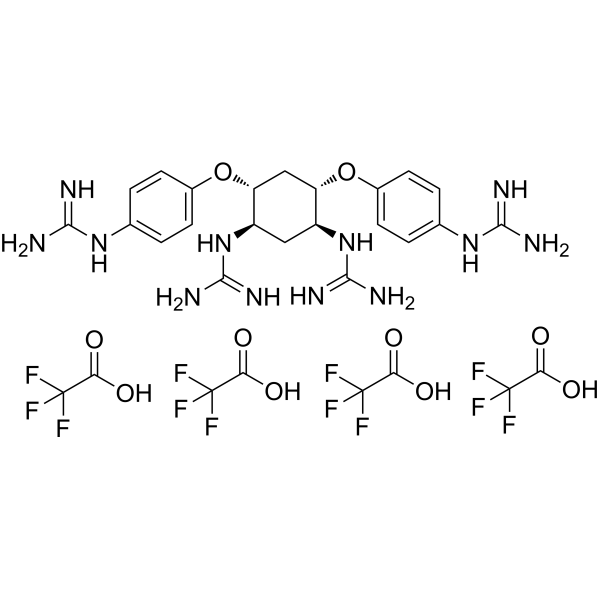
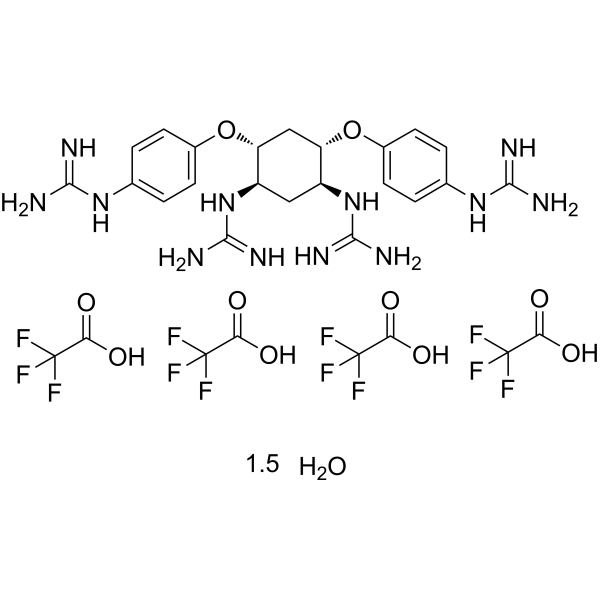
    KKI-5 (TFA) is a specific inhibitor of tissue kallikrein. KKI-5 (TFA) can attenuate breast cancer cell invasion .
    KKI-5 TFA
  • HY-P991660

    c-Met/HGFR Cancer
    ARGX-111 is an anti-MET antibody. ARGX-111 blocks HGF-dependent and -independent signaling, downregulating MET expression on the tumor cell surface. ARGX-111 depletes MET-expressing circulating tumor cells through enhanced antibody-dependent cell-mediated cytotoxicity (ADCC), thereby inhibiting tumor metastasis. ARGX-111 depletes circulating tumor cells and inhibits bone and lung metastasis in an orthotopic mouse model of metastatic breast cancer. ARGX-111 is promising for research in breast cancer and other cancers .
    ARGX-111
  • HY-P11205A

    Cys-txCD47 TFA

    CD47 Reactive Oxygen Species (ROS) Thrombopoietin Receptor Inflammation/Immunology Cancer
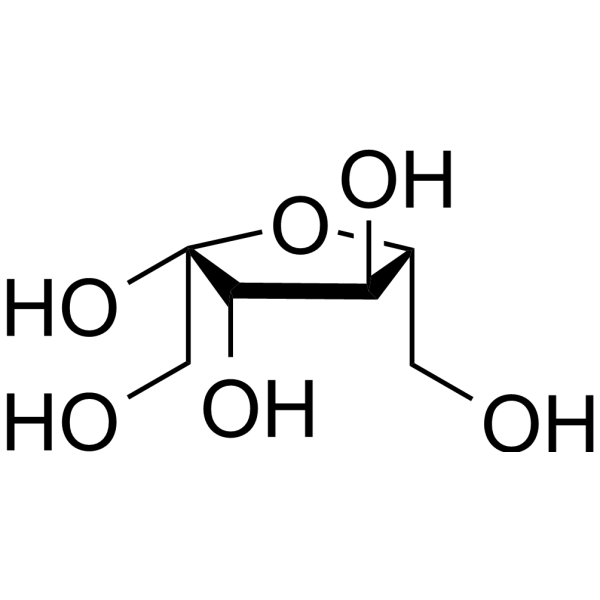
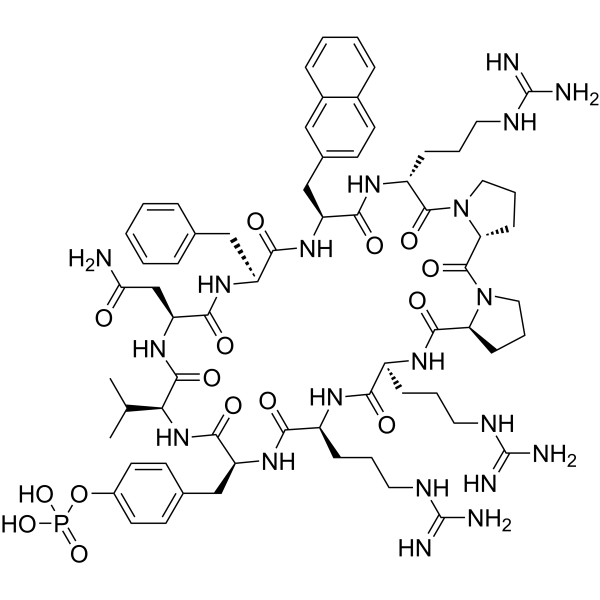
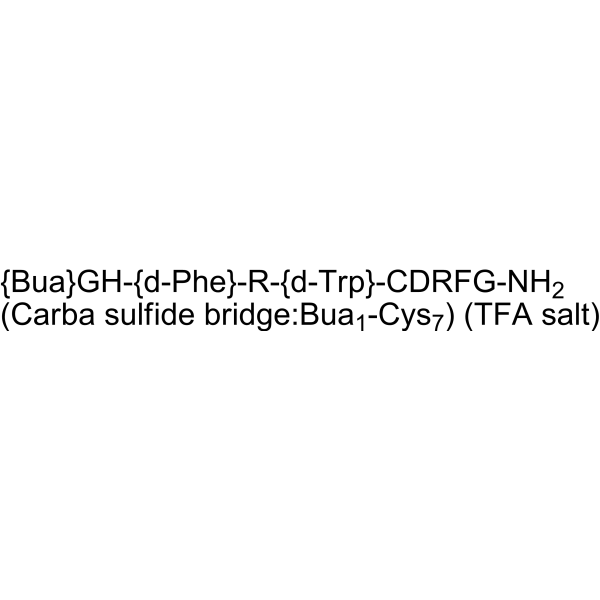
    Cys-PKHB1 (Cys-txCD47) TFA is a peptide conjugated to PKHB1, a CD47 agonist peptide and a thrombospondin-1 peptide mimic with antitumor effects. PKHB1 induces mitochondrial alterations, ROS generation, intracellular Ca + accumulation, and calcium-dependent cell death in breast cancer cells. PKHB1 induces immune system activation in breast cancer cells through immunogenic cell death .
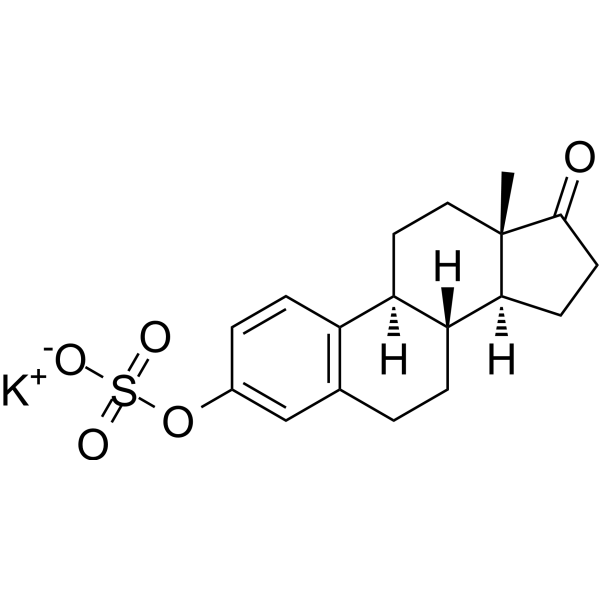
    Cys-PKHB1 TFA
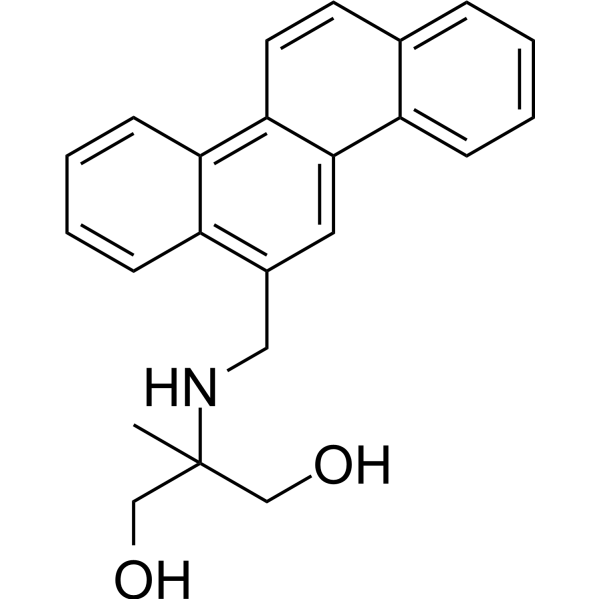
  • HY-108999A
    Crisnatol
    1 Publications Verification

    BWA770U

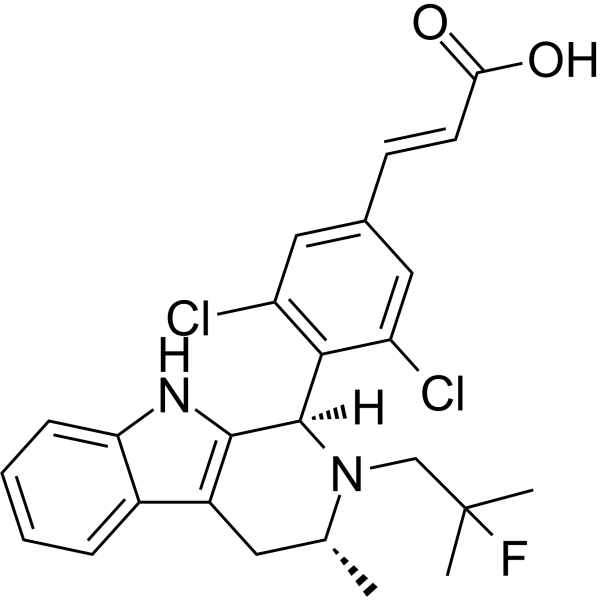
    DNA/RNA Synthesis Cancer
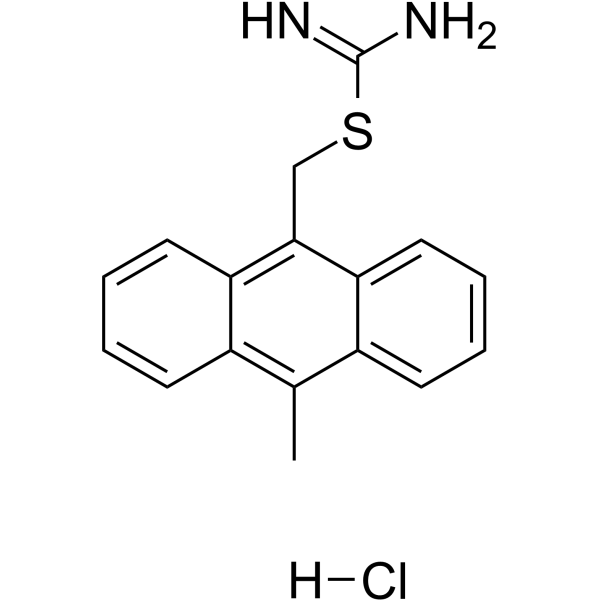
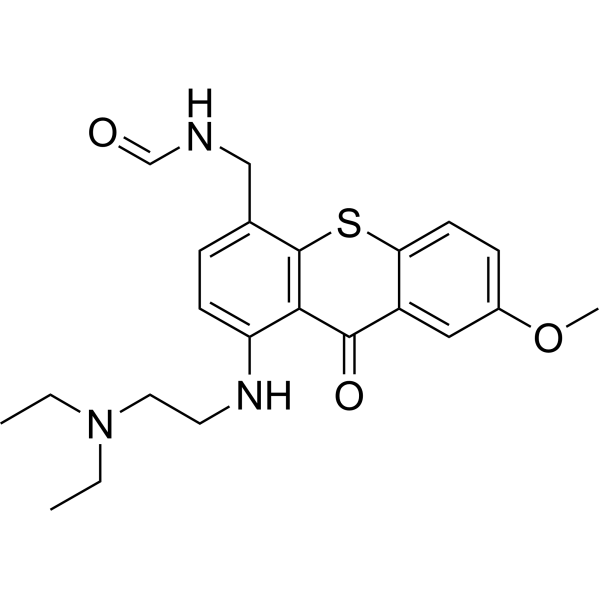
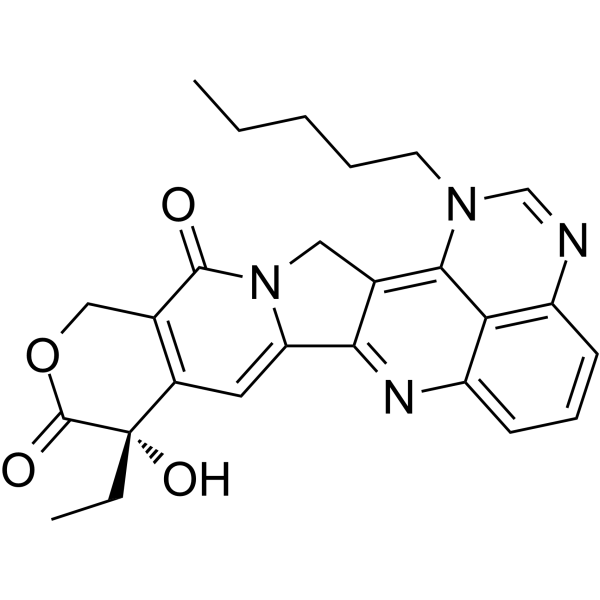
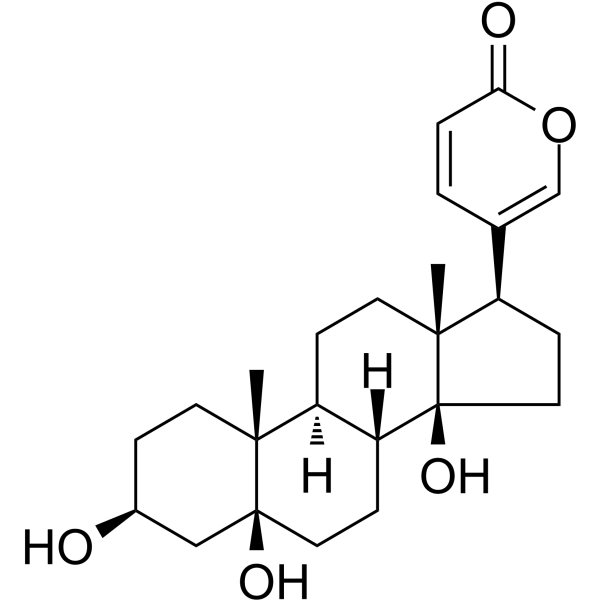
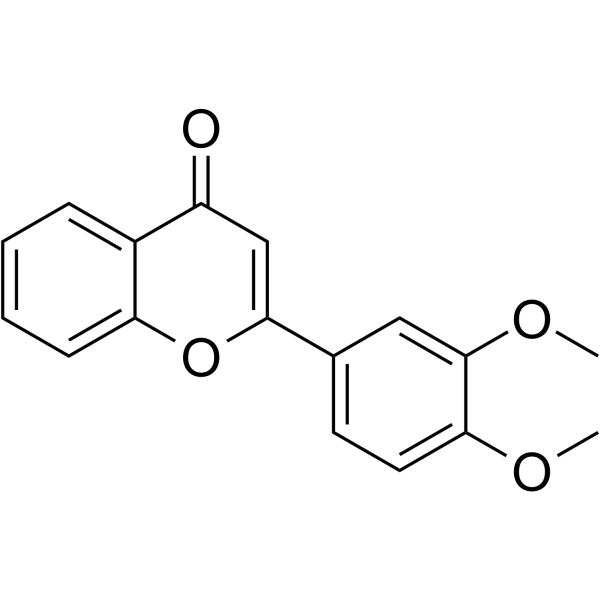
    Crisnatol (BWA770U) is an orally active and anticancer agent, and a member of the arylmethylaminopropanediol class of DNA intercalators. Crisnatol shows in vitro cytotoxicity against human breast cancer cells, but not normal human skin fibroblasts .
    Crisnatol
  • HY-N7424

    4,7-DHC

    EGFR Estrogen Receptor/ERR Progesterone Receptor Cancer
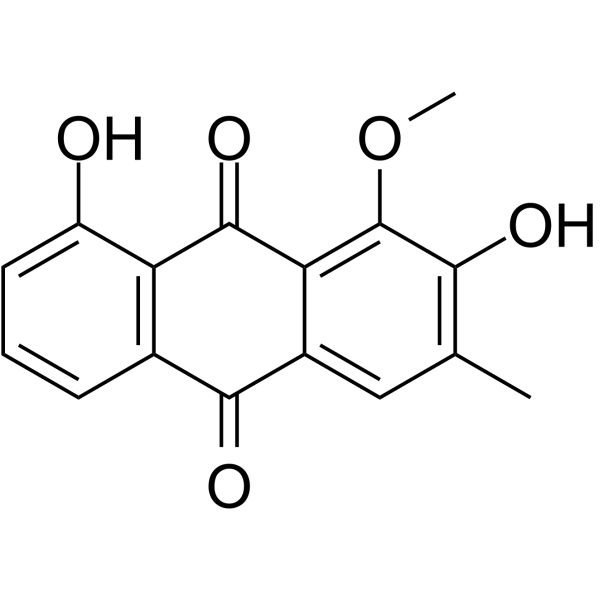
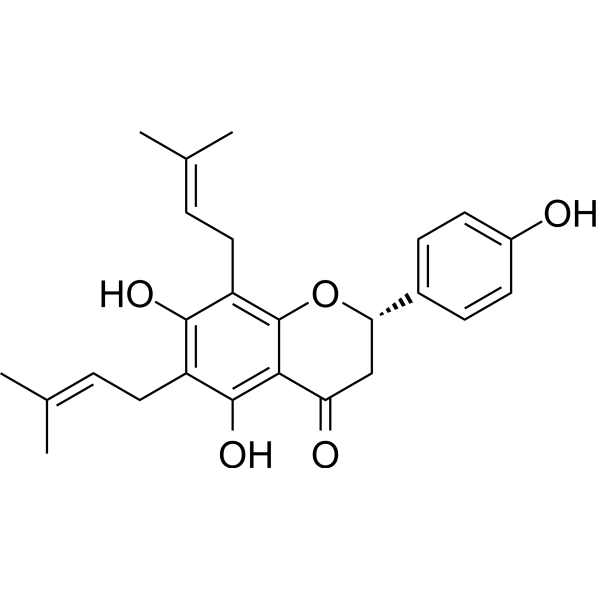
    4,7-Dihydroxycoumarin is an EGFR inhibitor, estrogen receptor inhibitor, and progesterone receptor inhibitor. 4,7-Dihydroxycoumarin against breast cancer cells with an IC50 velue of 18.36 μg/mL. 4,7-Dihydroxycoumarin can be used for the research of breast cancer .
    4,7-Dihydroxycoumarin
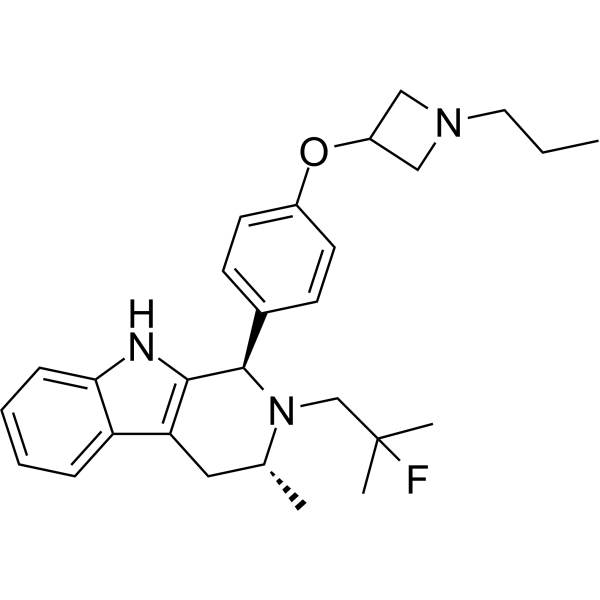
  • HY-147402

    D-0502

    Estrogen Receptor/ERR Cancer
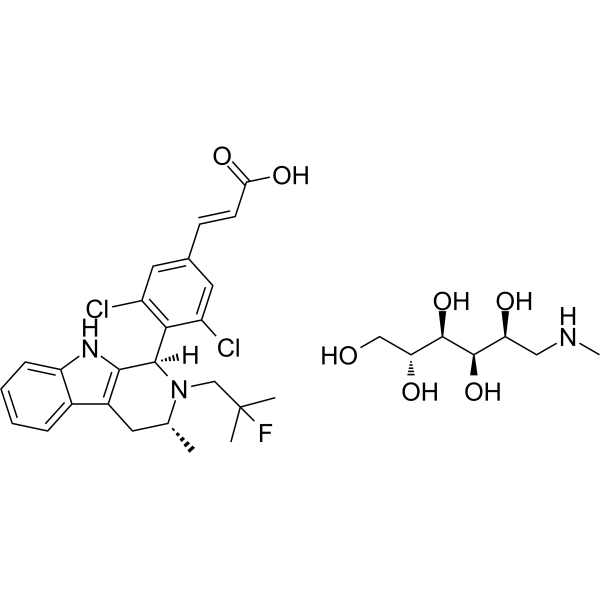
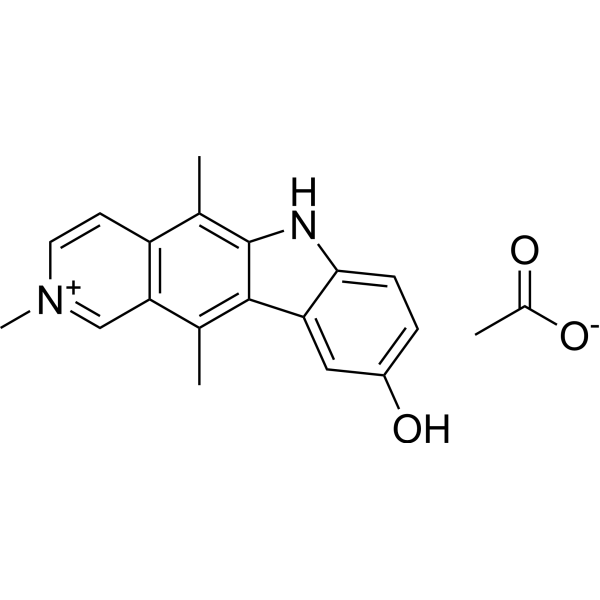
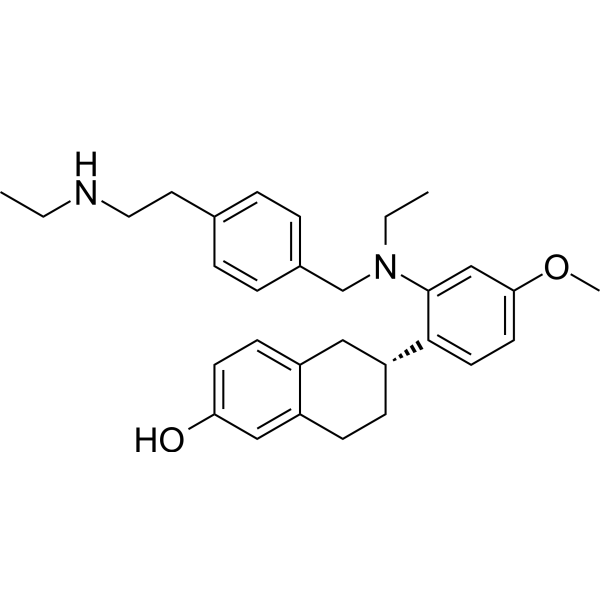
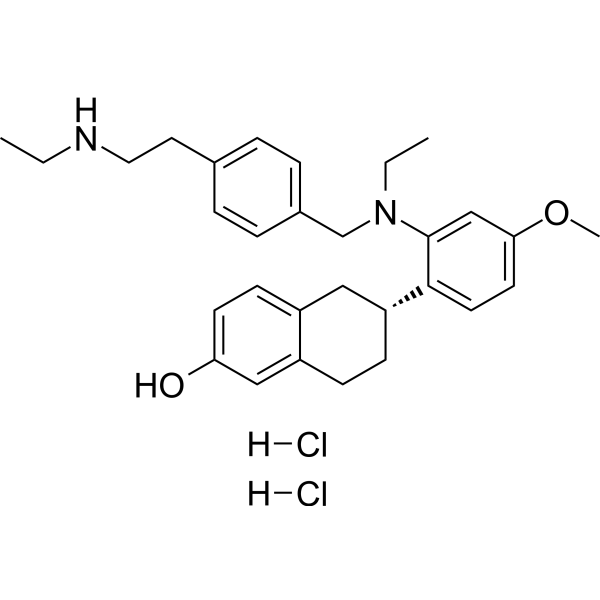
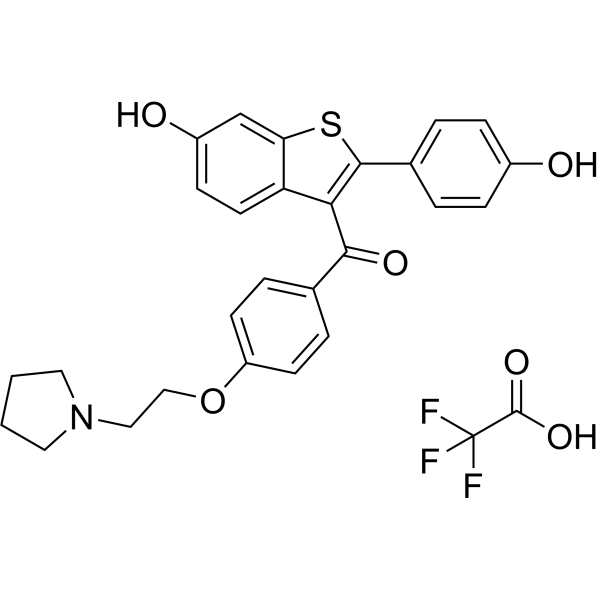
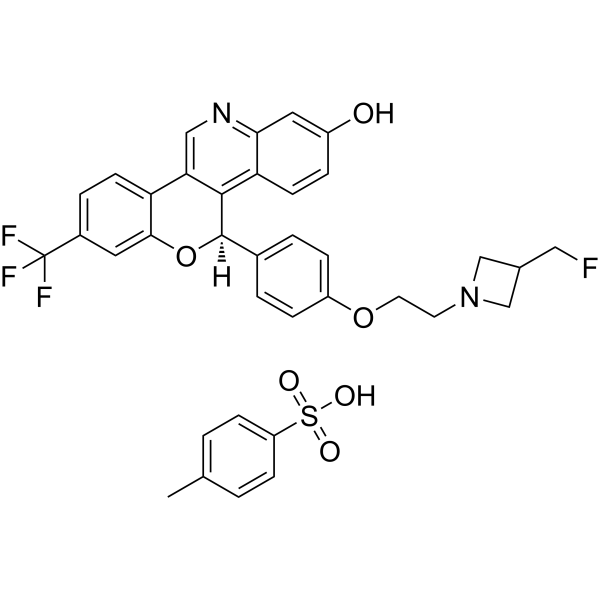
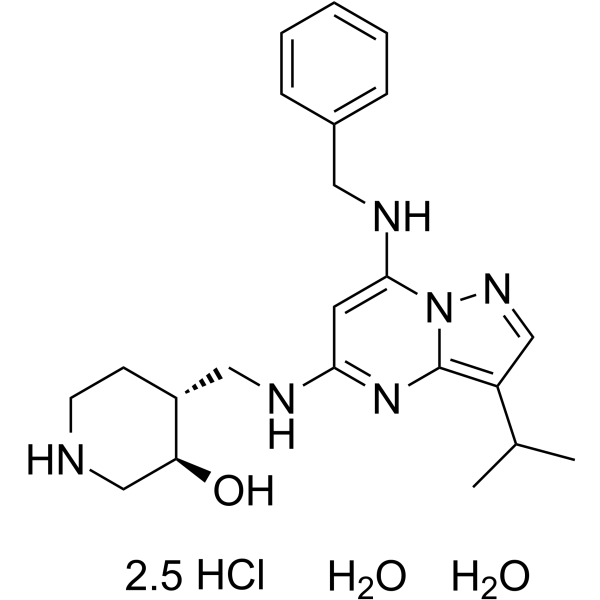
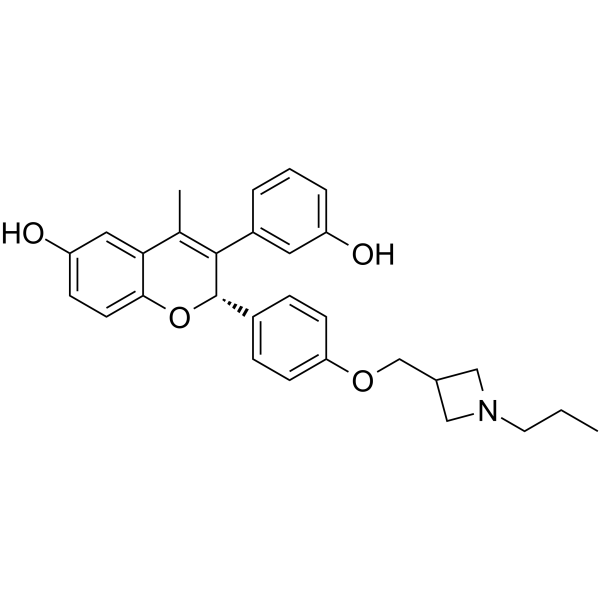
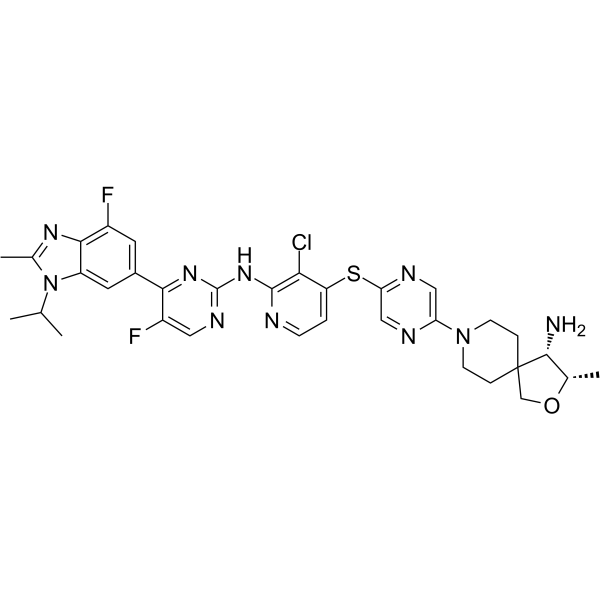
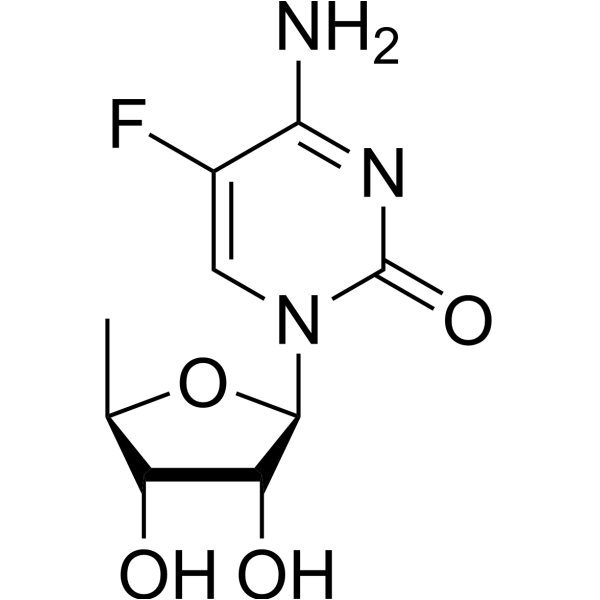
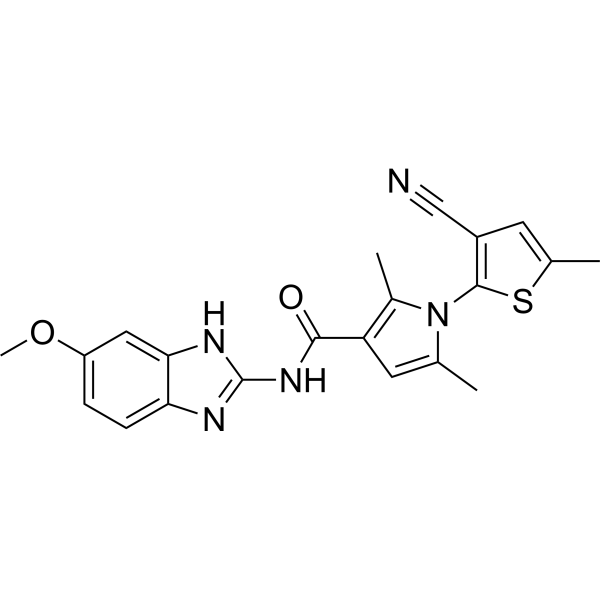
    Taragarestrant (D-0502) is a potent, orally active and selective estrogen receptor degrader (SERD). Taragarestrant shows potent activity in various ER+ breast cancer cell lines and xenograft models .
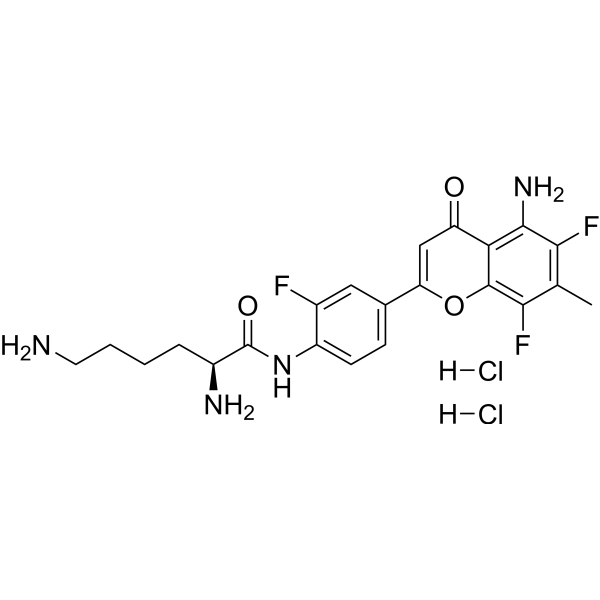
    Taragarestrant
  • HY-10062

    EBP-921

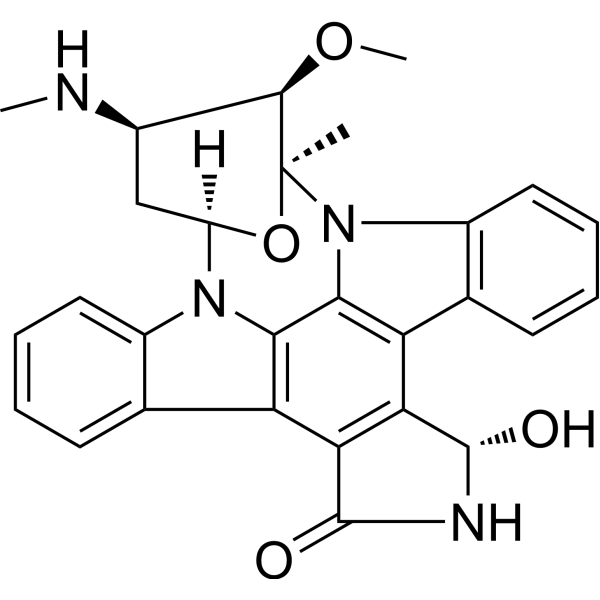
    Akt Farnesyl Transferase Cancer
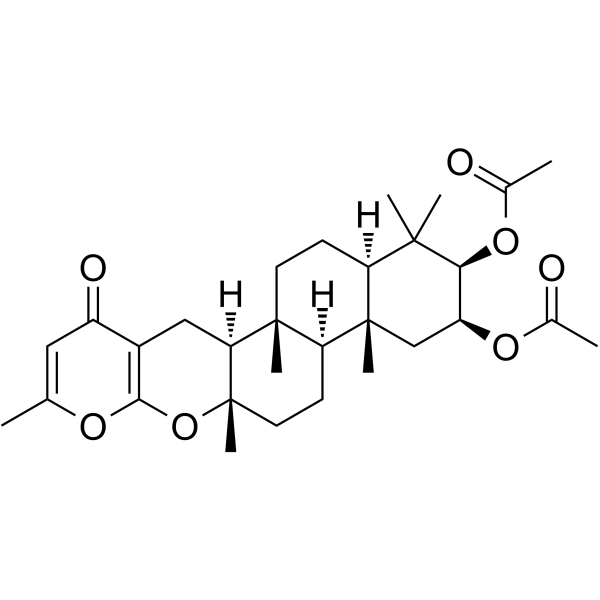
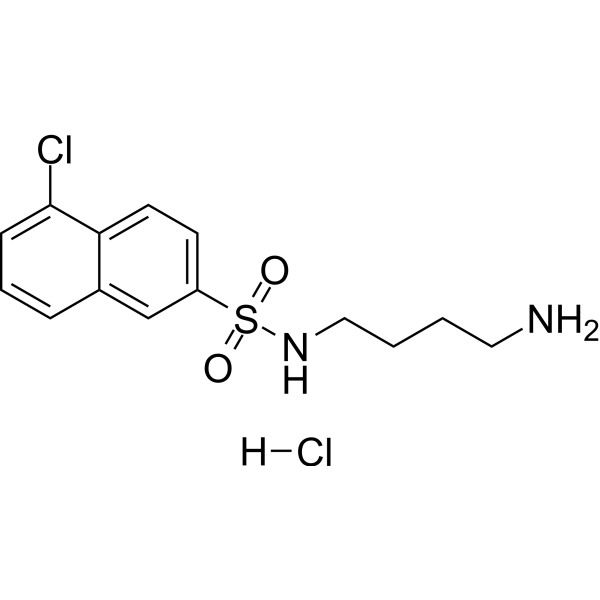
    AZD3409 is a prenyl inhibitor that exhibits inhibitory activity against both farnesyl transferase and geranylgeranyl transferase I. AZD3409 inhibits the growth of breast cancer cells, with IC50s of 220 nM (MDA-MB-468), 180 nM (MDA-MB-361), and 290 nM (SK-Br-3). AZD3409 significantly reduces the activation level of AKT in breast cancer cell lines. AZD3409 induces G0/G1 phase arrest in MDA-MB-468 cells, causes G2/M phase arrest in MDA-MB-361 cells. AZD3409 can be used for the study of breast cancer .
    AZD3409
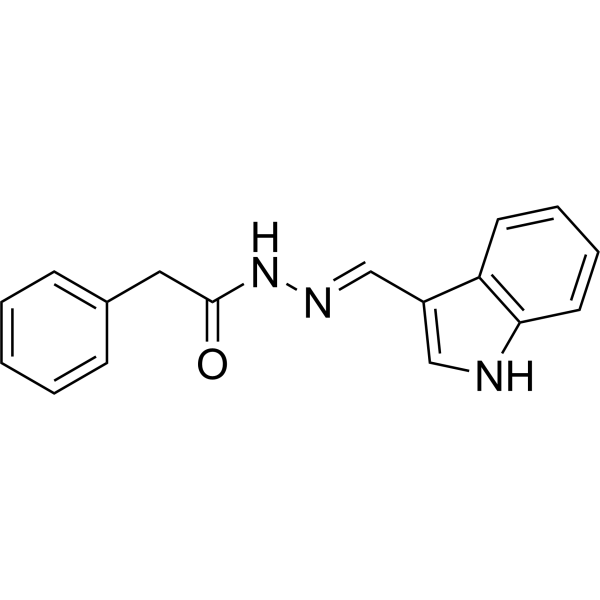
  • HY-148453

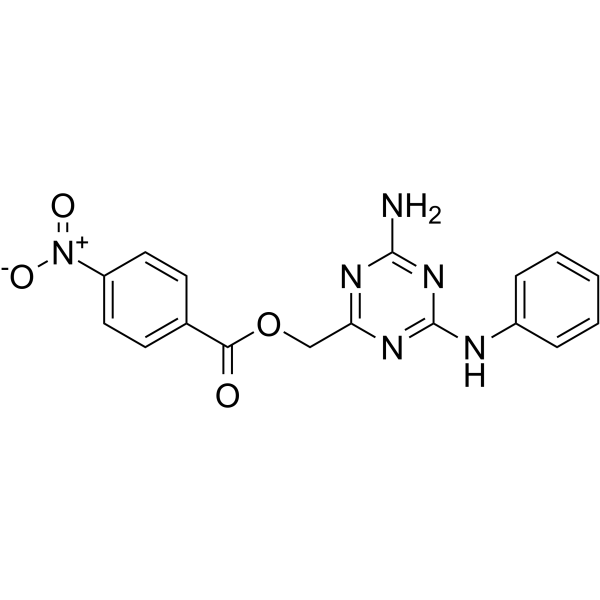
    Drug Derivative Cancer
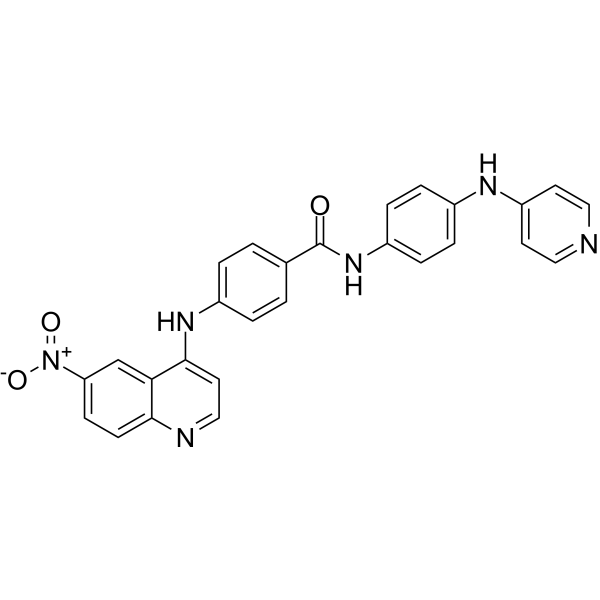
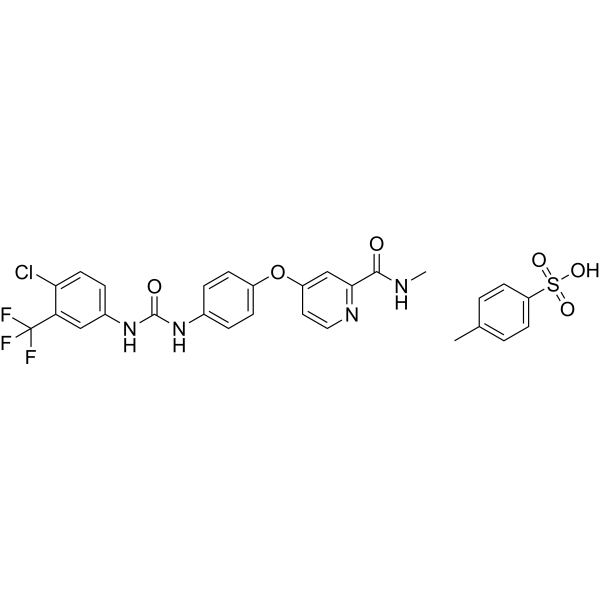
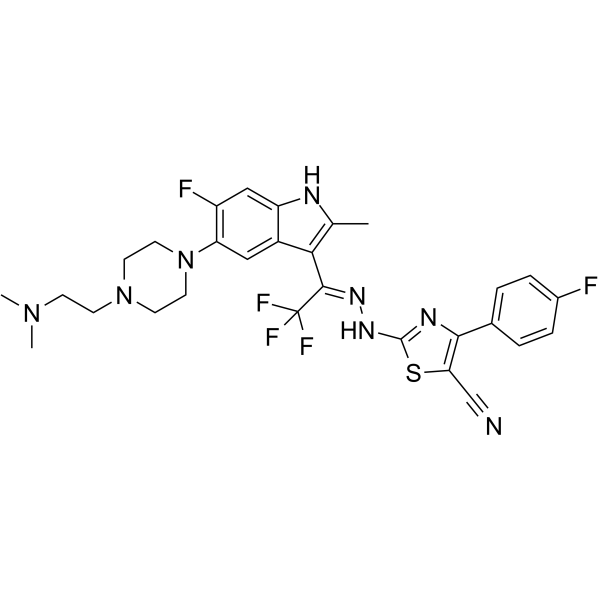
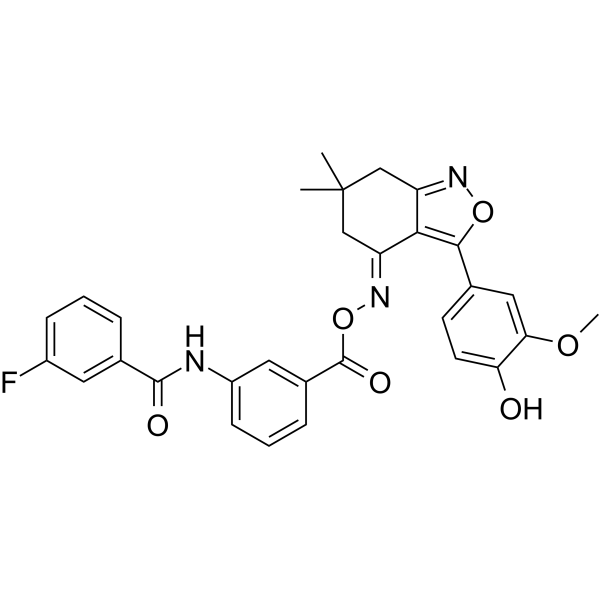
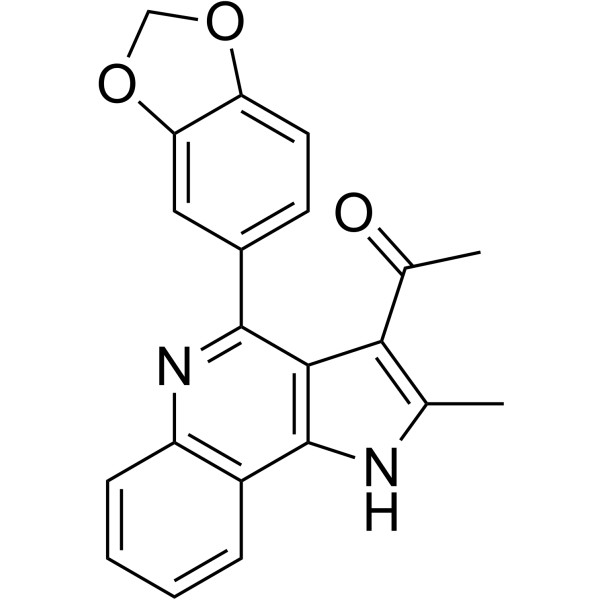
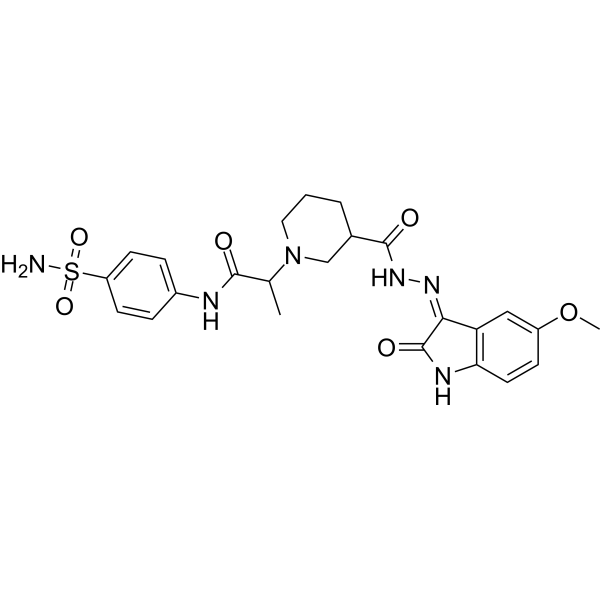
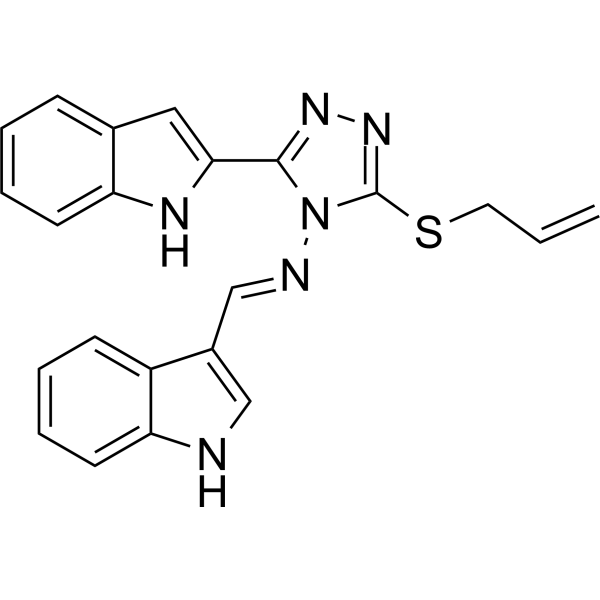
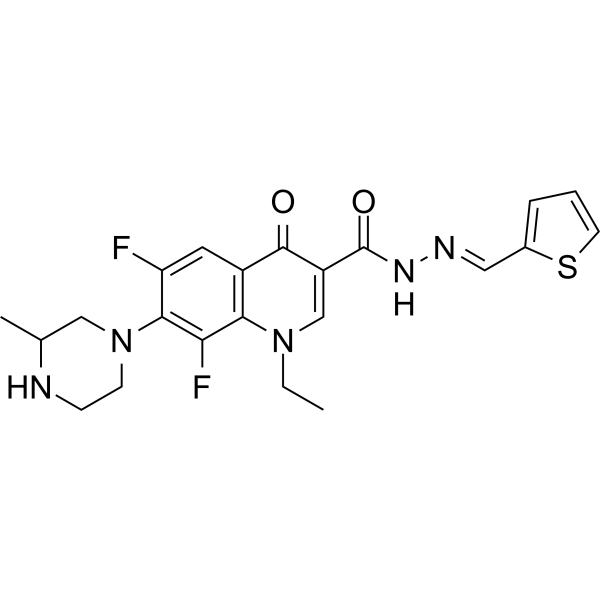
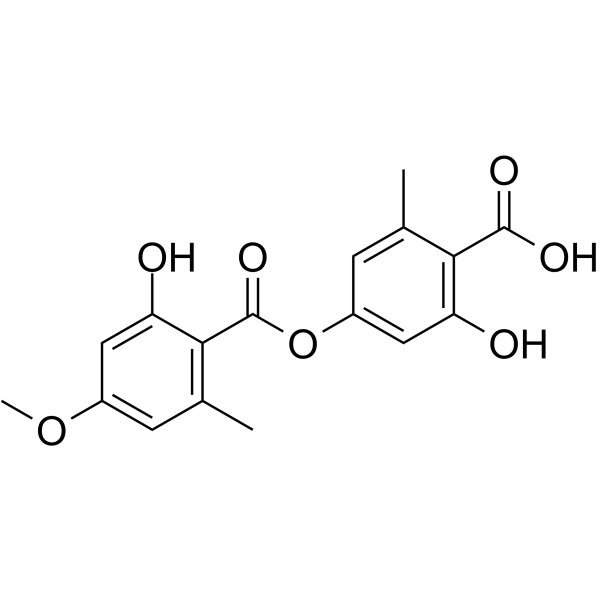
    Antiproliferative agent-16 is an indolyl hydrazide-hydrazone compound with anticancer activity. Antiproliferative agent-16 exhibits specificity toward breast cancer cells (IC50 of 6.94 μM for MCF-7 cells) .
    Antiproliferative agent-16
  • HY-172964

    PI3K Akt mTOR Apoptosis Reactive Oxygen Species (ROS) Cancer
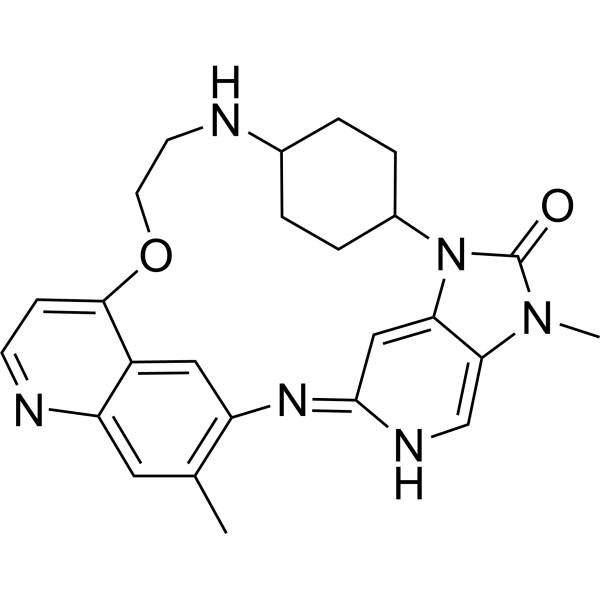
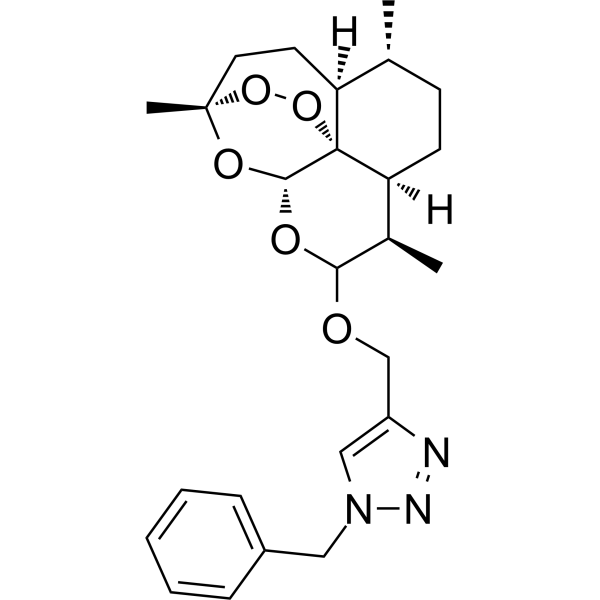
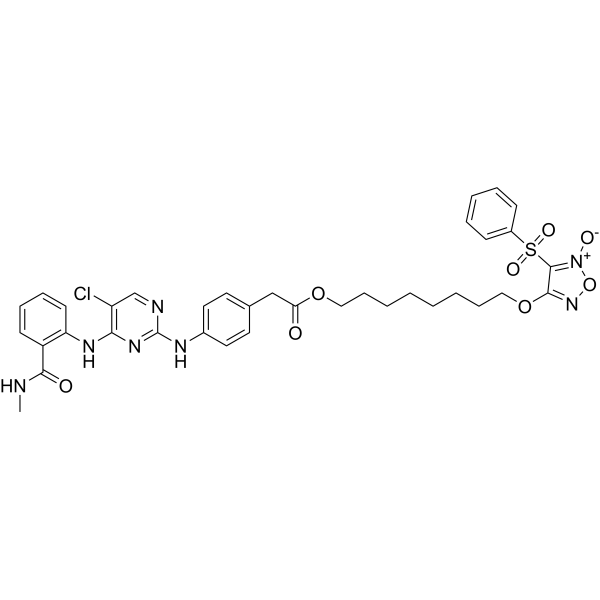
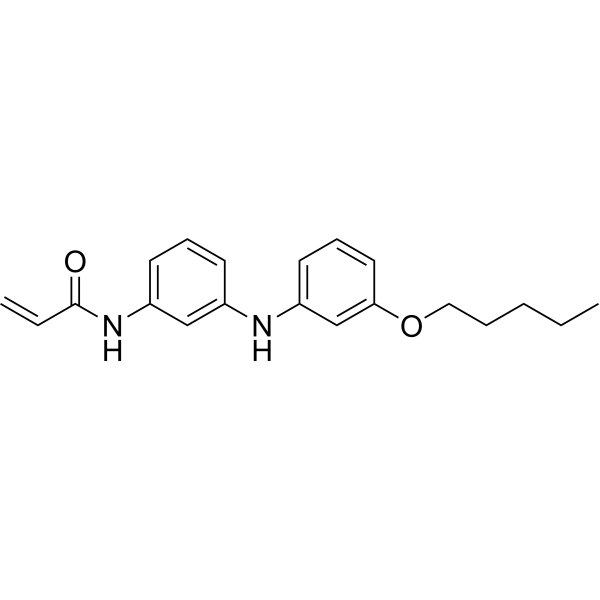
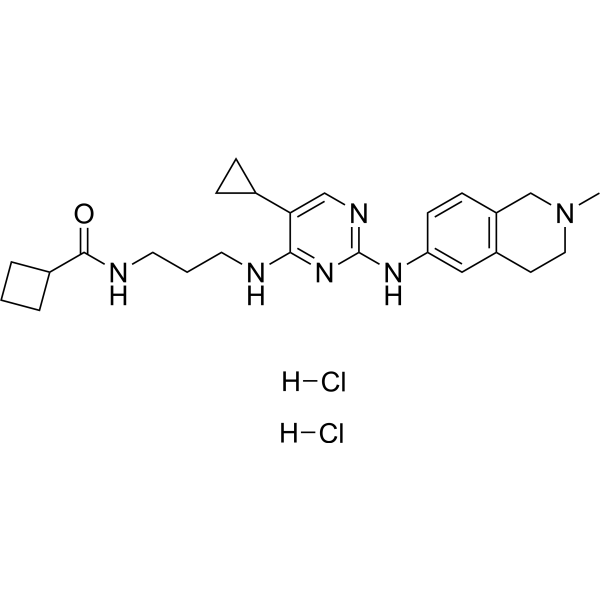
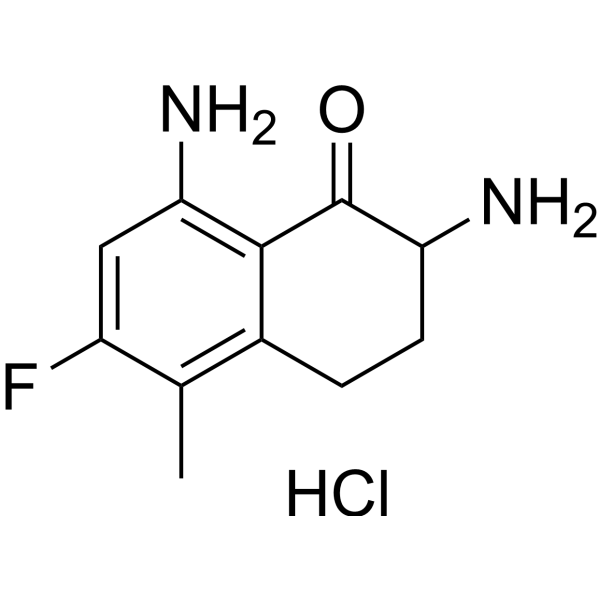
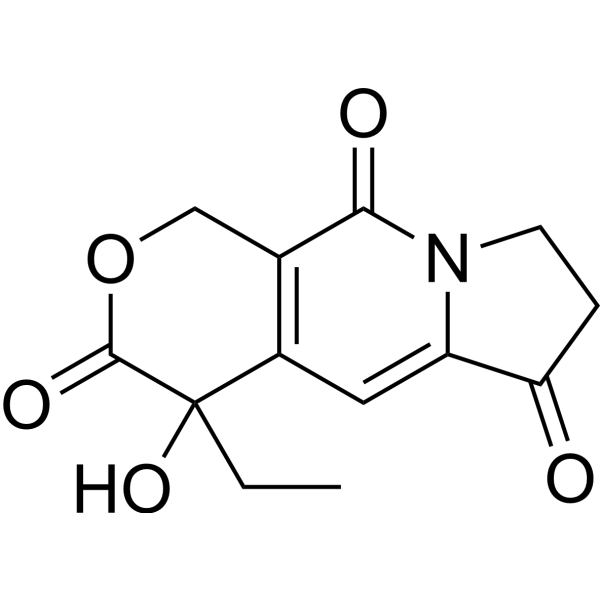
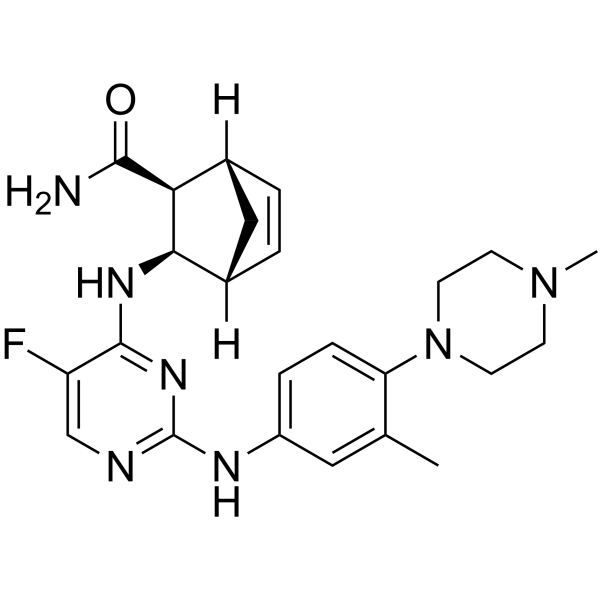
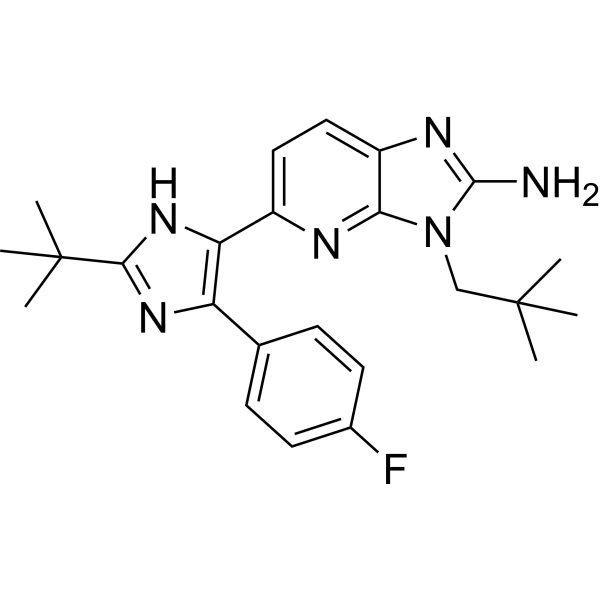
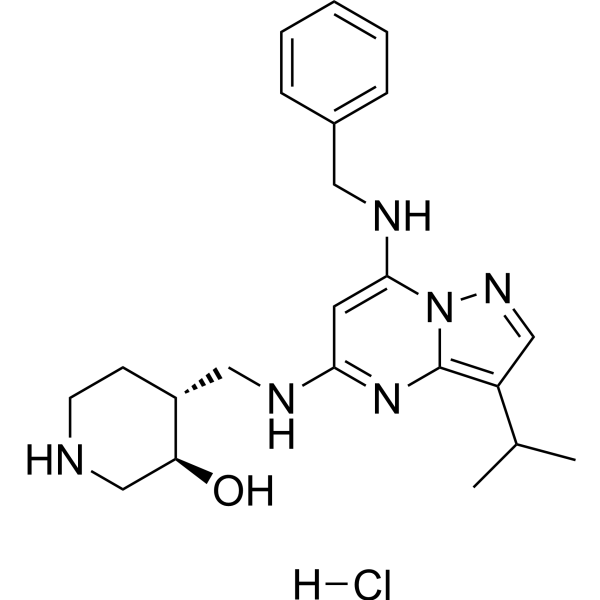
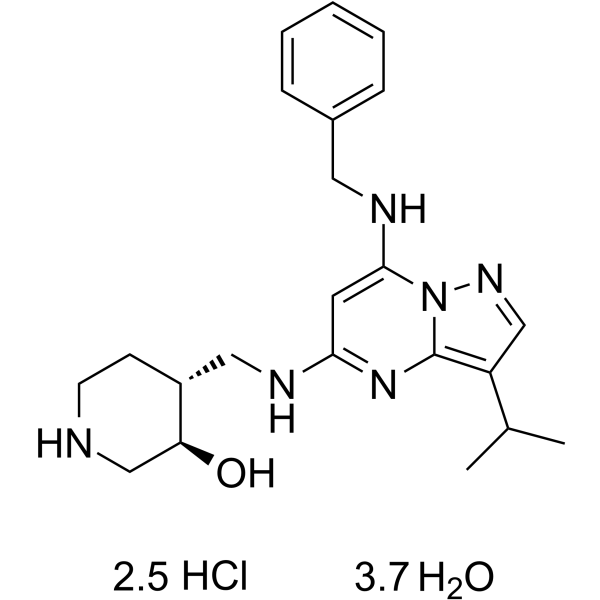
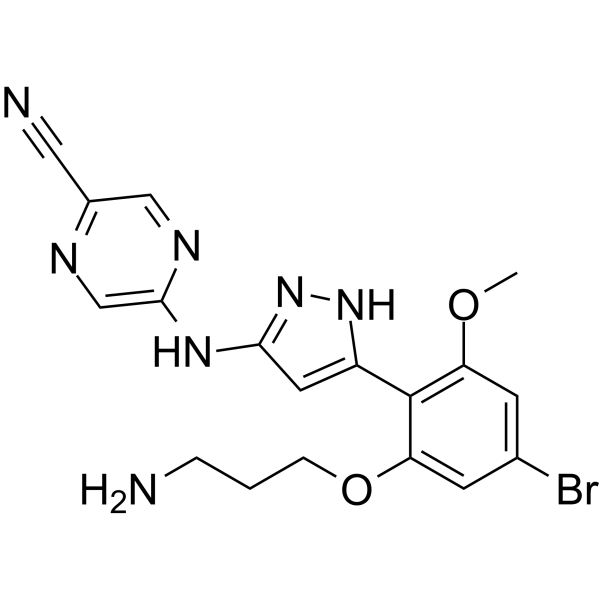
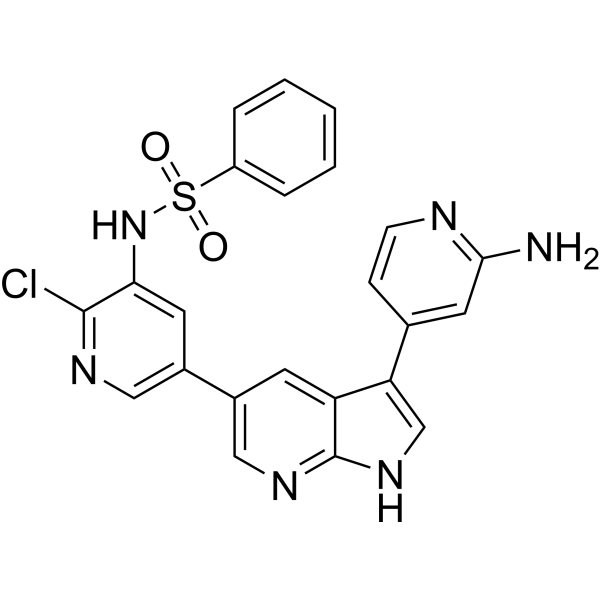
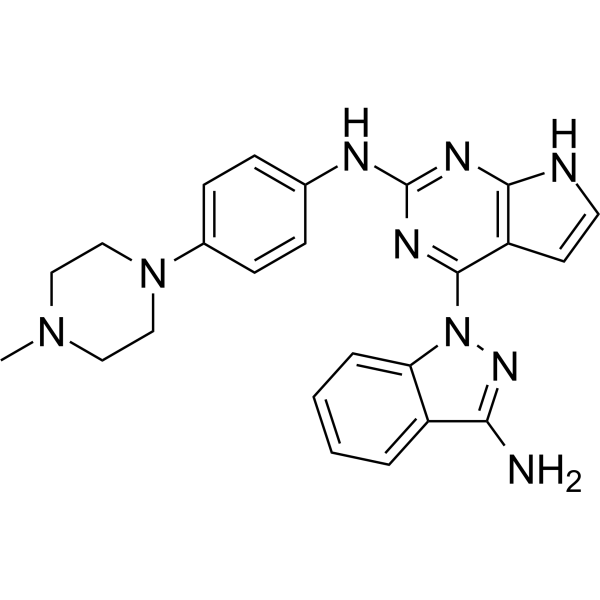
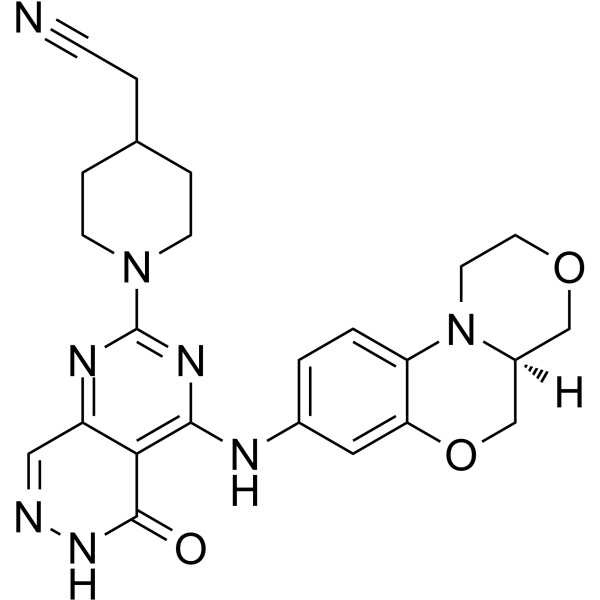
    KIM-161 is a PIK3CA inhibitor. KIM-161 has significant antiproliferative activity with IC50 values of 1.428 and 1.562 µM against PI3KCA mutant breast cancer MCF7 and T47D cells, respectively. KIM-161 induces apoptosis and cell cycle arrest by inhibiting the PI3K/AKT/mTOR signaling pathway and inducing ROS production. KIM-161 can be used to study breast cancer and its PI3KCA mutant subtypes .
    KIM-161
  • HY-172091

    EGFR Cancer
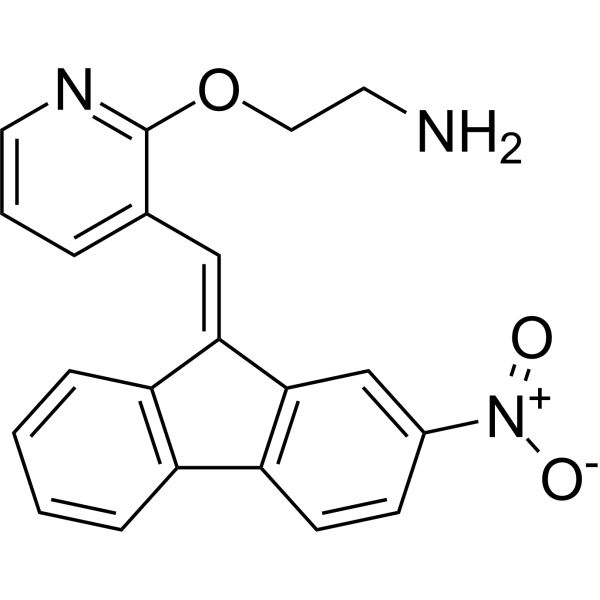
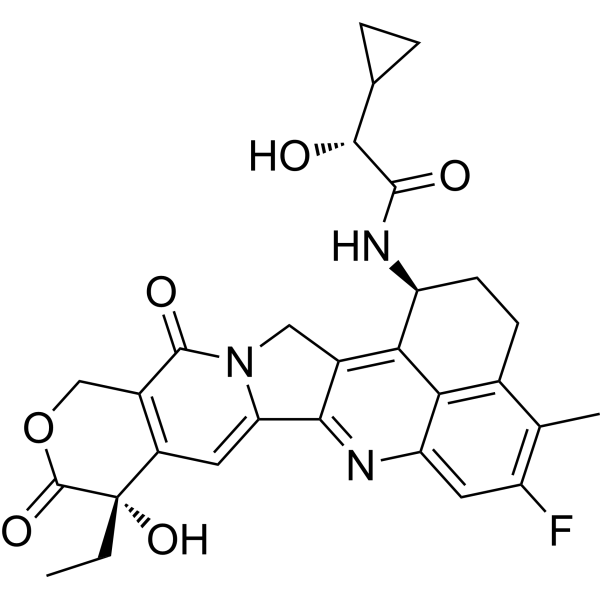
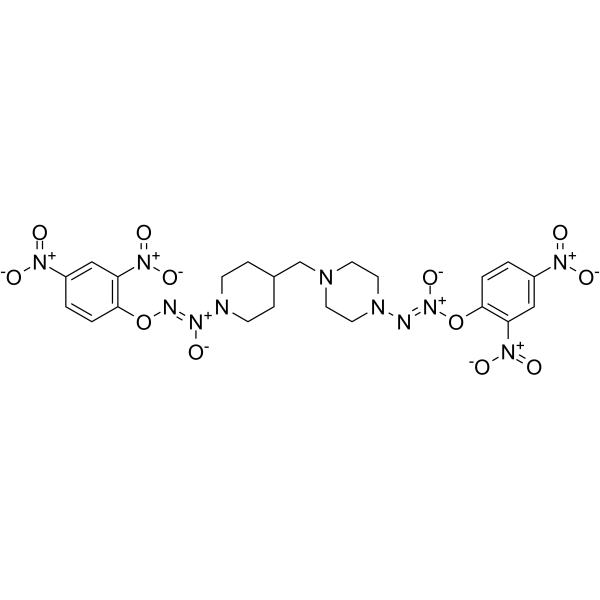
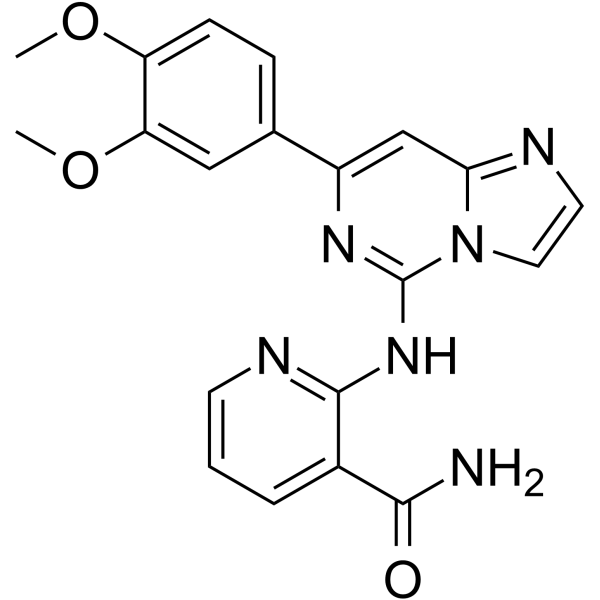
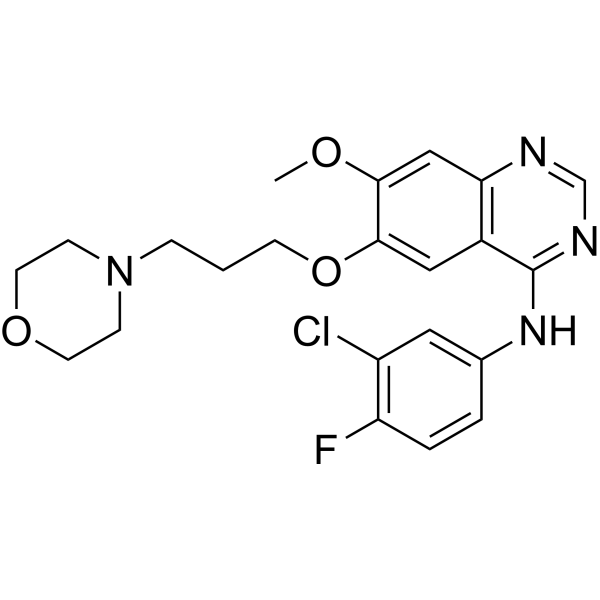
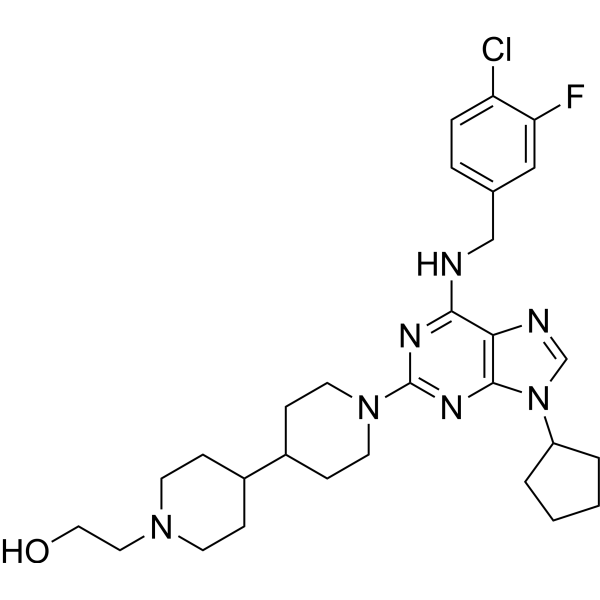
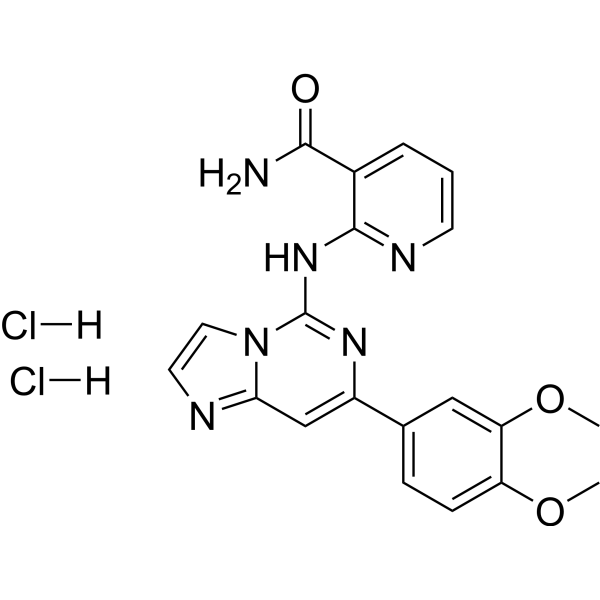
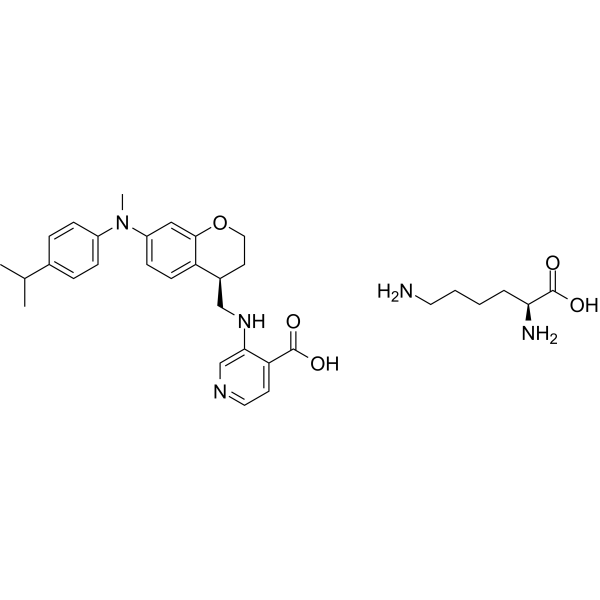
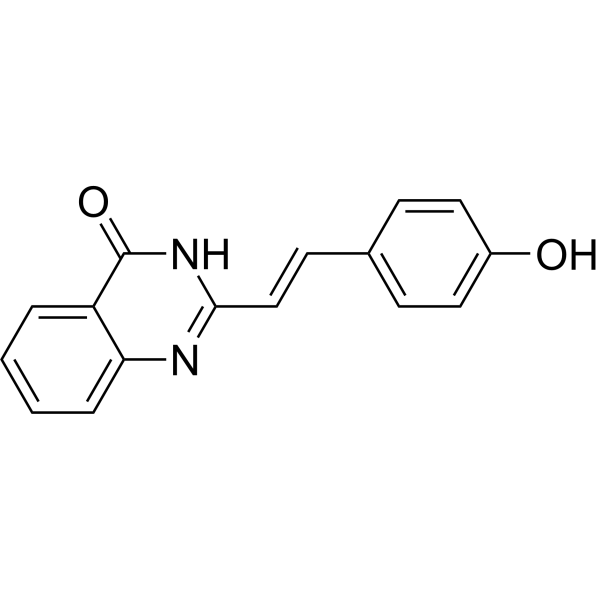
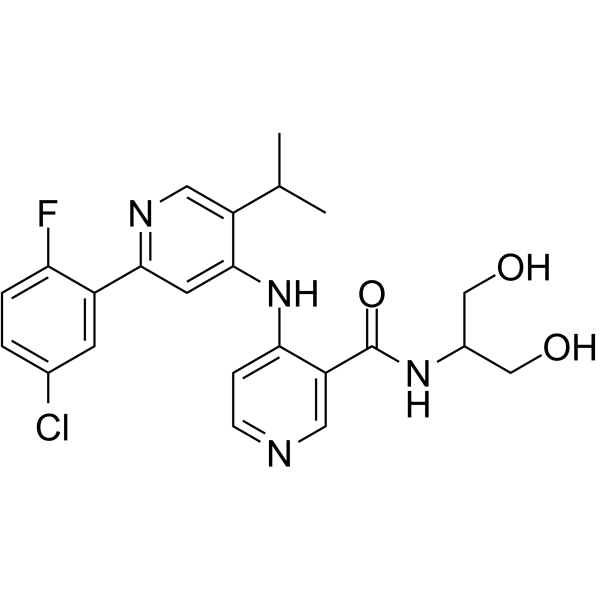
    CZY43 is a HER3 degrader. CZY43 can effectively induce HER3 degradation in a dose- and time-dependent manner in breast cancer SKBR3 cells. CZY43 potently inhibits HER3-dependent signaling and cancer cell growth and outperforms Bosutinib (HY-10158) .
    CZY43
  • HY-145143

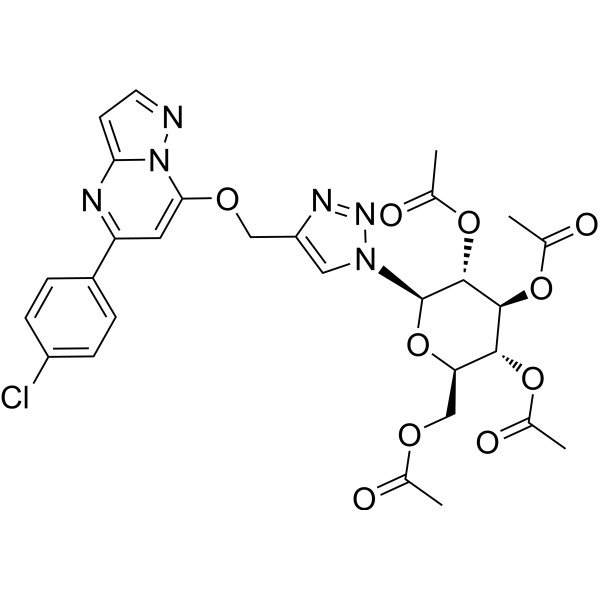
    Apoptosis Cancer
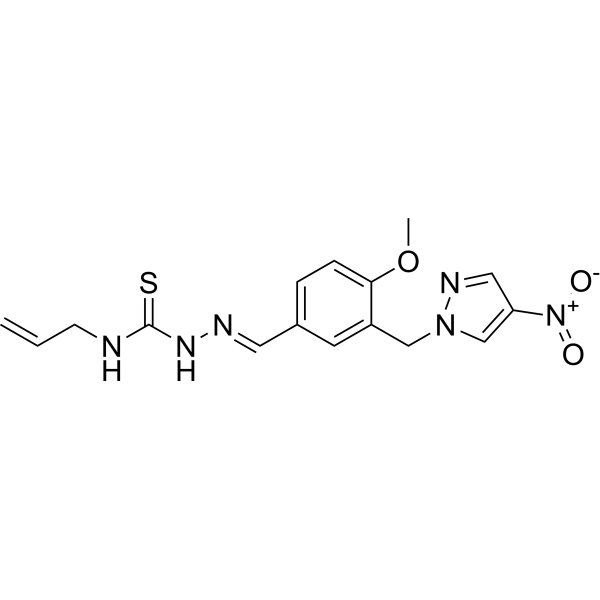
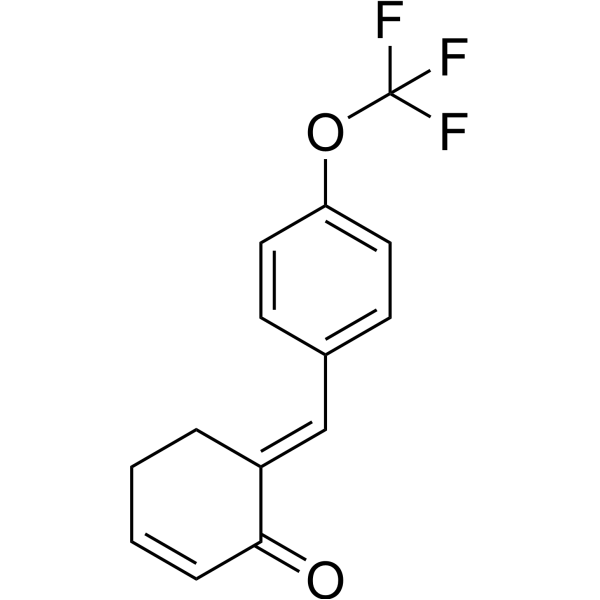
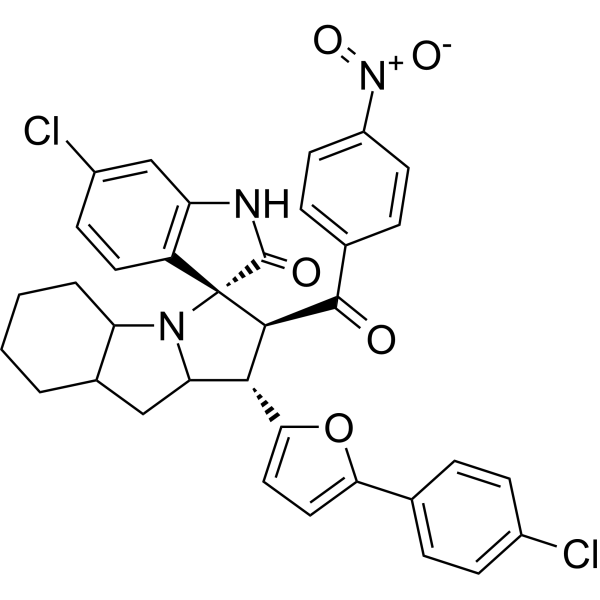
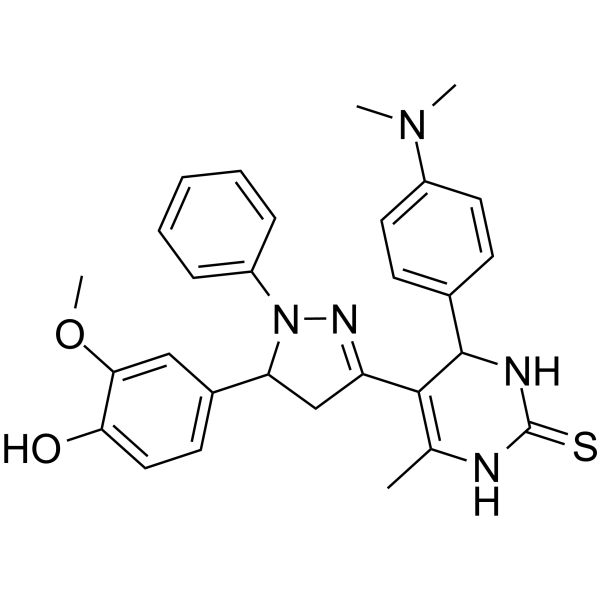
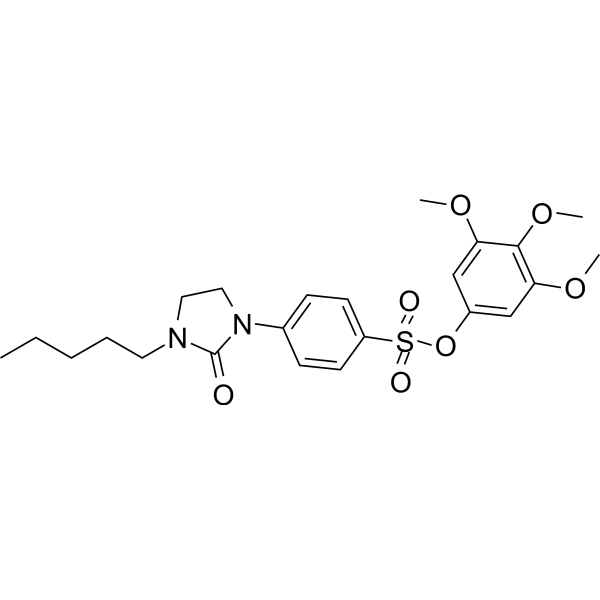
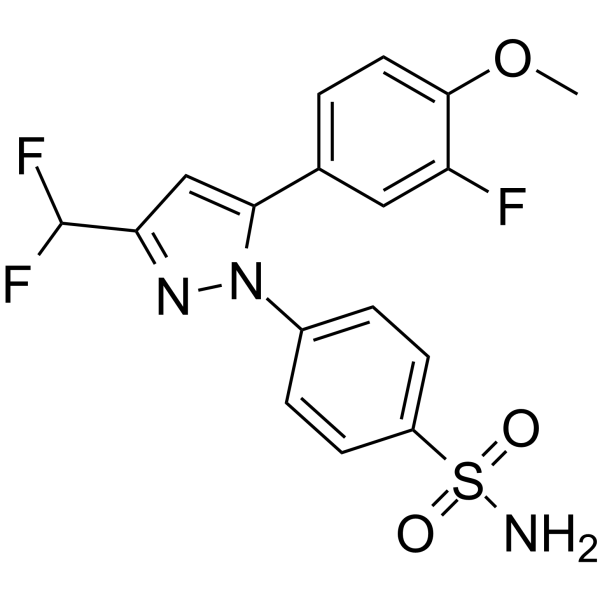
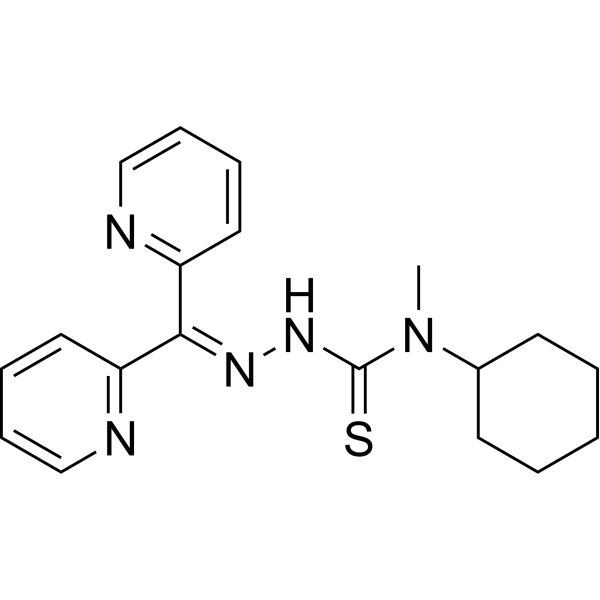
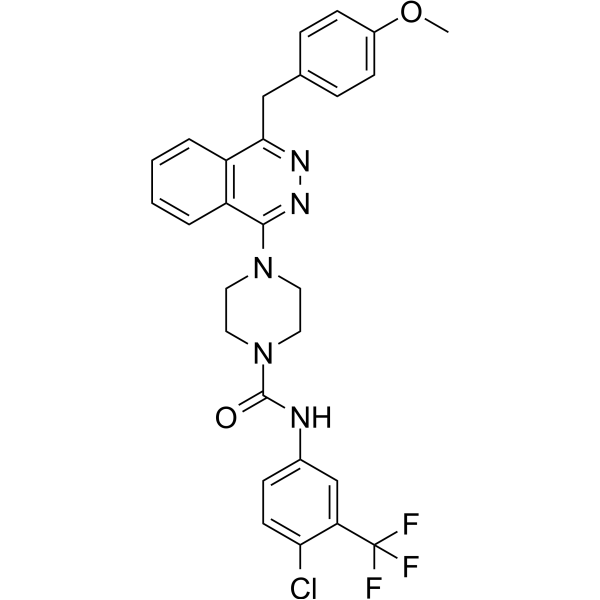
    anti-TNBC agent-1 is a potent anti-triple-negative breast cancer (TNBC) agent. anti-TNBC agent-1 exhibits potent activity against different breast cancer cells with IC50 values ranging from 0.20 μM to 0.27 μM. anti-TNBC agent-1 induces apoptosis of SUM-159 cells through mitochondria pathway and causes G1 phase arrest of SUM-159 cells .
    anti-TNBC agent-1
  • HY-162886

    JNK Reactive Oxygen Species (ROS) Cancer
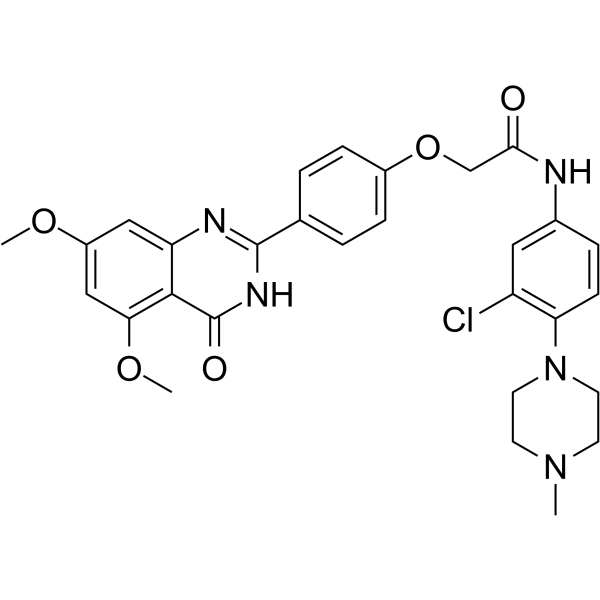
    BSO-07 is a ROS/JNK activator with significant anticancer effects, having an IC50 value of 24.81 μM against human breast cancer (BC) cells. BSO-07 induces apoptosis (Apoptosis) and paraptosis by activating JNK and increasing ROS levels, including enhancing the expression of apoptosis-associated proteins such as PARP, Bax, phosphorylated p53, ATF4, and CHOP, while decreasing the levels of anti-apoptotic proteins like Bcl-2, Bcl-xL, and Survivin. BSO-07 holds promise for research in the field of breast cancer .
    BSO-07
  • HY-171755

    HSP Cancer
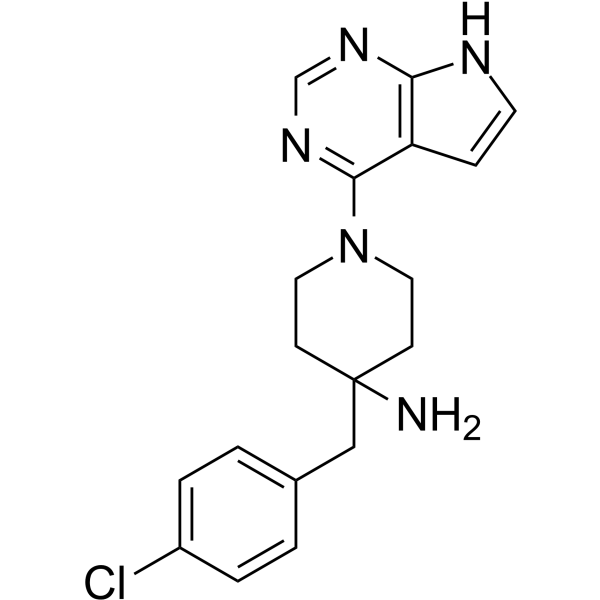
    Hsp90-IN-40 (Compound 15b) is a heat shock protein 90 (Hsp90) C-terminal inhibitor. Hsp90-IN-40 exhibits antiproliferative activity against SKBr3 and MCF-7 breast cancer cells (IC50 of 2.57 µM and 2.43 µM, respectively). Hsp90-IN-40 inhibits cancer cell growth by inhibiting the Hsp90 C-terminal function, leading to Hsp90-dependent protein degradation. Hsp90-IN-40 can be used in breast cancer research .
    Hsp90-IN-40
  • HY-135276

    MicroRNA Apoptosis Cancer
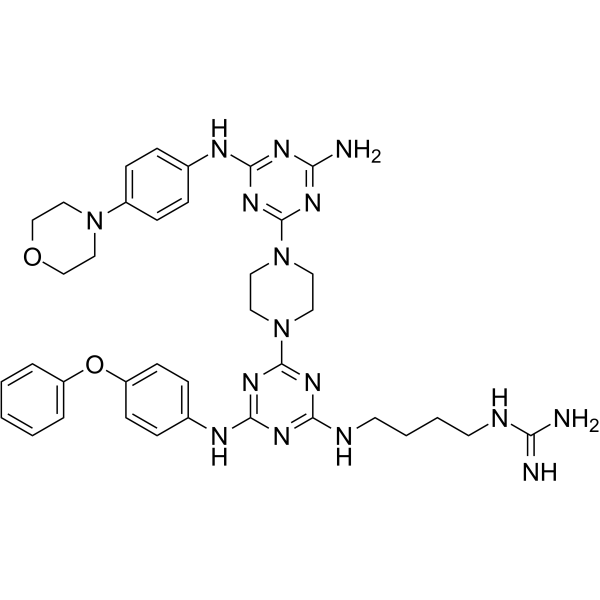
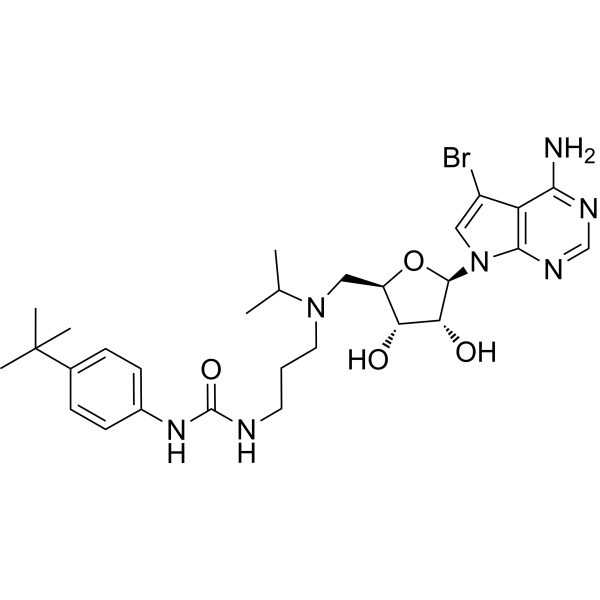
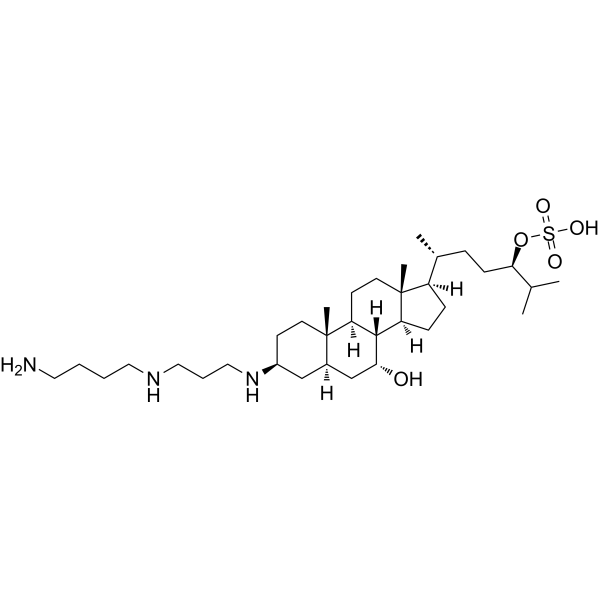
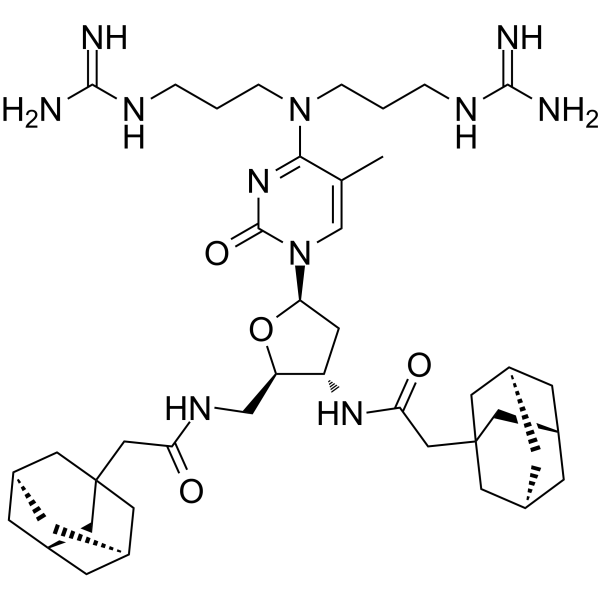
    Targaprimir-96 is a potent inhibitor of microRNA-96 (miR-96) processing. Targaprimir-96 selectively modulates miR-96 production in cancer cells and triggers apoptosis. Targaprimir-96 binds primary miR-96 (pri-miR-96) with low nanomolar affinity. Targaprimir-96 directly engages pri-miR-96 in breast cancer cells and is ineffective on healthy breast cells .
    Targaprimir-96
  • HY-107550

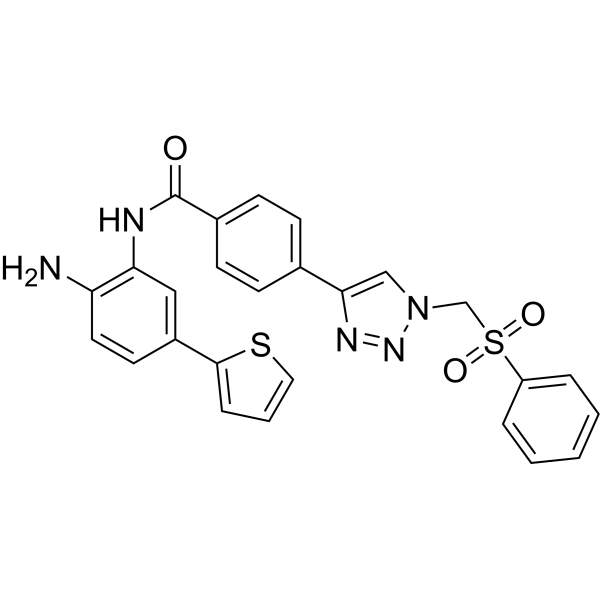
    HDAC Cancer
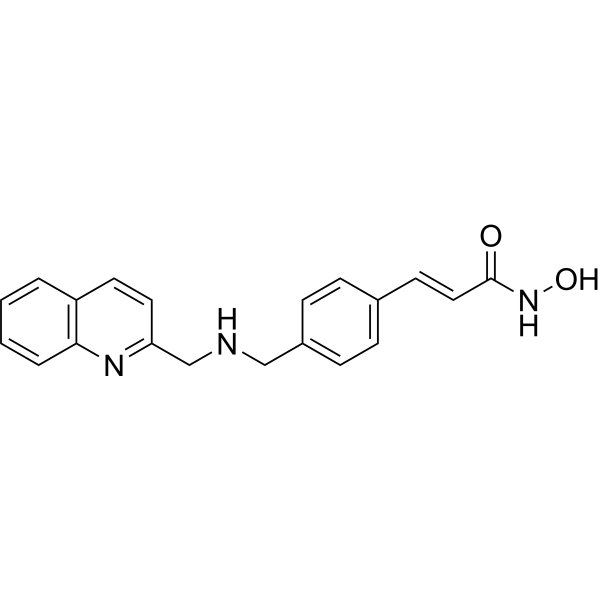
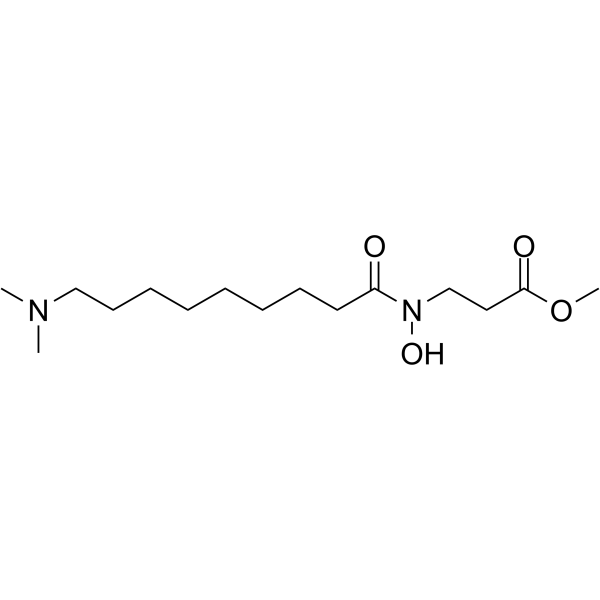
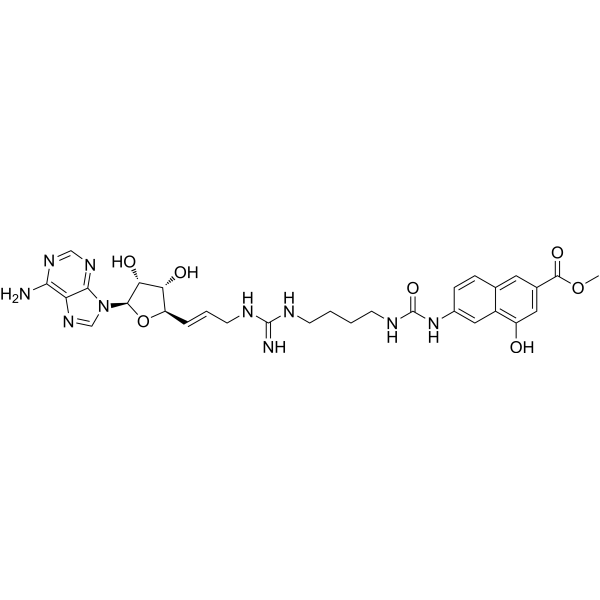
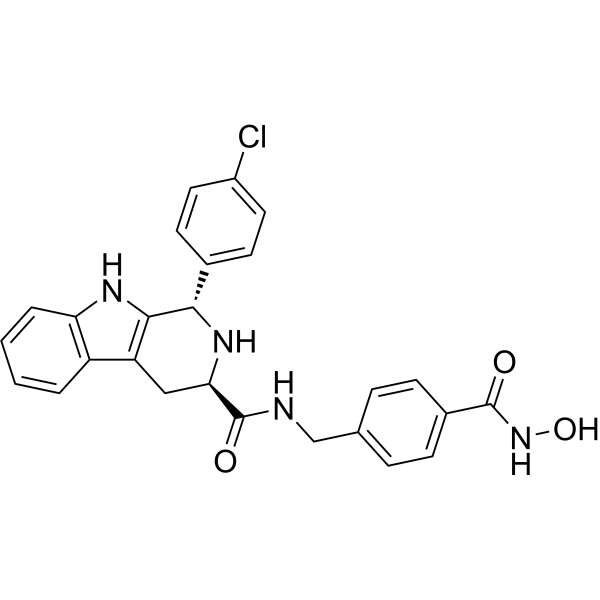
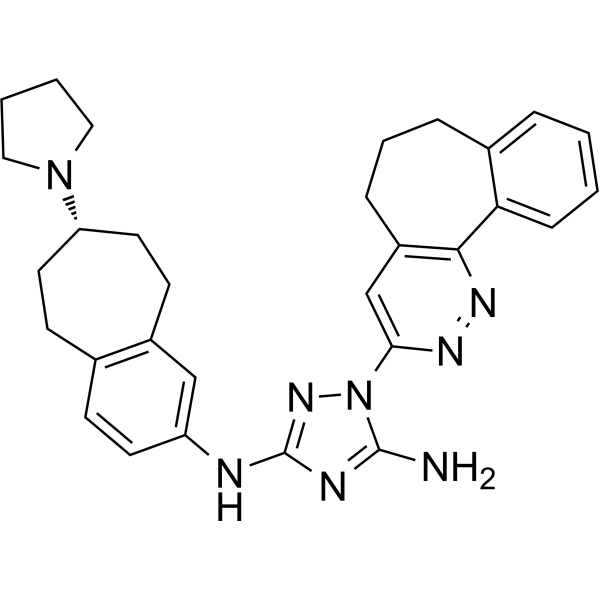
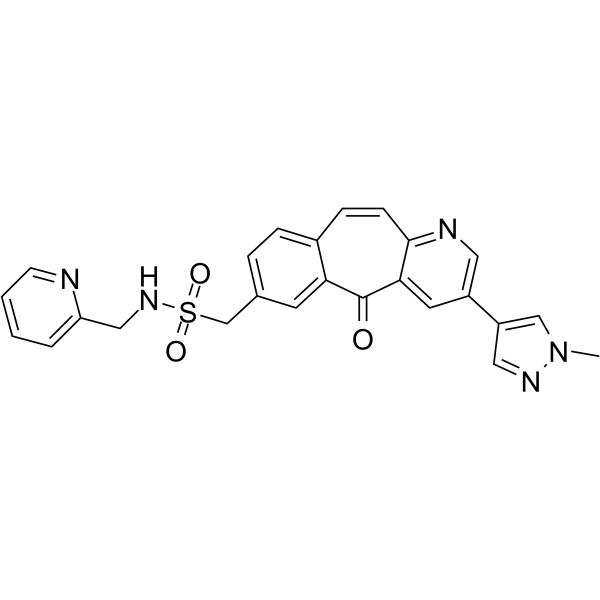
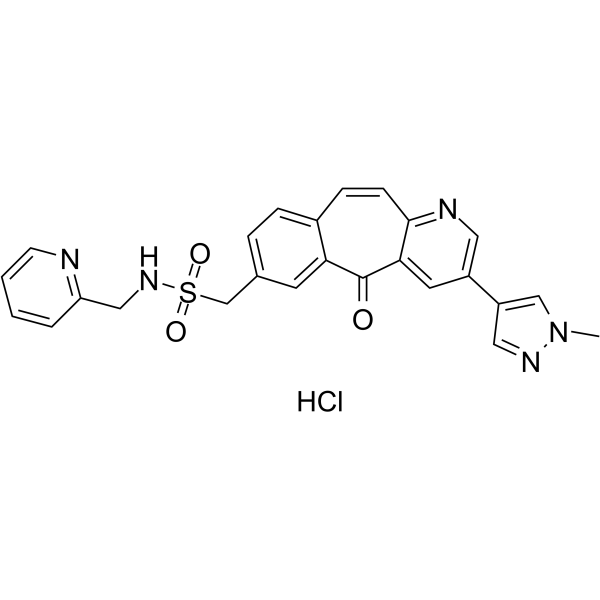
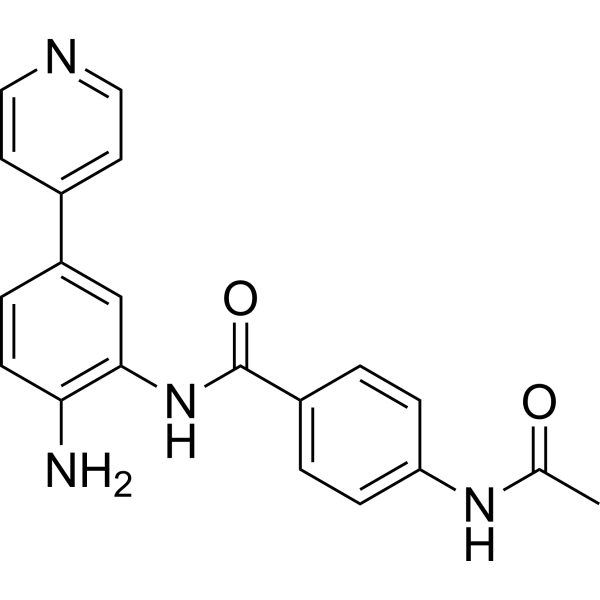
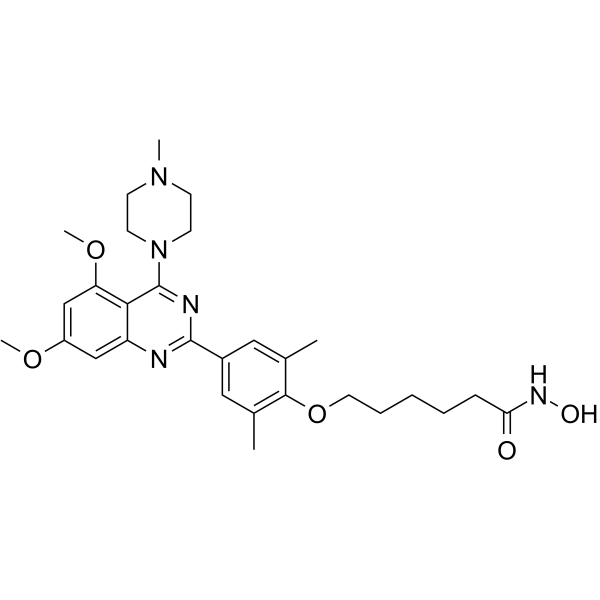
    NCT-14b is a HDAC6-selective inhibitor. NCT-14b blocks the growth of estrogen receptor α-positive breast cancer MCF-7 cells .
    NCT-14b
  • HY-144318

    Epigenetic Reader Domain Cancer
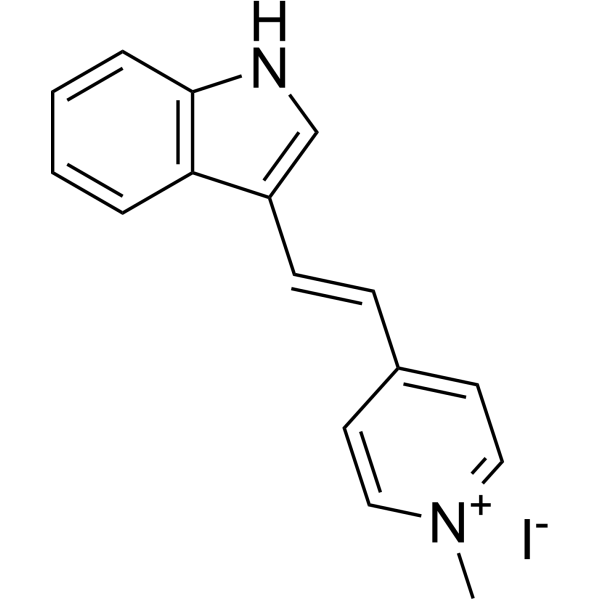
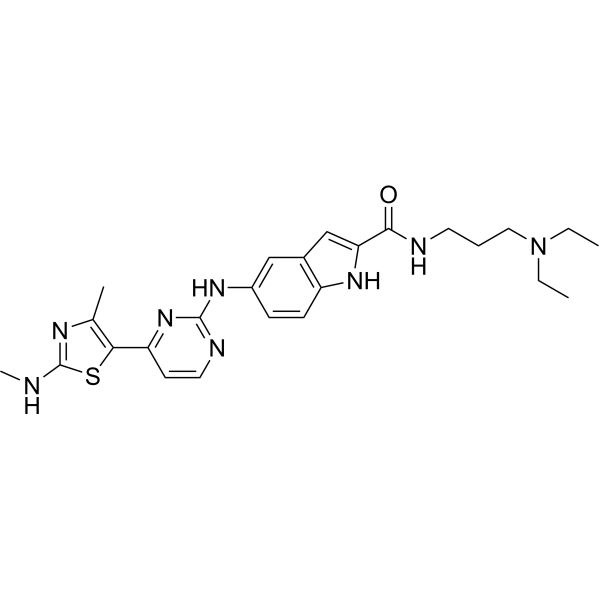
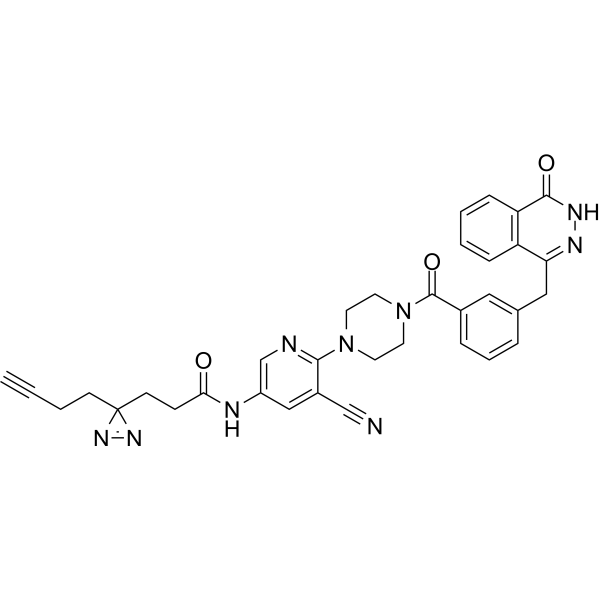
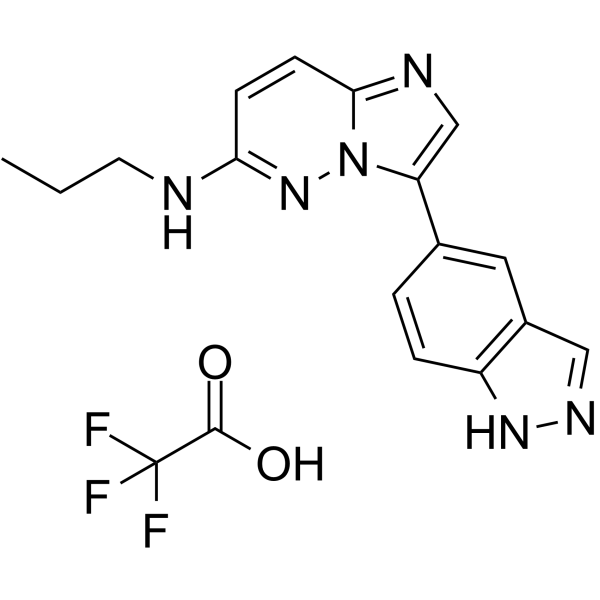
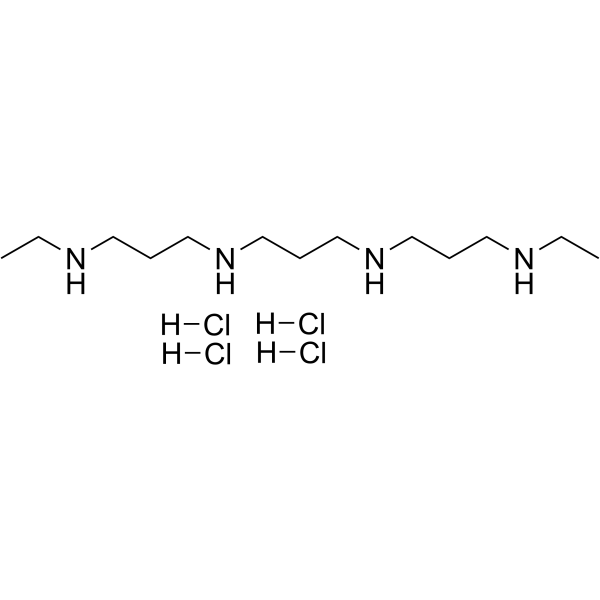
    CREB-IN-1 TFA is a potent, orally active CREB inhibitor (IC50=0.18 µM). CREB-IN-1 TFA inhibits breast cancer cell growth .
    CREB-IN-1 TFA
  • HY-W874892

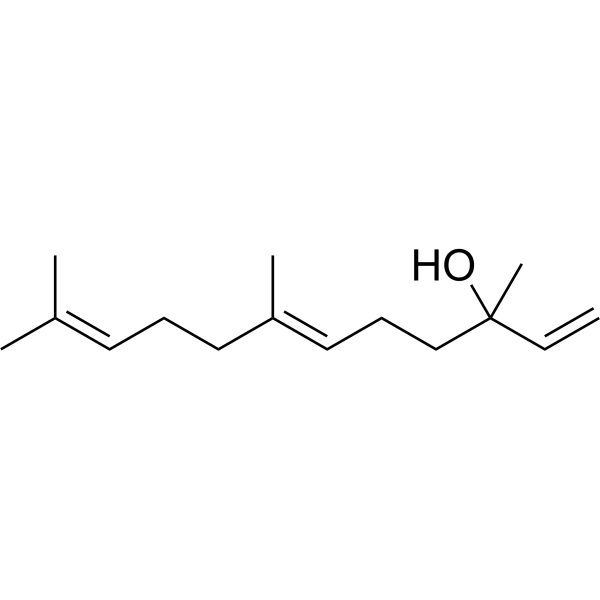
    CBDP

    Reactive Oxygen Species (ROS) Cancer
    Cannabidiphorol (CBDP) is a phytocannabinoid that increases the production of reactive oxygen species (ROS) and activates cellular pathways related to ROS signaling. Cannabidiphorol inhibits cell viability of breast cancer cells .
    Cannabidiphorol
  • HY-175981

    Drug Derivative Cancer
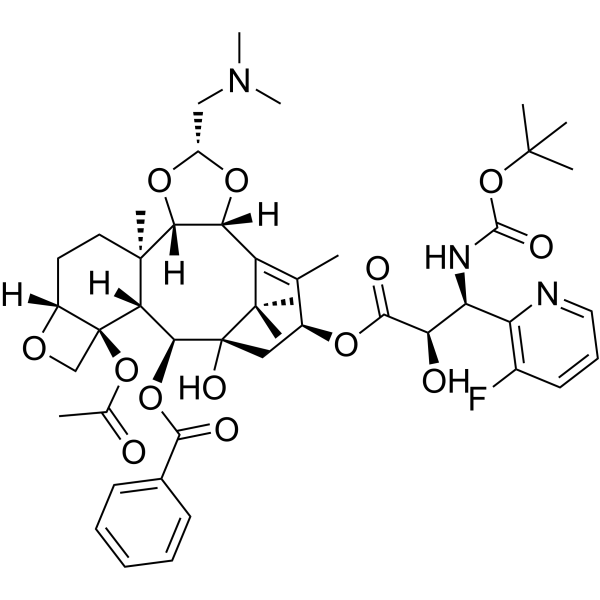
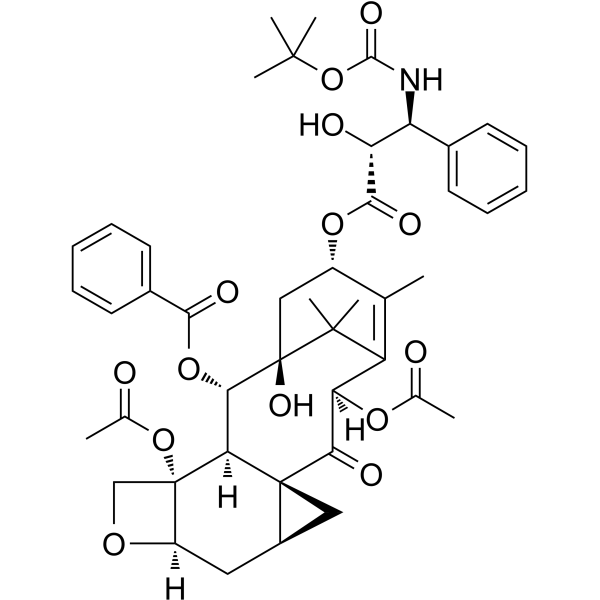
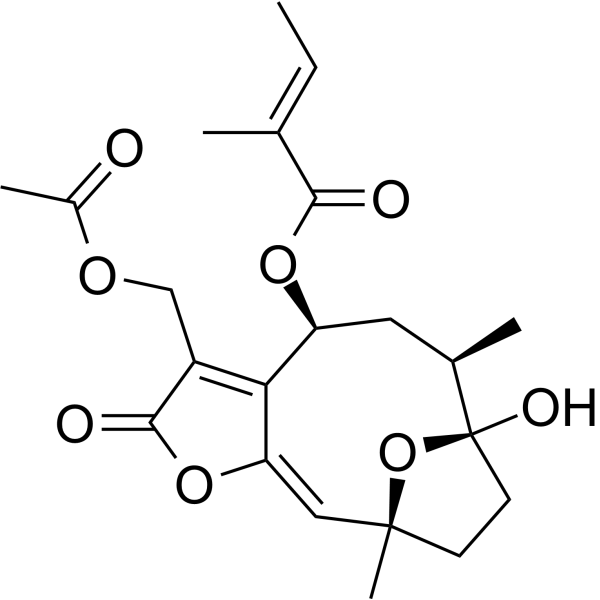
    Paclitaxel-bromothiophene is a semisynthetic taxane analogue of Paclitaxel (HY-B0015). Paclitaxel-bromothiophene exhibits potent antiproliferative activity against 4-T1 breast cancer cells, with an IC50 value of 15.18 nM. Paclitaxel-bromothiophene shows high binding affinity to C5aR1 (Kd = 19.4 μM). Paclitaxel-bromothiophene demonstrates excellent anti-tumor efficacy in 4-T1 breast cancer-bearing mice. Paclitaxel-bromothiophene can be used for the study of breast cancer .
    Paclitaxel-bromothiophene
  • HY-N12209

    Others Cancer
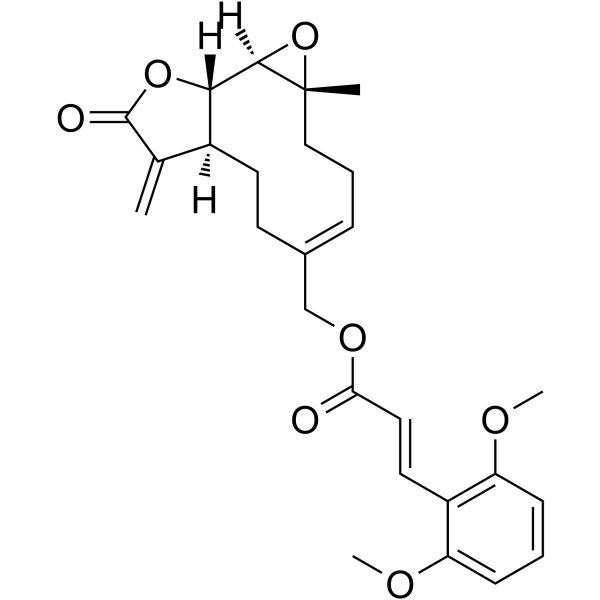
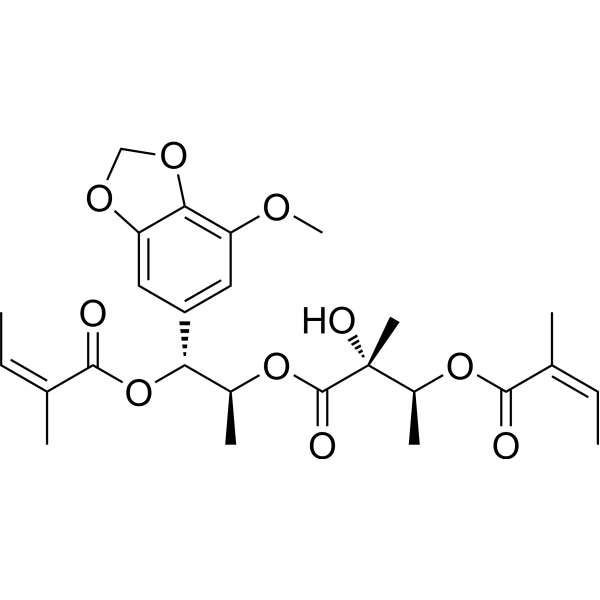
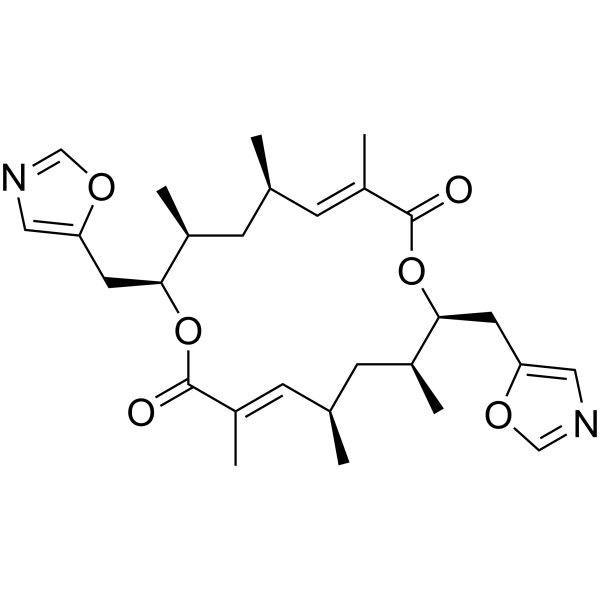
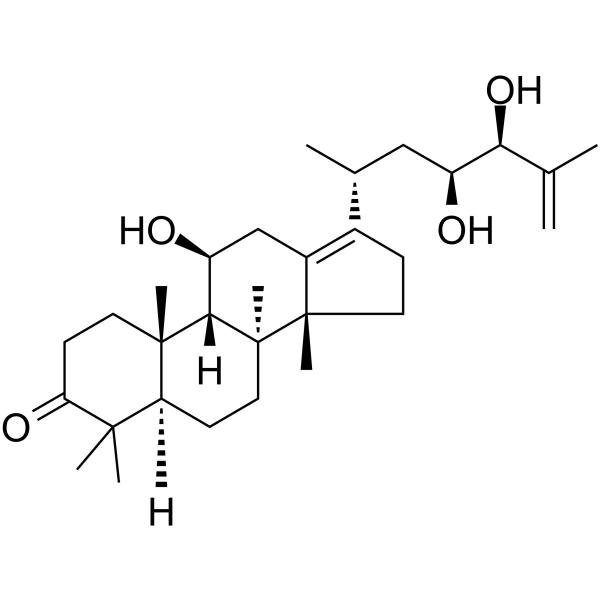
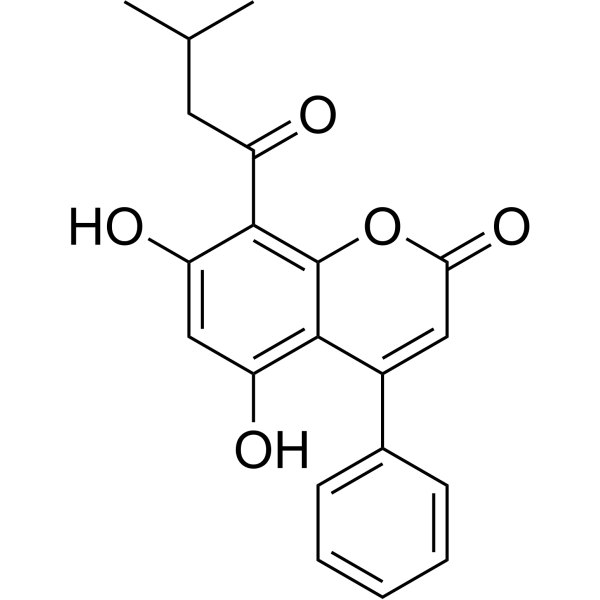
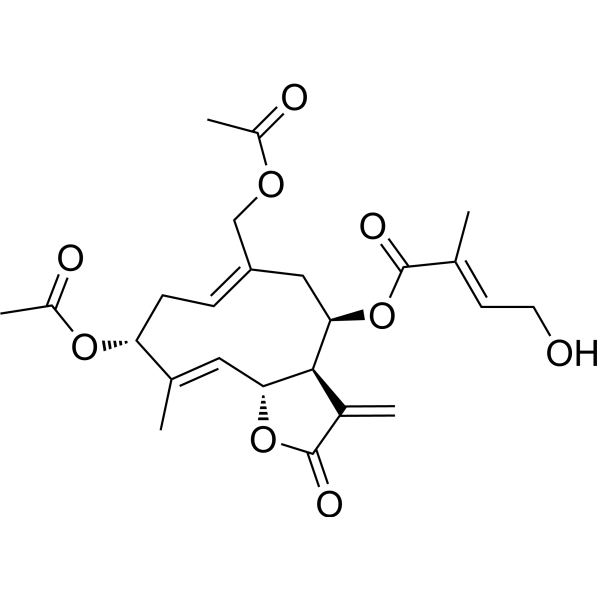
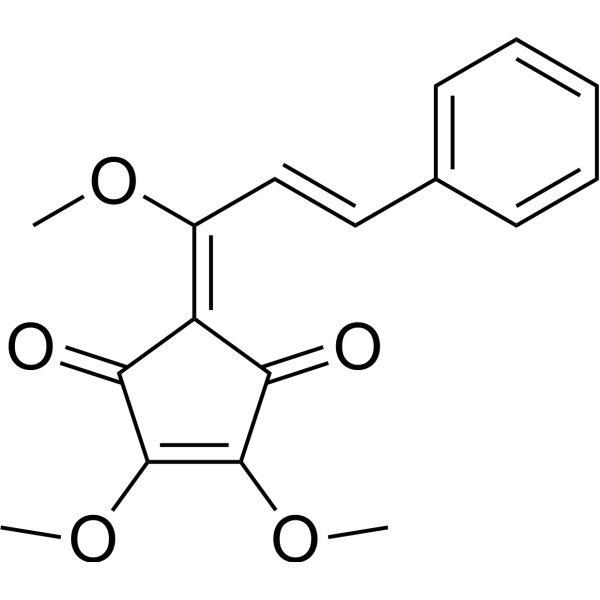
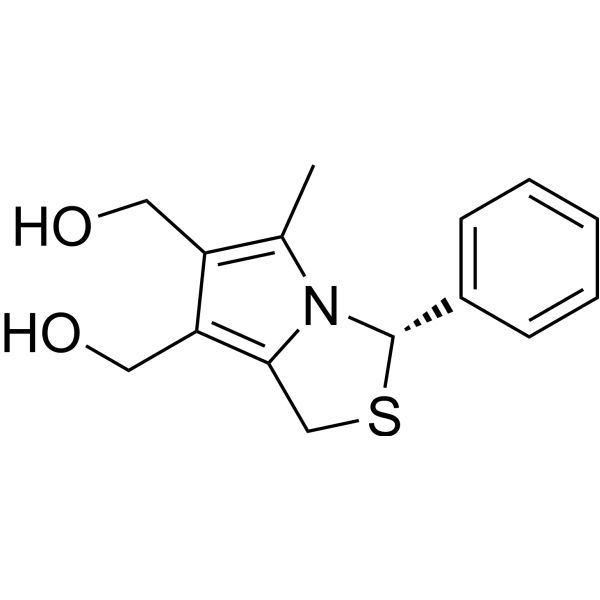
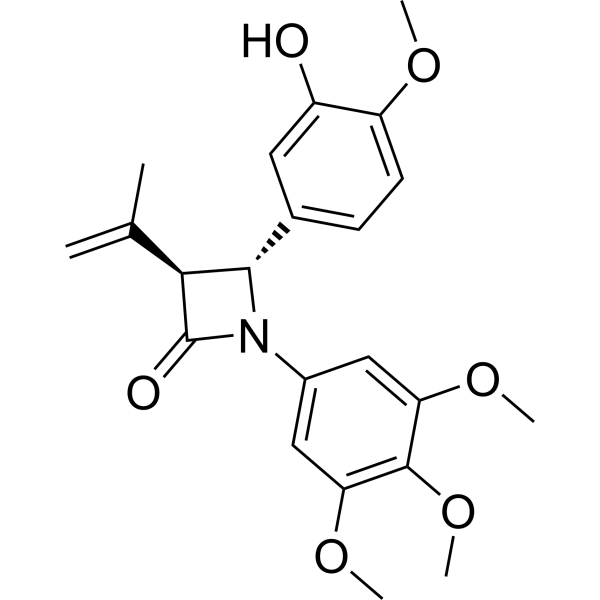
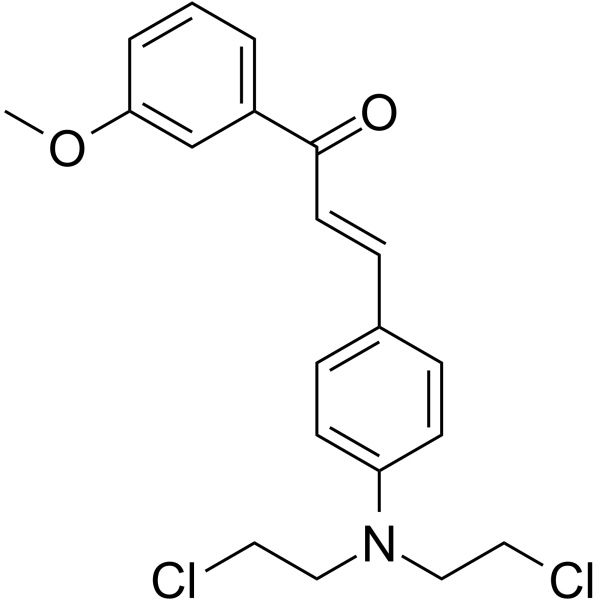
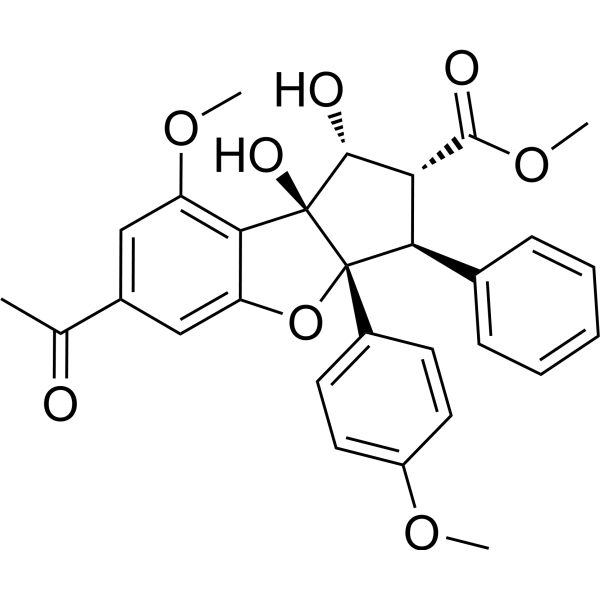
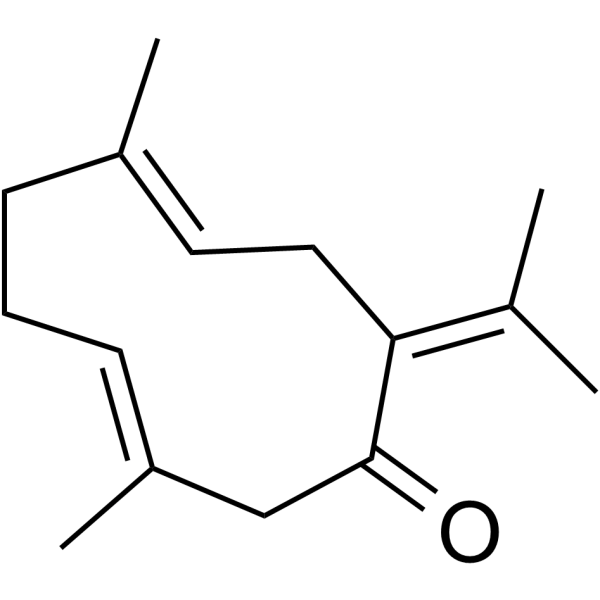
    Neohelmanthicin A (compound 3A) is a phenylpropanoid compound with antitumor activity. The IC50s of Neohelmanthicin A for inhibiting leukemia cell line EL4, breast cancer cell line S180 and breast cancer cell line MCF7 are 0.13 μM, 7 μM and 23 μM respectively .
    Neohelmanthicin A
  • HY-174854

    HDAC Reactive Oxygen Species (ROS) Apoptosis Cancer
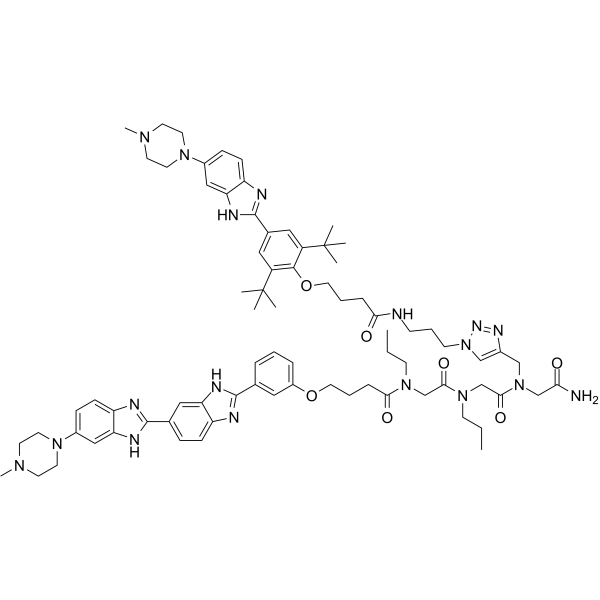
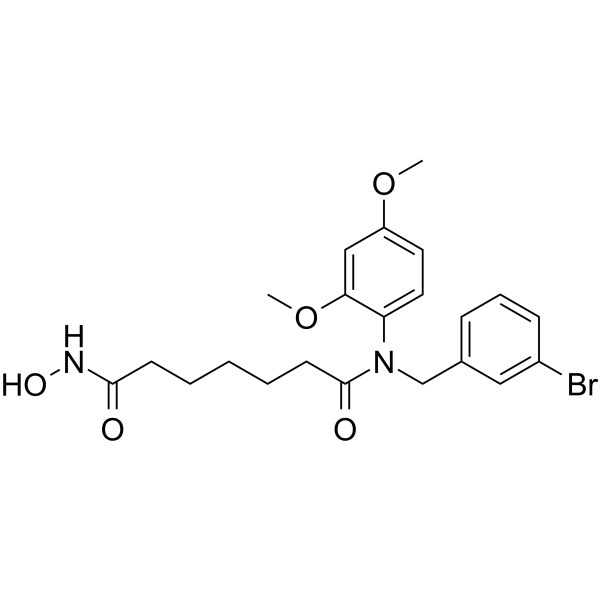
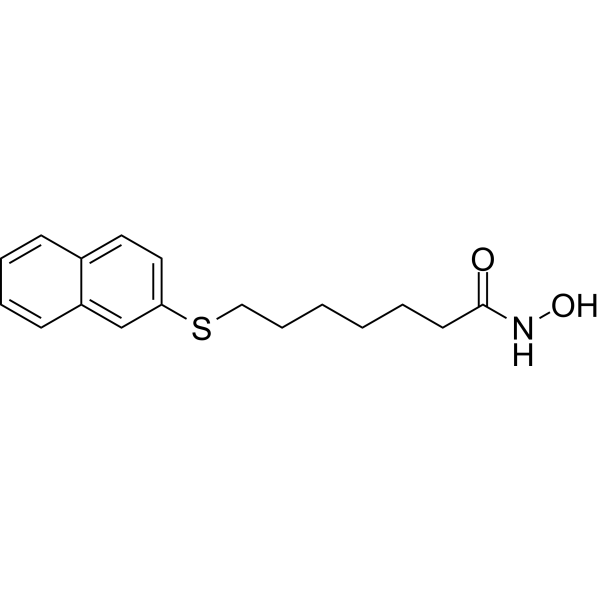
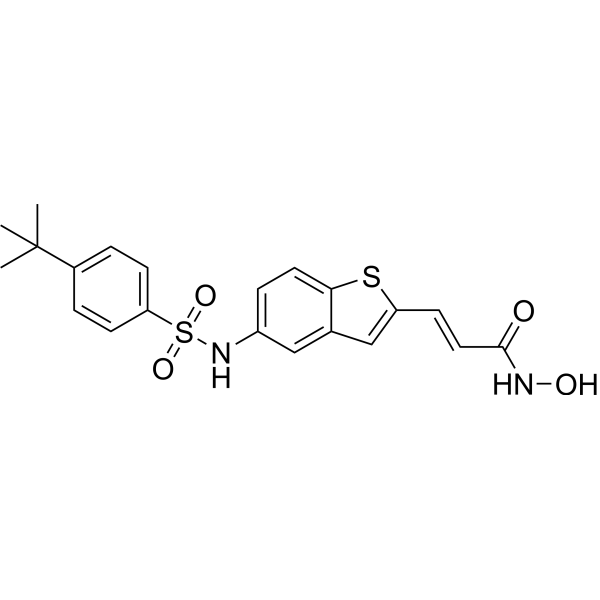
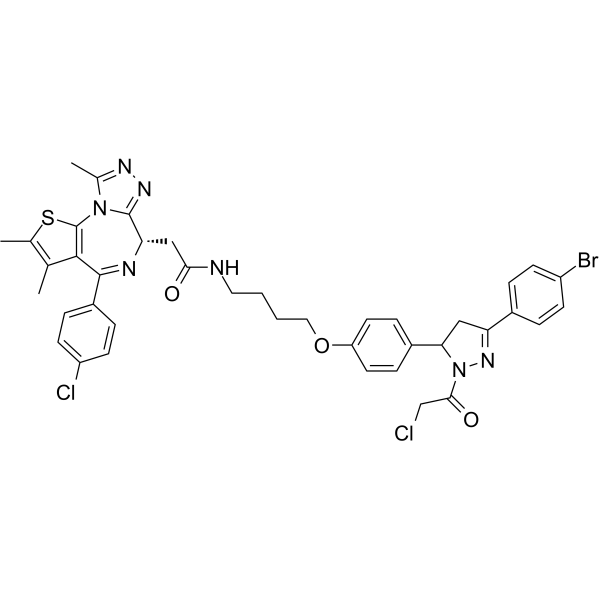
    PySAHA is a multifunctional HDAC inhibitor. PySAHA can degrade intracellular HDAC via a hydrophobic tagging mechanism. PySAHA also possesses photodynamic therapeutic activity and can generate reactive oxygen species under light irradiation. PySAHA can inhibit the proliferation, migration and induce cell apoptosis of breast cancer cells. PySAHA has antitumor activity and can be used in breast cancer research .
    PySAHA
  • HY-175173

    EGFR Cancer
    EGFR-IN-166 (Compound 2) is a EGFR inhibitor. EGFR-IN-166 has potent anticancer activity against breast cancer cells with IC50s of 69.63 and 22.84 μM for MCF-7 and MDA-MB-231 cells, respectively. EGFR-IN-166 significantly inhibits cell migration and EGFR expression. EGFR-IN-166 can be used for breast cancer research .
    EGFR-IN-166
  • HY-159112

    HDAC Cancer
    AW01178 is a Class I HDAC inhibitor. AW01178 induces the upregulation of E-cadherin at both mRNA and protein levels and inhibits the EMT of breast cancer cells .
    AW01178
  • HY-W087006

    Androgen Receptor Cancer
    p-Hydroxyphenylacetone, a Raspberry ketone (HY-N1426) derivative, is an androgen receptor (AR) antagonist with an IC50 of 420 μM in MDA-kb2 human breast cancer cells. p-Hydroxyphenylacetone can be used for breast cancer research .
    p-Hydroxyphenylacetone
  • HY-P11205

    Cys-txCD47

    CD47 Reactive Oxygen Species (ROS) Thrombopoietin Receptor Inflammation/Immunology Cancer
    Cys-PKHB1 (Cys-txCD47) is a peptide conjugated to PKHB1, a CD47 agonist peptide and a thrombospondin-1 peptide mimic with antitumor effects. PKHB1 induces mitochondrial alterations, ROS generation, intracellular Ca + accumulation, and calcium-dependent cell death in breast cancer cells. PKHB1 induces immune system activation in breast cancer cells through immunogenic cell death .
    Cys-PKHB1
  • HY-153943

    DNA-PK Cancer
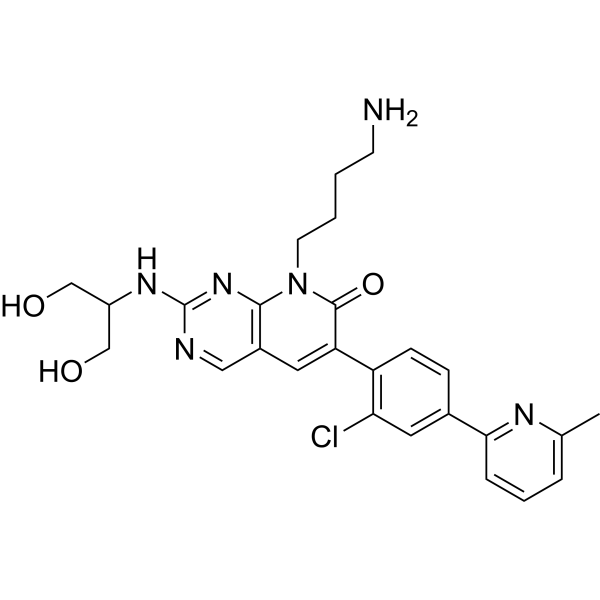
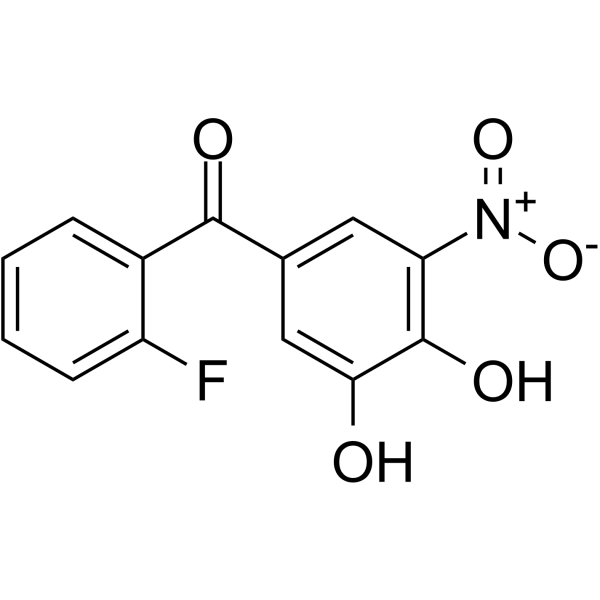
    DNA-PK-IN-10 is a DNA-PK inhibitor. DNA-PK-IN-10 can be used for the research of breast cancer and non-small cell lung cancer .
    DNA-PK-IN-10
  • HY-120046

    HDAC Cancer
    YF479 is a potent inhibitor of histone deacetylase. YF479 abates cell viability, suppresses colony formation and tumor cell motility. YF479 significantly inhibits breast tumor growth and metastasis. YF479 has the potential for the research of clinical trials for breast cancer .
    YF479
  • HY-108999

    BWA770U mesylate

    DNA/RNA Synthesis Cancer
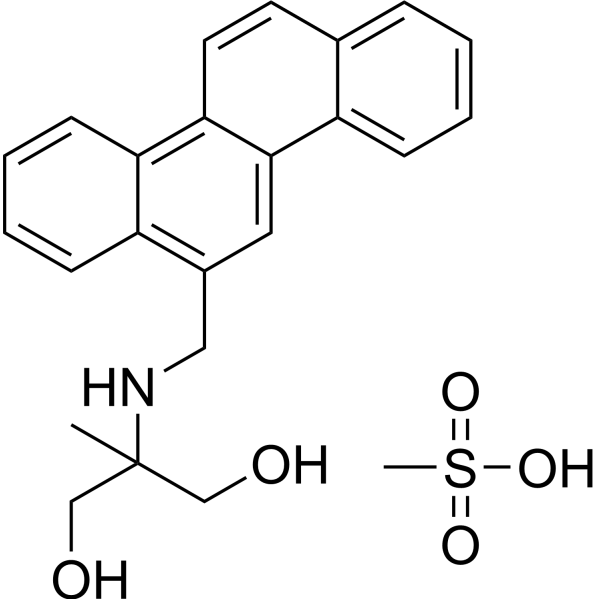
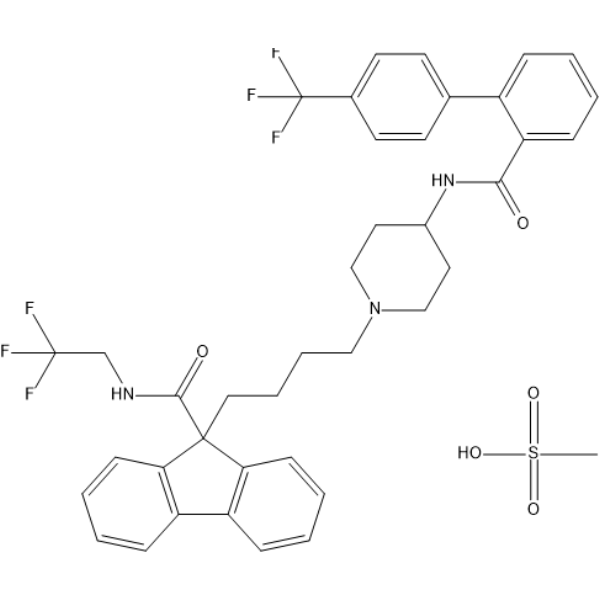
    Crisnatol (BWA770U) mesylate is an orally active and anticancer agent, and a member of the arylmethylaminopropanediol class of DNA intercalators. Crisnatol mesylate shows in vitro cytotoxicity against human breast cancer cells, but not normal human skin fibroblasts .
    Crisnatol mesylate
  • HY-172597

    MDM-2/p53 CDK Apoptosis Cancer
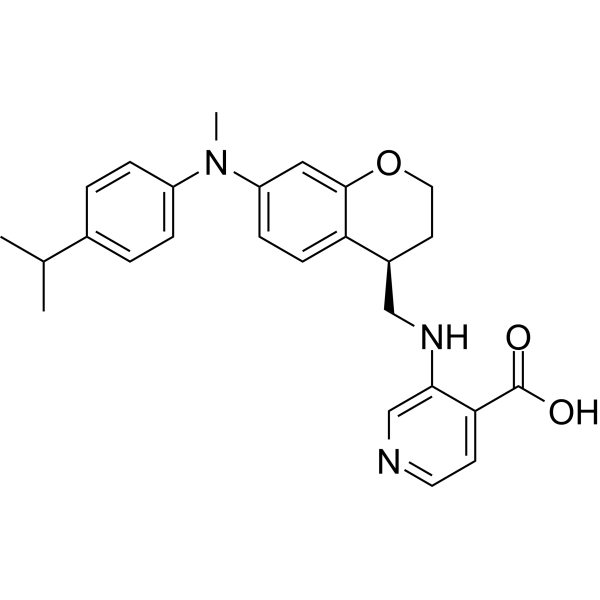
    YL-1-9 is an inhibitor of the degradation of p53 by MDM2 through strong binding to the key hydrophobic pockets of MDM2. YL-1-9 induces cell cycle arrest and apoptosis in breast cancer cells .
    YL-1-9
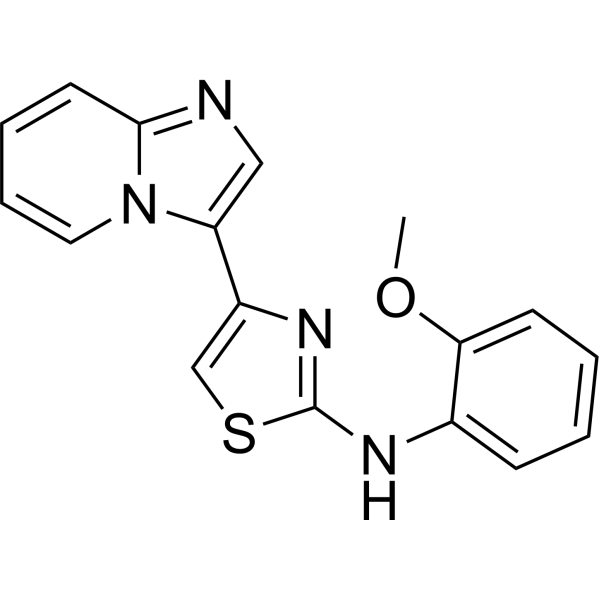
  • HY-116473

    APC Cancer
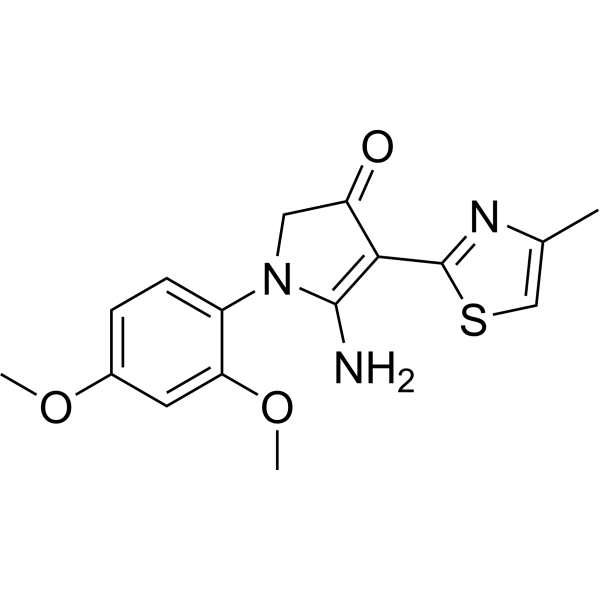
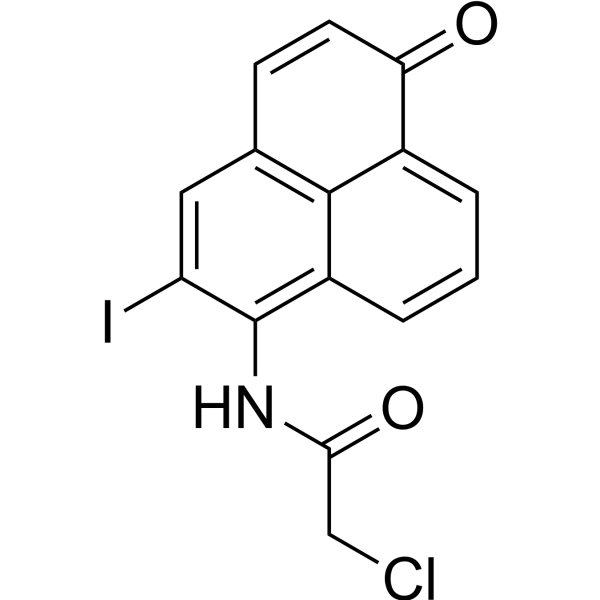
    CFM-1 is a small molecule antagonist of CARP-1/APC-2 binding with an EC50 value of 4.1 μM. CFM-1 induces G2M cell cycle arrest and suppresses viabilities of human breast cancer cells .
    CFM-1

Inquiry Online

Your information is safe with us. * Required Fields.

Salutation


Country or Region *

Applicant Name *


Organization Name *

Department *


Email Address *


Product Name *

Cat. No.


Requested quantity *

Phone Number *


Remarks

Inquiry Online

Inquiry Information

Product Name:
Cat. No.:
Quantity:
MCE Japan Authorized Agent: