
1. Search Result
Search Result
Results for "

Mitochondrial

" in MedChemExpress (MCE) Product Catalog:

1795

Inhibitors & Agonists

11

Screening Libraries

57

Fluorescent Dyes

40

Biochemical Assay Reagents

86

Peptides

1

MCE Kits

5

Inhibitory Antibodies

385

Natural
Products

112

Recombinant Proteins

125

Isotope-Labeled Compounds

139

Antibodies

10

Click Chemistry

26

Oligonucleotides

5

GMP Molecules

Cat. No. Product Name Target Research Areas Chemical Structure
  • HY-15886
    Mdivi-1
    310+ Cited Publications

    Mitochondrial division inhibitor 1

    Dynamin Mitophagy Autophagy Apoptosis Cancer
    Mdivi-1 is a selective dynamin-related protein 1 (Drp1) inhibitor. Mdivi-1 is a mitochondrial division/mitophagy inhibitor.
    Mdivi-1
  • HY-B0356
    Ciprofloxacin
    50+ Cited Publications

    Bay-09867

    Topoisomerase Apoptosis Antibiotic Bacterial Mitochondrial Metabolism Reactive Oxygen Species (ROS) Infection Cancer
    Ciprofloxacin (Bay-09867) is a potent, orally active topoisomerase IV inhibitor. Ciprofloxacin induces mitochondrial DNA and nuclear DNA damage and lead to mitochondrial dysfunction, ROS production. Ciprofloxacin has anti-proliferative activity and induces apoptosis. Ciprofloxacin is a fluoroquinolone antibiotic, exhibiting potent antibacterial activity .
    Ciprofloxacin
  • HY-135056
    MitoTracker Green FM
    20+ Cited Publications

    Fluorescent Dye Others
    Mito-Tracker Green is a green fluorescent dye that selectively accumulates in the mitochondrial matrix. MitoTracker Green FM covalently binds mitochondrial proteins by reacting with free mercaptan of cysteine residues, allowing staining of mitochondrial membrane potential independent of membrane potential. Excitation/emission wavelength 490/523 nm.
    MitoTracker Green FM
  • HY-150031
    MFI8
    5+ Cited Publications

    Mitochondrial Metabolism Others
    MFI8 is a small molecule inhibitor of mitochondrial .
    MFI8
  • HY-B0486
    Lonidamine
    15+ Cited Publications

    AF-1890; Diclondazolic Acid; DICA

    Hexokinase Mitochondrial Metabolism Apoptosis Parasite Inflammation/Immunology Cancer
    Lonidamine (AF-1890) is a hexokinase and mitochondrial pyruvate carrier inhibitor (Ki: 2.5 μM). Lonidamine also inhibits aerobic glycolysis in cancer cells. Lonidamine can be used in the research of mitochondrial metabolism and inflammation, such as pulmonary fibrosis .
    Lonidamine
  • HY-15453
    Devimistat
    20+ Cited Publications

    CPI-613

    Apoptosis Mitochondrial Metabolism Cancer
    Devimistat is a mitochondrial metabolism inhibitor. Devimistat is a lipoic acid antagonist that abrogates mitochondrial energy metabolism to induce apoptosis in various cancer cells .
    Devimistat
  • HY-111475
    Mitochondrial fusion promoter M1
    2 Publications Verification

    Mitochondrial Metabolism Cardiovascular Disease
    Mitochondrial fusion promoter M1 is a mitochondrial dynamic modulator. Mitochondrial fusion promoter M1 preserves the mitochondrial function and promotes cellular respiration. Mitochondrial fusion promoter M1 alleviates cardiac and brain damage in rats with cardiac ischemia/reperfusion injury .
    Mitochondrial fusion promoter M1
  • HY-B0356B

    Bay-09867 hydrochloride monohydrate

    Topoisomerase Apoptosis Antibiotic Bacterial Mitochondrial Metabolism Reactive Oxygen Species (ROS) Infection Cancer
    Ciprofloxacin (Bay-09867) hydrochloride monohydrate is a potent, orally active topoisomerase IV inhibitor. Ciprofloxacin hydrochloride monohydrate induces mitochondrial DNA and nuclear DNA damage and lead to mitochondrial dysfunction, ROS production. Ciprofloxacin hydrochloride monohydrate has anti-proliferative activity and induces apoptosis. Ciprofloxacin hydrochloride monohydrate is a fluoroquinolone antibiotic, exhibiting potent antibacterial activity .
    Ciprofloxacin hydrochloride monohydrate
  • HY-B0356A
    Ciprofloxacin monohydrochloride
    50+ Cited Publications

    Bay-09867 monohydrochloride

    Topoisomerase Apoptosis Antibiotic Bacterial Mitochondrial Metabolism Reactive Oxygen Species (ROS) Infection Cancer
    Ciprofloxacin (Bay-09867) monohydrochloride is a potent, orally active topoisomerase IV inhibitor. Ciprofloxacin monohydrochloride induces mitochondrial DNA and nuclear DNA damage and lead to mitochondrial dysfunction, ROS production. Ciprofloxacin monohydrochloride has anti-proliferative activity and induces apoptosis. Ciprofloxacin monohydrochloride is a fluoroquinolone antibiotic, exhibiting potent antibacterial activity .
    Ciprofloxacin monohydrochloride
  • HY-137067
    IMT1B
    5+ Cited Publications

    LDC203974

    DNA/RNA Synthesis Cancer
    IMT1B (LDC203974) is an orally active, noncompetitive and specific allosteric inhibitor of mitochondrial RNA polymerase (POLRMT) and inhibits mitochondrial DNA (mtDNA) expression. IMT1B has anti-tumour effects .
    IMT1B
  • HY-W187305
    MASM7
    5 Publications Verification

    Mitochondrial Metabolism Others
    MASM7 is a mitofusin activator, and can achieve mitochondrial fusion via mitofusins. MASM7 can increase Mito AR with an EC50 value of 75 nM in MEFs in concentration-responsively, and can promote mitochondrial fusion by directly activating MFN2 or MFN. MASM7 also demonstrates direct binding to the HR2 domain of MFN2 with Kd value of 1.1 μM .
    MASM7
  • HY-N1462
    Atractyloside potassium salt
    4 Publications Verification

    Chloride Channel Autophagy mTOR AMPK Cardiovascular Disease Metabolic Disease Cancer
    Atractyloside potassium salt is a powerful and specific inhibitor of mitochondrial ADP/ATP transport. Atractyloside potassium salt inhibits chloride channels from mitochondrial membranes of rat heart. Atractyloside potassium salt activates autophagy, inhibits ANT2, mTOR and promotes the activation of p-AMPK. Atractyloside potassium salt has anti-cancer effects on non-small cell lung cancer and can inhibit liver steatosis. Atractylodesin potassium salt has nephrotoxicity .
    Atractyloside potassium salt
  • HY-108547
    Alexidine dihydrochloride
    5 Publications Verification

    Fungal Apoptosis Infection Cancer
    Alexidine dihydrochloride is an anticancer agent that targets a mitochondrial tyrosine phosphatase, PTPMT1, in mammalian cells and causes mitochondrial apoptosis. Alexidine dihydrochloride has antifungal and antibiofilm activity against a diverse range of fungal pathogens .
    Alexidine dihydrochloride
  • HY-138620
    MCU-i4
    5 Publications Verification

    Mitochondrial Metabolism Metabolic Disease
    MCU-i4 blocks the IP3-dependent mitochondrial Ca 2+-uptake, maintaining the gatekeeping role of their target .
    MCU-i4
  • HY-14771A
    Imeglimin hydrochloride
    5+ Cited Publications

    EMD 387008 hydrochloride

    Mitochondrial Metabolism Reactive Oxygen Species (ROS) Metabolic Disease
    Imeglimin hydrochloride (EMD 387008) is an oral glucose-lowering agent. Imeglimin also reduces reactive oxygen species (ROS) production, increases mitochondrial DNA and improves mitochondrial function .
    Imeglimin hydrochloride
  • HY-14771
    Imeglimin
    5+ Cited Publications

    EMD 387008

    Mitochondrial Metabolism Reactive Oxygen Species (ROS) Metabolic Disease
    Imeglimin (EMD 387008) is an oral glucose-lowering agent. Imeglimin improves insulin sensitivity. Imeglimin also reduces reactive oxygen species (ROS) production, increases mitochondrial DNA and improves mitochondrial function .
    Imeglimin
  • HY-W194810
    MCU-i11
    2 Publications Verification

    Mitochondrial Metabolism Calcium Channel Neurological Disease Cancer
    MCU-i11 is a negative regulator of the mitochondrial calcium uniporter (MCU) complex. MCU-i11 can reduce mitochondrial Ca 2+ uptake. MCU-i11 impairs muscle cell growth. MCU-i11 can be used to study breast cancer, cervical cancer and neurological diseases .
    MCU-i11
  • HY-W040307
    Saccharopine
    1 Publications Verification

    L-Saccharopine

    Endogenous Metabolite Metabolic Disease
    Saccharopine (L-Saccharopine), a lysine degradation intermediate, is a mitochondrial toxin. Lysine and α-ketoglutarate are converted into Saccharopine by the lysine-ketoglutarate reductase. Saccharopine is then oxidized to α-aminoapidate semialdehyde and glutamate by the saccharopine dehydrogenase. Saccharopine impairs development by disrupting mitochondrial homeostasis .
    Saccharopine
  • HY-100550
    MSDC 0160
    4 Publications Verification

    Mitoglitazone; CAY10415

    Insulin Receptor Mitochondrial Metabolism Neurological Disease Endocrinology
    MSDC 0160 (Mitoglitazone) is a mitochondrial target of thiazolidinediones (mTOT)-modulating insulin sensitizer and a modulator of mitochondrial pyruvate carrier (MPC). MSDC 0160 is a thiazolidinedione (TZD) with antidiabetic and neuroprotective activities. MSDC 0160 has the potential for Alzheimer′s disease .
    MSDC 0160
  • HY-DY1032

    Fluorescent Dye Others
    Mito-Tracker Green (solution) is a green fluorescent dye that selectively accumulates in the mitochondrial matrix. MitoTracker Green FM covalently binds mitochondrial proteins by reacting with free mercaptan of cysteine residues, allowing staining of mitochondrial membrane potential independent of membrane potential. Excitation/emission wavelength 490/523 nm.
    Solvent and concentration: DMSO: 1 mM
    MitoTracker Green FM (solution)
  • HY-113285

    3-Ureidopropionic acid

    Oxidative Phosphorylation Metabolic Disease
    Ureidopropionic acid is a mitochondrial respiratory chain complex V inhibitor that selectively inhibits the activity of mitochondrial respiratory chain complex V, with no effect on respiratory chain complexes I-IV or mitochondrial fatty acid β-oxidation. Ureidopropionic acid induces the production of reactive oxygen species, delayed elevation of intracellular calcium concentration, secondary energy-dependent excitotoxicity and neurodegeneration in neurons. Ureidopropionic acid promotes neuropathological changes by impairing mitochondrial energy metabolism, oxidative stress and excitotoxicity pathways. Ureidopropionic acid can be used in studies related to 3-ureidopropionase deficiency and severe propionic aciduria .
    Ureidopropionic acid
  • HY-D0060

    Fluorescent Dye Others
    4-Di-2-ASP, a styryl pyridinium fluorescent dye, is a vital mitochondrial marker. 4-Di-2-ASP shows reliable and specific labelling of pulmonary NEBs (neuroepithelial bodies) .
    4-Di-2-ASP
  • HY-34740

    Mitochondrial Metabolism Neurological Disease Metabolic Disease
    Ethylmalonic acid is a short-chain organic dicarboxylic acid. Ethylmalonic acid synergistically induces mitochondrial permeability transition (MP) with Ca 2+, inhibits Mi-CK, and disrupts mitochondrial energy metabolism. Ethylmalonic acid can be used in the research of SCADD, EE and other genetic metabolic diseases characterized by EMA accumulation .
    Ethylmalonic acid
  • HY-B0486R

    AF-1890 (Standard); Diclondazolic Acid (Standard); DICA (Standard)

    Reference Standards Hexokinase Mitochondrial Metabolism Apoptosis Parasite Inflammation/Immunology Cancer
    Lonidamine (Standard) is the analytical standard of Lonidamine. This product is intended for research and analytical applications. Lonidamine (AF-1890) is a hexokinase and mitochondrial pyruvate carrier inhibitor (Ki: 2.5 μM). Lonidamine also inhibits aerobic glycolysis in cancer cells. Lonidamine can be used in the research of mitochondrial metabolism and inflammation, such as pulmonary fibrosis .
    Lonidamine (Standard)
  • HY-P10409

    Small humanin-like peptide 2

    Apoptosis Reactive Oxygen Species (ROS) Neurological Disease Metabolic Disease
    SHLP2 (Small humanin-like peptide 2) is a small molecule peptide encoded by mitochondrial DNA, belonging to mitochondria derived peptide. SHLP2 has the activity of regulating apoptosis and inhibits cell death. SHLP2 binds to mitochondrial complex 1. SHLP2 improves mitochondrial metabolism by increasing respiration and biogenesis, reducing ROS, and decreasing mtDNA oxidation. SHLP2 also regulated energy homeostasis through the activation of hypothalamic neurons. SHLP2 can be used in the study of diseases related to mitochondrial dysfunction and anti-aging diseases, such as age-related macular degeneration and Parkinson’s disease .
    SHLP2
  • HY-134377

    ASP0367; MA-0211

    PPAR Metabolic Disease
    Bocidelpar (ASP0367; MA-0211) is a selective, orally active PPARδ modulator. Bocidelpar activates the PPARδ downstream signaling pathway, upregulates the expression of target genes such as ABCA1 and ACAA2. Bocidelpar then promotes fatty acid oxidation (FAO) and mitochondrial biogenesis, and improves mitochondrial dysfunction. Bocidelpar can improve mitochondrial biogenesis and function in muscle cells. Bocidelpar is mainly used in the study of mitochondrial dysfunction diseases such as primary mitochondrial myopathy (PMM) and Duchenne muscular dystrophy (DMD) .
    Bocidelpar
  • HY-126220

    Fluorescent Dye Others
    KMG-301AM is the acetoxy methyl esterified form of KMG-301. KMG-301AM successfully accumulates in mitochondria and then it is hydrolyzed to KMG-301. KMG-301 is an Mg 2+-selective fluorescent probe functional in mitochondria in intact cells. Since the mitochondrial membrane is impermeable to KMG-301, it is not released upon depolarization of the mitochondrial membrane potential. KMG-301 can indicate changes in mitochondrial Mg2+ concentration and shows Mg 2+ transport across the mitochondrial membrane in the early phases of a cellular model .
    KMG-301AM
  • HY-121577

    KH176

    Reactive Oxygen Species (ROS) Metabolic Disease
    Sonlicromanol (KH176) is an orally active reactive oxygen species (ROS) modulator for the study in mitochondrial disease .
    Sonlicromanol
  • HY-164566

    Dynamin Mitochondrial Metabolism Neurological Disease
    POSH-IN-2 (MIDI), a mitochondrial division inhibitor, is a DRP1 inhibitor that potently blocks mitochondrial fragmentation induced by cellular stresses and genetic mitochondrial lesions. POSH-IN-2 covalently interacts with DRP1-C367 to target DRP1 interaction with multiple receptors .
    POSH-IN-2
  • HY-D1250
    Mito-TRFS
    2 Publications Verification

    Fluorescent Dye Cancer
    Mito-TRFS, the first off-on probe, is used to image the mitochondrial thioredoxin reductase (TrxR2) in live cells .
    Mito-TRFS
  • HY-W040307B
    Saccharopine hydrochloride
    1 Publications Verification

    L-Saccharopine hydrochloride

    Endogenous Metabolite Metabolic Disease
    Saccharopine (L-Saccharopine) hydrochloride, a lysine degradation intermediate, is a mitochondrial toxin. Lysine and α-ketoglutarate are converted into Saccharopine hydrochloride by the lysine-ketoglutarate reductase. Saccharopine hydrochloride is then oxidized to α-aminoapidate semialdehyde and glutamate by the saccharopine dehydrogenase. Saccharopine hydrochloride impairs development by disrupting mitochondrial homeostasis .
    Saccharopine hydrochloride
  • HY-155554

    Mitochondrial Metabolism Oxidative Phosphorylation Reactive Oxygen Species (ROS) MMP Cancer
    SCAL-255 is a potent mitochondrial complex I (CI) inhibitor with an IC50 of 1.14 μM. SCAL-255 blocks mitochondrial function, inhibits oxygen consumption rate (OCR), induces reactive oxygen species (ROS) production, and reduces MMP. SCAL-255 can be used in the research of oxidative phosphorylation (OXPHOS)-dependent cancers, such as colorectal cancer (CRC) and acute myeloid leukemia (AML), etc .
    SCAL-255
  • HY-16386

    Mitochondrial Metabolism Cancer
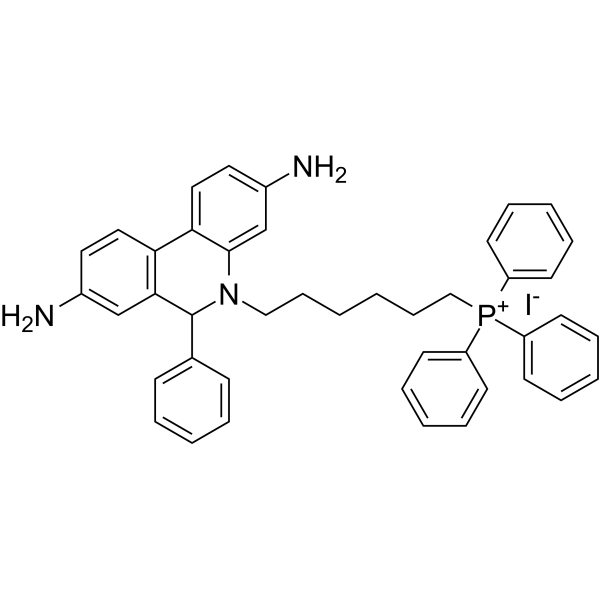
    PENAO is a potent tumour cell mitochondrial toxin. PENAO inactivates tumor cell mitochondria by targeting inner-membrane adenine nucleotide transferase .
    PENAO
  • HY-126220A

    Fluorescent Dye Others
    KMG-301AM TFA is the acetoxy methyl esterified form of KMG-301. KMG-301AM TFA successfully accumulates in mitochondria and then it is hydrolyzed to KMG-301. KMG-301 is an Mg 2+-selective fluorescent probe functional in mitochondria in intact cells. Since the mitochondrial membrane is impermeable to KMG-301, it is not released upon depolarization of the mitochondrial membrane potential. KMG-301 can indicate changes in mitochondrial Mg2+ concentration and shows Mg 2+ transport across the mitochondrial membrane in the early phases of a cellular model .
    KMG-301AM TFA
  • HY-139308
    T0467
    2 Publications Verification

    PINK1/Parkin Mitochondrial Metabolism Neurological Disease
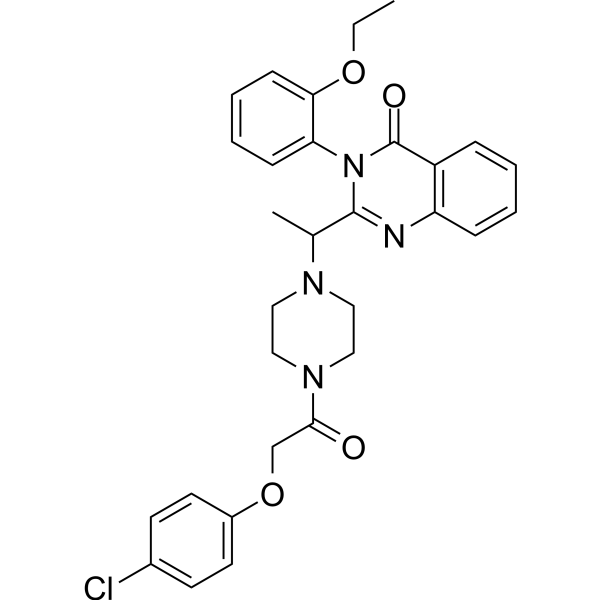
    T0467 activates parkin mitochondrial translocation in a PINK1-dependent manner in vitro. T0467 do not induce mitochondrial accumulation of PINK1in dopaminergic neurons. T0467 is a potential compound for PINK1-Parkin signaling activation, and can be used for parkinson's disease and related disorders research .
    T0467
  • HY-B1093
    Fenchlorphos
    1 Publications Verification

    Environmental Pollutants Parasite Cholinesterase (ChE) Infection
    Fenchlorphos, an organophosphate, is an insecticide. Fenchlorphos is an inhibitor of the enzyme acetylcholinesterase (AChE). Fenchlorphos is able to cause mitochondrial dysfunction .
    Fenchlorphos
  • HY-14256
    BMS-191095
    1 Publications Verification

    Potassium Channel Cardiovascular Disease Neurological Disease
    BMS-191095 is a selective activator of mitochondrial ATP-sensitive potassium (mitoKATP) channels. BMS-191095 inhibits human platelet aggregation by opening mitochondrial K(ATP) channels .
    BMS-191095
  • HY-D1174

    Fluorescent Dye Others
    Rhodamine 700, a Lambdachrome laser dye, is one of the few rhodamine dyes with near infrared fluorescence. Rhodamine 700 can be used for mitochondrial staining .
    Rhodamine 700
  • HY-111217

    VDAC Mitochondrial Metabolism Neurological Disease Cancer
    AKOS-22 is a potent mitochondrial protein VDAC1 (voltage-dependent anion channel 1) inhibitor (Kd=15.4 μM). AKOS-22 interacts with VDAC1 and inhibiting both VDAC1 oligomerization and apoptosis. AKOS-22 protects against mitochondrial dysfunction .
    AKOS-22
  • HY-16386A

    Mitochondrial Metabolism Cancer
    PENAO TFA is the trifluoroacetic acid of PENAO (HY-16386). PENAO is a potent tumour cell mitochondrial toxin. PENAO inactivates tumor cell mitochondria by targeting inner-membrane adenine nucleotide transferase .
    PENAO TFA
  • HY-B0356R

    Bay-09867 (Standard)

    Reference Standards Topoisomerase Apoptosis Antibiotic Bacterial Mitochondrial Metabolism Reactive Oxygen Species (ROS) Infection Cancer
    Ciprofloxacin (Standard) is the analytical standard of Ciprofloxacin. This product is intended for research and analytical applications. Ciprofloxacin (Bay-09867) is a potent, orally active topoisomerase IV inhibitor. Ciprofloxacin induces mitochondrial DNA and nuclear DNA damage and lead to mitochondrial dysfunction, ROS production. Ciprofloxacin has anti-proliferative activity and induces apoptosis. Ciprofloxacin is a fluoroquinolone antibiotic, exhibiting potent antibacterial activity .
    Ciprofloxacin (Standard)
  • HY-B0356BR

    Bay-09867 hydrochloride monohydrate (Standard)

    Reference Standards Topoisomerase Apoptosis Antibiotic Bacterial Mitochondrial Metabolism Reactive Oxygen Species (ROS) Infection Cancer
    Ciprofloxacin (hydrochloride monohydrate) (Standard) is the analytical standard of Ciprofloxacin (hydrochloride monohydrate). This product is intended for research and analytical applications. Ciprofloxacin (Bay-09867) hydrochloride monohydrate is a potent, orally active topoisomerase IV inhibitor. Ciprofloxacin hydrochloride monohydrate induces mitochondrial DNA and nuclear DNA damage and lead to mitochondrial dysfunction, ROS production. Ciprofloxacin hydrochloride monohydrate has anti-proliferative activity and induces apoptosis. Ciprofloxacin hydrochloride monohydrate is a fluoroquinolone antibiotic, exhibiting potent antibacterial activity .
    Ciprofloxacin hydrochloride monohydrate (Standard)
  • HY-178154

    PINK1/Parkin Mitochondrial Metabolism Neurological Disease
    FB231 is a Parkin activator. FB231 can induce mild mitochondrial stress, resulting in impaired mitochondrial function and activation of the integrated stress response. FB231 can lower the threshold for mitochondrial toxins to induce PINK1/Parkin-mediated mitophagy. FB231 can cause activation of the integrated stress response (ISR) and perturbation to iron-dependent pathways. FB231 can be used for the research of neurological disease, such as Parkinson’s disease .
    FB231
  • HY-155556

    ClpP Cancer
    ZG36 is a human Caseinolytic protease P (ClpP) agonist. ZG36 non-selectively degrades respiratory chain complexes and reduces mitochondrial DNA, ultimately leading to mitochondrial dysfunction and leukemic cell death. ZG36 also inhibits the development of acute myeloid leukemia in a xenograft mouse model .
    ZG36
  • HY-B1914

    Environmental Pollutants Mitochondrial Metabolism Neurological Disease
    Tebufenpyrad can induce mitochondrial dysfunction and oxidative damage. Tebufenpyrad induces dose-dependent cell death on N27 cells, with an EC50 value of 3.98 μM .
    Tebufenpyrad
  • HY-125612

    5'-Hydroxymorusin

    Apoptosis Cancer
    Artonin E (5'-Hydroxymorusin) is a known prenylated flavonoid that induces apoptosis and arrests the cell cycle in S phase. Artonin E can induce anti-proliferative effects through mitochondrial pathway dysregulation and can be used in cancer research .
    Artonin E
  • HY-152203

    Drug Derivative Cancer
    Mitochondrial respiration-IN-2 is the fluorine derivative of Virginiamycin M1 (HY-N6686). Mitochondrial respiration-IN-2 can inhibit mitochondrial translation of glioblastoma stem cells .
    Mitochondrial respiration-IN-2
  • HY-122029

    Mitochondrial Metabolism Metabolic Disease
    BRD6897 is a mitochondrial content inducer. BRD6897 does not alter the percent of cytoplasmic area occupied by mitochondria, but instead, induces a striking increase in the electron density of existing mitochondria .
    BRD6897
  • HY-W040298

    Bay-09867 lactate

    Topoisomerase Apoptosis Antibiotic Bacterial Mitochondrial Metabolism Reactive Oxygen Species (ROS) Infection Cancer
    Ciprofloxacin (Bay-09867) lactate is a potent, orally active topoisomerase IV inhibitor. Ciprofloxacin lactate induces mitochondrial DNA and nuclear DNA damage and lead to mitochondrial dysfunction, ROS production. Ciprofloxacin lactate has anti-proliferative activity and induces apoptosis. Ciprofloxacin lactate is a fluoroquinolone antibiotic, exhibiting potent antibacterial activity .
    Ciprofloxacin lactate
  • HY-N12486

    Keap1-Nrf2 ATP Synthase Metabolic Disease
    Isofalcarintriol is a NRF2 activator and selective inhibitor of the mitochondrial ATP synthase. Isofalcarintriol can be used for aging study .
    Isofalcarintriol

Inquiry Online

Your information is safe with us. * Required Fields.

Salutation


Country or Region *

Applicant Name *


Organization Name *

Department *


Email Address *


Product Name *

Cat. No.


Requested quantity *

Phone Number *


Remarks

Inquiry Online

Inquiry Information

Product Name:
Cat. No.:
Quantity:
MCE Japan Authorized Agent:

