
84 Results for "

(-)-Asparagine

" in MedChemExpress (MCE) Product Catalog:
Products (84)

84 Results for "(-)-Asparagine" in MCE Product Catalog:

17
17 Publications Verification
Cat. No.: HY-P1923
CAS No.: 9015-68-3
Synonyms: L-​ASNase
Research Areas:  

Cancer

L-Asparaginase (L-ASNase) is a deamidating enzyme that catalyses the hydrolysis of L-asparagine and L-glutamine, and can be used for the research of acute lymphoblastic leukemia. L-Asparaginase depletes L-asparagine from plasma resulting in inhibition of RNA and DNA synthesis with the subsequent blastic cell apoptosis .
loading...
    loading...
5
5 Cited Publications
Cat. No.: HY-N0667
CAS No.: 70-47-3
Synonyms: (-)-Asparagine; Asn; Asparamide
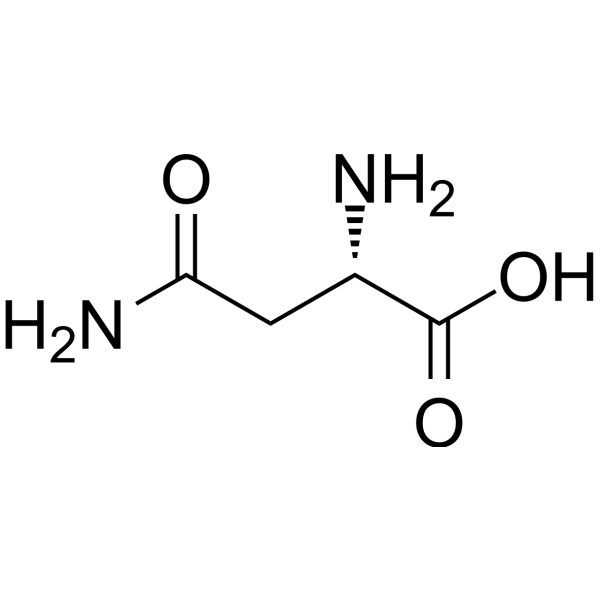
L-Asparagine is an essential amino acid for leukemic cells and a substrate for L-Asparaginase. L-Asparaginase is a potent anti-leukemic enzyme that promotes asparagine (Asn) and glutamine (Gln) depletion and inhibits protein biosynthesis in lymphoblasts. Removal of L-asparagine from plasma by L-Asparaginase results in inhibition of RNA and DNA synthesis and subsequent apoptosis. L-Asparaginase has cell-killing ability in vitro and in vivo, and selectively inhibits the growth of cancer cells with low asparagine synthetase (AASNS) expression. L-Asparagine can be used as a biomarker and sensor for the study of childhood acute lymphoblastic leukemia .
loading...
    loading...
5
5 Cited Publications
Cat. No.: HY-N1996
CAS No.: 23094-71-5
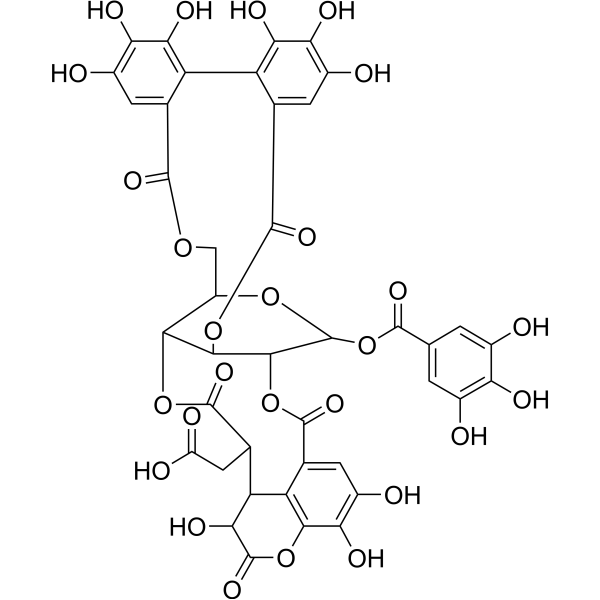
Chebulagic acid is a COX-LOX dual inhibitor isolated from the fruits of Terminalia chebula Retz, on angiogenesis. Chebulagic acid is a M2 serine to asparagine 31 mutation (S31N) inhibitor and influenza antiviral. Chebulagic acid also against SARS-CoV-2 viral replication with an EC50 of 9.76 μM.
loading...
    loading...
5
5 Cited Publications
Cat. No.: HY-W017443
CAS No.: 5794-13-8
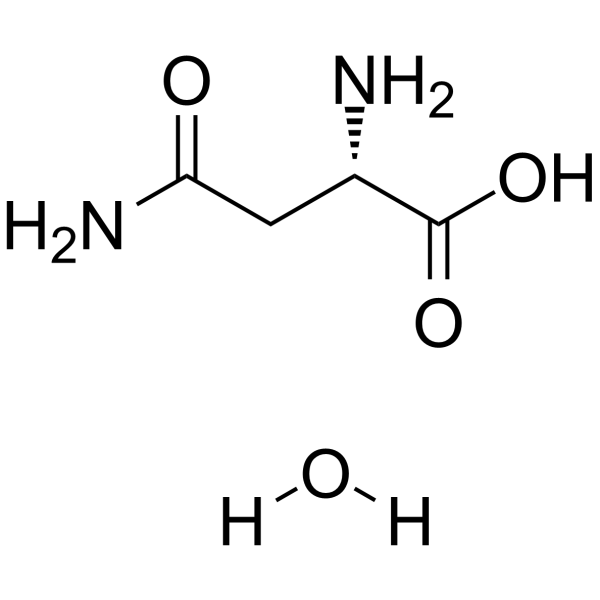
L-Asparagine monohydrate is an essential amino acid for leukemic cells and a substrate for L-Asparaginase. L-Asparaginase is a potent anti-leukemic enzyme that promotes asparagine (Asn) and glutamine (Gln) depletion and inhibits protein biosynthesis in lymphoblasts. Removal of L-asparagine from plasma by L-Asparaginase results in inhibition of RNA and DNA synthesis and subsequent apoptosis. L-Asparaginase has cell-killing ability in vitro and in vivo, and selectively inhibits the growth of cancer cells with low asparagine synthetase (AASNS) expression. L-Asparagine monohydrate can be used as a biomarker and sensor for the study of childhood acute lymphoblastic leukemia .
loading...
    loading...
3
3 Cited Publications
Cat. No.: HY-114174
CAS No.: 220701-06-4
Purity:  99.13%
Target:  

Amyloid-β

Research Areas:  

Neurological Disease

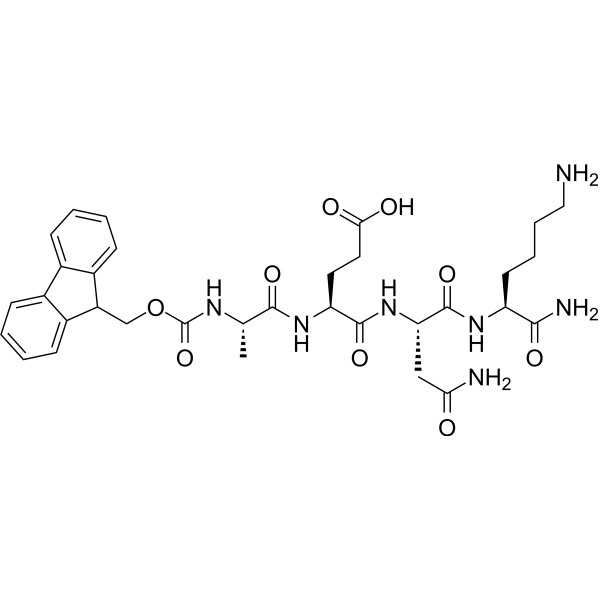
Fmoc-Ala-Glu-Asn-Lys-NH2 is a selective asparagine endopeptidase (AEP) inhibitor peptide and suppresses amyloid precursor protein (APP) cleavage. AEP, a pH-controlled cysteine proteinase, is activated during ageing and mediates APP proteolytic processing .
loading...
    loading...
2
2 Cited Publications
Cat. No.: HY-E70131
CAS No.: 37278-88-9
Synonyms: Endo-β-N-acetylglucosaminidase H
Target:  

Endonuclease

Research Areas:  

Metabolic Disease

Endo H, Streptomyces picatus (Endo-β-N-acetylglucosaminidase H), isolated from Streptomyces plicatus, hydrolyzes the central glycosidic bond of the β1, 4-di-N-acetylchitobiose core in asparagine-linked oligosaccharides .
loading...
    loading...
2
2 Cited Publications
Cat. No.: HY-P2929A
CAS No.: 83534-39-8
Target:  

Glycosidase

Research Areas:  

Cancer

PNGase F-Fast is a glycosidase that catalyzes the cleavage of internal glycosidic bonds in oligosaccharides. PNGase F-Fast removes almost all N-linked oligosaccharides from glycoproteins. PNGase F-Fast can release N-glycans from glycoproteins in the sugar analysis workflow. The cleavage site is: the glycosidic bond between the innermost N-acetylglucosamine and asparagine. PNGase F-Fast is an improved reagent that allows for rapid deglycosylation of antibodies and antibody fusions within minutes .
loading...
    loading...
1
1 Cited Publications
Cat. No.: HY-W015798
CAS No.: 4781-83-3
Research Areas:  

Others

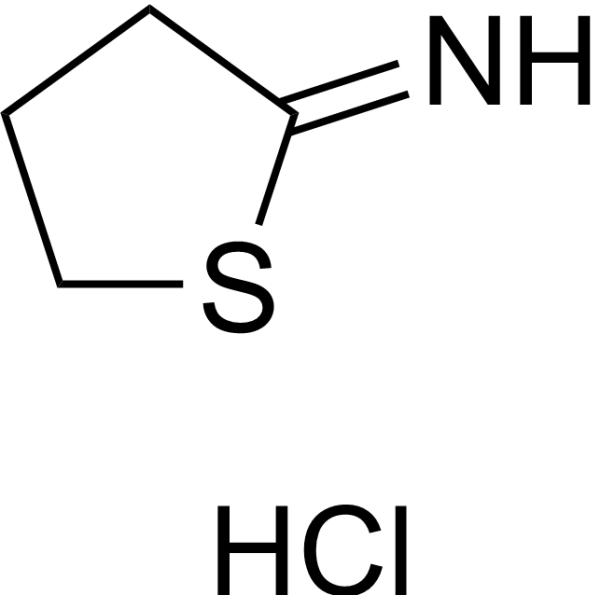
2-Iminothiolane hydrochloride is a reagent for the introduction of sulphydryl groups into oligosaccharides derived from asparagine-linked glycan. 2-Iminothiolane hydrochloride can be used to modify proteins and peptides .
loading...
    loading...
1
1 Cited Publications
Cat. No.: HY-N0667S2
CAS No.: 287484-32-6
Synonyms: (-)-Asparagine-15N2 monohydrate; Asn-15N2 monohydrate; Asparamide-15N2 monohydrate
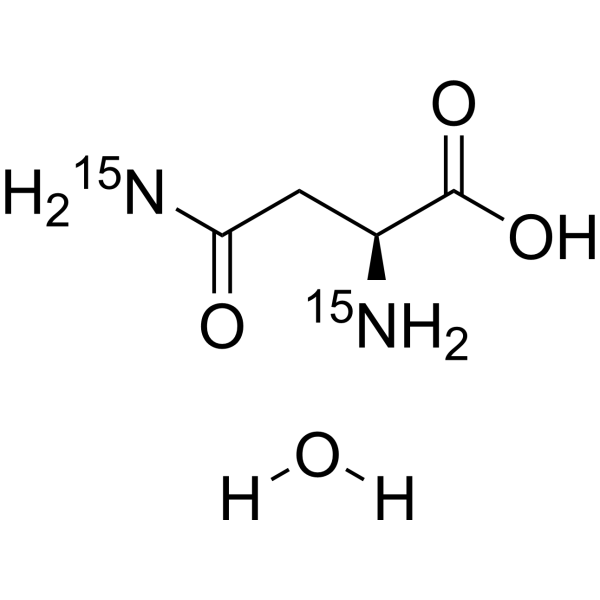
L-Asparagine- 15N2 monohydrate is the 15N-labeled L-Asparagine monohydrate (HY-W017443). L-Asparagine monohydrate is an essential amino acid for leukemic cells and a substrate for L-Asparaginase. L-Asparaginase is a potent anti-leukemic enzyme that promotes asparagine (Asn) and glutamine (Gln) depletion and inhibits protein biosynthesis in lymphoblasts. Removal of L-asparagine from plasma by L-Asparaginase results in inhibition of RNA and DNA synthesis and subsequent apoptosis. L-Asparaginase has cell-killing ability in vitro and in vivo, and selectively inhibits the growth of cancer cells with low asparagine synthetase (AASNS) expression. L-Asparagine monohydrate can be used as a biomarker and sensor for the study of childhood acute lymphoblastic leukemia .
loading...
    loading...
1
1 Cited Publications
Cat. No.: HY-112052
CAS No.: 1068-84-4
Purity:  98.87%
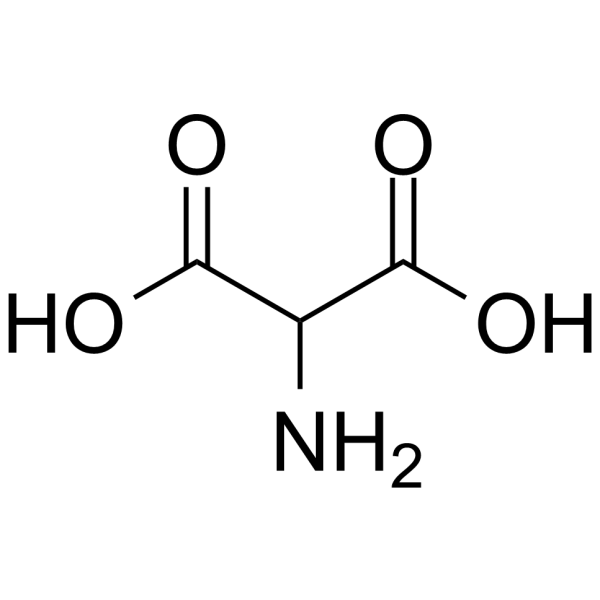
Aminomalonic acid is an amino endogenous metabolite, acts as a strong inhibitor of L-asparagine synthetase from Leukemia 5178Y/AR (Ki= 0.0023 M) and mouse pancreas (Ki= 0.0015 M) in vitro. Aminomalonic acid is a potential biomarker to discriminate between different stages of melanoma metastasis .
loading...
    loading...
1
1 Cited Publications
Cat. No.: HY-N0667S5
CAS No.: 2483831-59-8
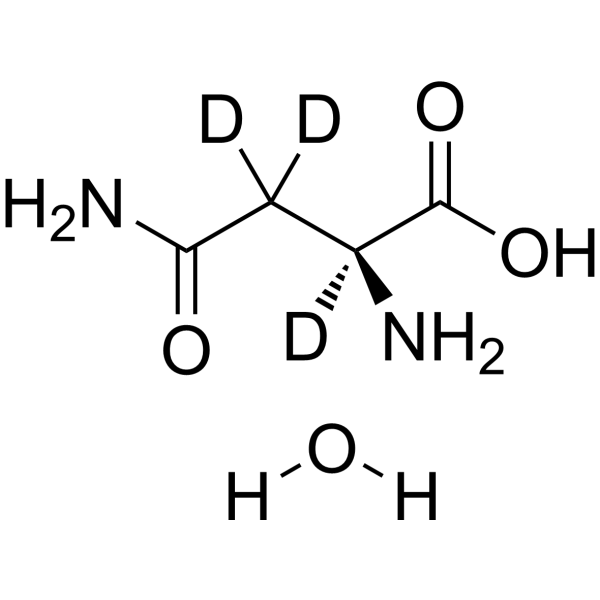
L-Asparagine-d3 hydrate is the deuterium labeled L-Asparagine (HY-N0667). L-Asparagine is an essential amino acid for leukemic cells and a substrate for L-Asparaginase. L-Asparaginase is a potent anti-leukemic enzyme that promotes asparagine (Asn) and glutamine (Gln) depletion and inhibits protein biosynthesis in lymphoblasts. Removal of L-asparagine from plasma by L-Asparaginase results in inhibition of RNA and DNA synthesis and subsequent apoptosis. L-Asparaginase has cell-killing ability in vitro and in vivo, and selectively inhibits the growth of cancer cells with low asparagine synthetase (AASNS) expression. L-Asparagine can be used as a biomarker and sensor for the study of childhood acute lymphoblastic leukemia .
loading...
    loading...
Cat. No.: HY-W009085
CAS No.: 71989-16-7
Research Areas:  

Others

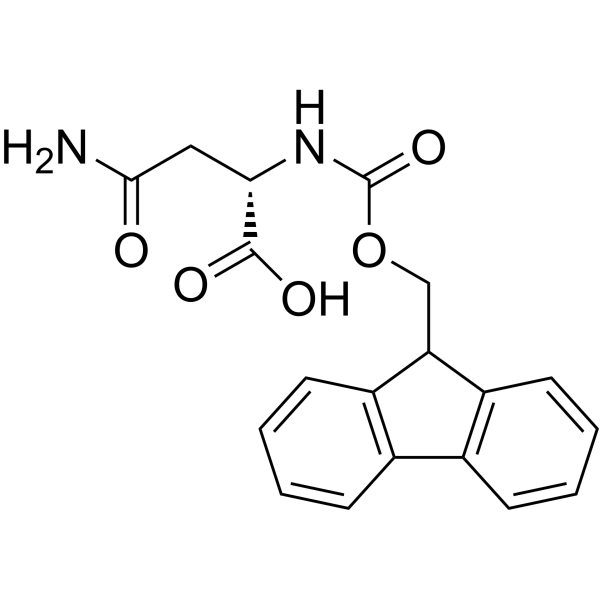
Fmoc-Asn-OH is an asparagine derivative .
loading...
    loading...
Cat. No.: HY-E70135
CAS No.: 37278-88-9
Synonyms: Endo F1
Target:  

Endonuclease

Research Areas:  

Metabolic Disease

Endo-β-N-acetylglucosaminidase F1 (Endo F1) cleaves Asparagine-linked high mannose and some hybrid oligosaccharides .
loading...
    loading...
Cat. No.: HY-W002327
CAS No.: 132388-59-1
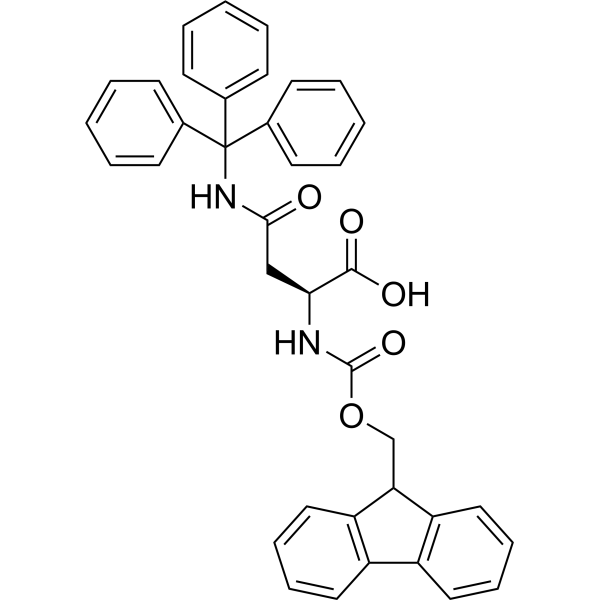
Fmoc-Asn (Trt)-OH is an Fmoc-protected asparagine derivative. Fmoc-Asn (Trt)-OH supports solid-phase peptide synthesis .
loading...
    loading...
Cat. No.: HY-175282
CAS No.: 2748800-08-8
Research Areas:  

Cancer

ASX-173 is an orally active inhibitor of asparagine synthetase (ASNS) (IC50 = 0.113 μM, Ki = 0.4 nM). ASX-173 enhances the anticancer activity of L-asparaginase (ASNase) (HY-P1923). ASX-173 disrupts nucleotide synthesis and induces leukemia cell cycle arrest, apoptosis and autophagy in leukemia cells in combination with ASNase. ASX-173 slows the growth of OCI-AML2 xenografts in combination with ASNase. ASX-173 is indicated for the study of acute lymphoblastic leukemia, acute myeloid leukemia, colorectal cancer, and other cancers .
loading...
    loading...
Cat. No.: HY-E70068
CAS No.: 37278-88-9
Target:  

Others

Research Areas:  

Others

Endo-β-N-acetylglucosaminidase (Endo S) is a family 18 glycosyl hydrolase secreted by Streptococcus pyogenes. Endo-β-N-acetylglucosaminidase (Endo S) exclusively hydrolyzes the β-1,4-di-N-acetylchitobiose core of the asparagine-linked complex-type glycan on Asn-297 of the γ-chains of IgG antibody .
loading...
    loading...
Cat. No.: HY-E70134
CAS No.: 37278-88-9
Synonyms: Endo F3
Target:  

Endonuclease

Research Areas:  

Metabolic Disease

Endo-β-N-acetylglucosaminidase D (Endo F3) cleaves free or Asparagine-linked triantennary oligosaccharides or α1-6 fucosylated biantennary oligosaccharides, as well as triamnnosyl chitobiose core structures .
loading...
    loading...
Cat. No.: HY-E70133
CAS No.: 37278-88-9
Synonyms: Endo F2
Target:  

Endonuclease

Research Areas:  

Metabolic Disease

Endo-β-N-acetylglucosaminidase F2 (Endo F2), a highly specific endoglycosidase, cleaves within the chitobiose core of asparagine-linked complex biantennary and high mannose oligosaccharides from glycoproteins and glycopeptides. Endo F2 cleaves biantennary glycans at a rate approximately 20 times greater than high mannose glycans. The activity of Endo F2 is identical on biantennary structures with and without core fucosylation. Endo F2 is not active on hybrid or tri- and tetra-antennary oligosaccharides .
loading...
    loading...
Cat. No.: HY-W010378
CAS No.: 2058-58-4
Synonyms: H-D-Asn-OH
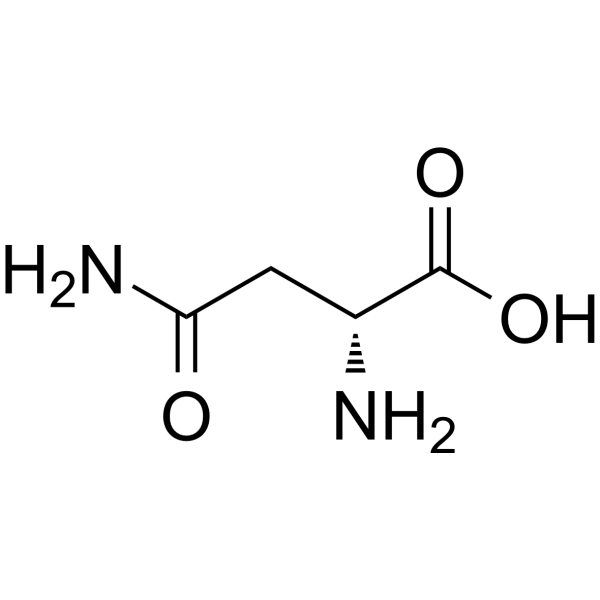
D-Asparagine (H-D-Asn-OH) acts as a competitive inhibitor of L-asparagine hydrolysis, with a Ki value of 0.24 mM. D-Asparagine serves as a nitrogen source for yeast strains. D-Asparagine is a good substrate for external yeast asparaginase but a poor substrate for internal yeast asparaginase .
loading...
    loading...
Cat. No.: HY-108860
CAS No.: 130167-69-0
Purity:  ≥99.0%
Synonyms: PEG-L-asparaginase; Pegasparaginase
Research Areas:  

Inflammation/Immunology

Oncaspar (PEG-L-asparaginase; Pegasparaginase), a pegylated form of native Escherichia coli-derived L-asparaginase, breaks down the amino acid asparagine that are circulating in the bloodstream. Oncaspar plays an important role in acute lymphoblastic leukemia (ALL) through asparagine hydrolysis and activation of the integrated stress response (ISR) pathway .
loading...
    loading...

