222 Results for "

Cyclo(-RGDfK)

" in MedChemExpress (MCE) Product Catalog:
Products (222)

222 Results for "Cyclo(-RGDfK)" in MCE Product Catalog:

Cat. No.: HY-P5023
CAS No.: 1193347-53-3
Synonyms: c(RADyK)
Research Areas:  

Cancer

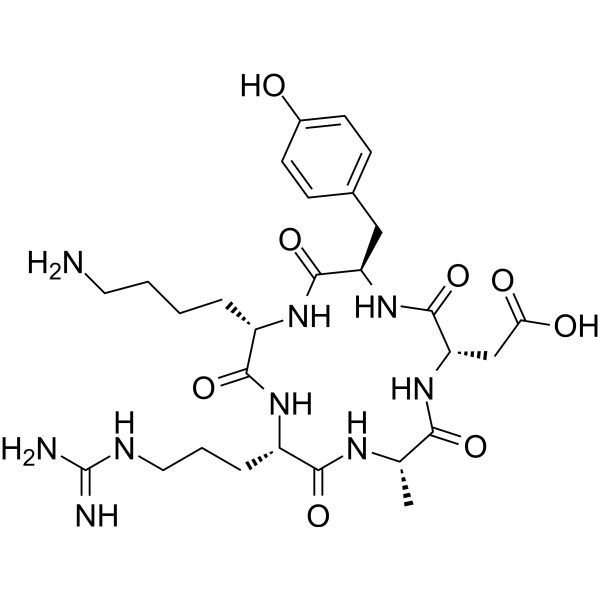
Cyclo (ARG-ALA-ASP- (D-Tyr) -LYS) (C (Radyk)) is a control peptide for c(RGDyK) .
loading...
    loading...
Cat. No.: HY-P5023A
Synonyms: c(RADyK) TFA
Research Areas:  

Cancer

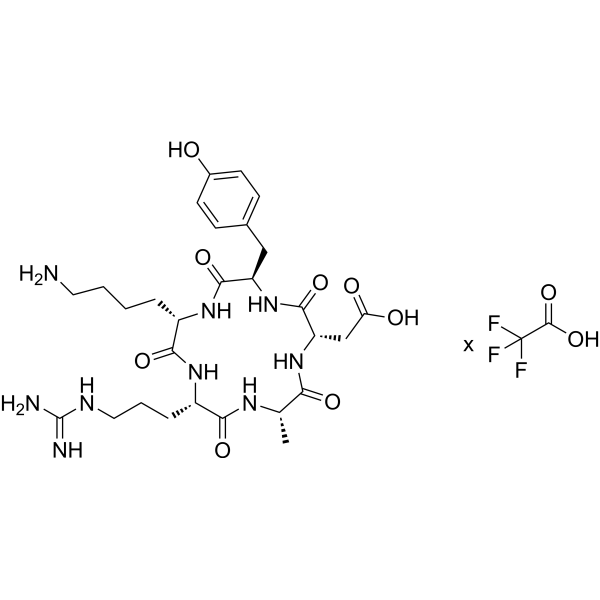
Cyclo (ARG-ALA-ASP- (D-Tyr) -LYS) (TFA) (C (Radyk) (TFA)) is a control peptide for c(RGDyK) .
loading...
    loading...
Cat. No.: HY-P5034
CAS No.: 274680-11-4
Target:  

Inhibitory Antibodies

Research Areas:  

Others

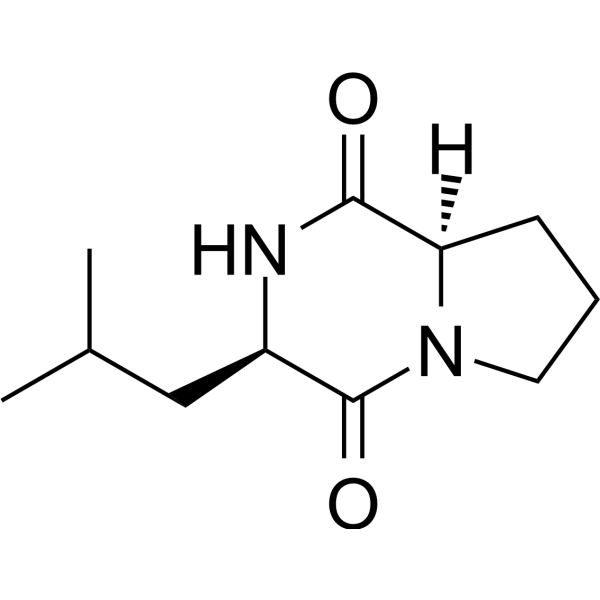
Cyclo(D-Leu-D-Pro) is a polypeptide that can be found by peptide screening. Peptide screening is a research tool that pools active peptides primarily by immunoassay. Peptide screening can be used for protein interaction, functional analysis, epitope screening, especially in the field of agent research and development .
loading...
    loading...
Cat. No.: HY-P5840A
Target:  

Inhibitory Antibodies

Research Areas:  

Cancer

Cyclo(RGDyC) TFA is a cyclic pentapeptide with anti-angiogenic abilities. Cyclo(RGDyC) TFA can be combined with liposome delivery systems for research on ocular neovascular diseases and cancer .
loading...
    loading...
Cat. No.: HY-187155
CAS No.: 158778-21-3
Target:  

PI3K

Research Areas:  

Others

Cyclo (Gly-{Tyr (PO3H2)-Val-Pro-Met-Leu) is a binding peptide for the PI3K SH2 domain, as well as an inhibitory peptide for the mitogenic signal transduction-mediating domain. Cyclo (Gly-{Tyr (PO3H2)}-Val-Pro-Met-Leu) binds to the SH2 domain of the phosphorylated PI3K p85 subunit, and the spatial arrangement of its phosphotyrosine residue and methionine residue is associated with this interaction .
loading...
    loading...
Cat. No.: HY-P10224
CAS No.: 936728-13-1
Target:  

EGFR

Research Areas:  

Cancer

G7-18NATE is a peptide inhibitor of Grb7. HY-P10224 binds to the Grb7-SH2 domain with micromolar affinity (KD = 18.1 μM). G7-18NATE inhibits cell proliferation, motility, cell invasion and 3D culture formation in several cancer cell lines .
loading...
    loading...
Cat. No.: HY-P10224A
Target:  

EGFR

Research Areas:  

Cancer

G7-18NATE TFA is a peptide inhibitor of Grb7. G7-18NATE TFA binds to the Grb7-SH2 domain with micromolar affinity (Kd = 18.1 μM). G7-18NATE TFA inhibits cell proliferation, motility, cell invasion and 3D culture formation in several cancer cell lines .
loading...
    loading...
Cat. No.: HY-P11216
Target:  

PCSK9

Research Areas:  

Cancer

Pep2-8 analogue 18 is a high affinity PCSK9 (KD = 6 nM) inhibitory peptide. Pep2-8 analogue 18 restores LDL uptake in HepG2 cells (EC50 = 175 nM). Pep2-8 analogue 18 has good cellular safety. Pep2-8 analogue 18 can be used for research on cardiovascular conditions .
loading...
    loading...
Cat. No.: HY-P11774
CAS No.: 1094848-99-3
Target:  

Integrin

Research Areas:  

Cancer

HYNIC-3P-RGD2 is a dimeric cyclic RGD peptide with high binding affinity for integrin αvβ3 (IC50 = 33 nM). HYNIC-3P-RGD2 acts as a precursor molecule for radiotracers and is used to detect tumor angiogenesis .
loading...
    loading...
Cat. No.: HY-P11814
Synonyms: Cyclic TMTP1
cTMTP1 (Cyclic TMTP1) is the cyclic form of TMTP1 (HY-P11815). TMTP1 is a tumor-targeting peptide that selectively targets highly metastatic tumor cells. The cTMTP1-based [ 68Ga]Ga-DOTA-cTMTP1 probe is used for visualization of hepatocellular carcinoma. cTMTP1 can form a 68Ga-DOTA radiotracer that accumulates in highly metastatic cervical cancer cells and is used for microPET tumor visualization. cTMTP1 is applicable to research related to hepatocellular carcinoma and cervical cancer .
loading...
    loading...
Cat. No.: HY-P11840
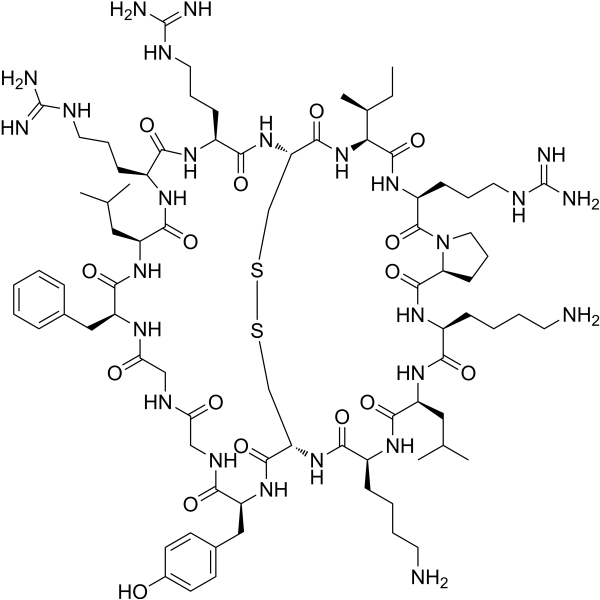
KLK5-IN-1 is a selective kallikrein 5 (KLK5) inhibitor with an IC50 of 14 nM and a Ki of 11 nM. KLK5-IN-1 reduces KLK5-mediated PAR2-dependent calcium mobilization. KLK5-IN-1 improves epithelial barrier integrity. KLK5-IN-1 can be used in research related to atopic dermatitis and Netherton syndrome .
loading...
    loading...
Cat. No.: HY-P11852
Target:  

FGFR

Research Areas:  

Cancer

NOTA-cRY9M is a reagent targeting FGFR1 with a Kd value of 58 nM, and exhibits subtype selectivity for FGFR2-4. When radiolabeled as [ 68Ga]Ga-NOTA-cRY9M, it functions as a stabilizer, imaging contrast enhancer, and tumor-targeting agent, and accumulates in FGFR1-positive non-small cell lung cancer xenograft models. NOTA-cRY9M can be used in studies related to non-small cell lung cancer .
loading...
    loading...
Cat. No.: HY-P11914
CAS No.: 3124554-07-7
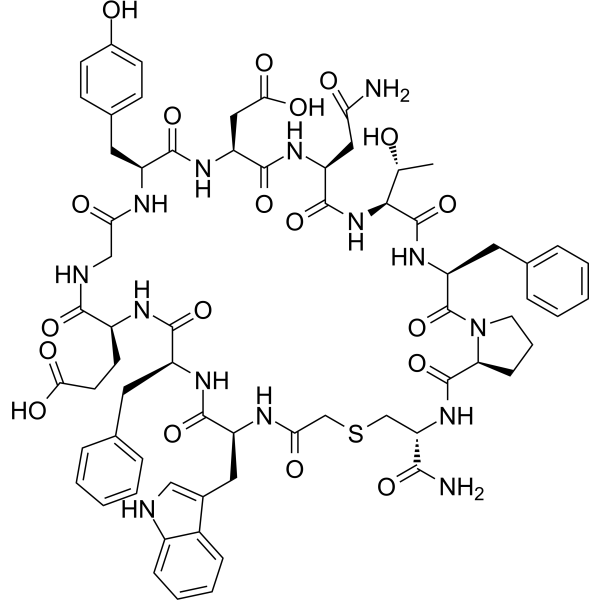
Peptide CYP9 is a head-to-tail cyclic peptide derived from Antimicrobial peptide YD (HY-P11913). Peptide CYP9 inhibits the activation of the TGF-β/Smad signaling pathway, including the phosphorylation of Smad2/3. Peptide CYP9 inhibits the activation of the MAPK signaling pathway, including the phosphorylation of ERK and p38. Peptide CYP9 inhibits epithelial-mesenchymal transition. Peptide CYP9 inhibits extracellular matrix synthesis. Peptide CYP9 can be used for the research of pulmonary fibrosis .
loading...
    loading...
Cat. No.: HY-P1201A
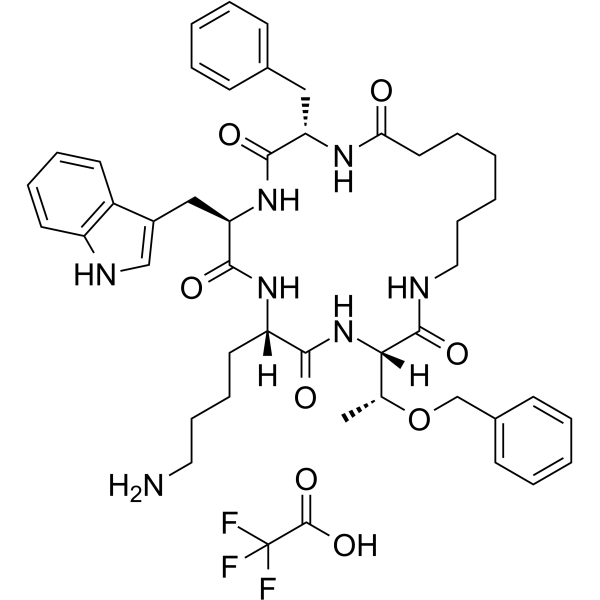
Cyclosomatostatin TFA is a non-selective somatostatin receptor antagonist that blocks SSTR1-5-mediated signaling. Cyclosomatostatin TFA decreases the ALDH + stem cell population and sphere formation without affecting cell viability, and reduces cell proliferation. Cyclosomatostatin TFA activates opioid receptors. Cyclosomatostatin TFA can be used for research on arthritis and colorectal cancer .
loading...
    loading...
Cat. No.: HY-P1680
CAS No.: 148057-23-2
Synonyms: Asterin
Astin C (Asterin) is a cyclopeptide that can be extracted from Aster tataricus. Astin C has anti-inflammatory and anti-cancer activities. Astin C can specifically inhibit the cGAS-STING signaling pathway, block the recruitment of IRF3 to the STING signalosome, and thus inhibit the innate inflammatory response. Astin C can be used in the research of autoimmune diseases and cancers .
loading...
    loading...
Cat. No.: HY-P3119
CAS No.: 194660-14-5
Synonyms: Desotamide A
Target:  

Bacterial Antibiotic

Research Areas:  

Infection

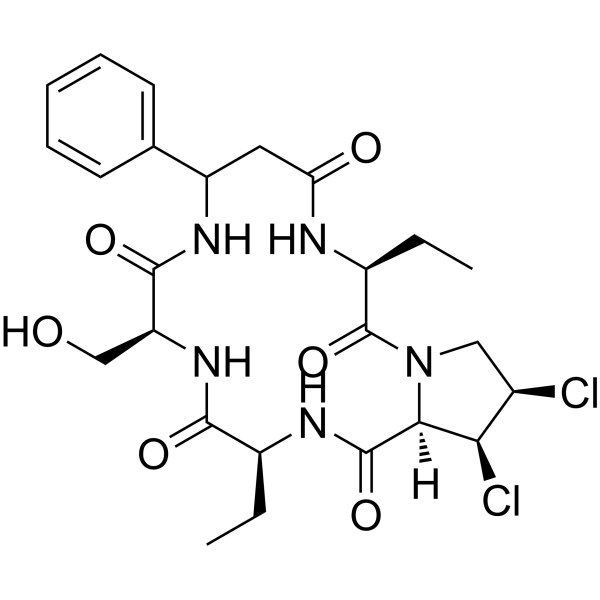
Desotamide is a cyclic hexapeptide antibiotic originally isolated from Streptomyces. It is active against S. aureus, S. pneumoniae, and methicillin-resistant S. epidermidis (MRSE; MICs=16, 12.5, and 32 μg/mL, respectively).
loading...
    loading...
Cat. No.: HY-P5907
CAS No.: 2883653-86-7
Target:  

Opioid Receptor

Research Areas:  

Neurological Disease

Helianorphin-19 is a potent and selective κ-opioid receptor (KOR) activator with a Ki of 21 nM and an EC50 of 45 nM. Helianorphin-19 exhibits strong KOR-specific peripheral analgesic activity in a mouse model of chronic visceral pain .
loading...
    loading...
Cat. No.: HY-P10469
Target:  

NF-κB

Research Areas:  

Inflammation/Immunology Cancer

NBD-2 is an inhibitor of the NEMO-IKKα/β interaction in the NF-κB signaling pathway. NBD-2 specifically inhibits the typical NF-κB signaling pathway in vitro and in vivo, reducing the inflammatory response in lipopolysaccharide (LPS) induced acute lung injury (ALI). NBD-2 exhibits significant anti-inflammatory activity. NBD-2 can be used to study diseases related to NF-κB signaling pathway, including autoimmune diseases, cancer, etc .
loading...
    loading...
Cat. No.: HY-P11451
CAS No.: 1339959-27-1
Research Areas:  

Cancer

Pentixafor peptide cyclo(dTyr-dOrn(NMe)-R-Nal-G) is a peptide that targets CXCR4. Pentixafor peptide cyclo(dTyr-dOrn(NMe)-R-Nal-G) constitutes the peptide moiety of Pentixafor (HY-153549). Pentixafor is a highly selective cyclic pentapeptide ligand targeting the CXCR4 receptor and is suitable for research into radionuclide-drug conjugates (RDCs) .
loading...
    loading...
Cat. No.: HY-P11889
CAS No.: 1481-70-5
Target:  

Bacterial

Research Areas:  

Infection

Tyrocidine A is an amphipathic cyclic decapeptide natural product, as well as a membrane-disrupting agent and an antibacterial agent. Tyrocidine A exhibits moderate activity against Gram-positive bacteria. Tyrocidine A can insert into bacterial cell membranes, form porous channels, disrupt membrane integrity and induce bacterial cell death. Tyrocidine A can be used in studies related to bacterial infections .
loading...
    loading...

