1. Search Result
Search Result
Results for "

2'-Deoxyuridine

" in MedChemExpress (MCE) Product Catalog:

88

Inhibitors & Agonists

2

Fluorescent Dyes

3

Biochemical Assay Reagents

2

Peptides

7

Natural
Products

1

Recombinant Proteins

15

Isotope-Labeled Compounds

3

Antibodies

11

Click Chemistry

36

Oligonucleotides

Cat. No. Product Name Target Research Areas Chemical Structure
  • HY-118411
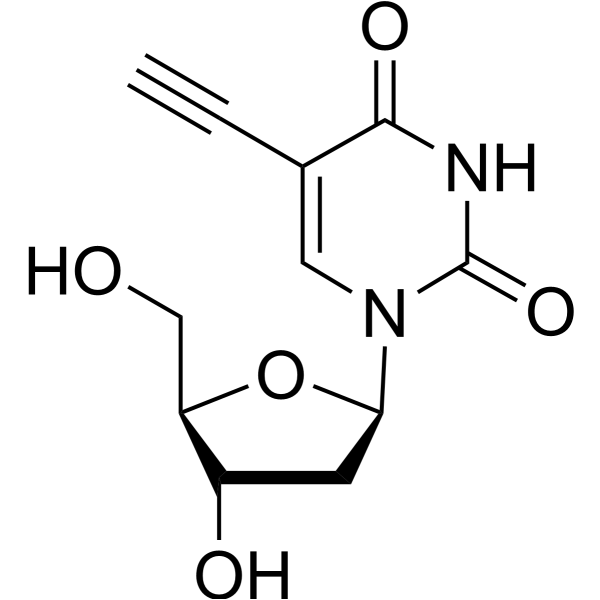
    5-Ethynyl-2'-deoxyuridine
    30+ Cited Publications

    EdU

    PROTAC Linkers Cancer
    5-Ethynyl-2'-deoxyuridine (EdU), a thymidine analogue, is incorporated into cellular DNA during DNA replication and the subsequent reaction of EdU with a fluorescent azide in a “Click” reaction. EdU staining is a fast, sensitive and reproducible method to study cell proliferation . 5-Ethynyl-2'-deoxyuridine is an alkyl chain-based PROTAC linker that can be used in the synthesis of PROTACs . 5-Ethynyl-2'-deoxyuridine is a click chemistry reagent, it contains an Alkyne group and can undergo copper-catalyzed azide-alkyne cycloaddition (CuAAc) with molecules containing Azide groups.
    5-Ethynyl-2'-deoxyuridine
  • HY-15910
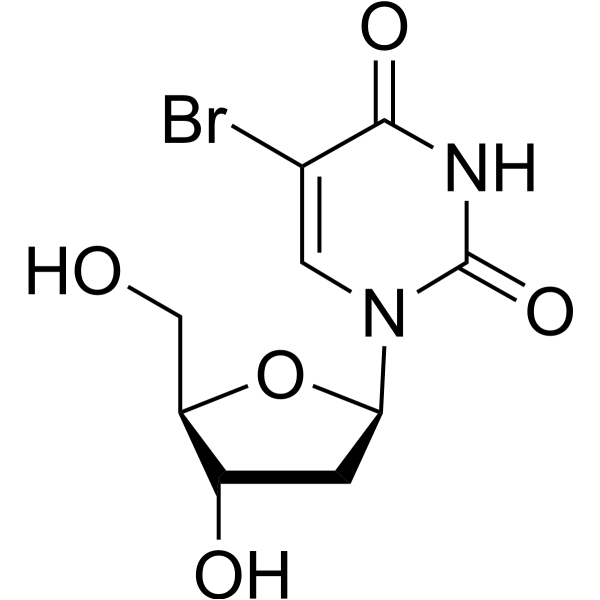
    5-BrdU
    75+ Cited Publications

    BrdU; 5-Bromo-2'-Deoxyuridine; BUdR

    Nucleoside Antimetabolite/Analog DNA/RNA Synthesis Cancer
    5-BrdU (BrdU) is a nucleoside analog that competes with thymidine for incorporation into DNA. 5-BrdU is commonly used in the detection of proliferating cells.
    5-BrdU
  • HY-17365
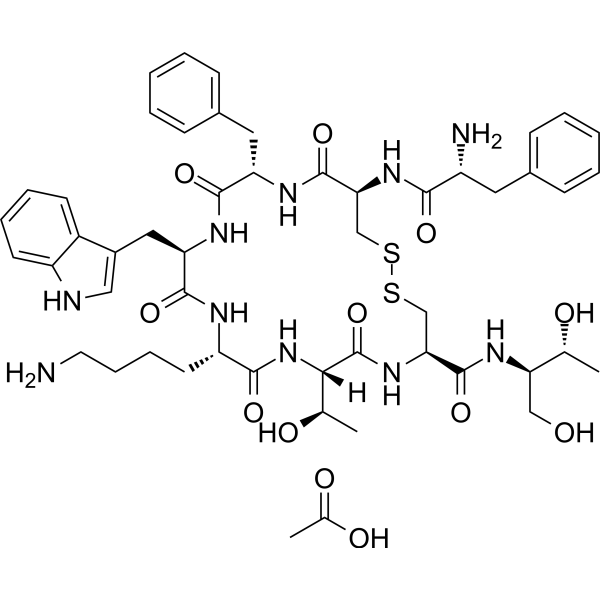
    Octreotide acetate
    15+ Cited Publications

    SMS 201-995 acetate

    Somatostatin Receptor Cardiovascular Disease Inflammation/Immunology Endocrinology Cancer
    Octreotide acetate, a long-acting synthetic analog of native somatostatin, inhibits growth hormone, glucagon, and insulin more potently.
    Octreotide acetate
  • HY-B0307
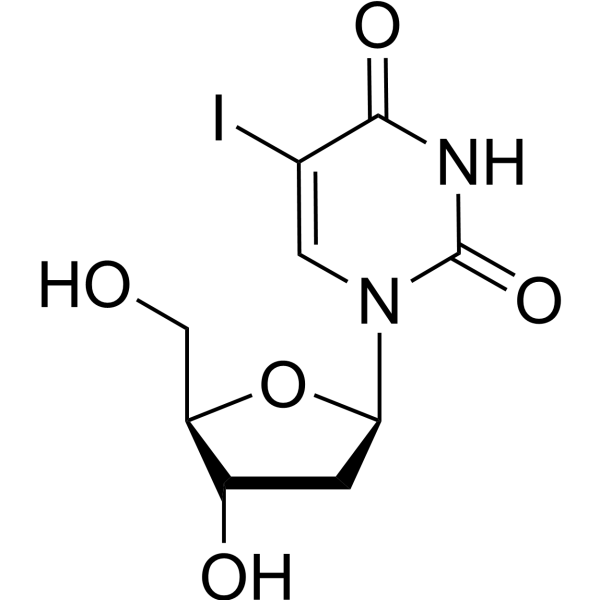
    Idoxuridine
    5+ Cited Publications

    5-Iodo-2′-Deoxyuridine; 5-IUdR; IdUrd

    DNA/RNA Synthesis Phosphatase Orthopoxvirus Infection Cancer
    Idoxuridine (5-Iodo-2′-deoxyuridine, 5-IUdR, IdUrd) is an iodinated thymidine analogue that competitively inhibits phosphorylases. Idoxuridine can inhibit viral activity, particularly viral eye infections, including herpes simplex keratitis, by inhibiting DNA polymerase and affecting viral replication. Idoxuridine against feline herpesvirus has the IC50 value of 4.3 μM . Idoxuridine shows anti-orthopoxvirus activity.
    Idoxuridine
  • HY-112669
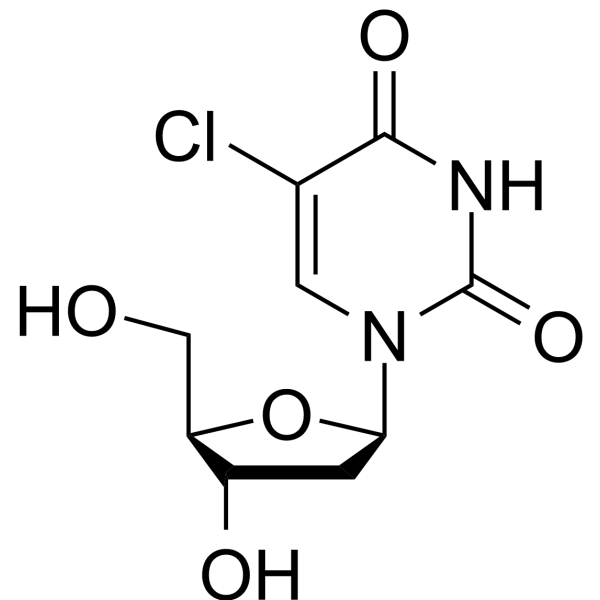
    5-Chloro-2'-deoxyuridine
    4 Publications Verification

    5-ChloroDeoxyuridine; CldU

    Nucleoside Antimetabolite/Analog Neurological Disease
    5-Chloro-2'-deoxyuridine, a thymine analog, is to study the potential of hypochlorous acid damage to DNA and DNA precursors.
    5-Chloro-2'-deoxyuridine
  • HY-D0186
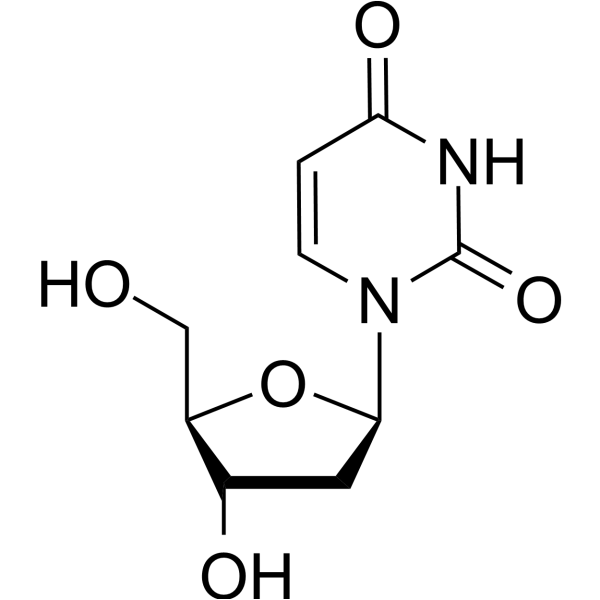
    2'-Deoxyuridine
    3 Publications Verification

    Endogenous Metabolite Thymidylate Synthase Infection
    2’-deoxyuridine is a brain-penetrant pyrimidines nucleotide that is associated with nervous system diseases. 2'-Deoxyuridine could increase chromosome breakage and results in a decreased thymidylate synthetase activity. 2'-Deoxyuridine is a precursor in the synthesis of Edoxudine (HY-B1011) and also an analogue of 5-ethynyl-2'-deoxyuridine, EdU (HY-118411). 2’-deoxyuridine reduces microglial activation and improve oxidative stress damage by modulating glycolytic metabolism on the Aβ25-35-induced brain injury, which is promising for research of Alzheimer’s disease (AD) .
    2'-Deoxyuridine
  • HY-138253

    dFdU; 2',2'-Difluoro-2'-Deoxyuridine

    Drug Metabolite Apoptosis Cancer
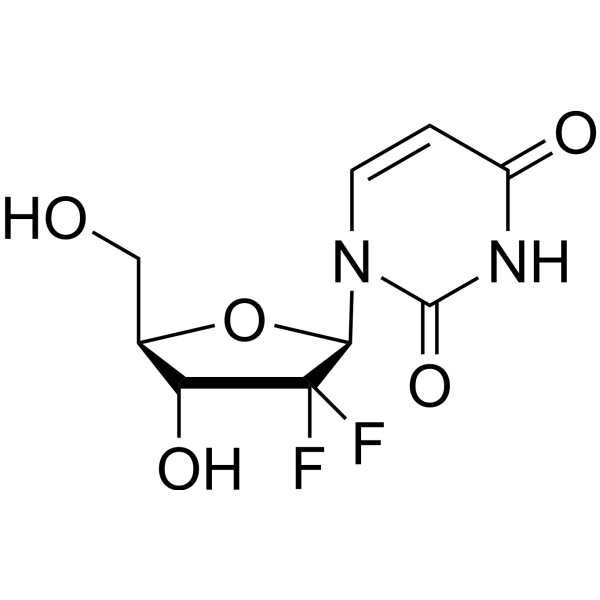
    2’,2’-Difluorodeoxyuridine (dFdU) is the main metabolite of Gemcitabine (HY-17026). 2’,2’-Difluorodeoxyuridine causes a concentration- and schedule- dependent radiosensitising effect in vitro. 2’,2’-Difluorodeoxyuridine arrests cell cycle at the early S phase and induces apoptosis in cancer cells .
    2′,2′-Difluorodeoxyuridine
  • HY-129983

    HSV Infection Cancer
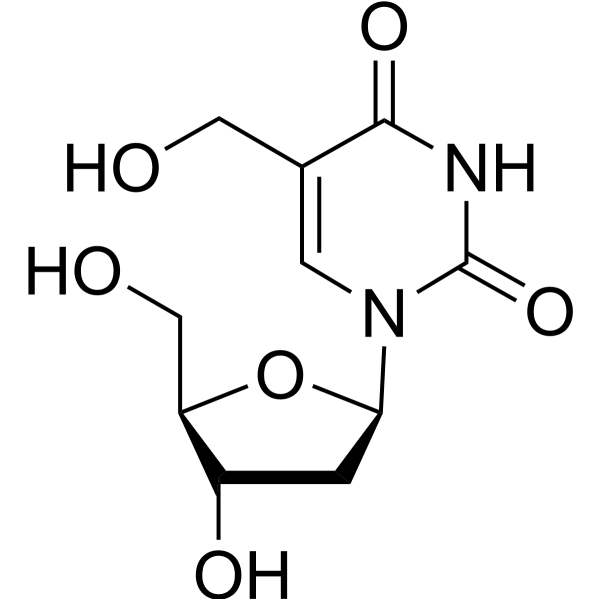
    5-Hydroxymethyl-2'-deoxyuridine is a nucleoside analog. 5-Hydroxymethyl-2'-deoxyuridine inhibits the replication of multiple human leukemia cell lines with IC50 values of 1.7-5.8 μM. 5-Hydroxymethyl-2'-deoxyuridine prolongs the survival of mice carrying L1210 leukemia. 5-Hydroxymethyl-2'-deoxyuridine can be used for the research of cell replication and leukemia .
    5-Hydroxymethyl-2'-deoxyuridine
  • HY-13420
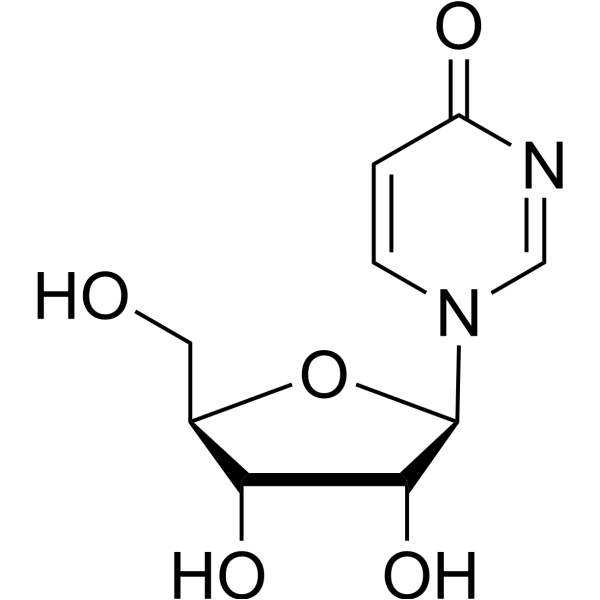
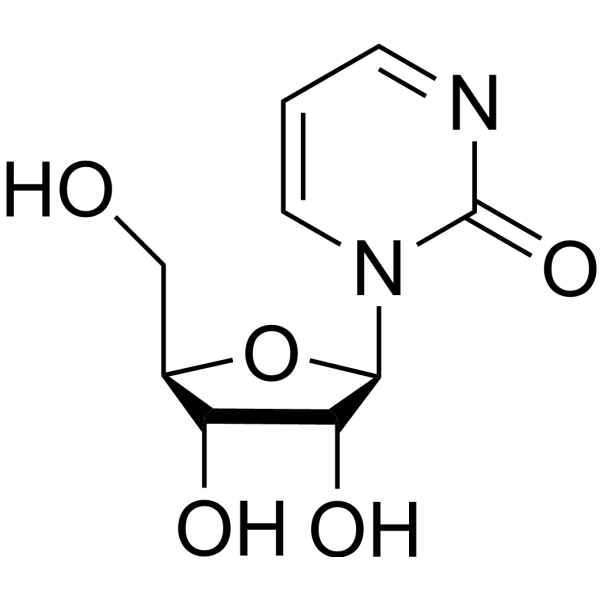
    Zebularine
    5 Publications Verification

    NSC309132; 4-Deoxyuridine

    DNA Methyltransferase Autophagy Cancer
    Zebularine (NSC309132; 4-Deoxyuridine) is a DNA methyltransferase inhibitor. Zebularine also inhibits cytidine deaminase with a Ki of 0.95 μM.
    Zebularine
  • HY-W011142

    dUMP disodium

    Endogenous Metabolite Infection Metabolic Disease
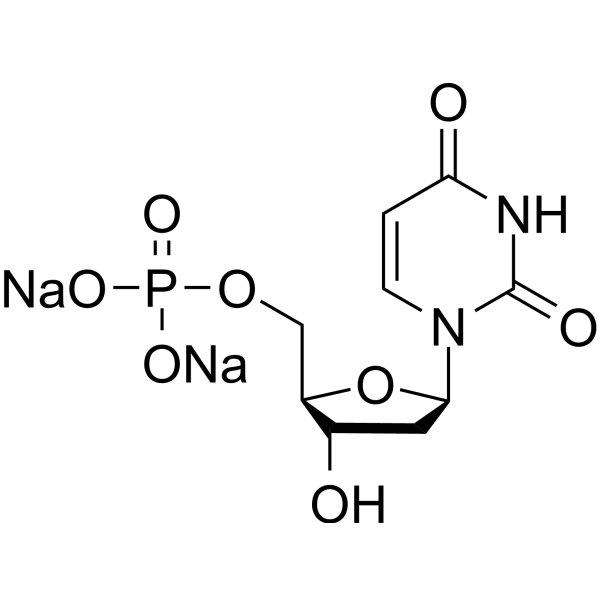
    2'-Deoxyuridine 5'-monophosphate (dUMP) disodium is a deoxynucleotide that is reductively methylated to dTMP (2'-deoxythymidine 5'-monophosphate) by bisubstrate enzyme thymidylate synthase (TS). dTMP is a nucleotide required for DNA synthesis .
    2'-Deoxyuridine 5'-monophosphate disodium
  • HY-W017068

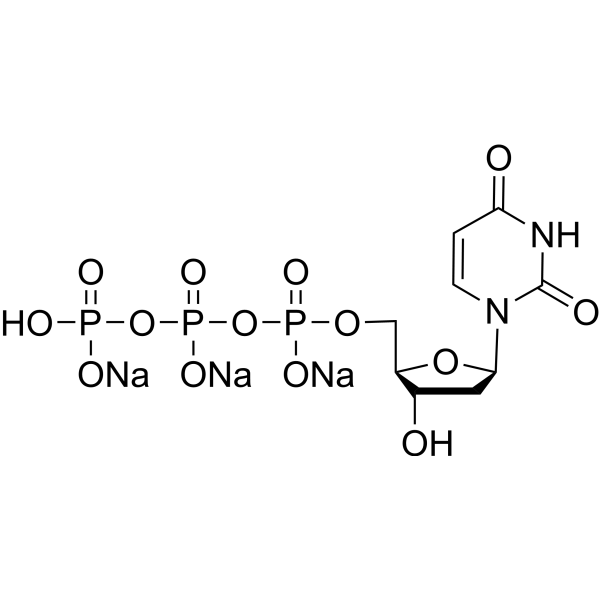
    2'-Deoxyuridine-5'-triphosphate trisodium salt

    DNA/RNA Synthesis Others
    dUTP trisodium (2´-Deoxyuridine, 5´-Triphosphate) is the salt form of dUTP. dUTP is a metabolic intermediate in both procaryotes and eucaryotes. dUTP can be used in PCR and RT-PCR to replace dTTP, resulting in the uracil-containing PCR products suitable for most standard applications. dUTP is found to inhibit the enzyme - Cytidine Aminohydrolase from sheep liver .
    dUTP trisodium
  • HY-B0021
    Doxifluridine
    2 Publications Verification

    Ro 21-9738; 5-Fluoro-5'-Deoxyuridine; 5'-DFUR

    Thymidylate Synthase Cancer
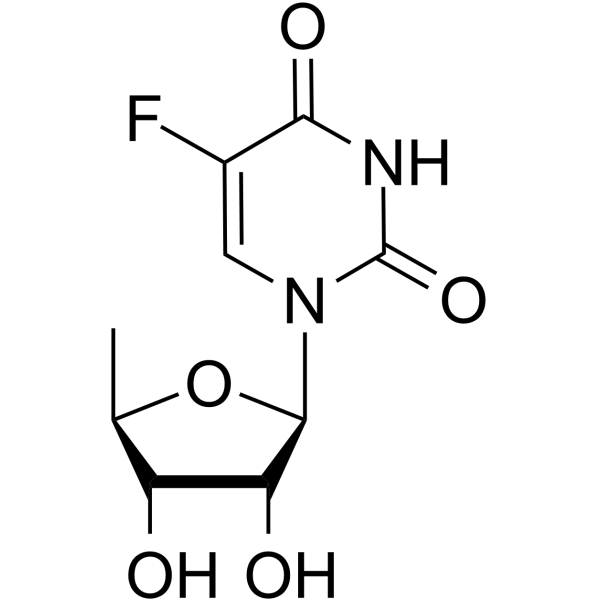
    Doxifluridine has anticancer activity. Doxifluidine is a 5-FU prodrug. Doxifluridine is a thymidine synthase inhibitor. Doxifluridine can enhance tumor inhibition by synergizing with a variety of drugs .
    Doxifluridine
  • HY-W012282

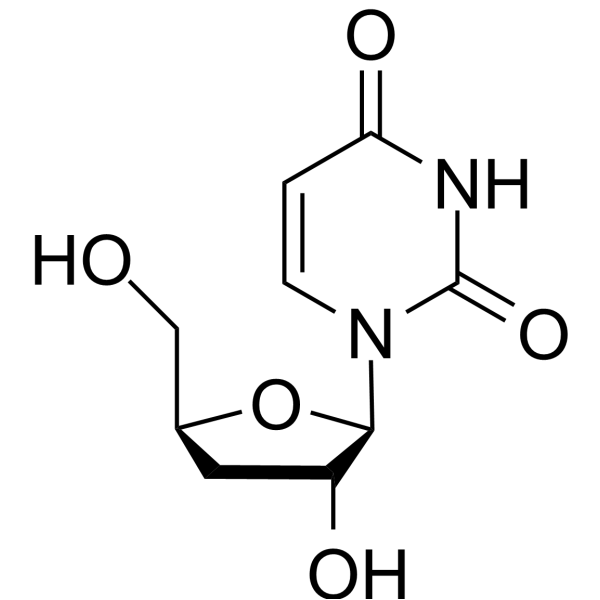
    HCV Infection
    3′-Deoxyuridine is a 3'-deoxynucleoside analog and a 2',3'-dideoxynucleoside. 3′-Deoxyuridine does not inhibit the replication of HCV-like RNA templates or luciferase levels in human cells at the tested concentrations. 3′-Deoxyuridine serves as a substrate for microbial dideoxyribosylation reactions to generate various 2',3'-dideoxynucleosides, but cannot be converted into 2',3'-dideoxycytidine by resting E. coli AJ 2595 cells. 3′-Deoxyuridine can be formed by the deamination of 3'-deoxycytidine by E. coli BM-11 cytidine deaminase, and can also undergo phosphorolytic cleavage to produce uracil and the corresponding pentose phosphate. 3′-Deoxyuridine has been used in research related to HCV and other relevant fields .
    3′-Deoxyuridine
  • HY-48873

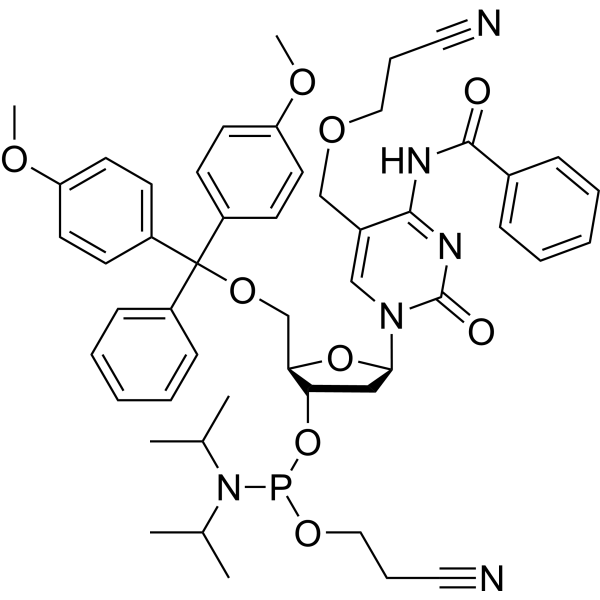
    DNA/RNA Synthesis Phosphoramidites Others
    5'-O-DMT-5-Ethynyl-2'-deoxyuridine 3'-CE phosphoramidite is a phosphorite monomer that can be used in the synthesis of oligonucleotides.
    5'-O-DMT-5-Ethynyl-2'-deoxyuridine 3'-CE phosphoramidite
  • HY-138253R

    dFdU (Standard); 2',2'-Difluoro-2'-Deoxyuridine (Standard)

    Drug Metabolite Reference Standards Apoptosis Cancer
    2′,2′-Difluorodeoxyuridine (Standard) is the analytical standard of 2′,2′-Difluorodeoxyuridine. This product is intended for research and analytical applications. 2’,2’-Difluorodeoxyuridine (dFdU) is the main metabolite of Gemcitabine (HY-17026). 2’,2’-Difluorodeoxyuridine causes a concentration- and schedule- dependent radiosensitising effect in vitro. 2’,2’-Difluorodeoxyuridine arrests cell cycle at the early S phase and induces apoptosis in cancer cells.
    2′,2′-Difluorodeoxyuridine (Standard)
  • HY-138253S

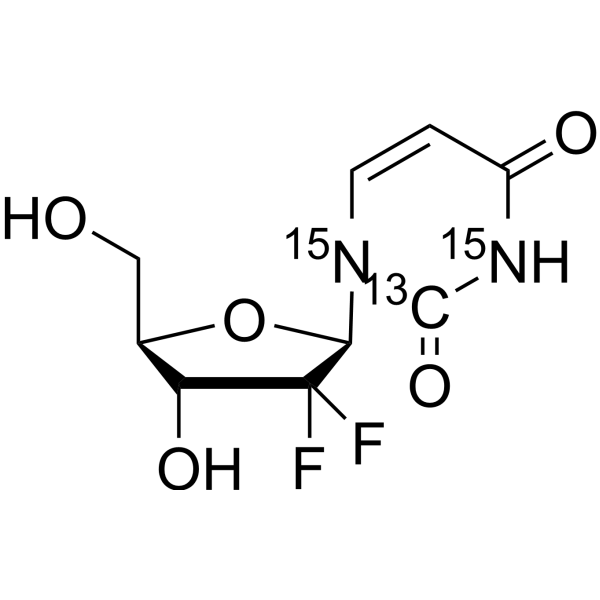
    dFdU-13C,15N2; 2',2'-Difluoro-2'-Deoxyuridine-13C,15N2

    Isotope-Labeled Compounds Drug Metabolite Apoptosis Others
    2′,2′-Difluorodeoxyuridine- 13C, 15N2 (dFdU- 13C, 15N2) is a 13C- and 15N-labeled compound. 2’,2’-Difluorodeoxyuridine (dFdU) is the main metabolite of Gemcitabine (HY-17026). 2’,2’-Difluorodeoxyuridine causes a concentration- and schedule- dependent radiosensitising effect in vitro. 2’,2’-Difluorodeoxyuridine arrests cell cycle at the early S phase and induces apoptosis in cancer cells .
    2′,2′-Difluorodeoxyuridine-13C,15N2
  • HY-135780A

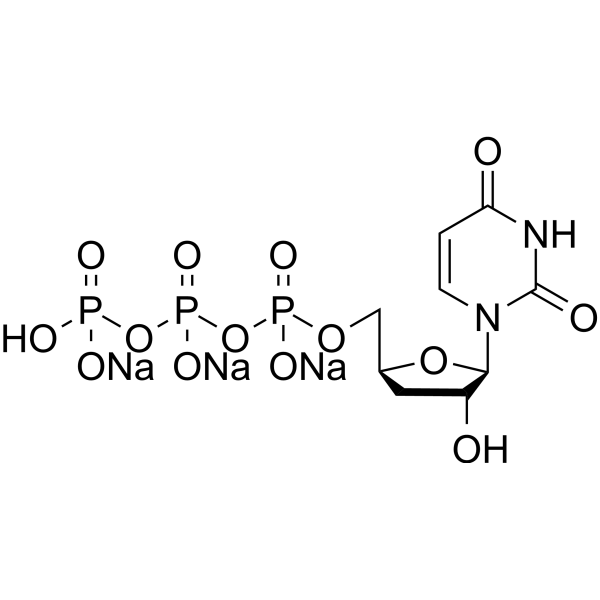
    3'-dUTP trisodium

    Nucleoside Antimetabolite/Analog DNA/RNA Synthesis Endogenous Metabolite Metabolic Disease
    3'-Deoxyuridine-5'-triphosphate trisodium (3'-dUTP trisodium) is a nucleotide analogue that inhibits DNA-dependent RNA polymerases I and II. 3'-Deoxyuridine-5'-triphosphate trisodium strongly and competitively inhibits the incorporations of UTP into RNA with a Ki value of 2.0 μM .
    3'-Deoxyuridine-5'-triphosphate trisodium
  • HY-W017068B

    2'-Deoxyuridine-5'-triphosphate trisodium,100 mM Solution,PCR Grade

    Biochemical Assay Reagents Others
    dUTP trisodium,100 mM Solution,PCR Grade (2'-Deoxyuridine-5'-triphosphate trisodium,100 mM Solution,PCR Grade) is a highly stable nucleotide that can participate in the biosynthesis of DNA and is suitable for various conventional molecular biology experiments. This product is provided in the form of aqueous solution .
    dUTP trisodium,100 mM Solution,PCR Grade
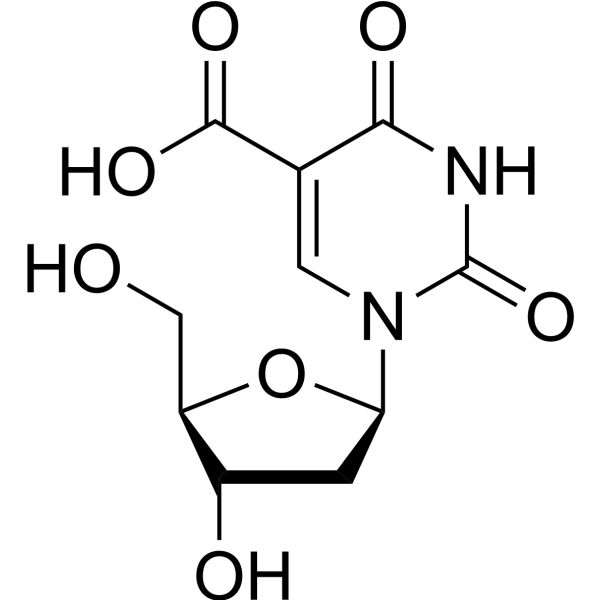
  • HY-W424779

    Drug Metabolite Infection
    5-Carboxy-2′-deoxyuridine is a metabolite of Trifluridine . 5-Carboxy-2′-deoxyuridine is a methyl oxidation product of Thymidine that can be formed by menadione-mediated photosensitization of Thymidine .
    5-Carboxy-2′-deoxyuridine
  • HY-W341499

    Endogenous Metabolite Others
    5-Formyl-2'-deoxyuridine is a product formed when the 5-methyl group of thymine in DNA undergoes oxidation due to exposure to gamma radiation or certain chemical agents. Serving as a biomarker of oxidative DNA damage, 5-formyl-2'-deoxyuridine is employed in investigations of DNA damage and repair mechanisms. Additionally, 5-Formyl-2'-deoxyuridine can be used in studies involving chemically crosslinking with peptides derived from the RecA protein .
    5-Formyl-2'-deoxyuridine
  • HY-130801

    5-OHdU

    Endogenous Metabolite Metabolic Disease
    5-Hydroxy-2'-deoxyuridine (5-OHdU) is a major stable oxidation product of 2'-Deoxycytidine. 5-Hydroxy-2'-deoxyuridine can be incorporated into DNA in vitro by DNA polymerase .
    5-Hydroxy-2'-deoxyuridine
  • HY-W190976

    5-VINYL-DURD

    DNA/RNA Synthesis Apoptosis Cancer
    5-Vinyl-2'-deoxyuridine (5-VINYL-DURD), a thymidine analogue, is incorporated into cellular DNA during DNA replication. 5-Vinyl-2'-deoxyuridine is a click chemistry reagent, it contains an Alkyne group and induces DNA damage leads to apoptosis in human cultured cells .
    5-Vinyl-2'-deoxyuridine
  • HY-154253

    5-AmdU; α-Azidothymidine

    Nucleoside Antimetabolite/Analog Cancer
    5-Azidomethyl-2'-deoxyuridine (5-AmdU) is a purine nucleoside analog. 5-Azidomethyl-2'-deoxyuridine demonstrates effective radiosensitization in EMT6 tumor cells. . 5-Azidomethyl-2'-deoxyuridine is a click chemistry reagent, it contains an Azide group and can undergo copper-catalyzed azide-alkyne cycloaddition reaction (CuAAc) with molecules containing Alkyne groups. It can also undergo strain-promoted alkyne-azide cycloaddition (SPAAC) reactions with molecules containing DBCO or BCN groups.
    5-Azidomethyl-2'-deoxyuridine
  • HY-W251781

    2′-Deoxy-4-thiouridine; 4-ThioDeoxyuridine

    Nucleoside Antimetabolite/Analog Cancer
    4-Thio-2’-deoxyuridine is a purine nucleoside analog. Purine nucleoside analogs have broad antitumor activity targeting indolent lymphoid malignancies. Anticancer mechanisms in this process rely on inhibition of DNA synthesis, induction of apoptosis, etc .
    4-Thio-2’-deoxyuridine
  • HY-D1022A

    Biotin-16-Deoxyuridine-5'-triphosphate trisodium

    DNA Stain Others
    Biotin-16- dUTP (Biotin-16-deoxyuridine-5'-triphosphate) trisodium can be used to replace its natural counterpart dTTP by enzymatically incorporating it into DNA/cDNA. Biotin-16- dUTP trisodium can be used to produce biotinylated DNA probes in a variety of assay applications .
    Biotin-16-dUTP trisodium
  • HY-152720

    Nucleoside Antimetabolite/Analog Others Cancer
    3’-Azido-3’-deoxyuridine is a purine nucleoside analogue. Purine nucleoside analogs have broad antitumor activity targeting indolent lymphoid malignancies. Anticancer mechanisms in this process rely on inhibition of DNA synthesis, induction of apoptosis, etc . 3’-Azido-3’-deoxyuridine is a click chemistry reagent, it contains an Azide group and can undergo copper-catalyzed azide-alkyne cycloaddition reaction (CuAAc) with molecules containing Alkyne groups. It can also undergo strain-promoted alkyne-azide cycloaddition (SPAAC) reactions with molecules containing DBCO or BCN groups.
    3’-Azido-3’-deoxyuridine
  • HY-D1022

    Biotin-16-Deoxyuridine-5'-triphosphate

    Fluorescent Dye Others
    Biotin-16-dUTP (Biotin-16-deoxyuridine-5'-triphosphate) can be used to replace its natural counterpart dTTP by enzymatically incorporating it into DNA/cDNA. Biotin-16- dUTP can be used to produce biotinylated DNA probes in a variety of assay applications .
    Biotin-16-dUTP
  • HY-D1023

    5-Bromo-2'-Deoxyuridine 5'-triphosphate sodium salt

    DNA/RNA Synthesis Others
    5-BrdUTP sodium salt is a TdT substrate which can be used to label the DNA double-strand breaks.
    5-BrdUTP sodium salt
  • HY-D0186R

    Reference Standards Endogenous Metabolite Thymidylate Synthase Infection
    2'-Deoxyuridine (Standard) is the analytical standard of 2'-Deoxyuridine. This product is intended for research and analytical applications. 2’-deoxyuridine is a brain-penetrant pyrimidines nucleotide that is associated with nervous system diseases. 2'-Deoxyuridine could increase chromosome breakage and results in a decreased thymidylate synthetase activity. 2'-Deoxyuridine is a precursor in the synthesis of Edoxudine (HY-B1011) and also an analogue of 5-ethynyl-2'-deoxyuridine, EdU (HY-118411). 2’-deoxyuridine reduces microglial activation and improve oxidative stress damage by modulating glycolytic metabolism on the Aβ25-35-induced brain injury, which is promising for research of Alzheimer’s disease (AD) . In Vitro:The interaction between the 2-deoxyuridine and the column increases the duration of retention of 2-deoxyuridine .
    Gradient elution with sodium acetate buffer-ACN eluent on two ZIC-HILIC homemade columns separates 2-deoxyuridine in under 9 min .
    In Vivo:2'-Deoxyuridine (34.42 ng/mL, gavage, 15 min) passes the blood-brain barrier (BBB) to enter the hippocampus of mice brain .
    2'-Deoxyuridine (20 mg/kg, gavage, daily for 4 weeks) improves cognition and memory loss and attenuates the damage to the hippocampus in Aβ25-35-induced mice model .
    2'-Deoxyuridine (Standard)
  • HY-154329

    Nucleoside Antimetabolite/Analog Cancer
    2-Deoxyuridine is a purine nucleoside analog. Purine nucleoside analogs have broad antitumor activity targeting indolent lymphoid malignancies. Anticancer mechanisms in this process rely on inhibition of DNA synthesis, induction of apoptosis, etc .
    2-Deoxyuridine
  • HY-135780

    3'-dUTP

    Nucleoside Antimetabolite/Analog DNA/RNA Synthesis Endogenous Metabolite Metabolic Disease
    3'-Deoxyuridine-5'-triphosphate (3'-dUTP) is a nucleotide analogue that inhibits DNA-dependent RNA polymerases I and II. 3'-Deoxyuridine-5'-triphosphate strongly and competitively inhibits the incorporations of UTP into RNA with a Ki value of 2.0 μM .
    3'-Deoxyuridine-5'-triphosphate
  • HY-W154172

    Nucleoside Antimetabolite/Analog Cancer
    2′-Chloro-2′-deoxyuridine is a purine nucleoside analog. Purine nucleoside analogs have broad antitumor activity targeting indolent lymphoid malignancies. Anticancer mechanisms in this process rely on inhibition of DNA synthesis, induction of apoptosis, etc .
    2′-Chloro-2′-deoxyuridine
  • HY-152548

    Nucleoside Antimetabolite/Analog Others
    4’-C-Methyl-4-deoxyuridine is a purine nucleoside analogue. Purine nucleoside analogs have broad antitumor activity targeting indolent lymphoid malignancies. Anticancer mechanisms in this process rely on inhibition of DNA synthesis, induction of apoptosis, etc .
    4’-C-Methyl-4-deoxyuridine
  • HY-W553730

    Nucleoside Antimetabolite/Analog Cancer
    2’-Deoxy-2’-iodouridine; 2’-Iodo-2’-deoxyuridine is a purine nucleoside analog. Purine nucleoside analogs have broad antitumor activity targeting indolent lymphoid malignancies. Anticancer mechanisms in this process rely on inhibition of DNA synthesis, induction of apoptosis, etc .
    2’-Deoxy-2’-iodouridine; 2’-Iodo-2’-deoxyuridine
  • HY-W141338

    2'-Bromo-2'-deoxy-D-uridine

    Nucleoside Antimetabolite/Analog Cancer
    2′-Bromo-2′-deoxyuridine is a purine nucleoside analog. Purine nucleoside analogs have broad antitumor activity targeting indolent lymphoid malignancies. Anticancer mechanisms in this process rely on inhibition of DNA synthesis, induction of apoptosis, etc .
    2′-Bromo-2′-deoxyuridine
  • HY-154492

    Nucleoside Antimetabolite/Analog Cancer
    2’,3’-Bis(O-t-butyldimethylsilyl)-4’,5’-didehydro-5’-deoxyuridine is a uridine analog. Uridine has potential antiepileptic effects, and its analogs can be used to study anticonvulsant and anxiolytic activities, as well as to develop new antihypertensive agents .
    2’,3’-Bis(O-t-butyldimethylsilyl)-4’,5’-didehydro-5’-deoxyuridine
  • HY-77645

    1-(5-Deoxy-beta-D-erythro-pent-4-enofuranosyl)uracil

    Nucleoside Antimetabolite/Analog Cancer
    4',5'-Didehydro-5'-deoxyuridine is a purine nucleoside analog. Purine nucleoside analogs have broad antitumor activity targeting indolent lymphoid malignancies. Anticancer mechanisms in this process rely on inhibition of DNA synthesis, induction of apoptosis, etc .
    4',5'-Didehydro-5'-deoxyuridine
  • HY-W416297

    Nucleoside Antimetabolite/Analog Others
    dUDP disodium is a nucleotide that plays a crucial role in the synthesis of DNA. dUDP disodium consists of a uracil base, a ribose, and two phosphate groups. dUDP disodium is also a substrate for the deoxyuridine triphosphate nucleotide hydrolase, which catalyzes the conversion of dUDP to dUMP, which is the precursor for dTTP synthesis. dUDP disodium is involved in various biochemical processes and can be used for various biochemical analyses and applications .
    dUDP disodium
  • HY-P5443

    Bacterial Others
    Pyrrhocoricin is a biological active peptide. (Antimicrobial activity against Gram-negative bacteria)
    Pyrrhocoricin
  • HY-D0186S4

    Isotope-Labeled Compounds Endogenous Metabolite Infection
    2'-Deoxyuridine-d2 is the deuterium labeled 2'-Deoxyuridine. 2'-Deoxyuridine could increase chromosome breakage and results in a decreased thymidylate synthetase activity. A known use of 2'-Deoxyuridine is as a precursor in the synthesis of Edoxud
    2'-Deoxyuridine-d2
  • HY-D0186S7

    Endogenous Metabolite Infection
    2'-Deoxyuridine- 13C, 15N2 is the 13C and 15N labeled 2'-Deoxyuridine . 2'-Deoxyuridine could increase chromosome breakage and results in a decreased thymidylate synthetase activity. A known use of 2'-Deoxyuridine is as a precursor in the synthesis of Edoxudine .
    2'-Deoxyuridine-13C,15N2
  • HY-W250162

    Deoxyuridine triphosphate

    DNA/RNA Synthesis Others
    dUTP (Deoxyuridine triphosphate) is a deoxyuridine phosphate having a triphosphate group at the 5'-position. Dutp can be used in PCR .
    dUTP
  • HY-W778990

    Isotope-Labeled Compounds Thymidylate Synthase Endogenous Metabolite Infection
    2-Deoxyuridine-1,2,3,4,5- 13C5 is the 13C-labeled 2'-Deoxyuridine (HY-D0186). 2’-deoxyuridine is a brain-penetrant pyrimidines nucleotide that is associated with nervous system diseases. 2'-Deoxyuridine could increase chromosome breakage and results in a decreased thymidylate synthetase activity. 2'-Deoxyuridine is a precursor in the synthesis of Edoxudine (HY-B1011) and also an analogue of 5-ethynyl-2'-deoxyuridine, EdU (HY-118411). 2’-deoxyuridine reduces microglial activation and improve oxidative stress damage by modulating glycolytic metabolism on the Aβ25-35-induced brain injury, which is promising for research of Alzheimer’s disease (AD) .
    2-Deoxyuridine-1,2,3,4,5-13C5
  • HY-135957

    N3dUrd

    DNA/RNA Synthesis Cancer
    2'-Azido-2'-deoxyuridine (N3dUrd) is a ribonucleotide reductase inhibitor. 2'-Azido-2'-deoxyuridine has anti-cancer activity . 2'-Azido-2'-deoxyuridine is a click chemistry reagent, it contains an Azide group and can undergo copper-catalyzed azide-alkyne cycloaddition reaction (CuAAc) with molecules containing Alkyne groups. It can also undergo strain-promoted alkyne-azide cycloaddition (SPAAC) reactions with molecules containing DBCO or BCN groups.
    2'-Azido-2'-deoxyuridine
  • HY-W394006

    dUMP

    Endogenous Metabolite Infection Metabolic Disease
    2'-Deoxyuridine 5'-monophosphate (dUMP) is a deoxynucleotide that is reductively methylated to dTMP (2'-deoxythymidine 5'-monophosphate) by bisubstrate enzyme thymidylate synthase (TS). dTMP is a nucleotide required for DNA synthesis .
    2'-Deoxyuridine 5'-monophosphate
  • HY-W097792

    5'-O-DMT-dU

    DNA/RNA Synthesis Others
    5'-O-(4,4'-Dimethoxytrityl)-2'-deoxyuridine (5'-O-DMT-dU) is a competitive inhibitor of E. coli dUTP nucleotidohydrolase (dUTPase), with the Ki higher than 1000 μM. 5'-O-(4,4'-Dimethoxytrityl)-2'-deoxyuridine can be used in machine-assisted DNA synthesis by synthesizing nucleosidic phosphoramidite blocks .
    5'-O-(4,4'-Dimethoxytrityl)-2'-deoxyuridine
  • HY-154424

    Nucleoside Antimetabolite/Analog Cancer
    2′-Amino-5′-O-[bis(4-methoxyphenyl)phenylmethyl]-2′-deoxyuridine is a purine nucleoside analog. Purine nucleoside analogs have broad antitumor activity targeting indolent lymphoid malignancies. Anticancer mechanisms in this process rely on inhibition of DNA synthesis, induction of apoptosis, etc .
    2′-Amino-5′-O-[bis(4-methoxyphenyl)phenylmethyl]-2′-deoxyuridine
  • HY-W397503

    2'-Deoxy-5'-O-DMT-5-iodouridine

    Nucleoside Antimetabolite/Analog Cancer
    5’-O-DMTr-5-iodo-2’-deoxyuridine is a purine nucleoside analog. Purine nucleoside analogs have broad antitumor activity targeting indolent lymphoid malignancies. Anticancer mechanisms in this process rely on inhibition of DNA synthesis, induction of apoptosis, etc .
    5’-O-DMTr-5-iodo-2’-deoxyuridine
  • HY-B0307R

    5-Iodo-2′-Deoxyuridine (Standard); 5-IUdR (Standard); IdUrd (Standard)

    Reference Standards Phosphatase Orthopoxvirus Infection Cancer
    Idoxuridine (Standard) is the analytical standard of Idoxuridine. This product is intended for research and analytical applications. Idoxuridine (5-Iodo-2′-deoxyuridine, 5-IUdR, IdUrd) is an iodinated thymidine analogue that competitively inhibits phosphorylases. Idoxuridine can inhibit viral activity, particularly viral eye infections, including herpes simplex keratitis, by inhibiting DNA polymerase and affecting viral replication. Idoxuridine against feline herpesvirus has the IC50 value of 4.3 μM . Idoxuridine shows anti-orthopoxvirus activity.
    Idoxuridine (Standard)
  • HY-D0186S5

    Isotope-Labeled Compounds Endogenous Metabolite Infection
    2'-Deoxyuridine-d is the deuterium labeled 2'-Deoxyuridine. 2'-Deoxyuridine could increase chromosome breakage and results in a decreased thymidylate synthetase activity. A known use of 2'-Deoxyuridine is as a precursor in the synthesis of Edoxud <
    2'-Deoxyuridine-d

Inquiry Online

Your information is safe with us. * Required Fields.

Salutation


Country or Region *

Applicant Name *


Organization Name *

Department *


Email Address *


Product Name *

Cat. No.


Requested quantity *

Phone Number *


Remarks

Inquiry Online

Inquiry Information

Product Name:
Cat. No.:
Quantity:
MCE Japan Authorized Agent:

