1. Search Result
Search Result
Results for "

(-)-Rolipram

" in MedChemExpress (MCE) Product Catalog:

8

Inhibitors & Agonists

1

Fluorescent Dyes

1

Biochemical Assay Reagents

1

GMP Molecules

Cat. No. Product Name Target Research Areas Chemical Structure
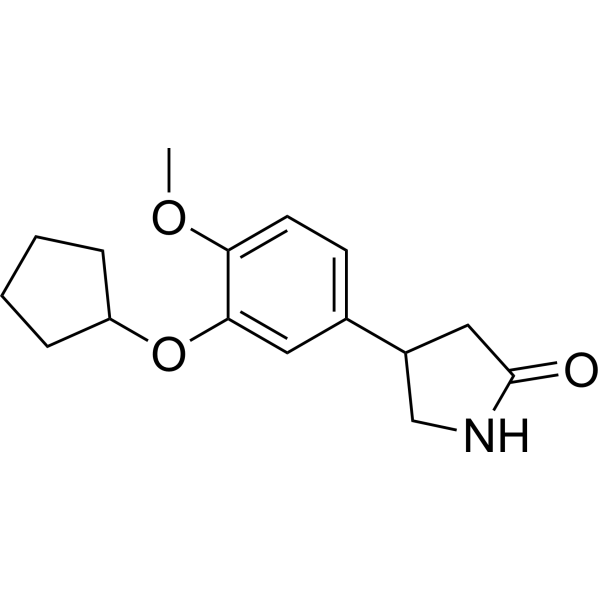
  • HY-16900
    Rolipram
    Maximum Cited Publications
    19 Publications Verification

    (R,S)-Rolipram; (±)-Rolipram; ZK 62711

    Bacterial HIV Phosphodiesterase (PDE) Epigenetic Reader Domain Amyloid-β Infection Neurological Disease Cancer
    Rolipram is a PDE4 inhibitor, with blood-brain barrier permeability, that reverses β-amyloid-induced learning and memory impairment in rats. Rolipram elevates intracellular cAMP and clevels and regulates the cAMP/CREB signaling pathway, thereby alleviating neuroinflammation and apoptotic responses. Rolipram promotes neuronal differentiation of human bone marrow mesenchymal stem cells and inhibits Methamphetamine- and morphine-induced hyperlocomotion in mice. Rolipram also reduces the viability of glioblastoma stem-like cells and enhances Bevacizumab (HY-P9906)-induced cell death. Rolipram inhibits the expression of proinflammatory cytokines and enhances central noradrenergic transmission. Rolipram is mainly used in studies related to various central nervous system diseases including Alzheimer's disease, major depressive disorder, glioblastoma multiforme, and multiple sclerosis .
    Rolipram
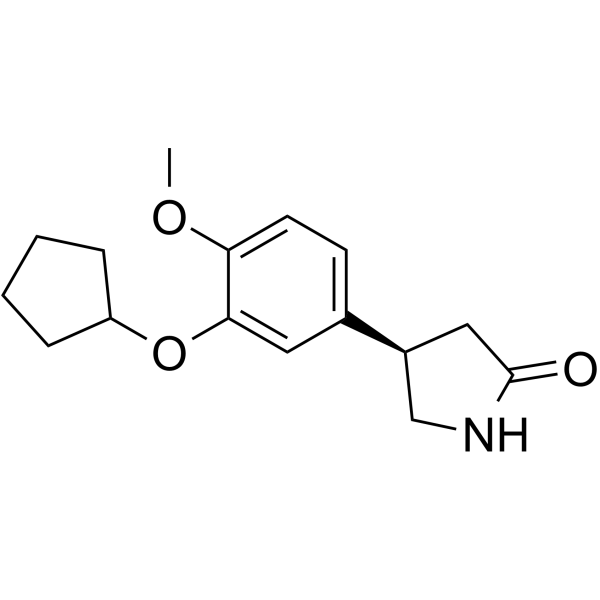
  • HY-16900A
    (R)-(-)-Rolipram
    2 Publications Verification

    (R)-Rolipram; (-)-Rolipram

    Phosphodiesterase (PDE) Neurological Disease
    (R)-(-)-Rolipram is the R-enantiomer of Rolipram. Rolipram is a selective inhibitor of phosphodiesterases PDE4 with IC50 of 3 nM, 130 nM and 240 nM for PDE4A, PDE4B, and PDE4D, respectively.
    (R)-(-)-Rolipram
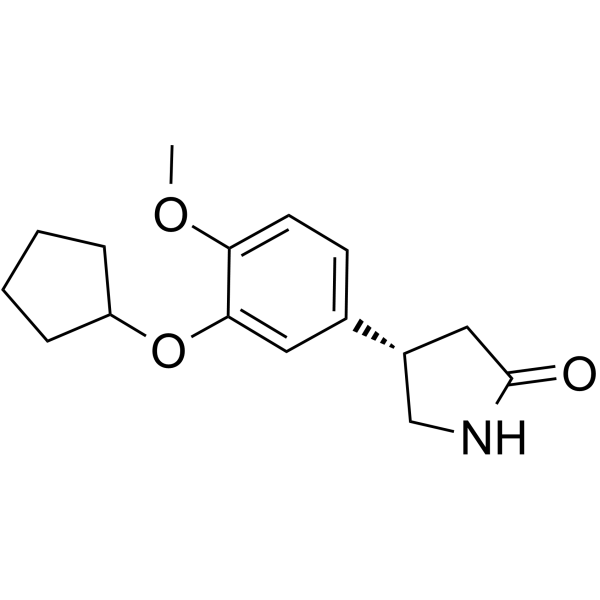
  • HY-B0392

    (+)-Rolipram; (S)-Rolipram

    Phosphodiesterase (PDE) Apoptosis Neurological Disease Inflammation/Immunology Cancer
    (S)-(+)-Rolipram ((+)-Rolipram) is a cyclic AMP(cAMP)-specific phosphodiesterase 4 (PDE4) inhibitor, with an IC50 of 1100 nM. (S)-(+)-Rolipram can suppresse tumor necrosis factor-alpha (TNFα) production by human mononuclear cells .
    (S)-(+)-Rolipram
  • HY-16900R

    (R,S)-Rolipram (Standard); (±)-Rolipram (Standard); ZK 62711 (Standard)

    Reference Standards Bacterial HIV Phosphodiesterase (PDE) Epigenetic Reader Domain Amyloid-β Neurological Disease Cancer
    Rolipram (Standard) is the analytical standard of Rolipram (HY-16900). This product is intended for research and analytical applications. Rolipram is a PDE4 inhibitor, with blood-brain barrier permeability, that reverses β-amyloid-induced learning and memory impairment in rats. Rolipram elevates intracellular cAMP and clevels and regulates the cAMP/CREB signaling pathway, thereby alleviating neuroinflammation and apoptotic responses. Rolipram promotes neuronal differentiation of human bone marrow mesenchymal stem cells and inhibits Methamphetamine- and morphine-induced hyperlocomotion in mice. Rolipram also reduces the viability of glioblastoma stem-like cells and enhances Bevacizumab (HY-P9906)-induced cell death. Rolipram inhibits the expression of proinflammatory cytokines and enhances central noradrenergic transmission. Rolipram is mainly used in studies related to various central nervous system diseases including Alzheimer's disease, major depressive disorder, glioblastoma multiforme, and multiple sclerosis .
    Rolipram (Standard)
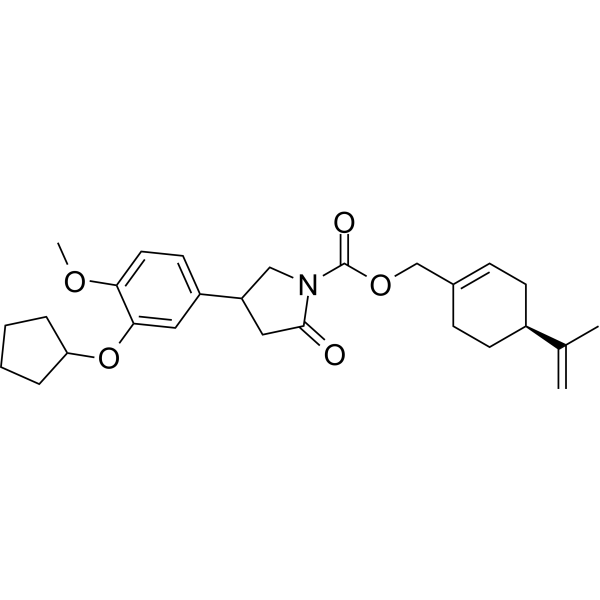
  • HY-124582
    NEO214
    1 Publications Verification

    Autophagy mTOR Cancer
    NEO214 is an autophagy inhibitor and a covalent conjugate of the PDE4 inhibitor Rolipram (HY-16900) and perillyl alcohol (HY-N7000). It has anti-cancer activity and blood-brain barrier (BBB) permeability. Over sex. NEO214 prevents autophagy-lysosome fusion, thereby blocking autophagic flux and triggering glioma cell death. The process involves mTOR activation, andTFEB(Transcription Factor EB) aggregation. NEO214 inhibitionMacroautophagy/autophagy in glioblastoma cells has the potential to overcome chemotherapy resistance in glioblastoma .
    NEO214
  • HY-16900G

    Phosphodiesterase (PDE) Epigenetic Reader Domain Amyloid-β Neurological Disease Inflammation/Immunology Cancer
    Rolipram GMP is Rolipram (HY-16900) produced by using GMP guidelines. GMP small molecules works appropriately as an auxiliary reagent for cell therapy manufacture. Rolipram is a PDE4 inhibitor, with blood-brain barrier permeability, that reverses β-amyloid-induced learning and memory impairment in rats. Rolipram elevates intracellular cAMP and clevels and regulates the cAMP/CREB signaling pathway, thereby alleviating neuroinflammation and apoptotic responses. Rolipram promotes neuronal differentiation of human bone marrow mesenchymal stem cells and inhibits Methamphetamine- and morphine-induced hyperlocomotion in mice. Rolipram also reduces the viability of glioblastoma stem-like cells and enhances Bevacizumab (HY-P9906)-induced cell death. Rolipram inhibits the expression of proinflammatory cytokines and enhances central noradrenergic transmission. Rolipram is mainly used in studies related to various central nervous system diseases including Alzheimer's disease, major depressive disorder, glioblastoma multiforme, and multiple sclerosis .
    Rolipram
  • HY-146974

    Phosphodiesterase (PDE) Inflammation/Immunology
    PDE4-IN-9 (Compound 5j) is a potent inhibitor of PDE4. PDE4-IN-9 exhibits lower IC50 value (1.4 μM) against PDE4 than parent rolipram (2.0 μM) in in vitro enzyme assay. PDE4-IN-9 also displays good in vivo activity in animal models of asthma/COPD and sepsis induced by LPS .
    PDE4-IN-9
  • HY-182503

    Adenosine Kinase Others Inflammation/Immunology
    GP515 is a potent and selective adenosine kinase inhibitor with a human IC50 of 4 nM. GP515 exerts tissue protective effects, produces long-lasting hepatic microcirculation effects after hemorrhagic shock, and induces dose- and time-related VEGF mRNA and protein expression in normoxic rat myocardial myoblasts, with additive VEGF increases during mild hypoxia and no effect during severe hypoxia. GP515 suppresses IFNγ synthesis and CD69 expression in DSS-induced colitis. GP515 also shows a dose-dependent suppression of TNF-α production with an IC50 of 80 μM and can be reversed in the presence of the cAMP antagonist (Rp)-cAMPS. Combinations of GP515 with either adenosine or rolipram led to an additive inhibition of TNF-α synthesis. GP515 can be used for the research of hemorrhagic shock .
    GP515

Inquiry Online

Your information is safe with us. * Required Fields.

Salutation


Country or Region *

Applicant Name *


Organization Name *

Department *


Email Address *


Product Name *

Cat. No.


Requested quantity *

Phone Number *


Remarks

Inquiry Online

Inquiry Information

Product Name:
Cat. No.:
Quantity:
MCE Japan Authorized Agent:

