1. Search Result
Search Result
Pathways Recommended: Membrane Transporter/Ion Channel
Results for "

sodium channels

" in MedChemExpress (MCE) Product Catalog:

2573

Inhibitors & Agonists

25

Screening Libraries

35

Fluorescent Dyes

30

Biochemical Assay Reagents

214

Peptides

3

MCE Kits

257

Natural
Products

291

Isotope-Labeled Compounds

6

Click Chemistry

16

Oligonucleotides

3

GMP Molecules

Cat. No. Product Name Target Research Areas Chemical Structure
  • HY-148800
    Suzetrigine
    5 Publications Verification

    VX-548

    Sodium Channel Neurological Disease
    Suzetrigine (VX-548) is an orally active and highly selective NaV1.8 inhibitor that acts as an analgesic. Suzetrigine is also a blocker of sodium channel protein type 10 subunit alpha. Suzetrigine is promising for research of acute pain after abdominoplasty and bunionectomy .
    Suzetrigine
  • HY-N6691
    Veratridine
    4 Publications Verification

    3-Veratroylveracevine

    Sodium Channel Neurological Disease
    Veratridine (3-Veratroylveracevine) is a plant neurotoxin, a voltage-gated sodium channels (VGSCs) agonist. Veratridine inhibits the peak current of Nav1.7, with an IC50 of 18.39 µM. Veratridine regulates sodium ion channels mainly by activating sodium ion channels, preventing channel inactivation and increasing sodium ion flow .
    Veratridine
  • HY-108505
    QX-314 chloride
    1 Publications Verification

    Sodium Channel Neurological Disease
    QX-314 chloride is a membrane-impermeable permanently charged sodium channel blocker .
    QX-314 chloride
  • HY-11079
    A-803467
    3 Publications Verification

    Sodium Channel Neurological Disease Inflammation/Immunology Cancer
    A-803467 is a potent and selective tetrodotoxin-resistant Nav1.8 sodium channel blocker (IC50=8 nM). A-803467 has shown significant anti-nociception in neuropathic and inflammatory pain models. A-803467 enhances the chemosensitivity of conventional anticancer agents through interaction with the ATP-binding cassette subfamily G member 2 (ABCG2) transporter .
    A-803467
  • HY-147423
    Zandatrigine
    1 Publications Verification

    NBI-921352; XEN901

    Sodium Channel Neurological Disease
    Zandatrigine (NBI-921352; XEN901) is a selective, orally active, voltage-gated sodium channel NaV1.6/SCN8A inhibitor that can penetrate the blood-brain barrier. Zandatrigine inhibits sodium influx by non-covalently binding to the VSD4 structure of NaV1.6, blocking the persistent and resuscitative currents under pathological conditions. Zandatrigine can reduce neuronal hyperexcitability and reduce epileptic seizures. Zandatrigine is 134-756-fold selective for other isoforms such as NaV1.1 and NaV1.2, and has minimal effect on NaV1.1 expressed by inhibitory interneurons. Zandatrigine can be used to study NaV1.6-mediated neuroexcitability diseases such as SCN8A-related developmental epileptic encephalopathy (SCN8A-DEE) and adult focal epilepsy .
    Zandatrigine
  • HY-101350
    QX-314 bromide
    1 Publications Verification

    Sodium Channel Neurological Disease
    QX-314 bromide is a membrane-impermeable permanently charged sodium channel blocker .
    QX-314 bromide
  • HY-112472

    Sodium Channel Metabolic Disease
    S3969 is a potent and reversible activator of the human epithelial sodium channel (hENaC). The apparent EC50 for S3969 activation of hENaC is 1.2 μm .
    S3969
  • HY-B0114
    Oxcarbazepine
    2 Publications Verification

    GP 47680

    Sodium Channel Apoptosis Neurological Disease Cancer
    Oxcarbazepine is a sodium channel blocker . Oxcarbazepine significantly inhibits glioblastoma cell growth and induces apoptosis or G2/M arrest in glioblastoma cell lines . Anti-cancer and anticonvulsant effects .
    Oxcarbazepine
  • HY-100345
    AMTB hydrochloride
    2 Publications Verification

    TRP Channel Neurological Disease Cancer
    AMTB hydrochloride is a selective TRPM8 channel blocker. AMTB hydrochloride inhibits icilin-induced TRPM8 channel activation with a pIC50 of 6.23. AMTB hydrochloride can be used for the research of the overactive bladder and painful bladder syndrome. AMTB hydrochloride is a non-selective inhibitor of voltage-gated sodium channels (NaV) .
    AMTB hydrochloride
  • HY-B0834

    (RS)-Indoxacarb; DPX-JW062

    Environmental Pollutants Sodium Channel Neurological Disease
    Indoxacarb ((±)-Indoxacarb; DPX-JW062) is a broad-spectrum oxadiazine insecticide with high insecticidal activity and low mammalian toxicity. Indoxacarb blocks insect sodium channels in nerve preparations and isolated neurons .
    (±)-Indoxacarb
  • HY-B1704
    Nisoxetine
    1 Publications Verification

    Monoamine Transporter Sodium Channel Neurological Disease
    Nisoxetine is a potent and selective inhibitor of noradrenaline transporter (NET), with a Kd of 0.76 nM. Nisoxetine is an antidepressant and local anesthetic, it can block voltage-gated sodium channels .
    Nisoxetine
  • HY-17612

    NW-3509

    Sodium Channel Neurological Disease
    Evenamide (NW-3509) is an orally available voltage-gated sodium channel (VGSC) blocker (Ki=0.4 µM) for the research of schizophrenia. Evenamide shows efficacy in a broad spectrum of rodent models of psychosis, mania, depression, and aggressiveness .
    Evenamide
  • HY-119521
    Mexiletine
    2 Publications Verification

    KOE-1173

    Sodium Channel Cardiovascular Disease Neurological Disease
    Mexiletine is an orally effective antiarrhythmic agent which has also been found to be effective for myotonia and neuropathic pain. Mexiletine exerts its efficacy through blocking sodium channels (IC50 : 75±8 μM for tonic block, 23.6±2.8 μM for use-dependent block), therefore can be used for cardiovascular and neurological research .
    Mexiletine
  • HY-159819

    Sodium Channel Neurological Disease
    Vormatrigine is an orally active sodium channel inhibitor with anti-epileptic activity. Vormatrigine can be used to study human focal and generalized epilepsy .
    Vormatrigine
  • HY-B1704A
    Nisoxetine hydrochloride
    1 Publications Verification

    Monoamine Transporter Sodium Channel Neurological Disease
    Nisoxetine hydrochloride is a potent and selective inhibitor of noradrenaline transporter (NET), with a Kd of 0.76 nM. Nisoxetine hydrochloride is an antidepressant and local anesthetic, it can block voltage-gated sodium channels .
    Nisoxetine hydrochloride
  • HY-108506
    Licarbazepine
    1 Publications Verification

    BIA 2-005; GP 47779

    Sodium Channel Neurological Disease
    Licarbazepine (BIA 2-005; GP 47779) is a voltage-gated sodium channel blocker with anticonvulsant and mood-stabilizing effects .
    Licarbazepine
  • HY-122376

    D-Trans-Allethrin; Esbiol

    Environmental Pollutants Sodium Channel Neurological Disease
    S-Bioallethrin (D-Trans-Allethrin) is a pyrethroid insecticide. S-Bioallethrin disrupts nerve function by modifying the gating kinetics of transitions between the conducting and nonconducting states of voltage-gated sodium channels. S-Bioallethrin also causes inhibition of lymphocyte proliferation and induces histamine release from human basophils .
    S-Bioallethrin
  • HY-175728

    Potassium Channel Sodium Channel Calcium Channel Metabolic Disease
    VU6032735 is a potent and subtype-selective sperm-specific potassium channel 3 (SLO3) inhibitor with IC50 values of 165 nM (hSLO3) and 730 nM (mSLO3). VU6032735 also inhibits sodium channel and L-type calcium channel VU6032735 can sustain high tissue exposure in the fertilized oviduct. VU6032735 can be used for the research of contraception .
    VU6032735
  • HY-B1243
    Propoxycaine hydrochloride
    1 Publications Verification

    Sodium Channel Neurological Disease
    Propoxycaine hydrochloride inhibits voltage-gated sodium channels, and thereby inhibits the ionic flux required for the initiation and conduction of impulses. Propoxycaine hydrochloride application can lead to a loss of sensation.
    Propoxycaine hydrochloride
  • HY-145558

    Sodium Channel Neurological Disease
    Bliretrigine is a sodium channel blocker. Bliretrigine has the effect of relieving pain .
    Bliretrigine
  • HY-122001

    Sodium Channel Neurological Disease
    PF-05186462 is a potent and selective inhibitor of human Nav1.7 voltage-dependent sodium channel, with an IC50 of 21 nM. PF-05186462 shows significant selectivity for Nav1.7 versus other sodium channels (Nav 1.1, 1.2, 1.3, 1.4, 1.5, 1.6, and 1.8). PF-05186462 can be used for the research of acute or chronic pain .
    PF-05186462
  • HY-16952A
    Bepridil hydrochloride hydrate
    5+ Cited Publications

    (±)-Bepridil hydrochloride hydrate; Org 5730 hydrochloride hydrate

    Calcium Channel Cardiovascular Disease
    Bepridil hydrochloride hydrate ((±)-Bepridil hydrochloride hydrate) is a non-selective, long-acting Ca + channel antagonist and Na +, K + channel inhibitor, with antianginal and type I antiarrhythmic effects. Bepridil hydrochloride hydrate also acts as a cardiac Na +/Ca2 + exchange (NCX1) inhibitor. Bepridil hydrochloride hydrate can be used for the research of cardiovascular disorders .
    Bepridil hydrochloride hydrate
  • HY-N3990
    Hardwickiic acid
    1 Publications Verification

    (-)-Hardwickiic acid; (-)-Hardwikiic acid

    Sodium Channel Parasite Infection Neurological Disease
    Hardwickiic acid ((-)-Hardwickiic acid) is a diterpenoid compound. Hardwickiic acid can block tetrodotoxin-sensitive voltage-dependent sodium channels and possesses multiple activities such as insecticidal, antinociceptive, and neurotransmitter release-regulating effects. Hardwickiic acid can be used in the study of neurological diseases .
    Hardwickiic acid
  • HY-P1604
    ATX-II
    1 Publications Verification

    Sodium Channel Cardiovascular Disease Inflammation/Immunology
    ATX-II is a selective sodium channel modulator toxin. ATX-II enhances late sodium current, prevents full sodium channel inactivation, and generates persistent current fractions. ATX-II has pro-arrhythmic effect. ATX-II slows intrinsic heart rate, prolongs QT interval and sinus node recovery time, and causes sinus pauses and arrests. ATX-II can be used for the research of atrial fibrillation, long QT syndrome, and long QT3 syndrome .
    ATX-II
  • HY-132818

    P-1037

    Sodium Channel Others
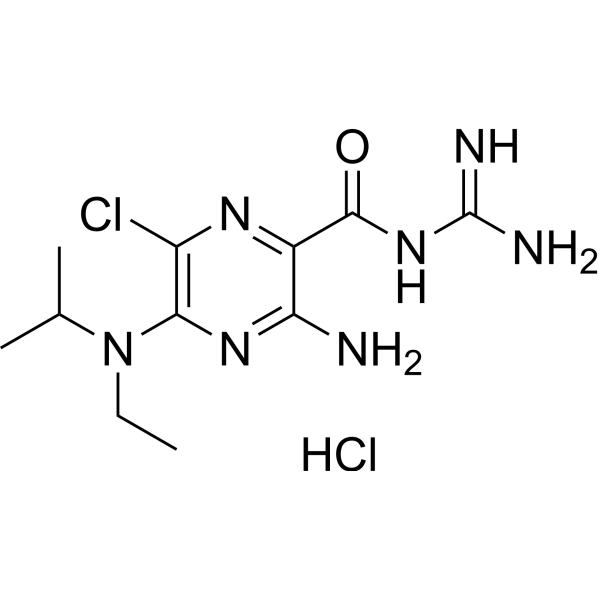
    Idrevloride, an epithelial sodium channel (ENaC) inhibitor (WO2016133967), can be used for the research of skin disorders .
    Idrevloride
  • HY-178494

    Sodium Channel Potassium Channel Neurological Disease
    Nav1.7-IN-19 is a potent, selective and orally active Nav1.7 inhibitor with an IC50 of 0.49 μM. Nav1.7-IN-19 shows high selectivity for Nav1.7, with selectivities of 312-fold and 662-fold against Nav1.1 and Nav1.5 in the inactivated state. Nav1.7-IN-19 exhibits weak inhibition on hERG potassium channels. Nav1.7-IN-19 exhibits analgesic effect and can be used for the research of neurological disease .
    Nav1.7-IN-19
  • HY-117714

    Sodium Channel Neurological Disease
    AZD-3161 is a potent and selective blocker of NaV1.7 channel, with a pIC50 of 7.1. AZD-3161 can be used for the research of neuropathic and inflammatory pain .
    AZD-3161
  • HY-148410C

    STK-001 negative control

    Sodium Channel Neurological Disease
    Zorevunensen (STK-001) negative control is the negative control form of Zorevunensen (HY-148410). Zorevunensen is an antisense oligonucleotide that is intended to increase the level of productive SCN1A mRNA and consequently increase the expression of the sodium channel Nav1.1 protein. Zorevunersen is used for the study of Dravet syndrome .
    Zorevunensen negative control
  • HY-P5152

    Sodium Channel Neurological Disease
    Scorpion toxin Tf2 is a selective human voltage-gated sodium channel Nav1.3 (hNav1.3) activator. Scorpion toxin Tf2 selectively shifts the channel's activation voltage to more negative values, enabling channel opening at resting membrane potentials. Scorpion toxin Tf2 can be used for the research of epilepsy, nociception (after spinal cord injury) .
    Scorpion toxin Tf2
  • HY-P1218B

    Sodium Channel Neurological Disease
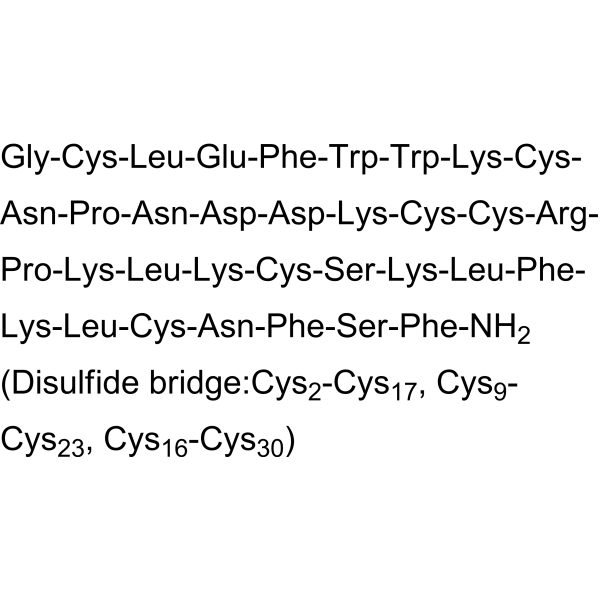
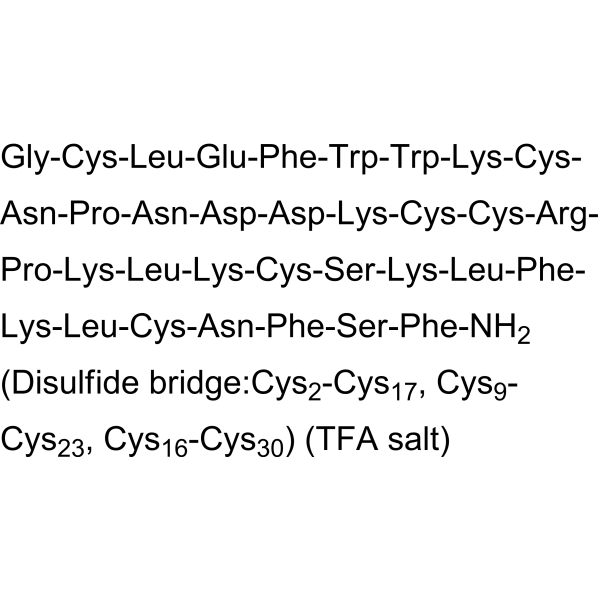
    Phrixotoxin 3-NH2 TFA is a derivative of Phrixotoxin 3 TFA (HY-P1218A). Phrixotoxin 3 TFA is a potent blocker of voltage-gated sodium channels, with IC50s of 0.6, 42, 72, 288, 610 nM for NaV1.2, NaV1.3, NaV1.4, NaV1.1 and NaV1.5, respectively. Phrixotoxin 3 TFA modulates voltage-gated sodium channels with properties similar to those of typical gating-modifier toxins, both by causing a depolarizing shift in gating kinetics and by blocking the inward component of the sodium current .
    Phrixotoxin 3-NH2 TFA
  • HY-135000

    DcSTX; DecarbamoylSTX

    Endogenous Metabolite Drug Metabolite Neurological Disease
    Decarbamoylsaxitoxin is a sodium channel inhibitor that blocks the influx of sodium ions through the membranes of excitable nerves and skeletal muscle cells, thereby preventing the formation of action potentials. Decarbamoylsaxitoxin is an acidic hydrolysis product of saxitoxin, and its toxic effects on mice are identical to those of saxitoxin. Decarbamoylsaxitoxin inhibits veratridine- and ouabain-induced swelling and lysis of mouse neuroblastoma cells by blocking Na + channels. Decarbamoylsaxitoxin can be used in studies related to paralytic shellfish poisoning .
    Decarbamoylsaxitoxin
  • HY-144287

    Glucokinase Sodium Channel Metabolic Disease
    Glucokinase activator 3 is an orally active Glucokinase (GK) activator with an AC50 of 38 nM. Glucokinase activator 3 inhibits hERG channel and sodium channel in patch clamp assays. Glucokinase activator 3 exhibits high efficacy in reducing blood glucose in diet-induced obese (DIO) mice. Glucokinase activator 3 has the potential for the research of type 2 diabetes .
    Glucokinase activator 3
  • HY-Z6848

    Sodium Channel Neurological Disease
    (R)-(+)-Bupivacaine hydrochloride is a voltage-gated sodium channel inhibitor. (R)-(+)-Bupivacaine hydrochloride can selectively block the voltage-gated sodium channels on nerve cell membranes, inhibit the influx of sodium ions, and thus prevent the generation and conduction of nerve impulses, exerting local anesthetic activity. (R)-(+)-Bupivacaine hydrochloride can be used in research of acute pains .
    (R)-(+)-Bupivacaine hydrochloride
  • HY-P5807

    β-Mammal toxin Cn2

    Sodium Channel Neurological Disease
    Cn2 toxin is aβ- toxoins. Cn2 toxin can bind to the voltage sensing domain of voltage gated sodium channels (Nav) .
    Cn2 toxin
  • HY-132133

    Sodium Channel Neurological Disease Inflammation/Immunology
    Nav1.8-IN-1 (Compound 31) is a potent inhibitor of Na(v)1.8 sodium channel. Nav1.8-IN-1 has the potential for the research of inflammatory and neuropathic pain .
    Nav1.8-IN-1
  • HY-B0114R

    GP 47680 (Standard)

    Reference Standards Sodium Channel Apoptosis Neurological Disease Cancer
    Oxcarbazepine (Standard) is the analytical standard of Oxcarbazepine. This product is intended for research and analytical applications. Oxcarbazepine is a sodium channel blocker . Oxcarbazepine significantly inhibits glioblastoma cell growth and induces apoptosis or G2/M arrest in glioblastoma cell lines . Anti-cancer and anticonvulsant effects .
    Oxcarbazepine (Standard)
  • HY-P1218

    Sodium Channel Neurological Disease
    Phrixotoxin 3 is a potent blocker of voltage-gated sodium channels, with IC50s of 0.6, 42, 72, 288, 610 nM for NaV1.2, NaV1.3, NaV1.4, NaV1.1 and NaV1.5, respectively. Phrixotoxin 3 modulates voltage-gated sodium channels with properties similar to those of typical gating-modifier toxins, both by causing a depolarizing shift in gating kinetics and by blocking the inward component of the sodium current .
    Phrixotoxin 3
  • HY-105084A

    Sodium Channel Calcium Channel Cardiovascular Disease Infection Neurological Disease Cancer
    Lubeluzole dihydrochloride is the dihydrochloride salt of Lubeluzole (HY-105084). Lubeluzole dihydrochloride is the S-isomer of benzothiazole derivative. Lubeluzole dihydrochloride can inhibit glutamate release, glutamate-activated NO synthesis and block voltage-gated Sodium Channel and Calcium Channel. Lubeluzole dihydrochloride exhibits anti-ischemic and neuroprotective effects. Lubeluzole dihydrochloride also shows anti-bacterial and anti-diarrheal potential. Lubeluzole dihydrochloride can inhibit cardiac sodium channel and prolong cardiac action potential. Lubeluzole dihydrochloride can inhibit cancer cells proliferation and invasion and shows chemosensitizing effect. Lubeluzole dihydrochloride can be used for the researches of cancer, infection, neurological and cardiovascular disease such as stroke, infectious diarrhea and ovarian .
    Lubeluzole dihydrochloride
  • HY-108506R

    BIA 2-005 (Standard); GP 47779 (Standard)

    Reference Standards Sodium Channel Neurological Disease
    Licarbazepine (Standard) is the analytical standard of Licarbazepine. This product is intended for research and analytical applications. Licarbazepine (BIA 2-005; GP 47779) is a voltage-gated sodium channel blocker with anticonvulsant and mood-stabilizing effects .
    Licarbazepine (Standard)
  • HY-B2021

    Insecticide Neurological Disease
    τ-Fluvalinate is an insecticide and in-hive miticide, with its mechanism involving interfering with nervous systems. τ-Fluvalinate binds to the open state of Varroa destructor (VdNaV1) and Apis mellifera (AmNaV1) voltage-dependent sodium channels, with EC50 values of 160 nM and 60 nM respectively. τ-Fluvalinate has higher affinity for AmNaV1, which causes sublethal toxicity to honeybees. τ-Fluvalinate can be applied for research on Varroa destructor infestation in honeybee colonies .
    τ-Fluvalinate
  • HY-172246

    Sodium Channel Neurological Disease
    Zilvetrigine is a sodium channel blocker. Zilvetrigine can be used as analgesics .
    Zilvetrigine
  • HY-B1798

    Sodium Channel Cardiovascular Disease
    Tocainide hydrochloride is an orally activesodium channel blocker, it blocks the sodium channels in the pain-producing foci in the nerve membranes. Tocainide hydrochloride is a primary amine analog of lidocaine, can be used for the treatment of tinnitus .
    Tocainide
  • HY-W990281

    Restacorin

    Sodium Channel Cardiovascular Disease
    B-GYKI-38233 hydrochloride (Restacorin) is a sodium channel blocker used in antiarrhythmic research .
    B-GYKI-38233 hydrochloride
  • HY-124232

    Parasite Sodium Channel Neurological Disease
    BTG 502 is an alkylamide insecticide. BTG 502 can reduce sodium current and antagonize the effect of bat toxin (BTX) on cockroach sodium channels .
    BTG 502
  • HY-P1219

    β-TRTX-Cj1α

    Sodium Channel Neurological Disease
    Jingzhaotoxin-III is a potent and selective blocker of Nav1.5 channels, with an IC50 of 348 nM, and shows no effect on other sodium channel isoforms. Jingzhaotoxin-III can selectively inhibit the activation of cardiac sodium channel but not neuronal subtypes, and hopefully represents an important ligand for discriminating cardiac VGSC subtype .
    Jingzhaotoxin-III
  • HY-N16421

    Insecticide GABA Receptor Sodium Channel Infection
    Leporin A is an insecticide. Leporin A binds to GABA receptors or sodium channels to disrupt neurotransmission .
    Leporin A
  • HY-10050

    Neurokinin Receptor Neurological Disease
    CJ-17493 is a neurokinin-1 (NK1) receptor antagonist, with a Ki of 0.2 nM. CJ-17493 shows moderate affinity for the verapamil-binding site of L-type Ca 2+ channels (IC50 = 164 nM) and site 2 of sodium channels (IC50 = 48 nM). CJ-17493 can be used for the study of neurological diseases .
    CJ-17493
  • HY-107695

    FPL 12924AA

    iGluR Sodium Channel Neurological Disease
    Remacemide hydrochloride (FPL 12924AA), a moderate inhibitor of the Na + channel, is a weak uncompetitive NMDA receptor antagonist with IC50s of 68 μM and 76 μM for MK-801 binding and NMDA currents, respectively . Remacemide hydrochloride is an anticonvulsant agent .
    Remacemide hydrochloride
  • HY-N6691R

    3-Veratroylveracevine (Standard)

    Reference Standards Sodium Channel Neurological Disease
    Veratridine (Standard) is the analytical standard of Veratridine. This product is intended for research and analytical applications. Veratridine (3-Veratroylveracevine) is a plant neurotoxin, a voltage-gated sodium channels (VGSCs) agonist. Veratridine inhibits the peak current of Nav1.7, with an IC50 of 18.39?μM. Veratridine regulates sodium ion channels mainly by activating sodium ion channels, preventing channel inactivation and increasing sodium ion flow .
    Veratridine (Standard)
  • HY-177361

    Sodium Channel Cardiovascular Disease
    Zocainone is an antiarrhythmic agent. Zocainone blocks sodium channels in cardiac tissue, stabilizing the cardiac action potential and reducing abnormal electrical activity. Zocainone is promising for research of cardiac arrhythmias .
    Zocainone

Inquiry Online

Your information is safe with us. * Required Fields.

Salutation


Country or Region *

Applicant Name *


Organization Name *

Department *


Email Address *


Product Name *

Cat. No.


Requested quantity *

Phone Number *


Remarks

Inquiry Online

Inquiry Information

Product Name:
Cat. No.:
Quantity:
MCE Japan Authorized Agent:

