




 LinkedIn
 Researchgate
 Instagram
 X
X Facebook
 WhatsApp
 Reddit
 Mail
MailSARS-CoV-2 contains four main structural proteins: spike (S), membrane (M), envelope (E), and nucleocapsid (N) proteins. All the proteins and subcellular structures of CoVs are promising targets for SARS-CoV-2 research.
Articles
All
-
All
-
Scientific Reviews
-
EDM
-
Blog
Most Recent
-
Most Recent
-
Oldest
-
 Scientific Reviews
-
 Scientific Reviews
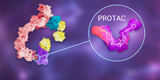
PROTAC, which exploit the ubiquitin-proteasome pathway to specifically degrade target proteins. PROTACs not only solve the problem of undruggability but they also have other advantages compared to traditional drug targeting strategies.
Scientific Reviews
PROTAC, which exploit the ubiquitin-proteasome pathway to specifically degrade target proteins. PROTACs not only solve the problem of undruggability but they also have other advantages compared to traditional drug targeting strategies. -
 Scientific Reviews
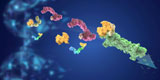
PROTAC — Target Selection and Design
Scientific Reviews
PROTAC — Target Selection and Design2022-07-08
A PROTAC molecule consists of three components: a target protein binding ligand, an E3 ligase ligand, and a linker connecting these two moieties. Here, we will discuss the conventional approaches for the rational design of PROTAC molecules. -
 Scientific Reviews
Organoids represent an important bridge between 2D cultures and in vivo mouse/human models. The organoid technology exerts enormous potential in evaluation of efficacy and toxicity of drugs, regenerative medicine, and precision medicine.In this article, we will briefly introduce organoid technology.
Scientific Reviews
Organoids represent an important bridge between 2D cultures and in vivo mouse/human models. The organoid technology exerts enormous potential in evaluation of efficacy and toxicity of drugs, regenerative medicine, and precision medicine.In this article, we will briefly introduce organoid technology. -
 Scientific Reviews
Development of Intestinal Organoid
Scientific Reviews
Development of Intestinal Organoid2022-07-28
3D organoid is one of the revolutionary developments in biomedical field during the past 10 years. The establishment of intestinal organoids is an important milestone in the development of organoid technology. -
 Scientific Reviews
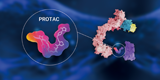
BacPROTACs is composed of a POI ligand, a chemical linker and a ClpCNTD anchor. BacPROTACs can induce in vitro and in vivo degradation of non-eukaryotic proteins in bacteria without the ubiquitin proteasome system.
Scientific Reviews
BacPROTACs is composed of a POI ligand, a chemical linker and a ClpCNTD anchor. BacPROTACs can induce in vitro and in vivo degradation of non-eukaryotic proteins in bacteria without the ubiquitin proteasome system. -
 Scientific Reviews
RNA therapeutics have changed the landscape of drug development, which possess broader spectrum of drug targets, simplicity and efficiency in development and manufacturing.In this article, we will discuss the underlying mechanisms of RNA-based drugs on the market or in clinical stages.
Scientific Reviews
RNA therapeutics have changed the landscape of drug development, which possess broader spectrum of drug targets, simplicity and efficiency in development and manufacturing.In this article, we will discuss the underlying mechanisms of RNA-based drugs on the market or in clinical stages. -
Scientific Reviews
Organoids have great potential in research of organ development, disease modeling, drug screening and, precision and regenerative medicin. In this article, we will expalin the origin of the organoids. Adult stem cells (ASCs) or pluripotent stem cells (PSCs) , which is the better choice.
-
 Scientific Reviews
Autophagy, derived from the Greek meaning "eating of self", plays an indispensable role in maintaining homeostasis. p27 is an inhibitor of cyclin CDKs, but how p27 regulates autophagy remains unknown. This article will cover the mechanism of autophagy and p27-related cell cycle regulation.
Scientific Reviews
Autophagy, derived from the Greek meaning "eating of self", plays an indispensable role in maintaining homeostasis. p27 is an inhibitor of cyclin CDKs, but how p27 regulates autophagy remains unknown. This article will cover the mechanism of autophagy and p27-related cell cycle regulation. -
 Scientific Reviews
AlphaFold2 can predict disease-related protein structures at low cost, and then find potential drugs for these diseases through drug repositioning, virtual screening, and other methods. ZINC is a public database summarizing information about billions of compounds. AlphaFold2 + ZINC20 speeds up the virtual screening process and improves the computing speed.
Scientific Reviews
AlphaFold2 can predict disease-related protein structures at low cost, and then find potential drugs for these diseases through drug repositioning, virtual screening, and other methods. ZINC is a public database summarizing information about billions of compounds. AlphaFold2 + ZINC20 speeds up the virtual screening process and improves the computing speed. -
 Scientific Reviews
CMA (chaperone-mediated autophagy) plays an essential role in maintaining neuronal protein stability and preventing neurodegeneration. In this article, we will comprehensively clarify the role of CMA in the occurrence and development of neurodegenerative diseases.
Scientific Reviews
CMA (chaperone-mediated autophagy) plays an essential role in maintaining neuronal protein stability and preventing neurodegeneration. In this article, we will comprehensively clarify the role of CMA in the occurrence and development of neurodegenerative diseases. -
 Scientific Reviews
TME (Tumor microenvironment) is considered as a complex integrated system, composed of cellular components such as tumor cells and immune cells, as well as non-cellular components such as ECM and cytokines. According to the spatial distribution of immune cells in TME, "hot" and "cold" TME will be explained in this article.
Scientific Reviews
TME (Tumor microenvironment) is considered as a complex integrated system, composed of cellular components such as tumor cells and immune cells, as well as non-cellular components such as ECM and cytokines. According to the spatial distribution of immune cells in TME, "hot" and "cold" TME will be explained in this article. -
 Scientific Reviews
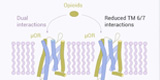
As powerful pain relievers, the opioids morphine and fentanyl have been "checked" by their side effects (listed as controlled substances). How to reduce its side effects? What is its mechanism? This research will explore its mechanism.
Scientific Reviews
As powerful pain relievers, the opioids morphine and fentanyl have been "checked" by their side effects (listed as controlled substances). How to reduce its side effects? What is its mechanism? This research will explore its mechanism. -
 Scientific Reviews
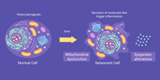
Understanding the mechanism of aging not only has guiding significance for prolonging human life but also has important clinical significance for the prevention and treatment of diseases in the elderly population , thus, improving their life quality and well-being.
Scientific Reviews
Understanding the mechanism of aging not only has guiding significance for prolonging human life but also has important clinical significance for the prevention and treatment of diseases in the elderly population , thus, improving their life quality and well-being. -
 Scientific Reviews
The latest study of Cell magazine "Neural mechanism underlying depressive-like state associated with social status loss" considers social factors as a breakthrough point. It has been found that the downward transition of social status induces depression-like behavior in mice whereas improves the depressive state by restoring their social environment.
Scientific Reviews
The latest study of Cell magazine "Neural mechanism underlying depressive-like state associated with social status loss" considers social factors as a breakthrough point. It has been found that the downward transition of social status induces depression-like behavior in mice whereas improves the depressive state by restoring their social environment. -
 Scientific Reviews
PROTAC - Design Strategy for Targeting
Scientific Reviews
PROTAC - Design Strategy for Targeting2023-04-23
Protein degradation targeting chimera (PROTAC) is a technology that uses the ubiquitin proteasome pathway to silent target protein. However, PROTAC still has problems such as solubility, membrane permeability, and selectivity. In this article, we have summarized three strategies for optimization: light-controlled linker, PAC molecule, and specific E3 ligase. -
 Scientific Reviews
Necroptosis, also known as necroptosis, is a form of regulated necrotizing cell death mediated by RIP1 and RIP3 kinases. Necroptosis is a process that prevents the self-destruction of activated cells that are blocked by apoptosis. Necroptosis plays a tumor suppressor role in most cases. It may provide benefits in the researches of a variety of human diseases involving immune inflammation and cell death.
Scientific Reviews
Necroptosis, also known as necroptosis, is a form of regulated necrotizing cell death mediated by RIP1 and RIP3 kinases. Necroptosis is a process that prevents the self-destruction of activated cells that are blocked by apoptosis. Necroptosis plays a tumor suppressor role in most cases. It may provide benefits in the researches of a variety of human diseases involving immune inflammation and cell death. -
 Scientific Reviews
Stem cell classification and its application
Scientific Reviews
Stem cell classification and its application2023-05-18
Stem cells (SCs) have the unique ability to self-renew and differentiate into different cell types. SCs can differentiate into various types of tissue cells under specific conditions. Additionally, they can be further cultured to form different tissues and organs in the human body. Stem cells have numerous applications in various fields, including cell therapy, organ transplantation, neurodegenerative disease modeling, and drug screening. -
 Scientific Reviews
Mitophagy:Mechanisms and Detection
Scientific Reviews
Mitophagy:Mechanisms and Detection2023-05-25
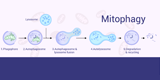
About 60 years ago, Christian de Duve first used the term "autophagy" to describe his observation of the degradation of mitochondria and other intracellular structures in lysosomes of rat liver. Over the years, autophagy has remained a beloved topic of research by the National Natural Science Foundation of China (NSFC).Today, let's talk about mitochondrial autophagy. -
 Scientific Reviews
HLA-E, A Novel Immune Checkpoint
Scientific Reviews
HLA-E, A Novel Immune Checkpoint2023-06-29
Immune checkpoints have immunosuppressive functions. It can be used in the research of tumor immunotherapy. In this article, we introduce a new paper entitled "Immune checkpoint HLA-E: CD94 - NKG2Amediates evasion of circulating tumor cells from NK cell surveillance "research paper. -
 Scientific Reviews
How to Perform Western Blot?
Scientific Reviews
How to Perform Western Blot?2023-07-13
Western blot is one of the most frequently performed experiments in molecular biology, biochemistry and immunology. This article describes in detail how to do WB. -
 Scientific Reviews
Organoid Culture: Questions & Answers
Scientific Reviews
Organoid Culture: Questions & Answers2023-07-26
In the last issue, we conducted a live lecture on the theme of organoid culture. Today, we have a special topic to solve your doubts in the last live class! -
 Scientific Reviews
WHO's Q2 drug list has been updated. Let's take you through the list of the most noteworthy small molecule drugs that we should pay attention to.
Scientific Reviews
WHO's Q2 drug list has been updated. Let's take you through the list of the most noteworthy small molecule drugs that we should pay attention to. -
 Scientific Reviews
FDA Approved Drug List!
Scientific Reviews
FDA Approved Drug List!2023-09-14
In the first half of 2023 (as of June 27), the FDA approved 26 new drugs, let's take you learn about it through the article. -
 Scientific Reviews
IHC is an indispensable technique for studying tissue morphology and in situ antigen expression, but usually only one or two antigens in tissues can be stained for analysis. It cannot judge the results more intuitively. Today, Little M will introduce you to the upgraded version mlHC.
Scientific Reviews
IHC is an indispensable technique for studying tissue morphology and in situ antigen expression, but usually only one or two antigens in tissues can be stained for analysis. It cannot judge the results more intuitively. Today, Little M will introduce you to the upgraded version mlHC. -
 Scientific Reviews
FDA Annual Review | Record-breaking number of new drug approvals in 2023!
Scientific Reviews
FDA Annual Review | Record-breaking number of new drug approvals in 2023! -
 Scientific Reviews
Katalin Karikó and Drew Weissman were awarded the Nobel Prize in Physiology or Medicine in 2023 for their groundbreaking work in nucleoside modification, which paved the way for the creation of successful mRNA vaccines to fight against COVID-19. Let's now delve into the complete process of mRNA vaccine development.
Scientific Reviews
Katalin Karikó and Drew Weissman were awarded the Nobel Prize in Physiology or Medicine in 2023 for their groundbreaking work in nucleoside modification, which paved the way for the creation of successful mRNA vaccines to fight against COVID-19. Let's now delve into the complete process of mRNA vaccine development. -
 Scientific Reviews
SPR, which stands for Surface Plasmon Resonance, essentially works by detecting the interaction between ligands and analytes on a biosensor chip. This in turn allows us to probe the properties and structure of substances. With this technology, we can analyze molecules, proteins, DNA, and various organic and inorganic substances in samples in real-time with precision.
Scientific Reviews
SPR, which stands for Surface Plasmon Resonance, essentially works by detecting the interaction between ligands and analytes on a biosensor chip. This in turn allows us to probe the properties and structure of substances. With this technology, we can analyze molecules, proteins, DNA, and various organic and inorganic substances in samples in real-time with precision. -
 Scientific Reviews
Science | A "new" mechanism for non-ubiquitinated Midnolin-proteasomal degradation pathway
Scientific Reviews
Science | A "new" mechanism for non-ubiquitinated Midnolin-proteasomal degradation pathway2024-04-26
“ubiquitin-mediated protein degradation” won the Nobel Prize in Chemistry in 2004! In fact, proteasomes degrade not only ubiquitinated proteins but also non-ubiquitinated ones. The mechanism remains shrouded in mystery. After reading this piece today, you might have a lightbulb moment! -
 Scientific Reviews
Common Questions and Solutions for WB
Scientific Reviews
Common Questions and Solutions for WB2024-05-09
Come to understand the common problems and solutions of WB, and better complete the experiment! -
 Scientific Reviews
Exosomes, which won the Nobel Prize in 2013, are still a research hotspot in the national natural sciences, and their popularity has only increased over the past decade (in 2022, they still rank 5th in the national natural sciences hotspots!). Why have exosomes become the darling of scientific research? Let's take a look together~
Scientific Reviews
Exosomes, which won the Nobel Prize in 2013, are still a research hotspot in the national natural sciences, and their popularity has only increased over the past decade (in 2022, they still rank 5th in the national natural sciences hotspots!). Why have exosomes become the darling of scientific research? Let's take a look together~ -
 Scientific Reviews
Degrade target proteins through the autophagy-lysosome pathway including LYTAC, AUTAC, and ATTEC have gained increasing attention in recent years due to their significant research potential!
Scientific Reviews
Degrade target proteins through the autophagy-lysosome pathway including LYTAC, AUTAC, and ATTEC have gained increasing attention in recent years due to their significant research potential! -
 Scientific Reviews
Antibodies!
Scientific Reviews
Antibodies!2024-07-26
Today, We introduce antibodies for everyone! -
 Scientific Reviews
Streptavidin-Biotin System
Scientific Reviews
Streptavidin-Biotin System2024-08-03
Streptavidin strongly binding small molecule biotin is one of the most popular non-covalent coupling methods. Streptavidin can be coupled to various carriers such as magnetic beads and agarose matrix, and become a highly specific affinity medium to capture various biotin-labeled ligands. -
 Scientific Reviews
2024 Nobel Prize Announcements! Curious about the details? Click to dive into the exciting developments!
Scientific Reviews
2024 Nobel Prize Announcements! Curious about the details? Click to dive into the exciting developments! -
Scientific Reviews
Delve into the intricate networks that govern mitochondrial quality control. By examining key mechanisms such as biogenesis, mitochondrial dynamics (fission and fusion), proteolysis, and mitophagy. -
 Scientific Reviews
A New Form of Cell Death: PANoptosis!
Scientific Reviews
A New Form of Cell Death: PANoptosis! -
 Scientific Reviews
Advancing Chronic Kidney Disease Research with GJ103 and Lamin B1 Antibody!
Scientific Reviews
Advancing Chronic Kidney Disease Research with GJ103 and Lamin B1 Antibody! -
 Scientific Reviews
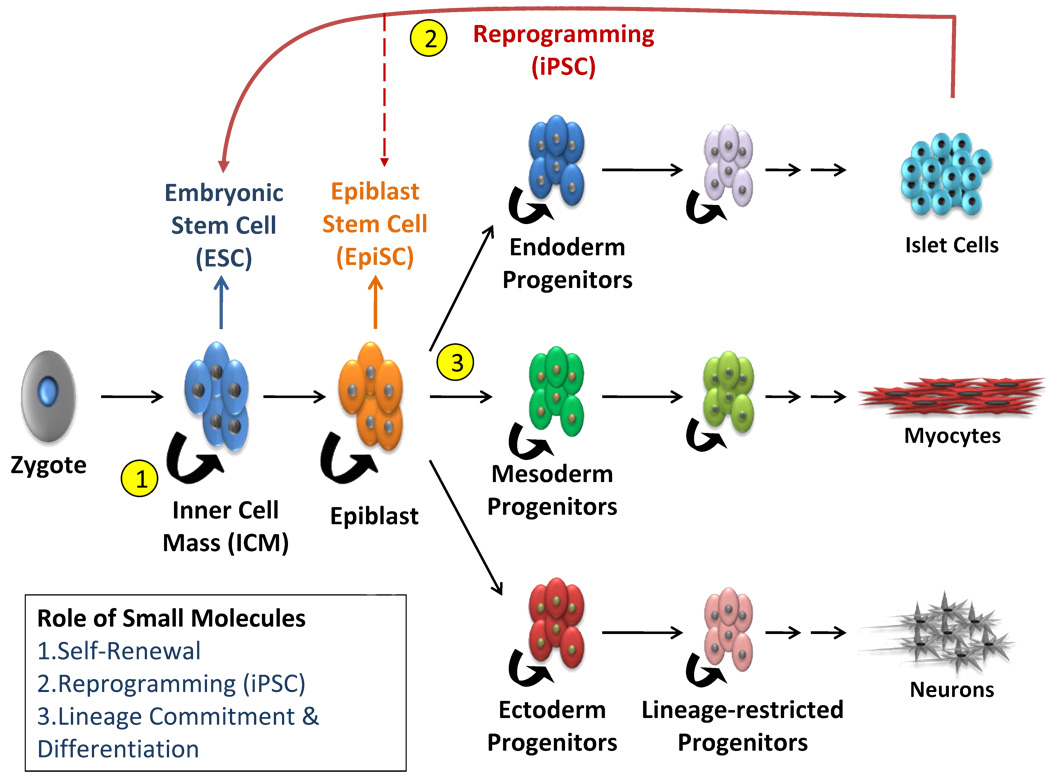
In early January 2025, MIT Tech Review unveiled its annual list of top 10 breakthrough technologies poised to redefine the future. Among these, stem cell therapy stood out for its potential to treat diverse diseases—including neurodegenerative disorders, diabetes, cancer, and heart failure. This groundbreaking approach uses stem cells to replace damaged cells, offering hope for millions worldwide.
Scientific Reviews
In early January 2025, MIT Tech Review unveiled its annual list of top 10 breakthrough technologies poised to redefine the future. Among these, stem cell therapy stood out for its potential to treat diverse diseases—including neurodegenerative disorders, diabetes, cancer, and heart failure. This groundbreaking approach uses stem cells to replace damaged cells, offering hope for millions worldwide. -
 Scientific Reviews
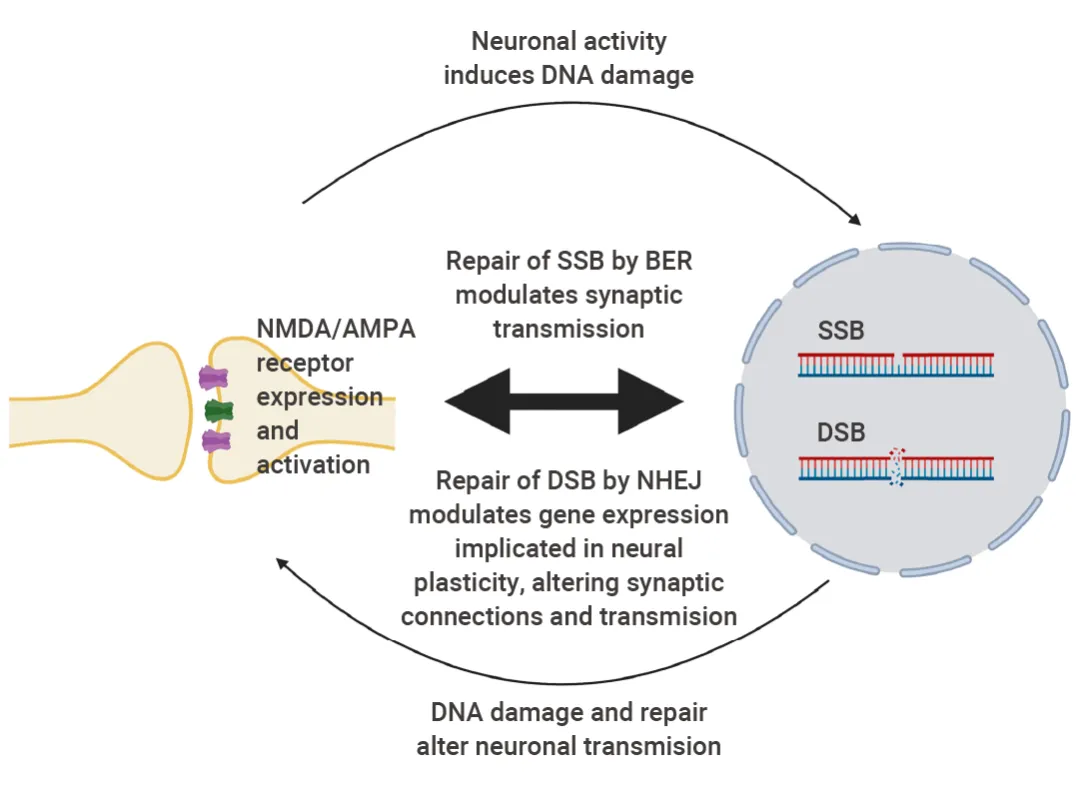
When you hear "inflammation" and "DNA damage," you might immediately think of disease or injury. However, in brains, these two processes are key steps in forming long-term memories, particularly related to specialized cells in our brain called hippocampal neurons.
Scientific Reviews
When you hear "inflammation" and "DNA damage," you might immediately think of disease or injury. However, in brains, these two processes are key steps in forming long-term memories, particularly related to specialized cells in our brain called hippocampal neurons. -
 Scientific Reviews
Autophagy is a fundamental process that degrades various components within the cell.
Scientific Reviews
Autophagy is a fundamental process that degrades various components within the cell. -
 Scientific Reviews
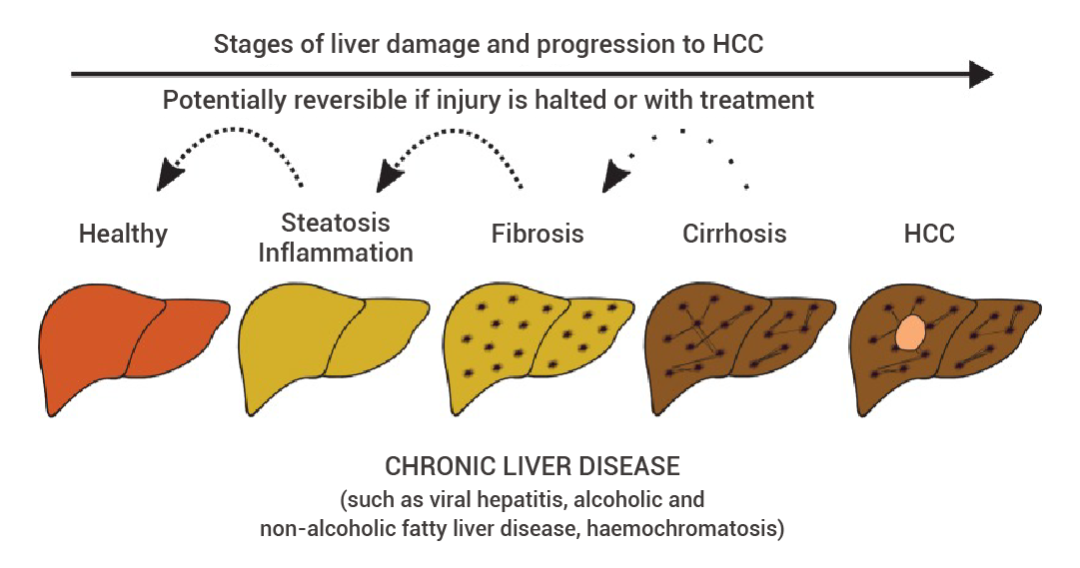
This article will tell you about the common methods of modeling liver disease in animal models.
Scientific Reviews
This article will tell you about the common methods of modeling liver disease in animal models. -
.jpg) Scientific Reviews
nside cells, the homeostasis and degradation of proteins is a precisely regulated process. If proteins cannot be degraded in time, it may lead to the occurrence of various diseases such as neurodegenerative diseases and cancer. This article will tell you the process of how proteins are recognized, labeled and then degraded!
Scientific Reviews
nside cells, the homeostasis and degradation of proteins is a precisely regulated process. If proteins cannot be degraded in time, it may lead to the occurrence of various diseases such as neurodegenerative diseases and cancer. This article will tell you the process of how proteins are recognized, labeled and then degraded! -
 Scientific Reviews
This article introduces some common cardiovascular disease models, inducers, modeling protocols and successful modeling cases in the research.
Scientific Reviews
This article introduces some common cardiovascular disease models, inducers, modeling protocols and successful modeling cases in the research. -
 Scientific Reviews
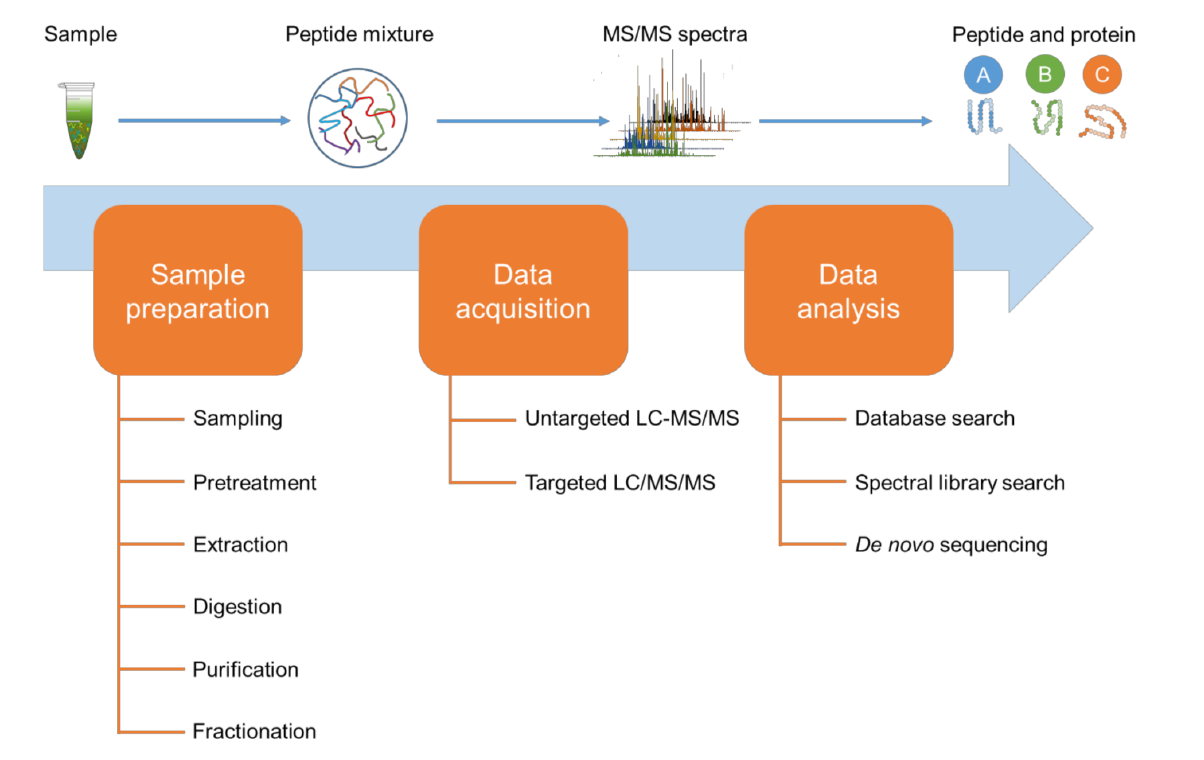
As a pivotal branch in the post - genomic era, proteomics is committed to comprehensively elucidating the types, abundances, structures, functions, and interactions of all proteins within living organisms. This article will tell you the key steps of proteomics sample preparation based on mass spectrometry. This article will tell you the key steps of proteomics sample preparation based on mass spectrometry.
Scientific Reviews
As a pivotal branch in the post - genomic era, proteomics is committed to comprehensively elucidating the types, abundances, structures, functions, and interactions of all proteins within living organisms. This article will tell you the key steps of proteomics sample preparation based on mass spectrometry. This article will tell you the key steps of proteomics sample preparation based on mass spectrometry. -
 Scientific Reviews
Western blotting is a crucial and fundamental technique in life science research. It plays a significant role in exploring protein expression and function. The following article will comprehensively and thoroughly elaborate on the specific procedures and detailed key points of this experiment.
Scientific Reviews
Western blotting is a crucial and fundamental technique in life science research. It plays a significant role in exploring protein expression and function. The following article will comprehensively and thoroughly elaborate on the specific procedures and detailed key points of this experiment. -
 Scientific Reviews
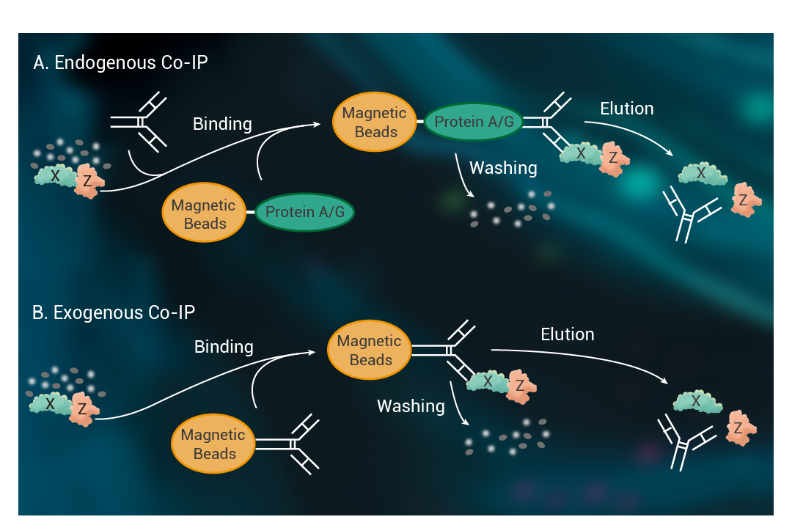
In protein biology, Co-IP is a powerful tool to uncover protein "social networks." But poorly performed, it easily becomes an awkward lab "meet-and-greet." Today, we discuss making Co-IP experiments elegant and efficient—so you pull down target proteins with confidence and precision.
Scientific Reviews
In protein biology, Co-IP is a powerful tool to uncover protein "social networks." But poorly performed, it easily becomes an awkward lab "meet-and-greet." Today, we discuss making Co-IP experiments elegant and efficient—so you pull down target proteins with confidence and precision. -
 Scientific Reviews
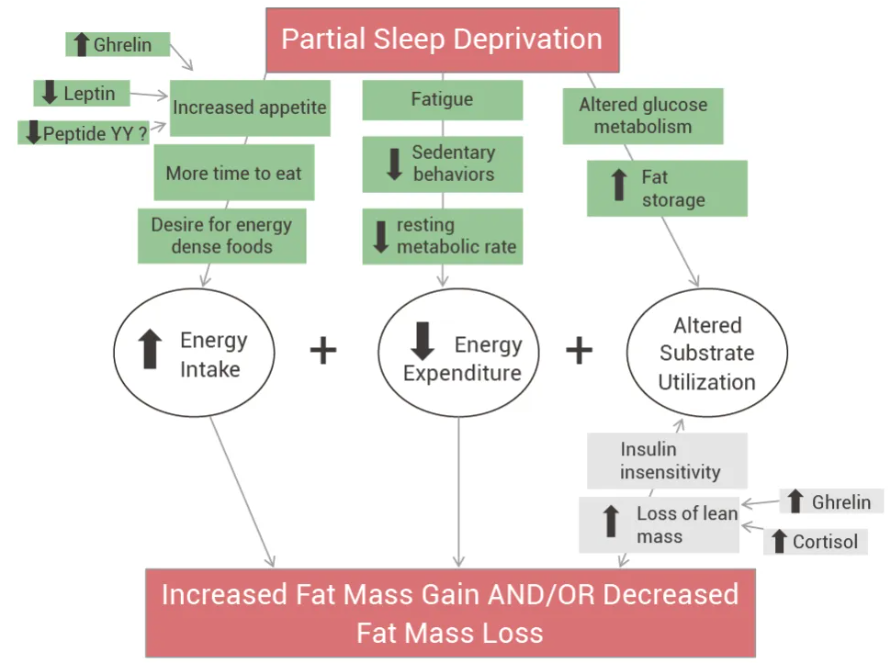
Have you ever noticed that after staying up late, your appetite—especially for high-calorie foods—gets out of control? If this sounds familiar, today’s article might offer some good news.
Scientific Reviews
Have you ever noticed that after staying up late, your appetite—especially for high-calorie foods—gets out of control? If this sounds familiar, today’s article might offer some good news. -
 Scientific Reviews
A groundbreaking study in Nature Communications reveals the key mechanism behind Idiopathic Pulmonary Fibrosis and identifies an existing drug with the potential to counter it.
Scientific Reviews
A groundbreaking study in Nature Communications reveals the key mechanism behind Idiopathic Pulmonary Fibrosis and identifies an existing drug with the potential to counter it. -
 Scientific Reviews
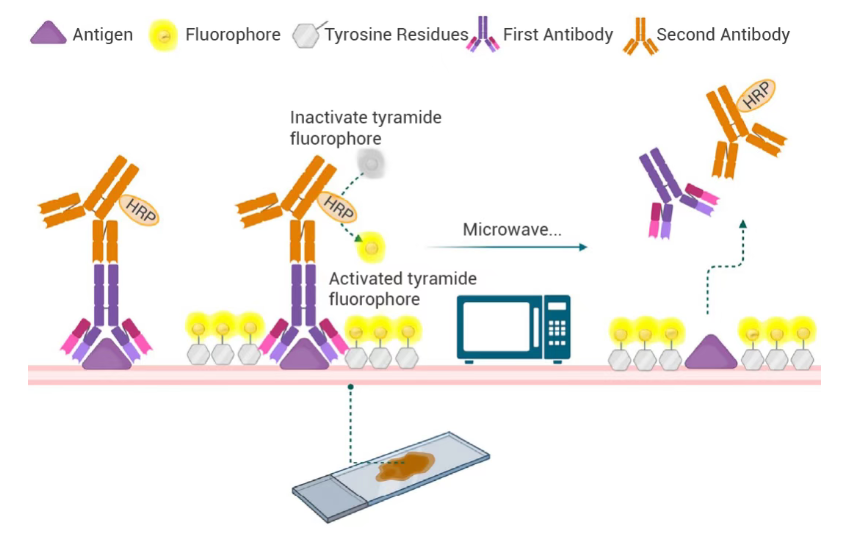
This detailed guide outlines the standardized experimental protocols for multiplex immunohistochemistry (mIHC), systematically summarizes common technical issues encountered during sample preparation, staining and imaging processes, and provides practical troubleshooting solutions to ensure reliable and reproducible results in biomedical research and clinical sample analysis.
Scientific Reviews
This detailed guide outlines the standardized experimental protocols for multiplex immunohistochemistry (mIHC), systematically summarizes common technical issues encountered during sample preparation, staining and imaging processes, and provides practical troubleshooting solutions to ensure reliable and reproducible results in biomedical research and clinical sample analysis. -
Scientific Reviews
For all the protein research folks out there, techniques like IP and Co-IP are no stranger, right? And of course, there's a faster and more convenient go-to tool—Protein A/G magnetic beads! In this article, let's chat about how these beads work their magic in classic experiments like IP and Co-IP. -
Scientific Reviews
Microglia– the only immune cells within the brain parenchyma. With advancements in imaging technologies, people’s understanding of microglia has shifted from being viewed as 'resting' cells to 'highly active' cells, particularly due to their dynamic processes that seem to be probing surrounding tissues and monitoring neuronal activity. This has made microglia a focal point of research in the field of neuroscience. -
 Scientific Reviews
Exosomes—natural nanoscale carriers—are revolutionizing targeted therapy. This article uncovers the science behind their precision in drug delivery.
Scientific Reviews
Exosomes—natural nanoscale carriers—are revolutionizing targeted therapy. This article uncovers the science behind their precision in drug delivery. -
Scientific Reviews
Cracking the PROTAC Permeability Barrier: CD36-Mediated Endocytosis as a Potential Breakthrough2025-12-03
This article provides an in-depth analysis of cutting-edge literature revealing CD36 as a key mediator of cellular uptake for PROTACs and bRO5 compounds. By structurally optimizing PROTAC molecules to enhance their affinity for CD36, membrane permeability can be markedly improved, leading to significantly enhanced antitumor efficacy. -
 Scientific Reviews
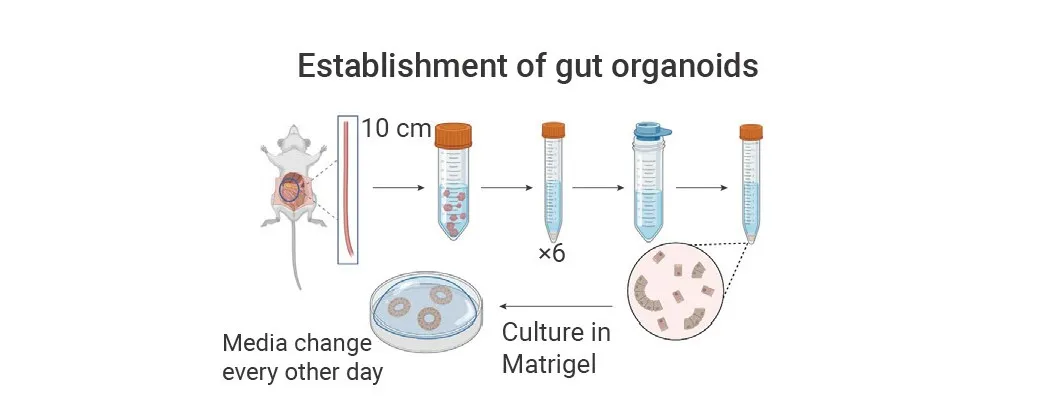
Efficient Generation of Mouse Small Intestinal Organoids: A Complete Experimental Protocol Guide
Scientific Reviews
Efficient Generation of Mouse Small Intestinal Organoids: A Complete Experimental Protocol Guide2025-12-10
How to successfully create mouse small intestine organoids? A detailed, hands-on guide to the entire process, all in one article! -
 Scientific Reviews
This paper elaborates on cytokines for culturing major immune cells, their regulatory roles, recombinant cytokines' merits and MCE’s related high-quality products.
Scientific Reviews
This paper elaborates on cytokines for culturing major immune cells, their regulatory roles, recombinant cytokines' merits and MCE’s related high-quality products. -
 Scientific Reviews
Molecular glue degraders have evolved from a serendipitous observation to one of the most dynamic and transformative fields in biomedical research.
Scientific Reviews
Molecular glue degraders have evolved from a serendipitous observation to one of the most dynamic and transformative fields in biomedical research. -
 EDM
Targeting the ‘Undruggable’ with PROTACs
EDM
Targeting the ‘Undruggable’ with PROTACs2025-06-18
This review introduces the fundamental principles and mechanisms of PROTACs, highlights recent advances in molecular design and clinical development, and discusses emerging opportunities and remaining challenges in targeted protein degradation. -
 EDM
Advances in Alzheimer's Disease Research
EDM
Advances in Alzheimer's Disease Research2025-07-16
This review summarizes current understanding of AD pathophysiology, including amyloid and tau pathology, neuroinflammation, synaptic dysfunction, and vascular abnormalities, and evaluates therapeutic strategies and experimental models. -
 EDM
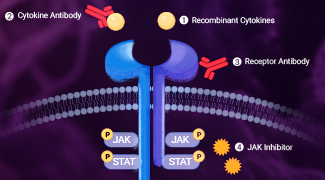
This review critically examines the role of the JAK-STAT pathway in immunity and autoimmune diseases, reviews current clinical applications of targeted therapies, and highlights emerging trends in autoimmune drug development.
EDM
This review critically examines the role of the JAK-STAT pathway in immunity and autoimmune diseases, reviews current clinical applications of targeted therapies, and highlights emerging trends in autoimmune drug development. -
 EDM
This review summarizes the mechanisms of DSS-induced colitis, commonly used modeling approaches, and key considerations related to DSS molecular weight.
EDM
This review summarizes the mechanisms of DSS-induced colitis, commonly used modeling approaches, and key considerations related to DSS molecular weight. -
 EDM
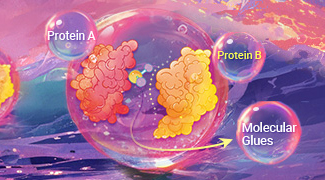
This review discusses recent progress in molecular glue technologies, illustrating how targeted protein degradation strategies enable the modulation of previously undruggable proteins.
EDM
This review discusses recent progress in molecular glue technologies, illustrating how targeted protein degradation strategies enable the modulation of previously undruggable proteins. -
 EDM
This review highlights the roles of microglia in AD pathology, focusing on metabolic reprogramming and microglia-targeted therapeutic strategies.
EDM
This review highlights the roles of microglia in AD pathology, focusing on metabolic reprogramming and microglia-targeted therapeutic strategies. -
 EDM
This review outlines macrophage functions and classification, and provides practical experimental guidelines for macrophage differentiation, polarization, and identification.
EDM
This review outlines macrophage functions and classification, and provides practical experimental guidelines for macrophage differentiation, polarization, and identification. -
 EDM
Review advances in target discovery, disease modeling, and biomarkers for Parkinson’s disease, highlighting their interplay and future directions for translational research.
EDM
Review advances in target discovery, disease modeling, and biomarkers for Parkinson’s disease, highlighting their interplay and future directions for translational research. -
 EDM
Review the mechanisms, mitochondrial regulation, disease relevance, and translational opportunities of the NLRP3–STING axis in neuroinflammation.
EDM
Review the mechanisms, mitochondrial regulation, disease relevance, and translational opportunities of the NLRP3–STING axis in neuroinflammation. -
 EDM
Explore the mechanisms driving immune tolerance breakdown in autoimmune diseases and emerging tolerance-restoring strategies, with a focus on IL-2-based immune modulation.
EDM
Explore the mechanisms driving immune tolerance breakdown in autoimmune diseases and emerging tolerance-restoring strategies, with a focus on IL-2-based immune modulation. -
 EDM
Review the evolution of molecular glues from serendipitous discovery to rational design, highlighting how emerging targets and advances in screening, proteomics, structural biology, and AI are expanding the druggable proteome.
EDM
Review the evolution of molecular glues from serendipitous discovery to rational design, highlighting how emerging targets and advances in screening, proteomics, structural biology, and AI are expanding the druggable proteome. -
 EDM
Explore how anti-Aβ therapy is reshaping the AD treatment landscape, the rationale for multi-pathology combination strategies, and advances in biomarker-guided precision treatment.
EDM
Explore how anti-Aβ therapy is reshaping the AD treatment landscape, the rationale for multi-pathology combination strategies, and advances in biomarker-guided precision treatment. -
 EDM
Explore how mitochondrial quality control, inflammatory signaling, and metabolic–epigenetic reprogramming regulate cellular senescence and the SASP, along with strategies to restore mitochondrial homeostasis.
EDM
Explore how mitochondrial quality control, inflammatory signaling, and metabolic–epigenetic reprogramming regulate cellular senescence and the SASP, along with strategies to restore mitochondrial homeostasis. -
 Blog
AZD5991, a macrocyclic molecule with high selectivity for Mcl-1, reduces Mcl-1 protein in AZD5991-sensitive but not in AZD5991-resistant MM cell lines.
Blog
AZD5991, a macrocyclic molecule with high selectivity for Mcl-1, reduces Mcl-1 protein in AZD5991-sensitive but not in AZD5991-resistant MM cell lines. -
 Blog
CF53 is a highly potent, selective and orally active inhibitor of BET protein, with anti-tumor activity in acute leukemia and breast cancer cell lines.
Blog
CF53 is a highly potent, selective and orally active inhibitor of BET protein, with anti-tumor activity in acute leukemia and breast cancer cell lines. -
 Blog
HJB97 is a BET PROTAC inhibitor with good anti-tumor activity, and effectively blocks the degradation of BRD2, BRD3, and BRD4 proteins induced by BETd-260.
Blog
HJB97 is a BET PROTAC inhibitor with good anti-tumor activity, and effectively blocks the degradation of BRD2, BRD3, and BRD4 proteins induced by BETd-260. -
 Blog
BR351 is a Brain Penetrant MMP Inhibitor
Blog
BR351 is a Brain Penetrant MMP Inhibitor2019-04-05
BR351 is a brain penetrant MMP inhibitor, and a potential tool for the molecular imaging of activated MMPs with PET, with an IC50 in the nanomolar range. -
 Blog
A Lead PROTAC BRD9 Chemical Degrader
Blog
A Lead PROTAC BRD9 Chemical Degrader2019-04-06
PROTAC BRD9 Degrader-1 is a lead PROTAC BRD9 chemical degrader and a selective probe useful for the study of BAF complex biology. -
 Blog
COH000 is an allosteric, covalent and irreversible inhibitor of SUMO-activating enzyme, with an IC50 of 0.2 μM for SUMOylation in vitro.
Blog
COH000 is an allosteric, covalent and irreversible inhibitor of SUMO-activating enzyme, with an IC50 of 0.2 μM for SUMOylation in vitro. -
 Blog
HS-1371 is a Small Molecule RIP3 Inhibitor
Blog
HS-1371 is a Small Molecule RIP3 Inhibitor2019-04-09
HS-1371 is a novel kinase inhibitor of RIP3-mediated necroptosis, showing an inhibitory effect on S227 auto-phosphorylation of RIP3 at the basal level. -
 Blog
PhiKan 083 is a carbazole derivative, which binds to the surface cavity and stabilizes Y220C (a p53 mutant), with a Kd of 167 μM.
Blog
PhiKan 083 is a carbazole derivative, which binds to the surface cavity and stabilizes Y220C (a p53 mutant), with a Kd of 167 μM. -
 Blog
IITZ-01 is a potent lysosomotropic autophagy inhibitor with single-agent antitumor activity, with an IC50 of 2.62 μM for PI3Kγ.
Blog
IITZ-01 is a potent lysosomotropic autophagy inhibitor with single-agent antitumor activity, with an IC50 of 2.62 μM for PI3Kγ. -
 Blog
PRN1008 is a Reversible Covalent and Oral Active Inhibitor of Bruton’s Tyrosine Kinase (BTK)
Blog
PRN1008 is a Reversible Covalent and Oral Active Inhibitor of Bruton’s Tyrosine Kinase (BTK)2019-04-18
PRN1008 is a selective, reversible covalent and oral active inhibitor of Bruton’s Tyrosine Kinase (BTK), with an IC50 of 1.3 nM. -
 Blog
Multiple Tyrosine Kinases Inhibitor TAS-115
Blog
Multiple Tyrosine Kinases Inhibitor TAS-1152019-04-19
TAS-115 is a potent VEGFR and c-Met/HGFR-targeted kinase inhibitor with IC50s of 30 and 32 nM for rVEGFR2 and rMET, respectively. -
 Blog
Y06036 is a potent and selective BET inhibitor for potential treatment of castration-resistant prostate cancer. With nanomolar inhibition.
Blog
Y06036 is a potent and selective BET inhibitor for potential treatment of castration-resistant prostate cancer. With nanomolar inhibition. -
 Blog
TAK-828F is a potent, selective and orally active retinoic acid receptor-related orphan receptor γt (RORγt) inverse agonist. TAK-828F inhibits IL-17A cytokine expression and reduces symptoms of autoimmune encephalomyelitis mice.
Blog
TAK-828F is a potent, selective and orally active retinoic acid receptor-related orphan receptor γt (RORγt) inverse agonist. TAK-828F inhibits IL-17A cytokine expression and reduces symptoms of autoimmune encephalomyelitis mice. -
 Blog
Y06137 is a potent and selective BET inhibitor, which binds to the BRD4(1) bromodomain with a Kd of 81 nM. Antitumor activity.
Blog
Y06137 is a potent and selective BET inhibitor, which binds to the BRD4(1) bromodomain with a Kd of 81 nM. Antitumor activity. -
 Blog
NRX-252262 is a β-catenin:β-TrCP interaction enhancer, and its cognate E3 ligase, SCFβ-TrCP, induces mutant β-catenin degradation, with an EC50 of 3.8 nM
Blog
NRX-252262 is a β-catenin:β-TrCP interaction enhancer, and its cognate E3 ligase, SCFβ-TrCP, induces mutant β-catenin degradation, with an EC50 of 3.8 nM -
 Blog
TAK-981 is a selective inhibitor of the SUMOylation enzymatic cascade, with potential immune-activating and antineoplastic activities
Blog
TAK-981 is a selective inhibitor of the SUMOylation enzymatic cascade, with potential immune-activating and antineoplastic activities -
 Blog
TD-428 is a Highly Specific BRD4 Degrader
Blog
TD-428 is a Highly Specific BRD4 Degrader2019-04-29
TD-428, a immunomodulatory drug analog, is a highly specific BRD4 degrader with a DC50 of 0.32 nM. TD-428 reduces c-Myc levels more efficiently than JQ1. -
 Blog
SLLN-15 is an oral activ enhancer of autophagy that activates cytostatic macroautophagy/autophagy in triple-negative breast cancer (TNBC).
Blog
SLLN-15 is an oral activ enhancer of autophagy that activates cytostatic macroautophagy/autophagy in triple-negative breast cancer (TNBC). -
 Blog
A1874 is a nutlin-based and BRD4-degrading PROTAC with a DC50 of 32 nM. Effective in inhibiting many cancer cell lines proliferation
Blog
A1874 is a nutlin-based and BRD4-degrading PROTAC with a DC50 of 32 nM. Effective in inhibiting many cancer cell lines proliferation -
 Blog
BSJ-03-123, a Degrader with Proteome-wide Selectivity for CDK6 (PROTAC). Induces a G1 cell-cycle arrest without a measurable increase in apoptosis.
Blog
BSJ-03-123, a Degrader with Proteome-wide Selectivity for CDK6 (PROTAC). Induces a G1 cell-cycle arrest without a measurable increase in apoptosis. -
 Blog
FT671 is a potent, non-covalent and selective USP7 inhibitor with an IC50 of 52 nM and binds to the USP7 catalytic domain with a Kd of 65 nM.
Blog
FT671 is a potent, non-covalent and selective USP7 inhibitor with an IC50 of 52 nM and binds to the USP7 catalytic domain with a Kd of 65 nM. -
 Blog
ZM223 is a non-sulfamide NEDD8 activating enzyme (NAE) inhibitor, with IC50 value of 100 nM in cells. ZM223 has potential to treat colon cancer.
Blog
ZM223 is a non-sulfamide NEDD8 activating enzyme (NAE) inhibitor, with IC50 value of 100 nM in cells. ZM223 has potential to treat colon cancer. -
 Blog
ACY-1083, a Highly Selective HDAC6 Inhibitor, Reverses Chemotherapy-induced Peripheral Neuropathy
Blog
ACY-1083, a Highly Selective HDAC6 Inhibitor, Reverses Chemotherapy-induced Peripheral Neuropathy2019-05-12
ACY-1083 is a selective and brain-penetrating HDAC6 inhibitor with an IC50 of 3 nM. ACY-1083 effectively reverses chemotherapy-induced peripheral neuropathy -
 Blog
MS4077 is an anaplastic lymphoma kinase (ALK) PROTAC (degrader) with a Kd of 37 nM for binding affinity to ALK. Efficacy for breast cancer and lung cancer.
Blog
MS4077 is an anaplastic lymphoma kinase (ALK) PROTAC (degrader) with a Kd of 37 nM for binding affinity to ALK. Efficacy for breast cancer and lung cancer. -
 Blog
VL285, is a Potent VHL Ligand
Blog
VL285, is a Potent VHL Ligand2019-05-24
VL285 is a Potent VHL Ligand. -
 Blog
SNIPER(TACC3)-1 targets the TACC3 protein for degradation via the ubiquitin-proteasome pathway. SNIPER(TACC3)-1 induces cancer cell death.
Blog
SNIPER(TACC3)-1 targets the TACC3 protein for degradation via the ubiquitin-proteasome pathway. SNIPER(TACC3)-1 induces cancer cell death. -
 Blog
IWP-O1, a Highly Potent Porcupine Inhibitor, Functions by Preventing the Secretion of Wnt Proteins
Blog
IWP-O1, a Highly Potent Porcupine Inhibitor, Functions by Preventing the Secretion of Wnt Proteins2019-06-03
IWP-O1 is a Porcupine (Porcn) inhibitor, with an EC50 of 80 pM in L-Wnt-STF cells. IWP-O1 functions by preventing the secretion of Wnt proteins[ -
 Blog
GSK3145095 is a RIP1 kinase inhibitor with an IC50 of 6.3 nM. Potently blocks the TNF response and RIP1-dependent inflammatory cytokine MIP-1β production.
Blog
GSK3145095 is a RIP1 kinase inhibitor with an IC50 of 6.3 nM. Potently blocks the TNF response and RIP1-dependent inflammatory cytokine MIP-1β production. -
 Blog
SJFδ, a 10-atom Linker PROTAC, Degrades p38δ
Blog
SJFδ, a 10-atom Linker PROTAC, Degrades p38δ2019-06-11
SJFδ, a 10-atom Linker PROTAC, Degrades p38δ, degrades p38δwith strong capacity. SJFδ degrades p38δ with a DC50 of 46.17±9.85 nM and a Dmax of 99.41±3.31%. -
 Blog
JMS-17-2 is a CX3CR1 Antagonist
Blog
JMS-17-2 is a CX3CR1 Antagonist2019-06-12
JMS-17-2 is a potent and selective CX3CR1 antagonist with an IC50 of 0.32 nM. Has potential to treat cancers such as breast cancer. -
 Blog
BAY-11-7082 inhibits the proliferation and induces the apoptosis of U266 cells through inhibiting NF-κB pathway. BAY 11-7082 ameliorates experimental diabetic neuropathy by modulating neuroinflammation and improving antioxidant defence.
Blog
BAY-11-7082 inhibits the proliferation and induces the apoptosis of U266 cells through inhibiting NF-κB pathway. BAY 11-7082 ameliorates experimental diabetic neuropathy by modulating neuroinflammation and improving antioxidant defence. -
 Blog
S18-000003 is a potent, selective and orally active inhibitor of retinoic acid receptor-related orphan receptor-gamma-t (RORγt). S18-000003 ameliorates psoriasis-like lesions in vivo. S18-000003 can be used for the research of skin inflammatory diseases.
Blog
S18-000003 is a potent, selective and orally active inhibitor of retinoic acid receptor-related orphan receptor-gamma-t (RORγt). S18-000003 ameliorates psoriasis-like lesions in vivo. S18-000003 can be used for the research of skin inflammatory diseases. -
 Blog
TAS4464 is a highly potent and selective inhibitor of NEDD8 activating enzyme (NAE), with an IC50 of 0.955 nM. TAS4464 shows antitumor activity.
Blog
TAS4464 is a highly potent and selective inhibitor of NEDD8 activating enzyme (NAE), with an IC50 of 0.955 nM. TAS4464 shows antitumor activity. -
 Blog
TPCA-1, a Direct Dual Inhibitor of STAT3 and NF-κB, Regresses Mutant EGFR-Associated NSCLC
Blog
TPCA-1, a Direct Dual Inhibitor of STAT3 and NF-κB, Regresses Mutant EGFR-Associated NSCLC2019-07-15
TPCA-1 is a potent and selective inhibitor of IKK-2 with IC50 of 17.9 nM. TPCA-1 is an effective inhibitor of STAT3 phosphorylation, DNA binding. -
 Blog
ERD-308 is a highly potent PROTAC degrader of ER for ER+ breast cancer treatment. ERD-308 induces >95% of ER degradation at concentrations as low as 5 nM.
Blog
ERD-308 is a highly potent PROTAC degrader of ER for ER+ breast cancer treatment. ERD-308 induces >95% of ER degradation at concentrations as low as 5 nM. -
 Blog
JG-98, an Hsp70 inhibitor, binds tightly to a conserved site on Hsp70 and disrupts the Hsp70-Bag3 interaction. JG-98 shows anti-cancer activities.
Blog
JG-98, an Hsp70 inhibitor, binds tightly to a conserved site on Hsp70 and disrupts the Hsp70-Bag3 interaction. JG-98 shows anti-cancer activities. -
 Blog
MZP-55 is a selective PROTAC degrader of BRD3/4, shows no obvious effect on BRD2. MZP-55 exhibits excellent activity in cancer research.
Blog
MZP-55 is a selective PROTAC degrader of BRD3/4, shows no obvious effect on BRD2. MZP-55 exhibits excellent activity in cancer research. -
 Blog
dBET6 is a potent PROTAC degrader of BET, shows high affinity to BRD4(1), and possess good efficacy in T cell acute lymphoblastic leukemia activity.
Blog
dBET6 is a potent PROTAC degrader of BET, shows high affinity to BRD4(1), and possess good efficacy in T cell acute lymphoblastic leukemia activity. -
 Blog
GSK2643943A is a Novel DUB Inhibitor
Blog
GSK2643943A is a Novel DUB Inhibitor2019-07-25
GSK2643943A is a novel deubiquitylating enzyme (DUB) inhibitor. GSK2643943A targets USP20/Ub-Rho and shows an IC50 of 160 nM. -
 Blog
MT-802 is a potent BTK degrader based on PROTAC technology, with a DC50 of 1 nM. MT-802 has potential to treat C481S mutant chronic lymphocytic leukemia.
Blog
MT-802 is a potent BTK degrader based on PROTAC technology, with a DC50 of 1 nM. MT-802 has potential to treat C481S mutant chronic lymphocytic leukemia. -
 Blog
ACBI1 is a PROTAC Degrader of BAF Complex
Blog
ACBI1 is a PROTAC Degrader of BAF Complex2019-08-07
ACBI1 is a potent PROTAC degrader of BAF ATPase subunits SMARCA2, SMARCA4 and PBRM1, with DC50s of 6 nM, 11 nM and 32 nM in MV-4-11 cells, respectively. -
 Blog
dMCL1-2 is a potent and selective degrader of myeloid cell leukemia 1 (MCL1) based on PROTAC, which binds to MCL1 with a KD of 30 nM.
Blog
dMCL1-2 is a potent and selective degrader of myeloid cell leukemia 1 (MCL1) based on PROTAC, which binds to MCL1 with a KD of 30 nM. -
 Blog
CP-10 is a Specific PROTAC Degrader of CDK6
Blog
CP-10 is a Specific PROTAC Degrader of CDK62019-08-25
CP-10 is a PROTAC with highly selective, specific, and remarkable CDK6 degradation (DC50=2.1 nM), which has anti-cancer activity. -
 Blog
ARV-825 is a PROTAC, and acts as a potent BRD4 degrader, with Kds of 90 and 28 nM for BRD4 BD1 and BRD4 BD2, respectively.
Blog
ARV-825 is a PROTAC, and acts as a potent BRD4 degrader, with Kds of 90 and 28 nM for BRD4 BD1 and BRD4 BD2, respectively. -
 Blog
GMB-475 is a PROTAC BCR-ABL1 degrader, overcomes BCR-ABL1-dependent drug resistance, targets BCR-ABL1 protein and recruits the E3 ligase Von Hippel Lindau.
Blog
GMB-475 is a PROTAC BCR-ABL1 degrader, overcomes BCR-ABL1-dependent drug resistance, targets BCR-ABL1 protein and recruits the E3 ligase Von Hippel Lindau. -
 Blog
dBET57 is a potent and selective degrader of BRD4BD1 based on the PROTAC technology and mediates recruitment to the CRL4CRBN E3 ubiquitin ligase.
Blog
dBET57 is a potent and selective degrader of BRD4BD1 based on the PROTAC technology and mediates recruitment to the CRL4CRBN E3 ubiquitin ligase. -
 Blog
MD-224 is a human MDM2 degrader based on the PROTAC concept. MD-224 induces rapid degradation of MDM2 at concentrations <1 nM in human leukemia cells.
Blog
MD-224 is a human MDM2 degrader based on the PROTAC concept. MD-224 induces rapid degradation of MDM2 at concentrations <1 nM in human leukemia cells. -
 Blog
BI-167107 is a high affinity, full agonist that binds to the β2 adrenergic receptor (β2AR) with a dissociation constant Kd of 84 pM.
Blog
BI-167107 is a high affinity, full agonist that binds to the β2 adrenergic receptor (β2AR) with a dissociation constant Kd of 84 pM. -
 Blog
CP5V is a Specific PROTAC Degrader of Cdc20
Blog
CP5V is a Specific PROTAC Degrader of Cdc202019-11-20
CP5V is a PROTAC, which specifically degrades Cdc20 by linking Cdc20 to the VHL/VBC complex for ubiquitination followed by proteasomal degradation. -
 Blog
PK11007 is a Mild Alkylating Agent with Anticancer Activity and induces mutant p53 cancer cell death by increasing reactive oxygen species (ROS) levels.
Blog
PK11007 is a Mild Alkylating Agent with Anticancer Activity and induces mutant p53 cancer cell death by increasing reactive oxygen species (ROS) levels. -
 Blog
SD-36 is a Selective PROTAC STAT3 Degrader
Blog
SD-36 is a Selective PROTAC STAT3 Degrader2019-12-06
SD-36 is a potent, efficacious and selective PROTAC STAT3 degrader (Kd=50 nM) and achieves complete tumor regression in vivo. -
 Blog
MG-277 works as a PROTAC molecular glue, inducing degradation of a translation termination factor, GSPT1 to achieve its potent anticancer activity.
Blog
MG-277 works as a PROTAC molecular glue, inducing degradation of a translation termination factor, GSPT1 to achieve its potent anticancer activity. -
 Blog
UK 356618 is a Selective MMP-3 Inhibitor
Blog
UK 356618 is a Selective MMP-3 Inhibitor2019-12-25
UK 356618 is a selective and potent inhibitor of MMP-3. UK 356618 exhibits potent anti-inflammatory and anti-cancer activity. -
 Blog
MS432 is a first-in-class and highly selective PD0325901-based VHL-recruiting PROTAC degrader for MEK1 and MEK2 with good anti-cancer activity.
Blog
MS432 is a first-in-class and highly selective PD0325901-based VHL-recruiting PROTAC degrader for MEK1 and MEK2 with good anti-cancer activity. -
 Blog
KB02-JQ1 is a highly potent and selective PROTAC BRD4 degrader that degrades nuclear proteins by engaging CUL4-DDB1 E3 ubiquitin ligases DCAF16.
Blog
KB02-JQ1 is a highly potent and selective PROTAC BRD4 degrader that degrades nuclear proteins by engaging CUL4-DDB1 E3 ubiquitin ligases DCAF16. -
 Blog
CH6953755 is a potent, orally active and selective YES1 kinase inhibitor leading to antitumor activity against YES1 Gene -amplified cancers.
Blog
CH6953755 is a potent, orally active and selective YES1 kinase inhibitor leading to antitumor activity against YES1 Gene -amplified cancers. -
 Blog
CA-4948 is a Selective and Orally Bioavailable IRAK4 Kinase Inhibitor for Lymphoma Treatment
Blog
CA-4948 is a Selective and Orally Bioavailable IRAK4 Kinase Inhibitor for Lymphoma Treatment2020-01-05
CA-4948 is a potent, selective and orally bioavailable IRAK4 kinase inhibitor. CA-4948 can be used for the treatment of lymphoma. -
 Blog
M8891 is an orally active, reversible and brain penetrant Methionine Aminopeptidase-2 (MetAP-2) inhibitor with antiangiogenic and antitumoral activity.
Blog
M8891 is an orally active, reversible and brain penetrant Methionine Aminopeptidase-2 (MetAP-2) inhibitor with antiangiogenic and antitumoral activity. -
 Blog
TCH-165 is a modulator of proteasome assembly, which increases 20S levels and facilitates 20S-mediated protein degradation, such as IDPs, α-syn, and tau.
Blog
TCH-165 is a modulator of proteasome assembly, which increases 20S levels and facilitates 20S-mediated protein degradation, such as IDPs, α-syn, and tau. -
 Blog
BAY-985 is an orally active and selective ATP-competitive dual inhibitor of TBK1 and IKKε with IC50s of 2/30 and 2 nM for TBK1 and IKKε, respectively.
Blog
BAY-985 is an orally active and selective ATP-competitive dual inhibitor of TBK1 and IKKε with IC50s of 2/30 and 2 nM for TBK1 and IKKε, respectively. -
 Blog
ADH-503 is an orally active and allosteric CD11b agonist and leads to the repolarization of tumor-associated macrophages.
Blog
ADH-503 is an orally active and allosteric CD11b agonist and leads to the repolarization of tumor-associated macrophages. -
 Blog
6RK73 is a covalent irreversible and specific UCHL1 inhibitor,which specifically inhibits UCHL1 activity in breast cancer.
Blog
6RK73 is a covalent irreversible and specific UCHL1 inhibitor,which specifically inhibits UCHL1 activity in breast cancer. -
 Blog
Ro 90-7501, an Aβ42 fibril assembly inhibitor, inhibits PP5 in a TPR-dependent manner and has radiosensitizing effects on cervical cancer cells.
Blog
Ro 90-7501, an Aβ42 fibril assembly inhibitor, inhibits PP5 in a TPR-dependent manner and has radiosensitizing effects on cervical cancer cells. -
 Blog
CCT367766, a PROTAC-based Pirin-targeting PDP, exhibits a moderate affinity for the CRBN-DDB1 complex and reveals a good affinity for Pirin and CRBN.
Blog
CCT367766, a PROTAC-based Pirin-targeting PDP, exhibits a moderate affinity for the CRBN-DDB1 complex and reveals a good affinity for Pirin and CRBN. -
 Blog
E64FC26 is a highly potent pan-style inhibitor of the protein disulfide isomerase (PDI) family with anti-myeloma activities.
Blog
E64FC26 is a highly potent pan-style inhibitor of the protein disulfide isomerase (PDI) family with anti-myeloma activities. -
 Blog
NU1025 is a potent PARP inhibitor and potentiates the cytotoxicity of ionizing radiation drug. NU1025 has anti-cancer and neuroprotective activity.
Blog
NU1025 is a potent PARP inhibitor and potentiates the cytotoxicity of ionizing radiation drug. NU1025 has anti-cancer and neuroprotective activity. -
 Blog
TL13-112 is a PROTAC Degrader of ALK
Blog
TL13-112 is a PROTAC Degrader of ALK2020-04-15
TL13-112 is a selective ALK-PROTAC degrader and inhibits ALK activity. TL13-112 is comprised of the conjugation of Ceritinib and the ligand pomalidomide . -
 Blog
TL13-12 is a Selective ALK-PROTAC Degrader
Blog
TL13-12 is a Selective ALK-PROTAC Degrader2020-04-21
TL13-12 can induce receptor tyrosine kinase anaplastic lymphoma kinase degradation in non small cell lung cancer cells. PROTAC ALK degrader. -
 Blog
ARCC-4 is a low-nanomolar AR degrader, and effectively degrades clinically relevant AR mutants associated with antiandrogen therapy.
Blog
ARCC-4 is a low-nanomolar AR degrader, and effectively degrades clinically relevant AR mutants associated with antiandrogen therapy. -
 Blog
UT-34 is a potent, selective and orally active second-generation pan-androgen receptor (AR) antagonist and degrader with anti-prostate cancer efficacy.
Blog
UT-34 is a potent, selective and orally active second-generation pan-androgen receptor (AR) antagonist and degrader with anti-prostate cancer efficacy. -
 Blog
HM03 is a potent and selective HSPA5 inhibitor with anticancer activity. HSPA5 plays a key role in monitoring protein transport through the cell.
Blog
HM03 is a potent and selective HSPA5 inhibitor with anticancer activity. HSPA5 plays a key role in monitoring protein transport through the cell. -
 Blog
XZ739 is a PROTAC BCL-XL Degrader
Blog
XZ739 is a PROTAC BCL-XL Degrader2020-06-18
XZ739 is a PROTAC BCL-XL Degrader. XZ739 is potent against various cancer cell lines. PROTAC is an emerging therapeutic modality. -
 Blog
JCN037 is a potent, non-covalent, and brain-penetrant EGFR tyrosine kinase inhibitor. JCN037 has potent anti-cancer activity.
Blog
JCN037 is a potent, non-covalent, and brain-penetrant EGFR tyrosine kinase inhibitor. JCN037 has potent anti-cancer activity. -
 Blog
RA-9 is a potent and selective proteasome-associated DUBs inhibitor with favorable toxicity profile and anticancer activity.
Blog
RA-9 is a potent and selective proteasome-associated DUBs inhibitor with favorable toxicity profile and anticancer activity. -
 Blog
HLI373 represents a potential drug-able lead for the development of therapeutically efficacious inhibitors of Hdm2. Hdm2 is an ubiquitin protein ligase.
Blog
HLI373 represents a potential drug-able lead for the development of therapeutically efficacious inhibitors of Hdm2. Hdm2 is an ubiquitin protein ligase. -
 Blog
GSK143 is an orally active and highly selective spleen tyrosine kinase (SYK) inhibitor. GSK143 reduces inflammation in the intestinal muscularis in mice.
Blog
GSK143 is an orally active and highly selective spleen tyrosine kinase (SYK) inhibitor. GSK143 reduces inflammation in the intestinal muscularis in mice. -
 Blog
RA375, a RPN13 inhibitor, inhibits proteasome function in muscle. RA375 is highly active against cell lines of multiple myeloma and diverse solid cancers.
Blog
RA375, a RPN13 inhibitor, inhibits proteasome function in muscle. RA375 is highly active against cell lines of multiple myeloma and diverse solid cancers. -
 Blog
KCC-07 prevents binding of MBD2 to methylated DNA and activates BAI1 inducing anti-proliferative BAI1/p53/p21 signaling. Anticancer activity.
Blog
KCC-07 prevents binding of MBD2 to methylated DNA and activates BAI1 inducing anti-proliferative BAI1/p53/p21 signaling. Anticancer activity. -
 Blog
CAY10404 is a potent and highly selective COX-2 inhibitor. CAY10404 is a potent inhibitor of PKB/Akt and MAPK signalling pathways.
Blog
CAY10404 is a potent and highly selective COX-2 inhibitor. CAY10404 is a potent inhibitor of PKB/Akt and MAPK signalling pathways. -
 Blog
MPT0G211, an orally active and selective HDAC6 inhibitor, ameliorates tau phosphorylation, and cognitive deficits in an Alzheimer’s disease model.
Blog
MPT0G211, an orally active and selective HDAC6 inhibitor, ameliorates tau phosphorylation, and cognitive deficits in an Alzheimer’s disease model. -
 Blog
RapaLink-1, a third-generation bivalent mTOR inhibitor, potently blocking cancer-derived, activating mutants of mTOR. It can cross the blood-brain barrier.
Blog
RapaLink-1, a third-generation bivalent mTOR inhibitor, potently blocking cancer-derived, activating mutants of mTOR. It can cross the blood-brain barrier. -
 Blog
SJF620 is a Potent PROTAC BTK Degrader
Blog
SJF620 is a Potent PROTAC BTK Degrader2020-09-26
SJF620 is a potent PROTAC BTK degrader with improved pharmacokinetic properties. Contains a Lenalidomide analog for recruiting CRBN. -
 Blog
BSJ-04-132 is a potent and selective Ribociclib-based CDK4 degrader (PROTAC) and does not induce CDK6 and IKZF1/3 degradation with anti-cancer activity.
Blog
BSJ-04-132 is a potent and selective Ribociclib-based CDK4 degrader (PROTAC) and does not induce CDK6 and IKZF1/3 degradation with anti-cancer activity. -
 Blog
BSJ-03-204 is a potent and selective Palbociclib-based CDK4/6 dual degrader (PROTAC) and does not induce IKZF1/3 degradation with anti-cancer activity.
Blog
BSJ-03-204 is a potent and selective Palbociclib-based CDK4/6 dual degrader (PROTAC) and does not induce IKZF1/3 degradation with anti-cancer activity. -
 Blog
KB02-SLF is a PROTAC-based nuclear FKBP12 degrader. KB02-SLF promotes nuclear FKBP12 degradation by covalently modifying DCAF16 (E3 ligase).
Blog
KB02-SLF is a PROTAC-based nuclear FKBP12 degrader. KB02-SLF promotes nuclear FKBP12 degradation by covalently modifying DCAF16 (E3 ligase). -
 Blog
DT2216 is a potent and selective BCL-XL degrader based on PROTAC technology. DT2216 inhibits leukemia and has potent anti-cancer activity.
Blog
DT2216 is a potent and selective BCL-XL degrader based on PROTAC technology. DT2216 inhibits leukemia and has potent anti-cancer activity. -
 Blog
dTRIM24 will be a useful tool to further probe the function of TRIM24 by rapid chemical depletion in hematopoietic cancers and other biological contexts.
Blog
dTRIM24 will be a useful tool to further probe the function of TRIM24 by rapid chemical depletion in hematopoietic cancers and other biological contexts. -
 Blog
ZXH-3-26 is a Selective PROTAC BRD4 Degrader
Blog
ZXH-3-26 is a Selective PROTAC BRD4 Degrader2020-11-17
ZXH-3-26 is a Selective PROTAC BRD4 Degrader and allows pharmacologic targeting of BRD4 without significant inhibition or degradation of BRD2/3. -
 Blog
BETd-260 is a Potent PROTAC BET Degrader
Blog
BETd-260 is a Potent PROTAC BET Degrader2020-11-18
BETd-260 is a highly potent, efficacious, and promising BET degrader. -
 Blog
SIAIS178 is a potent and selective BCR-ABL degrader based on PROTAC technology by recruiting VHL E3 ubiquitin ligase. SIAIS178 has anticancer activity.
Blog
SIAIS178 is a potent and selective BCR-ABL degrader based on PROTAC technology by recruiting VHL E3 ubiquitin ligase. SIAIS178 has anticancer activity. -
 Blog
GNE-987, a potent chimeric BET degrader, exhibits picomolar cell BRD4 degradation activity. GNE-987 can be used in PROTAC-Antibody Conjugate (PAC).
Blog
GNE-987, a potent chimeric BET degrader, exhibits picomolar cell BRD4 degradation activity. GNE-987 can be used in PROTAC-Antibody Conjugate (PAC). -
 Blog
BI-3663 is a highly selective PTK2/FAK PROTAC (DC50=30 nM), with cereblon ligands to hijack E3 ligases for PTK2 degradation.
Blog
BI-3663 is a highly selective PTK2/FAK PROTAC (DC50=30 nM), with cereblon ligands to hijack E3 ligases for PTK2 degradation. -
 Blog
dFKBP-1 induces potent and dose-dependent degradation of FKBP12 in 293FT-WT cells. A facile and general new strategy to control target protein stability.
Blog
dFKBP-1 induces potent and dose-dependent degradation of FKBP12 in 293FT-WT cells. A facile and general new strategy to control target protein stability. -
 Blog
UNC6852 is a chemical degrader that targets polycomb repressive complex 2 (PRC2). Anti-proliferative in diffuse large B cell lymphoma cell lines.
Blog
UNC6852 is a chemical degrader that targets polycomb repressive complex 2 (PRC2). Anti-proliferative in diffuse large B cell lymphoma cell lines. -
 Blog
VZ185 is a highly selective, potent, and rapid dual degrader with a slight preference for BRD9 over BRD7.
Blog
VZ185 is a highly selective, potent, and rapid dual degrader with a slight preference for BRD9 over BRD7. -
 Blog
PQR530 is a potent, ATP-competitive, orally bioavailable and brain-penetrant dual pan-PI3K/mTORC1/2 inhibitor. Antitumor activity.
Blog
PQR530 is a potent, ATP-competitive, orally bioavailable and brain-penetrant dual pan-PI3K/mTORC1/2 inhibitor. Antitumor activity. -
 Blog
MZP-54 is a Selective BRD3/4 PROTAC Degrader
Blog
MZP-54 is a Selective BRD3/4 PROTAC Degrader2020-12-02
MZP-54 is a PROTAC that would link together specific VHL ligand and BET bromodomain ligand. MZP-54 induces degradation of BRD3/4. -
 Blog
BMS-P5 is an Orally Active PAD4 Inhibitor
Blog
BMS-P5 is an Orally Active PAD4 Inhibitor2020-12-12
BMS-P5 is an orally active PAD4 inhibitor. BMS-P5 blocks MM-induced NET formation and delays progression of MM in a syngeneic mouse model -
 Blog
ML132, a potent and selective caspase 1 inhibitor with a unique selectivity pattern, is responsible for the proteolytic activation of IL-1β and IL-18.
Blog
ML132, a potent and selective caspase 1 inhibitor with a unique selectivity pattern, is responsible for the proteolytic activation of IL-1β and IL-18. -
 Blog
CHDI-390576, a potent and CNS penetrant class IIa HDAC inhibitor, show selectivity over class I HDACs, HDAC8 and the class IIb HDAC6 isoform.
Blog
CHDI-390576, a potent and CNS penetrant class IIa HDAC inhibitor, show selectivity over class I HDACs, HDAC8 and the class IIb HDAC6 isoform. -
 Blog
BI-3802, a BCL6 degrader, inhibits the BCL6 BTB domain. BI-3802 induces the polymerization of BCL6 and promotes BCL6 degration depended on E3 ligase SIAH1.
Blog
BI-3802, a BCL6 degrader, inhibits the BCL6 BTB domain. BI-3802 induces the polymerization of BCL6 and promotes BCL6 degration depended on E3 ligase SIAH1. -
 Blog
JH-XI-10-02, a highly Potent CDK8 Degrader, modulates the CDK8 protein levels. A viable therapeutic strategy in cancer.
Blog
JH-XI-10-02, a highly Potent CDK8 Degrader, modulates the CDK8 protein levels. A viable therapeutic strategy in cancer. -
 Blog
dCBP-1 is a potent and selective degrader of p300/CBP based on PROTAC. dCBP-1 is exceptionally potent at killing multiple myeloma cells.
Blog
dCBP-1 is a potent and selective degrader of p300/CBP based on PROTAC. dCBP-1 is exceptionally potent at killing multiple myeloma cells. -
 Blog
PR-619 is a Broad-Range DUB Inhibitor
Blog
PR-619 is a Broad-Range DUB Inhibitor2021-02-20
PR-619, a broad-spectrum deubiquitinating enzyme (DUB) inhibitor, induces ER stress and ER-stress related apoptosis. -
 Blog
NAZ2329 is an allosteric, noncompetitive and reversible inhibitor of R5 RPTP subfamily and PTPRZ/PTPRG with anti-cancer activity.
Blog
NAZ2329 is an allosteric, noncompetitive and reversible inhibitor of R5 RPTP subfamily and PTPRZ/PTPRG with anti-cancer activity. -
 Blog
CC-90001 is a potent, selective, and orally active inhibitor of JNK. CC-90001 can be used for the research of idiopathic pulmonary fibrosis (IPF).
Blog
CC-90001 is a potent, selective, and orally active inhibitor of JNK. CC-90001 can be used for the research of idiopathic pulmonary fibrosis (IPF). -
 Blog
BrBzGCp2 is a Glyoxalase 1 (GLO1) inhibitor for a variety of disorders. Possesses antitumor and neuroprotective activity.
Blog
BrBzGCp2 is a Glyoxalase 1 (GLO1) inhibitor for a variety of disorders. Possesses antitumor and neuroprotective activity. -
 Blog
Conglobatin inhibits proliferation and induces apoptosis by binding to N-terminus of Hsp90 and disrupting Hsp90-Cdc37 complex formation.
Blog
Conglobatin inhibits proliferation and induces apoptosis by binding to N-terminus of Hsp90 and disrupting Hsp90-Cdc37 complex formation. -
 Blog
YUM70 inhibits GRP78. Induces endoplasmic reticulum stress-mediated apoptosis. Pancreatic cancer. Acts as a novel anticancer agent.
Blog
YUM70 inhibits GRP78. Induces endoplasmic reticulum stress-mediated apoptosis. Pancreatic cancer. Acts as a novel anticancer agent. -
 Blog
LC-2 is a potent and first-in-class PROTAC capable of degrading endogenous KRAS G12C, with DC50s between 0.25 and 0.76 μM.
Blog
LC-2 is a potent and first-in-class PROTAC capable of degrading endogenous KRAS G12C, with DC50s between 0.25 and 0.76 μM. -
 Blog
SB-332235 is a potent, orally active nonpeptide CXCR2 antagonist. SB-332235 inhibits acute and chronic models of arthritis in the rabbit.
Blog
SB-332235 is a potent, orally active nonpeptide CXCR2 antagonist. SB-332235 inhibits acute and chronic models of arthritis in the rabbit. -
 Blog
ML-00253764 is a brain penetrant nonpeptidic melanocortin receptor 4 (MC4R) antagonist with a Ki/IC50 of 0.16 µM/0.103 µM, respectively.
Blog
ML-00253764 is a brain penetrant nonpeptidic melanocortin receptor 4 (MC4R) antagonist with a Ki/IC50 of 0.16 µM/0.103 µM, respectively. -
 Blog
PROTAC MDM2 degrader MD-222 is highly potent and effective in inducing degradation of MDM2 and in activating wild-type p53 in cells.
Blog
PROTAC MDM2 degrader MD-222 is highly potent and effective in inducing degradation of MDM2 and in activating wild-type p53 in cells. -
 Blog
Butaprost is a selective prostaglandin E receptor (EP2) agonist. Butaprost can effectively mitigate kidney fibrogenesis in various fibrosis models.
Blog
Butaprost is a selective prostaglandin E receptor (EP2) agonist. Butaprost can effectively mitigate kidney fibrogenesis in various fibrosis models. -
 Blog
Lenalidomide, a CRBN ligand, is an orally active immunomodulator that effective treatment for myelodysplastic syndrome and multiple myeloma.
Blog
Lenalidomide, a CRBN ligand, is an orally active immunomodulator that effective treatment for myelodysplastic syndrome and multiple myeloma. -
 Blog
AUTAC4 is a mitochondria-targeting autophagy-targeting chimera, which can be used for the study of mitochondrial dysfunction.
Blog
AUTAC4 is a mitochondria-targeting autophagy-targeting chimera, which can be used for the study of mitochondrial dysfunction. -
 Blog
ARV-110 is an orally active, specific androgen receptor (AR) PROTAC degrader. ARV-110 can be used for the research of prostate cancer.
Blog
ARV-110 is an orally active, specific androgen receptor (AR) PROTAC degrader. ARV-110 can be used for the research of prostate cancer. -
 Blog
Vorasidenib is an orally available, brain penetrant second-generation dual mutant isocitrate dehydrogenases 1 and 2 (mIDH1/2) inhibitor.
Blog
Vorasidenib is an orally available, brain penetrant second-generation dual mutant isocitrate dehydrogenases 1 and 2 (mIDH1/2) inhibitor. -
 Blog
BSJ-4-116 is a highly potent and selective CDK12 degrader (PROTAC). BSJ-4-116 exhibits potent antiproliferative effects.
Blog
BSJ-4-116 is a highly potent and selective CDK12 degrader (PROTAC). BSJ-4-116 exhibits potent antiproliferative effects. -
 Blog
EMD527040 is a highly selective αvβ6 antagonist with antifibrotic activities.
Blog
EMD527040 is a highly selective αvβ6 antagonist with antifibrotic activities. -
 Blog
Lumiracoxib is a COX-2 inhibitor. Lumiracoxib acts as nonselective NSAID with anti-inflammatory, analgesic and antipyretic activities.
Blog
Lumiracoxib is a COX-2 inhibitor. Lumiracoxib acts as nonselective NSAID with anti-inflammatory, analgesic and antipyretic activities. -
 Blog
SJ6986 is a selective and orally active GSPT1/GSPT2 degrader, displaying selectivity over classical IMiD neosubstrates, such as IKZF1/3
Blog
SJ6986 is a selective and orally active GSPT1/GSPT2 degrader, displaying selectivity over classical IMiD neosubstrates, such as IKZF1/3 -
 Blog
DP-C-4 is a CRBN-Based dual PROTAC for EGFR and PARP could provide an effective study for cancer diseases.
Blog
DP-C-4 is a CRBN-Based dual PROTAC for EGFR and PARP could provide an effective study for cancer diseases. -
 Blog
XY028-140 is a potent and selective PROTAC-based CDK4/6 degrader, which can inhibit RB-E2F signaling and reduce CDK4 and CDK6 protein levels.
Blog
XY028-140 is a potent and selective PROTAC-based CDK4/6 degrader, which can inhibit RB-E2F signaling and reduce CDK4 and CDK6 protein levels. -
 Blog
NRX-2663 is a potent enhancer of the interaction between β-catenin SCFβ-TrCP, potentiates the ubiquitylation of mutant β-Catenin by β-TrCP.
Blog
NRX-2663 is a potent enhancer of the interaction between β-catenin SCFβ-TrCP, potentiates the ubiquitylation of mutant β-Catenin by β-TrCP. -
 Blog
SIM1 is a PROTAC Based BET Family Degrader
Blog
SIM1 is a PROTAC Based BET Family Degrader2021-08-11
SIM1 is a potent von Hippel-Lindau (VHL)-based trivalent PROTAC capable of degradation for all BET family members. -
 Blog
Iberdomide (CC-220) is an orally active cereblon (CRBN) E3 ligase modulator (CELMoD) with antitumor and immunostimulatory activities。
Blog
Iberdomide (CC-220) is an orally active cereblon (CRBN) E3 ligase modulator (CELMoD) with antitumor and immunostimulatory activities。 -
 Blog
Ruxolitinib is a potent and selective JAK1/2 inhibitor and has 130-fold selectivity for JAK1/2 over JAK3. Ruxolitinib induces autophagy.
Blog
Ruxolitinib is a potent and selective JAK1/2 inhibitor and has 130-fold selectivity for JAK1/2 over JAK3. Ruxolitinib induces autophagy. -
 Blog
GSK2606414 is an orally available PERK inhibitor and is a potent compound of cancer and neurological diseases.
Blog
GSK2606414 is an orally available PERK inhibitor and is a potent compound of cancer and neurological diseases. -
 Blog
Ganetespib (STA-9090) is a HSP90 Inhibitor
Blog
Ganetespib (STA-9090) is a HSP90 Inhibitor2021-10-14
Ganetespib is a unique Hsp90 inhibitor that exhibits potent and sustained antitumor effects in a broad range of malignancies. -
 Blog
SB 258719 is a selective 5-HT7 receptor antagonist and can be used for the research of cancer and neurological disease.
Blog
SB 258719 is a selective 5-HT7 receptor antagonist and can be used for the research of cancer and neurological disease. -
 Blog
MB710 is a stabilizer of oncogenic p53 mutation Y220C. MB710 binds to the Y220C pocket and stabilizes p53-Y220C, with a Kd of 4.1 μM.
Blog
MB710 is a stabilizer of oncogenic p53 mutation Y220C. MB710 binds to the Y220C pocket and stabilizes p53-Y220C, with a Kd of 4.1 μM. -
 Blog
IMD-0354 is a Selective IKKβ Inhibitor
Blog
IMD-0354 is a Selective IKKβ Inhibitor2021-11-09
IMD-0354 is a selective IKKβ inhibitor and potently inhibits NF-κB activity. IMD0354 has antitumor activity. -
 Blog
Trolox is an analogue of vitamin E with a powerful antioxidant effect. Trolox is also a powerful inhibitor of membrane damage.
Blog
Trolox is an analogue of vitamin E with a powerful antioxidant effect. Trolox is also a powerful inhibitor of membrane damage. -
 Blog
AZD1390 is a potent, highly selective, orally bioavailable, brain-penetrant ATM inhibitor with an IC50 of 0.78 nM.
Blog
AZD1390 is a potent, highly selective, orally bioavailable, brain-penetrant ATM inhibitor with an IC50 of 0.78 nM. -
 Blog
MS4322 is a first-in-class PRMT5 degrader and a valuable chemical tool for exploring the PRMT5 functions in vitro and in vivo.
Blog
MS4322 is a first-in-class PRMT5 degrader and a valuable chemical tool for exploring the PRMT5 functions in vitro and in vivo. -
 Blog
CL097 is a TLR7/8 agonist. CL097 induces pro-nflammatory cytokines. CL097 induces NADPH oxidase priming and efficient diabetogenic cytotoxic T lymphocyte (CTL) function in NOD mice.
Blog
CL097 is a TLR7/8 agonist. CL097 induces pro-nflammatory cytokines. CL097 induces NADPH oxidase priming and efficient diabetogenic cytotoxic T lymphocyte (CTL) function in NOD mice. -
 Blog
Zingerone is a natural orally active nontoxic methoxyphenol potent anti-inflammatory, antidiabetic, antioxidize, and anti-tumor properties.
Blog
Zingerone is a natural orally active nontoxic methoxyphenol potent anti-inflammatory, antidiabetic, antioxidize, and anti-tumor properties. -
 Blog
MS170 is a PROTAC AKT Degrader
Blog
MS170 is a PROTAC AKT Degrader2022-02-27
MS170 is a CRBN-recruiting degrader, the AKT proteolysis targeting chimera (PROTAC) degrader. -
 Blog
AUTAC2 is a FKBP12-targeting autophagy-mediated degrader (AUTAC). AUTAC2 contains an FBnG and an SLF moiety.
Blog
AUTAC2 is a FKBP12-targeting autophagy-mediated degrader (AUTAC). AUTAC2 contains an FBnG and an SLF moiety. -
 Blog
BM213 is a selective C5aR1 agonist. It’s a useful research tool to study C5aR1 function
Blog
BM213 is a selective C5aR1 agonist. It’s a useful research tool to study C5aR1 function -
 Blog
Oprozomib (PR-047) is an orally active peptide epoxyketone proteasome inhibitor.
Blog
Oprozomib (PR-047) is an orally active peptide epoxyketone proteasome inhibitor. -
 Blog
Epoxomicin is an epoxyketone-containing natural product and a selective and irreversible proteasome inhibitor. Cross the blood-brain barrier.
Blog
Epoxomicin is an epoxyketone-containing natural product and a selective and irreversible proteasome inhibitor. Cross the blood-brain barrier. -
 Blog
DD1, a proteasome inhibitor, targets Bax activation and P70S6K degradation during acute myeloid leukemia (AML) apoptosis.
Blog
DD1, a proteasome inhibitor, targets Bax activation and P70S6K degradation during acute myeloid leukemia (AML) apoptosis. -
 Blog
PU-H54 is a potent purine-based (PU) Grp94-selective inhibitor. PU-H54 has the potential for the research of breast cancer.
Blog
PU-H54 is a potent purine-based (PU) Grp94-selective inhibitor. PU-H54 has the potential for the research of breast cancer. -
 Blog
Pelecopan is a potent, selective, and orally active complement factor D inhibitor, possessing the potential to study paroxysmal nocturnal hemoglobinuria (PNH).
Blog
Pelecopan is a potent, selective, and orally active complement factor D inhibitor, possessing the potential to study paroxysmal nocturnal hemoglobinuria (PNH). -
 Blog
MS159 is a frist-In-class nuclear receptor binding SET NSD2 PROTAC degrader for multiple myeloma research.
Blog
MS159 is a frist-In-class nuclear receptor binding SET NSD2 PROTAC degrader for multiple myeloma research. -
 Blog
ARV-471 is an oral estrogen receptor PROTAC degrader for breast cancer. ARV-471 robustly degrades ER in ER-positive breast cancer cell lines.
Blog
ARV-471 is an oral estrogen receptor PROTAC degrader for breast cancer. ARV-471 robustly degrades ER in ER-positive breast cancer cell lines. -
 Blog
AZD-9574 is a potent and brain penetrant PARP1 inhibitor and shows >8000-fold selectivity for PARP1 compared to PARP2/3/5a/6.
Blog
AZD-9574 is a potent and brain penetrant PARP1 inhibitor and shows >8000-fold selectivity for PARP1 compared to PARP2/3/5a/6. -
 Blog
ARD-69 is a potent PROTAC androgen receptor degrader and induces degradation of AR protein in AR-positive prostate cancer cell lines.
Blog
ARD-69 is a potent PROTAC androgen receptor degrader and induces degradation of AR protein in AR-positive prostate cancer cell lines. -
 Blog
GR-46611 is a 5-HT1D Receptor Agonist
Blog
GR-46611 is a 5-HT1D Receptor Agonist2022-10-11
GR-46611 is a potent 5-HT1D receptor agonist and has the potential for the research of epilepsy and inhibits bladder activity. -
 Blog
Golcadomide is a potent and orally active CRBN E3 ligase modulator with immunomodulating and antineoplastic activities.
Blog
Golcadomide is a potent and orally active CRBN E3 ligase modulator with immunomodulating and antineoplastic activities. -
 Blog
Etrolizumab is a Gut-selective, Anti-β7 Integrin McAb for Inflammatory Bowel Disease (IBD) Research
Blog
Etrolizumab is a Gut-selective, Anti-β7 Integrin McAb for Inflammatory Bowel Disease (IBD) Research2022-11-05
Etrolizumab is a gut-selective, anti-β7 integrin monoclonal antibody and has the potential for the research of inflammatory bowel disease. -
 Blog
U7D-1 is a selective USP7 PROTAC degrader. U7D-1 induces apoptosis in Jeko-1 cells and shows anticancer activity.
Blog
U7D-1 is a selective USP7 PROTAC degrader. U7D-1 induces apoptosis in Jeko-1 cells and shows anticancer activity. -
 Blog
Olutasidenib (FT-2102) is an orally active, brain penetrant inhibitor of mutant IDH1. Olutasidenib is used for AML or MDS Research.
Blog
Olutasidenib (FT-2102) is an orally active, brain penetrant inhibitor of mutant IDH1. Olutasidenib is used for AML or MDS Research. -
 Blog
A947 is a selective SMARCA2 (PROTAC). A947 also is a moderately selective SMARCA2 degrader. A947 can be used for the research of cancer.
Blog
A947 is a selective SMARCA2 (PROTAC). A947 also is a moderately selective SMARCA2 degrader. A947 can be used for the research of cancer. -
 Blog
SJ988497 is a cell permeable PROTAC JAK2 degrader that degrades JAK2 in vitro and in vivo, and shows anticancer activity against leukemia.
Blog
SJ988497 is a cell permeable PROTAC JAK2 degrader that degrades JAK2 in vitro and in vivo, and shows anticancer activity against leukemia. -
 Blog
MMRi62, a Ferroptosis inducer targeting MDM2-MDM4. MMRi62 shows a P53-independent pro-apoptotic activity against PDAC cells.
Blog
MMRi62, a Ferroptosis inducer targeting MDM2-MDM4. MMRi62 shows a P53-independent pro-apoptotic activity against PDAC cells. -
 Blog
TD1092 is a pan-IAP degrader, degrades cIAP1, cIAP2, and XIAP. TD1092 inhibits NF-κB pathway and epithelial-mesenchymal transition (EMT).
Blog
TD1092 is a pan-IAP degrader, degrades cIAP1, cIAP2, and XIAP. TD1092 inhibits NF-κB pathway and epithelial-mesenchymal transition (EMT). -
 Blog
SIAIS100 is a Potent BCR-ABL PROTAC Degrader
Blog
SIAIS100 is a Potent BCR-ABL PROTAC Degrader2023-01-10
SIAIS100 is a potent BCR-ABL PROTAC degrader with an DC50 value of 2.7 nM. SIAIS100 can be used to research chronic myeloid leukemia (CML). -
 Blog
YX-2-107 is a PROTAC that selectively degrades CDK6.
Blog
YX-2-107 is a PROTAC that selectively degrades CDK6. -
 Blog
SZUH280, a potent and selective PROTAC HDAC8 degrader, ,shows antitumor activity in an A549 nude mouse model.
Blog
SZUH280, a potent and selective PROTAC HDAC8 degrader, ,shows antitumor activity in an A549 nude mouse model. -
 Blog
MS8815 is a selective EZH2 PROTAC degrader. MS8815 can be used for the research of triple-negative breast cancer (TNBC),
Blog
MS8815 is a selective EZH2 PROTAC degrader. MS8815 can be used for the research of triple-negative breast cancer (TNBC), -
 Blog
J-113397 is a potent and selective nonpeptidyl ORL1 receptor antagonist without any agonistic effects on other opioid receptors.
Blog
J-113397 is a potent and selective nonpeptidyl ORL1 receptor antagonist without any agonistic effects on other opioid receptors. -
 Blog
Ruxolitinib is an orally-active JAK1/2 inhibitor. Ruxolitinib has the potential for the research of myeloproliferative neoplasm (MPN).
Blog
Ruxolitinib is an orally-active JAK1/2 inhibitor. Ruxolitinib has the potential for the research of myeloproliferative neoplasm (MPN). -
 Blog
dBRD9 is a PROTAC (proteolysis targeting chimera) and can be used as a selective valuable probe for degrading BRD9.
Blog
dBRD9 is a PROTAC (proteolysis targeting chimera) and can be used as a selective valuable probe for degrading BRD9.
Products
All
-
All
-
Inhibitors & Agonists
-
Isotope-Labeled Compounds
-
Fluorescent Dye
-
Peptides
-
Recombinant Proteins
-
Antibodies
-
Screening Libraries
-
Kits
-
Inhibitory Antibodies
-
Reference Standards
-
Induced Disease Models Products
-
Enzyme
-
Biochemical Assay Reagents
-
Natural Products
| Cat. No. | Product Name | Information | Application | Publication |
|---|---|---|---|---|
| HY-10201 | Sorafenib |
Sorafenib (Bay 43-9006) is a potent oral active multikinase inhibitor. Sorafenib blocks autophosphorylation and activity of receptor tyrosine kinases (VEGFR-2, VEGFR-3) and RAF family kinases, thereby suppressing the RAF/MEK/ERK and PI3K/Akt pathways, inhibiting STAT3 phosphorylation, and selectively inhibiting the MAPK pathway in cancer cells. Sorafenib induces cell cycle arrest, autophagy, apoptosis, and PARP cleavage, reduces Bcl-2, Bcl-XL, cyclin D1 levels, and activates Bak and Bax. Sorafenib inhibits tumor growth and metastasis in mouse and rat models. Sorafenib can be used for cancer research, such as colon, breast, non-small-cell lung cancer (NSCLC), ovarian, pancreatic, melanoma, colorectal and hepatocellular carcinoma.
|
Raf
VEGFR
FLT3
Autophagy
Apoptosis
STAT
Akt
MMP
Cadherin
p38 MAPK
ERK
MEK
PI3K
PARP
Bcl-2 Family
Ephrin Receptor
PDGFR
Gastric Cancer
Liver Cancer
Ovarian Cancer
Digestive System Inflammation
Small Cell Lung Cancer
Non-Small Cell Lung Cancer
Metastatic Breast Cancer
Metastatic Colorectal Cancer
Metastatic Prostate Cancer
Multiple Myeloma
Metastatic Pancreatic Cancer
SARS-CoV-2 Infection
Alzheimer's Disease
Parkinson's Disease
Obesity
Lung Fibrosis
|
317
|
| HY-P7085 | M-CSF Protein, Mouse |
The M-CSF protein is a key orchestrator in regulating the survival, proliferation, and differentiation of hematopoietic precursor cells, particularly mononuclear phagocytes, including macrophages and monocytes. It actively promotes the release of pro-inflammatory chemokines, thereby playing a key role in innate immunity and inflammatory processes. M-CSF Protein, Mouse is the recombinant mouse-derived M-CSF protein, expressed by E. coli.
Species: Mouse; Source: E. coli |
|
148
|
| HY-P1410A | GsMTx4 TFA |
GsMTx4 TFA is a spider venom peptide that selectively inhibits cationic-permeable mechanosensitive channels (MSCs) belonging to the Piezo and TRP channel families. GsMTx4 TFA also blocks cation-selective stretch-activated channels (SACs) , attenuates lysophosphatidylcholine (LPC)-induced astrocyte toxicity and microglial reactivity. GsMTx4 TFA is an important pharmacological tool for identifying the role of these excitatory MSCs in normal physiology and pathology.
|
Neurological, Eye or Ear Disease
Inflammation or Immune System Disease
Blood or Cardio-cerebrovascular Disease
|
136
|
| HY-P1410 | GsMTx4 |
GsMTx4 is a spider venom peptide that selectively inhibits cationic-permeable mechanosensitive channels (MSCs) belonging to the Piezo and TRP channel families. GsMTx4 also blocks cation-selective stretch-activated channels (SACs) , attenuates lysophosphatidylcholine (LPC)-induced astrocyte toxicity and microglial reactivity. GsMTx4 is an important pharmacological tool for identifying the role of these excitatory MSCs in normal physiology and pathology.
|
Neurological, Eye or Ear Disease
Inflammation or Immune System Disease
Blood or Cardio-cerebrovascular Disease
|
136
|
| HY-18723 | Yoda 1 |
Yoda 1 is a potent and selective Piezo1 agonist. Yoda 1 activates purified Piezo1 channels. Yoda 1 potently inhibits macropinocytosis induced by epidermal growth factor (EGF). Yoda 1 enhances Ca2+ influx followed by activation of the calcium-activated potassium channel KCa3.1 and inhibition of Rac1 activation.
|
Pancreatic Cancer
Depression
Pain
Digestive System Inflammation
Cardiovascular Disease
Lung Fibrosis
|
120
|
| HY-10231 | PX-478 |
PX-478 is a multifunctional HIF-1α inhibitor with properties including radiosensitization, autophagy activation, and lipid accumulation inhibition. PX-478 also blocks hypoxia-induced VEGF production and regulates β-cell phenotypes under hypoxic conditions. PX-478 induces cell cycle arrest and DNA damage, restores autophagic function, reduces foam cell formation, and maintains glucose homeostasis. PX-478 is widely used in research on related diseases such as human tumors (e.g., prostate cancer), type 2 diabetes, and atherosclerosis.
|
|
117
|
| HY-10255A | Sunitinib |
Sunitinib (SU 11248) is a multi-targeted receptor tyrosine kinase inhibitor with IC50s of 80 nM and 2 nM for VEGFR2 and PDGFRβ, respectively. Sunitinib, an ATP-competitive inhibitor, effectively inhibits autophosphorylation of Ire1α by inhibiting autophosphorylation and consequent RNase activation.
|
Neurological, Eye or Ear Disease
Lung Cancer
Breast Cancer
Colorectal Cancer
Prostate Cancer
Gastric Cancer
Liver Cancer
Leukemia/Lymphoma/Myeloma
Pancreatic Cancer
Ovarian Cancer
Viral Infection
Digestive System Inflammation
SARS-CoV-2 Infection
Lung Fibrosis
|
113
|
| HY-10981 | Lenvatinib |
Colorectal Cancer
Prostate Cancer
Gastric Cancer
Liver Cancer
Leukemia/Lymphoma/Myeloma
Pancreatic Cancer
Ovarian Cancer
Viral Infection
Non-Small Cell Lung Cancer
Triple-Negative Breast Cancer
Metastatic Breast Cancer
SARS-CoV-2 Infection
Lung Fibrosis
|
105
|
|
| HY-128868 | FITC-Dextran (MW 10000) |
FITC-Dextran (MW 10000) is a fluorescent probe for fluorescein isothiocyanate (FITC) dextran (Ex=495 nm; Em=525 nm). FITC-Dextran (MW 10000) can be used as a marker to reveal heat shock-induced cell damage and to study the early and late stages of apoptosis. FITC-Dextran (MW 10000) can also be used for cell permeability studies, such as blood-brain barrier permeability and determination of the extent of blood-brain barrier disruption.
|
|
100
|
| HY-128868A | FITC-Dextran (MW 4000) |
FITC-Dextran (MW 4000) is a fluorescent probe for fluorescein isothiocyanate (FITC) dextran (Ex=495 nm; Em=525 nm). FITC-Dextran (MW 4000) can be used as a marker to reveal heat shock-induced cell damage and to study the early and late stages of apoptosis. FITC-Dextran (MW 4000) can also be used for cell permeability studies, such as blood-brain barrier permeability and determination of the extent of blood-brain barrier disruption.
|
|
100
|
| HY-L068 | Flavonoids Library |
Flavonoids are an important class of natural products; particularly, they belong to a class of plant secondary metabolites having a polyphenolic structure, widely found in fruits, vegetables and certain beverages. Flavonoids can be subdivided into different subgroups depending on the carbon of the C ring on which the B ring is attached and the degree of unsaturation and oxidation of the C ring. These subgroups are: flavones, flavonols, flavanones, flavanonols, flavanols or catechins, anthocyanins and chalcones. Flavonoids are now considered as an indispensable component in a variety of nutraceutical, pharmaceutical, medicinal and cosmetic applications. This is attributed to their anti-oxidative, anti-inflammatory, anti-mutagenic and anti-carcinogenic properties coupled with their capacity to modulate key cellular enzyme function. Naturally occurring flavonoids are known to have biological activities for use as drugs, for example, in diseases like cancer, Alzheimer’s disease (AD), atherosclerosis, etc.
MCE offers a unique collection of 583 natural flavonoid compounds which is a useful tool for drug discovery as an important source of lead compounds.
|
|
98
|
| HY-10331 | Regorafenib |
Lung Cancer
Breast Cancer
Colorectal Cancer
Prostate Cancer
Gastric Cancer
Liver Cancer
Leukemia/Lymphoma/Myeloma
Pancreatic Cancer
Ovarian Cancer
SARS-CoV-2 Infection
Obesity
Lung Fibrosis
|
96
|
|
| HY-L002 | Anti-Infection Compound Library |
An infection occurs when another organism enters a person’s body and causes disease. The organisms that cause infections are very diverse and can include things like viruses, bacteria, fungi, and parasites. The immune system is an effective barrier against infectious agents.
MCE provides a unique collection of 4,884 anti-infective compounds with anti-bacterial, anti-viral, anti-fungal and anti-parasite activities that can be used for drug screening and other research in anti-microbial area.
|
|
91
|
| HY-L028 | CNS-Penetrant Compound Library |
The blood-brain barrier (BBB) is the complex network of brain microvessels. It protects the brain from the external bloodstream environment and supplies the brain with the required nutrients for normal function. However, blood-brain barrier is also the obstacle to deliver beneficial drugs to treat CNS (central nervous system) diseases or brain tumors, as it has the least permeable capillaries in the entire body due to physical barriers (tight junctions). Therefore, it is crucial to discover drugs which can cross this barrier for the treatment of brain-based diseases, such as Alzheimer’s disease (AD), Parkinson’s disease (PD) and epilepsy.
MCE offers a unique collection of 1,170 compounds with confirmed CNS-Penetrant property. It’s a useful tool for the discovery of drugs used for brain diseases, such as brain tumors, mental disorders, and neurodegenerative diseases.
|
|
91
|
| HY-L011 | Membrane Transporter/Ion Channel Compound Library |
Most of molecules enter or leave cells mainly via membrane transport proteins, which play important roles in several cellular functions, including cell metabolism, ion homeostasis, signal transduction, the recognition process in the immune system, energy transduction, etc. There are three major types of transport proteins, ATP-powered pumps, channel proteins and transporters. Transport proteins such as channels and transporters play important roles in the maintenance of intracellular homeostasis, and mutations in these transport protein genes have been identified in the pathogenesis of a number of hereditary diseases. In the central nervous system, ion channels have been linked to, but not limited to, many diseases such asataxias, paralyses, epilepsies, and deafness. This indicates the roles of ion channels in the initiation and coordination of movement, sensory perception, and encoding and processing of information. Ion channels are a major class of drug targets in drug development.
MCE designs a unique collection of 2,278 smal-molecule modulators that can be used for the research of Ion Channel and Membrane Transporter or high throughput screening (HTS) related drug discovery.
|
|
90
|
| HY-L015 | PI3K/Akt/mTOR Compound Library |
The PI3K/Akt/mTOR pathway controls many cellular processes that are important for the formation and progression of cancer, including apoptosis, transcription, translation, metabolism, angiogenesis, and cell cycle progression. Every major node of this signaling network is activated in a wide range of human tumors. Mechanisms for the pathway activation include activation of receptor tyrosine kinases (RTKs) upstream of PI3K, mutation or amplification of PIK3CA encoding p110α catalytic subunit of PI3K, mutation or loss of PTEN tumor suppressor gene, and mutation or amplification of Akt1. Once the pathway is activated, signaling through Akt can stimulate a series of substrates including mTOR which is involved in protein synthesis. Thus, inhibition of this pathway is an attractive concept for cancer prevention and/or therapy. Currently some mTOR inhibitors are approved for several indications, and there are several novel PI3K/Akt/mTOR inhibitors in clinical trials.
MCE owns a unique collection of 1,149 compounds that can be used for PI3K/Akt/mTOR pathway research. PI3K/Akt/mTOR Compound Library also acts as a useful tool for anti-cancer drug discovery.
|
|
90
|
| HY-L007 | Immunology/Inflammation Compound Library |
The immune system is a host defense system comprising many biological structures and processes within an organism that protects against disease. To function properly, an immune system must detect a wide variety of agents, known as pathogens, from viruses to parasitic worms, and distinguish them from the organism's own healthy tissue. Inflammation is also the body's attempt at self-protection to remove harmful stimuli and begin the healing process. It’s part of the body's immune response. The immune system recognizes damaged cells, irritants, and pathogens, and inflammation begins the healing process. Inflammatory abnormalities are a large group of disorders that underlie a vast variety of human diseases. The immune system is often involved with inflammatory disorders, demonstrated in both allergic reactions and some myopathies, with many immune system disorders resulting in abnormal inflammation.
MCE designs a unique collection of 8,643 compounds that are useful tool for Immunology/Inflammation research or autoimmune inflammatory diseases drug discovery.
|
|
89
|
| HY-L031 | Small Molecule Immuno-Oncology Compound Library |
Immuno-Oncology is a type of immunotherapy that has the specific purpose of treating cancer. It works by stimulating our immune system to fight back. Normally, our immune system is able to destroy cancer cells in our body, however sometimes cancer cells can adapt and mutate, effectively hiding from our immune system. This is when tumors can develop and become a threat to our health. Immuno-oncology involves mobilizing lymphocytes to recognize and eliminate cancer cells using the body’s immune system. There are several immuno-oncology treatments available, including Immune cell therapy (CAR-T), monoclonal antibodies (mABs) and checkpoint inhibitors, cytokines and cancer vaccines.
MCE Small Molecule Immuno-Oncology Compound Library offers 831 bioactive tumor immunology compounds that target some important checkpoints such as PD1/PD-L1, CXCR, Sting, IDO, TLR, etc. This library is a useful tool for Immuno-oncology research.
|
|
88
|
| HY-L902 | 5K Scaffold Library |
MCE 5K Scaffold Library consists of 5,000 lead-like compounds. Each compound represents one unique scaffold. All compounds are compatible with Lipinski’s rule (Rule of 5) with multiple characteristics such as calculated good solubility (-3.2 < logP < 5), oral bioavailability (RotB <= 10), drug transportability (PSA < 120). Compounds contained within the library have been screened to remove any inappropriate chemical structures, avoiding “false hits”. The sufficient diverse of compound structure makes this library a powerful tool for drug screening.
|
|
87
|
| HY-L020 | Wnt/Hedgehog/Notch Compound Library |
The developmental proteins Hedgehog, Notch and Wnt are key regulators of cell fate, proliferation, migration and differentiation in several tissues. Their related signaling pathways are frequently activated in tumors, and particularly in the rare subpopulation of cancer stem cells.
The Wnt signaling pathway is a conserved pathway in animals. Deregulated Wnt signaling has catastrophic consequences for the developing embryo and it is now well appreciated that defective Wnt signaling is a causative factor for a number of pleiotropic human pathologies, including cancer. Hedgehog signaling pathway is linked to tumorigenesis and is aberrantly activated in a variety of cancers. The Notch signaling pathway is a highly conserved cell signaling system present in most animals. It plays an important role in cell-cell communication, and further regulates embryonic development.
MCE designs a unique collection of 654 Wnt/Hedgehog/Notch signaling pathway-related small molecules. Wnt/Hedgehog/Notch Compound Library serves as a useful tool for stem cell research and anti-cancer drug screening.
|
|
86
|
| HY-L109 | Protein-protein Interaction Inhibitor Library |
Protein protein interactions (PPI) have pivotal roles in life processes. The studies showed that aberrant PPI are associated with various diseases, including cancer, infectious diseases, and neurodegenerative diseases. The classic drug targets are usually enzymes, ion channels, or receptors, the PPI indicate new potential therapeutic targets. Therefore, targeting PPI is a new direction in treating diseases and an essential strategy for the development of new drugs.
However, the design of modulators targeting PPI still faces tremendous challenges, such the difficult PPI interfaces for the drug design, lack of ligands reference, lack of guidance rules for the PPI modulators development and high-resolution PPI proteins structures.
With the development of high-throughput technology, high-throughput screening is also gradually used for the identification of PPI inhibitors, but the compound library used for conventional target screening is not very effective in screening PPI inhibitors. To improve screening efficiency, MCE carefully selected 826 PPI inhibitors and mainly targeting MDM2-p53, Keap1-Nrf2, PD-1/PD-L1, Myc-Max, etc. MCE Protein-protein Interaction Inhibitor Library is a useful tool for PPI drug discovery and related research.
|
|
86
|
| HY-L086 | Neurodegenerative Disease-related Compound Library |
Neurodegenerative diseases are incurable and life-threatening conditions that result in progressive degeneration and/or death of nerve cells. Some common neurodegenerative diseases include Alzheimer’s Disease (AD), Parkinson’s Disease (PD), Motor Neuron Disease (MND), Huntington’s Disease (HD), Spino-Cerebellar Ataxia (SCA), Spinal Muscular Atrophy (SMA), and Amyotrophic Lateral Sclerosis (ALS). Because the pathophysiology of neurodegenerative disorders is generally poorly understood, it is difficult to identify promising molecular targets and validate them. At the same time, about 85% of the drugs fail in clinical trials. Therefore, validating new targets and discovering new drugs to mitigate neurodegenerative disorders is need of the hour.
MCE offers a unique collection of 3,759 compounds with anti-Neurodegenerative Diseases activities or targeting the unique targets of neurodegenerative diseases. MCE Neurodegenerative Disease-related Compound Library is a useful tool for exploring the mechanism of neurodegenerative diseases and discovering new drugs for neurodegenerative diseases.
|
|
85
|
| HY-L136 | Coagulation and Anti-coagulation Compound Library |
Coagulation, also known as clotting, is the process in which blood changes from a liquid to a solid gel to form a blood clot. Thrombin, which is accurately and evenly generated in the injured part of blood vessels, is a key effector enzyme of the blood coagulation system and participates in many important biological processes, such as platelet activation, fibrinogen conversion to fibrin network, coagulation feedback amplification, etc. At the same time, to avoid the accidental formation of thrombus in the body, there is also an anticoagulant mechanism that inhibits blood coagulation.
Normal coagulation mechanism represents a balance between the pro-coagulant pathway in the injured site and anti-coagulant pathway beyond it. The blood coagulation system may be out of balance during the perioperative period or critical illness, which may lead to thrombosis or excessive bleeding. Therefore, the physiological study of coagulation balance is an important basis for clinical diagnosis and treatment of the abnormal coagulation process.
MCE supplies a unique collection of 1,525 compounds targeting key proteins in coagulation and anti-coagulation system. MCE Coagulation and Anti-coagulation Compound Library is a useful tool for study the mechanism of coagulation and anticoagulation.
|
|
85
|
| HY-L013 | Neuronal Signaling Compound Library |
Neuronal Signaling is involved in the regulation of the mechanisms of the central nervous system (CNS) such as its structure, function, genetics and physiology as well as how this can be applied to understand diseases of the nervous system. Every information processing system in the CNS is composed of neurons and glia, neurons have evolved unique capabilities for intracellular signaling (communication within the cell) and intercellular signaling (communication between cells). G protein-coupled receptors (GPCRs), including 5-HT receptor, histamine receptor, opioid receptor, etc. are the largest class of sensory proteins and are important therapeutic targets in Neuronal Signaling. Besides, Notch signaling, such as β- and γ-secretase, also plays multiple roles in the development of the CNS including regulating neural stem cell (NSC) proliferation, survival, self-renewal and differentiation. GPCR dysfunction caused by receptor mutations and environmental challenges contributes to many neurological diseases. Notch signaling in neurons, glia, and NSCs is also involved in pathological changes that occur in disorders such as stroke, Alzheimer's disease and CNS tumors. Thus, targeting Neuronal Signaling, such as notch signaling and GPCRs, can be used as therapeutic interventions for several different CNS disorders.
MCE designs a unique collection of 3,961 Neuronal Signaling-related compounds that act as a useful tool for the research of neuronal regulation and neuronal diseases.
|
|
84
|
| HY-L034 | Anti-Aging Compound Library |
Aging is a complex biological process characterized by functional decline of tissues and organs, structural degeneration, and reduced adaptability and resistance, all of which contribute to an increase in morbidity and mortality caused by multiple chronic diseases, such as Alzheimer's disease, cancer, and diabetes. Many theories, which fall into two main categories: programmed and error theories, have been proposed to explain the process of aging, but neither of them appears to be fully satisfactory. The programmed theories imply that aging relies on specific gene regulation, and the error theories emphasize the internal and environmental damages accumulated to living organisms. The damage theories proposed the nine hallmarks that were generally considered to contribute to the aging process: genomic instability, telomere attrition, epigenetic alterations, loss of proteostasis, deregulated nutrient-sensing, mitochondrial dysfunction, cellular senescence, stem cell exhaustion, and altered intercellular communication.
MCE Anti-Aging Compound Library contains 7,771 compounds, mainly targeting Sirtuin, mTOR, IGF-1R, AMPK, p53, Telomerase, Mitophagy, Mitochondrial Metabolism, COX, Cytochrome P450, Oxidase, etc. This library is a useful tool for anti-aging research.
|
|
84
|
| HY-L046 | Anti-Cardiovascular Disease Compound Library |
Cardiovascular diseases (CVDs) are a group of disorders of the heart and blood vessels which include coronary heart disease, cerebrovascular disease, peripheral arterial disease, rheumatic heart disease, etc. CVDs are the number 1 cause of death globally. Smoking, unhealthy nutrition, aging population, lack of physical activity, arterial hypertension, or diabetes can promote cardiovascular disease like myocardial infarction or stroke. It is multifactorial and encompasses a multitude of mechanisms, such as eNOS uncoupling, reactive oxygen species formation, chronic inflammatory disorders and abnormal calcium homeostasis. Antioxidant, anti-inflammatory and anti-diabetes agents may reduce the cardiovascular disease risk.
MCE supplies a unique collection of 2,468 compounds with confirmed anti-cardiovascular activity. These compounds mainly target metabolic enzyme, membrane transporter, ion channel, inflammation related signaling pathways. MCE Anti-Cardiovascular Disease Compound Library can be used for cardiovascular diseases related research and high throughput and high content screening for new drugs.
|
|
84
|
| HY-L059 | Pyroptosis Compound Library |
Programmed cell death pathways, including apoptosis, pyroptosis and necroptosis, are regulated by unique sets of host proteins that coordinate a variety of biological outcomes. Pyroptosis is a highly inflammatory form of programmed cell death that occurs most frequently upon infection with intracellular pathogens and is likely to form part of the antimicrobial response. This process promotes the rapid clearance of various bacterial, viral, fungal and protozoan infections by removing intracellular replication niches and enhancing the host's defensive responses. Pyroptosis has been widely studied in inflammatory and infection disease models. Recently, there are growing evidences that pyroptosis also plays an important role in the development of cancer, cardiovascular diseases and Metabolic disorder, etc.
MCE designs a unique collection of 2,034 pyroptosis-related compounds mainly focusing on the key targets in the pyroptosis signaling pathway and can be used in the research of pyroptosis signal pathway and related diseases.
|
|
84
|
| HY-L069 | Anti-Alzheimer's Disease Compound Library |
Alzheimer’s Disease (AD) is a progressive degenerative brain disease which causes mental and physical decline, gradually resulting in death. Despite the significant public health issue that it poses, only few medical treatments have been approved for Alzheimer’s Disease (AD) and these act to control symptoms rather than alter the course of the disease. Discovery of new therapeutic approaches depends on the study of pathology of AD. Recent research findings have led to greater understanding of disease neurobiology in Alzheimer's Disease (AD) and identification of unique targets for drug development. Several important mechanisms have been proposed to explain the underlying pathology of AD, such as Amyloid cascade hypothesis, Tau hypothesis and Cholinergic hypothesis, etc.
MCE offers a unique collection of 2,174 compounds with anti-Alzheimer’s Disease activities or targeting the unique targets of AD. MCE Anti-Alzheimer’s Disease Compound Library is a useful tool for exploring the mechanism of AD and discovering new drugs for AD.
|
|
84
|
| HY-L070 | Neuroprotective Compound Library |
Neurodegenerative diseases are characterised by progressive dysfunction and death of neurons, such as Alzheimer’s disease, Parkinson’s disease, and multiple sclerosis (MS). Neuroprotection is an approach to preserve neurons so that neurons cannot be hurt by different pathological factors in neurodegenerative diseases. Neuroprotectors are some agonists and antagonists targeting some key targets in neuroprotactive signal pathways, such as calcium and sodium channel blockers, GABA receptor agonists, NMDA receptor Antagonists, etc. Current neuroprotectors cannot reverse existing damage, but they may protect against further nerve damage and slow down any degeneration of the central nervous system (CNS) and still play important roles in the treatment of neurodegenerative diseases.
MCE offers a unique collection of 1,851 compounds with potential neuroprotective activities. These compounds mainly act on some key targets in neuroprotetive signal pathways, such as calcium channel, sodium channel, adenosine A1 receptor, etc. MCE Neuroprotective Compopund Library is a useful tool in neuroprotective drug discovery.
|
|
84
|
| HY-L149 | Membrane Protein-targeted Compound Library |
A membrane protein is a protein molecule that is attached to or associated with the membrane of a cell or an organelle. Membrane proteins can be classified into two groups based on how the protein is associated with the membrane: integral membrane proteins and peripheral membrane proteins. In humans, about 30% genome encodes membrane proteins. Membrane proteins perform a variety of functions vital to the survival of organisms, for example, signal transduction, molecules or ion transportation, enzymatic catalysis, and intercellular communication. Membrane proteins also play important roles in drug discovery. As reported, more than 60% of current drug targets are membrane proteins.
MCE supplies a unique collection of 7,999 compounds targeting a variety of membrane proteins. MCE Membrane Protein-targeted Compound Library can be used for membrane protein-focused screening and drug discovery.
|
|
84
|
| HY-L188 | Anti-Brain Cancer Compound Library |
Although brain cancer only accounts for 2% of all tumors, it has a poor prognosis, high mortality and high recurrence rate. Brain cancer can be divided into primary brain cancer and secondary brain cancer. According to the location of the cancer, brain cancer can also be divided into: brain glioma, pituitary adenoma, schwannoma, craniopharyngioma, meningioma and so on. Glioma is the most common primary brain tumor, accounting for about 1/3 of all brain tumors. At present, brain cancer lacks precision targeted therapeutic drugs, and there is still a great clinical demand that has not been met. With the continuous development of high-throughput screening technology, it may be able to help develop effective anti-brain cancer drugs by screening compounds targeting PKC, PD-1, c-Met, PARP, etc targets.
MCE designs a unique collection of 2,134 small molecules with definite or potential anti-brain cancer activity, which is an important tool for studying the pathological mechanism of brain cancer and developing drugs for brain cancer.
|
|
84
|
| HY-E0156 | 8-Channel Handheld Screw Cap Decapper |
MCE 8-Channel Handheld Screw Cap Decapper is a necessary tool for handling thousands of screw cap tubes. It can cap and open various types of screw cap tubes, making it convenient and fast to operate. This improves experimental efficiency and meets different needs. |
|
83
|
| HY-L0093V | Chemspace Scaffold derived set |
Diversity-based screening continues to be a vital tool for drug discovery. Efficiency and productivity can be improved by using screening libraries that offer maximum diversity whilst retaining drug-like properties. Chemspace Scaffold derived set composes 10,119 compounds, which including 3,373 scaffolds, 3 compounds per each. This library has exceptional coverage of drug-like chemical space.
|
|
83
|
| HY-L0116V | Asinex Macrocycles for RNA Library |
Macrocycles are promising scaffolds for the design of novel RNA targeting molecules. This collection of macrocycles for RNA consists of very diverse, drug-like molecules which incorporate certain known RNA-recognition elements (e.g. nucleobase ring systems and analogs) distributed within macrocyclic rings or peripheral fragments. As macrocyclic molecules tend to be larger than traditional screening molecules, it is vital to carefully assess and control their physicochemical properties. All macrocycles have been tested for aqueous and DMSO solubility with cutoffs applied at 10 mM in DMSO and 50 µM in PBS (pH 7.4); PAMPA permeability has also been tested for representative set of macrocycles.
|
|
83
|
| HY-L0119V | Asinex PPI Pre-Plated Library |
Protein protein interactions (PPI) have pivotal roles in life processes. The studies showed that aberrant PPI are associated with various diseases. However, the design of modulators targeting PPI still faces tremendous challenges, such the difficult PPI interfaces for the drug design, lack of ligands reference, lack of guidance rules for the PPI modulators development and high-resolution PPI proteins structures.
The PPI Library comprises molecules of various sizes, frameworks, and shapes ranging from fragment-like entities to macrocyclic derivatives designed as secondary structure mimetics or as epitope mimetics. The designs cover β-turn / loop mimetics and α-helix mimetics. Since helices present at the interface in 62% of all protein-protein interactions. This library focused on designs including mimics with the substitution geometry of an a-helices, as well as designs that mimic the location of “hot-spot” side chains in helix-mediated PPIs.
|
|
83
|
| HY-L0120V | Asinex BioDesign Library |
“BioDesign” approach incorporates key structural features of known pharmacologically relevant natural products (e.g. alkaloids and other secondary metabolites) into synthetically feasible medicinal chemistry scaffolds. In order to identify the privileged pharmacophores, ring systems and linkers, we have carried out statistical analysis of structural features of natural products, marketed drugs, and drug candidates.
Saturated, fused ring, spiro, and bridged systems with a tendency towards multiple chiral centers are highly privileged among natural products and marketed drugs yet these structures are very poorly represented in commercial libraries. This library addressed this market need by incorporating these privileged elements into the design of novel synthetic molecules with high molecular framework diversity, multiple stereogenic centers (≥2), and degree of saturation (Fsp3 > 0.5).
|
|
83
|
| HY-L0123V | Life Chemicals CNS Focused Screening Library |
The incidence and significance of central nervous system diseases are increasing at an alarming rate all over the world. Although substantial research efforts have been applied to develop new CNS-active drugs, only a few CNS disorders are addressed satisfactorily, while the remaining ones pose significant clinical challenges. Blood-brain barrier (BBB) permeability is one of the most important limiting factors in the design and development of novel CNS-targeted pharmaceuticals for the treatment of neurological disorders.
Carefully selected from the HTS Compound Collection to meet the parameters optimized for high BBB-permeability, our CNS Focused Screening Library comprising over 30,300 structurally-diverse and potentially CNS-active screening compounds. This original Screening Compound Library is aimed at supporting CNS drug design projects and HTS efforts in search for novel neurotherapeutics.
|
|
83
|
| HY-L0124V | Chemspace CNS-Focused Library |
The basic requirements for the compounds that are supposed to penetrate the blood-brain barrier are somewhat different from those for the majority of drug discovery projects. Alongside the known problem with delivery of the large and non-polar compounds and their penetrability through the cell membrane, the other issue arises as well: small and polar compounds are not able to pass the Blood-Brain Barrier. Chemspace CNS-focused library comprises quite small, non-polar compounds that are also free from PAINS/toxic fragments and aggregators.
|
|
83
|
| HY-L034M | Anti-Aging Compound Library Mini |
Research has shown that drugs targeting aging pathways demonstrate promising potential in models of age-related diseases such as Alzheimer's disease, cardiovascular diseases, metabolic syndrome, osteoarthritis, and various malignancies. This suggests that intervening in the biological processes of aging may enable synergistic prevention and treatment of multiple chronic diseases. Against the backdrop of the gradual elucidation of core aging mechanisms-including cellular senescence, telomere attrition, epigenetic dysregulation, and chronic inflammation anti-aging research has shifted from traditional phenotypic interventions toward targeting key pathways that regulate biological age.
The MCE Anti-Aging Compound Library Mini is precisely built upon this cutting-edge concept. It focuses on aging-related targets validated through genetic or functional studies, comprising 381 compounds designed to provide systematic research tools for aging biology and intervention strategy development. The library covers core mechanisms such as mTOR, SIRT, energy metabolism, clearance of senescent cells, optimization of mitochondrial function, and telomere maintenance. For each target, 1-5 compounds with clear activity and strong representativeness have been carefully selected, spanning the entire translational spectrum from preclinical tool molecules to clinically investigational drugs.
|
|
83
|
| HY-L045 | Oxygen Sensing Compound Library |
Oxygen homeostasis regulation is the most fundamental cellular process for adjusting physiological oxygen variations, and its irregularity leads to various human diseases, including cancer. Hypoxia is closely associated with cancer development, and hypoxia/oxygen-sensing signaling plays critical roles in the modulation of cancer progression.
Hypoxia-inducible factor 1 (HIF-1) is a transcription factor that functions as a master regulator of oxygen homeostasis. A variety of HF-1 target genes have been identified thus far which encode proteins that play key roles in critical developmental and physiological processes including angiogenesis/vascular remodeling, erythropoiesis, glucose transport, glycolysis, iron transport, and cell proliferation/survival.
HIF-1 is a heterodimeric transcription factor consisting of a constitutively expressed β-subunit and an oxygen-regulated α-subunit. The unique feature of HIF-1 is the regulation of HIF-1α expression and activity based upon the cellular O2 concentration. Under normoxic conditions, hydroxylation of HIF-1α on these different proline residues is essential for HIF proteolytic degradation by promoting interaction with the von Hippel-Lindau tumor-suppressor protein (pVHL) through hydrogen bonding to the hydroxyproline-binding pocket in the pVHL β-domain. As oxygen levels decrease, hydroxylation of HIF decreases; HIF-1α then no longer binds pVHL, and becomes stabilized, allowing more of the protein to translocate to the cell’s nucleus, where it acts as a transcription factor, upregulating (often within minutes) the production of proteins that stimulate blood perfusion in tissues and thus tissue oxygenation.
MCE offers a unique collection of 4,317 oxygen sensing related compounds targeting HIF/HIF Prolyl-Hydroxylase, MAPK/ERK, PI3K/AKT signaling pathways, etc. MCE Oxygen Sensing Compound Library is a useful tool to study hypoxia, oxidative stress and discover new anti-cancer drugs.
|
|
83
|
| HY-L047 | Endocrinology Compound Library |
The endocrine system is a chemical messenger system comprising feedback loops of the hormones released by internal glands of an organism directly into the circulatory system, regulating distant target organs. Hormones are chemicals that serve to communicate between organs and tissues for physiological regulation and behavioral activities. Hormones affect distant cells by binding to specific receptor proteins in the target cell, resulting in a change in cell function.
The endocrine system is concerned with the integration of developmental events proliferation, growth, and differentiation, and the psychological or behavioral activities of metabolism, growth and development, tissue function, sleep, digestion, respiration, excretion, mood, stress, lactation, movement, reproduction, and sensory perception caused by hormones. Irregulated hormone release, inappropriate response to signaling or lack of a gland can lead to endocrine disease.
MCE offers a unique collection of 908 endocrinology related compounds targeting varieties of hormone receptors such as thyroid hormone receptor, TSH receptor, GNRH receptor, adrenergic receptor, etc. MCE Endocrinology Compound Library is a useful tool for the discovery of endocrinology drugs.
|
|
83
|
| HY-L082 | Antiparasitic Compound library |
A parasite is an organism that lives on or in a host organism and gets its food from or at the expense of its host. Parasites of humans include protozoans, helminths, and ecto-parasites (organisms that live on the external surface of a host). They are responsible for many diseases and are transmitted to their hosts most often through the ingestion of contaminated food, water or through the bite of an arthropod (e.g., a fly or tick), which can act as an intermediate host and as a vector. Parasitic diseases of humans are a major global health problem causing significant morbidity and mortality, especially in developing countries. Each year there are hundreds of millions of people infected with disease-causing parasites, particularly in tropical and subtropical regions of the world, resulting in an estimated one million deaths. Therefore, there is a dire need of novel anti-parasitic drugs.
MCE has a unique collection of 673 compounds with validated anti-parasitic activity which offer researchers an opportunity to screen novel anti-parasitic targets.
|
|
83
|
| HY-L088 | Angiogenesis-Related Compound Library |
Angiogenesis is the physiological process through which new blood vessels are formed from pre-existing vessels. It occurs in various physiological processes e.g. embryonic development, menstrual cycle, exercise and wound healing etc. Angiogenesis is regulated by both endogenous activators and inhibitors. Some key activators of angiogenesis include vascular endothelial growth factor (VEGF), basic fibroblast growth factor (bFGF), angiogenin, TGF-β, etc. whereas angiogenesis inhibitors are angiostatin, endostatin, interferon, platelet factor 4, etc. The loss of balance between these opposing signals leads to life threatening diseases like cancer, cardiovascular and ischemic diseases etc. which are thus controlled by exogenous angiogenesis activators (for cardiovascular/ischemic disorders) and inhibitors (for cancer).
MCE offers a unique collection of 3,660 compounds with validated angiogenesis targets modulating properties. MCE angiogenesis-related compound library is an effective tool for angiogenesis research and discovery of angiogenesis-related drugs.
|
|
83
|
| HY-L110 | Cyclic Peptide Library |
Cyclic peptides are polypeptide chains taking cyclic ring structure, which exhibit diverse biological activities, such as antibacterial activity, immunosuppressive activity and anti-tumor activity. Cyclic peptides, with the features of good binding affinity, target selectivity and low toxicity, show great success as therapeutics. Multiple cyclic peptides are currently in clinical use, for examples, gramicidin and tyrocidine with bactericidal activity, cyclosporin A with immunosuppressive activity, and vancomycin with antibacterial activity. Furthermore, cyclic peptides usually have the sufficient size and a balanced conformational flexibility/rigidity for binding to flat protein-protein interaction (PPI) interfaces, which have potential to develop PPI drugs.
MCE offers a unique collection of 100 cyclic peptides, all of which have good bioactivities. MCE Cyclic Peptide Library is a powerful tool for drug discovery and PPI inhibitor screening.
|
|
83
|
| HY-L117 | Calcium Channel Blocker Library |
Calcium channel blockers (CCBs), also called calcium antagonists are compounds that slow the movement of calcium (Ca2+) through calcium channels into the cells of the heart and blood vessel walls. Calcium causes the heart and arteries to squeeze more strongly. By blocking calcium, calcium channel blockers allow blood vessels to relax and open. So calcium channel blockers are usually used to lower blood pressure, relieve chest pain (angina) and control an irregular heartbeat.
MCE supplies a unique collection of 226 calcium channel blockers and antagonists, all of which have the identified inhibitory effect on calcium channel. MCE Calcium Channel Blocker Library is a useful tool for discovery of antihypertensive drugs and cardiovascular disease research.
|
|
83
|
| HY-L132 | Chemokine Compound Library |
Chemokines, or chemotactic cytokines, are small cytokines or signaling proteins secreted by cells. They are a component of intercellular communication, controlling the directional movement of immune cells especially leukocytes, as well as other cell types, for instance, endothelial and epithelial cells, which are essential to maintain human health and the function of the immune system.
The biological effects of chemokines are achieved by binding to chemokine receptors, which are G protein-coupled receptors found on the surface of leukocytes. Some chemokine receptors are involved in directing tumor metastasis and over-expression by certain tumors. So inhibiting the interaction between chemokine and chemokine receptors on the surface of tumor cells may be a new possible therapeutic approach. Some chemokine receptors are coreceptors for HIV entry, and related inhibitors have been approved by the FDA to treat patients with HIV. Obviously, chemokines and chemokine receptors have become new targets for studying cancer, HIV, inflammation, and other diseases.
MCE supplies a unique collection of 257 chemokine or chemokine receptor inhibitors and activators, all of which have the identified inhibitory or activated effect on chemokine or chemokine receptors. MCE Chemokine Library is a useful tool for drug research related to cancer, AIDS, and wound therapy.
|
|
83
|
| HY-L150 | Membrane Receptor-targeted Compound Library |
Membrane receptors, also known cell surface receptors or transmembrane receptors, are transmembrane proteins embedded into the plasma membrane which play an essential role in maintaining communication between the internal processes within the cell and various types of extracellular signals. They act in cell signaling by receiving (binding to) extracellular molecules, which are also called ligands. These extracellular molecules include hormones, cytokines, growth factors, neurotransmitters, lipophilic signaling molecules such as prostaglandins, and cell recognition molecules.
There are three kinds of membrane receptors: ion channel-linked receptors, enzyme-linked receptors and G-protein-linked receptors. They play important roles in keeping human normal physiologic processes. GPCRs and ion channels are important drug targets in drug discovery.
MCE provides a unique collection of 7,133 compounds targeting a variety of membrane receptors. MCE Membrane reeptor-targeted Compound Library can be used for membrane receptor-focused screening and drug discovery.
|
|
83
|
| HY-L161 | Cytokine Inhibitors Library |
Cytokines are a kind of low molecular soluble proteins synthesized and secreted by immunogen, mitogen or other factors. They have functions of regulating innate and adaptive immune responses, promoting hematopoiesis, stimulating cell activation, proliferation and differentiation. The process of releasing a large number of cytokines is also called “Cytokine storm”, which can cause damage to many tissues and organs in the body. Cytokine is involved in the pathogenesis of many human diseases, including cancer, diabetes, chronic inflammatory diseases and so on. Cytokine inhibitors are a class of essential compounds that act by directly inhibiting the synthesis and release of cytokine or blocking the binding of cytokine to their receptors. Cytokine inhibitors are important compounds for the study of tumor and autoimmune diseases.
MCE designs a unique collection of 1,416 cytokine inhibitors, mainly targeting the receptor interleukin (IL), colony-stimulating factor (CSF), interferon (IFN), tumor necrosis factor (TNF), growth factor (GF) and chemokine, which is an effective tool for development and research of anti-cancer, anti-chronic inflammatory diseases and anti-autoimmune diseases compounds.
|
|
83
|
| HY-L168 | Extracellular Vesicles (EVs) Compound Library |
Extracellular vesicles (EVs) are small membrane binding structures that are released from cells into the surrounding environment and play a crucial role in mediating and regulating intercellular communication related to physiological and pathological processes. EVs are lipid membrane vesicles composed of proteins, lipids, and nucleic acids. EVs can be divided into several types based on their source, such as extracellular vesicles, microcapsules, and apoptotic vesicles. The size range of exosomes is 30-150nm, which are endocrine in multi vesicular endosomes (MVEs); microvesicles (50-1000nm) are secreted directly through extracellular interactions, thereby releasing plasma membrane vesicles. In contrast, apoptotic bodies are usually larger, ranging in size from 1 to 5 μ m. This is generated during programmed cell death. EV plays a crucial role in transmitting information between cells and influencing the behavior and function of receptor cells.
MCE designs a unique collection of 707 small molecules related to extracellular vesicles (EVs). It is a good tool to be used for research on metabolize, cancer and other diseases.
|
|
83
|
| HY-L174 | Macrophage Related Compound Library |
Macrophages are effector cells of the innate immune system, engulfing bacteria and secreting pro-inflammatory and antibacterial mediators. They are an important component of the first line defense against pathogens and tumor cells. In addition, macrophages play an important role in eliminating damaged cells through programmed cell death. Like all immune cells, macrophages originate from pluripotent hematopoietic stem cells in the bone marrow. Macrophages play key functions in many physiological processes beyond homeostasis and innate immunity, including metabolic function, cell debris clearance, tissue repair, and remodeling. In order to fulfill their different functional roles, macrophages can polarize into a series of phenotypes, including classic (pro inflammatory, M1) and alternative (anti-inflammatory, healing promoting, M2) activation states, as well as a wide range of regulatory phenotypes and subtypes. Macrophages exist in all vertebrate tissues and have a dual function in host protection and tissue damage, maintaining a good balance.
MCE designs a unique collection of 276 macrophage related compounds. It is a good tool to be used for research on Inflammation, cancer and other diseases.
|
|
83
|
| HY-L203 | Methylation Compound Library |
Methylation is an epigenetic modification mechanism that involves adding methyl groups to molecules such as DNA and histones, which can alter gene expression without changing the DNA sequence. This process is catalyzed by enzymes such as DNA methyltransferases (DNMTs) and histone methyltransferases (HMTs), and can be reversed by demethylases.
The balance of methylation and demethylation is crucial for maintaining cellular function and genomic stability. Abnormal regulation of methylation may lead to a variety of diseases, including cancer, neurological disorders, and developmental abnormalities. A deep understanding of the molecular mechanisms of methylation metabolism is essential for developing therapeutic strategies for diseases associated with methylation dysregulation.
MCE contains 351 compounds targeting methylation/demethylation enzymes, which is of significant value for studying the pathways of methylation metabolism and exploring their mechanisms of action in diseases.
|
|
83
|
| HY-L204 | Lactic Acid Metabolic Compound Library |
Lactic acid metabolism is one of the key metabolic pathways within living organisms. It plays a crucial role not only in cellular energy conversion but is also closely related to a variety of physiological and pathological processes. The production and clearance of lactic acid are important indicators of cellular metabolic balance, and its abnormal regulation may lead to conditions such as lactic acidosis, muscle fatigue, and hereditary metabolic diseases. Moreover, lactic acid is closely related to the malignancy of tumors and is considered a biomarker for malignant tumors and poor prognosis. Lactic acid can serve as a metabolic substrate to support the metabolic needs of tumor cells under hypoxic conditions, and it can also cause acidification of the tumor microenvironment, suppress immune cell function to promote immune evasion, and induce drug resistance in tumor cells. Currently, targeting lactic acid-lactylation and its related metabolic pathways has become a new research avenue for cancer treatment. In-depth exploration of the molecular mechanisms of lactic acid metabolism can help in screening lead compounds that regulate the lactic acid metabolism.
MCE contains 582 small molecule compounds targeting enzymes involved in lactic acid metabolism. This library is of significant value for researching the role of lactate metabolism in the mechanisms of diseases.
|
|
83
|
| HY-L211 | Human Hormone Compound Library |
Hormones are a class of biologically active substances secreted by endocrine gland cells, which are transported through the circulatory system to various parts of the body, and precisely act on specific target organs or cells, playing a crucial role in regulating the growth, development, metabolism, and reproduction of organisms. The mechanisms of hormone action are diverse and complex. Some hormones (such as corticosteroids, vitamin D, and thyroid hormones) can enter the cell interior and interact with receptors in the nucleus, thereby regulating gene expression and affecting cell function. Other hormones (such as growth hormone and thyrotropin-releasing hormone) bind directly to receptors on the cell surface, exerting their effects by regulating enzyme activity or influencing the state of ion channels. Additionally, hormones play a key role in the study of endocrine and metabolic diseases, and are closely related to the development of diseases such as diabetes and thyroid diseases.
MCE has included 86 human hormone compounds, which is of great significance for the study of human metabolic pathways, and can also be used to build a metabonomics database.
|
|
83
|
| HY-L212 | Neuropeptide Library |
Neuropeptides are small proteins produced and released by neurons through the regulation of secretory pathways, expressed in neurons and have transmitter or co-transmitter functions, and are used as nerve substrates. Neuropeptides are by far the largest and most diverse signaling molecules in the brain and have been implicated in the development of diseases and drugs. Neuropeptides are involved in inflammatory and immune diseases and have an impact on epithelial, vascular, and connective tissue cells proliferation and tissue repair. Studies have shown that neuropeptides are particularly important when the nervous system is challenged, such as stress, injury, or substance abuse. Substance P is a neuropeptide that acts as a neurotransmitter and neuromodulator in the central nervous system and is currently in clinical research and has been shown to be involved in inflammatory processes and pain.
MCE can provide 128 neuropeptides that can be used for scientific research.
|
|
83
|
| HY-L228 | Lipid Metabolite Compound Library |
Lipids are important energy storage substances in the human body. They are involved in the regulation of cell structure and function, as well as signaling pathways and gene expression. Abnormal lipid levels in tissues or their dysregulation can lead to various diseases. These include obesity, type 2 diabetes, non-alcoholic fatty liver disease, neurodegenerative diseases, infections, and cancer. Therefore, maintaining normal levels of lipid metabolism is critical to overall health.
One of the key features of cancer is aberrant lipid metabolism. This includes alterations in lipid uptake, lipid desaturation, neolipogenesis, lipid droplets, and fatty acid oxidation in cancer cells. These changes all contribute to cellular survival in an ever-changing microenvironment. They do this by modulating feed-forward oncogenic signals and key oncogenic functions. Additionally, they affect oxidative stress, other types of stress, immune responses, and intercellular communication. Alterations in lipid metabolism have a strong impact on the properties of cancer stem cells. This includes aspects such as self-renewal, differentiation, invasion, metastasis, drug sensitivity, and resistance. Furthermore, these alterations also modulate T cell responses.
MCE can offer 146 metabolites of lipid metabolism pathways, which can be used for drug screening in cancer, immune-based diseases, metabolic diseases, and other diseases.
|
|
83
|
| HY-L247 | Environmental Pollutant Compound Library |
Environmental pollution refers to the process where human activities release harmful chemicals or energy (such as industrial waste, pesticides, and plastic particles) into the natural environment at a rate that exceeds the ecosystem's capacity for self-purification, leading to deterioration in the composition or state of the atmosphere, water bodies, and soil. Environmental pollution is not only a direct threat to biodiversity but also ultimately impacts human health through the bioaccumulation effect of the food chain. Therefore, the accurate identification and dynamic monitoring of pollutants constitute the scientific cornerstone for formulating environmental policies, assessing ecological risks, and promoting green chemistry transformation.
MCE features a collection of 296 environmental pollutants, covering categories such as air pollutants, water pollutants, and pesticides, for research in the field of environmental chemistry.
|
|
83
|
| HY-L249 | Lactylation Compound Library |
Protein lactylation, an emerging post-translational modification identified in recent years, plays a critical role in linking cellular metabolic reprogramming, epigenetic regulation, and signaling networks. Based on a systematic framework encompassing lactate metabolism, lactylation, and downstream signaling pathways, this compound library comprehensively targets multiple regulatory layers, including histone modification enzymes (such as p300 and HDACs), key glycolytic enzymes (such as PKM2, LDHA, and GAPDH), transcriptional regulators (such as STAT3, HMGB1, and p53), as well as central signaling pathway nodes including HIF-1α, NF-κB, and PI3K-AKT-mTOR. This integrated design enables a comprehensive representation of the regulatory roles of lactylation across the “metabolism–epigenetics–signaling” axis.
MCE has assembled a collection of 6,182 known bioactive compounds and potential functional molecules, making this library suitable for a wide range of applications, including high-throughput drug screening, inhibitor identification, and mechanistic studies. It can be used to systematically evaluate the functional roles of lactylation in biological processes such as tumor metabolism, immune regulation, and inflammatory responses, and to efficiently identify small-molecule candidates with regulatory potential, thereby facilitating the development of innovative therapeutics targeting the interplay between metabolism and epigenetic regulation.
|
|
83
|
| HY-L252 | Carbohydrate Metabolite Compound Library |
Carbohydrate metabolism serves as a central hub for energy supply and biosynthesis in living organisms and plays a critical role in the onset and progression of various diseases. In recent years, studies have shown that tumor cells reprogram their energy metabolism through aerobic glycolysis (the Warburg effect) to support rapid proliferation. Immune cells also rely on specific carbohydrate metabolic pathways to regulate their activation and differentiation states, while disorders such as diabetes and metabolic syndrome arise directly from dysregulation of carbohydrate metabolism. In addition, enzymes and key metabolic nodes involved in carbohydrate metabolism have become important targets for drug discovery, and therapeutic strategies targeting glycolysis, the pentose phosphate pathway, and energy metabolism are continuously advancing the treatment of cancer and metabolic diseases. Therefore, systematic analysis of carbohydrate metabolic networks and their associated metabolites is of great significance for elucidating disease mechanisms and developing novel therapeutic approaches.
The MCE Carbohydrate Metabolism Metabolite Library is constructed based on classical carbohydrate metabolic pathways and contains 76 metabolites. It systematically integrates key metabolic networks, including glycolysis, the pentose phosphate pathway, the tricarboxylic acid (TCA) cycle, monosaccharide metabolism, and sugar acid interconversions. The library comprehensively covers core metabolic nodes from glucose uptake and utilization to energy production and biosynthesis, while also incorporating important upstream and downstream intermediates. It enables accurate representation of intracellular metabolic flux dynamics and is well suited for applications such as metabolic flux analysis, target validation, and mechanistic studies. Furthermore, it provides robust support for multi-omics integration and the development of precision intervention strategies.
|
|
83
|
| HY-L261 | Classic FDA-Approved Drug Library |
MCE Classic FDA-Approved Drug Library features a curated selection of marketed drugs that have achieved the highest prescription volumes and greatest clinical impact in global practice since 2006. The collection covers eight major therapeutic areas, including cardiovascular diseases, oncology, metabolic disorders, infectious diseases, central nervous system disorders, respiratory diseases, digestive system diseases, and immunological conditions. All compounds have been validated through long‑term clinical use and possess well‑defined molecular targets, well‑established pharmacokinetic properties, quantifiable efficacy endpoints, and comprehensive toxicological safety profiles.
The library currently contains 167 representative drugs and is designed to serve as an efficient tool for drug repurposing, phenotypic screening, mechanism‑of‑action studies, and combination therapy strategy development.
|
|
83
|
| HY-L264 | DNA Damage Repair Inhibitor Library |
DNA damage response (DDR) is a fundamental mechanism for maintaining genomic stability. When DNA damage occurs, such as single- or double-strand breaks or replication fork stalling, cells rely on key proteins including ATM, ATR, PARP, and DNA-PK to sense the damage and transmit signals, thereby regulating DNA repair, cell-cycle arrest, and cell death. Inhibition of specific DNA repair or checkpoint pathways can prevent tumor cells from effectively repairing accumulated DNA damage, ultimately leading to tumor cell death.
MCE DNA Damage Repair Inhibitor Library contains 1,544 compounds, focusing on key nodes involved in DNA damage response and DNA repair. The library covers multiple DNA repair and cell-cycle checkpoint pathways, providing a systematic compound screening tool for research on precision oncology, synthetic lethality, drug resistance mechanisms, and chemo- or radiosensitization.
|
|
83
|
| HY-L265 | Cholesterol Metabolism Compound Library |
Cholesterol is a crucial lipid that maintains cell membrane structure, serves as a precursor for the synthesis of steroid hormones and bile acids, and plays an important role in cell signal transduction and membrane function regulation. Intracellular cholesterol levels are precisely controlled by multiple processes, including synthesis, uptake, transport, esterification, storage, and efflux. Dysregulation of cholesterol metabolism is closely associated with diseases such as atherosclerosis, fatty liver disease, metabolic syndrome, and various cancers.
The Cholesterol Metabolism Compound Library contains 558 compounds and focuses on cholesterol metabolism and homeostatic regulation. It provides an efficient tool for mechanistic studies of cholesterol metabolism and for drug discovery in metabolism‑related diseases.
|
|
83
|
| HY-L901 | 50K Diversity Library |
MCE 50K Diversity Library consists of 50,000 lead-like compounds with multiple characteristics such as calculated good solubility (-3.2 < logP < 5), oral bioavailability (RotB <= 10), drug transportability (PSA < 120). These compounds were selected by dissimilarity search with an average Tanimoto Coefficient of 0.52. There are 36,857 unique scaffolds and each scaffold 1 to 7 compounds. What’s more, compounds with the same scaffold have as many functional groups as possible, which make abundant chemical spaces. This exceptionally diverse library is highly recommended for random screening against new as well as popular targets based its novel, diverse scaffolds, abundant chemical spaces and the convenience for subsequent modification.
|
|
83
|
| HY-L901P | Lead-like Diversity Library Plus |
A Lead-like, diverse library is the foundation for achieving biological activity diversity. The MCE Lead-like Diverse Library Plus is a further supplement to the 50K Lead-like Compound Library (HY-L901), consisting of over 80,000 lead-like compounds, with an additional 30,000 structurally novel lead-like molecules. These compounds occupy a broader "chemical space", making it a powerful tool for new drug discovery.
|
|
83
|
| HY-L906 | Norepinephrine Transporter (NET) Compound Library |
On May 15, 2024, "Dimerization and antidepressant recognition at noradrenaline transporter" was published online by Nature. The research findings were an effort from Shanghai Institute of Materia Medica, Chinese Academy of Sciences. This study unraveled the important neural system target - the noradrenaline transporter (NET), obtaining the binding modes of human NET homodimers with the natural substrate norepinephrine (NE) and six selective antidepressants. It laid an important theoretical foundation for understanding the physiological regulation mechanisms of NET and other monoamine transporters.
The Norepinephrine Transporter (NET) Compound Library is obtained by computer-aided virtual screening based on the HY-L901 compound library . The specific screening process includes molecular docking screening, key pharmacophore screening, and CNS-MPO screening, which can be used for new drug discovery targeting the noradrenaline transporter.
|
|
83
|
| HY-L908 | Lead-like Covalent Screening Library |
Small molecule covalent inhibitors, or irreversible inhibitors, are a type of inhibitors that exert their biological functions by irreversibly binding to target through covalent bonds. Compared with non-covalent inhibitors, covalent inhibitors have obvious advantages in bioactivity, such that covalent warheads can target rare residues of a particular target protein, thus leading to the development of highly selective inhibitors and achieving a more complete and continued target occupancy in living systems. In recent years, the distinct strengths of covalent inhibitors in overcoming drug resistance had been recognized. However, toxicity can be a real challenge related to this class of therapeutics due to their potential for off-target reactivity and has led to these drugs being disfavored as a drug class. The drug design and optimization of covalent inhibitors has become a hot spot in drug discovery.
MCE Lead-like Covalent Screening Library offers a valuable resource of 1,049 lead-like compounds with commonly used covalent warheads. These warheads, such as acrylamide, activated terminal alkyne, acyloxymethyl ketone, and boronic acid, are capable of reacting with specific amino acid residues, including cysteine, lysine, serine, and histidine. The inclusion of these reactive warheads in the library allows researchers to explore the potential of covalent inhibition, a powerful approach in drug discovery.
|
|
83
|
| HY-L913 | Tyrosine Focused Covalent Fragment Library |
Recently, significant advancements in tyrosine-targeting electrophiles have primarily occurred in the field of protein-protein interactions (PPIs), where cysteine residues are often underrepresented and novel chemistries are needed to address these interfaces. In this context, tyrosines are frequently more accessible compared to more buried binding sites. Moreover, they are commonly found at "hot spots," which are functional epitopes of PPIs, with 12.3% of the residues consisting of tyrosines. This prevalence is likely due to the hydrophobic nature of tyrosine, its ability to participate in aromatic π-interactions, and its capacity for hydrogen bonding. Beyond PPIs, some progress has also been made in covalent tyrosine targeting in other areas where more commonly addressed side chains are lacking. Even though tyrosine has a slightly lower pKa value compared to the protonated lysine side chain (approximately 10 vs. 10.5 for the unprotected amino acid side chains), significantly less progress has been made in the development of tyrosine-targeted covalent ligands compared to lysine. This is likely due to the reduced flexibility of the tyrosine side chain and the greater steric hindrance of its hydroxy group, which makes it more challenging to adopt suitable reaction geometries.
Through careful selection, we constructed a structural filter containing over 110 electrophilic groups. By analyzing the electrophilic fragments selected by the structural filter, we removed any molecules with trivial or undesirable structural features. Ultimately, we obtained 124 fragment molecules which can target tyrosine residue and can be used for fragment-based covalent drug discovery.
|
|
83
|
| HY-L917 | RNA Binding Library |
RNA is crucial for the regulation of numerous cellular processes and functions. With the in-depth study of disease mechanisms, processes such as RNA expression, splicing, translation, and stability regulation have become new targets for disease intervention. RNA has provided new therapeutic modalities for metabolic diseases, genetic disorders, and cancer patients, resulting in several innovative drugs.
MCE R&D team collected small molecules targeting RNA from the PDB, R-BIND, ROBIN, and internal database as the positive dataset, and non-targeting RNA small molecules from ROBIN as the negative dataset. Based on the GeminiMol pre-trained model, we encoded the molecules and calculated over 1700 molecular descriptors using Mordred as inputs for the model. Subsequently, we employed 13 deep learning models to learn from the data. All of which yielded good training results, with AUROCs greater than 0.75. Ultimately, we selected the Finetune model to screen HY-L901P, which exhibited the best classification performance, achieving an AUROC of 0.82 and a prediction accuracy of 0.76. We then applied filtering based on StaR rules (with at least two of the following properties: cLogP ≥ 1.5, Molar Refractivity ≥ 4, Relative Polar Surface Area ≤ 0.3) to obtain a library containing approximately 5,000 small molecule compounds targeting RNA. This library serves as a valuable tool for screening small molecules that interact with RNA.
|
|
83
|
| HY-L919 | MCE CNS BBB Lead-like Library |
With the aging population and increasing competitive pressures, neurodegenerative diseases of the central nervous system (CNS) have become a serious medical challenge in modern society, including Parkinson's disease, Alzheimer's disease, brain tumors, and multiple sclerosis. However, the success rate of CNS drug development remains remarkably low, primarily due to the blood-brain barrier (BBB).
The blood-brain barrier (BBB) is a semipermeable barrier structure that surrounds the microvasculature of the CNS. In capillaries, the wedged endothelial cells are tightly packed and wedge-shaped, lining the interior of the vessels to form extensive tight junctions. Along with a range of receptors, transporters, efflux pumps, and other cellular components, this barrier regulates the entry and exit of molecules between the bloodstream and the brain. The intact BBB blocks the passage of most blood-borne substances into the brain, preventing nearly 100% of large-molecule drugs and over 98% of small-molecule drugs from entering.
Compared to non-CNS drugs, physicochemical properties such as hydrogen bonds, lipophilicity, and molecular weight significantly influence a compound's ability to cross the BBB. Using artificial intelligence (AI) algorithms to predict BBB permeability, a predicted value greater than 0.75 indicates that the compound has strong potential to cross the BBB, providing a promising starting point for CNS drug discovery.
|
|
83
|
| HY-L920 | CNS MPO Lead-like Library |
With the aging population and increasing competitive pressures, neurodegenerative diseases of the central nervous system (CNS) have become a serious medical challenge in modern society, including Parkinson's disease, Alzheimer's disease, brain tumors, and multiple sclerosis.
The CNS MPO (Multi-Parameter Optimization) score is a widely recognized algorithm in medicinal chemistry. Developed by Pfizer, this method is based on an analysis of approved CNS drugs and their interior CNS drug candidates, establishing the CNS MPO rules. It incorporates six key physicochemical properties (ClogP, ClogD, MW, TPSA, HBD, and pKa) to prospectively optimize CNS drug attributes—such as high blood-brain barrier (BBB) permeability, low P-gp efflux liability, low metabolic clearance, and high safety—thereby improving the clinical success rate of CNS drug candidates.
The CNS MPO compound library is a collection of compounds with CNS MPO scores greater than 5, specifically designed for CNS drug discovery.
|
|
83
|
| HY-L932V | Kinase Macrocyclic Compound Virtual Library |
Macrocyclic compounds (≥12-atom cyclic small molecules/peptides) have unique physicochemical properties. They form preorganized conformations with high binding affinity/selectivity, target traditional small-molecule-inaccessible proteins, and bridge small-molecule drugs and biological agents. As key protein phosphorylation enzymes, kinases are linked to tumors, COPD, etc., and are critical therapeutic targets. Traditional small-molecule kinase inhibitors lack selectivity, causing off-target toxicity, low bioavailability, and acquired resistance. Macrocycles’ semi-rigid structure restricts conformations, boosts binding selectivity, optimizes pharmacokinetics, and makes macrocyclization a core kinase inhibitor optimization strategy.
Thousands of bioactive macrocycles were curated from ChEMBL. Via Transformer, macrocyclization was converted into a chemical language translation task, enabling end-to-end macrocycle generation from linear precursors with simplified inputs. Macformer achieves efficient, automated linear molecule macrocyclization via deep learning; generated macrocycles have diversity, novelty, biocompatibility, and cover broader chemical space.
MCE collected thousands of marketed/clinical kinase inhibitors, using their fragments for macrocyclization to generate derivatives. After evaluating synthetic accessibility and physicochemical properties, a million-scale virtual macrocyclic library was built for kinase-related virtual and AI-driven screening.
|
|
83
|
| HY-L932V0 | Kinase Macrocyclic Compound Virtual Library |
Macrocyclic compounds (≥12-atom cyclic small molecules/peptides) have unique physicochemical properties. They form preorganized conformations with high binding affinity/selectivity, target traditional small-molecule-inaccessible proteins, and bridge small-molecule drugs and biological agents. As key protein phosphorylation enzymes, kinases are linked to tumors, COPD, etc., and are critical therapeutic targets. Traditional small-molecule kinase inhibitors lack selectivity, causing off-target toxicity, low bioavailability, and acquired resistance. Macrocycles’ semi-rigid structure restricts conformations, boosts binding selectivity, optimizes pharmacokinetics, and makes macrocyclization a core kinase inhibitor optimization strategy.
Thousands of bioactive macrocycles were curated from ChEMBL. Via Transformer, macrocyclization was converted into a chemical language translation task, enabling end-to-end macrocycle generation from linear precursors with simplified inputs. Macformer achieves efficient, automated linear molecule macrocyclization via deep learning; generated macrocycles have diversity, novelty, biocompatibility, and cover broader chemical space.
MCE collected thousands of marketed/clinical kinase inhibitors, using their fragments for macrocyclization to generate derivatives. After evaluating synthetic accessibility and physicochemical properties, a million-scale virtual macrocyclic library was built for kinase-related virtual and AI-driven screening.
|
|
83
|
| HY-L942 | Allosteric Modulator Fragment Library |
Unlike highly conserved orthosteric sites, allosteric sites exhibit low conservation, high hydrophobicity, weak polarity, confined geometry, and dynamic cryptic properties. Rather than rigid keyhole-like cavities, they typically appear as flexible grooves, subunit interface clefts, or shallow depressions formed by protein conformational changes.
Based on the dynamic, hydrophobic, and elongated nature of allosteric pockets, MCE has carried out targeted fragment modification and screening under strict physicochemical criteria: MW 120–280 Da, HBD ≤ 2, HBA ≤ 3, PSA 30–80 Ų, rotatable bonds ≤ 2, cLogP 1–3.5. High 3D diversity was further ensured by PMI analysis, yielding fragments with excellent shape complementarity to allosteric pockets.
This library contains 1,800 structurally diverse, drug-like fragments, this library supports allosteric drug development and pocket optimization. It significantly improves screening hit rates and enables efficient, precise early-stage R&D of allosteric drugs.
|
|
83
|
| HY-L944 | MCE‑18 Novelty Focused Drug‑Like Library |
MCE 18 stands for Medicinal Chemistry Evolution 2018. This metric was established based on structural data of 28,161 patented lead molecules, 1,370 marketed innovative drugs, and nearly 30,000 investigational candidates from preclinical to Phase III stages across 23 major global pharmaceutical companies from 1950 to 2018. After scaffold clustering analysis, a scoring model was constructed by integrating five three dimensional scaffold characteristics, including aromatic rings (AR), non aromatic heterocycles (NAR), chiral centers (CHIRAL), spirocycles (SPIRO), and the sp³ carbon ratio in cyclic and acyclic moieties, enabling quantitative assessment of molecular scaffold novelty and three dimensional complexity.
According to the score distribution of patented molecules, the top 25% of the original patent dataset was defined as the high novelty region. MCE 18 high scoring compounds selected based on this criterion can effectively avoid scaffold patent conflicts and intellectual property risks from the source. Molecules in this range typically feature a high sp³ carbon ratio, abundant chiral centers, spirocycles, and fused heterocycles with prominent three dimensional conformations. Their spatial properties allow precise matching to complex non traditional undruggable target pockets such as PPI interfaces and allosteric sites, making them ideal structural types for early stage screening of First in class drugs.
MCE‑18 Novelty Focused drug‑Like library strictly selects molecules from the aforementioned high scoring range, containing more than 10,000 premium drug like molecules with highly diverse scaffolds and rich 3D diversity. It can be used for high throughput screening of well established targets such as kinases, GPCRs, and proteases, and is especially suitable for hit identification in allosteric modulation, protein–protein interactions, and various undruggable orphan targets, fully supporting early stage drug discovery for cutting edge innovat
|
|
83
|
| HY-L948 | PD-1/PD-L1 Lead-like Library |
PD-1/PD-L1 are key immune checkpoint targets that suppress T-cell-mediated anti-tumor immunity, representing a major focus in cancer immunotherapy. While antibody drugs dominate the clinic, they are limited by administration challenges and immune-related side effects. Small-molecule PD-1/PD-L1 inhibitors, with oral availability, good tissue penetration and low cost, have emerged as a promising next-generation strategy.
A PD-1/PD-L1 lead-like library was built via a five-step virtual screening process. After collecting 8,947 inhibitors from BindingDB and PubChem and filtering by activity and duplicates, AI similarity screening was performed using GeminiMol. Key pharmacophores were extracted from the PPI interface of co-crystal structures, and molecular was screened via a pharmacophore model, effectively enhancing target activity.
Containing 10,000 structurally diverse and drug-like molecules well-matched to the PD-L1 pocket, the library supports virtual docking, high-throughput screening and hit discovery, enabling efficient and rapid development of small-molecule immunotherapies.
|
|
83
|
| HY-L951 | Advanced Macrocyclization Linker Library |
Macrocyclic scaffolds are increasingly valued in modern drug discovery for their exceptional activity against undruggable targets (proteases, kinases, PPIs). 2026 marks a key commercial breakthrough for oral macrocyclic peptides: enlicitide, the world’s first oral PCSK9 macrocyclic peptide, has received FDA approval. Macrocyclic candidates targeting KRAS and other classic undruggable targets have also entered clinical development, validating macrocyclization as an effective strategy to overcome druggability barriers.
Two core R&D directions lead current macrocyclic drug design: AI-driven de novo generation and structural optimization of small-molecule macrocycles, and macrocyclic peptides based on sequence design and conformational engineering. Macrocycle druggability hinges on embedded linkers, which determine cyclization efficiency, final conformation and drug-like properties. Bifunctional reaction orthogonality is the core linker selection criterion. Our linker library enables stepwise intramolecular cyclization with suppressed side reactions, accommodates varied ring sizes, and covers three key reaction systems: amide condensation, nucleophilic substitution and CuAAC click chemistry.
Built on classical macrocyclization systems, the library is processed through reaction classification, bifunctional orthogonality evaluation, novelty clustering and redundancy removal, with PROTAC long-chain and ADC cleavable linkers explicitly excluded. Featuring rigid, semi-rigid and flexible scaffolds, it is widely applicable to small-molecule macrocycle synthesis and linear peptide cyclization.
|
|
83
|
| HY-10374 | Semaxinib |
Semaxinib (SU5416) is a potent and selective inhibitor of VEGFR (Flk-1/KDR) with an IC50 of 1.23 μM.
|
Breast Cancer
Colorectal Cancer
Prostate Cancer
Leukemia/Lymphoma/Myeloma
Pancreatic Cancer
Ovarian Cancer
Viral Infection
HIV Infection
Non-Small Cell Lung Cancer
Lung Fibrosis
|
81
|
| HY-50904 | Nintedanib |
Nintedanib (BIBF 1120) is a potent triple angiokinase inhibitor for VEGFR1/2/3, FGFR1/2/3 and PDGFRα/β with IC50s of 34 nM/13 nM/13 nM, 69 nM/37 nM/108 nM and 59 nM/65 nM, respectively.
|
Lung Cancer
Breast Cancer
Colorectal Cancer
Prostate Cancer
Gastric Cancer
Liver Cancer
Leukemia/Lymphoma/Myeloma
Pancreatic Cancer
Ovarian Cancer
Viral Infection
Lung Fibrosis
|
75
|
| HY-B0324A | Crystal Violet |
Crystal Violet, also known as Gentian violet, methyl violet 10B, is a triphenyl-methane, an alkaline dye that binds to DNA in the nucleus of a cell, staining it a deep purple. It is often used for Gram staining to classify bacteria, or for cell or histological staining[1].
|
|
71
|
| HY-P9906 | Bevacizumab |
Bevacizumab (Anti-Human VEGF, Humanized Antibody) is a humanized monoclonal antibody against VEGF-A and an angiogenesis inhibitor. Bevacizumab blocks the interaction between VEGF-A and VEGF receptors. Bevacizumab possesses immunomodulatory properties. Bevacizumab can be used in research on metastatic colorectal cancer, metastatic breast cancer, and non-small cell lung cancer.
Species: Human |
Inflammation or Immune System Disease
Cardiovascular Disease
Non-Small Cell Lung Cancer
Metastatic Breast Cancer
Metastatic Colorectal Cancer
|
63
|
| HY-101952 | Prostaglandin E2 |
Prostaglandin E2 (PGE2) is a hormone-like substance that participate in a wide range of body functions such as the contraction and relaxation of smooth muscle, the dilation and constriction of blood vessels, control of blood pressure, and modulation of inflammation.
|
|
62
|
| HY-13016 | Cabozantinib |
Cabozantinib is a potent and orally active inhibitor of VEGFR2 and MET, with IC50 values of 0.035, and 1.3 nM, respectively. Cabozantinib displays strong inhibition of KIT, RET, AXL, TIE2, and FLT3 (IC50=4.6, 5.2, 7, 14.3, and 11.3 nM, respectively). Cabozantinib shows antiangiogenic activity. Cabozantinib disrupts tumor vasculature and promotes tumor and endothelial cell apoptosis.
|
Lung Cancer
Breast Cancer
Colorectal Cancer
Prostate Cancer
Gastric Cancer
Liver Cancer
Leukemia/Lymphoma/Myeloma
Pancreatic Cancer
Ovarian Cancer
Viral Infection
Digestive System Inflammation
Lung Fibrosis
|
60
|
| HY-108841 | Raleukin |
Raleukin (Kineret) is a recombinant, nonglycosylated human interleukin-1 receptor (IL-1R) antagonist. Raleukin significantly reduces neutrophil accumulation in blood vessels and brain infarct volume as well as improves motor coordination performance in ischemic stroke mice model. Anakinra can be used to study chronic inflammatory disorders like rheumatoid arthritis and cardiovascular recurrence post-myocardial infarction.
Species: Human |
|
57
|
| HY-Y0703 | Sodium carboxymethyl cellulose (Viscosity:800-1200 mPa.s) |
Sodium carboxymethyl cellulose (Viscosity:800-1200 mPa.s) is the sodium salt of cellulose arboxymethyl and frequently used as viscous agent, paste and barrier agent.
|
|
53
|
| HY-N7131 | Coumarin 6 |
Coumarin 6, a fluorescent dye, is used as a fluorescent probe in a microparticle drug delivery system to conduct in vivo tracking, cell uptake, and transport mechanism studies of drug delivery systems (λexc=450 nm, λem=505 nm).
|
|
25
|
| HY-P7050 | M-CSF Protein, Human |
M-CSF (CSF-1) protein is a homodimeric hematopoietic growth factor and proinflammatory cytokine, belonging to the colony stimulating factor. M-CSF can act specifically on the monocyte-macrophage lineage, drive monocyte proliferation and differentiation into macrophages/osteoclasts, and induce M1 macrophages to enhance ADCC anti-tumor activity and M2 macrophages to promote VEGF angiogenesis. M-CSF Protein, Human is a recombinant human M-CSF protein expressed in E. coli with tag-free.
Species: Human; Source: E. coli |
|
23
|
| HY-Y0966 | Glycine |
Glycine is an inhibitory neurotransmitter in the CNS and also acts as a co-agonist along with glutamate, facilitating an excitatory potential at the glutaminergic N-methyl-D-aspartic acid (NMDA) receptors. Glycine is orally active. Glycine inhibits the membrane aggregation of NINJ1 and prevents plasma membrane rupture during cell death. Glycine can be used to study cell protection, cancer, neurological diseases, and angiogenesis.
|
Colorectal Cancer
Liver Cancer
Pancreatic Cancer
Ovarian Cancer
Schizophrenia
Pain
Non-Small Cell Lung Cancer
HER-2 Positive Breast Cancer
Multiple Myeloma
HSV Infection
SARS-CoV-2 Infection
Alzheimer's Disease
Lung Fibrosis
|
18
|
| HY-126010 | Dooku1 |
Dooku1 is a reversibly Yoda1 antagonist with IC50 value of 1.3 μM and 1.5 μM for 2 μM Yoda1-induced Ca2+ entry HEK 293 cells and HUVECs, respectively. Dooku1 can disrupt Yoda1-induced Piezo1 channel activity and inhibit Yoda1-induced relaxation of aorta. Dooku1 can be used for vascular physiology and disease research.
|
|
17
|
| HY-128868D | FITC-Dextran (MW 40000) |
FITC-Dextran (MW 40000) is a fluorescent probe for fluorescein isothiocyanate (FITC) dextran (Ex=495 nm; Em=525 nm). FITC-Dextran (MW 40000) can be used as a marker to reveal heat shock-induced cell damage and to study the early and late stages of apoptosis. FITC-Dextran (MW 40000) can also be used for cell permeability studies, such as blood-brain barrier permeability and determination of the extent of blood-brain barrier disruption.
|
|
17
|
| HY-N0111 | Coenzyme Q10 |
Coenzyme Q10 is an essential cofactor of the electron transport chain and a potent antioxidant agent.
|
Neurological, Eye or Ear Disease
Inflammation or Immune System Disease
Metabolic or Endocrine Disease
|
17
|
| HY-P7116A | BDNF Protein, Human/Mouse/Rat |
Brain Derived Neurotrophic Factor (BDNF) is a neurotrophin that belongs to NGF-beta family. BDNF can bind to its high affinity receptor TrkB and activates signal transduction cascades (IRS1/2, PI3K, Akt). BDNF can also bind to the p75NTR, but the affinity for the p75NTR receptor is lower than for TrkB. BDNF is a neurotransmitter modulator, and is vital in maturation, survival and differentiation of neuronal populations during development. BDNF also participates in neuronal plasticity, which is essential for learning and memory. BDNF is widely expressed in the CNS. BDNF Protein, Human is a recombinant human BDNF (H129-R247) without tag, which is produced in E.coli.
Species: Mouse; Rat; Human; Source: E. coli |
|
15
|
| HY-D0714 | Tetrazolium Red |
Tetrazolium Red (2,3,5-Triphenyltetrazolium chloride; TTC) is a not brain-penetrant, colorless, water-soluble dye that is reduced by mitochondrial enzymes to a deep red, water-insoluble compound (formazan) mainly in the mitochondria of living cells. Tetrazolium Red is used to observe the activity of dehydrogenase, and it turns colorless to red when exposed to hydrogen. Tetrazolium Red distinguishes between surviving and infarcted brain tissue after stroke. Tetrazolium Red has been used to stain heart tissue to measure the extent of acute lesions and also used to stain brain tissue to detect the size of the infarcted area. The absorption wavelength of Tetrazolium Red is 570 nm.
|
|
14
|
| HY-N0318 | Salvianolic acid A |
Salvianolic acid A could protect the blood brain barrier through matrix metallopeptidase 9 (MMP-9) inhibition and anti-inflammation.
|
|
13
|
| HY-W015229 | 3-Indolepropionic acid |
3-Indolepropionic acid is shown to be a powerful antioxidant and has potential in the treatment for Alzheimer’s disease.
|
|
13
|
| HY-P80935 | xCT Antibody (YA006) |
xCT Antibody (YA006) is a Rabbit-derived and non-conjugated IgG monoclonal antibody, targeting to xCT.
Host: Rabbit; Reactivity: Human, Mouse |
|
13
|
| HY-Y1889A | Sodium carboxymethyl cellulose (MW 250000) |
Sodium carboxymethyl cellulose (CMC-Na) (MW 250000) is a sodium salt of carboxymethyl cellulose. Sodium carboxymethyl cellulose has adsorption and corrosion inhibition on low-carbon steel in an acidic medium. Sodium carboxymethyl cellulose can be used as a thickener, paste and barrier agent.
|
|
12
|
| HY-P7247 | M-CSF Protein, Rat (CHO) |
M-CSF Protein, Rat (CHO) is a pro-inflammatory cytokine which binds to its receptor CSF1R, and is involved in the development and proliferation of cells of the monocyte/macrophage lineage and participates in the induction of osteoclasts.
Species: Rat; Source: CHO |
|
12
|
| HY-P7085A | M-CSF Protein, Mouse (CHO) |
M-CSF Protein, Mouse (CHO) is a pro-inflammatory cytokine, binds to its receptor CSF1R, and is involved in the development and proliferation of cells of the monocyte/macrophage lineage and participates in the induction of osteoclasts which are important in the destruction of bone and cartilage and in the periarticular osteoporotic changes.
Species: Mouse; Source: CHO |
|
10
|
| HY-D0799A | Sulfo-NHS-LC-Biotin |
Sulfo-NHS-LC-Biotin is an amine-reactive ester derivative of biotin and cannot pass the intact blood-retinal barrier. It can be used to assess vascular permeability of the brain and retinal vasculature.
|
|
9
|
| HY-Y1787 | Dimethyl malonate |
Dimethyl malonate is a competitive inhibitor of succinate dehydrogenase (SDH). Dimethyl malonate is able to cross the blood-brain barrier and hydrolyse to malonate. Dimethyl malonate reduces neuronal apoptosis.
|
|
9
|
| HY-P7050A | M-CSF Protein, Human (CHO) |
M-CSF (CSF-1) protein is a homodimeric hematopoietic growth factor and proinflammatory cytokine, belonging to the colony stimulating factor. M-CSF can act specifically on the monocyte-macrophage lineage, drive monocyte proliferation and differentiation into macrophages/osteoclasts, and induce M1 macrophages to enhance ADCC anti-tumor activity and M2 macrophages to promote VEGF angiogenesis. M-CSF Protein, Human (CHO) is a recombinant human M-CSF protein expressed in CHO cells with tag-free.
Species: Human; Source: CHO |
|
9
|
| HY-P1411A | Psalmotoxin 1 TFA |
Psalmotoxin 1 (PcTx1) TFA is a protein toxin that can bind at subunit-subunit interfaces of acid-sensing ion channel 1a (ASIC1a). Psalmotoxin 1 TFA is a potent and slective ASIC1a inhibitor (IC50: 0.9 nM) by increasing the apparent affinity for H+ of ASIC1a. Psalmotoxin 1 TFA can induce cell apoptosis, also inhibits cell migration, proferliration and invasion of cancer cells. Psalmotoxin 1 TFA can be used in the research of cancers, or neurological disease.
|
|
7
|
| HY-P1411 | Psalmotoxin 1 |
Psalmotoxin 1 (PcTx1) is a protein toxin that can bind at subunit-subunit interfaces of acid-sensing ion channel 1a (ASIC1a). Psalmotoxin 1 is a potent and slective ASIC1a inhibitor (IC50: 0.9 nM) by increasing the apparent affinity for H+ of ASIC1a. Psalmotoxin 1 can induce cell apoptosis, also inhibits cell migration, proferliration and invasion of cancer cells. Psalmotoxin 1 can be used in the research of cancers, or neurological disease.
|
|
7
|
| HY-D0217 | Sulfobromophthalein disodium salt |
Sulfobromophthalein (Bromosulfophthalein) disodium salt is an organic anion dye used in the study of a variety of membrane carriers expressed in animal tissues and involved in transport of agents and metabolites.
|
|
7
|
| HY-126073 | DFP00173 |
DFP00173 is a potent and selective aquaporin-3 (AQP3) inhibitor. DFP00173 inhibits mouse and human AQP3 with an IC50 of ~0.1-0.4 μM. DFP00173 is selective for AQP3 over the homologous AQP isoforms AQP7 and AQP9.
|
|
7
|
| HY-D1063 | IR-780 |
IR-780 is a near-infrared fluorescent probe for in vivo imaging of tumor cells. IR-780 is transported into tumor cells via OATPs and ABCB10, with uptake dependent on glycolytic activity and plasma membrane potential. IR-780 preferentially accumulates in tumor cell mitochondria, including those of drug-resistant cancer cells, without chemical conjugation. IR-780 generates reactive oxygen species (ROS), induces hyperthermia and apoptosis, inhibits tumor growth and recurrence, and modulates HSP70 expression upon ultrasound or 808 nm laser exposure. IR-780 acts as a sonosensitizer, photodynamic and photothermal agent, and drug delivery carrier, with low acute imaging-dose toxicity and rapid vital organ clearance. IR-780 can be used for the research of cancer, such as breast cancer, lung cancer, and non-small cell lung cancer (NSCLC).
|
|
7
|
| HY-P70553 | M-CSF Protein, Mouse (HEK293) |
M-CSF Protein, Mouse (HEK293) is a pro-inflammatory cytokine which binds to its receptor CSF1R, and is involved in the development and proliferation of cells of the monocyte/macrophage lineage and participates in the induction of osteoclasts.
Species: Mouse; Source: HEK293 |
|
7
|
| HY-N0901A | Corynoxine B |
Corynoxine B is an alkaloid-based autophagy inducer and α-synuclein aggregation inhibitor that ameliorates Mn-induced dysregulation of autophagy and enhances α-synuclein (α-syn) clearance in Parkinson's disease mice.
|
|
6
|
| HY-P1410C | D-GsMTx4 TFA |
D-GsMTx4 TFA is a spider peptide and the D enantiomer of GsMTx4 (HY-P1410). D-GsMTx4 TFA inhibits the mechanosensitive ion channel Piezo2. D-GsMTx4 TFA inhibits [Ca2+]i elevation. D-GsMTx4 TFA inhibits mTOR and PI3K-Akt signaling pathways. D-GsMTx4 TFA inhibits mechanical allodynia and thermal hyperalgesia. D-GsMTx4 TFA can be used in researches of mechanical stress, chronic pain and idiopathic pulmonary fibrosis.
|
Neurological, Eye or Ear Disease
Inflammation or Immune System Disease
Blood or Cardio-cerebrovascular Disease
|
6
|
| HY-P99340 | Sotrovimab |
Sotrovimab (VIR 7831) is a human IgG1κ pan-sarbecovirus monoclonal antibody (mAb), neutralizes SARS-CoV-2, SARS-CoV-1, and multiple other sarbecoviruses. Sotrovimab is developed based on S309, exhibits a long half-life and great bioavailability in the respiratory mucosa. Sotrovimab could result in immune-mediated viral clearance and prevent progression of Covid-19 early in the course of disease.
Species: Virus |
|
6
|
| HY-B0504 | Creatinine |
Creatinine (NSC13123) is an orally active, blood-brain barrier-permeable modulator of GABAA and NMDA receptors, with activities of antioxidation and metabolic regulation. Creatinine is generated via non-enzymatic conversion of creatine and phosphocreatine in muscle. Creatinine serum levels correlate with muscle mass, glomerular filtration rate, and extrarenal clearance, serving as an evaluation biomarker for renal function, muscle mass, and clinical outcomes, and used for perioperative renal risk assessment. In addition, Creatinine can induce specific Cryptococcus species to produce creatinine deiminase and act as their nitrogen source, while it can be secreted via renal tubules. Creatinine is widely used in research related to various diseases such as neurodegenerative diseases, psychiatric disorders, acute kidney injury, chronic kidney disease, and renal failure.
|
|
6
|
| HY-P1410B | D-GsMTx4 |
D-GsMTx4 is a spider peptide and the D enantiomer of GsMTx4 (HY-P1410). D-GsMTx4 inhibits the mechanosensitive ion channel Piezo2. D-GsMTx4 inhibits [Ca2+]i elevation. D-GsMTx4 inhibits mTOR and PI3K-Akt signaling pathways. D-GsMTx4 inhibits mechanical allodynia and thermal hyperalgesia. D-GsMTx4 can be used in researches of mechanical stress, chronic pain and idiopathic pulmonary fibrosis.
|
Neurological, Eye or Ear Disease
Inflammation or Immune System Disease
Blood or Cardio-cerebrovascular Disease
|
6
|
| HY-103240 | Methoxy-X04 |
Methoxy-X04 is a fluorescent dye that crosses the blood-brain barrier and selectively binds to beta-pleated sheets found in dense core amyloid Aβ plaques. Methoxy-X04 retains in vitro binding affinity for amyloid b (Ab) fibrils (Ki= 26.8 nM). Methoxy-X04 is fluorescent and stains plaques, tangles, and cerebrovascular amyloid in postmortem sections of AD brain with good specificity.
|
|
6
|
| HY-K0217 | Anti-Flag Affinity Gel |
MCE Anti-Flag Affinity Gel is used for immunoprecipitation (IP) or protein purification of specific Flag-tagged (DYKDDDDK) proteins expressed in bacterial and mammalian cells and in vitro expression systems. |
|
6
|
| HY-B0504S | Creatinine-d3 |
Creatinine-d3 is a deuterium labeled Creatinine. Creatinine (NSC13123) is an orally active, blood-brain barrier-permeable modulator of GABAA and NMDA receptors, with activities of antioxidation and metabolic regulation. Creatinine is generated via non-enzymatic conversion of creatine and phosphocreatine in muscle. Creatinine serum levels correlate with muscle mass, glomerular filtration rate, and extrarenal clearance, serving as an evaluation biomarker for renal function, muscle mass, and clinical outcomes, and used for perioperative renal risk assessment. In addition, Creatinine can induce specific Cryptococcus species to produce creatinine deiminase and act as their nitrogen source, while it can be secreted via renal tubules. Creatinine is widely used in research related to various diseases such as neurodegenerative diseases, psychiatric disorders, acute kidney injury, chronic kidney disease, and renal failure.
|
|
5
|
| HY-N0901B | Corynoxine hydrochloride |
Corynoxine hydrochloride, a tetracyclic oxindole alkaloid, is isolated from the hooks of Uncaria macrophylla. Corynoxine hydrochloride is a natural autophagy enhancer that promotes the clearance of alpha-synuclein via Akt/mTOR pathway.
|
|
4
|
| HY-N0833 | L-Hisidine (monohydrocholoride) |
L-Hisidine is an essential amino acid for infants. L-Hisidine is an inhibitor of mitochondrial glutamine transport.
|
Cancer
Neurological, Eye or Ear Disease
Inflammation or Immune System Disease
Cardiovascular Disease
|
4
|
| HY-N0901 | Corynoxine |
Corynoxine, a tetracyclic oxindole alkaloid, is isolated from the hooks of Uncaria rhynchophylla. Corynoxine is a natural autophagy enhancer that promotes the clearance of alpha-synuclein via Akt/mTOR pathway.
|
|
4
|
| HY-N0832 | L-Histidine |
L-Histidine is an essential amino acid for infants. L-Histidine is an inhibitor of mitochondrial glutamine transport.
|
|
4
|
| HY-112537A | D-Glucose 6-phosphate dipotassium |
D-Glucose 6-phosphate dipotassium is a key central node metabolite in glucose metabolism. It serves as the initiating metabolite for glycolysis and the pentose phosphate pathway, as well as a substrate for glycogen synthesis. D-Glucose 6-phosphate dipotassium acts as a metabolic stress signal, which activates the mTOR pathway to promote protein synthesis, especially when phosphoglucose isomerase (PGI) is inhibited, thereby participating in cardiac remodeling processes. D-Glucose 6-phosphate dipotassium can be used in research related to non-insulin-dependent diabetes mellitus and heart failure.
|
|
3
|
| HY-W011051 | 2-Arachidonoylglycerol |
2-Arachidonoylglycerol is a second endogenous cannabinoid ligand in the central nervous system.
|
|
3
|
| HY-128868B | FITC-Dextran (MW 3000-5000) |
FITC-Dextran (MW 3000-5000) is a fluorescent probe for fluorescein isothiocyanate (FITC) dextran (Ex=495 nm; Em=525 nm). FITC-Dextran (MW 3000-5000) can be used as a marker to reveal heat shock-induced cell damage and to study the early and late stages of apoptosis. FITC-Dextran (MW 3000-5000) can also be used for cell permeability studies, such as blood-brain barrier permeability and determination of the extent of blood-brain barrier disruption. Storage: protect from light.
|
|
3
|
| HY-111653 | CycLuc1 |
CycLuc1 is a blood-brain barrier permeable luciferase substrate that displays near-infrared (NIR) emission with a peak luminescence wavelength of 599 nm. CycLuc1 can be used for in vivo bioluminescence imaging.
|
|
3
|
| HY-D0837 | Imidazole |
Imidazole (Glyoxaline; 1,3-Diaza-2,4-cyclopentadiene) is a heterocyclic aromatic compound. Imidazole bearing molecules have been used as corrosion, acetylcholinesterase (AChEI) and xanthine oxidase (XO) inhibitors, performing biological activities such as antifungal, antituberculosis, anti-inflammatory, antioxidant, and analgesic, amongst many others. Imidazole inhibits the enzymatic conversion of the endoperoxides (PGG2 and PGH2) to thromboxane A2 by platelet microsomes. Imidazole derivatives exhibits inhibition on SARS-CoV-2 3CLPro enzyme, which is promising for research in the field of Alzheimer’s disease, gout, COVID-19 and thrombo-embolic disease.
|
|
3
|
| HY-P7386 | M-CSF Protein, Rat |
M-CSF Protein, Rat is a pro-inflammatory cytokine, binds to its receptor CSF1R, and is involved in the development and proliferation of cells of the monocyte/macrophage lineage and participates in the induction of osteoclasts which are important in the destruction of bone and cartilage and in the periarticular osteoporotic changes.
Species: Rat; Source: E. coli |
|
3
|
| HY-P74383 | BDNF Protein, Mouse (R129A, R130A, HEK293, His, Solution) |
Brain Derived Neurotrophic Factor (BDNF) is a neurotrophin that belongs to NGF-beta family. BDNF can bind to its high affinity receptor TrkB and activates signal transduction cascades (IRS1/2, PI3K, Akt). BDNF can also bind to the p75NTR, but the affinity for the p75NTR receptor is lower than for TrkB. BDNF is a neurotransmitter modulator, and is vital in maturation, survival and differentiation of neuronal populations during development. BDNF also participates in neuronal plasticity, which is essential for learning and memory. BDNF is widely expressed in the CNS. BDNF Protein, Mouse (R129A, R130A, HEK293, His) is a recombinant mouse BDNF (M1-R249, R129A, R130A) with C-terminal His tag, which is produced in HEK293.
Species: Mouse; Source: HEK293 |
|
3
|
| HY-125923 | Djenkolic acid |
Djenkolic acid is a sulfur-containing amino acid. Djenkolic acid can be isolated from the djenkol beans of the Southeast Asian plant Archidendron jiringa. Djenkolic acid de-inhibits the SO42- uptake system in Pseudomonas fluorescens. Djenkolic acid causes supersaturation of the urinary system with djenkolic acid crystals, leading to urinary tract obstruction and acute kidney injury.
|
|
2
|
| HY-D0227J | THAM hydrochloride (≥99%, for cell culture) |
THAM hydrochloride (≥99%, for cell culture) is a low-toxicity amino alcohol buffer, a specific CO2-consuming proton acceptor that buffers carbon dioxide and acid both in vitro and in vivo. THAM hydrochloride (≥99%, for cell culture) binds protons to form bicarbonate, reduces PaCO2, and induces intracellular alkalization, thereby ameliorating hypercapnia-induced elevation of pulmonary blood vessels and pulmonary arterial pressure. THAM hydrochloride (≥99%, for cell culture) may cause PaCO2 rebound, hypoglycemia, and respiratory depression. THAM hydrochloride (≥99%, for cell culture) removes amniotic epithelium and preserves the basement membrane, but depletes extracellular matrix and reduces the adhesion rate of limbal epithelial cells. THAM hydrochloride (≥99%, for cell culture) can act as a CO2 carrier to enhance the productivity and carbon utilization rate of Scenedesmus obliquus. THAM hydrochloride (≥99%, for cell culture) is a key component of buffer solutions used in various biological, cell culture, biochemical, and molecular biology applications.
|
|
2
|
| HY-P1482A | α-Factor Mating Pheromone, yeast TFA |
α-Factor Mating Pheromone, yeast (TFA) is a tridecapeptide secreted by S. cerevisiae α cells via Ste2p receptor.
Source: Saccharomyces cerevisiae |
|
2
|
| HY-B1024 | DL-Panthenol |
DL-Panthenol (DL-Pantothenol) is a precursor of pantothenic acid. DL-Panthenol easily penetrates the skin and has effects of deep moisturizing, promoting wound healing and anti-inflammation. DL-Panthenol can also be used as a hair conditioner in cosmetics. DL-Panthenol has low acute toxicity, non-sensitizing property, and no significant genotoxicity or reproductive and developmental toxicity. DL-Panthenol can be applied to the research of cosmetics.
|
|
2
|
| HY-N0450 | Sinapine thiocyanate |
Sinapine thiocyanate is an alkaloid isolated from seeds of the cruciferous species. Sinapine thiocyanate exhibits anti-inflammatory, anti-oxidant, anti-tumor, anti-angiogenic and radio-protective effects. Sinapine thiocyanate is also an acetylcholinesterase (AChE) inhibitor and can be used for the research of Alzheimer’s disease, ataxia, myasthenia gravis, and Parkinson’s disease.
|
|
2
|
| HY-110200 | TC AQP1 1 |
TC AQP1 1 (m-Phenylenediacrylic acid) is a potent AQP1 inhibitor. TC AQP1 1 inhibits AQP1-mediated water flux in oocytes, with an IC50 of 8 μM.
|
|
2
|
| HY-P1482 | α-Factor Mating Pheromone, yeast |
α-Factor Mating Pheromone, yeast is a tridecapeptide secreted by S. cerevisiae α cells via Ste2p receptor.
Source: S. cerevisiae |
|
2
|
| HY-N6016 | Bacopaside II |
|
2
|
|
| HY-N5077 | Sinapine |
Sinapine is an alkaloid isolated from seeds of the cruciferous species. Sinapine exhibits anti-inflammatory, anti-oxidant, anti-tumor, anti-angiogenic and radio-protective effects. Sinapine is also an acetylcholinesterase (AChE) inhibitor and can be used for the research of Alzheimer’s disease, ataxia, myasthenia gravis, and Parkinson’s disease.
|
|
2
|
| HY-P99019 | Fremanezumab |
Fremanezumab (TEV-48125) is a humanized lgG2 monoclonal antibody that selectively and potently binds to calcitonin gene related peptide (CGRp) (IC50 values = 7.943 nM). Fremanezumab binds to mouse CGRP with an IC50 value of 19.6 nM. Fremanezumab counteracts anti-inflammatory effects of CGRP in vitro, including CGRP-mediated inhibition of LPS (HY-D1056)-induced microglial activation. Fremanezumab selectively inhibits the activation of Aδ meningeal nociceptors by cortical spreading depression (CSD) in rats. Fremanezumab can be used for the study of inflammation and chronic migraine.
Species: Human |
|
2
|
| HY-131018 | Jedi2 |
Jedi2 is a Piezo1 activator, but not a specific Piezo2 activator. Jedi2 binds to the mouse Piezo1 proteins with a Kd of 2770??μM.
|
|
2
|
| HY-125665 | Pheophorbide A |
Pheophorbide A is an intermediate product in the chlorophyll degradation pathway. Pheophorbide A can be used as a photosensitizer. Pheophorbide A is a lymphatic vascular activator. Pheophorbide A has antitumor activity. Pheophorbide A can be used for human lymphatic vascular insufficiencies research.
Source: Botrytis cinerea |
|
2
|
| HY-Y0248A | Farnesol |
Farnesol is a sesquiterpene alcohol that modulates cell-to-cell communication in Candida albicans, and has the activity in inhibiting bacteria.
|
|
2
|
| HY-P99207 | Lenzilumab |
Lenzilumab (KB 003) is a human monoclonal antibody targeting CSF2/GM-CSF for COVID-19, chronic myelomonocytic leukemia (CMML) and juvenile myelomonocytic leukemia (JMML) studies.
Species: Human |
|
2
|
| HY-W010382 | Oxaloacetic acid |
Oxaloacetic acid (2-Oxosuccinic acid) is a metabolic intermediate involved in several ways, such as citric acid cycle, gluconeogenesis, the urea cycle, the glyoxylate cycle, amino acid synthesis, and fatty acid synthesis, whereby Oxaloacetic acid facilitates the clearance of reactive oxygen species (ROS) and improves mitochondrial function.
|
|
2
|
| HY-125857 | Cytochrome C |
Cytochrome C is a multi-functional enzyme involving in life and death decisions of the cell. Cytochrome C is essential in mitochondrial electron transport and intrinsic type II apoptosis.
|
|
2
|
| HY-P72153 | CCN2/CTGF Protein, Human (His) |
CCN2/CTGF Protein, secreted by vascular endothelial cells, crucially promotes chondrocyte proliferation and differentiation, and mediates heparin- and divalent cation-dependent cell adhesion in diverse cell types. Additionally, it enhances fibroblast growth factor-induced DNA synthesis while existing as a monomer and interacting with TSKU. CCN2/CTGF Protein, Human (His) is the recombinant human-derived CCN2/CTGF protein, expressed by E. coli , with N-6*His labeled tag.
Species: Human; Source: E. coli |
|
2
|
| HY-P72154 | CCN2/CTGF Protein, Mouse (GST) |
CCN2/CTGF protein is a major connective tissue mitochondrial attractant secreted by vascular endothelial cells and promotes chondrocyte proliferation and differentiation. It mediates heparin- and divalent cation-dependent cell adhesion in various cell types, including fibroblasts, myofibroblasts, endothelial cells, and epithelial cells. CCN2/CTGF Protein, Mouse (GST) is the recombinant mouse-derived CCN2/CTGF protein, expressed by E. coli , with N-GST labeled tag.
Species: Mouse; Source: E. coli |
|
2
|
| HY-K0310 | Mouse CD8+ Cell Positive Selection Kit |
MCE Mouse CD8+ Cells Positive Selection Kit is designed for the isolation of CD8+ cells from single cell suspensions of mouse spleen cells, lymph nodes or other tissues. |
|
2
|
| HY-P2203A | SAHM1 TFA |
|
1
|
|
| HY-136406S | Bongkrekic acid-13C28 |
Bongkrekic acid-13C28 is the 13C labeled Bongkrekic acid (HY-136406). Bongkrekic acid is a mitochondrial toxin secreted by the bacteria Pseudomonas cocovenenans. Bongkrekic acid specific ligand for mitochondrial adenine nucleotide translocase (ANT) rather than the electron transport chain. Bongkrekic acid has to cross the mitochondrial inner membrane to produce its inhibitory effect on ADP/ATP transport.
|
|
1
|
| HY-N6904 | Crocetin monomethyl ester |
|
1
|
|
| HY-N2321 | Salsolinol-1-carboxylic acid |
Salsolinol-1-carboxylic acid is an endogenous alkaloid in the central nervous system (CNS).
|
|
1
|
| HY-P0285A | Rabies Virus Glycoprotein TFA |
Rabies Virus Glycoprotein (TFA) is a 29-amino-acid cell penetrating peptide derived from a rabies virus glycoprotein that can cross the blood-brain barrier (BBB) and enter brain cells.
|
|
1
|
| HY-P99177 | Enibarcimab |
Enibarcimab is a humanized, non-neutralizing monoclonal antibody targeting adrenomedullin (ADM). Enibarcimab binds to the N-terminus of ADM, retains ADM in the circulation, and mobilizes interstitial ADM to increase the level of active bio-ADM, ultimately stabilizing blood vessels. Enibarcimab can be used in research related to septic shock and acute heart failure.
Species: Human |
|
1
|
| HY-W011051S1 | 2-Arachidonoylglycerol-d5 |
2-Arachidonoylglycerol-d5 is the deuterium labeled 2-Arachidonoylglycerol. 2-Arachidonoylglycerol is a second endogenous cannabinoid ligand in the central nervous system.
|
|
1
|
| HY-N0304S2 | L-DOPA-13C |
L-DOPA-13C is the 13C labeled L-DOPA. L-DOPA (Levodopa) is an orally active metabolic precursor of neurotransmitters dopamine. L-DOPA can cross the blood-brain barrier and is converted into dopamine in the brain. L-DOPA has anti-allodynic effects and the potential for Parkinson's disease.
|
|
1
|
| HY-P0285 | Rabies Virus Glycoprotein |
Rabies Virus Glycoprotein is a 29-amino-acid cell penetrating peptide derived from a rabies virus glycoprotein that can cross the blood-brain barrier (BBB) and enter brain cells.
Source: Rabies Virus Glycoprotein |
|
1
|
| HY-Y0319B1 | Potassium acetate, for molecular biology |
Potassium acetate, for molecular biology is an acetate salt commonly used as a deicing agent, food preservative and potassium source. Potassium acetate, for molecular biology can serve as an activator for preparing waste tea-based activated carbon, and is applied to the adsorption of Acid Blue 25 dye.
|
|
1
|
| HY-P1604 | ATX-II |
ATX-II is a selective sodium channel modulator toxin. ATX-II enhances late sodium current, prevents full sodium channel inactivation, and generates persistent current fractions. ATX-II has pro-arrhythmic effect. ATX-II slows intrinsic heart rate, prolongs QT interval and sinus node recovery time, and causes sinus pauses and arrests. ATX-II can be used for the research of atrial fibrillation, long QT syndrome, and long QT3 syndrome.
|
|
1
|
| HY-107198 | (2S)-6-Prenylnaringenin |
(2S)-6-Prenylnaringenin is the most efficient compound in forebrain. (2S)-6-Prenylnaringenin acts as a GABAA positive allosteric modulator at α+β- binding interface.
|
|
1
|
| HY-122381 | Kyotorphin |
Kyotorphin is an endogenou neuroactive dipeptide with analgesic properties. Kyotorphin possesses anti-inflammatory and antimicrobial activity. Kyotorphin levels in cerebro-spinal fluid correlate negatively with the progression of neurodegeneration in Alzheimer's Disease patients.
|
|
1
|
| HY-P99134 | Anti-Mouse GM-CSF Antibody (MP1-22E9) |
Anti-Mouse GM-CSF Antibody (MP1-22E9) is a rat-derived anti-mouse GM-CSF IgG2a antibody inhibitor. Anti-Mouse GM-CSF Antibody (MP1-22E9) can neutralize GM-CSF. Anti-Mouse GM-CSF Antibody (MP1-22E9) can be used for the researches of cancer, infection inflammation and immunology, such as cholangiocarcinoma and arthritis.
Species: Mouse |
|
1
|
| HY-N2013 | Aristolactam I |
Aristolactam I is an AQP1 inhibitor and Aristolochic acid I metabolite. Aristolactam I can be isolated from Aristolochia plants. Aristolactam I downregulates Twist1 expression, increases E-cadherin expression, and activates the TGF-β/Smad signaling pathway. Aristolactam I has anticancer activity against breast cancer. Aristolactam I is nephrotoxic. Aristolactam I is mainly used in the study of breast cancer and kidney diseases such as renal interstitial fibrosis.
|
|
1
|
| HY-113289 | Brassicasterol |
Brassicasterol is a metabolite of Ergosterol and has cardiovascular protective effects. Brassicasterol exerts anticancer effects in prostate cancer through dual targeting of AKT and androgen receptor signaling pathways. Brassicasterol inhibits HSV-1 (IC50=1.2 μM) and Mycobacterium tuberculosis. Brassicasterol also inhibits sterol δ 24-reductase, slowing the progression of atherosclerosis. Brassicasterol is also a cerebrospinal fluid biomarker for Alzheimer's disease.
Source: Hippocampus abdominalis |
|
1
|
| HY-P99259 | Cabiralizumab |
Cabiralizumab (FPA 008) is an anti-CSF1R monoclonal antibody (MAb). Cabiralizumab enhances T cell infiltration and antitumor T cell immune responses. Cabiralizumab inhibits the activation of osteoclasts and blocks bone destruction, and can be used in the research of rheumatoid arthritis (RA). Cabiralizumab can combine with Nivolumab (HY-P9903) for lung cancer research.
Species: Human |
|
1
|
| HY-113358 | 6-keto Prostaglandin F1α |
6-keto Prostaglandin F1α is an endogenous metabolite present in Cerebrospinal_Fluid, Urine and Blood that can be used for the research of Meningitis, Rheumatoid Arthritis and Cardiopulmonary Resuscitation.
|
|
1
|
| HY-113517 | Normetanephrine |
Normetanephrine is an endogenous metabolite present in Cerebrospinal_Fluid that can be used for the research of Hypertension.
|
|
1
|
| HY-125098 | Illudin S |
Illudin S, a cytotoxic Illudin, is a natural sesquiterpene with strong anti-tumour and antiviral activities. Illudin S has genotoxic activities. Illudin S blocks the G1-S phase interface of the cell cycle in human leukemia cells.
Source: Lampteromyces japonicus |
|
1
|
| HY-157355 | Brain Heart Infusion Broth |
Brain Heart Infusion Broth (BHI) is a bacterial culture medium that can be used for microbial culture.
|
|
1
|
| HY-126074 | Z433927330 |
Z433927330 is a potent and selective inhibitor of Aquaporin-7 (AQP7), less potently inhibits AQP3 and AQPs9, with IC50s of ~0.2 µM, ~0.7 µM and ~1.1 µM for mAQP7, mAQP3 and mAQP9, respectively.
|
|
1
|
| HY-20558 | D-(+)-Malic acid |
D-(+)-Malic acid (D-Malic acid), an active enantiomer of Malic acid, is a competitive inhibitor of L(--)malic acid transport.
|
|
1
|
| HY-P99370 | Landogrozumab |
Landogrozumab (LY2495655) is an humanized anti-myostatin monoclonal antibody. Landogrozumab effectively improves muscle volume, hand grip strength and function. Landogrozumab can be used for the research of muscle wasting disease.
Species: Human |
|
1
|
| HY-P1363F3 | 5-FAM-β-Amyloid (1-42), human Tris |
5-FAM-β-Amyloid (1-42), human (5-FAM-Amyloid β-peptide (1-42) (human) Tris is a 5-FAM labeled β-Amyloid (1-42), human. β-Amyloid (1-42), human is a brain-penetrant amyloid protein fragment, which can be used in research on Alzheimer's disease and Down’s syndrome.
|
|
1
|
| HY-162501 | Yaddle1 |
Yaddle1 is an agonist of the mechano-activated ion channel (Piezo1) with a half-maximal effective concentration (MEC50) of 0.40 μM. Yaddle1 can significantly trigger Ca2+ inflow in T cells and induce T cell activation response. Yaddle1 can be used in the study of vaccine adjuvants.
|
|
1
|
| HY-N2124 | Parishin B |
Parishin B is a multi-target biological agent with anti-epileptic, anti-fascioliasis and anti-breast cancer lung metastasis activities. Parishin B regulates the gene/protein activities of ACLY, unc13c, γ-aminobutynergic system, pro-inflammatory system, antioxidant system, monoaminergic system, ferroptosis-related pathways, as well as GST, CatL, Trx and TRIB3. Parishin B modulates energy-lipid metabolism, synaptic function, neurotransmitter balance, neuroinflammation, oxidative stress, parasite detoxification/invasion processes, as well as apoptosis, cell cycle, proliferation and metastasis of cancer cells. Parishin B can be used for related research of epilepsy, fascioliasis and breast cancer lung metastasis
|
|
1
|
| HY-115460 | AER-271 |
AER-271, a phosphonate proagent derivative of AER-270, is an aquaporin-4 (AQP4) inhibitor for the research of acute ischemic stroke.
|
|
1
|
| HY-161834 | RG100204 |
RG100204 is a selective, orally available inhibitor of the aquaporin AQP9. RG100204 directly inhibits AQP9 channel function, preventing the transmembrane transport of water, glycerol, and H2O2. RG100204 reduces the activation of the NLRP3 inflammasome and p38 MAPK signaling pathways, thereby alleviating inflammation and pyroptosis. RG100204 reduces multi-organ dysfunction in a mouse sepsis model and shows glucose-regulating effects in diabetic db/db mice.
|
Infection
Lung Cancer
Prostate Cancer
Gastric Cancer
Ovarian Cancer
Neurodegenerative Disease
Depression
Pain
Glucose Metabolism
Obesity
Lung Fibrosis
Rheumatoid Arthritis
|
1
|
| HY-101415 | Coenzyme Q9 |
Coenzyme Q9 (Ubiquinone Q9), the major form of ubiquinone in rodents, is an amphipathic molecular component of the electron transport chain that functions as an endogenous antioxidant. Coenzyme Q9 attenuates the diabetes-induced decreases in antioxidant defense mechanisms. Coenzyme Q9 improves left ventricular performance and reduces myocardial infarct size and cardiomyocyte apoptosis.
|
|
1
|
| HY-P99014 | Cusatuzumab |
Cusatuzumab (ARGX-110) is a selective competitive blocker targeting CD70 (with an equilibrium dissociation constant of 17 pM for binding to human CD70). Cusatuzumab also possesses enhanced antibody-dependent cell-mediated cytotoxicity (ADCC) activity. It is a humanized IgG1 monoclonal antibody, artificially synthesized through humanization and genetic engineering modifications (CH2 region mutation to enhance effector function). Cusatuzumab has a dual mechanism of action: firstly, it competitively blocks the interaction between CD70 and CD27, inhibiting the CD27-NF-κB signaling pathway, reducing regulatory T cell (Treg) activation and tumor cell proliferation; secondly, by enhancing binding to FcγRIIIa, it mediates ADCC and antibody-dependent cellular phagocytosis (ADCP), directly lysing CD70-positive tumor cells. Cusatuzumab can efficiently eliminate leukemia stem cells (LSCs), induce tumor cell differentiation and apoptosis, restore immune surveillance, and target CD70-positive tumors. Cusatuzumab is used in the study of acute myeloid leukemia (AML).
Species: Human |
|
1
|
| HY-111263 | NIAD-4 |
NIAD-4 is a blood-brain barrier permeable fluorophore for optical imaging of amyloid-β (Aβ) in the central nervous system (CNS) for Alzheimer’s disease (AD). NIAD-4 binds to the same Aβ site with the binding affinity (Ki) of 10 nM.
|
|
1
|
| HY-P99117 | Cadonilimab |
Cadonilimab (AK104) is a humanized tetravalent IgG1 bispecific antibody targeting PD1/CTLA4. Cadonilimab blocks both PD-1 and CTLA-4 pathways, thereby relieving their corresponding immunosuppressive effects and reversing tumor specific T cell exhaustion. Cadonilimab significantly downregulates Fc-mediated effector functions, including antibody-dependent cell-mediated cytotoxicity (ADCC), antibody-dependent cellular phagocytosis (ADCP), complement dependent cytotoxicity (CDC). Cadonilimab can be used for research of metastatic cervical cancer, as well as other malignancies such as gastric cancer, GEJ adenocarcinoma and non-small cell lung cancer (NSCLC).
Species: Human |
Inflammation or Immune System Disease
Gastric Cancer
Non-Small Cell Lung Cancer
Triple-Negative Breast Cancer
|
1
|
| HY-P99388 | Trevogrumab |
Trevogrumab (REGN-1033) is a monoclonal antibody targeting GDF8 (growth differentiation factor 8, also known as myostatin). Trevogrumab is used in research on muscle wasting conditions, including disuse atrophy, chronic diseases, and changes in food and nutrient intake.
Species: Human |
|
1
|
| HY-P70106 | CCN2/CTGF Protein, Human (HEK293) |
CCN2/CTGF (Connective Tissue Growth Factor) is a protein produced primarily by endothelial cells in blood vessels. It plays an important role in various cellular processes. CCN2/CTGF Protein, Human (HEK293) is the recombinant human-derived CCN2/CTGF protein, expressed by HEK293 , with tag free.
Species: Human; Source: HEK293 |
|
1
|
| HY-P700158AF | Animal-Free BDNF Protein, Human/Mouse/Rat (His) |
Brain Derived Neurotrophic Factor (BDNF) is a neurotrophin that belongs to NGF-beta family. BDNF can bind to its high affinity receptor TrkB and activates signal transduction cascades (IRS1/2, PI3K, Akt). BDNF can also bind to the p75NTR, but the affinity for the p75NTR receptor is lower than for TrkB. BDNF is a neurotransmitter modulator, and is vital in maturation, survival and differentiation of neuronal populations during development. BDNF also participates in neuronal plasticity, which is essential for learning and memory. BDNF is widely expressed in the CNS. Animal-Free BDNF Protein, Human/Mouse (His) is an animal-free recombinant human/muose BDNF (H129-R247) with C-terminal His tag, which is produced in E.coli.This product is for cell culture use only.
Species: Rat; Mouse; Human; Source: E. coli |
|
1
|
| HY-P700752 | Integrin alpha 2 beta 1 Protein, Human (HEK293, His) |
ITGA2 Protein, a transmembrane receptor, is involved in cell adhesion, platelet aggregation, and tumor metastasis. Dysregulation of ITGA2 Protein has been associated with various disorders, including thrombosis and cancer. Targeting ITGA2 Protein may offer potential therapeutic interventions in these conditions by modulating cell adhesion, inhibiting blood clot formation, and preventing tumor metastasis. Integrin alpha 2 beta 1 Protein, Human (HEK293, His) is a recombinant protein dimer complex containing human-derived Integrin alpha 2 beta 1 protein, expressed by HEK293 , with C-His labeled tag. Integrin alpha 2 beta 1 Protein, Human (HEK293, His), has molecular weight of 110-140 kDa.
Species: Human; Source: HEK293 |
|
1
|
| HY-P702444 | SLC7A11 Protein, Human (Cell-Free, His) |
The SLC7A11 protein forms a heterodimer with SLC3A2 and acts as an antiporter to exchange extracellular L-cystine for intracellular L-glutamate across the plasma membrane. This sodium-independent electroneutral transport, with a 1:1 stoichiometry, relies on high intracellular levels of L-glutamate and intracellular reduction of L-cystine. SLC7A11 Protein, Human (Cell-Free, His) is the recombinant human-derived SLC7A11 protein, expressed by E. coli Cell-free , with N-10*His labeled tag.
Species: Human; Source: E. coli Cell-free |
|
1
|
| HY-P72805 | NPPB Protein, Human |
NPPB proteins are members of the natriuretic peptide family and are key regulators of cardiovascular homeostasis. As a hormone, NPPB is produced and released primarily by ventricular myocytes in response to increases in pressure and volume. NPPB Protein, Human is the recombinant human-derived BNP protein, expressed by E. coli , with tag free.
Species: Human; Source: E. coli |
|
1
|
| HY-P70602 | CCN2/CTGF Protein, Human (HEK293, Fc) |
CCN2/CTGF (Connective Tissue Growth Factor) is a protein produced primarily by endothelial cells in blood vessels. It plays an important role in various cellular processes. CCN2/CTGF Protein, Human (HEK293, Fc) is the recombinant human-derived CCN2/CTGF protein, expressed by HEK293 , with C-hFc labeled tag.
Species: Human; Source: HEK293 |
|
1
|
| HY-P78104 | CCN2/CTGF Protein, Human (Biotinylated, HEK293, His-Avi) |
CCN2/CTGF (Connective Tissue Growth Factor) is a protein produced primarily by endothelial cells in blood vessels. It plays an important role in various cellular processes. CCN2/CTGF Protein, Human (Biotinylated, HEK293, His-Avi) is the recombinant human-derived CCN2/CTGF protein, expressed by HEK293 , with C-Avi, C-His labeled tag.
Species: Human; Source: HEK293 |
|
1
|
| HY-P72011 | SLC31A1 Protein, Human (Cell-Free, His-SUMO) |
The SLC31A1 protein is an important uniporter that can transport copper(1+) from the extracellular space into the cytoplasm with remarkable specificity and deliver it directly to molecular chaperones such as ATOX1. This process tightly regulates intracellular copper(1+) levels and may be involved in intestinal copper absorption. SLC31A1 Protein, Human (Cell-Free, His-SUMO) is the recombinant human-derived SLC31A1 protein, expressed by E. coli Cell-free , with N-SUMO, N-6*His labeled tag.
Species: Human; Source: E. coli Cell-free |
|
1
|
| HY-P80523 | xCT Antibody (YA652) |
xCT Antibody (YA652) is a Mouse-derived and non-conjugated IgG2b monoclonal antibody, targeting to xCT.
Host: Mouse; Reactivity: Human, Mouse |
|
1
|
| HY-P80658 | C-erbB-2/HER2 Antibody (YA771) |
C-erbB-2/HER2 Antibody (YA771) is a Mouse-derived and non-conjugated IgG1 monoclonal antibody, targeting to C-erbB-2/HER2.
Host: Mouse; Reactivity: Human, Mouse, Rat |
|
1
|
| HY-P84648 | BNP Antibody (YA4345) |
BNP Antibody (YA4345) is a Rabbit-derived and non-conjugated IgG monoclonal antibody, targeting to BNP.
Host: Rabbit; Reactivity: Human, Mouse, Rat |
|
1
|
| HY-K0220 | Ni-NTA 6FF Prepacked Column |
MCE Ni-NTA 6FF Prepacked Column is ideal for high performance purification of polyhistidine-tagged proteins expressed in E.coli, yeast, insect and mammalian expression systems. |
|
1
|
| HY-K0306 | Mouse CD3+ T Cells Negative Selection Kit |
MCE Mouse CD3+ T Cells Negative Selection Kit is designed for the isolation of CD3+ T cells from single cell suspensions of mouse spleen cells and lymph nodes. |
|
1
|
| HY-K0307 | Mouse CD4+ T Cells Negative Selection Kit |
MCE Mouse CD4+ T Cells Negative Selection Kit is designed for the isolation of CD4+ T cells from single cell suspensions of mouse spleen cells and lymph nodes. |
|
1
|
| HY-K3012 | N-2 Supplement (100×), Sterile |
This product is serum-free and supports cell growth and survival. It has been associated with the growth and expression of neuroblastoma, and with post-mitotic neuronal survival and expression in primary cultures of both the peripheral nervous system (PNS) and central nervous system (CNS). This product is formulated with water-for-injection. The 5 mL is defined as the base specification. All larger sizes correspond to incremental volumes of this base. |
|
1
|
| HY-K3018 | ITS Supplement (100×) |
MCE ITS Supplement (100×) can be used as a cell culture supplement and added to the medium for serum-free or low-serum cell culture systems. |
|
1
|
| HY-K6010 | Tissue Storage Solution |
MCE Tissue Storage Solution is designed for the short-term storage or transportation of primary tissue samples. It effectively prevents cell apoptosis, necrosis, and other detrimental processes during storage or transport, thereby preserving the functionality and vitality of stem cells. |
|
1
|
| HY-119696S | MTIC-d3 |
MTIC-d3 is deuterium labeled MTIC. MTIC is the active metabolite of Temozolomide (TMZ). MITC has lower bioavailability in the brain compared with TMZ, because the agent’s permeability through biological barriers and tumor cell membranes affects bioavailability. MITC exhibits low affinity to biological membrane.
|
|
/
|
| HY-151615 | DCI-Br-3 |
DCI-Br-3 is a rapid, highly sensitive, and selective probe to monitor thiols in the epileptic brain. (λex=537 nm, λem=675 nm).DCI-Br-3 can effectively cross the blood-brain barrier (BBB).
|
|
/
|
| HY-B0504S5 | Creatinine-15N |
Creatinine-15N (NSC13123-15N) is the 15N-labeled Creatinine (HY-B0504). Creatinine (NSC13123) is an orally active, blood-brain barrier-permeable modulator of GABAA and NMDA receptors, with activities of antioxidation and metabolic regulation. Creatinine is generated via non-enzymatic conversion of creatine and phosphocreatine in muscle. Creatinine serum levels correlate with muscle mass, glomerular filtration rate, and extrarenal clearance, serving as an evaluation biomarker for renal function, muscle mass, and clinical outcomes, and used for perioperative renal risk assessment. In addition, Creatinine can induce specific Cryptococcus species to produce creatinine deiminase and act as their nitrogen source, while it can be secreted via renal tubules. Creatinine is widely used in research related to various diseases such as neurodegenerative diseases, psychiatric disorders, acute kidney injury, chronic kidney disease, and renal failure.
|
|
/
|
| HY-17030S | Acamprosate-d3 calcium |
Acamprosate-d3 (calcium) is the deuterium labeled Acamprosate calcium. Acamprosate calcium is a GABA receptor agonist and modulator of glutamatergic systems.
|
|
/
|
| HY-DY1018 | FITC-Dextran (MW 4000) (solution) |
FITC-Dextran (MW 4000) (solution) is a fluorescent probe for fluorescein isothiocyanate (FITC) dextran (Ex=495 nm; Em=525 nm). FITC-Dextran (MW 4000) can be used as a marker to reveal heat shock-induced cell damage and to study the early and late stages of apoptosis. FITC-Dextran (MW 4000) can also be used for cell permeability studies, such as blood-brain barrier permeability and determination of the extent of blood-brain barrier disruption.
Solvent and Concentration: Sterile water: 2 mM |
|
/
|
| HY-B2099S | Buformin-d9 hydrochloride |
Buformin-d9 (hydrochloride) is the deuterium labeled Buformin. Buformin (1-Butylbiguanide), a potent AMPK activator, acts as an orally active biguanide antidiabetic agent. Buformin decreases hepatic gluconeogenesis and lowers blood glucose production in vivo. Buformin also has anti-cancer activities and is applied in cancer study (such as, cervical cancer and breast cancer, et al).
|
|
/
|
| HY-13676S | Megestrol acetate-d3 |
Megestrol acetate-d3 is the deuterium labeled Megestrol acetate. Megestrol acetate is a synthetic and orally active progesteronal agent. Megestrol acetate is effective as an appetite stimulant for wasting syndromes such as cachexia. Megestrol acetate decreases nuclear and cytosol androgen receptors human BPH tissue. Megestrol acetate has the potential for HIV study and downregulates autophagic catabolic pathway.
|
|
/
|
| HY-110233S | Acamprosate-d6 calcium |
Acamprosate-d6 (calcium) is the deuterium labeled Acamprosate calcium. Acamprosate calcium (Campral EC) is a GABA receptor agonist and modulator of glutamatergic systems.
|
|
/
|
| HY-B0740S | Cyclobenzaprine-d3 hydrochloride |
Cyclobenzaprine-d3 (hydrochloride) is the deuterium labeled Cyclobenzaprine hydrochloride. Cyclobenzaprine hydrochloride (MK130 hydrochloride) is a skeletal muscle relaxant and a central nervous system (CNS) depressant.
|
|
/
|
| HY-P11611 | d-PepH3-NH2 |
d-PepH3-NH2 is a blood-brain barrier-permeable peptide that can be conjugated with other compounds for research purposes.
|
|
/
|
| HY-P11423 | CSK peptide |
|
/
|
|
| HY-142987 | Linoleyl methane sulfonate |
Linoleyl methane sulfonate is a selective lipid-based vehicle for use in drug delivery systems.
|
|
/
|
| HY-N18676 | Dolichos biflorus extract |
Dolichos Biflorus Extract, derived from the Dolichos biflorus plant (commonly known as horse gram), is a nutrient-dense herb widely used in Ayurvedic and traditional medicine for its numerous health benefits. Dolichos biflorus extract contains alkaloids, saponins, flavonoids, carbohydrates, proteins, and tannins. It is known for its digestive support, as it promotes healthy digestion, alleviates bloating, and helps with constipation, along with mild diuretic effects that aid detoxification by eliminating excess fluids and waste products from the body.
|
|
/
|
| HY-111964S1 | Lenacapavir-d5 |
Lenacapavir-d5 (GS-6207-d5) is the deuterium labeled Lenacapavir (HY-111964). Lenacapavir (GS-6207) is an HIV-1 capsid inhibitor. Lenacapavir binds to the interface between capsid hexamers and CA monomers, disrupts capsid assembly and viral maturation, inhibits nuclear translocation of HIV-1 DNA, interferes with CA-mediated protein-protein interactions, reduces the formation of 2-LTR circles and pre-integration proviruses, induces aberrant capsids, and decreases the production of mature HIV-1. Lenacapavir exhibits activity against a variety of HIV-1 subtypes and clinical isolates. Lenacapavir is applicable to research related to human immunodeficiency virus type 1 (HIV-1) infection.
|
|
/
|
| HY-N6619 | Lycoramine hydrobromide |
Lycoramine hydrobromide is a blood-brain barrier-penetrating Acetylcholinesterase inhibitor and Galanthamine (HY-76299) derivative. Lycoramine hydrobromide induces Amyloid-beta plaque clearance. Lycoramine hydrobromide induces reversal of cognitive decline and memory improvement. Lycoramine hydrobromide can be used for research on Alzheimer's disease and myasthenia gravis.
|
|
/
|
| HY-N15509 | Harzianol K |
Harzianol K is a novel harziane - type diterpene derivative discovered from the deep - sea sediment fungus Trichoderma sp. SCSIOW21. It has an inhibitory effect on NO production and can be used in the research of the anti - inflammatory field.
Source: Trichoderma sp. |
|
/
|
| HY-P1567 | β-Amyloid (10-35), amide |
β-Amyloid (10-35), amide is composed of 26 aa (10-35 residues of the Aβ peptide) and is the primary component of the amyloid plaques of Alzheimer’s disease.
|
|
/
|
| HY-125407S | Palmitoyl serinol-d5 |
Palmitoyl serinol-d5 is the deuterium labeled Palmitoyl serinol. Palmitoyl serinol (N-Palmitoyl serinol) is an analog of the endocannabinoid N-palmitoyl ethanolamine (PEA). Palmitoyl serinol improves the epidermal permeability barrier in both normal and inflamed skin.
|
|
/
|
| HY-P1573A | Brain Natriuretic Peptide-45, rat TFA |
Brain Natriuretic Peptide-45, rat TFA (BNP-45, rat TFA) is a circulating form of rat brain natriuretic peptide isolated from rat heart with potent hypotensive and natriuretic potency.
|
|
/
|
| HY-W250311 | DL-Aspartic acid hemimagnesium salt |
DL-Aspartic acid (hemimagnesium salt is DL-aspartic acid salt. DL-aspartic acid hemimagnesium salt is a commonly used food supplement and food additive, because it can promote the synthesis of protein in the human body, and has a positive effect on the nervous system and The production of cardiovascular system has a certain protective effect. In addition, due to some chemical reactions in the industry, DL-aspartic acid semi-magnesium salt can also be obtained.
|
|
/
|
| HY-P991552 | AFM15 |
AFM15 is a humanized monoclonal antibody inhibitor targeting CD3E. AFM15 can be used to study metabolic and immune system diseases, such as type 1 diabetes and inflammatory bowel disease (IBD).
Species: Human |
|
/
|
| HY-P991866 | BI 1034020 |
BI 1034020 is a humanized nanobody, targeting two different epitopes of Aβ ( Aβ40 and Aβ42) with high affinity. BI 1034020 reduces the level of free Ab peptide in plasma and thus prevent the formation of new Aβ plaques and clear existing plaques. BI 1034020 can be used for Alzheimer’s disease research.
Species: Human |
|
/
|
| HY-D3284 | CSF1 |
CSF1 is a silicon-rhodamine-based, fluorescence-activatable probe with selectivity for Cu+. CSF1 colocalizes with the endoplasmic reticulum in live cells.
|
|
/
|
| HY-W768333 | D-Ribofuranose-13C5 |
D-Ribofuranose-13C5 (D-Ribose-13C5) is the 13C-labeled D-Ribofuranose (HY-113375). D-Ribofuranose (D-Ribose) is an endogenous metabolite present in Cerebrospinal_Fluid that can be used for the research of Ribose 5 Phosphate Isomerase Deficiency and Medium Chain Acyl Co A Dehydrogenase Deficiency.
|
|
/
|
| HY-B1804S1 | Tricaprilin-d50 |
Tricaprilin-d50 (Trioctanoin-d50) is the deuterium labeled Tricaprilin (HY-B1804). Tricaprilin is an orally active and well tolerated ketogenic agent that safely induces ketosis. Tricaprilin restores brain electrical activity and metabolism to help counteract neuroinflammation in migraine. Tricaprilin is promising for research of migraine prevention and Alzheimer’s disease (AD). Tricaprilin is a pure C8 medium chain triglyceride (MCT).
|
|
/
|
| HY-122957 | Huperzine C |
Huperzine C is an alkaloid isolated from Huperzia serrate. Huperzine C is an acetylcholinesterase (AChE) inhibotor, with an IC50 of 0.6 μM. Huperzine C can be used for the research of Alzheimer’s disease.
|
|
/
|
| HY-182731 | Brain CPE |
Brain CPE is a sphingolipid found in mammalian cells, bacteria, and invertebrates. Brain CPE is the main sphingolipid found in the cell membranes of fruit flies and houseflies.
|
|
/
|
| HY-W284558S | Sodium hexadecyl sulfate-d33 |
Sodium hexadecyl sulfate-d33 is the deuterium labeled Sodium hexadecyl sulfate. Sodium hexadecyl sulfate is a long-chain anionic surfactant. Sodium hexadecyl sulfate can act as an interface-regulating substance to form a soft layer on the surface of carbon nanotubes, guide proteins to adsorb in the correct orientation with active sites facing outward through electrostatic interactions, and significantly enhance the activity of immobilized enzymes. Sodium hexadecyl sulfate can replace or supplement SDS (HY-Y0316) in capillary gel electrophoresis (CGE).
|
|
/
|
| HY-P11025 | TMVP1446 |
TMVP1446 is a VEGFR-3 targeting peptide. TMVP1446 labeled with cyanine 7 can be used as a radiotracer for cancer-metastatic sentinel lymph nodes (m-SLN) imaging.
|
|
/
|
| HY-D3225 | MD-B |
MD-B is a •OH Fluorescent probe with blood-brain barrier permeability. MD-B undergoes single-electron oxidation by hydroxyl radicals (•OH), which triggers fluorescence enhancement and enables in-situ imaging of •OH. MD-B allows imaging analysis of hydroxyl radicals (•OH) in the mouse brain, revealing a positive correlation between elevated •OH levels and the severity of depressive phenotypes. MD-B can be used in depression-related research.
|
|
/
|
| HY-P991536 | KHK6640 |
KHK6640 is a humanized anti-amyloid beta oligomer-specific antibody. KHK6640 demonstrates high potency and efficacy for cognitive improvement in several rodent Alzheimer’s models. KHK6640 can be studied in research for neurological diseases such as Alzheimer’s disease.
Species: Human |
|
/
|
| HY-P2562 | β-Amyloid (1-38), mouse, rat |
β-Amyloid (1-38), mouse, rat is composed of 38 aa (1-38 residues of the Aβ peptide) and is the primary component of the amyloid plaques of Alzheimer’s disease.
|
|
/
|
| HY-132397S | Phenylephrone-d3 hydrochloride |
Phenylephrone-d3 (hydrochloride) is a deuterium labeled Phenylephrone hydrochloride. Phenylephrone hydrochloride can be used for the phenylephrone chemical delivery systems as safe and effective mydriatic agents.
|
|
/
|
| HY-P991039 | Zamubafusp alfa |
Zamubafusp alfa (AT-02) is an immunoglobulin-peptide fusion protein consisting of a humanized IgG1 and the pan-amyloid reactive peptide p5R. Zamubafusp alfa binds to two ubiquitous components of all amyloids, namely amyloid fibrils and highly sulfated heparan sulfate glycans. Zamubafusp alfa enhances macrophage phagocytosis for amyloid clearance and can be used in research related to systemic amyloidosis.
|
|
/
|
| HY-P4088 | LyP-2 |
LyP-2 is a peptide that homes to tumor lymphatics. LyP2 homes to lymphatics of C8161 melanomas and cervical carcinomas and K14-HPV16 skin, but not to MDA-MB435 tumors, showing heterogeneity in the molecular markers of tumor cells and lymphatics.
|
|
/
|
| HY-N12389 | Quellenin |
Quellenin is an anti-saprolegnia compound. Quellenin can be isolated from deep-sea fungus Aspergillus sp. YK-76
Source: Aspergillus sp. |
|
/
|
| HY-P991547 | Anti-CD20 Antibody (mAb 1.5.3) |
Anti-CD20 Antibody (mAb 1.5.3) is a fully human IgG1 anti-CD20 antibody. Anti-CD20 Antibody (mAb 1.5.3) evokes enhanced pro-apoptotic activity in vitro. Anti-CD20 Antibody (mAb 1.5.3) mediated both complement-dependent cytotoxicity and antibody-dependent cellular cytotoxicity. Anti-CD20 Antibody (mAb 1.5.3) demonstrates enhanced anti-tumor activity in various tumor xenograft models. Anti-CD20 Antibody (mAb 1.5.3) produces a superior B-cell depletion profile in lymph node organs and bone marrow in a primate pharmacodynamic model. Anti-CD20 Antibody (mAb 1.5.3) can be studied in research for B-cell maglignancies.
Species: Human |
|
/
|
| HY-D1129 | Basic yellow 40 |
Basic yellow 40 is an alkaline dye that can be removed from aqueous solutions in intermittent adsorption systems using tree ferns as biosorbents.
|
|
/
|
| HY-P990963 | Albipagrastim alfa |
Albipagrastim alfa is a long-acting granulocyte colony-stimulating factor (G-CSF), which is formed by the fusion of highly active recombinant G-CSF and human serum albumin (HSA). Albipagrastim alfa can significantly inhibit the clearance pathway mediated by the G-CSF receptor. Albipagrastim alfa can be used in tumor-related research.
Species: Human |
|
/
|
| HY-Y1219C | Silica gel, high-purity grade, 220-440 mesh |
Silica gel, high-purity grade, 220-440 mesh is a low-density, high-surface-area, high-purity inert additive that can be used to prepare chromatographic column sieve plates based on the sol-gel method. Silica gel, high-purity grade prevents DNA degradation by absorbing water from plant leaves, and is suitable for the preservation of field-collected samples for subsequent DNA extraction, restriction endonuclease digestion, PCR amplification and gene sequencing. It can also be reused after being saturated with water. Silica gel, high-purity grade can provide a non-toxic, inert aquatic environment for embedded cells, allowing nutrients, oxygen and metabolic waste to diffuse freely and blocking external pollution, thereby maintaining the activity of fibroblasts and epithelial cells.
|
|
/
|
| HY-D1535 | IR 813 perchlorate |
IR 813 perchlorate is a near-infrared (NIR) fluorescent dye (Ex=815 nm, Em=840 nm) and can be used for visualizing regional lymph nodes in mice.
|
|
/
|
| HY-W747751 | Sorbic acid-13C2 |
Sorbic acid-13C2 is the 13C-labeled Sorbic acid (HY-N0626). Sorbic acid is an effective, safe, and non-toxic food preservative. It can effectively inhibit most molds, yeasts, and certain bacteria. Sorbic acid is orally active and can enhance the growth performance of economically important animals (Duroc × Landrace × Yorkshire piglets) by activating the insulin-like growth factor system (IGF), and it can also lead to lipid accumulation by disrupting lipid clearance pathways.
|
|
/
|
| HY-N0832S | L-Histidine-15N3 |
L-Histidine-15N3 is the 15N-labeled L-Histidine. L-Histidine is an essential amino acid for infants. L-Histidine is an inhibitor of mitochondrial glutamine transport.
|
Neurological, Eye or Ear Disease
Inflammation or Immune System Disease
Metabolic or Endocrine Disease
|
/
|
| HY-D3217 | Ctrl-CSF1 |
|
|
/
|
| HY-W663542 | Nimolicinol |
Nimolicinol is a tetranortriterpenoid compound. Nimolicinol binds to the ephrinB2 interaction interface of the Nipah virus attachment glycoprotein, interfering with virus-host cell adhesion, and exhibits anti-Plasmodium, anti-SARS-CoV-2, and larvicidal activities. Nimolicinol can be used in research on Nipah virus infection, malaria, COVID-19, and filariasis.
|
|
/
|
| HY-N20490 | Ilex paraguariensis extract |
|
/
|
|
| HY-N0701C | DL-Asarinin |
DL-Asarinin (compound 88) is a natural product that can be found in waste leaves of Cinnamomum camphora.
|
|
/
|
| HY-155922 | mPEG10000-CHO |
mPEG10000-CHO participates in the formation of a three-dimensional porous scaffold which carries active substances to form a delivery vehicle. The -CHO functional group interacts with the -NH2 functional group of the chitosan chain to form a glutaraldehyde-type adduct to functionalize mPEG. This functionalization and cross-linking can affect the rigidity of the delivery system, allowing slow release of the cross-linked conjugate system.
|
|
/
|
| HY-W740650 | Migalastat hydrochloride-15N |
Migalastat hydrochloride-15N (GR181413A-15N) is the 15N-labeled Migalastat hydrochloride (HY-14929A). Migalastat (GR181413A free base) hydrochloride is an orally active α-galactosidase A molecular chaperone, with an IC50 value of 0.04 μM for human α-Gal A. Migalastat binds to the active site of certain unstable mutant forms of α-galactosidase A, facilitating their transport to the lysosome. After dissociation in the acidic environment, Migalastat enables the mutant α-galactosidase A to exhibit biological activity.
|
|
/
|
| HY-180346 | Hepta-histidine |
Hepta-histidine is an inhibitor of Ku70-Huntingtin protein interaction. Hepta-histidine can reverse the morphological abnormalities of primary neurons differentiatied from hiPSCs. Hepta-histidine prolongs the lifespan in severe Huntington’s disease R6/2 mouse model. Hepta-histidine ameliorates DNA damage in vitro. Hepta-histidine can be used to study anti-aggregation agent against Tau-associated neurodegenerative diseases such as Alzheimer’s disease and Huntington’s disease.
|
|
/
|
| HY-N20503 | Paeoniae radix rubra extract |
|
/
|
|
| HY-P11814 | cTMTP1 |
cTMTP1 (Cyclic TMTP1) is the cyclic form of TMTP1 (HY-P11815). TMTP1 is a tumor-targeting peptide that selectively targets highly metastatic tumor cells. The cTMTP1-based [68Ga]Ga-DOTA-cTMTP1 probe is used for visualization of hepatocellular carcinoma. cTMTP1 can form a 68Ga-DOTA radiotracer that accumulates in highly metastatic cervical cancer cells and is used for microPET tumor visualization. cTMTP1 is applicable to research related to hepatocellular carcinoma and cervical cancer.
|
|
/
|
| HY-P1060 | LPYFD-NH2 |
LPYFD-NH2, a pentapeptide, exerts some inhibitory effect on the aggregation of Aβ(1-42). LPYFD-NH2 can be used for the research of Alzheimer’s disease.
|
|
/
|
| HY-N15103 | Hydroxymycotrienin B |
Hydroxymycotrienin B is an ansamycin group antibiotic (triene-ansamycin) found in culture broths of Bacillus sp. BMJ958-62F4. Hydroxymycotrienin B inhibits HPV-positive cervical cancer cell growth 3~10 times more strongly than HPV-negative cervical cancer cells. Hydroxymycotrienin B can be used for the research of human cervical cancer.
Source: Bacillus sp. BMJ958-62F4 |
|
/
|
| HY-P11662 | NLS peptide |
NLS peptide is a nuclear localization signal peptide, a short amino acid sequence that can be recognized by nuclear transport machinery (such as the Importin protein complex). NLS peptide can directionally transport the molecules or nanoparticles linked to it into the nucleus, and the N-terminal Cys terminus can be used for subsequent coupling. NLS peptide can be used to construct nucleus-specific imaging probes and nucleus-targeted nanoparticles
|
|
/
|
| HY-D1595 | BODIPY FL Cholesterol |
BODIPY FL Cholesterol is a green fluorescent, lipophilic probe. BODIPY FL Cholesterol can be used for the research of lipid transport processes and lipid-protein interactions.
|
|
/
|
| HY-NP0221 | Rabbit Transferrin |
Rabbit Transferrin is the major iron-containing protein in plasma, responsible for transporting iron absorbed from the digestive tract and iron released by erythrocyte degradation.
|
|
/
|
| HY-138142 | Euphol acetate |
Euphol acetate is a triterpene that can be isolated from Euphorbia broteri. Euphol acetate is an inhibitor of hepatic transport proteins organic anion-transporting polypeptide 1/3 (OATP1B1/3).
|
|
/
|
| HY-P11478 | Catestatin (mouse) |
Catestatin (mouse) is an antimicrobial peptide. Catestatin (mouse) robustly activates Mrgprb2 with an EC50 of 59.73 μM. Catestatin (mouse) is effective in promoting MRSA clearance from wound infections. Catestatin (mouse) dampens the inflammatory immune response to MRSA infection.
|
|
/
|
| HY-D3220 | PTO-41 |
PTO-41 is a blood-brain barrier-permeable near-infrared fluorescent probe that targets β-amyloid oligomers (Aβ Oligomers, AβOs) with a Kd of 349 nM. PTO-41 exhibits low cytotoxicity, high sensitivity to β-amyloid oligomers in in vitro phantom imaging, and can be rapidly cleared from the brain. PTO-41 is applicable to the research of Alzheimer's disease (Ex/Em = 538 nM/680 nM).
|
|
/
|
| HY-112537S2 | D-Glucose 6-phosphate-13C |
D-Glucose 6-phosphate-13C is 13C labeled D-Glucose 6-phosphate (HY-112537). D-Glucose 6-phosphate is a key central node metabolite in glucose metabolism. It serves as the initiating metabolite for glycolysis and the pentose phosphate pathway, as well as a substrate for glycogen synthesis. D-Glucose 6-phosphate acts as a metabolic stress signal, which activates the mTOR pathway to promote protein synthesis, especially when phosphoglucose isomerase (PGI) is inhibited, thereby participating in cardiac remodeling processes. D-Glucose 6-phosphate can be used in research related to non-insulin-dependent diabetes mellitus and heart failure.
|
|
/
|
| HY-W766130 | Ethisterone-13C2 |
Ethisterone-13C2 (Pregneninolone-13C2) is the 13C-labeled Ethisterone (HY-B0487). Ethisterone (Pregneninolone; 17α-Ethynyltestosterone) is a synthetic steroidal estrogen, is an orally active steroidal contraceptive agent. Ethisterone has almost no effect on the phagocytic activity of the reticuloendothelial system in male guinea pigs, while in utero exposure can induce abnormalities in the urogenital system of offspring.
|
|
/
|
| HY-P5918 | Galanin-B2 |
Galanin-B2 (NAX-5055) has activity in the epilepsy model. Galanin-B2 can penetrate the blood-brain-barrier.
|
|
/
|
| HY-126056 | 3-Ethoxyphenol |
3-Ethoxyphenol (Resorcinol monoethyl ether) is a phosphine ligand that can be used to evaluate the hydrogen bond acceptor ability of solutes.
|
|
/
|
| HY-B1756S | Rotenone-d3 |
|
/
|
|
| HY-P11599 | NOTA-SP2A-FAPT |
NOTA-SP2A-FAPT is a fibroblast activation protein (FAP) ligand. NOTA-SP2A-FAPT can be adiolabeled and exhibits rapid renal excretion with fast kidney tissue clearance, accumulates rapidly in and retains high levels in FAP-positive tumor xenografts to enable clear tumor visualization. NOTA-SP2A-FAPT can be used as a tracer of cancer.
|
|
/
|
| HY-P4370 | Hepcidin-20 (human) |
Hepcidin-20 (human) is a histidine-containing, cysteine-rich, β-sheet structured peptide. Hepcidin-20 (human) shows antifungal activity. Hepcidin-20 (human) inhibits biofilm formation and bacterial cell metabolism of polysaccharide intercellular adhesin (PIA)-positive and PIA-negative strains.
|
|
/
|
| HY-N7764 | Tellimagrandin I |
Tellimagrandin I is a gap junction protein 43 (Cx43) activator, which is a hydrolyzable ellagitannin (ellagitannin) secondary metabolite extractable from various plants. Tellimagrandin I mainly restores gap junction intercellular communication (GJIC) and induces S-phase arrest in tumor cells by upregulating Cx43; activates inflammatory cells to release TNF-α and VEGF to promote angiogenesis in vivo; and protects DNA from damage via antioxidant and metal chelating effects. Tellimagrandin I can be used in research related to human cervical cancer.
|
|
/
|
| HY-13676S1 | Megestrol acetate-d3-1 |
Megestrol acetate-d3-1 is deuterium labeled Megestrol acetate. Megestrol acetate is a synthetic and orally active progesteronal agent. Megestrol acetate is effective as an appetite stimulant for wasting syndromes such as cachexia. Megestrol acetate decreases nuclear and cytosol androgen receptors human BPH tissue. Megestrol acetate has the potential for HIV study and downregulates autophagic catabolic pathway.
|
|
/
|
| HY-P1754 | Tetanus toxin (830-843) |
Tetanus toxin (830-843) is a powerful neurotoxin that reaches by retroaxonal transport and transcytosis the cytoplasm ofspinal inhibitory intemeurons and blocks their ability to release neurotransmitters.
|
|
/
|
| HY-D1036 | Basic red 18 acetate |
Basic red 18 (acetate) is an alkaline dye that can be removed from aqueous solutions in intermittent adsorption systems using tree ferns as biosorbents.
|
|
/
|
| HY-P11928 | TC6-D3 |
TC6-D3 is a proteolysis-resistant peptide and also a CC chemokine receptor 7 (CCR7) inhibitor, with a Kd value of 403 nM against mouse targets. TC6-D3 blocks the interaction between CCR7 and its ligands CCL19 and CCL21, and inhibits the activation of the ERK1/2 pathway. TC6-D3 reduces the migratory capacity of tumor cells in vitro. TC6-D3 inhibits tumor growth and lymph node metastasis in vivo. TC6-D3 restores T cell cytotoxicity, promotes CD8+ T cell infiltration, and enhances anti-tumor immune responses. TC6-D3 can be used in studies related to lymph node metastasis.
|
|
/
|
| HY-P992382 | IC 100 |
IC 100 is a humanized IgG4κ monoclonal antibody targeting apoptosis-associated speck-like protein (ASC) with blood-brain barrier permeability. IC 100 specifically inhibits ASC after being endocytosed via its Fc segment, blocks ASC polymerization and inflammasome activation, suppresses IL-1β release, forms complexes with ASC and TRIM21, and evades TRIM21-mediated proteasomal degradation. IC 100 alleviates symptoms associated with autoimmune encephalomyelitis, reduces immune cell infiltration and microglial activation in the mouse EAE model. IC 100 is suitable for research on neuroinflammatory and inflammasome-related diseases such as multiple sclerosis. Isotype comparison: HY-P99003.
Species: Human |
|
/
|
| HY-NP0205 | Sheep transferrin |
Sheep transferrin is a sheep-derived protein that transports iron from the absorption site to cells, where it is stored or utilized.
|
|
/
|
| HY-W013061S5 | Propane-1,2,3-triyl tripalmitate-13C2 |
Propane-1,2,3-triyl tripalmitate-13C2 is the 13C labeled Propane-1,2,3-triyl tripalmitate (HY-W013061). Propane-1,2,3-triyl tripalmitate is a saturated fat. Propane-1,2,3-triyl tripalmitate enhances the lymphatic transport of Glycerol tristearate (HY-127035).
|
|
/
|
| HY-W480392 | 1,9-Dimethylxanthine |
1,9-Dimethylxanthine is an adenosine receptor antagonist that has the activity of blocking the effects of adenosine on the central nervous system. 1,9-Dimethylxanthine enhances nerve excitability by regulating the adenosine system. 1,9-Dimethylxanthine is used as a pharmacological tool in research to help explore physiological and pathological processes related to adenosine.
|
|
/
|
| HY-N21712 | Cilinaphthalide A |
Cilinaphthalide A is an arylnaphthalene lignan lactone that exhibits cytotoxic activity against bladder cancer and cervical cancer cell lines and possesses antibacterial activity against Escherichia coli. Cilinaphthalide A can be used for research on bladder cancer and cervical cancer.
|
|
/
|
| HY-P11197 | ACT1 |
ACT1 is a peptide that targets endogenous Cx43 by stabilizing its activity at gap junctions. ACT1 stabilizes gap junction intercellular communication in breast cancer cells. ACT1 enhances the activity of Tamoxifen (HY-13757A) and Lapatinib (HY-50898) in breast cancer. ACT1 can be used for breast cancer research.
|
|
/
|
| HY-P4089 | REA |
REA is a homing peptide that targets pre-cancerous tumor lymphatic vessels. REA homes to lymphatic vessels at the pre-cancerous tumor stage, but does not recognize tumor lymphatic vessels. REA can be used in pre-cancerous tumor research.
|
|
/
|
| HY-W013061S7 | Propane-1,2,3-triyl tripalmitate-d27 |
Propane-1,2,3-triyl tripalmitate-d27 is the deuterium labeled Propane-1,2,3-triyl tripalmitate (HY-W013061). Propane-1,2,3-triyl tripalmitate is a saturated fat. Propane-1,2,3-triyl tripalmitate enhances the lymphatic transport of Glycerol tristearate (HY-127035).
|
|
/
|
| HY-P3553 | Alsactide |
Alsactide, a heptadecapeptide analogue, is an adrenocorticotropic hormone (ACTH) agonist. Alsactide can be used in research of central nervous system.
|
|
/
|
| HY-P11842 | Ac-HFKLYWPPFLGS-NH2 |
Ac-HFKLYWPPFLGS-NH2 is a RMI1/2 heterodimer inhibitor with an IC50 of 99 nM and antiproliferative activity. Ac-HFKLYWPPFLGS-NH2 binds competitively at the FANCM-RMI interaction interface, mimics native FANCM MM2 domain hydrophobic interactions, and adopts a unique binding pose with additional protein interactions. Ac-HFKLYWPPFLGS-NH2 induces antiproliferative effects in ALT-positive osteosarcoma cells. Ac-HFKLYWPPFLGS-NH2 shows limited stability toward α-chymotrypsin-mediated enzymatic degradation in vitro. Ac-HFKLYWPPFLGS-NH2 lacks inherent cell permeability, requiring conjugation to a cell-penetrating peptide for intracellular delivery. Ac-HFKLYWPPFLGS-NH2 can be used for the research of ALT-positive osteosarcoma.
|
|
/
|
| HY-P11886 | GNYTCEVTELTREGETIIELK-N3 |
GNYTCEVTELTREGETIIELK-N3 (GNYTCEVTELTREGETIIELK-Azide) is a conjugate of an azide (-N3) group and a CD47 functional peptide (GNYTCEVTELTREGETIIELK). Modifying the surface of LNPs with GNYTCEVTELTREGETIIELK significantly reduces the recognition and clearance of LNPs by the mononuclear phagocytic system (MPS) and reduces their accumulation in non-target tissues such as the liver and spleen. The azide group in GNYTCEVTELTREGETIIELK-N3 can undergo click chemistry reactions for applications such as constructing targeted drug delivery systems and nanoparticle modification.
|
|
/
|
| HY-P0003A | Nesiritide acetate |
Nesiritide (Brain Natriuretic Peptide-32 human) acetate is a recombinant human B-type natriuretic peptide. Nesiritide acetate is a NPRs agonist, with Kd values of 7.3 and 13 pM for NPR-A and NPR-C, respectively. Nesiritide acetate regulates V1/2 activation/inactivation of the L-type calcium channel. Nesiritide acetate shows vasodilatory, diuretic, and natriuretic activities. Nesiritide acetate is used in cardiovascular diseases such as heart failure and vascular remodeling after arterial injury.
|
|
/
|
| HY-Y0703E | Sodium carboxymethyl cellulose (Viscosity:2500-6000mpa.s) |
Sodium carboxymethyl cellulose (Viscosity:2500-6000mpa.s) is the sodium salt of cellulose arboxymethyl and frequently used as viscous agent, paste and barrier agent.
|
|
/
|
| HY-P4309 | H-Gly-Tyr-Gly-OH |
H-Gly-Tyr-Gly-OH, a tyrosine tripeptide, can be found in structural and transport proteins such as collagen and ion channels.
|
|
/
|
| HY-NP0237 | Cynomolgus Monkey transferrin |
Cynomolgus Monkey transferrin is a cynomolgus monkey-derived protein. Transferrin is the transport of iron in the bloodstream. Transferrin can also act as a growth factor.
|
|
/
|
| HY-W011051S2 | 2-Arachidonoylglycerol-d11 |
2-Arachidonoylglycerol-d11 is deuterium labeled 2-Arachidonoylglycerol.2-Arachidonoylglycerol is a second endogenous cannabinoid ligand in the central nervous system.
|
|
/
|
| HY-P992000 | F8-IL-4 |
F8-IL-4 is an immune cytokine targeting IL-4. F8-IL-4 specifically delivers IL-4 to inflammatory sites via binding to targets expressed on neovascular vessels. F8-IL-4 alleviates collagen-induced arthritis in mice by regulating T cell subsets and macrophage polarization. When combined with Dexamethasone (HY-14648), F8-IL-4 produces a synergistic and long-lasting therapeutic effect, and prevents arthritis recurrence after drug withdrawal by maintaining anti-inflammatory cell phenotypes and cytokine profiles. F8-IL-4 can be used in the research of collagen-induced arthritis.
Species: Human |
|
/
|
| HY-D1777 | Pyrromethene 605 |
Pyrromethene 605 (PM605) is a green-fluorescent polar tracer dye. It is used for investigations of membrane fusion, lysis, and gap-junctional communication and to detect volume changes in cells or liposomes.
|
|
/
|
| HY-N15726 | Obtusichromoneside C |
Obtusichromoneside C is a chromone C-glycoside found in the seeds of Cassia obtusifolia. Obtusichromoneside C regulates substance transport by inhibiting substrate uptake of specific transporters (e.g., OAT3, OATP1B3). Obtusichromoneside C is promising for research of drug transport.
|
|
/
|
| HY-P991755 | Anti-Rat CD47 Antibody (OX-101) |
|
/
|
|
| HY-D2962 | CAQ |
CAQ is a near-infrared fluorescent probe based on a curcumin scaffold (Ex/Em = 565/635). CAQ exhibits high affinity for Aβ1-42 aggregates (Kd = 78.89 nM) and excellent selectivity toward common biomolecules. CAQ’s emission wavelength shows significant solvent dependence. CAQ, by incorporating intramolecular rotation donors and quinoline functional groups, can be used for the specific detection and imaging of Aβ aggregates in Alzheimer's disease.
|
|
/
|
| HY-P4091A | LSD acetate |
LSD acetate is a peptide. LSD acetate can specifically recognize the lymphatics of C8161 melanoma, but it does not bind to the lymphatics of normal tissues or tumor blood vessels. When conjugated with a proapoptotic peptide, LSD acetate can reduce the number of tumor lymphatics. LSD acetate can be used in the research of targeted therapy and diagnosis of tumor lymphatics.
|
|
/
|
| HY-D1132 | Basic red 12 |
Basic red 12 is an alkaline dye that can be removed from aqueous solutions in intermittent adsorption systems using tree ferns as biosorbents.
|
|
/
|
| HY-D0293 | Acid blue 1 free acid |
Acid blue 1 free acid (Patent Blue V) is a novel biological dye that can be used as an intraocular dye for retinectomy. Retinectomy refers to the removal of the translucent inner limiting membrane (ILM). The application of appropriate dyes in vitreoretinal surgery can achieve the purpose of complete removal. Acid blue 1 free acid can be used to stain retinal premembranous structures. Spectral analysis shows that Acid blue 1 free acid has strong absorption below 450 nm and above 600 nm, showing a blue-green color. Acid blue 1 free acid is also used as a marker in lymphangiography for resection of neoplastic lymph nodes.
|
|
/
|
| HY-P10428 | E6AP-mimicking peptide |
E6AP-mimicking peptide (compound 13) is a high-affinity, selective, irreversible and potent peptide-based covalent HPV16 E6 inhibitor targeting the 16E6 oncoprotein using a cysteine-reactive acrylamide warhead. E6AP-mimicking peptide has a Ki of 17 nM. E6AP-mimicking peptide targets all residues appearing in the binding pocket of E6 to disrupt the binding interface of 16E6 and E6AP. E6AP-mimicking peptide selectively binds and crosslinks to MBP-16E6 in PBS or a protein mixture.
|
|
/
|
| HY-P1389S | Neuropeptide S (human)-13C2,15N |
Neuropeptide S (human)-13C2,15N is the 13C- and 15N-labeled Neuropeptide S (human) (HY-P1389). Neuropeptide S human, a neuropeptide, is a potent cognate neuropeptide S receptor (NPSR) agonist. Neuropeptide S human can be used for Alzheimer's disease (AD) research.
|
|
/
|
| HY-P992380 | IBC-Ab002 |
IBC-Ab002 is a humanized anti-PD-L1 monoclonal antibody with a modified Fc backbone that shortens its circulating half-life. IBC-Ab002 inhibits PD-L1, triggers immune responses by blocking the PD-1/PD-L1 pathway, promotes the recruitment of myeloid-derived immune cells to the brain, enhances the clearance of toxic substances in the brain, improves neuronal function and reduces inflammation. IBC-Ab002 reduces the risk of accelerated onset of autoimmune diabetes in susceptible mice. IBC-Ab002 can be used in research related to Alzheimer's disease.
Species: Human |
|
/
|
| HY-P10603 | SP1 |
SP1 is an α-peptide encoded by the mating pheromone MFα1 gene in Candida albicans, which can induce cell growth arrest at the mating type locus MTLa in Candida albicans. SP1 can be used in the study of the prevention and treatment of Candida albicans infection.
|
|
/
|
| HY-W008566S | Norharmane-13C |
Norharmane-13C (Norharman-13C) is the 13C-labeled Norharmane (HY-W008566). Norharmane (Norharman), a β-carboline alkaloid, is a potent and reversible monoamine oxidase inhibitor, with IC50 values of 6.5 and 4.7 μM for MAO-A and MAO-B, respectively. Norharmane causes antidepressant responses. Norharmane is also a prospective anti-cancer photosensitizer. Norharmane alters polar auxin transport (PAT) by inhibiting PIN2, PIN3 and PIN7 transport proteins, thus causing a significant inhibitory effect on the growth of Arabidopsis thaliana seedlings.
|
|
/
|
| HY-155923 | mPEG20000-CHO |
mPEG20000-CHO participates in the formation of a three-dimensional porous scaffold which carries active substances to form a delivery vehicle. The -CHO functional group interacts with the -NH2 functional group of the chitosan chain to form a glutaraldehyde-type adduct to functionalize mPEG. This functionalization and cross-linking can affect the rigidity of the delivery system, allowing slow release of the cross-linked conjugate system.
|
|
/
|
| HY-P1419A | AP 811 acetate |
AP 811 acetate is a selective atrial natriuretic peptide clearance receptor (ANP-CR, NPR3) antagonist with a Ki of 0.48 nM. AP 811 acetate displays >20000-fold selectivity for NPR3 over NPR1. AP 811 acetate abolishes ANP-induced pump stimulation.
|
|
/
|
| HY-N6619A | Lycoramine |
Lycoramine is a blood-brain barrier-penetrating Acetylcholinesterase inhibitor and Galanthamine (HY-76299) derivative. Lycoramine induces Amyloid-beta plaque clearance. Lycoramine induces reversal of cognitive decline and memory improvement. Lycoramine can be used for research on Alzheimer's disease and myasthenia gravis.
|
|
/
|
| HY-P3835 | Mating Factor α (1-6) |
Mating Factor α (1-6) is a mating factor produced by α-mating type cells of Saccharomyces cerevisiae and an acts as an inhibitor of the initiation of DNA synthesis in the cells.
|
|
/
|
| HY-P1519 | Brain Natriuretic Peptide (1-32), rat |
Brain Natriuretic Peptide (1-32), rat (BNP (1-32), rat) is a 32 amino acid polypeptide secreted by the ventricles of the heart in response to excessive stretching of heart muscle cells (cardiomyocytes).
|
|
/
|
| HY-W013061S6 | Propane-1,2,3-triyl tripalmitate-d98 |
Propane-1,2,3-triyl tripalmitate-d98 is the deuterium labeled Propane-1,2,3-triyl tripalmitate (HY-W013061). Propane-1,2,3-triyl tripalmitate is a saturated fat. Propane-1,2,3-triyl tripalmitate enhances the lymphatic transport of Glycerol tristearate (HY-127035).
|
|
/
|
| HY-D2333 | RhFNMB |
RhFNMB is a dualchannel/localization single-molecule fluorescence probe for ATP and HOCl, with independent fluorescence responses in the light red channel with ATP (λex = 520 nm, λem = 586 nm) and deep red channel with HOCl (λex = 620 nm, λem = 688 nm).
|
|
/
|
| HY-NP0210 | Rat Transferrin |
Rat Transferrin is a rat-derived protein. Transferrin is the transport of iron in the bloodstream. Transferrin can also act as a growth factor.
|
|
/
|
| HY-D2314 | Cyanine 7-amine chloride hydrochloride |
Cyanine 7-amine (chloride hydrochloride) can be used to label cationic nanoparticles (NPs) or to NP conjugates (NPCs). It can track the residence time and clearance of nanoparticles in the body.
|
|
/
|
| HY-P991277 | QX-004N |
QX-004N (HS-20137) is a monoclonal antibody inhibitor targeting the p19 subunit of interleukin-23 (IL-23). QX-004N is promising for research of immune system diseases and diseases of digestive system.
Species: Human |
|
/
|
| HY-P2634 | Acetyl pentapeptide-1 |
Acetyl pentapeptide-1 is a pentapeptide. Acetyl pentapeptide-1 combined with other oligopeptides can enhance the skin barrier function.
|
|
/
|
| HY-P10498 | [Des-Tyr1]-gamma-Endorphin |
[Des-Tyr1]-gamma-Endorphin is a neuropeptide, which can be found in human cerebrospinal fluid. [Des-Tyr1]-gamma-Endorphin exhibits antidepressant efficacy, facilitates the extinction of active avoidance and attenuates the passive avoidance behavior in rats.
|
|
/
|
| HY-153528 | DMAA |
DMAA is an indirect sympathomimetic amine. DMAA constricts blood vessels and raises blood pressure. DMAA can be used for neurological and cardiovascular disease research.
|
|
/
|
| HY-P4085 | AGR |
AGR is a peptide. AGR recognizes lymphatic vessels in fully developed prostate tumors but not in the pre-malignant lesions.
|
|
/
|
| HY-Y1754 | 2,2,6,6-Tetramethylpiperidine-N-oxyl-4-amino-4-carboxylic acid |
2,2,6,6-Tetramethylpiperidine-N-oxyl-4-amino-4-carboxylic acid (TOAC) is a compound with the ability to probe conformational changes, folding processes and interactions of peptides and proteins. 2,2,6,6-Tetramethylpiperidine-N-oxyl-4-amino-4-carboxylic acid is often used in relevant biological research to gain a deeper understanding of the behavior and function of biomacromolecules. 2,2,6,6-Tetramethylpiperidine-N-oxyl-4-amino-4-carboxylic acid plays an important role in analyzing the interactions and dynamic responses of biological systems.
|
|
/
|
| HY-P10295 | p53 (232-240) |
p53 (232-240) is a peptide segment of the 232-240 amino acid sequence of the human tumor suppressor protein p53. p53 (232-240) enhances its binding affinity to the Major histocompatibility complex (MHC), thereby enhancing the immunogenicity of this peptide to enhance the immune system's response to tumor antigens. p53 (232-240) can be used in the development of cancer vaccines and in the study of tumor cell recognition and clearance by the immune system.
|
|
/
|
| HY-P11414 | Cys-flag peptide |
Cys-flag peptide (CDYKDDDDK) is a FLAG tag peptide containing cysteine. Cys-flag peptide has a targeted interaction for protein purification and detection. Cys-flag peptide can be used for the research of neurological disease, such as Alzheimer’s disease.
|
|
/
|
| HY-W029659 | 1-Benzyl-1,2,3,4-tetrahydro-isoquinoline |
1-Benzyl-1,2,3,4-tetrahydro-isoquinoline is an endogenous metabolite present in Cerebrospinal_Fluid that can be used for the research of Parkinson's Disease.
|
|
/
|
| HY-P1778 | HPV16 E7 (86-93) |
HPV16 E7 (86-93) is a human leukocyte antigen (HLA)-A2.1 restricted HPV16 E7-derived peptide. HPV16 E7 (86-93) is immunogenic in cervical carcinomas.
|
|
/
|
| HY-155919 | mPEG2000-CHO |
mPEG2000-CHO participates in the formation of a three-dimensional porous scaffold which carries active substances to form a delivery vehicle. The -CHO functional group interacts with the -NH2 functional group of the chitosan chain to form a glutaraldehyde-type adduct to functionalize mPEG. This functionalization and cross-linking can affect the rigidity of the delivery system, allowing slow release of the cross-linked conjugate system.
|
|
/
|
| HY-D3522 | pH630 Deep Red maleimide, Thiol Reactive |
pH630 Deep Red maleimide, Thiol Reactive is a fluorescent labeling reagent combining pH responsiveness and thiol targeting capabilities. It combines pH sensitivity and thiol-specific labeling, primarily used for highly specific, low-background fluorescent labeling and imaging of thiol-containing biomolecules in acidic environments (Ex/Em = 630/650 nm).
|
|
/
|
| HY-P5878 | RG33 Peptide |
RG33 Peptide is a diabetes inhibitor that significantly improves glucose clearance in insulin-resistant mice. RG33 Peptide effectively solubilizes lipid vesicles and promotes cholesterol efflux in cultured macrophages. RG33 Peptide is used in research into type 2 diabetes (T2D).
|
|
/
|
| HY-P10911 | IETP2 |
IETP2 targets low-density lipoprotein receptor-related protein 1 (LRP1) with a KD of 738 nM and can be used for drug- and imaging agents delivery across the blood-labyrinth barrier (BLB).
|
|
/
|
| HY-P3871 | Peptide F, bovine |
Peptide F, bovine is a proenkephalin peptide F from in bovine brain and adrenal medulla. Enkephalinergic system involves in pain transmission.
|
|
/
|
| HY-D3420 | Neuro-DiI |
Neuro-DiI is a red retrograde Fluorescent tracer. Neuro-DiI is transported retrogradely to the cell bodies in the ventral tegmental area and labels ventral tegmental area neurons with red fluorescence.
|
|
/
|
| HY-P991276 | FM-303 |
FM-303 is a monoclonal antibody inhibitor targeting interleukin-23 (IL-23). FM-303 is promising for research of immune system diseases and diseases of digestive system.
Species: Human |
|
/
|
| HY-P991867 | SHR-1707 |
SHR-1707 is a humanized anti-Aβ IgG1 monoclonal antibody. SHR-1707 binds Aβ fibrils and monomers, blocking plaque formation and promoting the microglial phagocytosis of Aβ. SHR-1707 reduces brain Aβ deposition in 5xFAD transgenic mice. SHR-1707 can be used for Alzheimer’s disease research. Recommend Isotype Controls: Human IgG1 kappa, Isotype Control (HY-P99001).
Species: Human |
|
/
|
| HY-P991744 | Anti-Mouse CXCR4 Antibody (Cx4Mab-1) |
Anti-Mouse CXCR4 Antibody is a monoclonal antibody that specifically recognizes murine CXCR4 (C-X-C chemokine receptor 4), also known as fusin or CD184. CXCR4 is a seven-transmembrane G protein–coupled receptor whose principal endogenous ligand is CXCL12 (stromal cell–derived factor-1α, SDF-1α) and is widely expressed in hematopoietic cells, endothelial cells, neurons, as well as embryonic and adult stem cells. The CXCR4–CXCL12 signaling axis activates multiple downstream pathways, including ERK1/2, Ras, p38 MAPK, PLC/MAPK, and SAPK/JNK, thereby regulating cell survival, proliferation, migration, and stemness maintenance. Aberrant overexpression of CXCR4 is closely associated with poor prognosis and metastasis in various cancers, with CXCR4-positive tumor cells preferentially home to CXCL12-rich tissues such as the liver, bone marrow, lung, and lymph nodes. Accordingly, CXCR4 and its CXCL12-related antagonists emerge as attractive targets for experimental anticancer therapy. Anti-Mouse CXCR4 Antibody is generated using a cell-based immunization and screening strategy and exhibits high affinity for both endogenous and exogenous murine CXCR4. Anti-Mouse CXCR4 Antibody can be used for thestudy of chronic lymphocytic leukemia and multiple myeloma.
|
|
/
|
| HY-P1573 | Brain Natriuretic Peptide-45, rat |
Brain Natriuretic Peptide-45, rat (BNP-45, rat) is a circulating form of rat brain natriuretic peptide isolated from rat heart with potent hypotensive and natriuretic potency.
|
|
/
|
| HY-14929S | Migalastat-d2 hydrochloride |
Migalastat-d2 hydrochloride (GR181413A-d2) is the deuterium labeled Migalastat hydrochloride (HY-14929A). Migalastat (GR181413A free base) is an orally active α-galactosidase A molecular chaperone, with an IC50 value of 0.04 μM for human α-Gal A. Migalastat binds to the active site of certain unstable mutant forms of α-galactosidase A, facilitating their transport to the lysosome. After dissociation in the acidic environment, Migalastat enables the mutant α-galactosidase A to exhibit biological activity.
|
|
/
|
| HY-Y1219D | Silica gel, high-purity grade, 35-70 mesh |
Silica gel, high-purity grade, 35-70 mesh is a low-density, high-surface-area, high-purity inert additive that can be used to prepare chromatographic column sieve plates based on the sol-gel method. Silica gel, high-purity grade prevents DNA degradation by absorbing water from plant leaves, and is suitable for the preservation of field-collected samples for subsequent DNA extraction, restriction endonuclease digestion, PCR amplification and gene sequencing. It can also be reused after being saturated with water. Silica gel, high-purity grade can provide a non-toxic, inert aquatic environment for embedded cells, allowing nutrients, oxygen and metabolic waste to diffuse freely and blocking external pollution, thereby maintaining the activity of fibroblasts and epithelial cells.
|
|
/
|
| HY-W013061S | (S)-Propane-1,2,3-triyl tripalmitate-d9 |
Propane-1,2,3-triyl tripalmitate-d9 is deuterium labeled Propane-1,2,3-triyl tripalmitate (HY-W013061). Propane-1,2,3-triyl tripalmitate is a saturated fat. Propane-1,2,3-triyl tripalmitate enhances the lymphatic transport of Glycerol tristearate (HY-127035).
|
|
/
|
| HY-W042284R | Tetradecyl acetate (Standard) |
Tetradecyl acetate (Standard) is the analytical standard of Tetradecyl acetate. This product is intended for research and analytical applications. Tetradecyl acetate is a sex pheromone produced by Ctenopseustis obliquana females. Tetradecyl acetate can be used to disrupt the mating of pest species[1][2].
|
|
/
|
| HY-W009048 | Dicyclohexano-18-crown-6-ether |
Dicyclohexano-18-crown-6-ether (DCH18C6) is an excellent strontium chelating agent. Dicyclohexano-18-crown-6-ether exhibits favorable extraction capacity and selectivity toward Sr (II). After chemical modification, Dicyclohexano-18-crown-6-ether is covalently bonded to an organosilicon matrix via co-condensation. DCH18C6-functionalized organosilicon materials are expected to be applied to the extraction and separation of strontium from radioactive waste liquid.
|
|
/
|
| HY-W013061S3 | Propane-1,2,3-triyl tripalmitate-d5 |
Propane-1,2,3-triyl tripalmitate-d5 is the deuterium labeled Propane-1,2,3-triyl tripalmitate (HY-W013061). Propane-1,2,3-triyl tripalmitate is a saturated fat. Propane-1,2,3-triyl tripalmitate enhances the lymphatic transport of Glycerol tristearate (HY-127035).
|
|
/
|
| HY-B0590S3 | Tetrabenazine-d7 |
Tetrabenazine-d7 (TBZ-d7-d7) is deuterium labeled Tetrabenazine (HY-B0590). Tetrabenazine (Ro 1-9569) is a brain-penetrant and orally active VMAT2-selective ligand with human VMAT2 Ki 100 nM. Tetrabenazine binds VMAT2 to block monoamine uptake into synaptic vesicles, potentiates cytoplasmic monoamine degradation. Tetrabenazine weakly blocks dopamine D2 receptors, and increases dopamine turnover via elevated cerebrospinal fluid homovanillic acid. Tetrabenazine can be used for the research of Huntington’s disease, tardive dyskinesia, and Tourette’s syndrome.
|
|
/
|
| HY-P3957 | Urotensin II, teleost fish |
Urotensin II, teleost fish is a cyclic peptide. It can be isolated from the caudal neurosecretory system of teleost fish.
|
|
/
|
| HY-W989120 | cis-6,9,12-Hexadecatrienoic acid |
cis-6,9,12-Hexadecatrienoic acid is an important fatty acid with biological membrane fluidity and flexibility regulation activity. The multiple double bond structures of cis-6,9,12-Hexadecatrienoic acid help to improve the fluidity of cell membranes, thereby affecting cell molecular transport and signal transduction pathways. cis-6,9,12-Hexadecatrienoic acid plays a key role in cell physiological processes and promotes the normal function and interaction of cells.
|
|
/
|
| HY-P5903 | FGF acidic I (102-111) (bovine brain) |
FGF acidic I (102-111) (bovine brain) (aFGF (102-111)) is the 102-111 fragment of acidic FGF that can be used as a potential neurotrophic agent.
|
|
/
|
| HY-157375 | Brain Heart Infusion Agar |
Brain Heart Infusion Agar is growth medium for the cultivation of a wide variety of microorganisms.
|
|
/
|
| HY-D2343 | PB0822 |
PB0822 can be used for in vivo PET imaging when labeled with [18F]fluoride. [18F]PB0822 is a PET radioligand. [18F]PB0822 has a cLogP value of 1.54, which is a good predictive index for BBB penetration. [18F]PB0822 can be used for Alzheimer’s Disease research.
|
|
/
|
| HY-P11186 | CALNN |
CALNN is a pentapeptide that can be used as a ligand to stabilise and functionalise gold nanoparticles in drug delivery systems.
|
|
/
|
| HY-P11026 | DOTA-TMVP1446 |
DOTA-TMVP1446 is a VEGFR-3 targeting peptide. DOTA-TMVP1446 labeled with 68Ga accurately detectes the status of lymph node metastasis, even in micrometastatic tumors, in the B16-F10 tumor mice model. DOTA-TMVP1446 can be used as a radiotracer for cancer-metastatic sentinel lymph nodes (m-SLN) imaging.
|
|
/
|
| HY-P99648A | Gosuranemab (powder) |
Gosuranemab (BMS-986168; IPN007; BIIB092) (powder) is a humanised IgG4 anti-tau monoclonal antibody. Gosuranemab (powder) neutralizes the extracellular tau protein, inhibiting the spread and aggregation of pathological tau protein. Gosuranemab (powder) can be used for the research of progressive supranuclear palsy and early Alzheimer’s disease.
|
|
/
|
| HY-155918 | mPEG1000-CHO |
mPEG1000-CHO participates in the formation of a three-dimensional porous scaffold that carries active substances to form a delivery vehicle. The -CHO functional group interacts with the -NH2 functional group of the chitosan chain to form a glutaraldehyde-type adduct to functionalize mPEG. This functionalization and cross-linking can affect the rigidity of the delivery system, allowing slow release of the cross-linked conjugate system.
|
|
/
|
| HY-B0531S | Triflusal-d3 |
Triflusal-d3 is deuterium labeled Triflusal (HY-B0531). Triflusal is an orally bioavailable, blood-brain barrier-permeable dual Cyclooxygenase-1 (COX-1)/cAMP phosphodiesterase inhibitor. Triflusal inhibits platelet aggregation, NF-κB activation, iNOS activity, and prostaglandin synthesis in ischaemic tissue. Triflusal stimulates neutrophil nitric oxide production, eNOS protein expression, and cNOS activity. Triflusal alleviates cerebral ischemic injury in rats and ameliorates pathological lesions and related gene expression in transgenic Alzheimer’s disease models. Triflusal can be used for the research of thromboembolic/ischemic cardiovascular and cerebrovascular diseases, and Alzheimer’s disease.
|
Colorectal Cancer
Prostate Cancer
Pancreatic Cancer
Depression
SARS-CoV-2 Infection
Rheumatoid Arthritis
|
/
|
| HY-P3695A | VSPPLTLGQLLS TFA |
VSPPLTLGQLLS TFA is a small peptide FGFR3 inhibitor, peptide P3, inhibits FGFR3 phosphorylation. VSPPLTLGQLLS TFA inhibits 9-cisRA-induced tracheal lymphangiogenesis and blocks lymphatic endothelial cell (LEC) proliferation, migration, and tubule formation.
|
|
/
|
| HY-N2853R | D-α-Tocopherylquinone (Standard) |
D-α-Tocopherylquinone (α-Tocopherylquinone) (Standard) is the analytical standard of D-α-Tocopherylquinone. This product is intended for research and analytical applications. D-α-Tocopherylquinone is a quinone, can be isolated from Phaeodactylum tricornutum. D-α-Tocopherylquinone is an oxidation product of α-Tocopherol (vitamin E). D-α-Tocopherylquinone can act as an anticoagulant and as an antioxidant. D-α-Tocopherylquinone reduces cellular oxidative damage produced by oxidized lipids. D-α-Tocopherylquinone binds to a liver cytosolic protein with a molecular mass of about 40 kDa. D-α-Tocopherylquinone binds to glurathione-S-transferase (GST) and can be transported to the site of metabolism or excreted in the bile.
|
|
/
|
| HY-P11323 | XIPSve peptide |
XIPSve peptide is a ComRSve receptor agonist. XIPSve peptide is promising for research of streptococcal quorum-sensing systems and antibiotic.
|
|
/
|
| HY-B0303S1 | Diphenhydramine-d3 |
Diphenhydramine-d3 is the deuterium labeled Diphenhydramine (HY-B0303). Diphenhydramine is a first-generation histamine H1-receptor antagonist with anti-cholinergic effect. Diphenhydramine hydrochloride can across the ovine blood-brain barrier (BBB).
|
|
/
|
| HY-155921 | mPEG5000-CHO |
mPEG5000-CHO participates in the formation of a three-dimensional porous scaffold which carries active substances to form a delivery vehicle. The -CHO functional group interacts with the -NH2 functional group of the chitosan chain to form a glutaraldehyde-type adduct to functionalize mPEG. This functionalization and cross-linking can affect the rigidity of the delivery system, allowing slow release of the cross-linked conjugate system.
|
|
/
|
| HY-W013061S10 | Propane-1,2,3-triyl tripalmitate-13C |
Propane-1,2,3-triyl tripalmitate-13C is the 13C labeled Propane-1,2,3-triyl tripalmitate (HY-W013061). Propane-1,2,3-triyl tripalmitate is a saturated fat. Propane-1,2,3-triyl tripalmitate enhances the lymphatic transport of Glycerol tristearate (HY-127035).
|
|
/
|
| HY-D3523 | pH630 Deep Red TFP Ester, Amine reactive |
pH630 Deep Red TFP Ester, Amine reactive is a fluorescent labeling reagent combining pH responsiveness and amine-targeting capabilities. It combines pH sensitivity and amine-specific labeling, primarily used for highly specific, low-background fluorescent labeling and imaging of primary amine-containing biomolecules in acidic environments (Ex/Em = 630/650 nm).
|
|
/
|
| HY-17387S1 | (-)-Huperzine A-d4 hydrochloride |
(-)-Huperzine A-d4 hydrochloride is deuterated labeled (-)-Huperzine A (HY-17387). (-)-Huperzine A (Huperzine A) is an alkaloid isolated from Huperzia serrata, with neuroprotective activity. (-)-Huperzine A is a potent, highly specific, reversible and blood-brain barrier penetrant inhibitor of acetylcholinesterase (AChE), with an IC50 of 82 nM. (-)-Huperzine A also is non-competitive antagonist of N-methyl-D-aspartate glutamate (NMDA) receptor. (-)-Huperzine A is developed for the research of neurodegenerative diseases, including Alzheimer’s disease.
|
|
/
|
| HY-N15649 | Ostruthol |
Ostruthol is a coumarin and a potent inhibitor of AChE. Ostruthol can be studied in research on Alzheimer’s disease.
|
|
/
|
| HY-P991417 | LYN00101 |
LYN00101 is a human monoclonal antibody (mAb) targeting VEGFA. LYN00101 can be used in Cervical cancer, Colorectal cancer, Gastric cancer and Ovarian cancer research.
Species: Human |
|
/
|
| HY-P992323 | BI-836880 |
BI-836880 is a humanized bispecific nanobody and a selective inhibitor of VEGF and ANG2, with a Kd of 16 pM for hANG2, an EC50 of 1.4 nM for VEGF165, and an EC50 of 2.3 nM for VEGF121. BI-836880 blocks ERK phosphorylation downstream of VEGF-A as well as TIE2 phosphorylation downstream of ANG2. BI-836880 does not inhibit ANG1-mediated TIE2 phosphorylation. BI-836880 exerts anti-angiogenic effects, reduces the number of immature endothelial vessels in tumor tissues, and inhibits tumor growth in preclinical models. BI-836880 can be used in the research of pancreatic cancer, non-small cell lung cancer, renal cell carcinoma, ovarian cancer, colon cancer, and Lewis lung cancer.
Species: Human |
Blood or Cardio-cerebrovascular Disease
Colorectal Cancer
Pancreatic Cancer
Ovarian Cancer
Non-Small Cell Lung Cancer
Renal Cancer
|
/
|
| HY-NP0208 | Chicken Transferrin |
Chicken Transferrin (Chicken Serum Transferrin) is a major serum protein in chicken serum. Chicken Transferrin is primarily responsible for transporting iron.
|
|
/
|
| HY-P992172 | ADEL-Y01 |
ADEL-Y01 is a humanized and parental murine blood-brain barrier-penetrating monoclonal antibody against tau-acK280. ADEL-Y01 specifically recognizes tau-acK280 and its surrounding residues, mediates the neutralization and phagocytosis of acetylated tau aggregates, and interferes with the activity of pathological tau protein. ADEL-Y01 prevents the progression of tauopathies, increases neuronal survival rate, reduces tau-related pathological changes, and improves memory impairment. ADEL-Y01 can be used in research related to Alzheimer's disease and tauopathies.
Species: Human |
|
/
|
| HY-184830 | Isosilychristin |
Isosilychristin is a P-glycoprotein inhibitor with an IC50 of 25.9 μM. Isosilychristin downregulates the expression of transmembrane efflux pumps, exerts intracellular antioxidant effects, and inhibits NO production in macrophages. Isosilychristin regulates cell cycle progression, and exerts weak antiproliferative and colony formation inhibitory effects in prostate cancer cells. Isosilychristin reduces bacterial intercellular communication and reverses the drug resistance of Staphylococcus aureus. Isosilychristin can be used in studies related to prostate cancer, inflammation and bacterial infections.
|
|
/
|
| HY-W013061S8 | Propane-1,2,3-triyl tripalmitate-d9-1 |
Propane-1,2,3-triyl tripalmitate-d9-1 is the deuterium labeled Propane-1,2,3-triyl tripalmitate (HY-W013061). Propane-1,2,3-triyl tripalmitate is a saturated fat. Propane-1,2,3-triyl tripalmitate enhances the lymphatic transport of Glycerol tristearate (HY-127035).
|
|
/
|
| HY-Y1219E | Silica gel, high-purity grade, 130-270 mesh |
Silica gel, high-purity grade, 130-270 mesh is a low-density, high-surface-area, high-purity inert additive that can be used to prepare chromatographic column sieve plates based on the sol-gel method. Silica gel, high-purity grade prevents DNA degradation by absorbing water from plant leaves, and is suitable for the preservation of field-collected samples for subsequent DNA extraction, restriction endonuclease digestion, PCR amplification and gene sequencing. It can also be reused after being saturated with water. Silica gel, high-purity grade can provide a non-toxic, inert aquatic environment for embedded cells, allowing nutrients, oxygen and metabolic waste to diffuse freely and blocking external pollution, thereby maintaining the activity of fibroblasts and epithelial cells.
|
|
/
|
| HY-P10604 | SP2 |
SP2 is a 14-amino acid long active peptide that can induce growth arrest in MTLa cells of the mating type locus of Candida albicans.
|
|
/
|
| HY-P11458 | Hanlp24 |
Hanlp24 (Nlp24) is an immunogenic short peptide derived from plant pathogenic microorganisms. Hanlp24 can be recognized by the immune system of the model plant Arabidopsis thaliana and effectively induces the production of reactive oxygen species (ROS) in Arabidopsis thaliana. Hanlp24 is not the key factor that triggers plant defense and leads to the loss of pathogen virulence in the interaction system between cucumber and anthracnose pathogen. Hanlp24 can be used for the study of the plant immune system.
|
|
/
|
| HY-P2433 | SNF-8814 |
SNF-8814 is a cholecystokinin analog. SNF-8814 can be used in digestive system related research.
|
|
/
|
| HY-P991654 | SAR228810 |
SAR228810 is a humanized IgG4 monoclonal antibody inhibitor targeting amyloid β (Aβ) with a KD? of ?0.43 ?nM for protofibrillar Aβ over monomeric Aβ. SAR228810 significantly inhibits the brain amyloid plaque formation and oligomer-induced synaptic dysfunction and neurite loss. SAR228810 has significant protection against Aβ-mediated neuritotoxicity. MINT1526A can be used for Alzheimer’s disease imaging and immunotherapy research.
Species: Human |
|
/
|
| HY-P3587 | Brain-Derived Acidic Fibroblast Growth Factor (1-11) |
Brain-Derived Acidic Fibroblast Growth Factor (1-11) is a peptide fragment of brain-derived acidic fibroblast growth factor.
|
|
/
|
| HY-NP0232 | Rat hemopexin |
Rat hemopexin binds heme and transports it to the liver for breakdown and iron recovery, after which the free hemopexin returns to the circulation.
|
|
/
|
| HY-P1385 | TCS 183 |
|
/
|
|
| HY-N8421 | Tabernanthine |
Tabernanthine is a negative chronotropic and negative inotropic agent that selectively acts on sinoatrial node receptors, regulating heart rhythm and myocardial contractility. Tabernanthine exhibits atropine resistance and direct non-cholinergic binding properties, acting directly on the sinoatrial node rather than relying on vagal nerve or cholinergic pathways to exert its key activity of slowing heart rate and weakening myocardial contractility. Tabernanthine is useful in cardiovascular pharmacology research, particularly in the areas of sinoatrial node function regulation, mechanisms related to bradycardia, and studies of cardiac receptor subtype differences.
|
|
/
|
| HY-B2127S | Azobenzene-d10 |
Azobenzene-d10 is the deuterium labeled Azobenzene. Azobenzene can be used as an optical trigger for the design and synthesis of a large variety of photoresponsive systems.
|
|
/
|
| HY-W699809 | 3-Ethoxyphenol-d5 |
3-Ethoxyphenol-d5 (Resorcinol monoethyl ether-d5) is the deuterium labeled 3-Ethoxyphenol. 3-Ethoxyphenol (Resorcinol monoethyl ether) is a phosphine ligand that can be used to evaluate the hydrogen bond acceptor ability of solutes.
|
|
/
|
| HY-W013061S9 | Propane-1,2,3-triyl tripalmitate-d6 |
Propane-1,2,3-triyl tripalmitate-d6 is the deuterium labeled Propane-1,2,3-triyl tripalmitate (HY-W013061). Propane-1,2,3-triyl tripalmitate is a saturated fat. Propane-1,2,3-triyl tripalmitate enhances the lymphatic transport of Glycerol tristearate (HY-127035).
|
|
/
|
| HY-P1389A | Neuropeptide S (human) TFA |
Neuropeptide S human TFA, a neuropeptide, is a potent cognate neuropeptide S receptor (NPSR) agonist. Neuropeptide S human TFA can be used for Alzheimer's disease (AD) research.
|
|
/
|
| HY-N14935 | Agrobactin |
Agrobactin is a catechol-type siderophore (microbial iron transport compound).
Source: Agrobacterium tumefaciens |
|
/
|
| HY-N15514 | Harzianol N |
Harzianol N is a harziane-type diterpene derivative isolated from the deep-sea sediment-derived fungus Trichoderma sp. SCSIOW21.
Source: Trichoderma sp. |
|
/
|
| HY-125086 | Leustroducsin B |
Leustroducsin B is a colony-stimulating factor (CSF) inducer. Leustroducsin B induces CSF production in bone marrow stromal cells.
Source: Actinomycetes |
|
/
|
| HY-117259S | Valiltramiprosate-d6 |
Valiltramiprosate-d6 (ALZ-801-d6) is deuterium labeled Valiltramiprosate. ALZ-801 is a potent and orally available small-molecule β-amyloid (Aβ) anti-oligomer and aggregation inhibitor, valine-conjugated proagent of Tramiprosate with substantially improved PK properties and gastrointestinal tolerability compared with the parent compound. ALZ-801 is an advanced and markedly improved candidate for the treatment of alzheimer’s disease.
|
|
/
|
| HY-P991423 | MEDI0639 |
MEDI0639 (21H3RK) is a human monoclonal antibody (mAb) targeting DLL4. MEDI0639 inhibits Notch1 binding to Dll4. MEDI0639 reverses Notch1-mediated growth inhibition of human umbilical vein endothelial cells in vitro. MEDI0639 promotes human angiogenesis and reduces the number of vessels covered by smooth muscle actin-positive mural cells. MEDI0639 can be used in Small cell lung cancer and solid tumors research.
Species: Human |
|
/
|
| HY-145782 | Witepsol |
Witepsol is a selective lipid-based vehicle for use in drug delivery systems.
|
|
/
|
| HY-N15835 | CER1(d18:1/28:0/18:2) |
CER1(d18:1/28:0/18:2) is a skin ceramide essential for maintaining skin barrier integrity and hydration.
Source: stratum corneum |
|
/
|
| HY-122381R | Kyotorphin (Standard) |
Kyotorphin (Standard) is the analytical standard of Kyotorphin. This product is intended for research and analytical applications. Kyotorphin is an endogenou neuroactive dipeptide with analgesic properties. Kyotorphin possesses anti-inflammatory and antimicrobial activity. Kyotorphin levels in cerebro-spinal fluid correlate negatively with the progression of neurodegeneration in Alzheimer's Disease patients.
|
|
/
|
| HY-B1395S | Mecamylamine-d3 hydrochloride |
Mecamylamine-d3 hydrochloride is the deuterium labeled Mecamylamine hydrochloride. Mecamylamine hydrochloride is an orally active, nonselective, noncompetitive nAChR antagonist that can treat various neuropsychiatric disorders. Mecamylamine hydrochloride is originally used as a ganglionic blocker in treating hypertension. Mecamylamine hydrochloride can easily crosses the blood-brain barrier.
|
|
/
|
| HY-N15058 | Chlorogentisylquinone |
Chlorogentisylquinone is found in the strain of FOM-8108. The IC50 of inhibitory rat meningeal nSMase is 1.2 μM, and the IC50 of P388 cells is 7.6 μM.
Source: FOM-8108. |
|
/
|
| HY-P991815 | Anti-Mouse CD90.1 Antibody (OX-7) |
|
/
|
|
| HY-N5077R | Sinapine (Standard) |
Sinapine is an alkaloid isolated from seeds of the cruciferous species. Sinapine exhibits anti-inflammatory, anti-oxidant, anti-tumor, anti-angiogenic and radio-protective effects. Sinapine is also an acetylcholinesterase (AChE) inhibitor and can be used for the research of Alzheimer’s disease, ataxia, myasthenia gravis, and Parkinson’s disease.
|
|
/
|
| HY-P2044 | Azumamide E |
Azumamide E is a HDAC inhibitor, with an IC50 of 0.064 μM against HDAC, 1.22 μM against HDAC1, and 2.28 μM against HDAC4. Azumamide E inhibits HDAC activity in nuclear extracts of leukemia cells and cervical adenocarcinoma cells. Azumamide E suppresses angiogenesis. Azumamide E is applicable for research on leukemia, cervical adenocarcinoma, and anti-angiogenesis.
Source: Marine Sponge Mycale izuensis |
|
/
|
| HY-152015S | Acetyl-L-carnitine-d6 hydrochloride |
Acetyl-L-carnitine-d6 (hydrochloride) is a deuterated Acetyl-L-carnitine. Acetyl-L-carnitine is an orally active mitochondrial energy metabolism regulator and neuroprotectant that can penetrate the blood-brain barrier.
|
|
/
|
| HY-P991775 | Anti-Rat CTLA-4 Antibody (WKH203) |
Anti-Rat CTLA-4 Antibody (WKH203) reacts with rat CTLA-4. Anti-Rat CTLA-4 Antibody (WKH203) binds to the CTLA-4 protein disrupts the key signaling mechanisms linked to the suppression of T cell activity, triggering T cells readily and enhancing the immune system’s capacity to identify and eliminate cancer. Recommend Isotype Controls: Mouse IgG1 kappa, Isotype Control (HY-P99977).
Species: Rat |
|
/
|
| HY-W728096 | Migalastat-d5 |
Migalastat-d5 (GR181413A-d5 (free base)) is deuterium labeled Migalastat. Migalastat (GR181413A free base) is an orally active α-galactosidase A molecular chaperone, with an IC50 value of 0.04 μM for human α-Gal A. Migalastat binds to the active site of certain unstable mutant forms of α-galactosidase A, facilitating their transport to the lysosome. After dissociation in the acidic environment, Migalastat enables the mutant α-galactosidase A to exhibit biological activity.
|
|
/
|
| HY-P10916 | Micafungin metabolite M1 |
Micafungin metabolite M1 is an active metabolite of Micafungin (HY-17579), which is metabolized by arylsulfatase and exhibits antifungal activity. Micafungin metabolite M1 can be used for research on deep fungal infections caused by Candida and Aspergillus species.
|
|
/
|
| HY-D0724 | Basic violet 16 phosphate |
Basic violet 16 (phosphate) is an alkaline dye that can be removed from aqueous solutions in intermittent adsorption systems using tree ferns as biosorbents.
|
|
/
|
| HY-W747088 | (2Z,13Z)-Octadecadienyl acetate |
(2Z,13Z)-Octadecadienyl acetate is a female pheromone that attracts male clearwing moths and disrupts mating, isolated from Japanese persimmon clearwing moths (Synanthedon tenuis (Lepidoptera: Sesiidae)).
Source: Synanthedon tenuis |
|
/
|
| HY-B0324AS | Crystal Violet-d6 |
Crystal Violet-d6 is the deuterium labeled Crystal Violet (HY-B0324A). Crystal Violet, also known as Gentian violet, methyl violet 10B, is a triphenyl-methane, an alkaline dye that binds to DNA in the nucleus of a cell, staining it a deep purple. It is often used for Gram staining to classify bacteria, or for cell or histological staining.
|
|
/
|
| HY-N7131R | Coumarin 6 (Standard) |
Coumarin 6 (Standard) is the analytical standard of Coumarin 6 (HY-N7131). This product is intended for research and analytical applications. Coumarin 6, a fluorescent dye, is used as a fluorescent probe in a microparticle drug delivery system to conduct in vivo tracking, cell uptake, and transport mechanism studies of drug delivery systems (λexc=450 nm, λem=505 nm).
|
|
/
|
| HY-152004S | Acetyl-L-carnitine-d3-2 hydrochloride |
Acetyl-L-carnitine-d3-2 (hydrochloride) is a deuterated Acetyl-L-carnitine. Acetyl-L-carnitine is an orally active mitochondrial energy metabolism regulator and neuroprotectant that can penetrate the blood-brain barrier.
|
|
/
|
| HY-W014983R | Neryl acetate (Standard) |
Neryl acetate (Standard) is the analytical standard of Neryl acetate. This product is intended for research and analytical applications. Neryl acetate is an essential oil component. Neryl acetate upregulates genes associated with epidermal differentiation, skin barrier formation and ceramide synthesis; it also increases filaggrin expression, total lipid and ceramide contents. Neryl acetate acts as the core driver mediating the skin barrier-forming and antibacterial effects of Helichrysum italicum essential oil.
|
|
/
|
| HY-P990846 | Anti-Fy3 Antibody (MIMA-29) |
Anti-Fy3 Antibody (MIMA-29) is a kind of mouse IgG2a κ chimeric antibody inhibitor, targeting to human Fy3. Anti-Fy3 Antibody (MIMA-29) binds to erythrocytes and induces RBC (red blood cells) clearance. Anti-Fy3 Antibody (MIMA-29) can be used for the research of metabolic disease .
Species: Human |
|
/
|
| HY-D0579 | Basic red 18:1 |
Basic red 18:1 is an alkaline dye that can be removed from aqueous solutions in intermittent adsorption systems using tree ferns as biosorbents.
|
|
/
|
| HY-W700241 | Norharman-d7 |
Norharman-d7 is deuterium labeled Norharmane. Norharmane (Norharman), a β-carboline alkaloid, is a potent and reversible monoamine oxidase inhibitor, with IC50 values of 6.5 and 4.7 μM for MAO-A and MAO-B, respectively. Norharmane causes antidepressant responses. Norharmane is also a prospective anti-cancer photosensitizer. Norharmane alters polar auxin transport (PAT) by inhibiting PIN2, PIN3 and PIN7 transport proteins, thus causing a significant inhibitory effect on the growth of Arabidopsis thaliana seedlings.
|
|
/
|
| HY-W717924 | (Z)-14-Methyl-8-hexadecenal |
(Z)-14-Methyl-8-hexadecenal is a sex pheromone that can induce mating responses in male Trogoderma beetles, isolated from the spiracular exhalation distillates of female beetles.
|
|
/
|
| HY-125393 | Leustroducsin A |
Leustroducsin A is a colony-stimulating factor (CSF) inducer. Leustroducsin A induces production of CSF by bone marrowstromal cells.
Source: Streptomyces platensis SANK 60191 |
|
/
|
| HY-N15515 | Harzianol O |
Harzianol O is a harziane-type diterpene derivative isolated from the deep-sea sediment-derived fungus Trichoderma sp. SCSIOW21.
Source: Trichoderma sp. |
|
/
|
| HY-125377 | Leustroducsin C |
Leustroducsin C is a colony-stimulating factor (CSF) inducer. Leustroducsin C induces production of CSF by bone marrowstromal cells.
Source: Streptomyces platensis SANK 60191 |
|
/
|
| HY-120649 | SKM 4-45-1 |
SKM 4-45-1 is an analog of Anandamide (AEA)(HY-10863). SKM 4-45-1 is a fluorescent substrate, that can be used to study the transmembrane carrier-mediated transport of AEA across cell membranes.
|
|
/
|
| HY-132580S | Tofersen-d27 |
Tofersen-d27 (BIIB067-d27) is the deuterium labeled Tofersen (HY-132580). Tofersen (BIIB067) is an antisense oligonucleotide and SOD1 mRNA inhibitor with an IC50 of 320 pM. Tofersen mediates RNase H-dependent degradation of SOD1 mRNA to reduce SOD1 protein levels in cerebrospinal fluid and serum. Tofersen downregulates cerebrospinal fluid neurofilament light chain, neurofilament heavy chain, amyloid-beta 1-40, amyloid-beta 1-42, neuropeptide Y, ubiquitin C-terminal hydrolase L1, neuropentraxins 1, 2, R, corticotropin-releasing hormone, IL-15, and serum neurofilament light chain, neurofilament heavy chain. Tofersen can be used for the research of superoxide dismutase 1-associated amyotrophic lateral sclerosis.
|
|
/
|
| HY-113517R | Normetanephrine (Standard) |
Normetanephrine (Standard) is the analytical standard of Normetanephrine. This product is intended for research and analytical applications. Normetanephrine is an endogenous metabolite present in Cerebrospinal_Fluid that can be used for the research of Hypertension.
|
|
/
|
| HY-N0766R | Isorhynchophylline (Standard) |
Isorhynchophylline (Standard) is the analytical standard of Isorhynchophylline. This product is intended for research and analytical applications. Isorhynchophylline is an alkaloid compound isolated from Uncaria. It can lower blood pressure, relax blood vessels, and protect nerves from damage caused by local ischemia.
|
|
/
|
| HY-P2076A | Dusquetide TFA |
Dusquetide (SGX942) TFA is a first-in-class innate defense regulator (IDR). Dusquetide TFA modulates the innate immune response to both PAMPs and DAMPs by binding to p62. Dusquetide TFA shows activity in both reducing inflammation and increasing clearance of bacterial infection. DAMPs: damage-associated molecular patterns; PAMPs: pathogen-associated molecular patterns
|
|
/
|
| HY-P99109 | Zimberelimab |
Zimberelimab (GLS-010) is a fully human IgG4 anti-PD-1 monoclonal antibody with an EC50 of 210 pM for human PD-1. Zimberelimab effectively blocks the binding of PD-L1 and PD-L2 to cell-surface PD-1 in CHO-S cells, with IC50 values of 580 pM and 670 pM, respectively. Zimberelimab shows antitumor activities, and can be used for various cancers research, including cervical cancer, non-small cell lung cancer and classical Hodgkin’s lymphoma.
Species: Human |
|
/
|
| HY-N12581 | Kuwanon U |
Kuwanon U is a potent cholinesterase inhibitor with IC50s of 19.69, 10.11 µM and Kis of 6.48, 9.59 µM for acetylcholinesterase (AChE) and butyrylcholinesterase (BChE), respectively. Kuwanon U has the potential for the research of Alzheimer’s disease (AD).
|
|
/
|
| HY-W099642 | Trimethyloctylammonium bromide |
Trimethyloctylammonium bromide (TOAB) is used as a surfactant and phase transfer catalyst in various chemical reactions. TOAB can be used in the synthesis of nanomaterials due to its ability to selectively transfer ions across interfaces and as a surfactant in the production of emulsions and foams. It is valued for its amphiphilic properties, which allow it to interact with water and oils, stabilizing and dispersing mixtures.
|
|
/
|
| HY-W013061S2 | Propane-1,2,3-triyl tripalmitate-d31 |
Propane-1,2,3-triyl tripalmitate-d31 is the deuterium labeled Propane-1,2,3-triyl tripalmitate (HY-W013061). Propane-1,2,3-triyl tripalmitate is a saturated fat. Propane-1,2,3-triyl tripalmitate enhances the lymphatic transport of Glycerol tristearate (HY-127035).
|
|
/
|
| HY-W108801 | α-D-Glucoheptonic acid sodium |
α-D-Glucoheptonic acid sodium is a compound that modulates the immune system, has chelating activity, and can be used in the preparation of cleaning agents.
|
|
/
|
| HY-P99769 | Omfiloctocog alfa |
Omfiloctocog alfa (SCT-800) is a recombinant factor VIII (FVIII). FVIII is an essential blood coagulation protein and a key component of the fluid phase blood coagulation system. Omfiloctocog alfa can be used for the research of Hemophilia A.
|
|
/
|
| HY-P10504 | C-Terminally encoded peptide 1 |
C-Terminally encoded peptide 1 (CEP1) is a small secreted peptide hormone. C-Terminally encoded peptide 1 is involved in regulating plant growth and abiotic stresses through cellular communication. C-Terminally encoded peptide 1 can be used in the study of plant growth and development.
|
|
/
|
| HY-W009165R | (Z)-9-Tricosene (Standard) |
(Z)-9-Tricosene (Standard) (cis-9-Tricosene (Standard)) is the analytical standard of (Z)-9-Tricosene (HY-W009165). This product is intended for research and analytical applications. (Z)-9-Tricosene (cis-9-Tricosene) is an insect pheromone found in dipteran flies. (Z)-9-Tricosene has multiple functions as a sex pheromone, aggregation pheromone and aphrodisiac pheromone, and mediates insect behaviors such as attraction, oviposition and mating via antennal receptors (e.g., the Or7a receptor). (Z)-9-Tricosene can be used in studies related to insecticides and insect chemical ecology.
|
|
/
|
| HY-B1018AS | Phenelzine-d5 sulfate |
Phenelzine-d5 sulfate is the deuterium labeled Phenelzine sulfate (HY-B1018A). Phenelzine sulfate, an antidepressant agent, is an irreversible and orally active monoamine oxidase (MAO-A and MAO-B) inhibitor. Phenelzine sulfate inhibits GABA transaminase and primary amine oxidase (PrAO), and sequester reactive aldehydes. Phenelzine sulfate also inhibits LSD1 (Ki: 5.6 μM) and suppresses oxidative stress and lipogenesis. Phenelzine sulfate elevates neurotransmitters (serotonin, norepinephrine, dopamine). Phenelzine sulfate is studied in neurological, metabolic and cancer diseases for depression and anxiety disorders, stroke, spinal cord injury, traumatic brain injury, multiple sclerosis, Parkinson’s disease, Alzheimer’s disease, inflammatory pain, obesity and prostate cancer.
|
Cancer
Neurological, Eye or Ear Disease
Inflammation or Immune System Disease
Blood or Cardio-cerebrovascular Disease
Metabolic or Endocrine Disease
|
/
|
| HY-P992121 | Nilvanstomig |
Nilvanstomig (ZG005) is an antibody targeting PD-1 and TIGIT. Nilvanstomig blocks the PD-1/TIGIT pathway, thereby promoting the synergistic activation of T cells and enhancing the anti-tumor activity of NK cells. Nilvanstomig is applicable to relevant research on advanced cervical cancer.
Species: Human |
|
/
|
| HY-D1478 | Fluorescent polyamine probe-1 |
Fluorescent polyamine probe-1 (compound 15) is a linear polyamine probe with high uptake efficiency. Fluorescent polyamine probe-1 can be used for the research of transport system into cancer cells.
|
|
/
|
| HY-P11844 | NOTA-FZCD-3 |
NOTA-FZCD-3 is a NOTA (HY-134418)-labeled FZCD-3 polypeptide precursor that targets cathepsin D (CTSD) with a KD of 0.65 μM. NOTA-FZCD-3 binds specifically to the active site of CTSD, exhibits rapid in vivo clearance properties, and remains stable in blood for more than 2 h. NOTA-FZCD-3 can be used in studies monitoring CTSD-positive tumors.
|
|
/
|
| HY-122767 | Romurtide |
|
/
|
|
| HY-P99552 | Tafolecimab |
Tafolecimab (IBI-306) is a human lgG2 monoclonal antibody that specifically binds PCSK-9 and reduces LDL-C levels by inhibiting PCSK-9-mediated endocytosis of the LDL receptor, which in turn enhances clearance of LDL-C and leads to a reduction in LDL-C levels. Tafolecimab may be used in studies of hypercholesterolaemia.
Species: Human |
|
/
|
| HY-P11800A | GPLGVRGC |
GPLGVRGC is a cysteine-tagged variant of GPLGVRG (HY-P11800). GPLGVRGC is hydrolyzable by MMP13. GPLGVRGC mediates the disassembly of micelle-exosome systems, enhances chondrocyte endocytosis, and promotes responsive system uptake. GPLGVRGC confers targeted delivery and responsive release properties to micelle-exosome systems. GPLGVRGC is applicable to the research of osteoarthritis.
|
|
/
|
| HY-W014861 | Tetramethylammonium iodide |
Tetramethylammonium iodide (Tetramethyl-ammoniuiodide) is a capillary active agent and weakly capillary active quasi-simple salt. Tetramethylammonium iodide decreases aqueous solution surface tension with increasing concentration and exhibits surface accumulation of constituent ions at liquid-vapor interfaces.
|
|
/
|
| HY-148337 | Thr-Val-Leu |
Thr-Val-Leu is a central nervous system tripeptide and reduces Thr-Val-Leu content in schizophrenic brain tissue.
|
|
/
|
| HY-Y1968C | Sterile 25 mM Histidine, pH 5.5 buffer |
Sterile 25 mM Histidine (Sterile 25 mM His-HCl), pH 5.5 buffer is a sterile solution using 25 mM histidine as the solute with its pH adjusted to 5.5, possessing both buffering capacity and biocompatibility. Sterile 25 mM Histidine, pH 5.5 buffer is widely applied in laboratory research, pharmaceutical production, cosmetics and other fields.
|
|
/
|
| HY-P4704 | α-Synuclein (61-95) (human) |
α-Synuclein (61-95) (human) is the hydrophobic core region of α-synuclein, and induces neuronal cell death. α-Synuclein (61-95) (human) can be used for research of neurodegenerative diseases, including Alzheimer’s disease (AD) and Parkinson’s disease (PD).
|
|
/
|
| HY-133685S | N-Hexanoyl-L-Homoserine lactone-d3 |
N-Hexanoyl-L-Homoserine lactone-d3 (C6-HSL-d3) is deuterium labeled N-Hexanoyl-L-homoserine lactone. N-Hexanoyl-L-homoserine lactone is a short-chained N-acyl homoserine lactone (AHL). Diatoms are frequently found in association with Proteobacteria, many members of which employ cell-to-cell communication via AHLs in aquatic habitats.
|
|
/
|
| HY-W014989 | Thioglucose |
Thioglucose is a thiosugar with antioxidant properties. Thioglucose acts as an H2S/polysulfide donor to elevate intracellular sulfane sulfur levels and promote hydropersulfide formation. Thioglucose reduces the endocytosis of gold nanoparticles by phagocytes, enhances cytotoxicity and improves biocompatibility by increasing their adsorption on the surface of cancer cells. Thioglucose can be engineered into a stimulus-responsive prodrug or functional reagent for the development of targeted nanocarriers, and is used in studies related to human breast adenocarcinoma and cervical cancer.
|
|
/
|
| HY-P4091 | LSD |
LSD is a peptide. LSD can specifically recognize the lymphatics of C8161 melanoma, but it does not bind to the lymphatics of normal tissues or tumor blood vessels. When conjugated with a proapoptotic peptide, LSD can reduce the number of tumor lymphatics. LSD can be used in the research of targeted therapy and diagnosis of tumor lymphatics.
|
|
/
|
| HY-B0464S | Hydralazine-d4 hydrochloride |
Hydralazine-d4 hydrochloride is the deuterium labeled Hydralazine hydrochloride. Hydralazine hydrochloride is an orally active, blood-brain barrier-permeable DNA methyltransferase inhibitor with vasodilatory, arterial smooth muscle relaxant and hypotensive activities. Hydralazine hydrochloride reactivates silenced tumor suppressor genes via mediating DNA demethylation, while exerting neuroprotective and anti-inflammatory properties. Hydralazine hydrochloride inhibits NOS-2 (iNOS) and COX-2, and reduces the production of NO and PGEE2; meanwhile, Hydralazine hydrochloride scavenges reactive oxygen species and inhibits macrophage activation. Hydralazine hydrochloride alleviates motor dysfunction, neuropathic inflammatory pain, and formalin-induced somatic and emotional pain responses. In addition, Hydralazine hydrochloride directly induces DNA strand breaks and sister chromatid exchange, exhibiting certain mutagenic characteristics. Hydralazine hydrochloride has been widely used in studies on hypertension, various cancers (such as cervical cancer, leukemia), spinal cord injury and the mechanisms of inflammatory pain.
|
Isotope-Labeled Compounds
PGE synthase
NO Synthase
Reactive Oxygen Species (ROS)
DNA Methyltransferase
COX
|
/
|
| HY-N0832S1 | L-Histidine-13C6,15N3 |
L-Histidine-13C6,15N3 is 13C and 15N-labeled L-Histidine (HY-N0832). L-Histidine is an essential amino acid for infants. L-Histidine is an inhibitor of mitochondrial glutamine transport.
|
Neurological, Eye or Ear Disease
Inflammation or Immune System Disease
Metabolic or Endocrine Disease
|
/
|
| HY-N0832S1A | L-Histidine-13C6,15N3 hydrochloride |
L-Histidine-13C6,15N3 hydrochloride is the 13C and 15N labled L-Histidine (HY-N0832). L-Histidine is an essential amino acid for infants. L-Histidine is an inhibitor of mitochondrial glutamine transport.
|
|
/
|
| HY-W747928 | (-)-Aspartic acid-d3 |
(-)-Aspartic acid-d3 ((R)-Aspartic acid-d3) is the deuterium labeled (-)-Aspartic acid (HY-42068). (-)-Aspartic acid is a pyroptosis inhibitor. (-)-Aspartic acid acts as a neurotransmitter and neuromodulator, participates in hormone synthesis and regulation, and plays a role in nervous system development and endocrine system.
|
|
/
|
| HY-130429 | 14,15-Leukotriene C4 |
14,15-Leukotriene C4 (Eoxin C4) is a Leukotriene compound produced by the enzymatic reaction of arachidonic acid. 14,15-Leukotriene C4 has the activity of promoting inflammatory response. 14,15-Leukotriene C4 can increase the permeability of blood vessels, causing fluid and white blood cells to leak out of the blood vessels, which increases the number of inflammatory cells in the tissue. 14,15-Leukotriene C4 can be used in studies of asthma and other inflammatory diseases.
|
|
/
|
| HY-141582S | Ceramide 3-d3 |
Ceramide 3-d3 (N-Stearoyl phytosphingosine-d3) is deuterium labeled Ceramide 3. Ceramide 3 is an orally active major component of intercellular lipids in the stratum corneum of the skin, and belongs to the ceramide family. Ceramide 3 inhibits c-jun and NF-κB activation induced by Histamine (HY-B1204), and suppresses the expression of IL-4 and TNF-α. Ceramide 3 inhibits scratching behavior and vascular permeability in mice, and exhibits antihistamine effects in guinea pig ileum. Ceramide 3 improves skin barrier function, reduces transepidermal water loss, erythema and the number of circulating epidermal cells, and accelerates barrier repair of irritated or dysfunctional skin.
|
|
/
|
| HY-137868 | Decanoyl coenzyme A |
Decanoyl coenzyme A (Decanoyl CoA) is a primer for the fatty acid elongation system in Mycobacterium smegmat.
|
|
/
|
| HY-101415R | Coenzyme Q9 (Standard) |
Coenzyme Q9 (Standard) is the analytical standard of Coenzyme Q9. This product is intended for research and analytical applications. Coenzyme Q9 (Ubiquinone Q9), the major form of ubiquinone in rodents, is an amphipathic molecular component of the electron transport chain that functions as an endogenous antioxidant. Coenzyme Q9 attenuates the diabetes-induced decreases in antioxidant defense mechanisms. Coenzyme Q9 improves left ventricular performance and reduces myocardial infarct size and cardiomyocyte apoptosis.
|
|
/
|
| HY-42068R | (-)-Aspartic acid (Standard) |
(-)-Aspartic acid (Standard) is the analytical standard of (-)-Aspartic acid. This product is intended for research and analytical applications. (-)-Aspartic acid is a pyroptosis inhibitor. (-)-Aspartic acid acts as a neurotransmitter and neuromodulator, participates in hormone synthesis and regulation, and plays a role in nervous system development and endocrine system.
|
|
/
|
| HY-W011151R | trans-Zeatinriboside (Standard) |
trans-Zeatinriboside is a type of cytokinin precursor, acts as a major long-distance signalling form in xylem vessels, regulates leaf size and meristem activity-related traits.
|
|
/
|
| HY-D1894 | 5-Br-PAPS |
5-Br-PAPS is a highly specific Zn2+ metallochromic indicator. 5-Br-PAPS is used in assays for measuring free Zn2+ by forming a deeply colored red Zn2+ complex.
|
|
/
|
| HY-134571 | Brain Extract Total |
Brain Extract Total is a natural brain total lipid extract that can be used to prepare neuronal membranes. Brain Extract Total can be used for the study of Alzheimer's disease.
|
|
/
|
| HY-P992133 | Sutantatug |
Sutantatug (SYS6002 Antibody) is a monoclonal antibody targeting Nectin-4, and serves as the antibody moiety of the ADC CRB-701. Sutantatug is applicable to the research of Nectin-4-positive solid tumors, urothelial carcinoma and cervical cancer. The corresponding isotype control for Sutantatug is Human IgG1 kappa, Isotype Control (HY-P99001).
Species: Human |
|
/
|
| HY-W015715 | 5-Methylresorcinol monohydrate |
5-Methylresorcinol monohydrate (Orcinol monohydrate) is a tyrosinase inhibitor. 5-Methylresorcinol monohydrate shows cytotoxicity. 5-Methylresorcinol monohydrate also is an oral active and cross the blood-brain barrier anxiolytic agent.
|
|
/
|
| HY-B0464S1 | Hydralazine-d5 hydrochloride |
Hydralazine-d5 (hydrochloride) is deuterium-labeled Hydralazine (hydrochloride) (HY-B0464). Hydralazine hydrochloride is an orally active, blood-brain barrier-permeable DNA methyltransferase inhibitor with vasodilatory, arterial smooth muscle relaxant and hypotensive activities. Hydralazine hydrochloride reactivates silenced tumor suppressor genes via mediating DNA demethylation, while exerting neuroprotective and anti-inflammatory properties. Hydralazine hydrochloride inhibits NOS-2 (iNOS) and COX-2, and reduces the production of NO and PGEE2; meanwhile, Hydralazine hydrochloride scavenges reactive oxygen species and inhibits macrophage activation. Hydralazine hydrochloride alleviates motor dysfunction, neuropathic inflammatory pain, and formalin-induced somatic and emotional pain responses. In addition, Hydralazine hydrochloride directly induces DNA strand breaks and sister chromatid exchange, exhibiting certain mutagenic characteristics. Hydralazine hydrochloride has been widely used in studies on hypertension, various cancers (such as cervical cancer, leukemia), spinal cord injury and the mechanisms of inflammatory pain.
|
Isotope-Labeled Compounds
PGE synthase
NO Synthase
Reactive Oxygen Species (ROS)
DNA Methyltransferase
COX
|
/
|
| HY-D1542 | Mucicarmine |
|
/
|
|
| HY-P99831 | Coprelotamab |
Coprelotamab (GB-221) is an IgG-κ monoclonal antibody targeting EGFR2. The commonly used expression system for Coprelotamab is CHO DG44 (Chinese Hamster Ovary) cells.
Species: Human |
|
/
|
| HY-P99035 | Naptumomab |
Naptumomab is a fusion protein of a tumor-targeting superantigen (TTS). Naptumomab stimulates the immune system to recognize and kill tumor cells and can be used in the study of refractory solid tumors such as renal cell carcinoma.
Species: Human |
Inflammation or Immune System Disease
Non-Small Cell Lung Cancer
Luminal Breast Cancer
Triple-Negative Breast Cancer
|
/
|
| HY-N0111S2 | Coenzyme Q10-d9 |
Coenzyme Q10-d9 is the deuterium labeled Coenzyme Q10. Coenzyme Q10 is an essential cofactor of the electron transport chain and a potent antioxidant agent.
|
Cancer
Neurological, Eye or Ear Disease
Inflammation or Immune System Disease
Metabolic or Endocrine Disease
|
/
|
| HY-169675 | Lacripep |
Lacripep is a synthetic tear protein. Lacripep binds to and activates syndecan-1 (SDC1). Lacripep restores progenitor cell identity and epithelial barrier function. Lacripep resolves dry eye.
|
|
/
|
| HY-W142117 | H-Asp(AMC)-OH |
H-Asp(AMC)-OH, a amino acid derivative, is a fluorescent dye. H-Asp(AMC)-OH dose not inhibit glycine transport at a concentration of 0.25 mM.
|
|
/
|
| HY-B1804S2 | Tricaprilin-d15 |
Tricaprilin-d15 (Trioctanoin-d15) is the deuterium labeled Tricaprilin (HY-B1804). Tricaprilin is an orally active and well tolerated ketogenic agent that safely induces ketosis. Tricaprilin restores brain electrical activity and metabolism to help counteract neuroinflammation in migraine. Tricaprilin is promising for research of migraine prevention and Alzheimer’s disease (AD). Tricaprilin is a pure C8 medium chain triglyceride (MCT).
|
|
/
|
| HY-P11017 | LNSMGQD |
LNSMGQD is a cyclic peptide fragment derived from desmoglein 1 (amino acids 81-86), which mimics trans-interactions and acts as part of the tandem peptide binding interface of desmoglein 2. LNSMGQD not only binds to desmoglein 1 and 3, but also effectively inhibits their homophilic trans-interactions, while reducing the probability of homophilic or heterophilic binding between desmoglein 2 and Dsc2, N-cadherin and E-cadherin. LNSMGQD is applicable to the research on disease mechanisms such as Crohn's disease and pemphigus vulgaris.
|
|
/
|
| HY-100801A | DL-threo-3-Hydroxyaspartic acid |
DL-threo-3-Hydroxyaspartic acid is a glutamate uptake inhibitor that can block glutamate transport in cannulated sprague dawley rat.
|
|
/
|
| HY-W011641R | (±)-Naringenin (Standard) |
(±)-Naringenin (Standard) is the analytical standard of (±)-Naringenin. This product is intended for research and analytical applications. (±)-Naringenin is a naturally-occurring flavonoid. (±)-Naringenin displays vasorelaxant effect on endothelium-denuded vessels via the activation of BKCa channels in myocytes.
|
|
/
|
| HY-W250151 | Leishman's stain |
Leishman's stain is an essential staining tool for for staining of the peripheral blood and bone marrow smears (displayed pale bluish-grey to deep blue under oil-immersion lens).
|
|
/
|
| HY-P5389 | Connexin mimetic peptide 40GAP27 |
Connexin mimetic peptide 40GAP27 is a biological active peptide. (This peptide corresponds to the GAP27 domain of the second extracellular loop of dominant vascular connexin (Cx40), designated as 40Gap 27. It was used to investigate mechanisms through which oxidant stress impairs communication via gap junctions. When administered, 40Gap27attenuates endothelium-dependent subintimal smooth muscle hyperpolarization.)
|
|
/
|
| HY-Y0248AR | Farnesol (Standard) |
Farnesol (Standard) is the analytical standard of Farnesol. This product is intended for research and analytical applications. Farnesol is a sesquiterpene alcohol that modulates cell-to-cell communication in Candida albicans, and has the activity in inhibiting bacteria.
|
|
/
|
| HY-W248583 | Pyrromethene 650 |
Pyrromethene 650 (PM650) is a green-fluorescent polar tracer dye. It is used for investigations of membrane fusion, lysis, and gap-junctional communication and to detect volume changes in cells or liposomes.
|
|
/
|
| HY-Y0399S | L-Norvaline-d5 |
L-Norvaline-d5 is the deuterium labeled L-Norvaline. L-Norvaline is the inhibitor for arginase, that promotes the production of NO, reduces oxidative stress, improves insulin resistance, and exhibits antioxidant and anti-hyperglycemic effects. L-Norvaline can be used in research of Alzheimer’s disease.
|
|
/
|
| HY-W070306 | PDK1-IN-1 |
PDK1-IN-1 (Compound 2-11) is a PDK1 inhibitor. PDK1-IN-1 is also useful as inhibitor of other kinases such as FGFR3, NTRK3, RP-S6K and WEE1. PDK1-IN-1 selectively inhibits microtubule affinity regulating kinase (MARK). PDK1-IN-1 can be used for researches of myeloproliferative disorders, cancer and Alzheimer's disease.
|
Lung Cancer
Colorectal Cancer
Prostate Cancer
Liver Cancer
Pancreatic Cancer
Alzheimer's Disease
Obesity
|
/
|
| HY-N0111S | Coenzyme Q10-d6 |
Coenzyme Q10-d6 is deuterium labeled Coenzyme Q10. Coenzyme Q10 is an essential cofactor of the electron transport chain and a potent antioxidant agent.
|
Cancer
Neurological, Eye or Ear Disease
Inflammation or Immune System Disease
Metabolic or Endocrine Disease
|
/
|
| HY-P991704 | Moponetug |
Moponetug (PRX-005), an anti-microtubule binding region (MTBR) tau monoclonal antibody, is a humanized monoclonal tri-epitopic antibody. Moponetug binds with high affinity to the R1, R2, and R3 repeats in the MTBR region of tau, and targets both 3R and 4R tau isoforms. Moponetug can be used for the study of Alzheimer’s disease.
Species: Human |
|
/
|
| HY-113046S | 5-Methyltetrahydrofolic acid-13C5 |
5-Methyltetrahydrofolic acid-13C5 is the 13C-labeled 5-Methyltetrahydrofolic acid. 5-Methyltetrahydrofolic acid (5-Methyl THF) is a biologically active form of folic acid. 5-Methyltetrahydrofolic acid is a methylated derivate of tetrahydrofolate. 5-Methyltetrahydrofolic acid is the predominant natural dietary folate and the principal form of folate in plasma and cerebrospinal fluid.
|
|
/
|
| HY-W017933 | Octahydroisoindole |
Octahydroisoindole (Perhydroisoindole) is a substance P antagonist that can cross the blood-brain barrier and is useful for the study of movement disorders associated with central nervous system diseases.
|
|
/
|
| HY-D1214 | Basic Red 46 |
Basic Red 46 is an alkaline dye that can be removed from aqueous solutions in intermittent adsorption systems using tree ferns as biosorbents.
|
|
/
|
| HY-122958 | Peucedanocoumarin III |
Peucedanocoumarin III is an α-synuclein fiber depolymerizer with blood-brain barrier permeability. Peucedanocoumarin III depolymerizes β-sheet aggregate structures, promotes aggregate clearance, inhibits β23-induced cytotoxicity, blocks the formation of Lewy body-like inclusions, and prevents dopaminergic neuron loss. Peucedanocoumarin III can be used in studies related to Parkinson's disease.
|
|
/
|
| HY-N4308 | Hexamethylquercetagetin |
Hexamethylquercetagetin (Hexa-O-methylquercetagetin; Quercetagetin hexamethyl ether; 3,5,6,7,3',4'-Hexamethoxyflavone) is an orally active NF-κB inhibitor. Hexamethylquercetagetin inhibits NF-κB-derived luciferase activity, reduces phosphorylated p65 and IκBα, Cyclin D1, Bcl-2 and blocks TNFα-induced NF-κB activation. Hexamethylquercetagetin inhibits survival and proliferation of cervical carcinoma cells. Hexamethylquercetagetin suppresses tumor volume and weight in BALB/c nude mouse xenograft models of cervical carcinoma. Hexamethylquercetagetin can be used for the research of cancer, such as cervical carcinoma.
|
|
/
|
| HY-P991176 | RG-6333 |
RG-6333 is a bispecific agonist targeting CD19 and CD28. RG-6333 specifically recognizes and binds to the CD19 antigen on the surface of B-cell malignancies to locate tumor cells. RG-6333 activates T cells by binding to CD28, overcoming activation barriers to enhance anti-tumor immunity. RG-6333 can be used in the study of relapsed/refractory non-Hodgkin's lymphoma. The recommended isotype control is human IgG1 kappa, isotype control (HY-P99001).
Species: Human |
|
/
|
| HY-126214S | JH-RE-06-d6 |
JH-RE-06-d6 is deuterium labele JH-RE-06. JH-RE-06, a potent REV1-REV7 interface inhibitor (IC50=0.78 μM; Ki=0.42 μM), targets REV1 that interacts with the REV7 subunit of POLζ. JH-RE-06 disrupts mutagenic translesion synthesis (TLS) by preventing recruitment of mutagenic POLζ. JH-RE-06 improves chemotherapy.
|
|
/
|
| HY-P99865 | Dresbuxelimab |
Dresbuxelimab (AK-119) is an IgG-κ monoclonal antibody targeting CD73. The expression system is usually CHO (Chinese Hamster Ovary) cells.
Species: Human |
|
/
|
| HY-B1847S | Terbuthylazine-d9 |
Terbuthylazine-d9 is the deuterium labeled Terbuthylazine (HY-B1847). Terbuthylazine is an inhibitor of acetolactate syntase (ALS), is a selective herbicide. Terbuthylazine blocks electron transport in photosystem II via interaction with the D1-protein.
|
|
/
|
| HY-50682S | Azeliragon-d9 |
Azeliragon-d9 (TTP488-d9) is the deuterium labeled Azeliragon (HY-50682). Azeliragon (TTP488) is an orally bioavailable inhibitor of the receptor for advanced glycation end products (RAGE) in development as a potential treatment to slow disease progression with mild Alzheimer’s disease (AD). Azeliragon also can cross the blood-brain barrier (BBB).
|
|
/
|
| HY-W001603 | Ethyl diethoxyacetate |
Ethyl diethoxyacetate is a reagent used in organic synthesis. Ethyl diethoxyacetate has moderate antiproliferative effects on cervical cancer and liver cancer.
|
|
/
|
| HY-113468R | 3-O-Methyl-DL-DOPA (Standard) |
3-O-Methyl-DL-DOPA (Standard) is the analytical standard of 3-O-Methyl-DL-DOPA. This product is intended for research and analytical applications. 3-O-Methyl-DL-DOPA is an endogenous metabolite present in Cerebrospinal_Fluid that can be used for the research of Epilepsy, Purine Nucleoside Phosphorylase Deficiency and Aromatic L Amino Acid Decarboxylase Deficiency[4].
|
|
/
|
| HY-P3601 | Brain Derived Basic Fibroblast Growth Factor (1-24) |
Brain Derived Basic Fibroblast Growth Factor (1-24) (FGF basic 1-24) is a synthetic peptide, shows anti-bacterial and anti-HBV activities. Brain Derived Basic Fibroblast Growth Factor (1-24) can be used in infection disease and immune disease research.
|
|
/
|
| HY-W013061S1 | Propane-1,2,3-triyl tripalmitate-13C3 |
Propane-1,2,3-triyl tripalmitate-13C3 is the 13C labeled Propane-1,2,3-triyl tripalmitate (HY-W013061). Propane-1,2,3-triyl tripalmitate is a saturated fat. Propane-1,2,3-triyl tripalmitate enhances the lymphatic transport of Glycerol tristearate (HY-127035).
|
|
/
|
| HY-P1805 | Calmodulin Binding Peptide 1 |
Calmodulin Binding Peptide 1 is a high-affinity (pM) CaM-binding peptide derived from smooth muscle myosin light chain kinase (MLCK peptide). The interface of the complex formed by Calmodulin Binding Peptide 1 and Ca2+-CaM can be specifically bound by small-molecule inhibitors, serving as a key target for selective regulation of smooth muscle contraction and development of anti-CaM drugs.
|
|
/
|
| HY-W014983 | Neryl acetate |
Neryl acetate is an essential oil component. Neryl acetate upregulates genes associated with epidermal differentiation, skin barrier formation and ceramide synthesis; it also increases filaggrin expression, total lipid and ceramide contents. Neryl acetate acts as the core driver mediating the skin barrier-forming and antibacterial effects of Helichrysum italicum essential oil.
|
|
/
|
| HY-P1778A | HPV16 E7 (86-93) TFA |
HPV16 E7 (86-93) TFA is a human leukocyte antigen (HLA)-A2.1 restricted HPV16 E7-derived peptide. HPV16 E7 (86-93) TFA is immunogenic in cervical carcinomas.
|
|
/
|
| HY-102029 | Sarafotoxin S6c |
Sarafotoxin S6c (SRTX-c) is a potent endothelin-B receptor agonist. Sarafotoxin S6c can cause vasoconstriction in both endothelium-intact and endothelium-denuded vessels.
|
|
/
|
| HY-W009165 | (Z)-9-Tricosene |
(Z)-9-Tricosene (cis-9-Tricosene) is an insect pheromone found in dipteran flies. (Z)-9-Tricosene has multiple functions as a sex pheromone, aggregation pheromone and aphrodisiac pheromone, and mediates insect behaviors such as attraction, oviposition and mating via antennal receptors (e.g., the Or7a receptor). (Z)-9-Tricosene can be used in studies related to insecticides and insect chemical ecology.
Source: Musca domestica |
|
/
|
| HY-165607S | MCB-22-174 |
MCB-22-174 is a deuterated Piezo1 agonist, with an EC50 value of 6.28 μM. MCB-22-174 remarkably activates the CaMKII/ERK signaling pathway and initiates Ca2+ influx in rMSCs. MCB-22-174 significantly decreases the expression of chondrogenesis markers (Comp, Acan) and adipogenesis markers (Lpl, Fabp4) in MSCs. MCB-22-174 can effectively improve bone quality in hind-limb unloading (HU) model rats. MCB-22-174 can be used for the study of disuse osteoporosis (OP).
|
|
/
|
| HY-B0642R | Isosorbide mononitrate (Standard) |
Isosorbide mononitrate (Standard) is the analytical standard of Isosorbide mononitrate. This product is intended for research and analytical applications. Isosorbide mononitrate (Isosorbide-5-mononitrate) is a nitric acid compound used for angina pectoris by dilating blood vessels and lowering blood pressure.
|
|
/
|
| HY-113317 | L-Xylulose |
L-Xylulose is an endogenous metabolite present in Blood, Cerebrospinal_Fluid and Urine that can be used for the research of Ribose 5 Phosphate Isomerase Deficiency.
|
|
/
|
| HY-DY1016 | FITC-Dextran (MW 10000) (solution) |
FITC-Dextran (MW 10000) (solution) is a fluorescent probe for fluorescein isothiocyanate (FITC) dextran (Ex=495 nm; Em=525 nm). FITC-Dextran (MW 10000) can be used as a marker to reveal heat shock-induced cell damage and to study the early and late stages of apoptosis. FITC-Dextran (MW 10000) can also be used for cell permeability studies, such as blood-brain barrier permeability and determination of the extent of blood-brain barrier disruption.
Solvent and Concentration: Sterile water: 2 mM |
|
/
|
| HY-P991571 | GC1118 |
GC1118 (GC-1118A) is a fully human anti-EGFR monoclonal antibody with binding affinity of 0.16 nM (KD) to EGFR. GC1118 displays potent inhibitory effects on high- and low-affinity EGFR ligand-induced signaling. GC1118 shows potent anti proliferative activity in KRAS wild-type and KRAS mutant cells. GC1118 can reach the tumor by crossing both BBB (blood-brain barrier) and BTB (brain-tumor barrier) and shows superior anti-tumor effects in various mice xenograft models. GC1118 can be used for the researches of cancer, such as colorectal cancer.
Species: Human |
|
/
|
| HY-P4896 | FITC-Ahx-Gly-Arg-Gly-Asp-Ser-Pro |
|
/
|
|
| HY-W115609 | N-Phenylbenzamide |
N-Phenylbenzamide (N-Benzoylaniline) is a compound skeleton. N-Phenylbenzamide can be used for the researches of cancer and infection, such as enterovirus and cervical cancer.
|
|
/
|
| HY-N9343 | Kulactone |
Kulactone, a natural bioflavonoid and an inhibitor against jRdRp, possesses antifungal, antibacterial and antiplasmodial activities. Kulactone exhibit no crossing through Blood Brain Barrier (BBB).
|
|
/
|
| HY-34408 | 6-Methoxy-1-tetralone |
6-Methoxy-1-tetralone is a tetralone derivative and core structure for synthesis of acetylcholinesterase and butyrylcholinesterase inhibitors. 6-Methoxy-1-tetralone can be used for the research of alzheimer’s disease.
|
|
/
|
| HY-P1519B | Brain Natriuretic Peptide (1-32), rat acetate |
Brain Natriuretic Peptide (1-32), rat acetate (BNP (1-32), rat acetate) is a 32 amino acid polypeptide secreted by the ventricles of the heart in response to excessive stretching of heart muscle cells (cardiomyocytes).
|
|
/
|
| HY-D1005A23 | Poloxamer 401 (L121) |
Poloxamer 401 L121 is a block copolymer of polyethylene oxide and polypropylene oxide with an average molecular weight of 4400. Poloxamer has the ability to inhibit P-gp. Poloxamer 401 inhibits multiagent resistance and adjuvant activity. Poloxamer 401 can be used as a cosmetic ingredient. Poloxamer 401 can be used in nanoparticle engineering (lymphatic targeting particles) research.
|
|
/
|
| HY-P10633 | SmBiT Tag |
SmBiT Tag is an 11-amino-acid short peptide with extremely low natural affinity for LgBiT, with a Kd value of approximately 190 μM. It serves as a core component of the NanoLuc Binary Technology (NanoBiT) system. NanoBiT is a bioluminescent reporter system based on protein fragment complementation technology, which is used to monitor dynamic protein-protein interactions in live cells and in vitro.
|
|
/
|
| HY-156045B | Cross-linked dextran G 150 |
Cross-linked dextran G 150 is a hydrophilic gel based on molecular size exclusion and targeted for the separation of macromolecules. Cross-linked dextran G 150 functions through the gel permeation mechanism, where the cross-linked structure forms a three-dimensional network with specific pore diameters, achieving separation based on the molecular volumetric flow. Cross-linked dextran G 150 can be used to regulate the distribution coefficient of permeating solutes and maintain the permeation balance, such as in gel filtration chromatography for the purification and analysis of biological macromolecules like proteins and nucleic acids. Cross-linked dextran G 150 can also be used as a gel filtration filler (particle size range: 40-120 μm; spherical protein separation range: 5-300 kDa).
|
|
/
|
| HY-P10436 | Braftide |
Braftide is an allosteric inhibitor for BRAF kinase by targeting the dimer interface of BRAF kinase and inhibiting the formation of BRAF dimers. Braftide inhibits wild-type BRAF and oncogenic BRAFG469A with IC50 of 364 nM and 172 nM, respectively. Braftide inhibits MAPK signaling pathway, inhibits proliferation of KRAS mutant tumor cells (EC50 is 7.1 and 6.6 μM, for HCT116 and HCT-15), in combination of TAT sequence. Braftide can be used for cancer research.
|
|
/
|
| HY-18982R | Anisomycin (Standard) |
Anisomycin (Standard) is the analytical standard of Anisomycin. This product is intended for research and analytical applications. Anisomycin is a potent protein synthesis inhibitor which interferes with protein and DNA synthesis by inhibiting peptidyl transferase or the 80S ribosome system[1]. Anisomycin is a JNK activator, which increases phospho-JNK[2][3]. Anisomycin is a bacterial antibiotic[4].
|
|
/
|
| HY-W034344 | Sodium methanesulfonate |
Sodium methanesulfonate is a hygroscopic atmospheric aerosol, which typically forms from the reaction of methanesulfonic acid with sodium chloride or sea salt particles. Sodium methanesulfonate can serve as a substrate for oxidation reactions, undergoing heterogeneous oxidation by hydroxyl radicals at the air-aerosol interface, thereby initiating subsequent aerosol-phase chain reactions. Sodium methanesulfonate exhibits significant temperature-dependent deliquescence and efflorescence properties; particularly at lower temperatures relevant to the troposphere, its deliquescence and efflorescence relative humidity increase accordingly.
|
|
/
|
| HY-Y1787R | Dimethyl malonate (Standard) |
Dimethyl malonate is a competitive inhibitor of succinate dehydrogenase (SDH). Dimethyl malonate is able to cross the blood-brain barrier and hydrolyse to malonate. Dimethyl malonate reduces neuronal apoptosis.
|
|
/
|
| HY-100993 | α-Methylserotonin maleate |
α-Methylserotonin maleate is a potent and selective agonist of 5-HT2 receptor. α-Methylserotonin maleate is an analogue of serotonin formed in vivo from α-Methyltryptophan. α-Methylserotonin maleate mediates the lymphatic smooth muscle contraction and prevents the up-regulation of serotonin-receptor-mediated phosphoinositide hydrolysis.
|
|
/
|
| HY-P99594 | Socazolimab |
Socazolimab (ZKAB001) is an anti-PD-L1 monoclonal antibody. Socazolimab has lasting safety and efficacy in the treatment of recurrent or metastatic cervical cancer. Socazolimab also has potential applications in small cell lung cancer, esophageal squamous cell carcinoma (ESCC), advanced urothelial carcinoma and osteosarcoma.
Species: Human |
|
/
|
| HY-126912A | Lauroyl coenzyme A lithium |
Lauroyl coenzyme A lithium salt is an intermediary in fatty acid synthesis or metabolism, formed by combining long-chain fatty acids (or lauric acid) with coenzyme A. Lauroyl coenzyme A lithium salt is involved in lipid biosynthesis and fatty acid transport, in which coenzyme A acts as a transport molecule to help move and target specific compounds.
|
|
/
|
| HY-112624E | Dextran T0.8 (MW 800) |
Dextran T0.8 (Dextran 0.8; Dextran T0.8(MW 640-960)) is a food additive with a porous network structure that exhibits strong hydration capacity and low browning activity. Dextran T0.8 (MW 800) can improve the coagulation of dairy products and is used as a prebiotic in baked goods. Dextran T0.8 (MW 800) is non-toxic to HeLa cells at a concentration of ~500 μg/mL and has a low relative browning rate in the Maillard reaction. The Dextran series of compounds are also natural polysaccharide drug carriers that can be connected to drugs through covalent bonding methods such as ester bonds, amide bonds or click chemistry, or self-assembled to form carriers such as nanoparticles and hydrogels. Dextran is biodegradable and biocompatible, and can achieve targeted delivery and controlled release of drugs. Dextran derivatives can prolong the half-life of drugs, increase local concentrations, and reduce the activity of immune clearance.
|
|
/
|
| HY-N0304S | L-DOPA-d6 |
L-DOPA-d6 is the deuterium labeled L-DOPA. L-DOPA (Levodopa) is an orally active metabolic precursor of neurotransmitters dopamine. L-DOPA can cross the blood-brain barrier and is converted into dopamine in the brain. L-DOPA has anti-allodynic effects and the potential for Parkinson's disease.
|
|
/
|
| HY-P0122B | iRGD peptide 1 TFA |
iRGD peptide 1 TFA is the prototypic tumor-specific tissue-penetrating peptide, which delivers agents deep into extravascular tumor tissue. iRGD peptide 1 TFA has anti-metastatic activity.
|
|
/
|
| HY-W011051S | 2-Arachidonoylglycerol-d8 |
2-Arachidonoylglycerol-d8 is the deuterium labeled 2-Arachidonoylglycerol. 2-Arachidonoylglycerol is a second endogenous cannabinoid ligand in the central nervous system.
|
|
/
|
| HY-P991373 | APNmAb005 |
APNmAb005 is a human monoclonal antibody (mAb) targeting MAPT/Tau/PHF-tau. APNmAb005 blocks tau seeding in vitro and rescues neuronal loss in rTG4510 mice. APNmAb005 can be used in Alzheimer’s disease (AD) research.
Species: Human |
|
/
|
| HY-W016415 | 7-Methyluric acid |
7-Methyluric acid is a methylated purine metabolite of Theobromine (HY-N0138) and Caffeine. 7-Methyluric acid is a substrate of OAT1 (SLC22A6) and OAT3 (SLC22A8). 7-Methyluric acid is not transported by OATP1B1, OATP1B3, OCT2, MATE1, or P-glycoprotein. 7-Methyluric acid can be used in studies on urolithiasis.
Source: rat's urine |
|
/
|
| HY-B0590S | Tetrabenazine-d6 |
Tetrabenazine-d6 (Deutetrabenazine) is a deuterium-labled Tetrabenazine (HY-B0590). Tetrabenazine (Ro 1-9569) is a brain-penetrant and orally active VMAT2-selective ligand with human VMAT2 Ki 100 nM. Tetrabenazine binds VMAT2 to block monoamine uptake into synaptic vesicles, potentiates cytoplasmic monoamine degradation. Tetrabenazine weakly blocks dopamine D2 receptors, and increases dopamine turnover via elevated cerebrospinal fluid homovanillic acid. Tetrabenazine can be used for the research of Huntington’s disease, tardive dyskinesia, and Tourette’s syndrome.
|
|
/
|
| HY-122489 | DL-Laudanosine |
DL-Laudanosine, an Atracurium and Cisatracurium metabolite, crosses the blood–brain barrier and may cause excitement and seizure activity.
Source: Pseudomonas putida |
|
/
|
| HY-P1754A | Tetanus toxin (830-843) TFA |
Tetanus toxin (830-843) TFA is a powerful neurotoxin that reaches by retroaxonal transport and transcytosis the cytoplasm ofspinal inhibitory intemeurons and blocks their ability to release neurotransmitters.
|
|
/
|
| HY-W284558 | Sodium hexadecyl sulfate |
Sodium hexadecyl sulfate is a long-chain anionic surfactant. Sodium hexadecyl sulfate can act as an interface-regulating substance to form a soft layer on the surface of carbon nanotubes, guide proteins to adsorb in the correct orientation with active sites facing outward through electrostatic interactions, and significantly enhance the activity of immobilized enzymes. Sodium hexadecyl sulfate can replace or supplement SDS (HY-Y0316) in capillary gel electrophoresis (CGE).
|
|
/
|
| HY-D0830 | Calcein (tetraethyl ester) |
Calcein tetraethyl ester is a tetraethylated derivative of calcein, with its core function serving as a live cell-specific fluorescent tracer. Calcein tetraethyl ester can diffuse between human periodontal ligament cells via gap junctions, thus enabling the evaluation of gap junction intercellular communication function, and its diffusion is enhanced under hydrogen peroxide induction. Calcein tetraethyl ester can be applied in the fields of cell biology and fluorescent labeling.
|
|
/
|
| HY-P99358 | Dezamizumab |
Dezamizumab (GSK 2398852) is a fully humanized clonal IgG1 antibody against serum amyloid P component (SAP) with complement activation and amyloid clearance-inducing activities. Dezamizumab binds to SAP associated with amyloid deposits to form complexes that activate complement and mediate phagocytic clearance, triggering activation of the classical complement pathway. Dezamizumab can be used for the research of systemic amyloidosis.
Species: Human |
|
/
|
| HY-175416 | Yoda2 |
Yoda2 (KC289), the potassium salt of Yoda1 (HY-18723), is a PIEZO1 agonist with an EC50 of 150 nM. Yoda2 evokes Ca2+ elevation and NO-dependent relaxation. Yoda2 induces relaxation in mouse arterial and cavernous tissues. Yoda2 inhibits glucocorticoid-induced osteoclast formation and bone resorptive activity, reverses glucocorticoid-induced bone density loss and architectural deterioration, and does not induce medication-related osteonecrosis of the jaw in mice. Yoda2 can be used for the researches of hypertension and osteoporosis.
|
|
/
|
| HY-N2853 | D-α-Tocopherylquinone |
D-α-Tocopherylquinone (α-Tocopherylquinone) is a quinone, can be isolated from Phaeodactylum tricornutum. D-α-Tocopherylquinone is an oxidation product of α-Tocopherol (vitamin E). D-α-Tocopherylquinone can act as an anticoagulant and as an antioxidant. D-α-Tocopherylquinone reduces cellular oxidative damage produced by oxidized lipids. D-α-Tocopherylquinone binds to a liver cytosolic protein with a molecular mass of about 40 kDa. D-α-Tocopherylquinone binds to glurathione-S-transferase (GST) and can be transported to the site of metabolism or excreted in the bile.
Source: Phaeodactylum tricornutum |
|
/
|
| HY-107784R | Ectoine (Standard) |
Ectoine (Standard) is the analytical standard of Ectoine. This product is intended for research and analytical applications. Ectoine is a natural cell protectant, an amino acid derivate produced by bacteria living under extremely harsh environmental conditions. Ectoine serves as an osmoregulatory compatible solute, increasing the hydration of the skin surface and stabilizing lipid layers, which is useful in skincare. Ectoine demonstrates a good safety profile for the treatment of allergic rhinitis.
|
|
/
|
| HY-110281R | Dehydroascorbic acid (Standard) |
Dehydroascorbic acid (Standard) is the analytical standard of Dehydroascorbic acid. This product is intended for research and analytical applications. Dehydroascorbic acid, a blood-brain barrier transportable form of vitamin C, mediates potent cerebroprotection in experimental stroke.
|
|
/
|
| HY-P99167 | Lucatumumab |
Lucatumumab (HCD122) is a fully human anti-CD40 antagonist monoclonal antibody, which blocks CD40/CD40L-mediated signaling. Lucatumumab efficiently mediates antibody-dependent cell-mediated cytotoxicity (ADCC) and clearance of tumor cells, can be used for refractory lymphomas, CLL and multiple myeloma research.
Species: Human |
|
/
|
| HY-101893 | Dihydrofluorescein diacetate |
Dihydrofluorescein diacetate is a fluorimetric probe mainly used for oxidative stress measurements, in both cell-free systems and cellular models.
|
|
/
|
| HY-B0303AS | Diphenhydramine-d6 hydrochloride |
Diphenhydramine-d6 (hydrochloride) is the deuterium labeled Diphenhydramine hydrochloride. Diphenhydramine hydrochloride is a first-generation histamine H1-receptor antagonist with anti-cholinergic effect. Diphenhydramine hydrochloride can across the ovine blood-brain barrier (BBB).
|
|
/
|
| HY-P3695 | VSPPLTLGQLLS |
VSPPLTLGQLLS is a small peptide FGFR3 inhibitor, peptide P3, inhibits FGFR3 phosphorylation. VSPPLTLGQLLS inhibits 9-cisRA-induced tracheal lymphangiogenesis and blocks lymphatic endothelial cell (LEC) proliferation, migration, and tubule formation.
|
|
/
|
| HY-141582 | Ceramide 3 |
Ceramide 3 (N-Stearoyl phytosphingosine) is an orally active major component of intercellular lipids in the stratum corneum of the skin, and belongs to the ceramide family. Ceramide 3 inhibits c-jun and NF-κB activation induced by Histamine (HY-B1204), and suppresses the expression of IL-4 and TNF-α. Ceramide 3 inhibits scratching behavior and vascular permeability in mice, and exhibits antihistamine effects in guinea pig ileum. Ceramide 3 improves skin barrier function, reduces transepidermal water loss, erythema and the number of circulating epidermal cells, and accelerates barrier repair of irritated or dysfunctional skin.
|
|
/
|
| HY-B0504S1 | Creatinine-13C |
Creatinine-13C is the 13C-labeled Creatinine. Creatinine (NSC13123) is an orally active, blood-brain barrier-permeable modulator of GABAA and NMDA receptors, with activities of antioxidation and metabolic regulation. Creatinine is generated via non-enzymatic conversion of creatine and phosphocreatine in muscle. Creatinine serum levels correlate with muscle mass, glomerular filtration rate, and extrarenal clearance, serving as an evaluation biomarker for renal function, muscle mass, and clinical outcomes, and used for perioperative renal risk assessment. In addition, Creatinine can induce specific Cryptococcus species to produce creatinine deiminase and act as their nitrogen source, while it can be secreted via renal tubules. Creatinine is widely used in research related to various diseases such as neurodegenerative diseases, psychiatric disorders, acute kidney injury, chronic kidney disease, and renal failure.
|
|
/
|
| HY-P1564A | [Sar1, Ile8]-Angiotensin II TFA |
[Sar1, Ile8]-Angiotensin II (TFA) is a peptide that has multiple effects on vascular smooth muscle, including contraction of normal arteries and hypertrophy or hyperplasia of cultured cells or diseased vessels.
|
|
/
|
| HY-P99368 | Lacnotuzumab |
Lacnotuzumab (MCS110) is a neutralizing humanized IgG1/κ monoclonal antibody targeting CSF-1 that prevents CSF-1 from activating the CSF-1R. Lacnotuzumab can be used for the research of pigmented villonodular synovitis.
Species: Human |
|
/
|
| HY-P99917 | Eflepedocokin alfa |
Eflepedocokin alfa is a recombinant fusion protein. Eflepedocokin alfa consists of human IL-22 fused to human IgG2-Fc domain. Eflepedocokin alfa leads to the activation of IL-22/IL-22R-mediated signal transduction pathways as well as STAT3. Eflepedocokin alfa plays a role in immune response and bacterial infection, enhancing intestinal barrier function, intestinal immunity, and tissue repair.
Species: Human |
|
/
|
| HY-N2548 | Turkesterone |
Turkesterone is a potent ecdysteroid. Turkesterone acts as an ecdysteroid receptor (EcR) agonist in some insect systems.
|
|
/
|
| HY-D0936 | SPQ |
SPQ is a fluorescent dye. SPQ can be used to measure chloride ion concentration transients and transport rates in vesicles, cells, and even intact epithelium.
|
|
/
|
| HY-B0303AS1 | Diphenhydramine-d5 hydrochloride |
Diphenhydramine-d5 (hydrochloride) is the deuterium labeled Diphenhydramine hydrochloride. Diphenhydramine hydrochloride is a first-generation histamine H1-receptor antagonist with anti-cholinergic effect. Diphenhydramine hydrochloride can across the ovine blood-brain barrier (BBB).
|
|
/
|
| HY-112624K | Dextran T5 (MW 5,000) |
Dextran T5 (MW 5,000) is a sulfated polysaccharide anti-apoptotic and autophagic agent. Dextran T5 (MW 5,000) has sulfated groups and interacts with cell membranes by mimicking endogenous glycosaminoglycans, inhibiting the mitochondrial apoptotic pathway and delaying DNA fragmentation to exert anti-apoptotic activity. Dextran T5 (MW 5,000) also promotes the conversion of LC3-I to LC3-II and the formation of autophagosomes to activate the autophagic pathway. Dextran T5 (MW 5,000) can prolong the survival cycle of CHO cells and increase the production of recombinant erythropoietin (EPO). The Dextran series of compounds are also natural polysaccharide drug carriers that can be connected to drugs through covalent bonding methods such as ester bonds, amide bonds or click chemistry, or self-assembled to form carriers such as nanoparticles and hydrogels. Dextran is biodegradable and biocompatible, and can achieve targeted delivery and controlled release of drugs. Dextran derivatives can prolong drug half-life, increase local concentration and reduce immune clearance activity. The Dextran series of compounds are also natural polysaccharide drug carriers that can be connected to drugs through covalent bonding methods such as ester bonds, amide bonds or click chemistry, or self-assembled to form carriers such as nanoparticles and hydrogels. Dextran is biodegradable and biocompatible, and can achieve targeted delivery and controlled release of drugs. Dextran derivatives can prolong the half-life of drugs, increase local concentrations, and reduce the activity of immune clearance.
|
|
/
|
| HY-139410 | Sodium caseinates |
Sodium caseinates is a kind of sodium salts of major milk proteins, which act as protein-based biopolymers and innate immune system activators. Sodium caseinates induce granulopoiesis, activation and differentiation, promote the production of M-CSF, and increase serum levels of G-CSF and GM-CSF. Sodium caseinates inhibit the proliferation and reduce the viability of leukemia macrophage-like cells, thereby significantly improving the survival rate of mice inoculated with leukemia cells. Sodium caseinates can serve as carriers for probiotics in edible films and exhibit anti-Listeria activity. Sodium caseinates effectively protect vitamin A from degradation, enhance its stability, bioaccessibility and bioavailability, and regulate protein digestibility when complexed with vitamin A. Sodium caseinates can be applied to research related to acute monocytic leukemia and vitamin A deficiency.
|
|
/
|
| HY-W353469 | 2-O-(α-D-Glucopyranosyl)glycerol (55% w/w in water) |
2-O-(α-D-Glucopyranosyl) glycerol (55% w/w in water) (Glucosylglycerol) is a glycerol glycoside and compatible solute. 2-O-(α-D-Glucopyranosyl) glycerol is isolable from the marine cyanobacterium Oscillatoria sp. 2-O-(α-D-Glucopyranosyl) glycerol (55% w/w in water) acts as a salt stress protectant in Synechocystis sp. PCC 6803 ΔggpS cells. It enhances salt tolerance of Synechocystis sp. PCC 6803 ΔggpS cells and maintains cell division under salt stress.
Source: Oscillatoria sp. |
|
/
|
| HY-P99213 | Ozanezumab |
Ozanezumab (GSK1223249) is a humanized, Fc-inactivated monoclonal antibody that targets the nervous system protein Nogo-A. Ozanezumab promotes neurite outgrowth and axonal regeneration by neutralizing Nogo-A signaling. Ozanezumab is used for research on neurodegenerative diseases such as amyotrophic lateral sclerosis and multiple sclerosis[1].
Species: Human |
|
/
|
| HY-P99795 | Otilimab |
|
/
|
|
| HY-P990951 | Vixticibart |
Vixticibart (REGN-5381) is a fully human IgG4 monoclonal antibody and NPR1 agonist that targets NPR1. Vixticibart stabilizes the receptor in an activated conformation by binding to the N-terminal domain of NPR1, and enhances the activity of endogenous ligands ANP and BNP without blocking ligand binding when these ligands are present. Vixticibart exerts vasodilatory and hypotensive effects by inducing cGMP production, preferentially dilating venous vessels to reduce systolic and venous pressure, but does not induce diuresis and may trigger a compensatory increase in heart rate. Vixticibart produces a synergistic hypotensive effect when combined with angiotensin-converting enzyme inhibitors or angiotensin receptor blockers, and is currently mainly used in research related to heart failure and hypertension.
Species: Human |
|
/
|
| HY-132392S | L-DOPA-2,5,6-d3 |
L-DOPA-2,5,6-d3 is the deuterium labeled L-DOPA. L-DOPA (Levodopa) is an orally active metabolic precursor of neurotransmitters dopamine. L-DOPA can cross the blood-brain barrier and is converted into dopamine in the brain.
|
|
/
|
| HY-P1940 | Maculosin |
Maculosin (Cyclo (Tyr-Pro)) is a host-specific phytotoxin for spotted knapweed from Alternaria alternata. Maculosin is a quorum-sensing molecule involved in cell-cell communication. Maculosin also acts as a signaling molecule regulating virulence gene expression. Maculosin shows antimicrobial, antifungal, antioxidant and anti-cancer properties.Maculosin (Cyclo (Tyr-Pro)) is a host-specific phytotoxin for spotted knapweed from Alternaria alternata. Maculosin is a quorum-sensing molecule involved in cell-cell communication. Maculosin also acts as a signaling molecule regulating virulence gene expression. Maculosin shows antimicrobial, antifungal, antioxidant and anti-cancer properties.
Source: Streptomyces sp. KTM18 |
|
/
|
| HY-W013061 | Propane-1,2,3-triyl tripalmitate |
Propane-1,2,3-triyl tripalmitate is a saturated fat. Propane-1,2,3-triyl tripalmitate enhances the lymphatic transport of Glycerol tristearate (HY-127035).
|
|
/
|
| HY-P99648 | Gosuranemab |
Gosuranemab (BMS-986168; IPN007; BIIB092) is a humanised IgG4 anti-tau monoclonal antibody. Gosuranemab neutralizes the extracellular tau protein, inhibiting the spread and aggregation of pathological tau protein. Gosuranemab can be used for the research of progressive supranuclear palsy and early Alzheimer’s disease.
Species: Human |
|
/
|
| HY-P2469 | Brain Natriuretic Peptide-45, mouse |
Brain Natriuretic Peptide-45, mouse (BNP-45, mouse) is a 45-amino-acid peptide derived from the mouse BNP prohormone, which exhibits natriuretic, diuretic, and vasoactive effects. Brain Natriuretic Peptide-45, mouse contains all amino acid residues deemed critical for the biological activity of natriuretic peptides. Brain Natriuretic Peptide-45, mouse possesses hypotensive and diuretic activities.
|
|
/
|
| HY-W040203 | Decyl β-D-maltopyranoside |
Decyl β-D-maltopyranoside is an epithelial permeability enhancer. Decyl β-D-maltopyranoside regulates the paracellular transport pathway and increases the permeability of molecules and proteins transported via the paracellular route. Decyl β-D-maltopyranoside enhances the transepithelial paracellular permeability of EPO across cell monolayers.
|
|
/
|
| HY-W020952 | Palladium(Ⅱ) acetylacetonate |
Palladium(II) acetylacetonate is a metal-organic complex. Palladium(II) acetylacetonate upregulates the expression of GRP78, ATF-4, XBP-1, CHOP, and phosphorylated c-Jun. Palladium(II) acetylacetonate induces Apoptosis. Palladium(II) acetylacetonate has anticancer effects against non-small cell lung cancer, gastric cancer, leukemia, and cervical cancer.
|
|
/
|
| HY-N0849 | Dictamine |
Dictamnine (Dictamine) exhibits cytotoxicity to human cervical and colon cancer cells and also has antibacterial and antifungal activities.
|
|
/
|
| HY-P99163 | Tilavonemab |
Tilavonemab (ABBV-8E12) is a humanized anti-tau monoclonal antibody that binds to amino acids 25-30 near the N-terminus of the tau protein. Tilavonemab can block the ability of human and mouse neurons to uptake tau aggregates. Tilavonemab can be used for research on Alzheimer’s disease and other tauopathies.
Species: Human |
|
/
|
| HY-156045C | Cross-linked dextran G 200 |
Cross-linked dextran G 200 is a hydrophilic gel based on molecular size exclusion and targeted macromolecular separation. Cross-linked dextran G 200 works through the gel permeation mechanism, and the cross-linked structure forms a three-dimensional network with a specific pore size, achieving separation based on the molecular hydrodynamic volume. Cross-linked dextran G 200 can be used to adjust the osmotic solute distribution coefficient and the ability to maintain osmotic equilibrium, such as in gel filtration chromatography for purification and analysis of biomacromolecules such as proteins and nucleic acids. Cross-linked dextran G 200 can also be used as a gel filtration filler (particle size range: 40-120 μm; globular protein separation range: 5-600 kDa).
|
|
/
|
| HY-P4704A | α-Synuclein (61-95) (human) TFA |
α-Synuclein (61-95) (human) TFA is the hydrophobic core region of α-synuclein, and induces neuronal cell death. α-Synuclein (61-95) (human) TFA can be used for research of neurodegenerative diseases, including Alzheimer’s disease (AD) and Parkinson’s disease (PD).
|
|
/
|
| HY-W020958 | Ru(acac)3 |
Ru (acac) 3 (Tris (acetylacetonato) ruthenium (III)) is a caspase-3 activator and Apoptosis inducer. Ru (acac) 3 exerts growth inhibitory effects on various cell lines in vitro by inhibiting DNA/RNA synthesis and inducing mild reversible S-phase cell cycle arrest. Ru (acac) 3 is commonly used in research related to ovarian cancer, osteosarcoma, cervical cancer, melanoma, and other fields.
|
|
/
|
| HY-W763582B | GelMA, 90% methacrylation |
GelMA (Gelatin Methacryloyl), 90% methacrylation, is a derivative obtained by the reaction of Methacrylic anhydride (MA) (HY-W017330) and gelatin. GelMA exhibits excellent biocompatibility, biodegradability, and moldability. GelMA can be photocrosslinked into hydrogels and can be used for research in regeneration of tissues, such as skin, tendon, bone, cartilage, blood vessel, and cardiovascular system. GelMA hydrogel also can be used for research on drug delivery, organ-on-a-chip, and biosensing.
|
|
/
|
| HY-P2076 | Dusquetide |
Dusquetide (SGX942) is a first-in-class innate defense regulator (IDR). Dusquetide modulates the innate immune response to both PAMPs and DAMPs by binding to p62. Dusquetide shows activity in both reducing inflammation and increasing clearance of bacterial infection. DAMPs: damage-associated molecular patterns; PAMPs: pathogen-associated molecular patterns
|
|
/
|
| HY-P99105 | Anselamimab |
Anselamimab (CAEL-101) is a chimeric monoclonal antibody for systemic light chain (AL) amyloidosis. Anselamimab can promote phagocytic destruction and subsequent clearance of amyloid deposits. Anselamimab can be used in the research of amyloidosis.
Species: Human |
|
/
|
| HY-107130 | Alirinetide |
Alirinetide (GM604) is an oligopeptide containing 6 amino acids. Alirinetide can cross the blood-brain barrier and can be used for the research of multiple neurodegenerative diseases.
|
|
/
|
| HY-113262 | 8-Hydroxyguanosine |
8-Hydroxyguanosine, an oxidized nucleoside, is a marker of RNA oxidative damage and oxidative stress. 8-Hydroxyguanosine stimulates proliferation and differentiation of murine B cells with immunostimulatory activity. 8-Hydroxyguanosine is promising for research of Alzheimer’s disease and Down’s syndrome.
|
Metabolic or Endocrine Disease
Digestive System Disease
Digestive System Inflammation
Alzheimer's Disease
Parkinson's Disease
|
/
|
| HY-113870 | 6-NBDG |
6-NBDG is a fluorescent glucose analogue, it can be used for fluorescence imaging and monitoring glucose transport and uptake. 6-NBDG can be used as a fluorescent probe for detecting macrophage-rich atherosclerotic plaques.
|
|
/
|
| HY-117401 | 5-Dodecanoylaminofluorescein |
5-Dodecanoylaminofluorescein is an amphipathic (amphoteric) fluorescent probe (Ex/Em = 485 nm/515-535 nm), which consists of a hydrophilic fluorescein core and a hydrophobic dodecanoyl group (C12 fatty acid chain) linked by an amide bond. 5-Dodecanoylaminofluorescein is mainly used as an interface-localized radical trapping/indicator probe. Dodecanoylaminofluorescein can be used for the determination of the antioxidant properties of emulsions, or can serve as a lipophilic drug model for the study of passive skin penetration when encapsulated in tyrosine-derived nanospheres.
|
|
/
|
| HY-N2057 | Steviol |
Steviol is the main metabolite of steviol glycosides and an inhibitor of AQP2/CFTR. Steviol slows down the growth of renal cysts by inhibiting the activity of CFTR, reducing the expression of AQP2, and promoting the degradation of AQP2 and CFTR. Steviol can be used in the research of polycystic kidney disease.
|
|
/
|
| HY-P9995 | Posdinemab |
Posdinemab (JNJ-63733657) is a humanized IgG1/κ monoclonal antibody that selectively targets phosphorylated tau (pT217). Posdinemab specifically binds to the pT217+tau epitope rich in the proline domain, blocks tau protein aggregation and seed propagation, and promotes the clearance of extracellular tau species. Posdinemab reduces the levels of free and total p217+tau in cerebrospinal fluid, thereby inhibiting the pathological propagation of tau protein and the formation of neurofibrillary tangles. Posdinemab can be used for the study of progressive supranuclear palsy syndrome and Alzheimer's disease (AD), especially for prodromal or mild AD disease.
Species: Human |
|
/
|
| HY-113468 | 3-O-Methyl-DL-DOPA |
3-O-Methyl-DL-DOPA is an endogenous metabolite present in Cerebrospinal_Fluid that can be used for the research of Epilepsy, Purine Nucleoside Phosphorylase Deficiency and Aromatic L Amino Acid Decarboxylase Deficiency.
|
|
/
|
| HY-P99806 | Pritumumab |
Pritumumab is a natural human IgG1kappa mAb originally isolated from a regional draining lymph node of a patient with cervical carcinoma. Pritumumab recognizes vimentin expressing on the cell surface of the malignant tumor. Pritumumab can be used for glioblastoma research.
Species: Human |
|
/
|
| HY-P1419 | AP 811 |
AP 811 is a selective atrial natriuretic peptide clearance receptor (ANP-CR, NPR3) antagonist with a Ki of 0.48 nM. AP 811 displays >20000-fold selectivity for NPR3 over NPR1. AP 811 abolishes ANP-induced pump stimulation.
|
|
/
|
| HY-P99452 | Axatilimab |
Axatilimab (SNDX-6352) is a humanized IgG4 antibody with high affinity to CSF-1R. Axatilimab can be used for the research of chronic graft versus host disease (cGVHD) and neoplastic diseases.
Species: Human |
|
/
|
| HY-106228 | HLF1-11 |
HLF1-11, a human lactoferrin-derived peptide, is a broad spectrum antimicrobial agent. HLF1-11 inhibits human MPO activity. HLF1-11 also directs GM-CSF-driven monocyte differentiation toward macrophages, and enhances immune responses.
|
|
/
|
| HY-P990995 | Etalanetug |
Etalanetug (E2814) is a humanized high-affinity IgG1 antibody that targets tau protein and can cross the blood-brain barrier. Etalanetug inhibits the spread of pathological tau protein through high-affinity binding to the microtubule-binding region (MTBR). Etalanetug can be used in research related to Alzheimer's disease.
Species: Human |
|
/
|
| HY-P1248 | Neuropeptide FF |
Neuropeptide FF (NPFF), an octapeptide belonging to the RF-amide family of peptides, is a NPFF1 and NPFF2 receptors agonist with Ki values of 2.82 nM and 0.21 nM, respectively. Neuropeptide FF induces abstinence syndrome, exerts antiopioid and analgesic effects, releases via calcium-dependent mechanisms from rat spinal cord, regulates memory, autonomic function, and neuroendocrine function, modulates pain and opioid antinociception, reduces food intake, stimulates water intake, alters cardiovascular parameters, and shows differential activity in hypothalamic paraventricular nucleus neurons. Neuropeptide FF is present in mammalian central nervous system and periphery, with NPFF-immunoreactivity increases in rat cerebrospinal fluid during opiate tolerance, and its NPFF gene and NPFF-R2 gene are up-regulated in rat spinal cord and dorsal root ganglia during peripheral inflammation. Neuropeptide FF can be used for the research of opioid tolerance, morphine-induced analgesia, abstinence syndrome, pain, hypertension, nociception, inflammatory pain, and neuropathic pain.
|
|
/
|
| HY-P2314 | HAIYPRH hydrochloride |
HAIYPRH hydrochloride, a targeting ligand, can specially bind to transferrin receptor (TfR). HAIYPRH hydrochloride can mediate the transport of nanocarriers across the blood-brain barrier.
|
|
/
|
| HY-P99317 | Solanezumab |
Species: Human |
|
/
|
| HY-P990724 | Tividenofusp alfa |
Tividenofusp alfa (DNL‑310) is a modified iduronate‑2‑sulfatase fusion protein capable of crossing the blood-brain barrier. Tividenofusp alfa can be used in research on mucopolysaccharidosis type II.
|
|
/
|
| HY-159069 | Zymosan (ZM), 95% |
Zymosan (ZM), 95% is a yeast cell wall-derived carbohydrate-rich preparation and immunomodulator. Zymosan (ZM), 95% binds to and activates TLR-2, TLR-4, and Dectin-1 receptor to trigger downstream signaling pathways. Zymosan (ZM), 95% upregulates TLR-2, TLR-4, and TNF-α mRNA expression, increases serum TNF-α levels, and stimulates splenocyte number and viability in mice. Zymosan (ZM), 95% attenuates melanoma growth progression, modulates macrophage marker gene expression, and mediates phagocytosis, ROS generation, and cytokine production. Zymosan (ZM), 95% reduces Connexin 43 protein and mRNA levels, inhibits gap junctional intercellular communication, and induces proinflammatory factor production in human corneal cells. Zymosan (ZM), 95% induces peritoneal inflammation in mice, functions as a drug carrier, and supports fibroblast cell attachment in hydrogel formulations. Zymosan (ZM), 95% can be used for the research of melanoma, tumors, fungal keratitis, ocular surface inflammatory disorders, and peritoneal inflammation.
|
|
/
|
| HY-P10936A | AQP4 (201-220) TFA |
AQP4 (201-220) TFA is an encephalitogenic epitope of AQP-4. AQP4 (201-220) TFA can induce experimental autoimmune encephalomyelitis (EAE) (characterized by midline lesions in the brain, retinal pathology, and lesions at the grey matter/white matter border zone in the spinal cord). AQP-4 is a target antigen in neuromyelitis optica.
|
|
/
|
| HY-D1161 | True Blue |
True Blue (NCI 240899) is a fluorescent dye, as neuronal retrograde tracer (excitation wavelength 395-425 nm, barrier filter 450 nm). True Blue can label neuron and has no effects on neuronal survival.
|
|
/
|
| HY-21170B | Trifluoromethanesulfonate lithium |
Trifluoromethanesulfonate (Triflate;Trifluoromethylsulfonate) lithium is a stable lithium salt and dopant with four resonance states, which is commonly used as an electrolyte component in polymer light-emitting electrochemical cells and primary lithium batteries. Trifluoromethanesulfonate lithiumalso acts as a catalyst for the preparation of the herbicide Imazapyr. In MEH-PPV-based light-emitting electrochemical cells, Trifluoromethanesulfonate lithium promotes electrochemical p-type doping at the anode interface under applied bias, thereby facilitating the formation of p-i-n junctions, exciton generation, and light emission. Trifluoromethanesulfonate lithiumexhibits strong ion pairing in non-aqueous electrolytes, but its electrochemical stability window is narrower than that of lithium bistrifluoromethylsulfonyl imidee.
|
|
/
|
| HY-112624J | Dextran T4 (MW 4,000) |
Dextran 4,000 is a mucus rheology modifier. The dextran molecules in Dextran 4,000 can reduce the cross-link density of mucus through osmotic effects and hydrogen bond substitution, and reduce viscoelasticity and improve the mucociliary/cough clearance index by destroying the DNA-mucin network structure in mucus. Dextran 4,000 has the ability to improve the rheological properties and clearance ability of cystic fibrosis (CF) sputum, and can be used in the study of inhalation therapy or aerosol delivery of mucostatic respiratory diseases. The Dextran series of compounds are also natural polysaccharide drug carriers that can be connected to drugs through covalent bonding methods such as ester bonds, amide bonds or click chemistry, or self-assembled to form carriers such as nanoparticles and hydrogels. Dextran is biodegradable and biocompatible, and can achieve targeted delivery and controlled release of drugs. Dextran derivatives can prolong the half-life of drugs, increase local concentrations, and reduce the activity of immune clearance.
|
|
/
|
| HY-W763582A | GelMA, 60% methacrylation |
GelMA (Gelatin Methacryloyl), 60% methacrylation, is a derivative obtained by the reaction of Methacrylic anhydride (MA) (HY-W017330) and gelatin. GelMA exhibits excellent biocompatibility, biodegradability, and moldability. GelMA can be photocrosslinked into hydrogels and can be used for research in regeneration of tissues, such as skin, tendon, bone, cartilage, blood vessel, and cardiovascular system. GelMA hydrogel also can be used for research on drug delivery, organ-on-a-chip, and biosensing.
|
|
/
|
| HY-W763582 | GelMA, 30% methacrylation |
GelMA (Gelatin Methacryloyl), 30% methacrylation, is a derivative obtained by the reaction of Methacrylic anhydride (MA) (HY-W017330) and gelatin. GelMA exhibits excellent biocompatibility, biodegradability, and moldability. GelMA can be photocrosslinked into hydrogels and can be used for research in regeneration of tissues, such as skin, tendon, bone, cartilage, blood vessel, and cardiovascular system. GelMA hydrogel also can be used for research on drug delivery, organ-on-a-chip, and biosensing.
|
|
/
|
| HY-32264 | X-Neu5Ac sodium |
X-Neu5Ac (sodium) is a substrate for chromogenic assay of neuraminidase activity in bacterial expression systems; with a Km of 0.89 mM for neuraminidase.
|
|
/
|
| HY-P990150 | Anti-Mouse TSLP Antibody (28F12) |
Anti-Mouse TSLP Antibody (28F12) is an anti-mouse TSLP IgG2a monoclonal antibody. Anti-Mouse TSLP Antibody (28F12) weakens skin inflammation and allergic reactions by reducing Treg cells and lymph node cells. Anti-Mouse TSLP Antibody (28F12) can be used for research on allergic conditions.
Species: Mouse |
|
/
|
| HY-Y0399 | L-Norvaline |
L-Norvaline is the inhibitor for arginase, that promotes the production of NO, reduces oxidative stress, improves insulin resistance, and exhibits antioxidant and anti-hyperglycemic effects. L-Norvaline can be used in research of Alzheimer’s disease.
|
|
/
|
| HY-D1122 | Janus green B |
Janus green B is a supravital stain. Janus green B staining reaction is oxygen dependent, and is reversibly inhibited by cyanide. Janus Green B has been used to stain structures such as peripheral nerves in living insects, rabbit lymphatic vessels, mitochondria, and mast cells.
|
|
/
|
| HY-D0877 | TAPS |
TAPS is an aminosulfonate-based lysozyme stabilizer and connexin channel inhibitor. TAPS maintains the native structure of lysozyme in aqueous solution at pH 7.0 and significantly protects it from heat-induced denaturation. TAPS directly inhibits the activity of heteromeric connexin 32/connexin 26 channels (Cx32/Cx26) via its protonated form, and this inhibitory effect is dependent on the presence of connexin 26. TAPS reduces connexin channel-mediated solute exchange in a recombinant liposome system, resulting in a decreased degree of liposome density shift in transport-specific separation assays. TAPS is a critical compound for investigating the structure and function of connexin channels.
|
|
/
|
| HY-D0873 | HEPPS |
HEPPS (EPPS) is a buffering agent with the useful pH range from 7.3 ~ 8.7. HEPPS reduces Aβ-aggregate-induced memory deficits and rescues cognitive deficits in mice. EPPS is orally active and penetrates the blood-brain barrier.
|
|
/
|
| HY-W096638A | Glycerophosphocholine |
Glycerophosphocholine ((S)-Glycerolphosphocholine) is an orally active metabolite that crosses the blood-brain barrier. Glycerophosphocholine acts as a precursor of acetylcholine, a specific marker for phosphatidylcholine breakdown, a major water-soluble storage form of choline, and an intermediate in phosphatidylcholine metabolism. Glycerophosphocholine is specifically elevated in the cerebrospinal fluid of Alzheimer's disease models, and it also promotes growth hormone secretion and fat oxidation. Glycerophosphocholine is also a potential biomarker for breast cancer.
|
|
/
|
| HY-112537S1 | D-Glucose 6-Phosphate-13C6 (disodium xhydrate) |
D-Glucose 6-Phosphate-13C6 disodium xhydrate is a 13C-labeled D-Glucose 6-phosphate disodium xhydrate. D-Glucose 6-phosphate disodium xhydrate is a key central node metabolite in sugar metabolism, serving as the initial metabolite of glycolysis and pentose phosphate pathway, and also a substrate for glycogen synthesis. D-Glucose 6-phosphate disodium xhydrate can act as a metabolic stress signal, especially when phosphoglucomutase (PGI) is inhibited, activating the mTOR pathway, promoting protein synthesis, and thereby participating in the remodeling process of the heart. D-Glucose 6-phosphate disodium xhydrate can be used in research related to non-insulin-dependent diabetes and heart failure.
|
|
/
|
| HY-P99031 | Mavrilimumab |
Mavrilimumab (CAM 3001) is a monoclonal antibody that binds to the α subunit of the granulocyte-macrophage colony stimulating factor (GM-CSF) receptor and blocks intracellular signalling downstream of GM-CSF. GM-CSF might be a mediator of the hyperactive inflammatory response associated with respiratory failure and death.
Species: Human |
|
/
|
| HY-P990016 | Temtokibart |
Temtokibart (ARGX-112) is a monoclonal antibody and also an IL-22RA1 inhibitor. Temtokibart inhibits the signal transduction of IL-22, IL-20 and IL-24. Temtokibart reduces the expression levels of inflammatory proteins, chemokines, immune cell migration and markers of activated immune pathways. Temtokibart improves the expression of genes related to immunity and epidermal barrier function. Temtokibart is applicable to research on moderate-to-severe atopic dermatitis.
Species: Human |
|
/
|
| HY-42068 | (-)-Aspartic acid |
(-)-Aspartic acid is a pyroptosis inhibitor. (-)-Aspartic acid acts as a neurotransmitter and neuromodulator, participates in hormone synthesis and regulation, and plays a role in nervous system development and endocrine system.
|
|
/
|
| HY-P1389 | Neuropeptide S (human) |
Neuropeptide S human, a neuropeptide, is a potent cognate neuropeptide S receptor (NPSR) agonist. Neuropeptide S human can be used for Alzheimer's disease (AD) research.
|
|
/
|
| HY-B0504S2 | Creatinine-d5 |
Creatinine-d5 is the deuterium labeled Creatinine. Creatinine (NSC13123) is an orally active, blood-brain barrier-permeable modulator of GABAA and NMDA receptors, with activities of antioxidation and metabolic regulation. Creatinine is generated via non-enzymatic conversion of creatine and phosphocreatine in muscle. Creatinine serum levels correlate with muscle mass, glomerular filtration rate, and extrarenal clearance, serving as an evaluation biomarker for renal function, muscle mass, and clinical outcomes, and used for perioperative renal risk assessment. In addition, Creatinine can induce specific Cryptococcus species to produce creatinine deiminase and act as their nitrogen source, while it can be secreted via renal tubules. Creatinine is widely used in research related to various diseases such as neurodegenerative diseases, psychiatric disorders, acute kidney injury, chronic kidney disease, and renal failure.
|
|
/
|
| HY-W176557 | TGN-073 |
TGN-073 is an orally active, blood-brain barrier-permeable aquaporin 4 (AQP4) modulator. TGN-073 increases the uptake and distribution of brain MRI tracers in the brain parenchyma and reduces the levels of insoluble amyloid β-40 and β-42. TGN-073 can be used in research related to Alzheimer's disease, dementia, traumatic brain injury and pain.
|
|
/
|
| HY-D2865 | Celltrack Deep Red |
Celltrack Deep Red is a fluorescent dye with a fluorescence signal that can be maintained for at least 72 h and has good stability. Celltrack Deep Red can be used for cell tracing and multi-generation cell movement tracking. Within a cell population, Celltrack Deep Red is only transferred to daughter cells and not to neighboring cells (Ex/Em = 630/650 nm).
|
|
/
|
| HY-NP137 | NP-PE (Phycoerythrin) |
NP-PE (Phycoerythrin) is a complex formed by 4-Hydroxy-3-nitrophenylacetyl (NP, a hapten) with Phycoerythrin (PE, a carrier protein). NP-PE (Phycoerythrin) can induce the formation of specific immune complexes and mediate the targeted encounter and activation of B cells with antigens. NP-PE (Phycoerythrin) can be used to study the mechanisms by which B cells capture and transport immune complexes in lymph nodes.
|
|
/
|
| HY-NP0204 | MSA Protein |
MSA Protein (Mouse Serum Albumin) is most abundant protein in plasma, which leaks into the brain parenchyma when the blood-brain barrier (BBB) is impaired. Mouse Serum Albumin induces astrocytes to A1 phenotype to remarkably increase levels of Elovl1. Mouse Serum Albumin promotes VLSFAs secretion and causes neuronal lippoapoptosis through endoplasmic reticulum stress response pathway. MSA-activated microglia triggeres remarkable tau phosphorylation at multiple sites (Ser202/Thr205) through NLRP3 inflammasome pathway. Mouse Serum Albumin decreases the spatial learning and memory abilities in mice. Mouse Serum Albumin can be used for the study of neurodegenerative diseases like Alzheimer’s disease (AD) and frontotemporal dementia (FTD).
|
|
/
|
| HY-158082A | TRITC-dextran, MW 20000 |
TRITC-dextran, MW 20000 (Tetramethyl rhodamine isothiocyanate glucan, MW 20000) is a fluorescent dye, with the molecular weight of 20 kD. TRITC-dextran MW 20000 exhibits an excitation wavelength of 555 nm. TRITC-dextran MW 20000 is vessel penetrate, which could label blood plasma to visualize the vasculature. TRITC-dextran MW 20000 is utilized in drug delivery for the stability of TRITC over a wide pH range (i.e. pH 2–11) and resistance to photo-bleaching.
|
|
/
|
| HY-P0003 | Nesiritide |
Nesiritide (Brain Natriuretic Peptide-32 human) is a recombinant human B-type natriuretic peptide. Nesiritide is a NPRs agonist, with Kd values of 7.3 and 13 pM for NPR-A and NPR-C, respectively. Nesiritide regulates V1/2 activation/inactivation of the L-type calcium channel. Nesiritide shows vasodilatory, diuretic, and natriuretic activities. Nesiritide is used in cardiovascular diseases such as heart failure and vascular remodeling after arterial injury.
|
|
/
|
| HY-W015229S | 3-Indolepropionic acid-d2 |
3-Indolepropionic acid-d2 is the deuterium labeled 3-Indolepropionic acid. 3-Indolepropionic acid is shown to be a powerful antioxidant and has potential in the treatment for Alzheimer’s disease.
|
|
/
|
| HY-P99797 | Pabinafusp alfa |
Pabinafusp alfa (JR-141) is a transferrin receptor-targeting antibody consisting of Iduronate 2-sulfatase (HY-P76399) and an anti-human transferrin receptor antibody. Pabinafusp alfa is blood-brain permeable and prevents heparan sulfate (HS) deposition in the central nervous system of mucopolysaccharidosis II (MPS II) mice. Pabinafusp alfa improves learning and prevents central nervous system neuronal damage in mice.
|
|
/
|
| HY-P990608 | Alpitatug |
Alpitatug (IMC 3C5) is a fully human monoclonal antibody and also a VEGFR3 inhibitor. Alpitatug blocks renal lymphangiogenesis, prevents the formation of tubulointerstitial lymphatic vessels, and reduces the number of lymphatic vessels in rats. Alpitatug does not alter the proteinuria level, inflammatory cell infiltration, fibrosis markers or renal function parameters in proteinuric rats. Alpitatug can be used in research related to proteinuric nephropathy and advanced solid tumors.
Species: Human |
|
/
|
| HY-P990043 | Iluzanebart |
Iluzanebart is a human monoclonal IgG1 antibody and is the agonist antibody for human TREM2 (hTREM2). Iluzanebart improves the survival and function of microglia by activating the TREM2 signaling pathway to compensate for the loss of CSF1R function. Iluzanebart can be used for research of adult-onset leukoencephalopathy associated with CSF1R (colony stimulating factor 1 receptor) (CSF1R-ALSP).
Species: Human |
|
/
|
| HY-Y0703A | Sodium carboxymethyl cellulose (Viscosity:1200-1400 mPa.s) |
Sodium carboxymethyl cellulose (Viscosity:1200-1400 mPa.s) is the sodium salt of cellulose arboxymethyl and frequently used as viscous agent, paste and barrier agent.
|
|
/
|
| HY-130750 | Phycocyanobilin |
Phycocyanobilin, an orally active antioxidative agent, is an effective scavenger for various reactive oxygen species. Phycocyanobilin can be used for the research of Alzheimer’s disease.
Source: Spirulina platensis |
|
/
|
| HY-P99245 | Emactuzumab |
Emactuzumab(RG 7155) is a specific monoclonal antibody that inhibits colonystimulating factor 1 receptor (CSF1R) activation. Emactuzumab has high affinity for CSF-1R with Ki value of 0.2 nM to blocks CSF-1R dimerization. Emactuzumab can be used for the research of several diseases, such as diffuse-type tenosynovial giant cell tumour (dt-GCT) .
Species: Human |
|
/
|
| HY-P990125 | Anti-Mouse CSF1R/CD115 Antibody (AFS98) |
Anti-Mouse (CSF1R/CD115) Antibody (AFS98) is an anti-mouse CSF1R IgG2a antibody inhibitor derived from rats. Anti-Mouse (CSF1R/CD115) Antibody (AFS98) inhibits M-CSF-dependent colony formation and cell growth by blocking the binding of M-CSF to its receptor. Anti-Mouse (CSF1R/CD115) Antibody (AFS98) can be used for the researches of inflammation, metabolic disease, cardiovascular disease and neurological disease, such as such as stroke, diabetes and arthritis.
Species: Mouse |
Neurological, Eye or Ear Disease
Inflammation or Immune System Disease
Arthritis
Atherosclerosis
Type 2 Diabetes
|
/
|
| HY-Y0703D | Sodium carboxymethyl cellulose (average Mw 90000) |
Sodium carboxymethyl cellulose (average Mw 90000, DS=0.7, Viscosity:50-200 mPa.s) is the sodium salt of cellulose arboxymethyl and frequently used as viscous agent, paste and barrier agent.
|
|
/
|
| HY-P991220 | AL002 |
AL002 is a humanized monoclonal IgG1 antibody and a blood-brain barrier-permeable TREM2 modulator. AL002 binds to TREM2 on the surface of microglia, promotes TREM2 clustering and the formation of the TREM2-DAP12 complex, activates the TREM2 signaling pathway and PI3K cascade, and induces TREM2 internalization and degradation. AL002 is applicable to research related to Alzheimer's disease.
Species: Human |
|
/
|
| HY-Y1889 | Sodium carboxymethyl cellulose (Viscosity:5000-15000 mPa.s) |
Sodium carboxymethyl cellulose (Viscosity:5000-15000 mPa.s) is the sodium salt of cellulose arboxymethyl and frequently used as viscous agent, paste and barrier agent.
|
|
/
|
| HY-126436A | Poly-L-ornithine hydrobromide (MW 30000-70000) |
Poly-L-ornithine hydrobromide (MW 30000-70000) is a poly-lysine derivative with a molecular weight of 30000-70000. Poly-L-ornithine hydrobromide (MW 30000-70000) binds to the surface of cell culture vessels through positively charged amino acid residues to form a coating that promotes cell adhesion and provides cells with a matrix environment required for growth. Poly-L-ornithine hydrobromide (MW 30000-70000) is used as a coating agent in cell culture and can be used for the study of primary culture of neurons (such as dopaminergic neurons and oligodendrocytes).
|
|
/
|
| HY-D1005A6 | Poloxamer 124 (L44) |
Poloxamer 124 L44 is a block polymer of polyoxyethylene and polyoxypropylene and a hydrophobic surfactant. Poloxamer 124 L44 causes eye irritation and exhibits oral toxicity in albino rats with an LD50 of 5 g/kg. Poloxamer 124 L44 has reversible adverse effects on triglyceride and cholesterol transport in the lymphatic system of rats. Poloxamer 124 L44 can form thermoreversible hydrogels and is used as a food additive and as a drug delivery vehicle in cosmetics, pharmaceuticals, and tissue engineering[1][2][3].
|
|
/
|
| HY-107784 | Ectoine |
Ectoine is a natural cell protectant, an amino acid derivate produced by bacteria living under extremely harsh environmental conditions. Ectoine serves as an osmoregulatory compatible solute, increasing the hydration of the skin surface and stabilizing lipid layers, which is useful in skincare. Ectoine demonstrates a good safety profile for the treatment of allergic rhinitis.
Source: Ethtothiorhodospiru halochloris、Ehalonas elongata |
|
/
|
| HY-P991097 | Pumitamig |
Pumitamig (PM-8002, BNT-327) is a bispecific antibody targeting PD-L1 and VEGF-A, with immune activation and anti-angiogenic activities. By binding to PD-L1, Pumitamig restores the function of effector T cells, while neutralizing VEGF-A in the tumor microenvironment to reverse its inhibition on the infiltration and activation of immune cells and normalize tumor blood vessels. Pumitamig can also be combined with various ADCs targeting TROP2, B7H3, HER2, HER3 for the research of advanced/metastatic solid tumors, including non-small cell lung cancer, ovarian cancer, triple-negative breast cancer, cervical cancer, etc. Pumitamig also exhibits potential efficacy in "cold" tumors with low PD-L1 expression that are insensitive to immunotherapy.
Species: Human |
|
/
|
| HY-W068119A | N-(2-Aminoethyl)maleimide hydrochloride |
N-(2-Aminoethyl)maleimide (2-Maleimidoethylamine) hydrochloride is a selective covalent binding agent for thiol groups (RSGs), covalently binding to thiols via an irreversible thioether bond to prepare MMP-2-sensitive nanosystems. Under near-neutral conditions, the maleimide group in N-(2-Aminoethyl)maleimide hydrochloride binds to thiol groups via a nucleophilic addition reaction, and can be used to modify polymers or biological interfaces, enhancing mucosal adhesion and regulating the surface charge of biological interfaces. N-(2-Aminoethyl)maleimide hydrochloride can optimize the adhesion performance of drug delivery carriers and cell interactions with biological interfaces, and is applied in transmucosal drug delivery systems (such as drug carriers for oral and bladder sites) and biomaterial surface engineering research, providing support for tissue implantation, regeneration, and related drug delivery.
|
|
/
|
| HY-Y1968A | Sterile 10 mM Histidine, pH 5.5 buffer |
Sterile 10 mM Histidine, pH 5.5 buffer is a sterile solution using 10 mM histidine as the solute with its pH adjusted to 5.5, possessing both buffering capacity and biocompatibility. Sterile 10 mM Histidine, pH 5.5 buffer is widely applied in laboratory research, pharmaceutical production, cosmetics and other fields.
|
|
/
|
| HY-P9967 | Aducanumab |
Aducanumab (BIIB037) is a human monoclonal antibody that selectively targets aggregated amyloid-beta (Aβ). Aducanumab shows blood-brain-barrier penetration, and can be used for Alzheimer's disease (AD) research.
Species: Human |
|
/
|
| HY-Y0703C | Sodium carboxymethyl cellulose (Viscosity:300-800mpa.s) |
Sodium carboxymethyl cellulose (Viscosity:300-800mpa.s) is the sodium salt of cellulose arboxymethyl and frequently used as viscous agent, paste and barrier agent.
|
|
/
|
| HY-P9999 | Trontinemab |
Trontinemab (RG6102) is a brain-penetrant, anti-amyloid, bispecific and humanizedized IgG1-κ antibody, targeting to Aβ plaques and transferrin receptor 1 (TFR1). Trontinemab binds to fibrillar Aβ as well as Aβ plaques triggering plaque clearance by engaging immune cells on Alzheimer disease (AD) brain sections. Trontinemab also shows specific affinity to cynomolgus and human TFR1.
Species: Human |
|
/
|
| HY-P7116 | BDNF Protein, Human/Mouse/Rat (CHO) |
BDNF Protein, Human (CHO) is a neurotrophin binding to the high-affinity tropomyosin-related receptor kinase B (TrkB) receptor to regulate neurodevelopmental processes, including neuronal survival, neuronal differentiation, and synaptic plasticity.
Species: Mouse; Human; Rat; Source: CHO |
|
/
|
| HY-P70493 | M-CSF Protein, Rat (HEK293) |
The M-CSF protein regulates hematopoietic precursor cells, promoting their survival, proliferation, and differentiation. M-CSF Protein, Rat (HEK293) is the recombinant rat-derived M-CSF protein, expressed by HEK293 , with tag free.
Species: Rat; Source: HEK293 |
|
/
|
| HY-P701094 | Apolipoprotein E/APOE2 Protein, Human (R154S, R176C, HEK293, C-His) |
Apolipoprotein E (APOE) plays a key role in lipoprotein-mediated lipid transport and is a core component in the production, transformation, and clearance of plasma lipoproteins. As an amphipathic molecule, APOE binds to various lipoprotein particles, including chylomicrons, chylomicron remnants, VLDL, and IDL, favoring HDL. Apolipoprotein E/APOE Protein, Human (R154S, R176C, HEK293, C-His) is the recombinant human-derived Apolipoprotein E/APOE protein, expressed by HEK293 , with C-6*His labeled tag and R154S, R176C mutation.
Species: Human; Source: HEK293 |
|
/
|
| HY-P72489 | BDNF Protein, Human (R125A, R127A, R128A) |
Brain Derived Neurotrophic Factor (BDNF) is a neurotrophin that belongs to NGF-beta family. BDNF can bind to its high affinity receptor TrkB and activates signal transduction cascades (IRS1/2, PI3K, Akt). BDNF can also bind to the p75NTR, but the affinity for the p75NTR receptor is lower than for TrkB. BDNF is a neurotransmitter modulator, and is vital in maturation, survival and differentiation of neuronal populations during development. BDNF also participates in neuronal plasticity, which is essential for learning and memory. BDNF is widely expressed in the CNS. BDNF Protein, Human (R125A, R127A, R128A) is a recombinant human BDNF (A19-R247) with R125A, R127A, R128A mutations, and without tag, which is produced in E.coli.
Species: Human; Source: E. coli |
|
/
|
| HY-P700701 | CCN2/CTGF Protein, Human (HEK293, His) |
CCN2/CTGF (Connective Tissue Growth Factor) is a protein produced primarily by endothelial cells in blood vessels. It plays an important role in various cellular processes. CCN2/CTGF Protein, Human (HEK293, His) is the recombinant human-derived CCN2/CTGF protein, expressed by HEK293 , with C-His labeled tag.
Species: Human; Source: HEK293 |
|
/
|
| HY-P78778 | LSECtin/CLEC4G Protein, Human (HEK293, Fc) |
The LSECtin/CLEC4G protein displays unique carbohydrate binding characteristics that favor mannose, N-acetylglucosamine (GlcNAc), and fucose in a Ca(2+)-dependent manner, as shown in vitro. Notably, it serves as a receptor for Japanese encephalitis virus during microbial infection, highlighting its role in viral recognition and host-pathogen interactions. LSECtin/CLEC4G Protein, Human (Fc) is the recombinant human-derived LSECtin/CLEC4G protein, expressed by E. coli , with N-hFc labeled tag.
Species: Human; Source: HEK293 |
|
/
|
| HY-P79369 | CCN2/CTGF Protein, Rat (HEK293) |
The CCN2/CTGF protein is a major connective tissue mitochondrial attractant secreted by vascular endothelial cells and critical for chondrocyte proliferation and differentiation. Additionally, it mediates heparin- and divalent cation-dependent cell adhesion in various cell types, including fibroblasts, myofibroblasts, endothelial cells, and epithelial cells. CCN2/CTGF Protein, Rat (HEK293) is the recombinant rat-derived CCN2/CTGF protein, expressed by HEK293 , with tag free.
Species: Rat; Source: HEK293 |
|
/
|
| HY-P72482 | S100A11 Protein, Human |
S100A11 Protein facilitates keratinocyte differentiation and cornification, forming homodimers via disulfide linkages. S100A11 Protein, Human is the recombinant human-derived S100A11 protein, expressed by E. coli , with tag free.
Species: Human; Source: E. coli |
|
/
|
| HY-P70161 | LYVE-1 Protein, Human (HEK293, His) |
The LYVE-1 protein is a ligand-specific transporter that regulates molecular transport between the trans-Golgi network (TGN) and the plasma membrane. It plays a key role in autocrine cell growth regulation, mediating the uptake and catabolism of growth regulators through cell surface retention sequences. LYVE-1 Protein, Human (HEK293, His) is the recombinant human-derived LYVE-1 protein, expressed by HEK293 , with C-6*His labeled tag.
Species: Human; Source: HEK293 |
|
/
|
| HY-P74764 | LYVE-1 Protein, Mouse (HEK293, Fc) |
The LYVE-1 protein is a ligand-specific transporter that regulates molecular transport between the trans-Golgi network (TGN) and the plasma membrane. It plays a key role in autocrine cell growth regulation, mediating the uptake and catabolism of growth regulators through cell surface retention sequences. LYVE-1 Protein, Mouse (HEK293, Fc) is the recombinant mouse-derived LYVE-1 protein, expressed by HEK293 , with C-hFc labeled tag.
Species: Mouse; Source: HEK293 |
|
/
|
| HY-P76219A | CD299 Protein, Human (HEK293, hFc) |
The CD299 protein is an important C-type lectin that plays a role in cell adhesion and pathogen recognition. It can identify pathogens such as Mycobacterium tuberculosis, Ebola virus, hepatitis C, HIV-1, influenza A, West Nile virus and SARS-CoV. CD299 Protein, Human (HEK293, Fc) is the recombinant human-derived CD299 protein, expressed by HEK293 , with N-hFc labeled tag.
Species: Human; Source: HEK293 |
|
/
|
| HY-P71260 | RHEB Protein, Human (GST) |
RHEB is an important small GTPase that acts as an allosteric activator of the mTORC1 complex, a key nutrient sensor that controls cell growth and biomass production. In response to signals such as nutrients and growth factors, RHEB activates the MTOR kinase within mTORC1 by inducing conformational changes. RHEB Protein, Human (GST) is the recombinant human-derived RHEB protein, expressed by E. coli , with N-GST labeled tag.
Species: Human; Source: E. coli |
|
/
|
| HY-P700617 | PCSK6 Protein, Human (His) |
The PCSK6 protein is a serine endoprotease that plays a key role in preprotein processing by cleavage at sites with paired basic amino acids, specifically recognizing the RXXX[KR]R consensus motif. Its function may be involved in the constitutive secretory pathway, with a unique and limited distribution in neuroendocrine and non-neuroendocrine tissues. PCSK6 Protein, Human (His) is the recombinant human-derived PCSK6 protein, expressed by E. coli , with C-6*His labeled tag.
Species: Human; Source: E. coli |
|
/
|
| HY-P700621 | PCSK6 Protein, Human (HEK293, hFc) |
The PCSK6 protein is a serine endoprotease that plays a key role in preprotein processing by cleavage at sites with paired basic amino acids, specifically recognizing the RXXX[KR]R consensus motif. Its function may be involved in the constitutive secretory pathway, with a unique and limited distribution in neuroendocrine and non-neuroendocrine tissues. PCSK6 Protein, Human (HEK293, hFc) is the recombinant human-derived PCSK6 protein, expressed by HEK293 , with C-hFc labeled tag.
Species: Human; Source: HEK293 |
|
/
|
| HY-P71269 | S100A11 Protein, Mouse (His) |
The S100A11 protein plays a crucial role in promoting keratinocyte differentiation and keratinization, suggesting its involvement in important processes related to skin development and integrity.As a disulfide-linked homodimer, S100A11 may contribute to the molecular machinery that regulates keratinocyte maturation and specialized functions.S100A11 Protein, Mouse (His) is the recombinant mouse-derived S100A11 protein, expressed by E.coli , with N-6*His labeled tag.
Species: Mouse; Source: E. coli |
|
/
|
| HY-P704517 | CCN5 Protein, Human (His) |
CCN5 Protein, Human (His) is the recombinant human-derived CCN5 protein, expressed by E. coli, with C-10*His tag.
Species: Human; Source: E. coli |
|
/
|
| HY-P700753 | Integrin alpha 2 beta 1 Protein, Mouse (HEK293, His) |
Integrin α-2/β-1 is a key collagen receptor that focuses platelet and cell adhesion to collagen and regulates collagen and collagenase gene expression.In addition to its collagen-related functions, it contributes to force generation, extracellular matrix organization, and recognition of laminin, collagen C propeptide, and E-cadherin.Integrin alpha 2 beta 1 Protein, Mouse (HEK293, His) is a recombinant protein dimer complex containing mouse-derived Integrin alpha 2 beta 1 protein, expressed by HEK293 , with C-His labeled tag.Integrin alpha 2 beta 1 Protein.
Species: Mouse; Source: HEK293 |
|
/
|
| HY-P703200 | GLUT3 Protein, Human (sf9, His) |
GLUT3 Protein, Human (sf9, His) is the recombinant human-derived GLUT3, expressed by sf9 insect cells , with His labeled tag. ,
Species: Human; Source: Sf9 insect cells |
|
/
|
| HY-P71344 | SULT4A1 Protein, Human |
SULT4A1 Protein, an atypical sulfotransferase, shows low PAPS affinity and minimal catalytic activity toward substrates like L-triiodothyronine and estrone.Despite limited efficiency, SULT4A1 may impact drug and neurotransmitter metabolism in the central nervous system (CNS).SULT4A1 Protein, Human is the recombinant human-derived SULT4A1 protein, expressed by E.coli , with tag free.
Species: Human; Source: E. coli |
|
/
|
| HY-P72739 | CD299 Protein, Human (HEK293, His-Flag) |
CD299 protein showcases an unconventional genetic architecture with a non-canonical intron-exon splice junction, highlighting unique structural features. CD299 Protein, Human (HEK293, His-Flag) is the recombinant human-derived CD299 protein, expressed by HEK293 , with N-Flag, N-8*His labeled tag.
Species: Human; Source: HEK293 |
|
/
|
| HY-P71119A | NPPB Protein, Human (His) |
NPPB proteins are members of the natriuretic peptide family and are key regulators of cardiovascular homeostasis. As a hormone, NPPB is produced and released primarily by ventricular myocytes in response to increases in pressure and volume. NPPB Protein, Human (His) is the recombinant human-derived NPPB protein, expressed by E. coli , with N-6*His labeled tag.
Species: Human; Source: E. coli |
|
/
|
| HY-P78713 | CCN2/CTGF Protein, Rhesus macaque (HEK293, His) |
CCN2 is a mitogen secreted by vascular endothelial cells and a mechanosensor of mesenchymal cell differentiation that secretes stromal cell proteins. CCN2 can sense appropriate mechanical stress and downregulate its expression accordingly. CCN2 is a classic epithelial-to-mesenchymal transition (EMT) and fibrosis marker. CCN2/CTGF Protein, Rhesus macaque (HEK293, His) is the recombinant Rhesus Macaque-derived CCN2/CTGF protein, expressed by HEK293 , with C-His labeled tag.
Species: Rhesus Macaque; Source: HEK293 |
|
/
|
| HY-P70414 | LSAMP Protein, Human (HEK293, His) |
LSAMP proteins are key mediators that orchestrate selective neuronal growth and precise axonal targeting, playing a critical role in guiding axonal development and promoting mature circuit remodeling within the limbic system. Its importance extends to ensuring the normal growth of hippocampal mossy fiber projections, which contribute to the formation of complex neural pathway structures. LSAMP Protein, Human (HEK293, His) is the recombinant human-derived LSAMP protein, expressed by HEK293 , with C-6*His labeled tag.
Species: Human; Source: HEK293 |
|
/
|
| HY-P76219 | CD299 Protein, Human (HEK293, hFc, solution) |
The CD299 protein is an important C-type lectin that plays a role in cell adhesion and pathogen recognition. It can identify pathogens such as Mycobacterium tuberculosis, Ebola virus, hepatitis C, HIV-1, influenza A, West Nile virus and SARS-CoV. CD299 Protein, Human (HEK293, hFc, solution) is the recombinant human-derived CD299 protein, expressed by HEK293 , with N-hFc labeled tag.
Species: Human; Source: HEK293 |
|
/
|
| HY-P76358 | GCSH Protein, Human (His) |
GCSH protein, a vital component of the glycine cleavage system, efficiently shuttles the methylamine group of glycine from the P protein (GLDC) to the T protein (GCST), contributing to glycine degradation. GCSH Protein, Human (His) is the recombinant human-derived GCSH protein, expressed by E. coli , with N-His labeled tag.
Species: Human; Source: E. coli |
|
/
|
| HY-P72949U | CSF1R Protein, Human (HEK293, hFc, SPR verified) |
CSF1R protein is ubiquitously found in mononuclear phagocytes, especially macrophages and monocytes, and is involved in a variety of biological processes. It induces the release of proinflammatory chemokines in response to IL34 and CSF1, contributing to innate immunity and inflammation. CSF1R Protein, Human (HEK293, hFc) is the recombinant human-derived CSF1R protein, expressed by HEK293 , with C-hFc labeled tag.
Species: Human; Source: HEK293 |
|
/
|
| HY-P700268 | RHEB Protein, Human (sf9, N-His) |
RHEB is an important small GTPase that acts as an allosteric activator of the mTORC1 complex, a key nutrient sensor that controls cell growth and biomass production. In response to signals such as nutrients and growth factors, RHEB activates the MTOR kinase within mTORC1 by inducing conformational changes. RHEB Protein, Human (sf9, N-His) is the recombinant human-derived RHEB protein, expressed by Sf9 insect cells , with N-His labeled tag.
Species: Human; Source: Sf9 insect cells |
|
/
|
| HY-P702872 | LASP1 Protein, Human (His) |
LASP1 Protein, Human (His) is the recombinant human-derived LASP1 , expressed by E. coli , with C-6*His labeled tag.
Species: Human; Source: E. coli |
|
/
|
| HY-P702873 | LASP1 Protein, Mouse (His) |
LASP1 Protein, Mouse (His) is the recombinant mouse-derived LASP1, expressed by E. coli , with C-6*His labeled tag.
Species: Mouse; Source: E. coli |
|
/
|
| HY-P7116G | GMP BDNF Protein, Human/Mouse/Rat |
Brain Derived Neurotrophic Factor (BDNF) is a neurotrophin that belongs to NGF-beta family. BDNF can bind to its high affinity receptor TrkB and activates signal transduction cascades (IRS1/2, PI3K, Akt). BDNF can also bind to the p75NTR, but the affinity for the p75NTR receptor is lower than for TrkB. BDNF is a neurotransmitter modulator, and is vital in maturation, survival and differentiation of neuronal populations during development. BDNF also participates in neuronal plasticity, which is essential for learning and memory. BDNF is widely expressed in the CNS. GMP BDNF Protein, Human is a recombinant human BDNF (H129-R247) without tag, which is produced in E.coli.
Species: Human; Source: E. coli |
|
/
|
| HY-P702003 | NLRP5 Protein, Human (sf9) |
NLRP5 is a key SCMC member that coordinates zygote progression by regulating the formation of F-actin CPL, ensuring symmetric division and spindle positioning. It directs cortical granule positioning, connects to the actin scaffold for granule localization, and contributes to actin clearance prior to oocyte exocytosis. NLRP5 Protein, Human (sf9) is the recombinant human-derived NLRP5 protein, expressed by sf9 insect cells , with tag free.
Species: Human; Source: Sf9 insect cells |
|
/
|
| HY-P702039 | SLC51B Protein, Human (sf9, His, MBP, FLAG) |
The SLC51B protein is an important component of the Ost-α/Ost-β complex, which transports bile acids from enterocytes to portal blood. SLC51B Protein, Human (sf9, His, MBP, FLAG) is the recombinant human-derived SLC51B protein, expressed by sf9 insect cells , with N-MBP, C-Flag, N-8*His labeled tag.
Species: Human; Source: Sf9 insect cells |
|
/
|
| HY-P702440 | SLC26A4-VLPs Protein, Human (HEK293, His) |
SLC26A4-VLPs Protein, Human (HEK293, His) is recommended for animal immunization, ELISA. It is not recommended for receptor-ligand interaction detection and SPR/BLI assay since there are other irrelevant membrane proteins of the host on the VLP envelope, and the receptor-ligand interaction will have strong background interference. High requirements for chips and experimental protocols are needed for SPR/BLI assays. If VLP control is required, it is recommended HY-P701236. Tags can only be detected under denaturing conditions.
Species: Human; Source: HEK293 |
|
/
|
| HY-P703216 | KCC1 Protein, Human (HEK293) |
KCC1 Protein, Human (HEK293) is the recombinant human-derived KCC1, expressed by HEK293 , with tag Free labeled tag. ,
Species: Human; Source: HEK293 |
|
/
|
| HY-P703217 | KCC1 Protein, Human (HEK293, Strep, His) |
KCC1 Protein, Human (HEK293, Strep, His) is the recombinant human-derived KCC1, expressed by HEK293 , with Strep, His labeled tag. ,
Species: Human; Source: HEK293 |
|
/
|
| HY-P703218 | KCC1 Protein, Human (HEK293, His, MBP, Flag) |
KCC1 Protein, Human (HEK293, His, MBP, Flag) is the recombinant human-derived KCC1, expressed by HEK293 , with His, MBP, Flag labeled tag. ,
Species: Human; Source: HEK293 |
|
/
|
| HY-P703318 | DBNL Protein, Human (HEK293, His, Strep) |
DBNL Protein, Human (HEK293, His, Strep) is the recombinant human-derived DBNL, expressed by HEK293 , with Strep, His labeled tag.
Species: Human; Source: HEK293 |
|
/
|
| HY-P703380 | SLC26A9 Protein, Human (HEK293) |
SLC26A9 Protein, Human (HEK293) is the recombinant human-derived SLC26A9, expressed by HEK293 , with tag Free labeled tag. ,
Species: Human; Source: HEK293 |
|
/
|
| HY-P703394 | SLC5A8 Protein, Human (HEK293) |
SLC5A8 Protein, Human (HEK293) is the recombinant human-derived SLC5A8, expressed by HEK293 , with tag Free labeled tag. ,
Species: Human; Source: HEK293 |
|
/
|
| HY-P703445 | susB Protein, Bacteroides thetaiotaomicron |
susB Protein, Bacteroides thetaiotaomicron is the recombinant susB, expressed by E. coli , with tag Free labeled tag. ,
Species: Others; Source: E. coli |
|
/
|
| HY-P703694 | Integrin alpha 2 beta 1 Protein, Cynomolgus (HEK293, His) |
Species: Cynomolgus; Source: HEK293 |
|
/
|
| HY-P706249 | SLC38A1 Protein, Human (HEK293, His, MBP, FLAG) |
The SLC38A1 protein acts as an symporter, facilitating the pH-dependent cotransport of short-chain neutral amino acids and sodium ions across cell membranes. Crucially, it mediates astrocyte-derived glutamine transport to GABAergic interneurons, contributing to de novo GABA synthesis. SLC38A1 Protein, Human (HEK293, His, MBP, FLAG) is the recombinant human-derived SLC38A1 protein, expressed by HEK293, with N-MBP, C-Flag, N-8*His labeled tag.
Species: Human; Source: HEK293 |
|
/
|
| HY-P701953 | PARP15 Protein, Human (His) |
PARP15 protein, acting as a mono-ADP-ribosyltransferase, facilitates the mono-ADP-ribosylation of target proteins. It also functions as a transcriptional negative regulator, impacting cellular processes and gene expression. PARP15 Protein, Human (His) is the recombinant human-derived PARP15 protein, expressed by E. coli , with N-6*His labeled tag.
Species: Human; Source: E. coli |
|
/
|
| HY-P702014 | SLC25A45 Protein, Human (sf9, His, MBP, FLAG) |
SLC25A45 Protein, Human (sf9, His, MBP, FLAG) is the recombinant human-derived SLC25A45 protein, expressed by sf9 insect cells, with N-MBP, C-Flag, N-8*His labeled tag.
Species: Human; Source: Sf9 insect cells |
|
/
|
| HY-P704310 | CCN2/CTGF Protein, Mouse (HEK293, His) |
CCN2/CTGF protein is a major connective tissue mitochondrial attractant secreted by vascular endothelial cells and promotes chondrocyte proliferation and differentiation. It mediates heparin- and divalent cation-dependent cell adhesion in various cell types, including fibroblasts, myofibroblasts, endothelial cells, and epithelial cells. CCN2/CTGF Protein, Mouse (HEK293, His) is the recombinant mouse-derived CCN2/CTGF protein, expressed by HEK293, with C-His labeled tag.
Species: Mouse; Source: HEK293 |
|
/
|
| HY-P704979 | Apolipoprotein E/APOE3 Protein, Human (Biotinylated, R154S, HEK293, His-Avi) |
Species: Human; Source: HEK293 |
|
/
|
| HY-P83754 | beta Amyloid 1-42 Antibody (YA3555) |
beta Amyloid 1-42 Antibody (YA3555) is a Rabbit-derived and non-conjugated IgG monoclonal antibody, targeting to beta Amyloid 1-42.
Host: Rabbit; Reactivity: Human, Mouse |
|
/
|
| HY-P81663 | SLC31A1 Antibody (YA1408) |
SLC31A1 Antibody (YA1408) is a Rabbit-derived and non-conjugated IgG monoclonal antibody, targeting to SLC31A1.
Host: Rabbit; Reactivity: Human, Mouse, Rat, Hamster |
|
/
|
| HY-P83753 | beta Amyloid 1-40 Antibody (YA3554) |
beta Amyloid 1-40 Antibody (YA3554) is a Rabbit-derived and non-conjugated IgG monoclonal antibody, targeting to beta Amyloid 1-40.
Host: Rabbit; Reactivity: Human, Mouse |
|
/
|
| HY-P80750 | M-CSF Antibody (YA301) |
|
/
|
|
| HY-P83562 | G-CSF Antibody (YA3307) |
|
/
|
|
| HY-P86499 | xCT Antibody (YA6191) |
xCT Antibody (YA6191) is a Rabbit-derived and non-conjugated IgG monoclonal antibody, targeting to xCT.
Host: Rabbit; Reactivity: Human, Mouse, Rat |
|
/
|
| HY-P84642 | RICTOR Antibody (YA4339) |
RICTOR Antibody (YA4339) is a Mouse-derived and non-conjugated IgG1 monoclonal antibody, targeting to RICTOR.
Host: Mouse; Reactivity: Human, Mouse, Monkey |
|
/
|
| HY-P81506 | ENT1 Antibody (YA1251) |
ENT1 Antibody (YA1251) is a Rabbit-derived and non-conjugated IgG monoclonal antibody, targeting to ENT1.
Host: Rabbit; Reactivity: Human |
|
/
|
| HY-P81554 | CSF-1R Antibody (YA1299) |
CSF-1R Antibody (YA1299) is a Rabbit-derived and non-conjugated IgG monoclonal antibody, targeting to CSF-1R.
Host: Rabbit; Reactivity: Human |
|
/
|
| HY-P83063 | TRAF4 Antibody (YA2808) |
TRAF4 Antibody (YA2808) is a Rabbit-derived and non-conjugated IgG monoclonal antibody, targeting to TRAF4.
Host: Rabbit; Reactivity: Human, Mouse |
|
/
|
| HY-P87138 | VAChT/SLC18A3 Antibody (YA6831) |
VAChT/SLC18A3 Antibody (YA6831) is a Rat -derived and non-conjugated monoclonal antibody, targeting to VAChT/SLC18A3.
Host: Rat ; Reactivity: Mouse |
|
/
|
| HY-P81554A | CSF-1R Antibody (YA1299)(PBS only) |
CSF-1R Antibody (YA1299)(PBS only) is a Rabbit-derived and non-conjugated IgG monoclonal antibody, targeting to CSF-1R.
Host: Rabbit; Reactivity: Human |
|
/
|
| HY-P83753A | beta Amyloid 1-40 Antibody (YA3554)(PBS only) |
beta Amyloid 1-40 Antibody (YA3554) is a Rabbit-derived and non-conjugated IgG monoclonal antibody, targeting to beta Amyloid 1-40.
Host: Rabbit; Reactivity: Human, Mouse |
|
/
|
| HY-P83754A | beta Amyloid 1-42 Antibody (YA3555)(PBS only) |
beta Amyloid 1-42 Antibody (YA3555) is a Rabbit-derived and non-conjugated IgG monoclonal antibody, targeting to beta Amyloid 1-42.
Host: Rabbit; Reactivity: Human, Mouse |
|
/
|
| HY-P83755 | beta Amyloid Antibody (YA3556) |
beta Amyloid Antibody (YA3556) is a Rabbit-derived and non-conjugated IgG monoclonal antibody, targeting to beta Amyloid.
Host: Rabbit; Reactivity: Human, Mouse |
|
/
|
| HY-P83755A | beta Amyloid Antibody (YA3556)(PBS only) |
beta Amyloid Antibody (YA3556) is a Rabbit-derived and non-conjugated IgG monoclonal antibody, targeting to beta Amyloid.
Host: Rabbit; Reactivity: Human, Mouse |
|
/
|
| HY-P86086 | BDNF Antibody (YA5778) |
BDNF Antibody (YA5778) is a Rabbit-derived and non-conjugated IgG monoclonal antibody, targeting to BDNF.
Host: Rabbit; Reactivity: Human, Mouse, Rat |
|
/
|
| HY-P86899 | HEXB Antibody (YA6592) |
HEXB Antibody (YA6592) is a Rabbit-derived and non-conjugated IgG monoclonal antibody, targeting to HEXB.
Host: Rabbit; Reactivity: Human |
|
/
|
| HY-P87101 | TBR2 Antibody (YA6794) |
TBR2 Antibody (YA6794) is a Rabbit-derived and non-conjugated IgG monoclonal antibody, targeting to TBR2.
Host: Rabbit; Reactivity: Human, Mouse |
|
/
|
| HY-P87671 | c-Fms Antibody (YA7356) |
|
/
|
|
| HY-P810541 | Phospho-RICTOR (Thr1135) Antibody (YA9810) |
Phospho-RICTOR (Thr1135) Antibody (YA9810) is a Rabbit-derived and non-conjugated IgG Recombinant, Monoclonal antibody, targeting to Phospho-RICTOR (Thr1135).
Host: Rabbit; Reactivity: Human, Mouse |
|
/
|
| HY-P811593 | SLC8B1 Antibody |
SLC8B1 Antibody is a Rabbit-derived and non-conjugated IgG polyclonal antibody, targeting to SLC8B1.
Host: Rabbit; Reactivity: Human, Mouse, Rat |
|
/
|
| HY-P811639 | BLBP Antibody (YA10115) |
BLBP Antibody (YA10115) is a Mouse-derived and non-conjugated IgG monoclonal antibody, targeting to BLBP.
Host: Mouse; Reactivity: Human, Mouse, Rat |
|
/
|
| HY-P811671 | POU3F2 Antibody (YA10142) |
POU3F2 Antibody (YA10142) is a Rabbit-derived and non-conjugated IgG recombinant monoclonal antibody, targeting to POU3F2.
Host: Rabbit; Reactivity: Human, Mouse, Rat |
|
/
|
| HY-P83472 | TBR1 Antibody (YA3217) |
TBR1 Antibody (YA3217) is a Rabbit-derived and non-conjugated IgG monoclonal antibody, targeting to TBR1.
Host: Rabbit; Reactivity: Human, Mouse, Rat |
|
/
|
| HY-P85190 | GM-CSF Antibody (YA4882) |
|
/
|
|
| HY-P80750A | M-CSF Antibody (YA301)(PBS only) |
|
/
|
|
| HY-P810658 | Phospho-HER2 / ErbB2 (Thr686) Antibody (YA9918) |
Phospho-HER2 / ErbB2 (Thr686) Antibody (YA9918) is a Mouse-derived and non-conjugated IgG1 Monoclonal antibody, targeting to Phospho-HER2 / ErbB2 (Thr686).
Host: Mouse; Reactivity: Human, Mouse, Rat |
|
/
|
| HY-P810659 | Phospho-HER2 / ErbB2 (Tyr1139) Antibody (YA9919) |
Phospho-HER2 / ErbB2 (Tyr1139) Antibody (YA9919) is a Rabbit-derived and non-conjugated IgG Recombinant, Monoclonal antibody, targeting to Phospho-HER2 / ErbB2 (Tyr1139).
Host: Rabbit; Reactivity: Human |
|
/
|
| HY-P811608 | MATER Antibody |
MATER Antibody is a Rabbit-derived and non-conjugated IgG polyclonal antibody, targeting to MATER.
Host: Rabbit; Reactivity: Human, Mouse |
|
/
|
| HY-P811795 | CD147 Antibody (YA10266) |
|
/
|
|
| HY-P811795A | CD147 Antibody (YA10266) (PBS only) |
|
/
|
|
| HY-P811931 | CHCHD6 Antibody(YA10402) |
CHCHD6 Antibody(YA10402) is a Mouse-derived and non-conjugated IgG1 monoclonal antibody, targeting to CHCHD6.
Host: Mouse; Reactivity: Human, Mouse, Rat |
|
/
|
| HY-P811931A | CHCHD6 Antibody(YA10402) (PBS only) |
CHCHD6 Antibody(YA10402) is a Mouse-derived and non-conjugated IgG1 monoclonal antibody, targeting to CHCHD6.
Host: Mouse; Reactivity: Human, Mouse, Rat |
|
/
|
| HY-P81288 | BNP Antibody (YA999) |
BNP Antibody (YA999) is a Mouse-derived and non-conjugated IgG2b monoclonal antibody, targeting to BNP.
Host: Mouse; Reactivity: Human |
|
/
|
| HY-P81663A | SLC31A1 Antibody (YA1408)(PBS only) |
SLC31A1 Antibody (YA1408) is a Rabbit-derived and non-conjugated IgG monoclonal antibody, targeting to SLC31A1.
Host: Rabbit; Reactivity: Human, Mouse, Rat, Hamster |
|
/
|
| HY-P83460 | M-CSF Receptor Antibody (YA3205) |
|
/
|
|
| HY-P83460A | M-CSF Receptor Antibody (YA3205)(PBS only) |
|
/
|
|
| HY-P83761 | Phospho-C-erbB-2/HER2(Tyr1221/Tyr1222) Antibody |
Phospho-C-erbB-2/HER2(Tyr1221/Tyr1222) Antibody is a Rabbit-derived and non-conjugated IgG polyclonal antibody, targeting to Phospho-C-erbB-2/HER2(Tyr1221/Tyr1222).
Host: Rabbit; Reactivity: Human, Mouse |
|
/
|
| HY-P84642A | RICTOR Antibody (YA4339)(PBS only) |
RICTOR Antibody (YA4339) is a Mouse-derived and non-conjugated IgG1 monoclonal antibody, targeting to RICTOR.
Host: Mouse; Reactivity: Human, Mouse, Monkey |
|
/
|
| HY-P85195 | HAND1 Antibody (YA4887) |
HAND1 Antibody (YA4887) is a Mouse-derived and non-conjugated monoclonal antibody, targeting to HAND1.
Host: Mouse; Reactivity: Human |
|
/
|
| HY-P85195A | HAND1 Antibody (YA4887)(PBS only) |
HAND1 Antibody (YA4887) is a Mouse-derived and non-conjugated monoclonal antibody, targeting to HAND1.
Host: Mouse; Reactivity: Human |
|
/
|
| HY-P85271 | M-CSF Antibody (YA4963) |
|
/
|
|
| HY-P85379 | SYK Antibody (YA5071) |
|
/
|
|
| HY-P85787 | ZIP9 Antibody (YA5479) |
ZIP9 Antibody (YA5479) is a Mouse-derived and non-conjugated monoclonal antibody, targeting to ZIP9.
Host: Mouse; Reactivity: Human, Mouse, Rat |
|
/
|
| HY-P85894 | CD35 Antibody (YA5586) |
CD35 Antibody (YA5586) is a Mouse-derived and non-conjugated IgG1 monoclonal antibody, targeting to CD35.
Host: Mouse; Reactivity: Human |
|
/
|
| HY-P86166 | Phospho-C-erbB-2/HER2(Tyr1221/Tyr1222) Antibody (YA5858) |
Phospho-C-erbB-2/HER2(Tyr1221/Tyr1222) Antibody (YA5858) is a Rabbit-derived and non-conjugated IgG monoclonal antibody, targeting to Phospho-C-erbB-2/HER2(Tyr1221/Tyr1222).
Host: Rabbit; Reactivity: Human |
|
/
|
| HY-P86242 | C-erbB-2/HER2 Antibody (YA5934) |
C-erbB-2/HER2 Antibody (YA5934) is a Rabbit-derived and non-conjugated IgG monoclonal antibody, targeting to C-erbB-2/HER2.
Host: Rabbit; Reactivity: Human, Mouse, Rat |
|
/
|
| HY-P86787 | BLBP Antibody (YA6480) |
BLBP Antibody (YA6480) is a Rat -derived and non-conjugated monoclonal antibody, targeting to BLBP.
Host: Rat ; Reactivity: Mouse, Rat |
|
/
|
| HY-P86788 | BLBP Antibody (YA6481) |
BLBP Antibody (YA6481) is a Rabbit-derived and non-conjugated IgG monoclonal antibody, targeting to BLBP.
Host: Rabbit; Reactivity: Human |
|
/
|
| HY-P86922 | TBR1 Antibody(YA6615) |
TBR1 Antibody(YA6615) is a Rabbit-derived and non-conjugated IgG monoclonal antibody, targeting to TBR1.
Host: Rabbit; Reactivity: Human, Mouse, Rat |
|
/
|
| HY-P87100 | TBR1 Antibody (YA6793) |
TBR1 Antibody (YA6793) is a Rat -derived and non-conjugated IgG monoclonal antibody, targeting to TBR1.
Host: Rat ; Reactivity: Mouse, Rat |
|
/
|
| HY-P80658A | C-erbB-2/HER2 Antibody (YA771)(PBS only) |
C-erbB-2/HER2 Antibody (YA771) is a Mouse-derived and non-conjugated IgG1 monoclonal antibody, targeting to C-erbB-2/HER2.
Host: Mouse; Reactivity: Human, Mouse, Rat |
|
/
|
| HY-P810930 | OATP1 Antibody |
OATP1 Antibody is a Rabbit-derived and non-conjugated IgG Polyclonal antibody, targeting to OATP1.
Host: Rabbit; Reactivity: Human, Mouse, Rat |
|
/
|
| HY-P811085 | CD62L Antibody |
CD62L Antibody is a Rabbit-derived and non-conjugated IgG Polyclonal antibody, targeting to CD62L.
Host: Rabbit; Reactivity: Human, Mouse, Rat |
|
/
|
| HY-P811274 | HuB Antibody |
HuB Antibody is a Rabbit-derived and non-conjugated IgG Polyclonal antibody, targeting to HuB.
Host: Rabbit; Reactivity: Human, Mouse, Rat |
|
/
|
| HY-P89593 | GLDC Antibody (YA8937) |
GLDC Antibody (YA8937) is a Mouse-derived and non-conjugated IgG1 monoclonal antibody, targeting to GLDC.
Host: Mouse; Reactivity: human, mouse, rat |
|
/
|
| HY-E0001 | Cooling Rack |
MCE® Cooling Rack can be used to prevent enzymes from becoming inactive as well as for PCR sample preparation, sample transport, and to slow thawing of frozen samples throughout your entire lab workflow. |
|
/
|
| HY-K0308 | Mouse CD4+ Cell Positive Selection Kit |
MCE Mouse CD4+ Cells Positive Selection Kit is designed for the isolation of CD4+ cells from single cell suspensions of mouse spleen cells, lymph nodes or other tissues. |
|
/
|
| HY-K0309 | Mouse CD8+ T Cells Negative Selection Kit |
MCE Mouse CD8+ T Cells Negative Selection Kit is designed for the isolation of CD8+ T cells from single cell suspensions of mouse spleen cells and lymph nodes. |
|
/
|
| HY-K0324 | Total Superoxide Dismutase (SOD) Activity Colorimetric Assay Kit (Xanthine Oxidase-NBT Method) |
MCE MCE Total Superoxide Dismutase (SOD) Activity Colorimetric Assay Kit (Xanthine Oxidase-NBT Method) is based on the xanthine oxidase–NBT chromogenic system and quantitatively determines total SOD activity in various biological samples by measuring the inhibition of NBT reduction to formazan in the xanthine/xanthine oxidase–generated superoxide system at 560 nm. It is suitable for the determination of SOD activity in cell or tissue homogenate supernatants, whole blood, erythrocyte extracts, serum, and other biological samples. |
|
/
|
| HY-K0325 | Total Superoxide Dismutase (SOD) Activity Colorimetric Assay Kit (WST-8 Method) |
MCE Total Superoxide Dismutase (SOD) Activity Colorimetric Assay Kit (WST-8 Method) employs a water-soluble tetrazolium salt (WST-8)–based colorimetric system and quantifies total SOD activity in various biological samples by measuring the inhibition of WST-8 reduction to water-soluble formazan in the xanthine/xanthine oxidase system at 450 nm. |
|
/
|
| HY-K0357 | Mouse Mature B Cell Negative Selection Kit |
MCE Mouse Mature B Cell Negative Selection Kit enables the efficient isolation of mature B cells from single-cell suspensions prepared from mouse spleen, lymph nodes, or bone marrow. The principle involves using biotin-labeled monoclonal antibodies to label non-target cells (non-B cells), followed by the removal of these non-target cells through streptavidin-labeled magnetic beads, achieving the selective isolation of mouse mature B cells. |
|
/
|
| HY-K0361 | Mouse Pan B Cell Negative Selection Kit |
MCE Mouse Pan B Cell Negative Selection Kit enables the efficient isolation of total B cells from mouse spleen, lymph nodes, bone marrow, or peritoneal lavage fluid. The principle involves using biotin-labeled monoclonal antibodies to label non-target cells (non-B cells), followed by the removal of these non-target cells through streptavidin-labeled magnetic beads, achieving the selective isolation of mouse B Cells. |
|
/
|
| HY-K0610 | Sirius Red Staining Kit |
MCE Sirius Red Staining Kit consists of hematoxylin staining solution and Sirius Red staining solution and is mainly used to observe abnormal collagen deposition or fibrosis in various pathological tissues. Under a conventional light microscope, collagen fibers in tissues such as the heart and blood vessels appear red. Under polarized light microscopy, this method is useful for the classification and evaluation of different types of fibrotic lesions. |
|
/
|
| HY-K1065 | Exosome Isolation and Purification Kit (from body fluids) |
MCE Exosome Isolation and Purification Kit provides a simple and effective method to isolate and purify intact exosomes from cerebro-spinal fluid, amniotic fluid, milk, saliva, etc, which can be used for electron microscope analysis, NTA analysis, WB, qPCR, etc. |
|
/
|
| HY-K1067 | Exosome Isolation and Purification Kit (From Tissue) |
MCE Exosome Isolation and Purification Kit (From Tissue) provides a simple and effective method to isolate and purify intact exosomes from a variety of tissues (such as brain, heart, lung, liver, muscle, lymph nodes, thymus, embryo, tumor, etc.). |
|
/
|
| HY-K3019 | Lipid Concentrate (Chemically Defined) |
MCE Lipid Concentrate (Chemically Defined) is a concentrated lipid solution with a clearly defined chemical composition, which can be added to cell culture media as an additive for serum-free or low-serum cell culture systems. |
|
/
|
| HY-K3031 | HBSS, Phenol Red, no Calcium, no Magnesium |
Hanks’ Balanced Salt Solution (HBSS) is widely used in various cell culture applications, including washing cells prior to dissociation, transporting cells or tissue samples, diluting cells for cell counting, and preparing a variety of reagent solutions. Formulations without calcium and magnesium are suitable for washing chelating agents prior to cell dissociation procedures. The 500 mL is defined as the base specification. All larger sizes correspond to incremental volumes of this base. |
|
/
|
| HY-K3032 | HBSS, Phenol Red, Calcium, Magnesium |
Hanks’ Balanced Salt Solution (HBSS) is widely used in various cell culture applications, including washing cells prior to dissociation, transporting cells or tissue samples, diluting cells for cell counting, and preparing a variety of reagent solutions. Formulations without calcium and magnesium are suitable for washing chelating agents prior to cell dissociation procedures. The 500 mL is defined as the base specification. All larger sizes correspond to incremental volumes of this base. |
|
/
|
| HY-K3033 | HBSS, Calcium, Magnesium, no Phenol Red |
Hanks’ Balanced Salt Solution (HBSS) is widely used in various cell culture applications, including washing cells prior to dissociation, transporting cells or tissue samples, diluting cells for cell counting, and preparing a variety of reagent solutions. Formulations without calcium and magnesium are suitable for washing chelating agents prior to cell dissociation procedures. The 500 mL is defined as the base specification. All larger sizes correspond to incremental volumes of this base. |
|
/
|
| HY-K3034 | HBSS, no Calcium, no Magnesium, no Phenol Red |
Hanks’ Balanced Salt Solution (HBSS) is widely used in various cell culture applications, including washing cells prior to dissociation, transporting cells or tissue samples, diluting cells for cell counting, and preparing a variety of reagent solutions. Formulations without calcium and magnesium are suitable for washing chelating agents prior to cell dissociation procedures. The 500 mL is defined as the base specification. All larger sizes correspond to incremental volumes of this base. |
|
/
|
| HY-K3124 | Macrofungal-Derived Extracellular Vesicle Isolation and Purification Kit |
MCE Macrofungal-Derived Extracellular Vesicle Isolation and Purification Kit is specifically optimized for fungal fruiting body samples. The optimized extraction system facilitates the release of EVs from fungal tissues, while the purification system effectively removes polysaccharides, proteins, phenolic compounds, terpenoids, and other non-vesicular components, enabling efficient isolation and purification of fungal EVs. The isolated macrofungal-derived vesicles can be used for downstream applications including transmission electron microscopy (TEM), nanoparticle tracking analysis (NTA), Western blotting, qPCR, cell-based studies, and animal experiments. |
|
/
|
| HY-K6017 | 3D Cell-ATP Viability Detection Kit |
MCE 3D Cell-ATP Viability Detection kit is based on high-sensitivity bioluminescence detection technology (luciferase system) that quantitatively measures ATP to detect the number and viability of 3D cells in culture. |
|
/
|
| HY-K6022 | ECM Gentle Dissociation Solution |
MCE ECM Gentle Dissociation Solution is a gentle ECM-degrading enzyme mixture derived from marine bacteria and Bacillus species, specifically formulated for efficient and low-damage digestion of in-vitro cell systems. It selectively degrades extracellular matrix components while minimizing disruption to the cell membrane and intercellular junctions, thereby significantly reducing mechanical stress during dissociation. This product is compatible with a wide range of cell types, including stem cell colonies, primary cells, neural cells, and organoids, and is particularly well suited for gentle yet effective dissociation of brain organoids and other complex 3D structures. |
|
/
|
| HY-K6025 | Cell Invasion Basement Membrane Matrix (Ready-to-Use) |
MCE Cell Invasion Basement Membrane Matrix (Ready-to-Use) is formulated in high-glucose DMEM and contains 50 μg/mL gentamicin. With an optimized formulation and working concentration, it requires no additional dilution or preparation and can be directly used for Transwell cell invasion assays to establish an in vitro extracellular matrix barrier model for evaluating the invasive capacity and invasion potential of cells, particularly in studies of tumor cell invasion. |
|
/
|
| HY-K6107 | Human Cervical Cancer Organoid Kit |
MCE Human Cervical cancer Organoid Kit contains Cervical cancer Organoid Basal Medium A, Cervical cancer Organoid Supplement B (50×), Cervical cancer Organoid Supplement C (250×). This product can be used to efficiently construct human cervical cancer organoid. |
|
/
|
| HY-K6119P | Mouse Intestinal Organoid Plus Kit |
MCE Mouse Intestinal Organoid Plus Kit is an upgraded serum-free culture system developed based on the Mouse Small Intestinal Organoid Culture Kit (HY-K6119), designed for the establishment, expansion, and long-term maintenance of mouse small intestinal organoids. The kit contains basal culture medium and multiple essential supplements, and an optional Wnt ligand supplement is provided to enable modulation of Wnt signaling activity in the culture system. |
|
/
|
| HY-K6137 | Brain Glioma Organoid Kit |
MCE Brain Glioma Organoid Kit contains brain glioma organoid basal medium and culture supplement. This product can be used to efficiently construct brain glioma organoid. |
|
/
|
| HY-K6141 | Human Brain Organoid (Expansion) Kit |
MCE Human Brain Organoid (Expansion) Kit contains Human Brain Organoid Expansion Basal Medium and Human Brain Organoid Expansion Culture Supplements. This kit enables the efficient in vitro generation of human forebrain organoids (hFBs). Within this culture system, human brain tissue can spontaneously form organoid structures that faithfully recapitulate key features of in vivo cellular heterogeneity and complex tissue organization. |
|
/
|
| HY-K6142 | Human Brain (Differentiation) Organoid Kit |
MCE Human Brain (Differentiation) Organoid Kit includes a basic culture medium and differentiation supplements, designed for the induction and culture of human brain organoids (hFBs). |
|
/
|
| HY-K6143 | Mouse Fetal Brain Organoid (Expansion) Kit |
MCE Mouse Fetal Brain Organoid (Expansion) Kit contains Mouse Fetal Brain Organoid Expansion Basal Medium and Mouse Fetal Brain Organoid Expansion Culture Supplement . This kit enables the efficient in vitro generation of mouse fetal brain organoids (mFBs). Within this culture system, mouse fetal brain tissue can spontaneously form organoid structures that faithfully recapitulate key features of in vivo cellular heterogeneity and complex tissue organization. |
|
/
|
| HY-K6144 | Mouse Fetal Brain (Differentiation) Organoid Kit |
MCE Mouse Fetal Brain (Differentiation) Organoid Kit includes a basic culture medium and differentiation supplements, designed for the induction and culture of mouse fetal brain organoids (mFBs). |
|
/
|
| HY-K6302 | Human iPSC/ESC Whole-Brain Organoid Induction Differentiation Kit |
MCE Human iPSC/ESC Whole-Brain Organoid Induction Differentiation Kit is a non-region-specific brain organoid induction kit designed based on the neuroectoderm self-differentiation system. After 38 d of culture using this kit, the resulting whole-brain organoids stably express core neuronal markers such as TUJ1, SOX2, Nestin, and NeuN, as well as forebrain/cortical markers including FOXG1 and CTIP2. |
|
/
|
| HY-K6502 | Human iPSC-Derived Brain Organoid Long-term Culture Medium |
MCE Human iPSC-Derived Brain Organoid Long-term Culture Medium is a specialized culture system developed through systematic reformulation and concentration optimization based on neuronal cell culture platforms. It significantly enhances the adaptability and stability of long-term culture for brain organoids derived from human induced pluripotent stem cells (iPSCs). |
|
/
|
| HY-K6504 | Human iPSC/ESC Cortical Brain Organoid Maturation Medium |
MCE Human iPSC/ESC Cortical Brain Organoid Maturation Medium is a ready-to-use culture system specifically formulated for the long-term maintenance and maturation of cortical brain organoids. It serves as a seamless transition from the induction phase and supports the continued growth and functional development of the organoids. Upon switching PSC-derived cortical brain organoids to this medium, organoid viability and structural stability are markedly enhanced, enabling a robust and extended culture period of up to 180 d. |
|
/
|
| HY-KD1030 | Tubulin Deep Red Kit |
Tubulin Deep Red is a fluorescent probe with red fluorescence that can specifically label microtubules in living mammalian cells. |
|
/
|
Targets/Pathways
Brochures

